Tag Archives: Chatham Air Raid

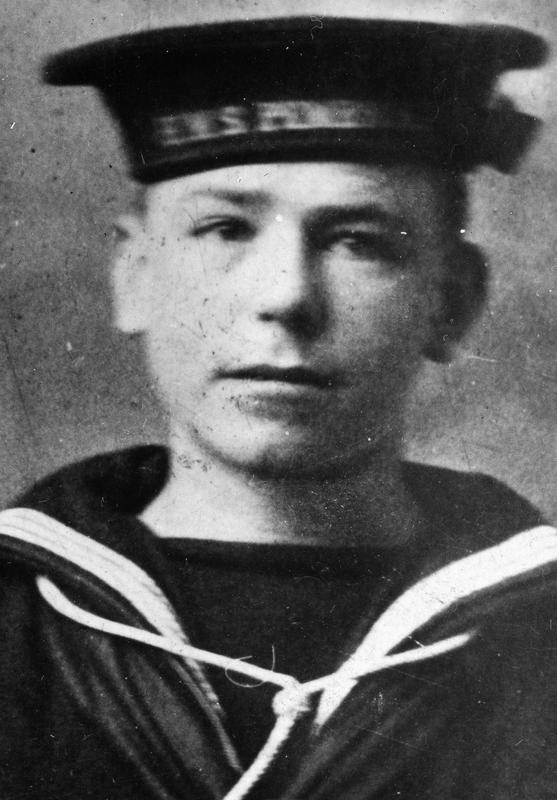
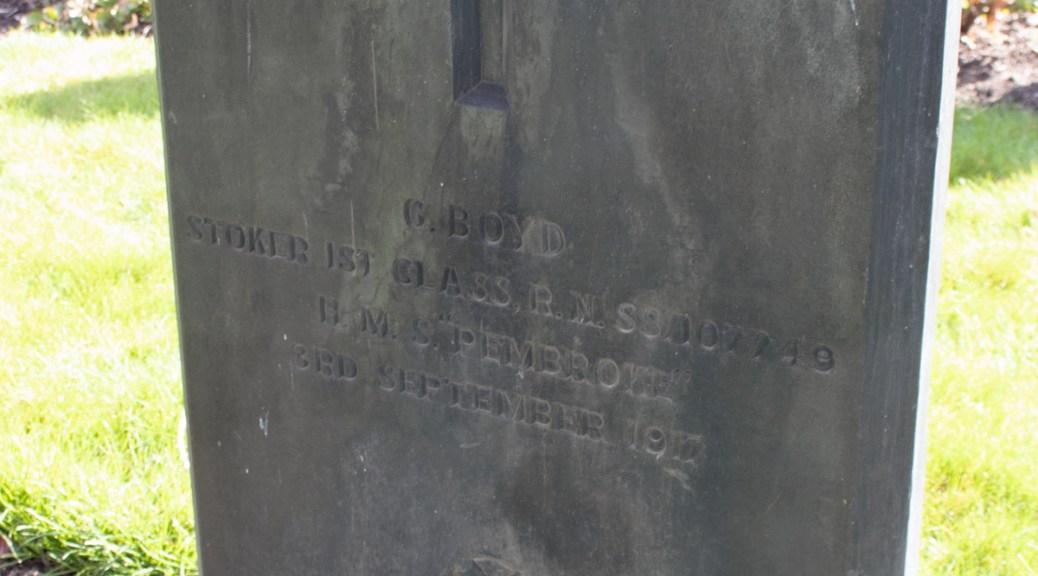
Stoker 1st Class George Boyd

Stoker 1st Class George Boyd

George Boyd was born in Belfast, Northern Ireland on 1st May 1890, although further information about his early life is not available.

What can be confirmed is that George enlisted in the Royal Navy on 8th September 1908 as a Stoker 2nd Class. He had been working as a labourer for shipbuilder Workman Clark, when the opportunity to better himself was presented. His service records show that he was 5ft 3ins (1.60m) tall, had light brown hair, grey eyes and a fresh complexion. He was also noted as having a tattoo of a compass and square on the back of his left hand.

Over the five years of his service, Stoker Boyd served on five different ships, returning each time to what would become his base, HMS Pembroke, also known as the Royal Naval Dockyard in Chatham, Kent. During his time, he was also promoted to Stoker 1st Class.

When his five years’ service was up, George was transferred to the reserve ranks, only to be called up again less than a year later, when war broke out. Stoker Boyd’s enthusiasm for the job may have been waning by this point: his previous Very Good character was noted only as Fair when he was re-engaged, and, in July 1915, while based in Chatham, he went absent without leave, a crime than resulted in six weeks’ detention.

Stoker 1st Class Boyd served on a number of ships during his renewed period of service, although he returned to HMS Pembroke between voyages. He returned there for good on 7th August 1917.

That summer was a particularly busy time for the Royal Naval Dockyard: temporary overflow accommodation was put in place at the barracks’ Drill Hall, and this is where George found himself billeted.

On the night of 3rd September, Chatham came under attack from a German air raid, and the Drill Hall received a direct hit. Stoker 1st Class Boyd was among those to be killed that night. He was 27 years of age.

George Boyd was laid to rest in the Woodlands Cemetery in Gillingham, Kent, alongside the other victims of the Chatham Air Raid. His pension was transferred to his widow, Adelaide Boyd (née Kerr).


Adelaide Kerr was an interesting character in her own right. Born in Belfast on 9th June 1893, she was one of three children to labourer Joseph Kerr and his wife Elizabeth (or Lizzie).

Adelaide married James Stephenson when she was just 17 years old, and five months before the birth of their first child, James Jr. The couple went on to have a second child, Joseph, although he tragically passed away when just a year old.

James also passed away, 27th February 1916, aged just 23 years old. Intriguingly, his place of death is Crumlin Road Gaol in Belfast, but there is no record of why he was imprisoned, nor the cause of his death.

It seems that Adelaide needed support and, within a few months of James’ death, she had married George. After he too died during the air raid, she went on to marry a third time, to Samuel Buller. The couple tied the knot in March 1918, and went on to have a son, William, that September. Tragedy was to strike again, however, when he passed away in December 1923, having just turned five.

There is no further information about Samuel, and time passed for Adelaide as well. She outlived her remaining son, James, who died in Belfast in 1979. At some point Adelaide emigrated – records do not confirm when, nor whether Samuel left Northern Ireland as well – and she passed away, at the age of 90, in the Australian hamlet of Paschendale, some 219 miles (352km) from Melbourne.


Seaman Alexander Kennedy

Seaman Alexander Kennedy

Alexander Kennedy was born in Cromore on the Isle of Lewis on 15th June 1895. He was one of five children – four of them boys – to John and Isabella Kennedy.

Living in the remote coastal township, he would have grown up knowing the sea and, when the opportunity arose, he volunteered for the Royal Naval Reserve. His service records show that he enlisted on 12th December 1913; they also note that he was 5ft 6.5ins (1.69m) tall, had blue eyes, a fresh complexion and a scar under his chin.

Seaman Kennedy was kept on a retainer until war broke out the following summer, at which point he was sent to the other end of the country – HMS Pembroke, the Royal Naval Dockyard in Chatham, Kent – for formal training. His time in the navy was then split between the dockyard and the battleship HMS Implacable.

Over the next couple of years, Seaman Kennedy toured the Mediterranean, berthing in Egypt, Malta and Gibraltar between stops back in the ports on the English coasts. By the summer of 1917, he had returned to HMS Pembroke for good.

At that point in the war, Chatham Dockyard was a particularly busy place, and Alexander was billeted in overflow accommodation set up in the naval barracks’ Drill Hall.

On the night of the 3rd September, the German Air Force conducted the first night time raid on England. Chatham came in the firing line, and the Drill Hall received a direct hit. Seaman Kennedy was among those killed. He was just 21 years of age.

Alexander Kennedy was laid to rest in the Woodlands Cemetery in nearby Gillingham, along with the other victims of the Chatham Air Raid.


Seaman Alexander Kennedy
(from ancestry.co.uk)

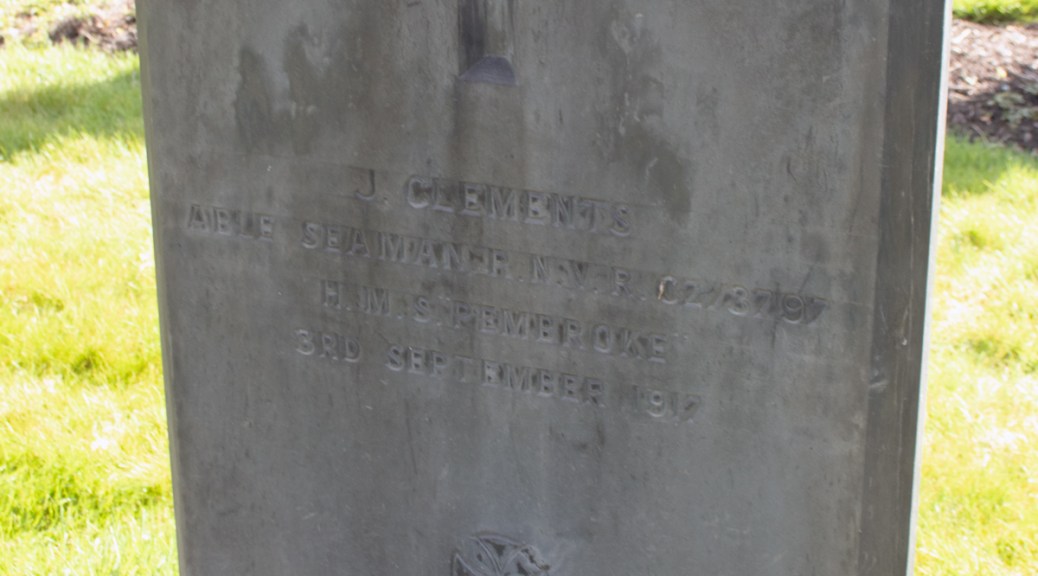
Able Seaman John Clements

Able Seaman John Clements

John Clements was born on 22nd March 1891 in the Lanarkshire town of Airdrie. He was one of seven children to John and Catherine Clements.

There is little concrete information about John Jr’s life. When he left school, he followed his father and two brothers, David and George into the mining industry, working at the New Orbiston Colliery, walking distance from home.

When war broke out, however, John Jr wanted to play a bigger part and – probably to Catherine’s horror – he enlisted in the Royal Naval Volunteer Reserve at the same time as two of his three brothers also joined up.

Information about Able Seaman Clements’ service is scarce. All that can be confirmed is that, in the autumn of 1917, he was based at HMS Pembroke, the Royal Naval Dockyard in Chatham, Kent.

The base was particularly busy at that point in the war, and John found himself billeted in overflow accommodation in the barracks’ Drill Hall.

On the night of 3rd September 1917, Chatham was bombarded by a German air raid, and the Drill Hall received a direct hit. Able Seamen Clements was among those killed. He was just 26 years old.

John Clements’s body, along the other victims of the Chatham Air Raid, was laid to rest in the Woodlands Cemetery in nearby Gillingham.


Able Seaman John Clements
(from britishnewspaperarchive.co.uk)

John and Catherine’s second son had been killed, but, as the local newspaper reported, there seemed to be more trauma ahead:

Private George Clements, Cameron Highlanders, aged 23… is officially posted missing in recent operations in France. He has seen a long period of active service, and previous to enlisting, was employed in the… Hattonrigg Colliery.

Private David Clements, Royal Irish, the eldest son [of John and Catherine] is in hospital in Yorkshire suffering from ‘gassing injuries’. This is the third occasion upon which he has been wounded; fortunately, he is making a satisfactory recovery. He is 28 years of age and was employed in the… New Orbiston Colliery.

Bellshill Speaker: Friday 14th September 1917

Thankfully, George was found and David recovered and John was to be the only casualty of the conflict for the Clements family.


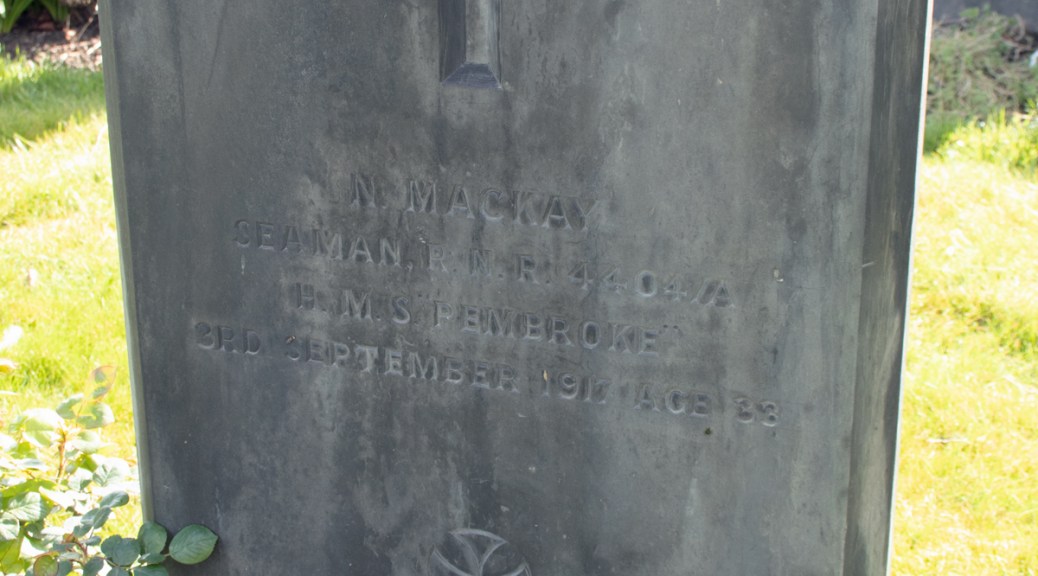
Seaman Neil Mackay

Seaman Neil Mackay

Neil Mackay was born on 16th September 1888 in Stornoway, Scotland, the son of Murdoch and Johanna (known as Murdo and Annie) Mackay.

Sadly, little information remains about his early life; most of what can be gleaned comes from his Royal Naval Reserve records. The document confirms that he was 5ft 9ins (1.75m) tall, had blue eyes, a dark complexion and a scar between his eyes.

Neil enlisted as a Seaman on 3rd September 1912 and, over the next couple of years, he travelled the world, visiting Maine in the United States, New Zealand and Newfoundland on his voyages.

When war broke out, he was assigned to HMS Northbrook, a troopship taking soldiers to India; he returned to the United Kingdom on HMS Dalhousie, in 1915, before making the same round trip, this time on HMS Lawrence, later that year.

In April 1916 Seaman Mackay returned to England, and was based at HMS Pembroke, the Royal Naval Dockyard in Chatham, Kent, for around eighteen months.

The summer of 1917 was to prove a busy time at HMS Pembroke, and Neil found himself billeted in temporary accommodation in the barracks’ Drill Hall. On 3rd September 1917, the town came under fire from a German air raid; the Drill Hall received a direct hit and Neil was killed. He was just shy of his 29th birthday and had completed five years’ service that day.

Neil Mackay was among 98 servicemen to be killed during the Chatham Air Raid that night. The victims were laid to rest in a mass funeral at Woodlands Cemetery in nearby Gillingham a few days later.


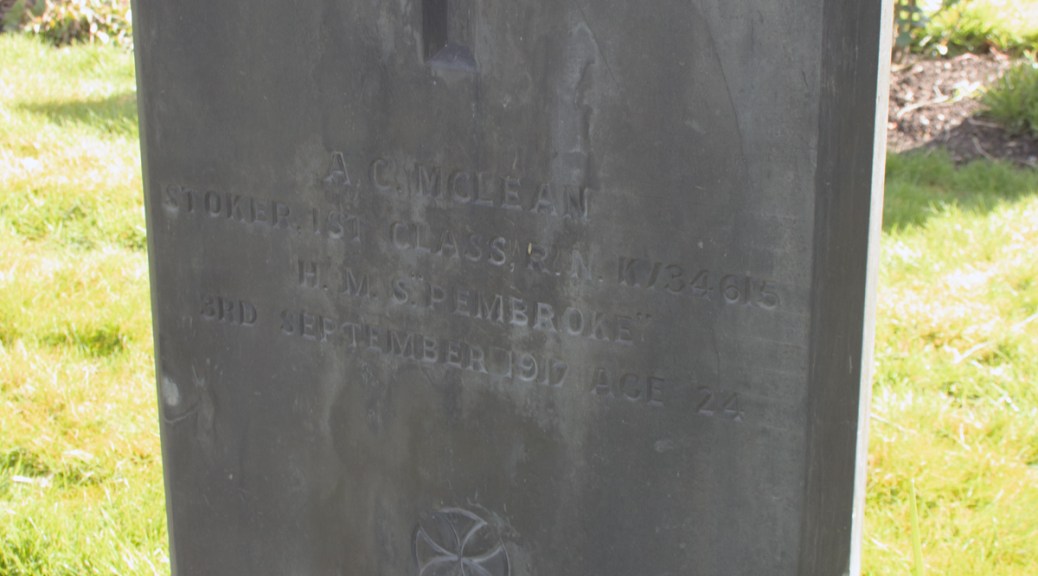
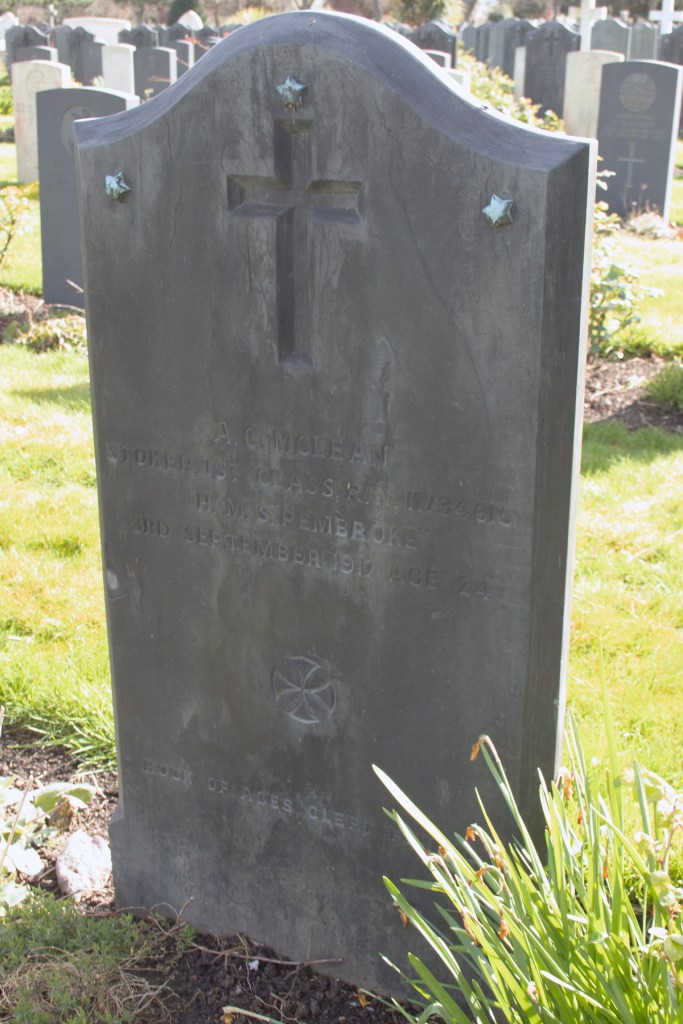
Stoker 1st Class Alexander McLean

Stoker 1st Class Alexander McLean

Alexander McLean was born in the village of Bowling, on the River Clyde near Glasgow, on 7th February 1893. There is little documented on his life, other than that his parents were Duncan and Margaret (Maggie) McLean.

When he left school, he fond work as a caulker at the local docks; war came to Europe, however, and he wanted to play his part. on 11th November 1914, he enlisted in the Cameron Highlanders as a Private. His service records show that he was 5ft 4ins (1.63m) tall, weighed 118lbs (53.5kg), had dark brown eyes, grey eyes and a fresh complexion.

Private McLean’s time in the army was a brief one, however, as his entry exam identified him as medically unfit, and that he would not be an effective soldier.

Alexander was not to be deterred, however, and he soon enlisted in the Royal Navy as a Stoker 2nd Class. There is little information about his life at sea. At some point he was promoted to Stoker 1st Class, and he was certainly based at HMS Pembroke, the Royal Naval Dockyard in Chatham, Kent, by the summer of 1917.

That was particularly busy time for the base, and temporary accommodation had been put in place at the barrack’s Drill Hall: this is where Alexander found himself billeted.

On the night of the 3rd September 1917, Chatham was bombarded by a German air raid, and the Drill Hall received a direct hit. Tragically, Stoker 1st Class McLean was amongst those killed. He was just 24 years old.

Alexander McLean’s body was laid to rest in the Woodlands Cemetery in Gillingham, alongside the other victims of the Chatham Air Raid.


Stoker 1st Class Albert Cairns

Stoker 1st Class Albert Cairns

Albert Cairns was born on 22nd October 1894, one of ten children to Wilson and Maria Cairns. Both of his parents were born in Northern Ireland, and flax dresser Wilson raised his family in the capital, Belfast.

When he left school, Albert began shop work, but he wanted bigger and better things. On 2nd March 1912, having already been a volunteer in the Royal Inniskilling Fusiliers, he enlisted in the regiment full time. His service records show that he was 5ft 4.5ins (1.64m) tall, weighed 125lbs (56.7kg) and had blue eyes, brown hair and a fresh complexion.

Private Cairns’ army service was brief, however, as, on 23rd March he was discharged for “having made a mis-statement as to [his] age on enlistment.”

Undeterred, six months later, Albert tried again, this time enlisting in the Royal Navy as a Stoker 2nd Class. His determination was clear, as he lied about his age again, giving his year of birth as 1893. This was overlooked (or at the very least not checked), and he was sent to HMS Pembroke, the Royal Naval Dockyard in Chatham, Kent, for his training.

In February 1913, Stoker Cairns was assigned to the cruiser HMS Blonde. He spent the next two years on board, and was promoted to Stoker 1st Class.

For all his desire to serve, Albert’s military career was a chequered one. Over the period of five years, he served on four ships, returning to Chatham after each voyage. His character began as Very Good, but as time went on this slipped to Good and then to Indifferent. On four separate occasions he was detained for going AWOL, and he spent a total of 159 days in the brig.

In May 1917 he returned to HMS Pembroke; that summer was a busy time for the base, and Stoker 1st Class Cairns found himself billeted in overflow accommodation set up in the barracks’ Drill Hall.

On the night of 3rd September, Chatham came under attack from a German air raid, and the Drill Hall received a direct hit. Stoker Cairns was among those to be killed that night. He was 22 years of age.

Albert Cairns was laid to rest in the Woodlands Cemetery in Gillingham, Kent, alongside the other victims of the Chatham Air Raid.


Tragically, Albert was not the first boy of that name to be born to the family. Albert Wilson Cairns was born in 1888, but died when only a toddler.

Wilson and Maria also had three sons called Wilson: the first, born in 1889, died at the age of two. The second was born in 1892, but passed away at the age of seven months.

The third Wilson Cairns was born in 1896. He went on to become a mill labourer, before joining the Royal Inniskilling Fusiliers in February 1913. Just like his older brother had done before him, however, he had lied about his age, and was soon discharged. Two years later he tried again, and this time succeeded in joining up.

Private Cairns was assigned to the 2nd Battalion, and soon found himself in France and in the thick of it. Fighting in the Battle of Ancre, he was killed on 23rd November 1916. He was just 20 years of age, and was laid to rest in the Waggon Road Cemetery near Beaumont-Hamel.

Private Wilson Cairns
(from findagrave.com)

The Belfast Telegraph reported on Albert’s death, and noted Wilson’s death ten months previously. It also confirmed that Wilson and Maria’s oldest son, George, had also been wounded, and was recovering in a convalescent camp.

The same newspaper ran a number of messages of condolence for Albert, including one from his loving sweetheart, Katie Rollins.


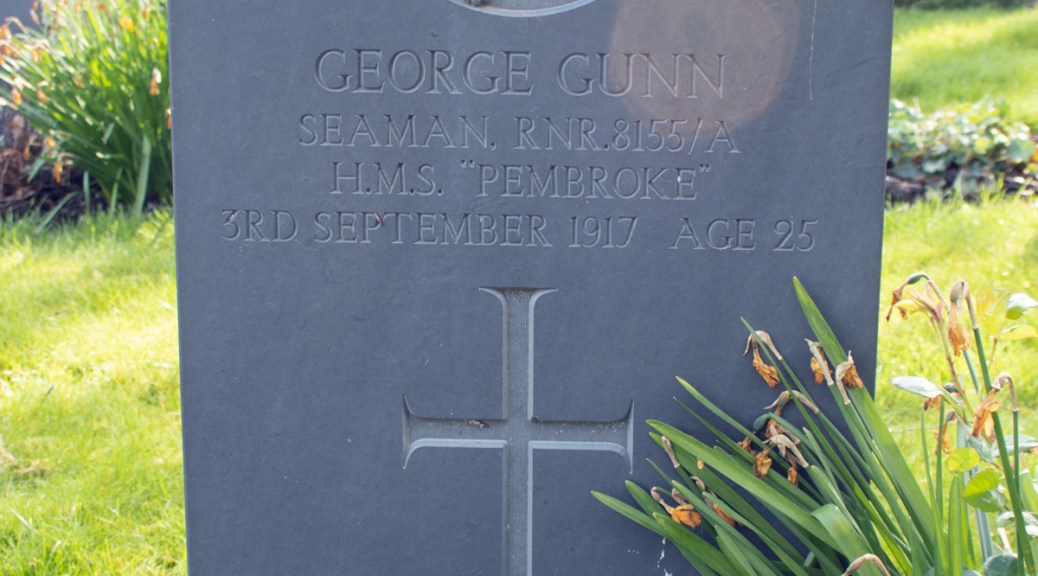
Seaman George Gunn

Seaman George Gunn

George Gunn was born on 15th October 1891, the middle of three children to William and Hughina Gunn. The family lived in the hamlet of Skerray on the North Scottish coast.

Sadly, there is little information about George’s life. When was broke out, he enlisted in the Royal Naval Reserve, which suggests that he had experience of going to sea, although this is likely, because he lived in a coastal village.

George’s service records show that he was 5ft 10.5ins (1.79m) tall, had grey eyes and a fresh complexion. Under ‘personal marks’ the document noted that he had a dimple in his chin.

Seaman Gunn spent most of his time on land; he was initially posted to HMS Pembroke, the Royal Naval Dockyard in Chatham, Kent. In June 1915, however, he was assigned to the minelayer HMS Orvieto, and spent the next year patrolling the North Sea.

By the spring of 1916, George was back in Chatham; by August he was on the move again, this time to London, where he spent twelve months at HMS President, the Royal Naval Base in London. He returned to HMS Pembroke on 3rd September 1917, a move that was to prove fatal.

The base was a particularly busy place that summer, and George was billeted in overflow accommodation in the barracks’ Drill Hall.

That night, Chatham was bombarded by a German air raid, and the Drill Hall received a direct hit. Tragically, Seamen Gunn was among those killed. He was just 24 years old and has been at HMS Pembroke for a matter of hours.

George Gunn’s body, along the other victims of the Chatham Air Raid, was laid to rest in the Woodlands Cemetery in Gillingham, more than 500 miles from home.


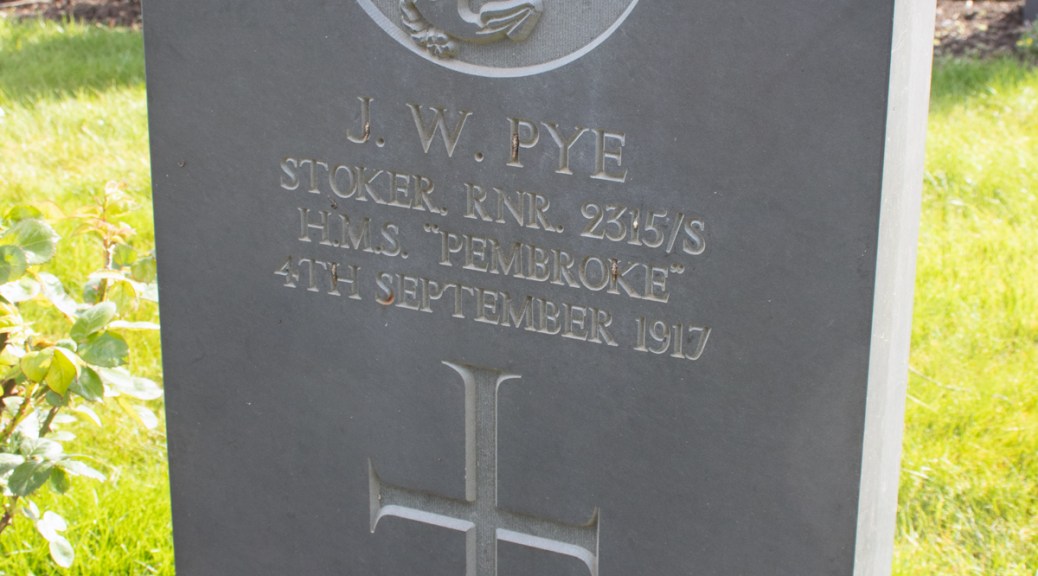
Stoker James Pye

Stoker James Pye

James William Pye was born on 14th August 1892, the oldest of ten children to James and Florence Pye. James Sr was a carter from Lowestoft, Suffolk, and this is where and he and Florence raised their family.

James Jr sought bigger and better things, and a career: he does not appear on the 1911 census, but, on 8th February 1912, he enlisted in the Royal Naval Reserve as a Stoker. His service records confirm that he was 5ft 7ins tall, had a fresh complexion and blue eyes. He was, by this point, living in Bungay, but no further information is given.

James was officially mobilised on 18th August 1914, and was sent to HMS Pembroke, the Royal Naval Dockyard in Chatham, for training. The following year Stoker Pye was assigned to the armoured cruiser HMS Shannon. He spent nearly two years on board, before returning to Chatham.

The summer of 1917 was a particularly crowded time at HMS Pembroke; additional space for the crews was needed, and the barracks’ Drill Hall was given over to accommodation. This is where James found himself billeted for his 25th birthday.

On the night of 3rd September, Chatham came under attack from a German air raid, and the Drill Hall received a direct hit. Stoker Pye was badly injured and admitted to the Chatham Naval Hospital; he succumbed to his injuries the following day.

James William Pye was laid to rest in the Woodlands Cemetery in Gillingham, Kent, alongside the other victims of the Chatham Air Raid.


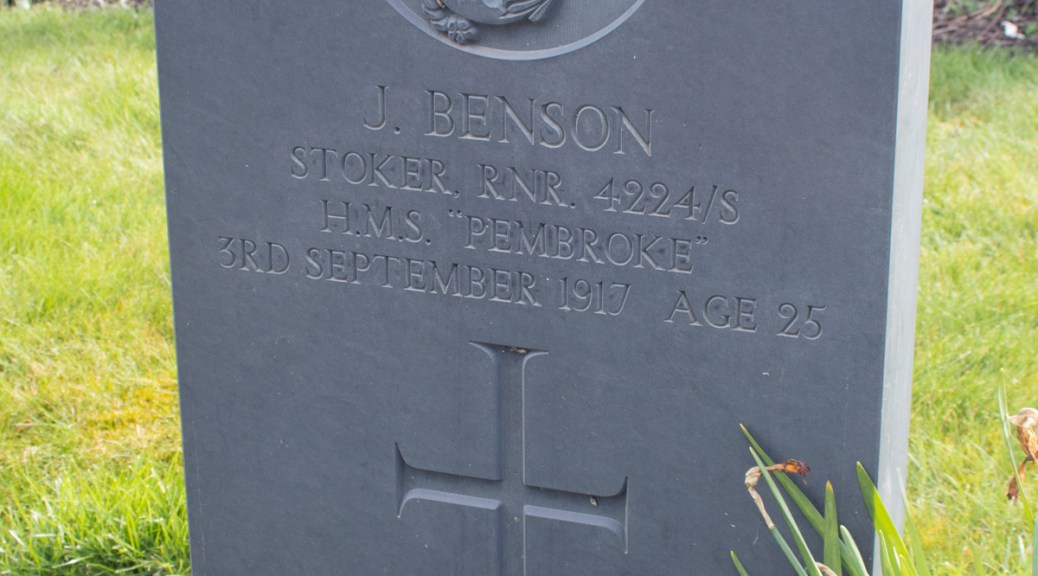
Stoker John Benson

Stoker John Benson

John Benson was born on 29th April 1892, the second of eleven children to Thomas and Annie Benson. Thomas was from Grays, Essex, and this is where the barge captain raised his growing family. While it is likely that John would have also experienced life on the water, by the time of the 1911 census, he was recorded as being a labourer at the town’s brewery.

When war broke out, it’s evident that John wanted to play his part. On 18th November 1914 he enlisted as a Stoker in the Royal Naval Reserve, and was based at HMS Pembroke, the Royal Naval Dockyard in Chatham, Kent.

Stoker Benson’s service records show that he was 5ft 3.5ins (1.61m) tall, had blue eyes and a fair complexion. He was also noted as having a number of tattoos on his forearms, including clasped hands, a bird and a lady’s head.

While John was primarily based at HMS Pembroke, he also served at sea; this included two years on board the cruiser HMS Grafton. In July 1917, however, he returned to Chatham again.

The Royal Naval Dockyard was a busy base that summer, so much so that temporary accommodation was set up in the barracks’ Drill Hall: this is where Stoker Benson found himself billeted.

On the night of the 3rd September, the German Air Force conducted the first night time raid on England. Chatham came in the firing line, and the Drill Hall received a direct hit. Stoker Benson was among those to be killed. He was just 25 years of age.

John Benson was laid to rest in the Woodlands Cemetery in nearby Gillingham, along with the other victims of the Chatham Air Raid.


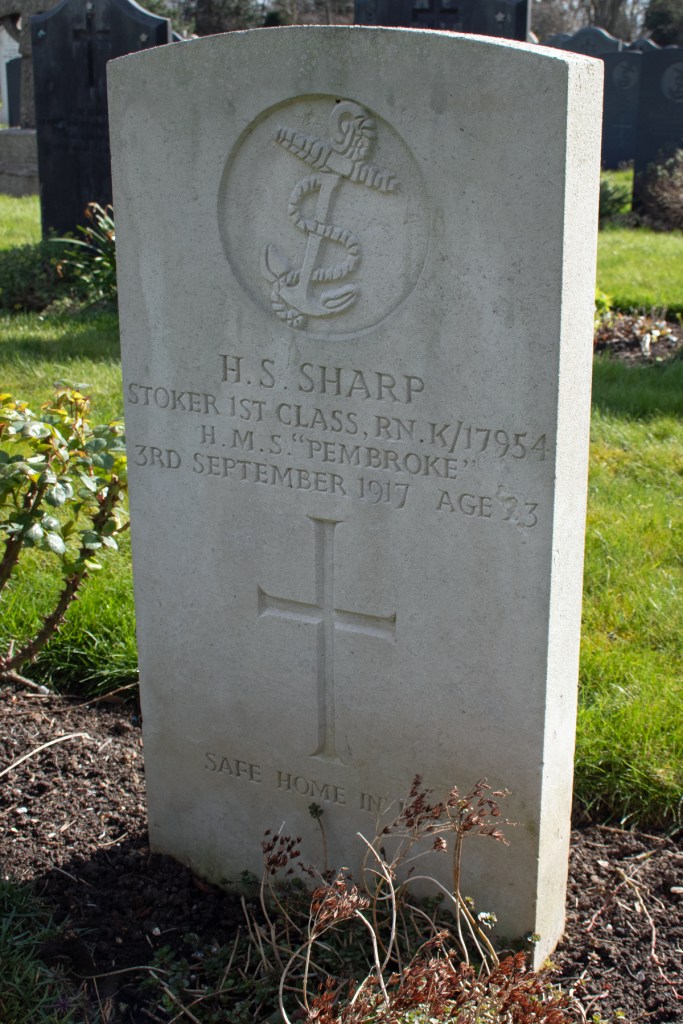
Stoker 1st Class Horace Sharp

Stoker 1st Class Horace Sharp

Horace Stanley Sharp was born on 13th April 1894, the oldest of eight children to Harry and Edith. Harry was a labourer from Luton in Bedfordshire, and this is where he and Edith raised their family.

When he left school, Horace found work at a local iron foundry, but he wanted more of a career and, on 25th February 1913, he enlisted in the Royal Navy as a Stoker 2nd Class. His service records confirm that he was 5ft 4ins (1.62m) tall, had brown hair, grey eyes and that he had a fair complexion.

Stoker Sharp was first posted to HMS Pembroke, the Royal Naval Dockyard in Chatham, Kent. Here he would have received his training, but, during this time, he went absent without authorisation, and, as a result, spent 24 days in the cells. It seems that his training was extended as a result of this, as he was not given his first posting – on board the cruiser HMS Sirius – until January 1914.

Over the next couple of years, Horace served on two further vessels – HMS Alert, where he gained a promotion to Stoker 1st Class, and HMS Swiftsure, where he was detained for a further five days. The reason for this second time in the brig is not recorded, but, as it coincided with the death of Horace’s mother, the cause seems likely to have been connected.

In 1916 he returned to HMS Pembroke, before being assigned to the brand new battlecruiser HMS Repulse, where he served for a year, taking part in operations in the Persian Gulf and the Dardanelles.

At the end of July 1917, Stoker 1st Class Sharp returned to Chatham once more. The base was particularly busy that summer, and the large number of extra servicemen meant that Horace was billeted in temporary accommodation in Chatham Drill Hall.

On the 3rd September 1917, the first night air raid carried out by the German Air Force bombarded the town, and scored a direct hit on the Drill Hall; Stoker 1st Class Sharp was among those killed that night. He was just 23 years of age.

Horace Stanley Sharp was laid to rest, along with the other victims of the Chatham Air Raid, in the Woodlands Cemetery, Gillingham.


Stoker 1st Class Horace Sharp
(from findagrave.com)

Horace’s younger brother Harry also fought in the First World War, serving a a Private in the 1st Battalion of the London Regiment. He was assigned to the 13th Battalion of the Royal Fusiliers, and fought at the 3rd Battle of Ypres in 1917.

He was wounded on 5th September 1917, receiving a gun shot wound in the back. Private Sharp was admitted to hospital, and died from his injuries later that day. He was just 20 years of age and passed away just two days after his older brother. He was laid to rest in the Reninghelst Military Cemetery in Belgium.