
Tag Archives: Greece

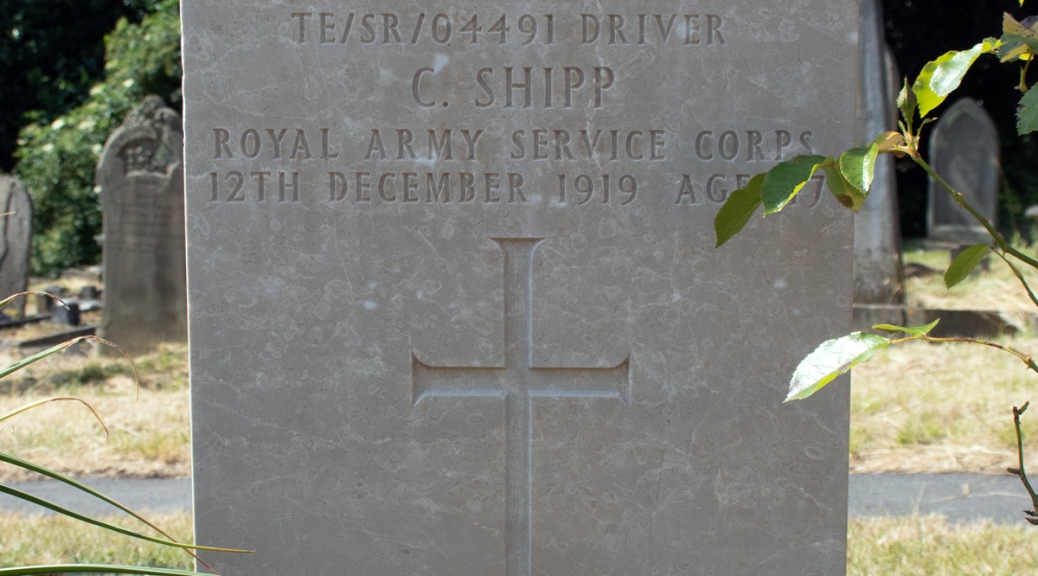
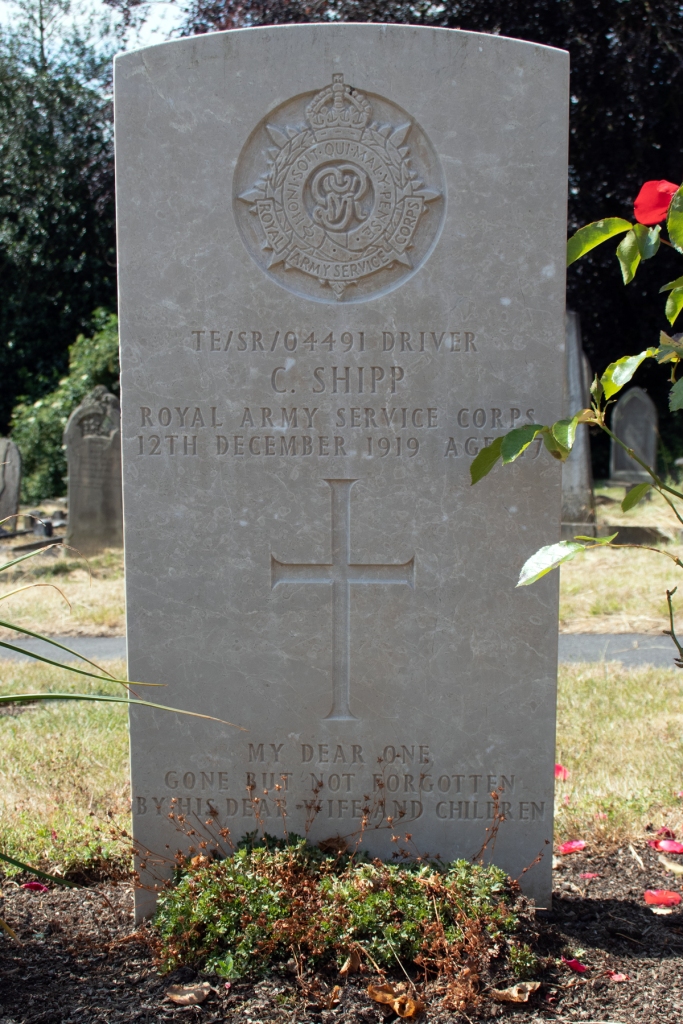
Driver Charles Shipp

Driver Charles Shipp

The early life of Charles Shipp is a challenge to unpick. Born Charles Morgan in Bath, Somerset, in 1872, his father was also called Charles. He found work as a labourer when he finished school.

Charles sought a life of adventure, however, and on 7th January 1890, he enlisted in the army, joining the South Wales Borderers. Private Morgan’s service records show that he was 5ft 5.5ins (1.66m) tall and weighed 116lbs (52.6kg). He had brown hair, grey eyes and a fresh complexion, with tattoos of crossed flags, a crown and VR on his left forearm.

Private Morgan spent three years on home soil, and is recorded as being based in North Camp Barracks in Farnborough, Hampshire, in the 1891 census. His battalion was sent to Egypt in December 1892 and spent the next three years overseas, moving to Gibraltar in the spring of 1895. The only details available for his time abroad relate to a couple of hospital admissions – for a fever in Cairo in August 1894, and for gonorrhoea in Gibraltar in the autumn of 1895. He returned to Britain at the end of November that year.

Charles appears to have been based in South Wales when he returned home and, on 20th December 1896, he married Lottie Walters in Llandough Parish Church. Interestingly, while the new bride’s father’s details are recorded – naval pensioner James Walters – Charles’ have been intentionally left blank. This is also the first document on which his surname is recorded as Shipp, so there seems to have been a deliberate distancing from his family at this point.

Charles was still committed to his military career. He served on home soil until January 1897, when he was placed on reserve, having completed seven years’ service. This respite was not to be for long, however, as he was recalled on three years later, and sent to South Africa, to fight in the Second Boer War.

Private Shipp, as he was now known, served in South Africa for more than two years, and was awarded the Johannesburg, Cape Colony, 1901 and 1902 clasps. In August 1902, he returned to Britain, and was formally stood down from army service.

Charles and Lottie moved to Bath, and set up home in a small cottage in Locksbrook Road. They went on to have seven children, all of them girls and, by the time of the 1911 census, Charles was working as a carter for the local gas works. His heart seems always to have been with his military career, however, and, when war broke out in 1915, he saw this as an opportunity to play his part once more.

On 25th October 1915, Charles enlisted in the Royal Army Service Corps as a Driver. His was not to be a war fought on home turf, and within a month, he was in the Mediterranean, potentially back in Egypt again. In April 1916, his battalion moved to Salonika, and he spent the next three years in Northern Greece.

Charles contracted malaria in the autumn of 1917, and this resulted in a hospital admission for just over two months. He returned to his unit, but spent another couple of months in a Macedonian hospital the following year when the condition recurred.

Driver Shipp survived the war, and returned to Britain in April 1919. His health was again suffering, and he was formally discharged from the army on medical grounds on 29th April.

At this point, Charles’ trail goes cold. He returned home to Lottie and their daughters, but there is nothing to account for the the last eight months of his life. He passed away on 12th December 1919, at the age of 47 years of age.

Charles Shipp was laid to rest in Bath’s majestic Locksbrook Cemetery, not far from where his family lived.


Corporal Charles Fernley

Corporal Charles Fernley

Charles Edward Fernley was born on 28th November 1874 in Stepney, East London. One of thirteen children, his parents were Richard and Eliza Fernley. Richard was a sluice keeper, who worked his way up to be an inspector of sewers and drains for London County Council. By 1888, he had been able to move his family out of the East End, to suburban Bromley, south of the river in Kent.

By the time of the 1891 census, Charles had finished his schooling, and had found work as a printer’s labourer. Ten years later, however, he was employed as a packer for a millinery warehouse. There seems to have been more need for this back in the East End, however, as he was living in Bow in the summer of 1901.

On 21st August 1901, Charles married Hannah Weston in St Faith’s Church, Stepney. She was three years younger than her husband, and was the daughter of a boatbuilder. The couple settled in a small terraced house in East Ham and had a son, Leonard, who was born in 1908.

When war came to Europe, Charles was keen to play his part. He enlisted in the Essex Regiment, and was assigned to the 1st/4th Battalion. Sent to the Balkans in August 1915, it is likely that he was caught up at Gallipoli and, in December 1915, evacuated with his battalion to Mudros on the Greek island of Lemnos.

By this point, the now Corporal Fernley had contracted dysentery, and was repatriated to Britain for treatment. He was admitted to the Newton Park VAD Hospital on the outskirts of Bath, but was to succumb to the condition on 31st December 1915. He was 41 years of age.

Charles Edward Fernley was laid to rest in the quiet Holy Trinity Churchyard in Newton St Loe, Somerset.


While Charles’ headstone is dedicated to Sergeant Fernley, all other documentation suggests that he held the rank of Corporal when he died.


Lieutenant Thomas Denny

Lieutenant Thomas Denny

Thomas David William Denny was born on 26th December 1890 in Glasgow, Lanarkshire. There is little information on his early life, other than that his parents were Thomas and Annie Denny.

By the time of the 1911 census, Thomas Jr was serving as a Lance Corporal in the 2nd Battalion of the Gloucestershire Regiment, and was based at the Verdola Barracks in Malta.

When war broke out, the battalion was called back to mainland Europe. By 19th December 1914, Thomas found himself in France; two years later, he was in Salonika, Greece.

Thomas’ bravery was not in doubt. While serving in France, he received the Military Medal for conspicuous gallantry. This went hand in hand with a promotion to Sergeant. In 1917, he received a commission as Second Lieutenant and was moved to the regiment’s 3rd Battalion.

In the spring of 1918, Second Lieutenant Denny married Elsie, a woman from Bearsted, near Maidstone in Kent. Sadly, little else is known of her, and even a later newspaper report only referred to her as “a Bearsted lady” [East Kent Gazette: Saturday 15th March 1919].

By early 1919, Thomas was back in Britain. Whether he had been demobbed is unclear, but is seems more likely that he had returned home for medical treatment. On 6th March, he passed away in Maidstone. He was just 28 years of age.

Thomas David William Denny was laid to rest in the graveyard of Holy Cross Church in Bearsted close to where the now-widowed Elsie must have lived.


Private Edgar Boyland

Private Edgar Boyland

Edgar Albert Boyland (known as Albert) was born in the summer of 1894, the third of eight children to John and Sarah Boyland. John was a farm labourer from Chaffcombe in Somerset, but it was in nearby Chard that the family were born and raised.

Albert followed in his father’s footsteps and, when he finished school, he found work on a local farm. The 1911 census recorded him boarding with the Boait family in Winsham, to the south-east of Chard. He was living there along with another boarder, a baker called Fred Baker, and his influence seems to have paid off, as, by the time war was declared in 1914, baking was the trade that he had taken up.

With the conflict declared, Albert was called upon to play his part. In April 1915, he enlisted in the Army Service Corps. His records show that he stood 5ft 5.5ins (1.66m) tall and he gave his trade as baker. This was the trade that served him well, as it is the one for which he was employed.

Private Boyland was sent to France within a few weeks of enlisting. In November 1915, he was sent to Salonika, Greece, and spent the next couple of years in the Eastern Mediterranean providing food for the troops.

In December 1917, Albert returned to England where, within a couple of months, he was medically discharged from active duty. Sadly, there is nothing documented to confirm the condition that led to him leaving the army, but it seems likely to have been an illness of some description.

At this point, Albert’s trail goes cold. He passed away on 19th February 1919; again the cause of his death is lost to time. He was just 24 years of age.

Edgar Albert Boyland was laid to rest in Chard Cemetery, not far from where his family still lived.


Private Arthur Boyland

Two rows back from Private Albert Boyland’s headstone is another Commonwealth War Grave, dedicated to another Boyland. This is from the Second World War, and identifies the resting place of Albert’s cousin.

Arthur James Boyland was born on 21st October 1908, one of nine children to Arthur’s uncle and aunt, Joseph and Julia Boyland. Joseph worked at an iron foundry, but it seems that Arthur was destined for other things. While a lot of his life is lost to time, by the time of the 1939 Register, he was working as a dental mechanic in Chard.

Arthur had married Bessie Hopkins in 1936; the couple went on to have three children.

When the Second World War was declared, Arthur had a role to play; he enlisted as a Private in the Royal Army Dental Corps. Sadly, details of his service are not available; he survived the war, however, and returned to Chard afterwards.

Arthur James Boyland passed away at home on 14th December 1947, at just 39 years of age. He was laid to rest in Chard Cemetery.