Tag Archives: gun

Bombardier Charles Newbery

Bombardier Charles Newbery

Charles James Anderson Newbery was born in Misterton, a stone’s throw from Crewkerne, Somerset, in the spring of 1895. The oldest of eight children, his parents were Benjamin and Edith Newbery. Benjamin was a farmer, who passed away in 1908, when his son was just 13 years of age.

Charles seems not to have spent a great deal of time in the family home, however: the 1901 census found him living with his paternal grandmother, while the 1911 census, taken three years after his father’s death, recorded him as living with his paternal aunt, and working on their farm.

The farming life seemed to suit Charles: indeed he emigrated to Australia to pursue the life. When war broke out in Europe, however, he returned to England’s shores to better serve King and Country. He enlisted in the Royal Garrison Artillery on 18th October 1915, and was given the rank of Gunner.

Charles’ service records confirm that he was 5ft 5ins (1.65m) tall and weighed 140lbs (63.5kg). He was noted as having a mole on his left shoulder and an upper denture.

Private Newbery was sent to France in April 1916 and, a little over a year later, was promoted to Bombardier. He was attached to the 137th Heavy Battery and all seemed to be going reasonably well for him. He had ten days’ in England in July 1917, and a further two weeks’ in March 1918.

On 13th August 1918, possible during the Battle of Amiens, Charles was injured by a gun shot wound to his right leg. He was initially treated at the 47th General Hospital at Le Treport on the French coast, but was medically evacuated to Britain for further treatment.

Charles was moved to the 4th Northern General Hospital in Lincoln. To complicate matters, he had contracted bronchitis and, while his injury was being managed, it was a combination of the lung condition and cardiac failure to which he succumbed. Private Newbery passed away on 2nd September 1918, his mother and sisters by his side. He was just 23 years of age.

Charles James Anderson Newbery was taken back to Somerset for burial. He was laid to rest in Crewkerne’s Townsend Cemetery, not far from the family home.


Bombardier Charles Newbery
(from ancestry.co.uk)

Edith had to write to the regimental office three times to get her late son’s belongings back, and in the end it took more than six months to do so. She received the items he had on him in Lincoln in April 1919: they included and “upper row [of] teeth, cigarette case, wallet containing letters, hair brush [and] comb, disc, letter, wristlet watch, note paper and envelopes.”


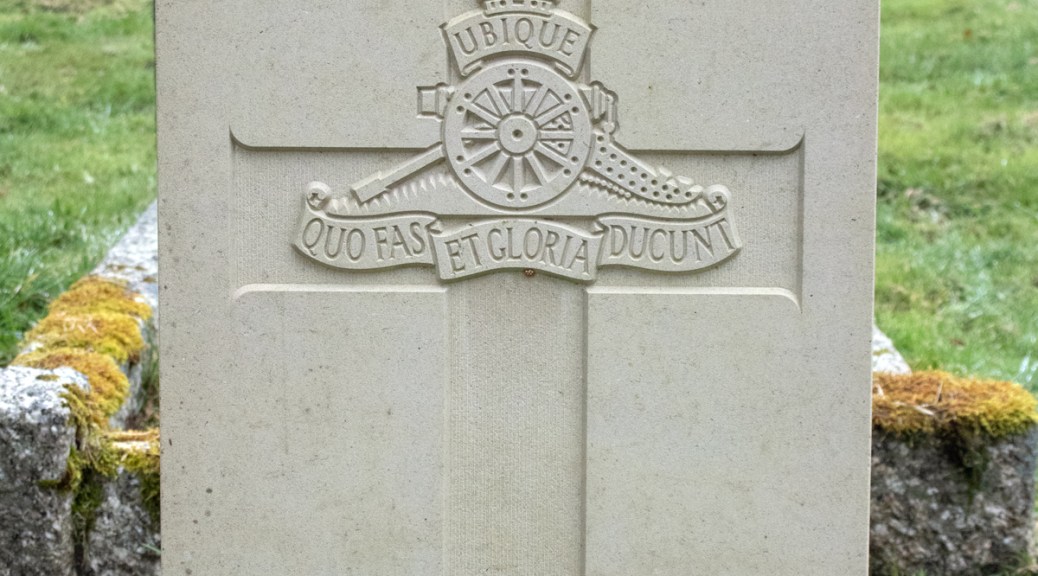
Private Francis Millard

Private Francis Millard

The early life of Francis Albert Millard is lost to time. He was born in 1894 in Bath, Somerset. His gravestone notes that he was the adopted son of AE and H Evans, though there are no census records confirming the three as a family. His military records specifically note that he has “no relations alive only one brother who is younger than myself nor have I any guardians”.

Interestingly, when Private Millard passed, Mrs Harriet Evans, who was noted as a foster mother, applied for his personal effects. Two days later, and Albert Francis Millard, who was claiming to be Francis’ father, also put in an application.

Francis was working as a seaman when he formally enlisted. He had previously been a volunteer in the Durham Light Infantry, and was readily accepted in the regiment’s 2nd Battalion. He joined up in November 1911, his service records noting that he was 5ft 3ins (1.6m) tall, 104lbs (47.2kg) in weight, with a fresh complexion, blue eyes and light brown hair. He was also noted as having a tattoo of the figure of a woman on his right forearm and a scar on his left buttock.

Over the next couple of years Private Millard was reprimanded a couple of times for small misdemeanours – being absent from bread rations on 15th September 1912, and being absent from the company officer’s lecture on 22nd February 1913. During this time he had been promoted to Lance Corporal, but the reprimand he received demoted him to Private once more. Overall, however, his service appears to have been a positive one and, when war was declared, he soon found himself on the Western Front.

[Priavte Millard] was present at the retreat from Mons. He took part in the advance over the Marne and the Aisne, and [had] been engaged in the battles around Ypres. In the early part of August [1915] a charge was ordered, and in this he took part. The late Captain RH Legard… to whom Millard was servant, fell. Millard ran to his assistance, and was wounded in two places…

Bath Chronicle and Weekly Gazette: Saturday 21st August 1915

Francis received gun shot wounds to his thigh and across his spinal column. He was medically evacuated to Britain for urgent treatment. Admitted to the King George Hospital in South London, his admission notes make for stark reading:

Patient very collapsed. Sunken eyes, some delirium. Small circular wound on right shoulder behind level 1st Dorsal spine 2″ from middle line; wound on inner side of left thigh, with suppuration and cellulitis. Can move both arms but very poor power. Patient continued to go downhill rapidly after admission despite stimulation (brandy, [strychnine], saline).

A telegram was sent to Harriet and she took the first train to London. She arrived on the evening of Tuesday 17th August, and remained by Francis’ bedside until he passed away the following morning. He was just 21 years of age.

The shattered body of Francis Albert Millard was brought back to Somerset for burial. He was laid to rest in the city’s St James Cemetery.


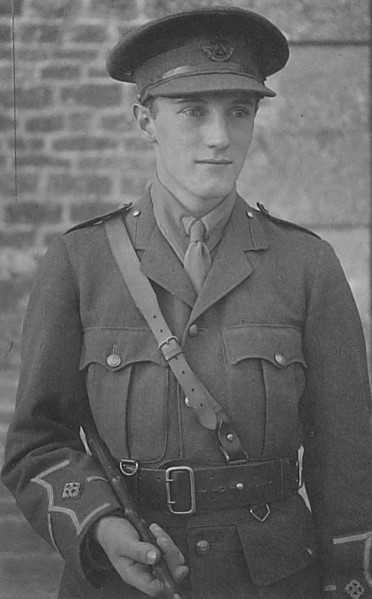
Second Lieutenant Cedric Pepper

Second Lieutenant Cedric Pepper

Cedric William Pepper was born in 1895 in South Kirkby, Yorkshire. He was the middle of three children to William and Harriette Pepper. William was a colliery owner from Leeds, and the family lived in some comfort in Rawdon Hill in Wharfdale. The 1901 census records show that they employed a governess, cook, two housemaids, a kitchen maid and a page.

By the time of the next census, in 1911, the Pepper family had moved to Shipton in Oxfordshire, where they lived in the 27-room Shipton Court. Cedric, by this time, was still studying, having been taught at Winchester College, where he lasted only a year, Tonbridge School, and then Worcester College in Oxford.

When war broke out, he had taken time away from his studies, and was working on a ranch in Rhodesia (present-day Zimbabwe). He returned to Britain at the start of the conflict and enlisted in the King’s Royal Rifle Corps. Assigned to the 2nd Battalion, Private Pepper arrived in France in November 1914, and was wounded in his thigh the summer of 1915.

Private Pepper returned to Britain to recuperate and, when he had recovered, he was given a commission in the 3rd Battalion of the Somerset Light Infantry. It was while he was training in Oxfordshire that the now Second Lieutenant Pepper met his end.

The evidence at the inquest… suggested that the death from a bullet wound… was accidental.

Second-Lieutenant William Eric Warburton… stated that early last week Lieutenant Pepper told him he was in some difficulty with a woman, but he did not explain it. Lieutenant Warburton did not think that this caused him to take his life. In his opinion Lieutenant Pepper knew nothing of the working of an automatic pistol he possessed.

The medical evidence was that a bullet entered the centre of the forehead. The doctor said that if the wound was self-inflicted it was quite possible that it was accidental.

The jury returned a verdict of Death from a bullet from an automatic pistol, but that there was no evidence to show how the wound was inflicted.

Central Somerset Gazette: Friday 29th October 1915

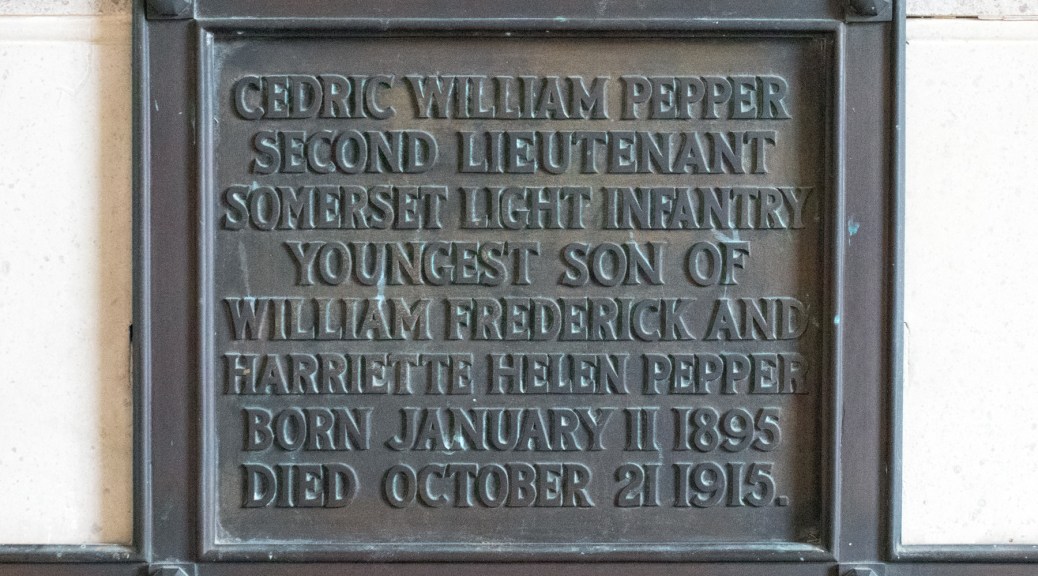
Second Lieutenant Pepper died from the bullet wound on 21st October 1915. He was just 20 years of age.

Pepper Family Memorial

Cedric William Pepper’s family were, by this time, living in Redlynch House, near Bruton, Somerset. He was cremated, and his ashes immured in the wall of St Peter’s Church in the hamlet.


Second Lieutenant Cedric Pepper
(from findagrave.com)

In researching Cedric’s life, there is a definite sense of a young man desperately looking to please his father. A successful Yorkshire colliery owner, he may have expected more from his oldest son, a drop out from Winchester College, possibly sent to Southern Africa to find himself. While an immediate return to Britain to serve his country would have been commonplace, the suggestion of difficulty with a woman and the subsequent accident with his gun just adds to the sense of a need for Cedric to not disappoint his father.


Private Joseph Sibley

Private Joseph Sibley

Joseph Henry Sibley was born on 23rd September 1897 in the hamlet of Elm, near Frome in Somerset. He was one of seven children to Joseph and Ellen Sibley. Joseph Sr worked as an iron moulder and, by the time of the 1911 census, the family had moved to South Petherton.

When he left school, Joseph Jr found work as a baker. But when he turned 18, and with war ravaging Europe, he enlisted to serve his King and his Country. On 8th December 1915, he joined the Somerset Light Infantry, and was assigned to the 6th Battalion.

Private Sibley’s service records confirm that he was 5ft 5ins (1.65m) tall and 116lbs (52.6kg) in weight. He was declared fit for the army, and was formally mobilised in June 1916.

Joseph was sent to France and by January 1917, he found himself on the Front Line. On 19th May, he was injured, receiving a gun shot wound to his hand and face. Medically evacuated to Britain for treatment and admitted to hospital.

He was for some time in Norwich Infirmary for treatment and ultimately received his discharge from the Army. He had been home only a short time and his health being very unsatisfactory, he was taken to Bristol Royal Infirmary, where an operation was performed, which, unfortunately, terminated fatally.

Western Chronicle: Friday 22nd March 1918

Private Sibley died on 16th March 1918, he was just 19 years of age.

Joseph Henry Sibley’s body was brought back to South Petherton for burial. He was laid to rest in the town’s cemetery.


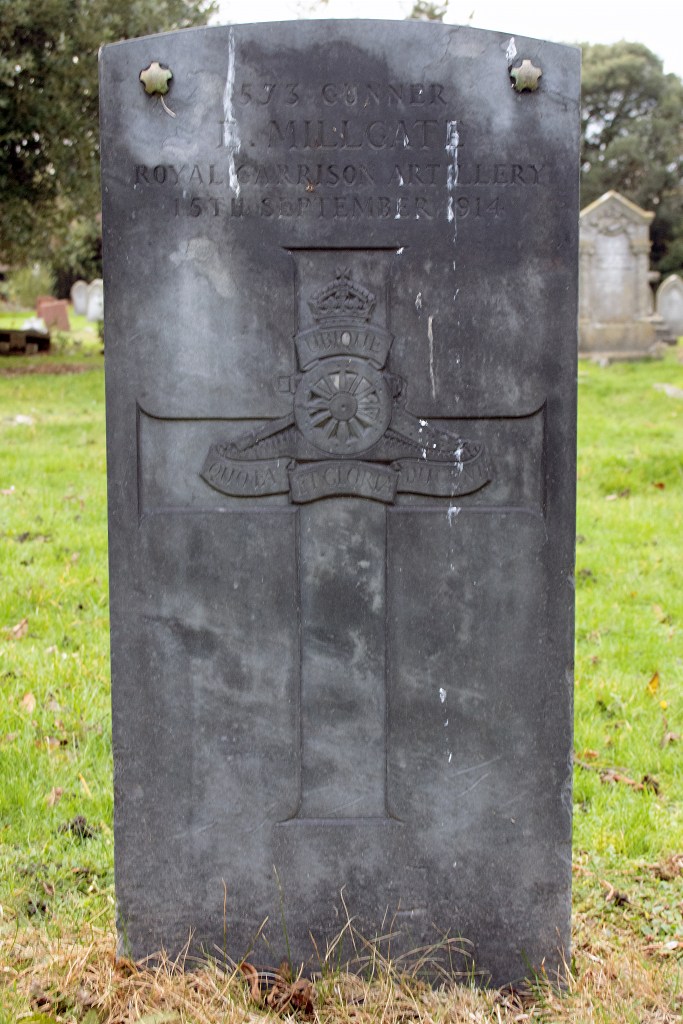
Gunner Ernest Millgate

Gunner Ernest Millgate

Ernest Millgate was born in late 1893, the fifth of six children to Henry and Agnes. Henry was a brewer’s drayman from Boughton, Kent, but it was in nearby Faversham that he and Agnes raised their family.

Ernest found work as a labourer in the town’s Cotton Powder Works, but when war was declared, he was one of the first to enlist. He joined the Royal Garrison Artillery as a Gunner on 5th September 1914, and was billeted nearby on the Isle of Sheppey. His service records show that he stood 5ft 9ins (1.75m) tall, had fair hair, blue eyes and a fresh complexion.

Gunner Millgate’s military service was to be tragically short, as a contemporary local newspaper was to report:

A terrible tragedy occurred at Minster, Sheppey, on Tuesday morning last, Ernest Millgate… who joined the Kent Heavy Battery barely a fortnight ago, being accidentally shot by a comrade, George Walter Cornelius… a gunner of three years’ service in the same Battery.

Gunner Cornelius, it appears, was handling a rifle preparatory to going on sentry duty shortly after eleven o’clock on Tuesday morning. On examining the rifle he had found that the magazine was charged but that there was no charge in the bore. Apparently the cut-off was in operation, for he pulled the trigger and there was no discharge. He examined the breech a second time and, afterwards pulled the trigger again. To his dismay there was this time a discharge and Millgate, who was standing near, fell dead, having been shot through the head. The theory is that Cornelius’ great coat, which he was wearing, caught in and released the cut-off, thereby bringing the magazine into operation.

Faversham Times and Mercury and North-East Kent Journal: Saturday 19th September 1914

An inquest was held, and it was a verdict of accidental death was given.

Gunner Ernest Millgate was just 21 years old, and had been in the service of the army for just eleven days. His body was brought back to Faversham, and he lies at rest in the town’s Borough Cemetery, just a few minutes’ walk from the home he had left just a fortnight before.


The same newspaper also ran a report on Ernest’s older brother, Henry.

Private Millgate was a volunteer for the Northumberland Fusiliers, and was called into active service a couple of weeks before his brother. He had been caught up in the fighting at Mons, le Cateau and the Marne, and was, according to the newspaper, injured.

Medically evacuated to England for treatment, at the time of his brother’s funeral he was in a hospital in Newcastle-upon-Tyne.

Henry survived the war; he and his wife, Elizabeth, had two children, and he lived until 1939, passing away at the age of 52 years old.


Private Albert Sparrow

Private Albert Sparrow

Albert Edward Sparrow was born in Frome, Somerset, in March 1880. One of four children, his parents were Albert and Louisa Sparrow. Albert Sr was a labourer at an iron foundry, and the family were raised close to the centre of the town.

When he left school, Albert Jr found work as a labourer. However, after his father passed away in 1895, he sought longer term prospects. On 11th November 1898 he enlisted in the Royal Fusiliers as a Private for a period of twelve years. His service records show that he stood 5ft 6in (1.67m) tall, weighed 115lbs (52.2kg), had brown eyes, curly brown hair and a sallow complexion.

During his time in the army, Private Sparrow served in Gibraltar, South Africa and Burma. He returned home in March 1903, was placed on reserve in November 1906, and then ended his contract four years later.

At this point, Albert’s trail goes cold. However, when war was declared, he was keen to play his part. He re-enlisted on 27th August 1914, and was assigned to the Somerset Light Infantry. Assigned to the 6th (Service) Battalion, he was sent to France in December that year.

In July 1916, while fighting at the Somme, he was hurt when he received a gunshot wound to his right buttock. The injury proved enough for him to be medically evacuated back to England, and he spent the next five months recovering, and then working, on home soil.

In December 1916, Private Sparrow was sent back out to France. Six months later, he contracted bronchitis and was again evacuated back to England. He was admitted to the Royal Infirmary in Liverpool and, after a month there, he was moved to the Plas Tudno Nursing Home in Llandudno to recover.

Albert’s condition meant that he could not continue in military service, and he was discharged from the army on 18th December 1917. He returned home to Somerset, but his lung condition proved too much; he passed away on 19th January 1918, at the age of 37 years old.

Albert Edward Sparrow was laid to rest in the graveyard of Holy Trinity Church in his home town of Frome.


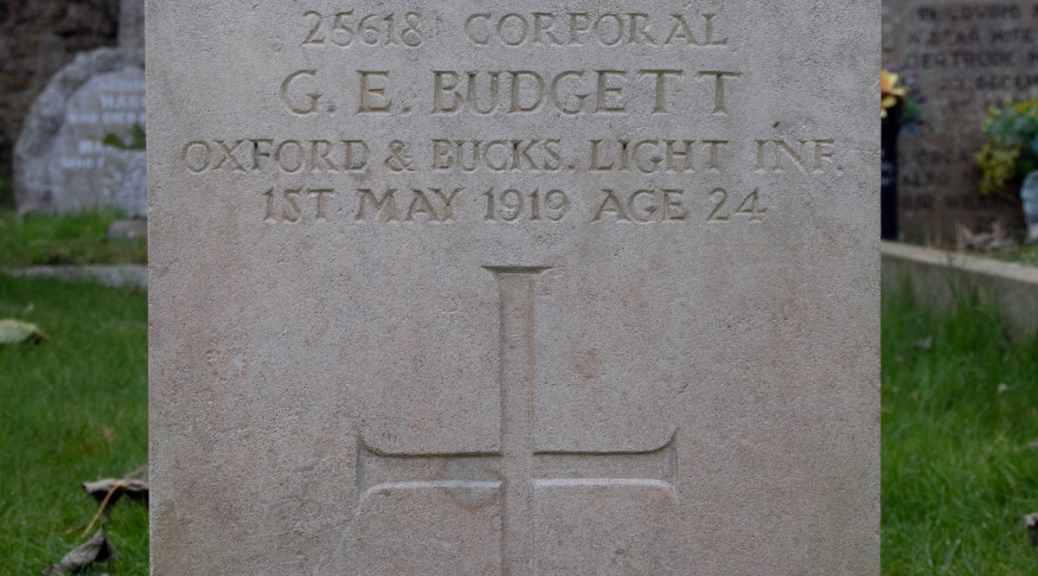
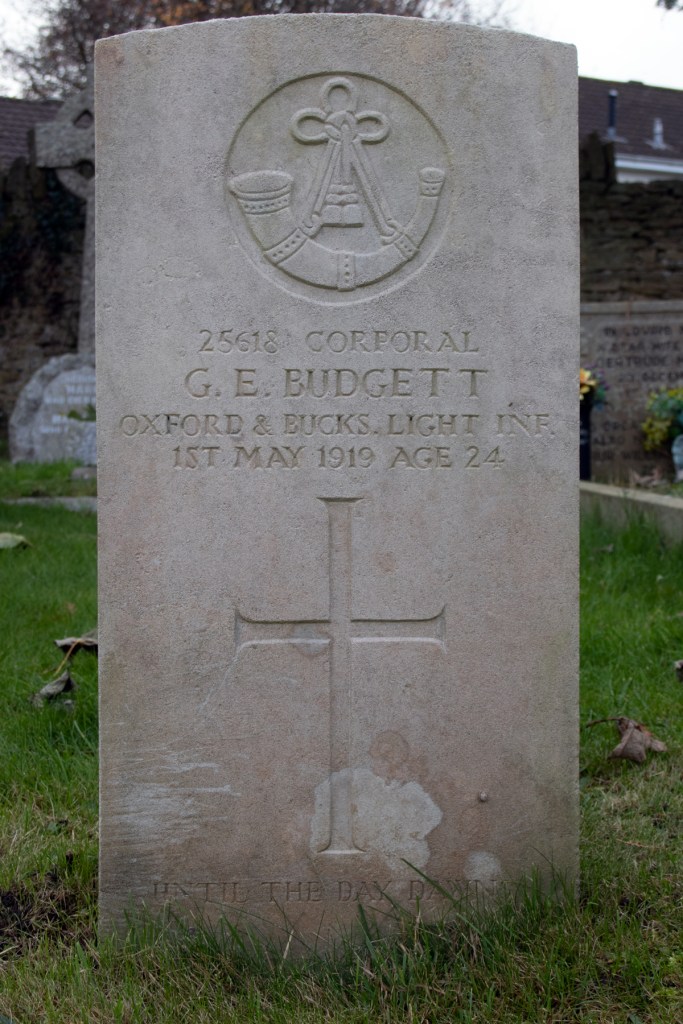
Corporal George Budgett

Corporal George Budgett

George Edgar Budgett was born in Frome, Somerset in the autumn of 1894, and was one of ten children to Joseph and Annie Budgett. Joseph was a labourer on the roads, but Annie and their eight daughters all went into the town’s silk weaving industry. When they left school, George and his older brother Frederick both found labouring work – Frederick at a bell foundry, George in the silkworks.

Conflict was coming to Europe and, within weeks of the war being declared, George enlisted. He was assigned to the Oxfordshire & Buckinghamshire Light Infantry as a Private and his service records show that he stood 5ft 5ins (1.65m) tall, weighed 114lbs (51.7kg), had dark brown hair and brown eyes.

Private Budgett initially served on home soil, but by May 1915 he was sent to France as part of the British Expeditionary Force, receiving a promotion to Corporal in the process. He had been on the front line for a little over a month when he was wounded at Ypres. He received a shrapnel wound to his left hand and had to have his little finger amputated in the camp hospital. He was then medically evacuated back to England for further treatment and recovery.

George was admitted to the City of London War Hospital in Epsom, and needed a further operation, this time the amputation of the third finger. His health recovered, but the injury to his hand resulted in him being medically discharged from the army on 25th August 1916.

Sadly, at this point Corporal Budgett’s trail goes cold. He passed away at home, through causes unrecorded, on 1st May 1919. He was just 24 years of age.

George Edgar Budgett was laid to rest in the graveyard of Holy Trinity Church in his home town of Frome, Somerset.


George’s brother Frederick – Joseph and Annie’s only other son – also fought in the First World War. He was assigned to the 14th Battalion of the Gloucester Regiment, and was missing in action, presumed dead on 4th April 1918 – possibly during the Battle of the Avre. He was commemorated at the Pozières Memorial in northern France.


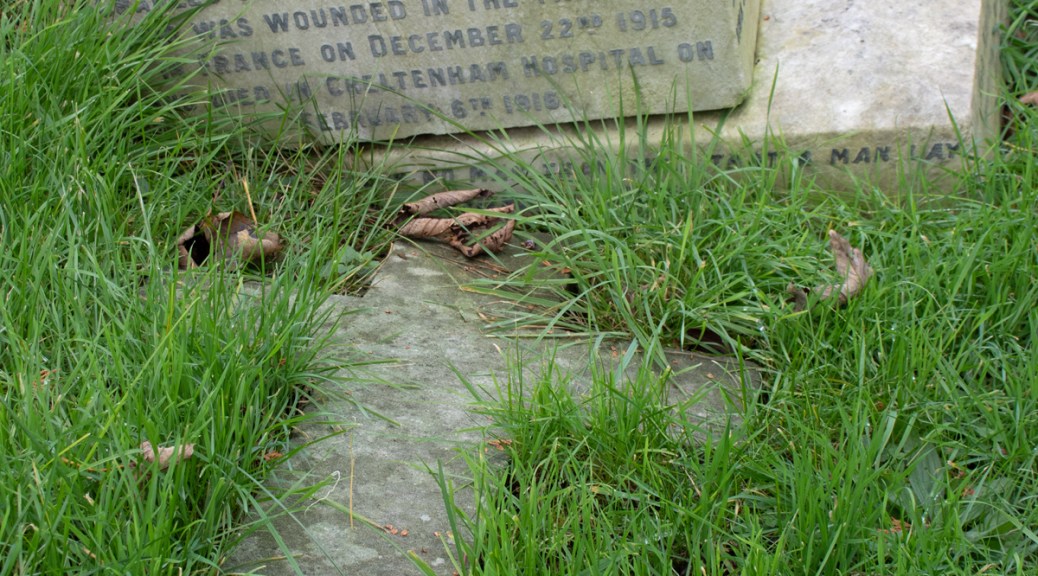
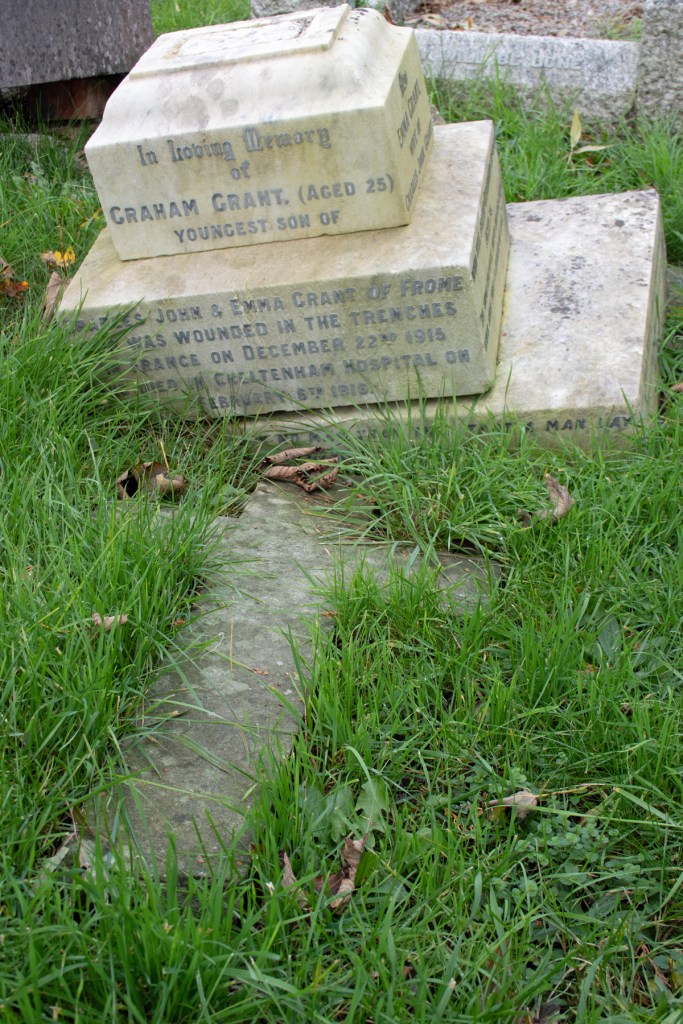
Private Graham Grant

Private Graham Grant

Graham Grant was born in early 1891, one of ten children to Charles and Emma Grant. Charles was a sign painter and both he and his wife were from Wiltshire, but it was in Frome, Somerset, that they chose to settle and raise their family.

When he left school Graham found work as an assistant in a jeweller’s shop, but when war came to England’s shores, he was keen to do all that he could for King and Country.

While full details of his military service are not available, it is noticeable that the local newspaper – the Somerset Standard – dedicated a full column to news of his death in 1916, and then a further full column to his funeral a week later. The newspaper reported that:

Private Graham Grant, who was just 25 years of age, was living in Bristol when the war broke out, and in September 1914, he joined the 4th Gloucesters along with his eldest brother, Private Charles Grant, and being in the same platoon they were inseparable companions both in training and in the trenches… They went out to the Front just over 12 months ago – January 1915 – and for practically a year they escaped injury…

Private Grant had not been home since he landed in France, but he and his brother were expecting to have leave at Christmas to visit their family and friends at Frome. On the 23rd December… [he] was with his platoon in a trench, the top of which was some three feet above the heads of the men. At 8:30 in the evening they were about to be relieved… when a German machine-gun opened fire on the trench.

Somerset Standard: Friday 11th February 1916

A bullet hit Graham in the back and he was taken first to a hospital in Rouen, then medically evacuated back to England. Admitted to the Racecourse Hospital in Cheltenham, x-rays showed that his spine had been shattered by the bullet, and he was paralysed from the waist down. “[His] case was regarded as hopeless from the first” and as many friends and family went to see him as possible. Private Grant passed away on 6th February 1916, Emma and his three sisters at his bedside. He was just 25 years of age.

Graham Grant’s body was brought back to Frome, and laid to rest in the graveyard of Christ Church in the town. The funeral, at the family’s request, was devoid of any military fanfare or involvement.


While there was a lot of reporting on both the death and funeral, the vicar of St John’s Church in the town noted in his sermon that Graham had been a member of the choir there, both as a boy and a man. He was also the first chorister of the church to give his life for his country. Reverend Randolph went on to say that:

…there were things connected with Graham Grant’s death for which [he was] thankful… he did not die on the battlefield, maybe after hours of suffering unattended and without succour… he did not die in the hands of the enemy or in the enemy’ country… he died surrounded by his relatives and friends, those who were near and dear to him, and that he had the most skilful medical treatment and tender nursing.

Somerset Standard: Friday 11th February 1916

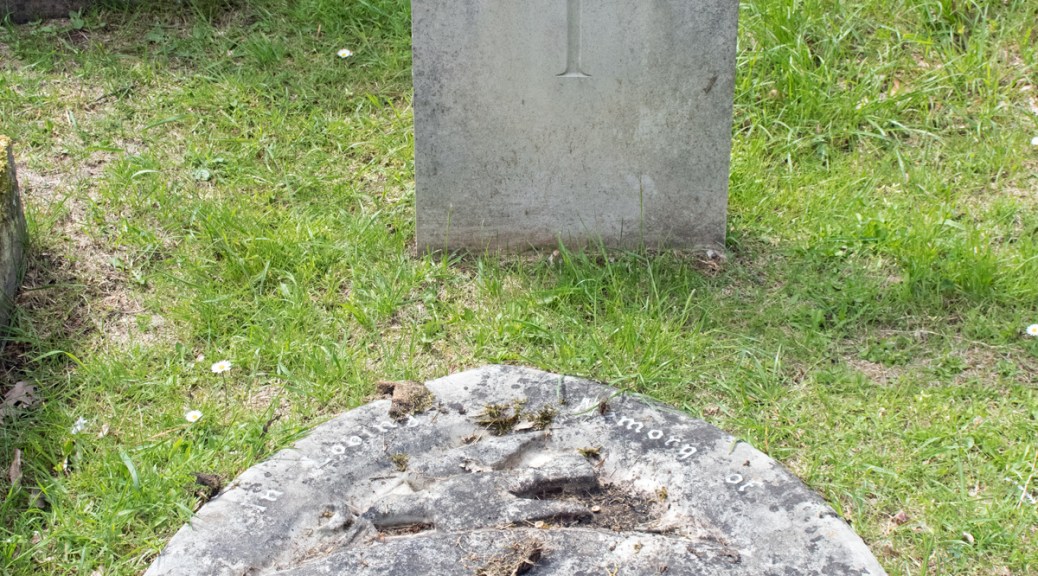
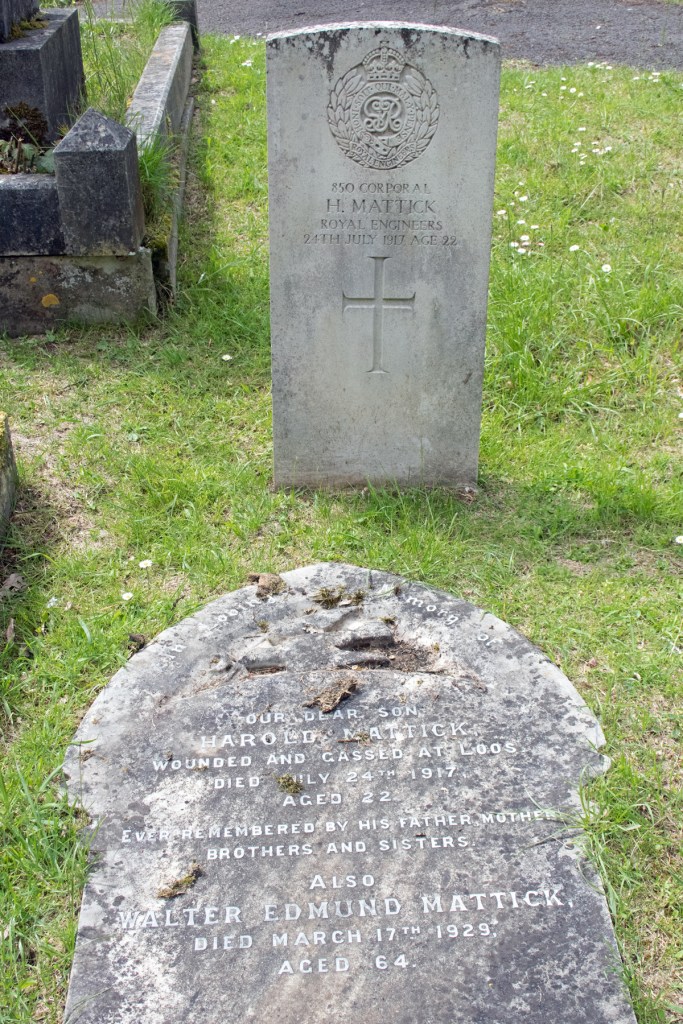
Corporal Harold Mattick

Corporal Harold Mattick

Harold Mattick was born in the spring of 1895, the youngest of four children to Walter and Augusta. Walter was a harness maker and brought the family up in his home town of Weston-super-Mare, Somerset.

When he left school, Harold found work as a plumber. He seemed to had sought a life of adventure, however, and, in 1908, aged just 14, enlisted in the Wessex Division of the Royal Engineers as a Bugler. He served for five years, fulfilling his duties at the same time as carrying out his plumbing work.

When war broke out, Harold immediately re-enlisted. As a Sapper, he was assigned to the 1st/2nd (Wessex) Field Company. After initial training, he was sent to the front as part of the British Expeditionary Force just before Christmas in 1914.

Sapper Mattick was caught up in some of the fiercest fighting on the Wester Front, including the First and Second Battles of Ypres. On 30th September 1915, at Loos, he received a gunshot wound in his right leg, which fractured his tibia. The Germans were also using gas to attack the Allied front lines, which also affected Harold.

Medically evacuated to England for treatment on 9th October, his condition was such that he was discharged from the army on health grounds six months later, on 30th March 1916.

Sadly, while Harold’s leg healed, the injuries he sustained in the gas attack were too severe for him to recover from. He died at home from a lung condition on 24th July 1917, aged just 22 years old.

Harold Mattick was laid to rest in the Milton Cemetery of his home town, Weston-super-Mare.


Private Peter McDonald

Private Peter McDonald

Peter McDonald was born in Tullamore, King’s County (now Offaly County), Ireland, on 28th May 1893 and was one of eight children to Michael and Mary McDonald. Michael had been in the army, and this seems to have been the route that Peter wanted to follow as well.

When he left school, however, he found work as a domestic servant at St Stanislaus College in his home town. War, by this time, was on the horizon, and so Peter was called on to other things.

Unfortunately, a lot of the documentation around Peter’s military service is no longer available. He enlisted in the Royal Army Service Corps; while an exact date for his enrolment is not available, this would appear to have been at some point in the first year of the conflict.

Private McDonald was assigned to the 341st Mechanical Transport Company. This was formed in May 1915, and was designated an Ammunition Park (which was in essence a fleet of lorries and a workshop for maintaining them). While full details of his time with the RASC is not available, Peter certainly came to be based in Weston-super-Mare, Somerset.

Considerable sensation was created at Weston-super-Mare on Friday evening, by a rumour which prevailed that a member of the Army Service Corps billeted in the town had been shot and another man wounded.

Inquiries revealed the fact that the rumour had some foundation, and it appears that some half-dozen members of the corps were attending their motor-bicycles in a shed at headquarters in Beach Road, when Lance Corporal Goldsmith produced an automatic Colt pistol, which he handed to Private McDonald for inspection.

In the course of the examination the weapon went off, and Goldsmith was shot in the leg. He at once took the revolved from McDonald, observing that he was unaware that it was loaded, and was apparently in the act of unloading it when it was again discharged, the bullet entering the lower part of McDonald’s abdomen, severing the main arteries.

Medical aid was at once procured. The unfortunate man died as the result of internal haemorrhage about an hour later.

Goldsmith was removed to hospital, but his injuries are not regarded as serious.

Somerset Standard: Friday 28th January 1916

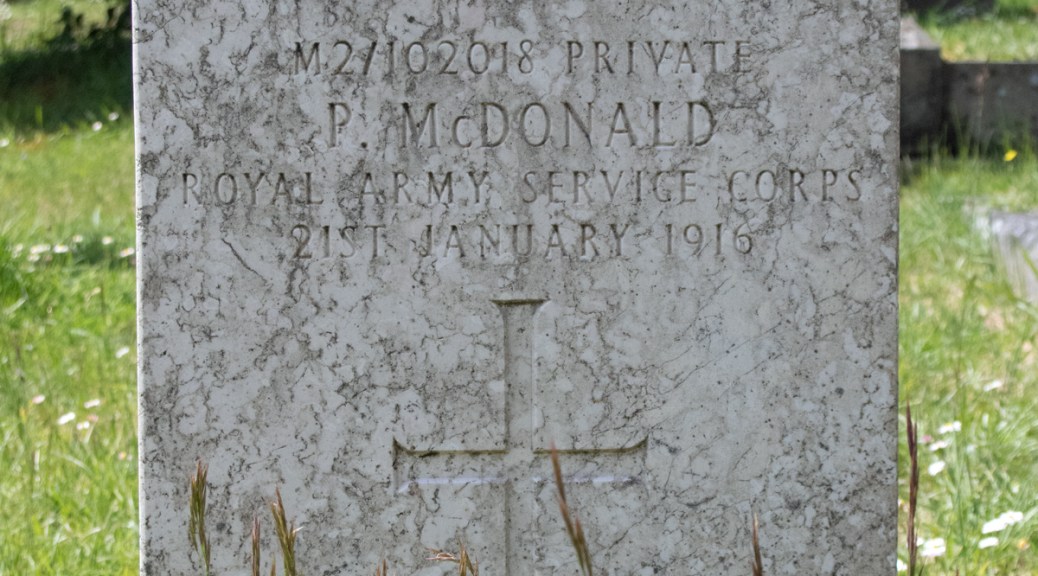
Private Peter McDonald has passed away from a gunshot wound on 21st January 1916, at the age of just 22 years old. His body was laid to rest in the Milton Cemetery in Weston-super-Mare, where he had met his fatal accident.


Private McDonald’s pension record gives his cause of death as ‘explosion’, something of a misinterpretation of the evening’s events.