Tag Archives: Hertfordshire

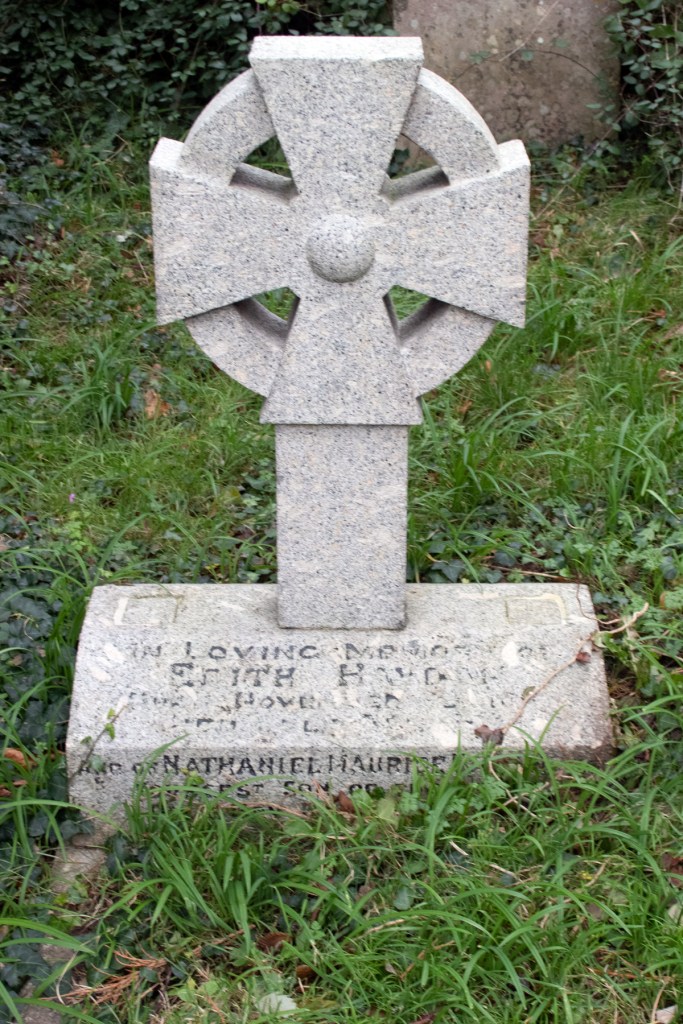
Private Nathaniel Haydon

Private Nathaniel Haydon

Nathaniel Maurice Haydon was born on 26th May 1900, and was the youngest of four children to Edgar and Edith Haydon. Edgar was a surgeon from Bovey Tracey, Devon, but the family were born and raised in Newton Abbot.

Edgar’s work gave them a comfortable lifestyle: the 1901 census shows the family had four live-in servants. Edith passed away from cancer in July 1903, when her youngest was only a toddler. Edgar married again – to a Gertrude Godwin, fourteen years his junior – four years later; given his role in the community, this is likely to have provided the family with a level of stability.

By the time of the 1911 census, Nathaniel and his older brother Frank were recorded as boarders in a private school in the town, while Edgar and Gertrude were listed at the family home with two domestics.

War was coming to Europe, but Nathaniel was initially young to become involved. Spurred on when his oldest brother, Edgar, was killed at the Somme in July 1916, he applied to join the Inns of Court Officer Training Corps in the summer of 1918. He was accepted, and sent off to Hemel Hempstead, Hertfordshire, for training that September.

Sadly, it was Private Haydon’s eagerness to emulate his brother that led to his undoing. While at the camp, he contracted pneumonia, and passed away on 1st November 1918, aged just 18 years old.

Nathaniel Maurice Haydon’s body was brought back to Devon for burial. He was laid to rest in the family plot in the graveyard of St Mary’s Church, Wolborough, Newton Abbot.

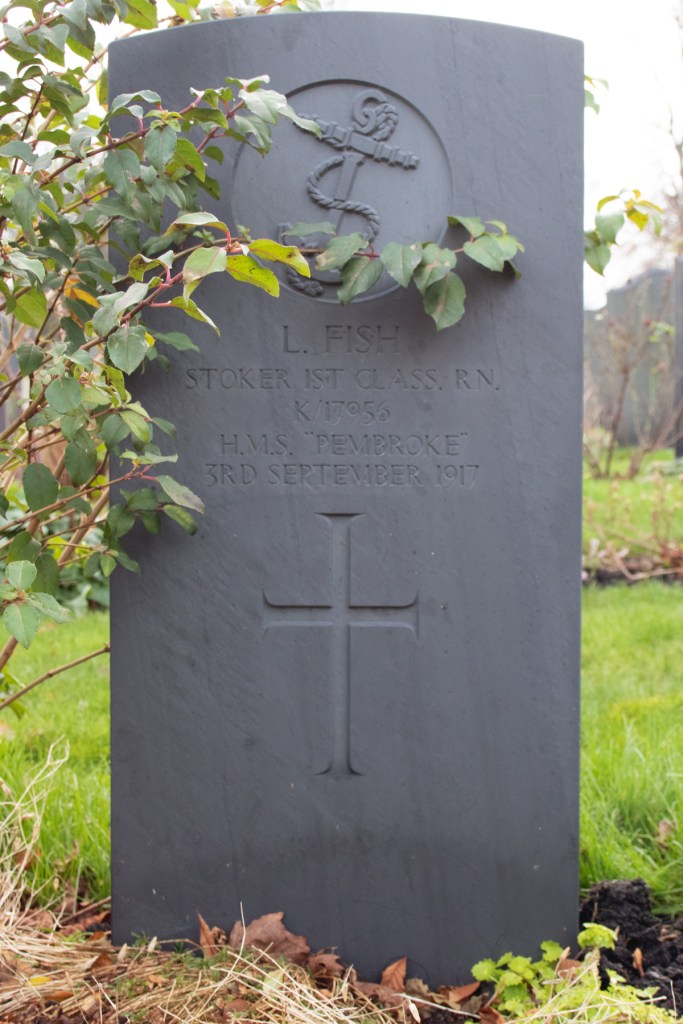
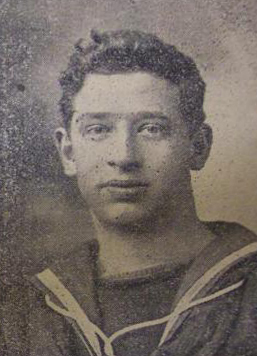
Stoker 1st Class Leonard Fish

Stoker 1st Class Leonard Fish

Leonard Fish was born on 24th November 1893, one of eleven children to Arthur and Elizabeth. Arthur was a maltser (brewer) from Hertfordshire and is was in Ware that Leonard was born.

While Leonard’s older brothers followed in their father’s brewing footsteps, he worked as a farm labourer after leaving school. He wanted bigger things, however, and, on 25th February 1913, he enlisted in the Royal Navy.

Leonard’s service records show that he stood 5ft 9ins (1.75m) tall, had brown hair, blue eyes and a fresh complexion. He enlisted as a Stoker 2nd Class, and was sent to HMS Pembroke – the Royal Naval Dockyard in Chatham, Kent – for training.

Over the next four years, Stoker Fish travelled far and wide. His initial sea posting was on board the battleship HMS King Edward VII; he served on board for nearly two-and-a-half years, gaining a promotion to Stoker 1st Class in the process.

After a brief spell back in Chatham, Leonard was sent to HMS Vivid – a similar shore-based establishment in Devonport – and from there he was assigned to the newly fitted out battleship HMS Royal Oak. Within the month she was at the heart of the Battle of Jutland, and continued to protect the North Sea convoys.

Stoker Fish returned to HMS Pembroke in August 1917. The Dockyard was particularly busy that summer, and the large number of extra servicemen meant that Leonard was billeted in temporary accommodation in Chatham Drill Hall.

On the 3rd September 1917, the first night air raid carried out by the German Air Force bombarded the town, and scored a direct hit on the Drill Hall; Stoker Fish was among those killed. He was just 23 years of age.

Leonard Fish was laid to rest, along with the other victims of the Chatham Air Raid, in the Woodlands Cemetery, Gillingham.


Stoker Leonard Fish
(from ancestry.co.uk)

Leonard’s older brother Frederick Fish also fought in the First World War.

Frederick was born three years before Leonard, and enlisted in the Royal West Kent Regiment in 1915. He was sent to France at the end of July, and gained the rank of Corporal.

He was killed in the fighting at the Somme on 13th July 1916. He was just 26 years of age, and left a widow, Ellen.

Corporal Frederick Fish was laid to rest in the Serre Road Cemetery No 2 in Beaumont-Hamel.

Corporal Frederick Fish
(from ancestry.co.uk)

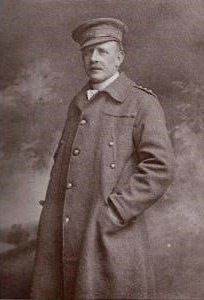
Captain Hugh Brooking

Captain Hugh Brooking

Hugh Cyril Arthur Brooking was born on 15th September 1870 and was one of six children (although he also had three further half-siblings through his father’s first marriage). His father, Arthur Brooking, was the vicar of the Hertfordshire village of Bovingdon, and it was in the vicarage that he and his wife Marian raised their family (with the help of seven servants).

Hugh led a life befitting of a reverend’s son; he was educated at St Mark’s School in Windsor, Lancing College and Down College, both in Sussex. He continued his studies at the Mining College in London (now part of Imperial College London), and went out to South Africa to further that work.

The local newspaper reporting on his funeral takes up the story:

When the Boer War broke out he joined the Imperial Light Horse, and was engaged in the battles of Elandslaagte, Wagon Hill and others, was in Ladysmith during the siege, and the relief of Mafeking. He was several times mentioned in despatches, and obtained the Queen’s medal and six clasps, and the King’s medal with two clasps. He then joined the South African Constabulary, under General Baden Powell.

He had previously held a commission in the North Somerset Yeomanry, and after leaving it for a short time he re-joined a soon as the [First World War] was declared, and was in France with his regiment when it made its famous stand against the Prussian Guards. All his superior officers were killed or wounded, and he was temporarily in command of the regiment.

He received the ribbon of the 1914 Star of Mons, but did not live to get the star. He served with the regiment 20 years. He was latterly attached to the Labour Corps at West Ham.

Captain Brooking came to Frome with his parents as a boy. In his youth he was a thorough sportsman, well known in the hunting field, genial and kindly, ready with a pleasant word, and courteous to all, he won friendly appreciation from all classes of townsfolk.

He had seen a great deal of fighting, though from exposure and other causes his health suffered, and he was employed on home service.

He was in command of the 371st Labour Company, and second in command of his battalion, when he met with the slight accident which led to his death. He grazed his knuckles, causing bleeding, but of so slight a character that no notice was taken of it. A few hours later he again struck his hand, and fresh paint appears to have affected the wound, and blood poisoning supervened.

Somerset Standard: Friday 7th June 1918

In his personal life, Hugh had met and married Florence Day, a farmer’s daughter seventeen years his junior from Somerset. The wedding was in the autumn of 1912, and they would go on to have two children, Granville and Hugh Jr. The boys would both go on to lead distinguished lives, Granville in the armed forces and Hugh as a ‘King’s Messenger’ in South America.

Following Captain Brooking’s injury, he was admitted to the Military Hospital in Purfleet but the treatment he received there was to do no good. Three months after the accident, on 31st May 1918, he passed away; he was 47 years of age.

Hugh Cyril Arthur Brooking’s body was taken back to Frome; he was laid to rest in the graveyard of St John the Baptist Church in the town.


Larger memorial image loading...
Captain Hugh Brooking
(from findagrave.com)

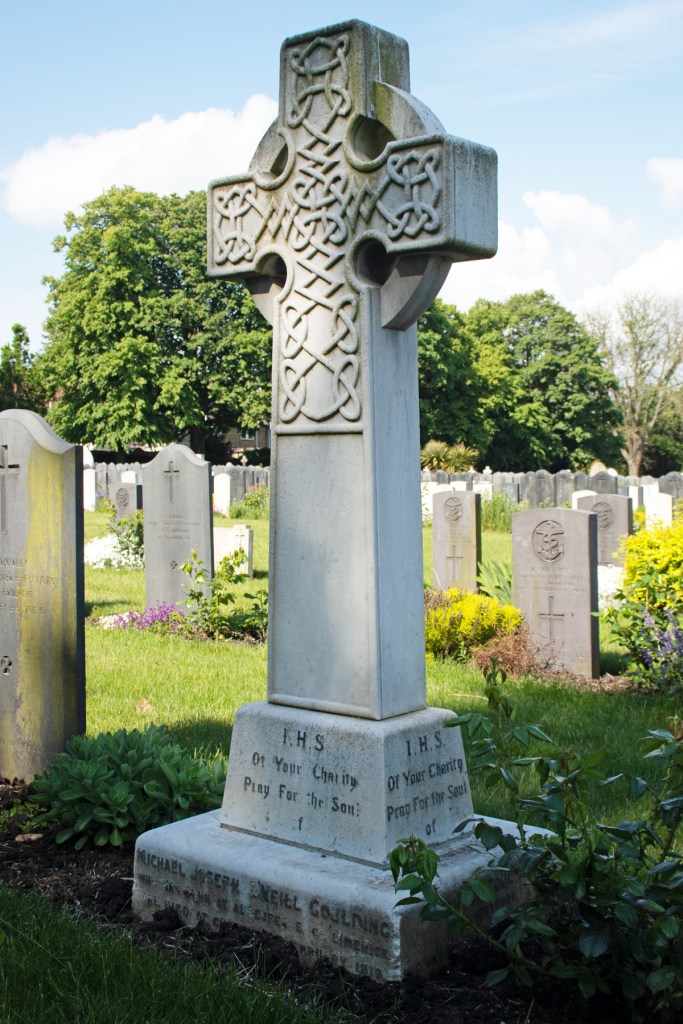
Able Seaman Michael Goulding

Able Seaman Michael Goulding

Michael Joseph O’Neill Goulding was born on 5th May 1884, the oldest of six children to Michael and Ellen Goulding (née O’Neill). Michael Sr worked for the inland revenue and his job took him around most parts of the British Isles.

Michael Jr had been born in Limerick – both of his parents came from Ireland – but his subsequent three siblings (Patrick, Margaret and William) had all been born in Scotland. His second youngest sibling, Lily, was born in County Durham, the youngest back in Scotland, while, by the time of the 1901 census, the whole family were living in Forest Gate, East London.

The census also shows that Michael Jr, having left school, was working at Customs House (presumably where his father was employed), as a boy copyist on tea accounts. The inland revenue at that time was a career for life; by the next census in 1911, the family had moved to Hertford, where Michael Sr was a customs and excise supervisor, and Michael Jr was an assistant clerk at the same place of employment.

War was on its way, but Michael seems not to have enlisted immediately. While specific dates for his joining up are not available, it appears that he was still working for the Inland Revenue when he got married in Shoreditch, in April 1917. His wife was called Bridget Mary Gough (known as Bryde), and she had also been born in Ireland. The couple went on to have a daughter, Ellen (or Eileen), the following year.

By this time, Michael had definitely enlisted. He joined the Royal Naval Volunteer Reserve, and was based at HMS Pembroke, the shore-based establishment in Chatham, Kent. This was the location for the Navy’s main accounting base, so it is likely that he was employed for financial, rather than his military, skills.

Able Seaman Goulding served through to the end of the war and beyond, and it was while he was based in Kent that he became unwell. Admitted to the Royal Naval Hospital in Chatham, he succumbed to a combination of bronchitis and pneumonia on 22nd February 1919. He was 34 years of age.

Michael Joseph O’Neill Goulding was laid to rest in the Woodlands Cemetery in nearby Gillingham. His family were still in Hertford, while his widow and daughter moved back to Ireland.


Michael Joseph O’Neill Goulding
(courtesy of ancestry.co.uk)