Tag Archives: mystery

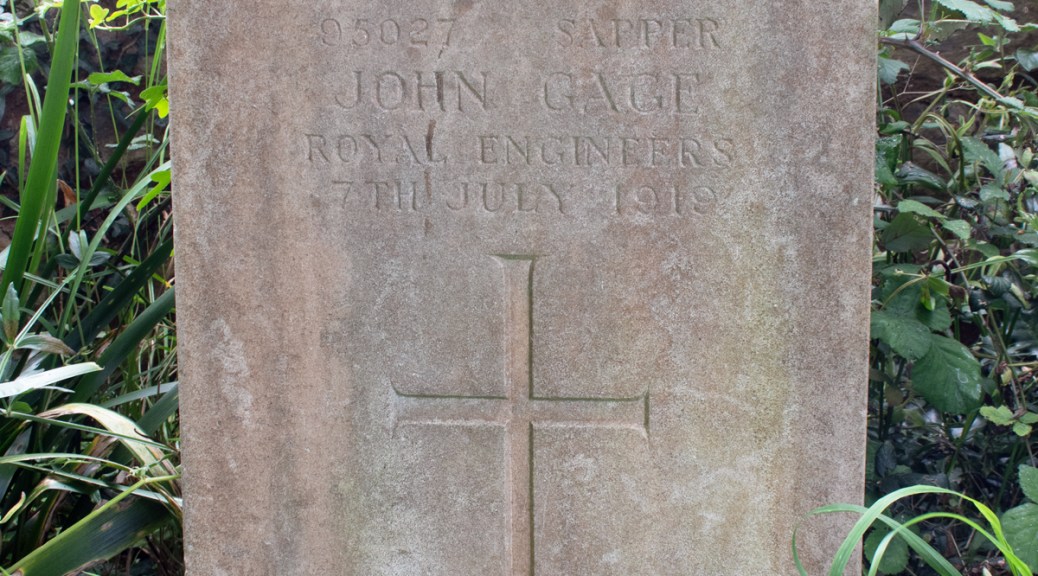
Sapper John Gage

Sapper John Gage

The life of John Gage seems destined to remain a mystery. His grave lies in a quiet corner of St Andrew’s Churchyard in West Hatch, Somerset. The Commonwealth War Graves Commission registration reads:

GAGE, Spr. John, 95027. “G” Depot Coy. Royal Engineers. 7th July 1919. Son of John Gage; husband of Lucy Gage, of Canal Cottage, Wrantage, Taunton. Born at Axminster, Devon.

There is no date of birth for John, and, while there is a possible census return for 1891, with a John Gage Sr and Jr living in the Axminster area, in isolation it is not concrete enough to connect to the man lying in St Andrew’s Churchyard.

The Army Register of Soldiers’ Effects confirms Lucy as John’s widow, but again no marriage documents remain to give a date for the nuptials or ages for the bride and groom. The document does confirm that Sapper Gage had been serving in the Royal Engineers for more than six months at the time of his passing, and that he died in a military hospital in Taunton.

There are no contemporary newspapers that report on John’s passing, which would indicate that is was nothing out of the ordinary, or connected directly to the war – through injury, for example. This might suggest, therefore, that John passed away though illness, although this cannot be confirmed either way.

Sapper John Gage’s life is set to be lost to time, therefore. He lies in the graveyard of St Andrew’s Church in West Hatch. Nearby is another grave, that of Lucy Gage, who died in 1942.

Serjeant James Gillighan

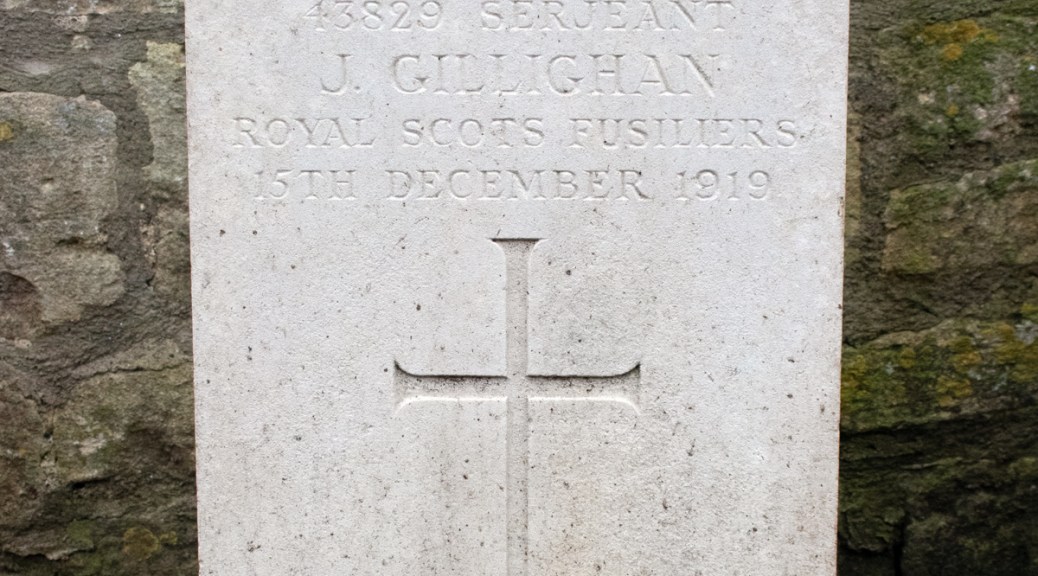
Serjeant James Gillighan

Some lives are destined to remain shrouded in mystery, and James Gillighan’s is one of those to be lost to time.

His headstone sits in the quiet Roman Catholic Cemetery in Bath, Somerset. It provides his regiment – the Royal Scots Fusiliers – and confirms that he was a Serjeant at the time of his death on 15th December 1919. The Commonwealth War Graves Commission adds that he served in the 2nd Battalion, but sadly James’ service records no longer exist.

The Army Register of Soldiers’ Effects notes that his next of kin was his brother, Matthew Gillighan, which suggests that James’ parents were not alive, nor that he was married. The document also notes that Serjeant Gillighan passed away in Bath War Hospital.

Another army document – the Service Medal and Award Roll – suggests that the service number on the headstone – 42839 – was actually James’ second number, given to him when he moved to the battalion depot. Tantalisingly, however, his previous regimental number – 15170 – sheds little more light to his service, other than the date he was sent to France – 15th September 1915.

Contemporary newspapers do not have any records for James’ passing, so it is likely to have been natural causes of some description – possibly an illness contracted while serving.

Sadly, there is little more detail that can be added to James’ life. He lies quietly, in a corner of the Bath cemetery, wrapped in mystery.


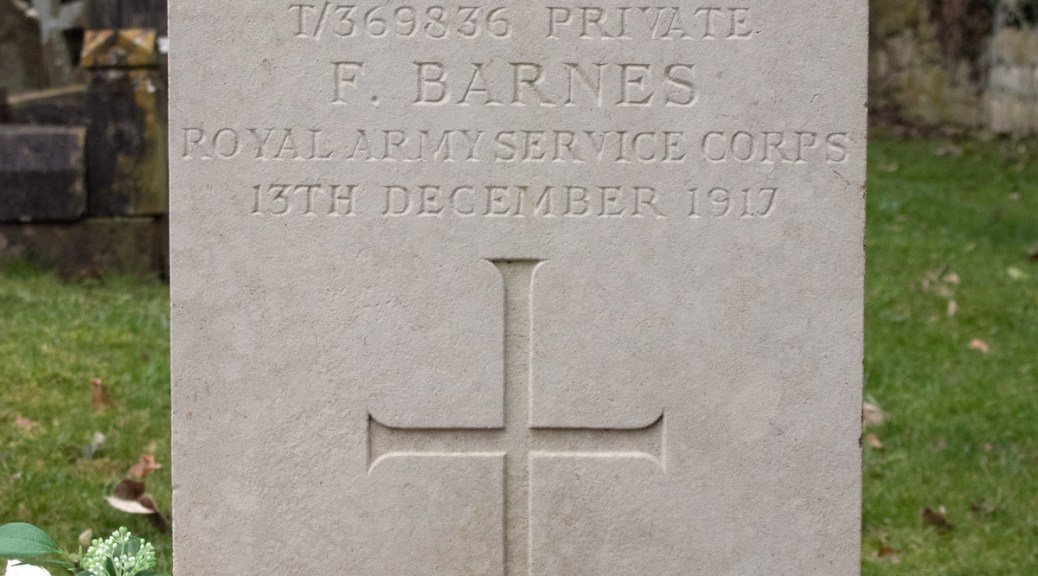
Private Francis Barnes

Private Francis Barnes

The life of Francis – Frank – Barnes is destined to remain a mystery and, indeed, the majority of the information comes from his headstone and one document, the British Army Register of Soldiers’ Effects.

Frank’s headstone confirms that he was a Private in the Royal Army Service Corps, and that he died on 13th December 1917, though the cause of his passing is unknown. He is buried in Bath Roman Catholic Cemetery, so this also sheds light on his religion.

The British Army Register of Soldiers’ Effects suggests that he was also known as Frank McBarnes, although no further information comes to light with this alternative surname. The document confirms that he died in Bath War Hospital, and that his dependents were not eligible for a war gratuity, which suggests that he enlisted after June 1917.

Five dependents are highlighted on the record – Frank’s siblings Sabrina, Elizabeth, Margaret, Patrick and Thomas. This would suggest that both of their parents were dead by the time Frank himself passed away. Sadly, a combined search of the siblings doesn’t shed any light on their background, despite married names being given for Sabrina and Margaret, and an alternative surname – McManus – being provided for Thomas.

Some lives are not meant to be uncovered, and that of Frank Barnes, at rest in a peaceful Somerset cemetery, took everything to his grave.


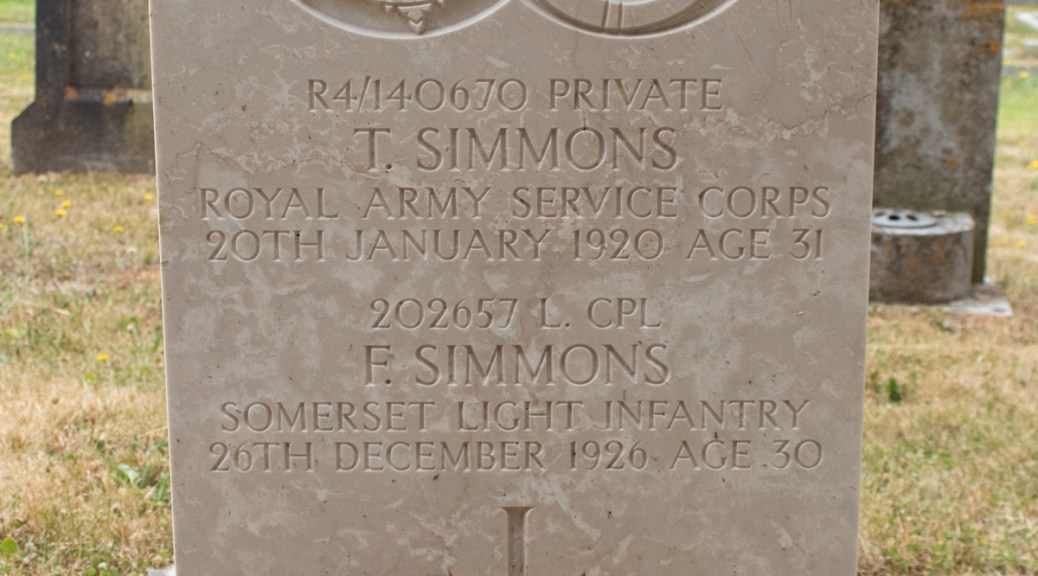
Private Tom Simmons

Private Tom Simmons

Tom Simmons was born early in 1889, one of fourteen children to William and Elizabeth Simmons. William was a farm labourer from Devon, who had moved to Runnington, near Wellington in Somerset, with Elizabeth in the late 1880s. This was where their growing family was born and raised.

Tom found work away from Somerset when he left school and, by the time of the 1911 census, he was lodging in a house in Llanwonno, Glamorgan. He was employed as an assistant machine repairer at the local colliery.

War was beginning to encroach on England’s shores, and Tom was to play his part. Full service details are not available, but he enlisted in the Royal Army Service Corps and served as part of a territorial force. For the part he played, he was awarded the Victory and British Medals and the Silver War Badge.

It would seem that Private Simmons survived the war and was demobbed, returning to Somerset at some point by the end of 1919. Sadly, his trail goes cold: the next record available is of his death – through causes unspecified – at home on 20th January 1920, at the age of 31 years old.

Tom was buried in Wellington Cemetery, not far from his family home.


Tom’s headstone also includes a dedication to a Lance Corporal F Simmons.

Frederick Simmons was seven years younger than his brother. When he left school, he worked as a wool spinner in the local wool mill. When war came to Europe, he too played his part. Again, full details of his service are sketchy, but he enlisted in the Somerset Light Infantry.

Like Tom, Frederick served as part of the territorial force, and worked his way to the rank of Lance Corporal. After the war he returned home, but his life there was not set to be a long one. He passed away, through causes not noted, on 26th December 1926. He was just 30 years of age.

Frederick was laid to rest in the same grave as his brother. Technically not entitled to an official Commonwealth War Grave (the rules are laid out here), his service was remembered alongside that of Tom’s.


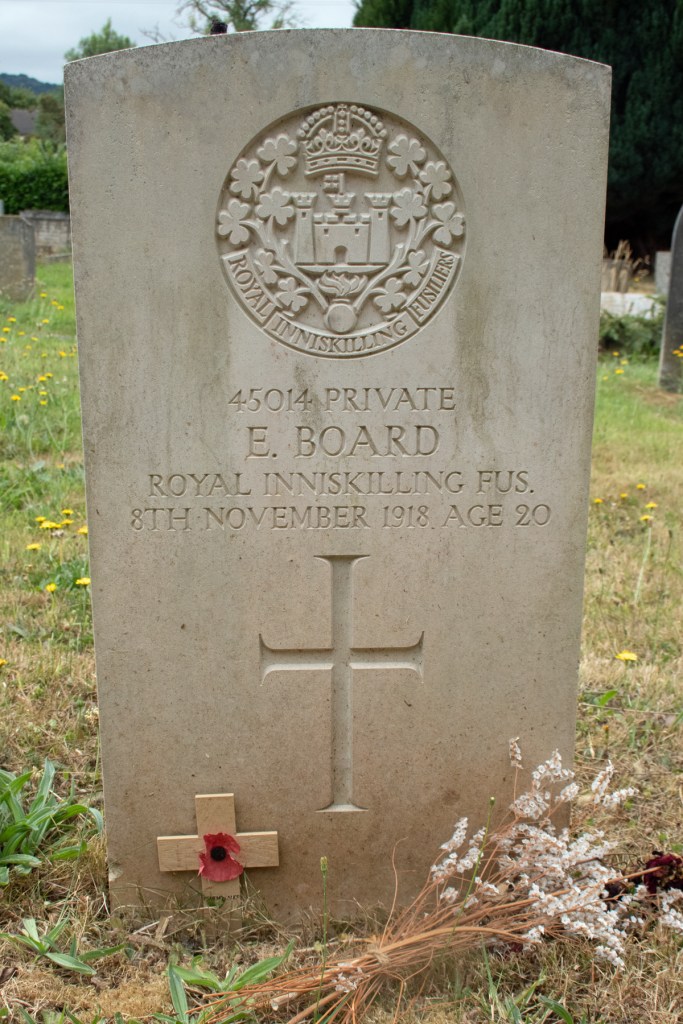
Private Ernest Board

Private Ernest Board

Ernest Board was born in Taunton, Somerset, on 20th September 1898 and was one of at least six children to Walter and Mary Board. Walter was a carter for the town’s gasworks, but, when Mary passed away in 1910, things changed dramatically for the family.

The 1911 census found Walter working as a cowman on a farm in Milverton, Somerset. All but two of his children are missing from that year’s national record, but Ernest and his older brother Arthur are noted as being ‘inmates’ at the National Nautical School in Portishead, near Bristol.

This was an establishment set up in 1869 for the destitute and neglected boys of the area. Ernest and Arthur were two of more than 320 students at the school which, at that time, was under the control of Commander Willoughby Still. School life was very strongly based on the running of a ship, with hammocks instead of beds, and a parade ground in front of the building.

There is no information about how long the brothers remained at the school, but, when war came to Europe, it would seem that they were keen to play their part. Sadly little detail remains of Ernest’s military life.

What can be determined, however, is that he enlisted in the Royal Inniskilling Fusiliers, and was assigned to the 1st Battalion as a Private. His battalion fought at, and were evacuated from, Gallipoli, before moving to France. There is no record where Private Board was involved, sadly, although his Medal Roll Card shows that he was assigned the Victory and British Medals, although may not have actually seen time overseas.

Private Board’s passing is also lost to time. All that can be confirmed is that he died on 8th November 1918, and was just 20 years of age.

Ernest Board was laid to rest in Wellington Cemetery, Somerset: as this is not far from where his father was recorded on the census seven years earlier, it is likely that his place of burial was due to family connections in the area.


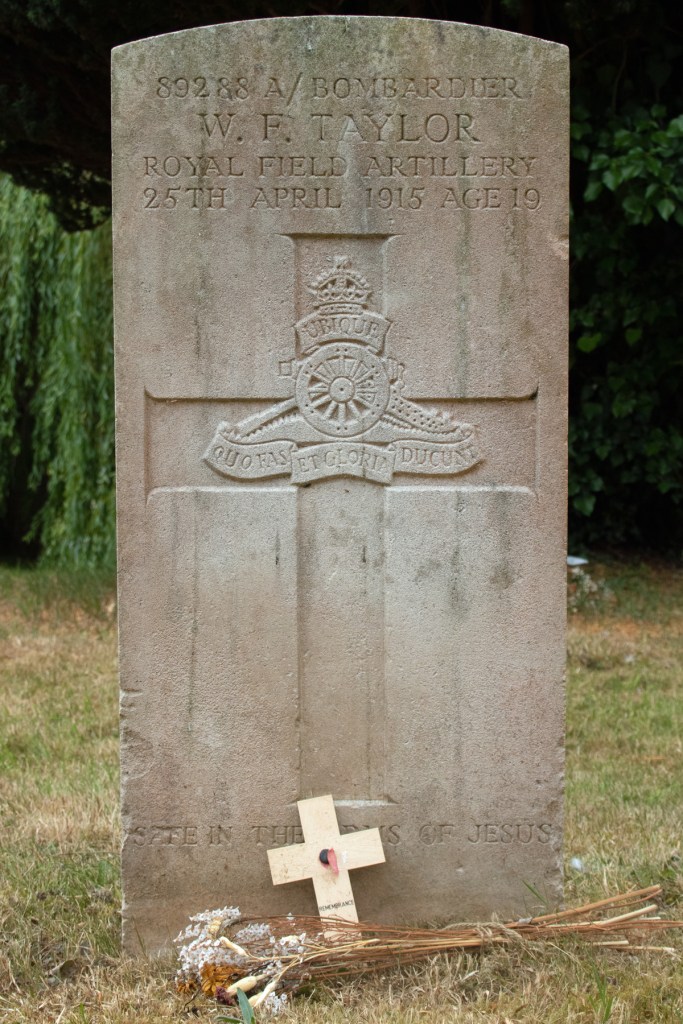
Bombardier Willie Taylor

Bombardier Willie Taylor

Willie Francis Taylor was born early in 1895 and was one of six children to James and Louisa. James worked as a miller in a wool factory in Wellington, Somerset, and this is a job that Willie and his siblings went into when they left school.

At this point, Willie’s trail goes cold. He had enlisted in the Royal Field Artillery by the spring of 1915 – given that he gained the rank of Acting Bombardier, it is likely that he joined up early in the conflict. He never saw active service overseas: Bombardier Taylor’s troop – the 48th Brigade – was sent to France in May 1915, a few weeks after Willie himself passed away.

There are no records pertaining to Willie’s death: all that can be confirmed is that he died at home on 25th April 1915, aged just 19 years old.

Willie Francis Taylor was laid to rest in Wellington Cemetery, close to where his mother, Louisa, had been buried three years earlier, and not far from where James still lived.


Bombardier Willie Taylor
(from findagrave.com)

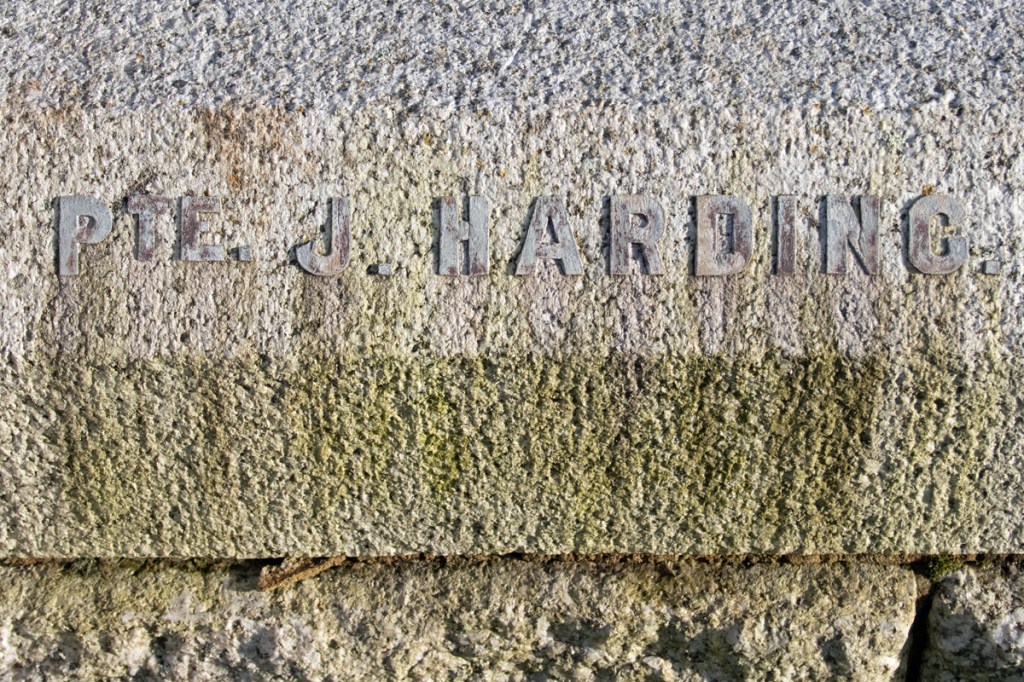
Private John Harding

Private John Harding

In a mass grave in Faversham Borough Cemetery, Kent, is a commemoration to Private John Harding, who died during the Faversham Explosion on 2nd April 1916.

Sadly, there is little concrete information about John, other than the details recorded in the Register of Soldiers Effects. This document confirms that he served in the 3rd Supply Company of the 3rd/4th Battalion of The Buffs (East Kent Regiment). He had enlisted before October 1915 and no next of kin is recorded.

Another document suggests that Private Harding was a resident of Milton Regis, a small village to the north of Sittingbourne. Again, however, there is not enough additional information to corroborate this or to expand on his personal life.

Unfortunately, therefore, Private John Harding is destined to remain a mystery, one of more than a hundred men and women to have died on that fateful day.


Memorial to the Faversham Explosion, Borough Cemetery

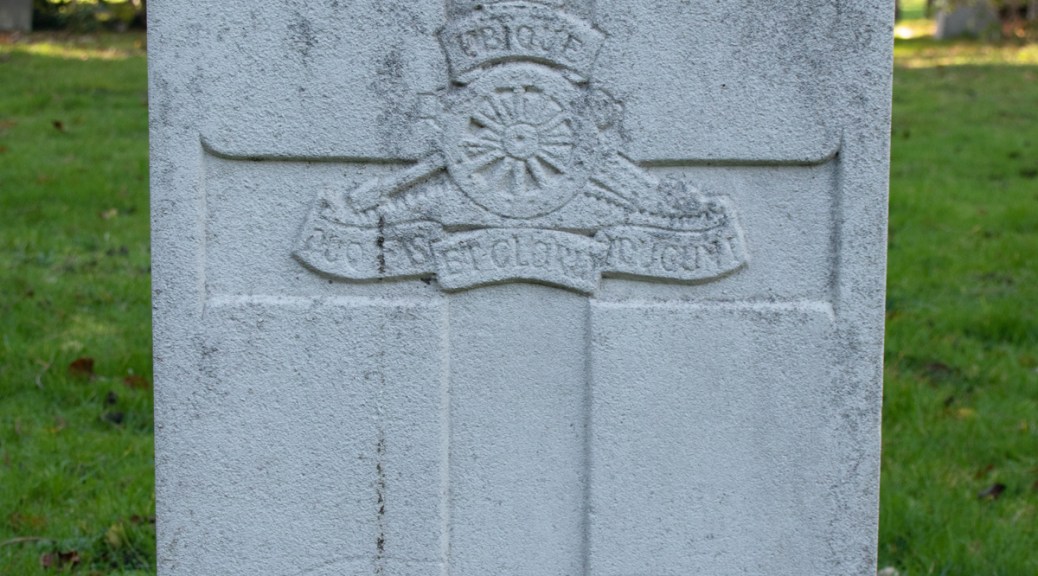
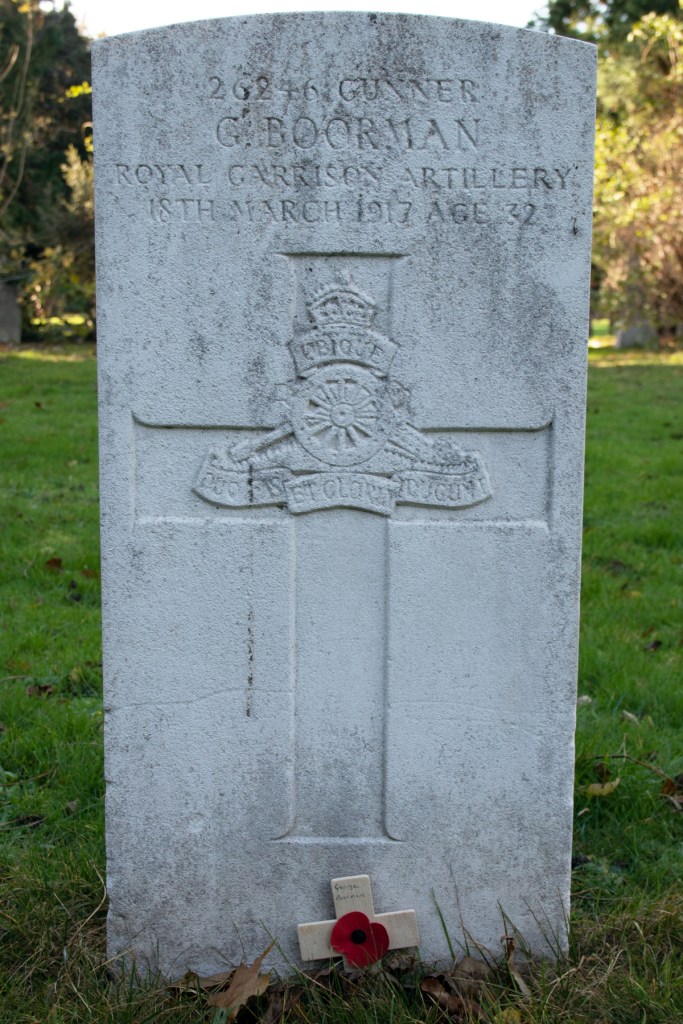
Gunner George Boorman

Gunner George Boorman

George Boorman was born in Lenham, Kent, in the spring of 1886, one of thirteen children to farm labourer George Boorman and his wife, Sarah. There is little further information about his early life, other than that he went into labouring when he finished school.

And agricultural life was not enough for George, however, and, on 15th January 1907, he enlisted in the Royal Garrison Artillery. His records show that he was 5ft 9.5ins (1.77m) tall and weighed 134lbs (60.8kg). George had hazel eyes, brown hair and a fresh complexion.

Full details of Gunner Boorman’s military service are not available, but the 1911 census records him as being attached to the 64th Company, based in Aden.

Further information about George’s life is difficult to piece together. His father died in 1913, and the next evidence of Gunner Boorman is that of his passing, on 18th March 1917. The cause of his death is lost to time, but he was 31 years of age.

George Boorman was laid to rest in the Borough Cemetery in Faversham, Kent.


Tragedy struck Sarah Boorman on more than one occasion. Four of George’s brothers died before they turned eighteen, while only six of her thirteen children outlived their mother.


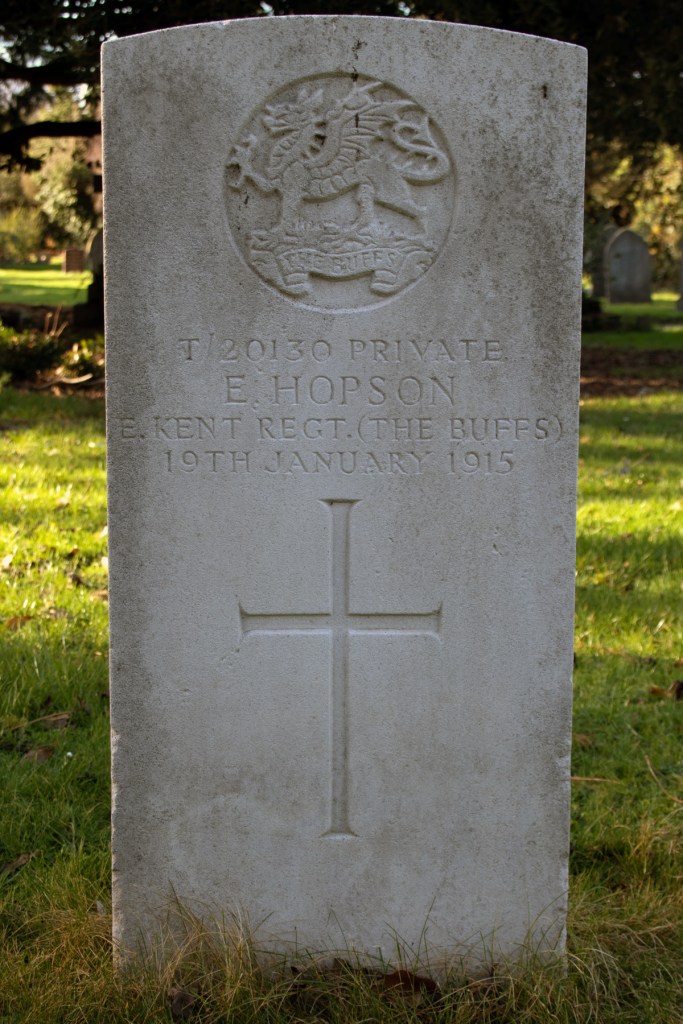
Private Edward Hopson

Private Edward Hopson

The life of Edward Hopson looks likely to remain a mystery, and what can be pieced together is done from a few fragmented documents. His gravestone sits in the Faversham Borough Cemetery in Kent.

A local newspaper, contemporary to his passing in January 1915, acts at the starting point:

Edward Hopson, a Maidstone [Kent] man, belonging to the National Reserve Guard doing duty at the Explosives Works at Faversham, died suddenly while proceeding on duty on Tuesday night.

Evidence of identification was given by Joseph Cornelius, a Lance Corporal in the Guard, who stated that so far as was known, the deceased’s only relative was a half-brother. The deceased gave his age as 49 when he enlisted, but witness believed his correct age was 61. He was apparently in good health when passed for duty on Tuesday at the works of the Explosives Loading Company at Uplees.

Charles John Link, engaged on patrol duty at the works, stated that about 10:30 on Tuesday night he was accompanying deceased to the point where he was to do guard duty. On the way deceased complained that he could not see, and shortly afterwards, as they came to a style, he exclaimed “Oh! dear,” and then, dropping his rifle, he fell into the witness’s arms and expired.

South Eastern Gazette: Tuesday 26th January 1915

The cause of death was given to be heart disease, and, at the inquest, a verdict of “Death from Natural Causes” was given.

The report suggests that Edward was born either in around 1866 or 1854. The Commonwealth War Graves Commission give his parents as Jack and Annie Hopson, but there are no surviving census records from the 1800s that would corroborate this.

The 1911 census records an Edward Hopson, aged 57 and from Maidstone, Kent, residing in the Maidstone Union Workhouse. He is listed as a former farm labourer, and his marital stated us given as widowed.

If this is the Edward Hopson commemorated in Faversham Cemetery, it seems likely that he used the outbreak of war – and the opportunity to enlist – as his escape route from the workhouse.

He joined The Buffs (The East Kent Regiment), and was assigned, as a Private, to the 4th Battalion. This particular troop was dispatched to India in October 1914, and it seems likely that Private Hopson was reassigned to the National Reserves Guard, and posted to Faversham.

This is all conjecture, of course, but, either way, Private Hopson died of a heart attack on the night of the 19th January 1915, aged approximately 61 years old.


Private George Dove

Private George Dove

George Dove was born in Wincanton, Somerset, on 4th December 1883. One of five children, his parents were farm labourer George Dove and his wife, Jane.

George Jr did not follow his father into farm work: the 1901 census found him boarding with a family in Radstock, working in one of the coal mines in the area. Ten years later, he was living back with his family, employed as a groom.

His work with horses stood him in good stead when war was declared. George enlisted early on, and was assigned to the 19th (Queen Alexandra’s Own Royal) Hussars as a Private. By October 1914, he was in France, returning to England with his squadron the following spring.

At some point during the conflict, Private Dove transferred to the Reserve Regiment of Cavalry. He was posted to the 5th Regiment, which trained men for the Northumberland Hussars and Yorkshire Dragoons, amongst others.

Further details of George’s life are scarce; at some point, he married a woman called Emily, although records of the couple’s wedding no longer exist. The only thing that can be confirmed is that George was admitted to the Bermondsey Military Hospital in Surrey, where he passed away on 24th October 1918. He was 34 years old.

The body of George Dove was brought back to Somerset for burial. He lies at rest in the cemetery in his home town, Wincanton.