Tag Archives: Petty Officer

Lieutenant Frederick Hill

Lieutenant Frederick Hill

Frederick Charles Hill was born on 13th June 1882 in the Devon village of Marldon. One of seven children, his parents were William and Elizabeth Hill. William was a carpenter, and the 1891 census found the family living or boarding at the Royal Oak Inn.

When he finished his schooling, Frederick found work as a gardener. However, he sought a bigger and better life and, on 21st April 1897, he joined the Royal Navy. His service record suggests that he lied about his age to do so, giving his year of birth as 1881,

Frederick was below the age to formally enlist in the navy, and was given the rank of Boy 2nd Class. He was sent to HMS Impregnable, the training base in Devonport, Devon, spending the next eighteen months there. Promoted to Boy 1st Class in February 1898, he was given his first posting, on board HMS Agincourt, later that year.

In the autumn of 1898, Frederick was assigned to the cruiser HMS Leander. The following summer, and based on the date of birth he had previously provided, he came of age, and was formally inducted into the Royal Navy. His service records show that he was 5ft 2ins (1.57m) tall, with red hair, grey eyes and a fresh complexion. Hs was also noted as having a scar on his forehead.

The now Ordinary Seaman Hill remained on board HMS Leander for more than two years. He proved a worthwhile member of crew, and was promoted to Able Seaman in May 1900. He left Leander in January 1901, and was billeted at HMS Vivid, the Royal Naval Dockyard in Plymouth, Devon, which would become his base when not at sea.

Frederick’s contract was for twelve years, and during that time he would serve on four vessels. His dedication to the navy was evident by his promotions – he made Leading Seaman in October 1904, Petty Officer 2nd Class in October 1906, and Petty Officer 1st Class in March 1911. When his term of service ended, he immediately re-enlisted, and, at his annual reviews, was regularly noted for his very good character and superior ability. His career kept going from strength to strength, and, in 1914, he was promoted to Chief Petty Officer.

He was sent to Antwerp in September [1914] with the Royal Naval Division, and in 1916 went to the Dardanelles, there gaining his commission for bravery. After the evacuation he was sent to France and won the MC in the Ancre drive in 1916. In February 1918 he was sent for six months’ rest to England. Lieut. Hill volunteered to go to France again in November the same year, and contracted heart disease, from which he died. He returned to England early in June [1919], and, being on sick leave, went to Paignton Hospital, where his death occurred.

[Brixham Western Guardian: Thursday 7th August 1919]

Frederick Charles Hill was 37 years of age when he died on 2nd August 1919. His body was laid to rest in the family plot in St John the Baptist’s Church, Marldon.


Frederick’s headstone records his rank as Lieutenant Commander. However, Commonwealth War Grave Commission documents suggest his rank was Lieutenant.


Petty Officer Ernest Archer

Petty Officer Ernest Archer

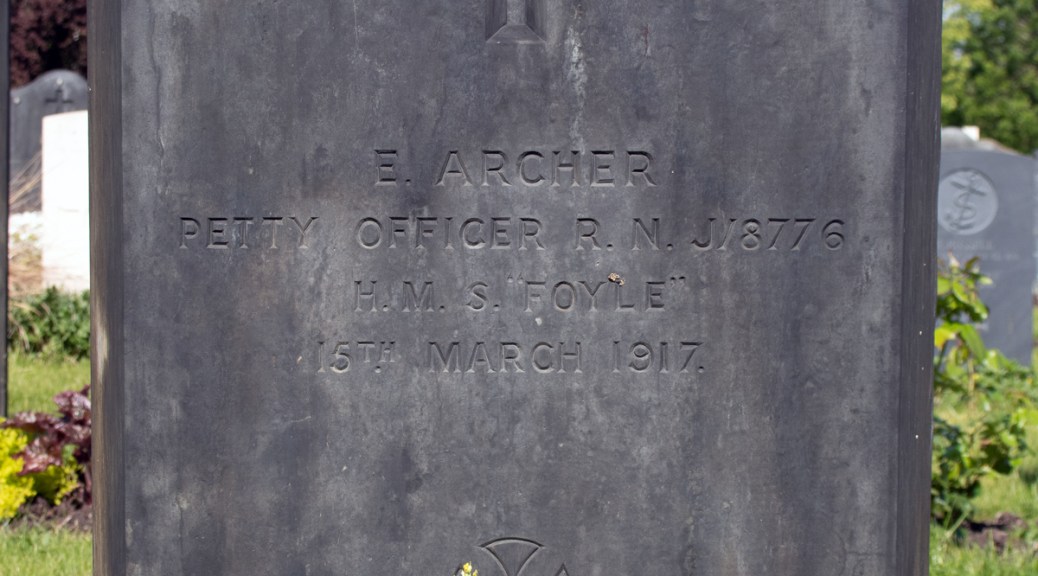
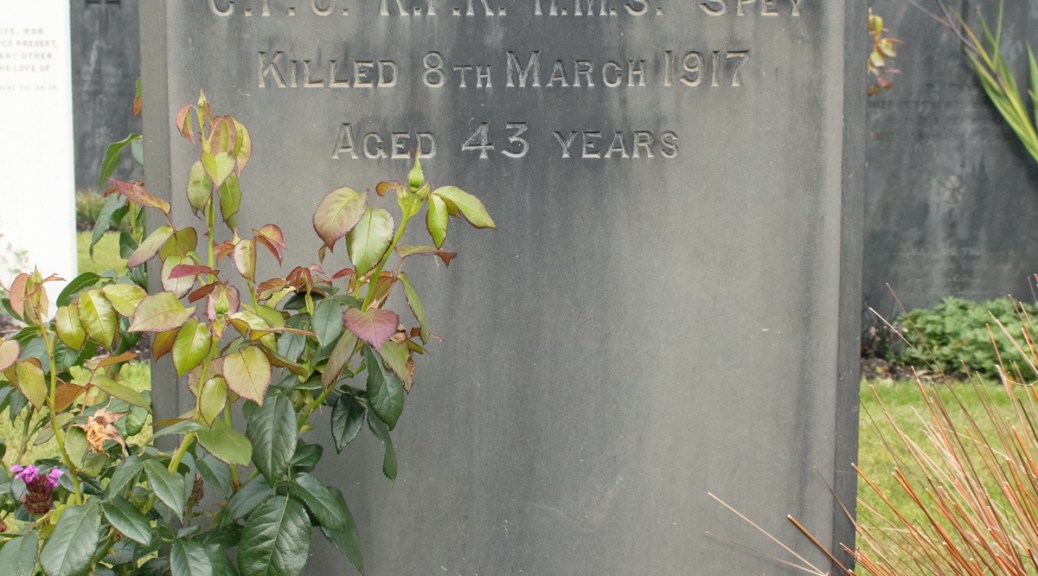
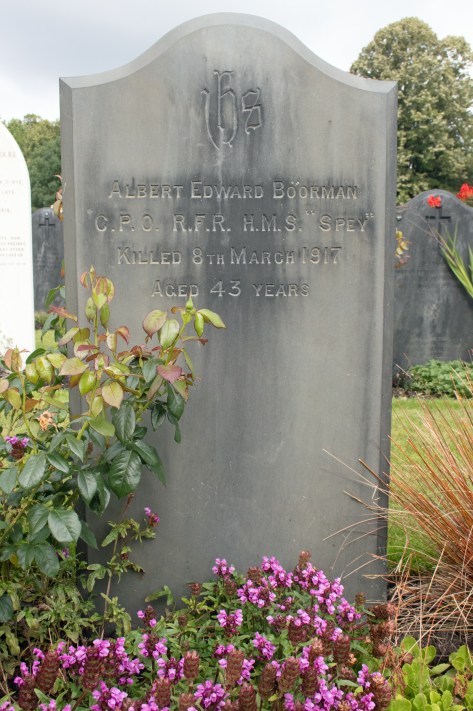
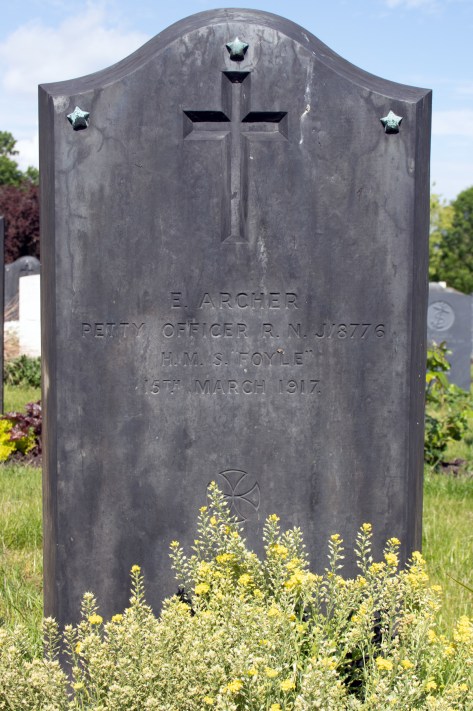
The life of Ernest Archer is challenging to piece together. His headstone, in Woodlands Cemetery, Gillingham, Kent, confirms he was a Petty Officer on HMS Foyle, which was a Royal Navy destroyer. She hit a mine in the English Channel off the Devon coast on 15th March 1917, and foundered while being towed to safety in Plymouth. A total of 28 crew members, Petty Officer Archer included, were killed.

Ernest’s service papers have been lost to time, but his Dependent’s Pension record gives his beneficiary as his aunt, Mrs H Greenhow, of 8 Kinmel Street, Liverpool. This would suggest that his parents had passed by 1917, but it’s not been possible to track her down through contemporary documents.

The same record notes that Ernest had a brother, James, and that he was an Able Seaman in the Howe Battalion of the Royal Naval Division. He was killed in action on 17th February 1917 – four weeks before his brother – and is commemorated on the Thiepval Memorial.

Further information on the lives of the siblings, however, is lost in the mists of time, Ernest Archer’s story taken to his grave with him.


Petty Officer 2nd Class George Ball

Petty Officer 2nd Class George Ball

The early life of George John Ball is a challenge to piece together.

His naval records confirm that he was born in Bedminster, Somerset, on 11th October 1865. There are census records that link his name to parents coal miner Luke Ball and his wife, Ann, but these cannot be confirmed.

George’s papers show that he found work as a butcher when he finished his schooling. He was set on a life at sea, however, and, on 25th November 1880, he joined the Royal Navy. Given the rank of Boy 2nd Class, he was sent to the training base HMS Impregnable for his induction. The Devon establishment would remain his home for the next two years, and, during this time, he rose to the rank of Boy 1st Class.

On 10th October 1882, George was given his first sea-faring assignment, on board the armoured cruiser HMS Northampton. He stayed with her for the next two years, during which time he came of age. Now formally inducted to the Royal Navy, he was promoted to Ordinary Seaman. His service records from the time give an indication as to the man he had become. Short of stature, he was just 5ft 1.5ins (1.56m) tall, and had light brown hair, hazel eyes and a fresh complexion.

Ordinary Seaman Ball signed up for a ten-year contract. Over that time, he would serve on a total of eight vessels, rising to the rank of Able Seaman in January 1889. George’s slate was not completely clean, however, and his record notes three serious demeanours in that time.

In the spring of 1888 George spent 27 days in Canterbury Gaol for ‘breaking out of [the] ship’ he was then serving on, HMS Duncan. He was sent to the brig for a further fourteen days in January 1892 for an undisclosed crime.

Able Seaman Ball was also fined £3 10s (£575 in today’s money) for staying away beyond his allotted shore leave. His papers note an absence of seventeen weeks from 10th October 1893, and this time would have been added to the end of his contract.

George re-enlisted on 9th February 1894, and his service record noted that he had grown half and inch (1.3cm) since he enlisted. He had also had a number of tattoos in that time, including an anchor on his right arm and a bracelet and sailor on his left.

Over the next decade, Able Seaman Ball continued his steady progression through the ranks. He would serve on seven ships, returning to what had become his shore base – HMS Victory, the Royal Naval Dockyard in Chatham, Kent – in between assignments. In October 1897, George was promoted to Leading Seaman: by the following July he was given the rank of Petty Officer 2nd Class.

On 29th April 1904, after more than twenty years in service, George was formally stood down to reserve status. The next document for him – the 1911 census – gives an insight into his life away from the sea. By this point, George was living in a small terraced house at 234 Luton Road, Chatham, Kent.

The document confirms he had been married for fourteen years, to a woman called Sarah. The couple had a daughter – six-year-old Doris – and Sarah’s son from a previous marriage, Albert, was also living with them. George had not distanced himself too far from the sea, however. He was employed as a Ship’s Canteen Manager, a position his stepson also held.

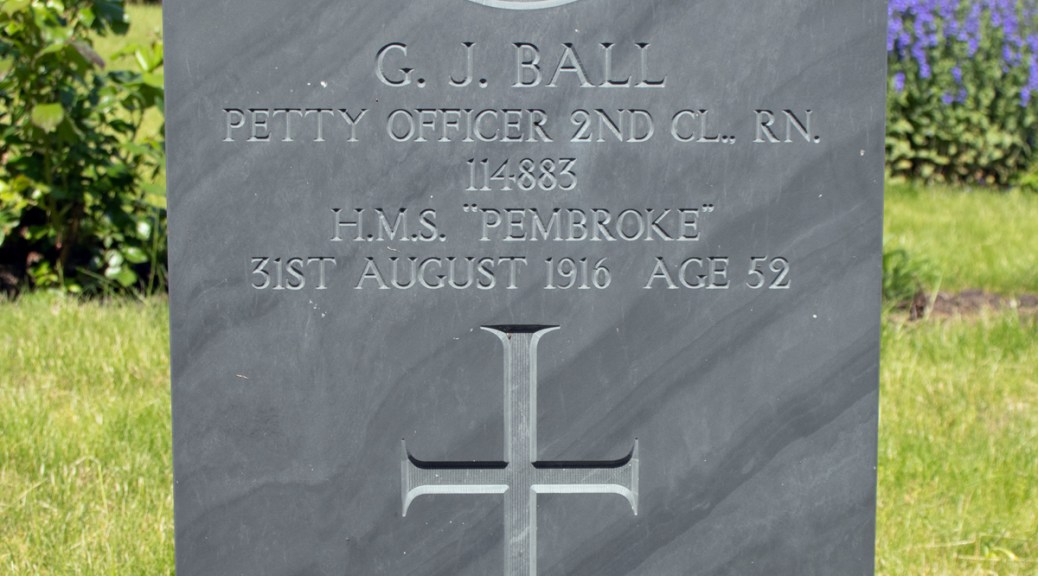
When war came to Europe, George was called upon to play his part once more. Taking up the rank of Petty Officer 2nd Class again, he would be based at HMS Pembroke – Chatham Dockyard – and he remained in service for the next two years.

In August 1916, George was admitted to the Royal Naval Hospital in Chatham, with a combination of pychtis and a stricture. The conditions were to prove fatal: he breathed his last on 31st August 1916, at the age of 50 years old.

George John Ball was laid to rest in the military section of Woodlands Cemetery, Gillingham, Kent, not far from the dockyard that had been his home for many years.


Petty Officer 1st Class Frederick Morgan

Petty Officer 1st Class Frederick Morgan

Frederick Morgan was born on 15th July 1871, the oldest of four children to Samuel and Selina. Samuel was a miner from Bristol, Gloucestershire, but it was in the Staffordshire town of Tipton that he and local girl Selina married and raised their family. The 1881 census found the Morgans living at 17 Brewery Street, to the south of the town centre.

Frederick was not destined to follow in his father’s footsteps, however, and had his sights set on a life at sea, rather than in the depths of a coal mine. On 23rd November 1896 he joined the Royal Navy, and was sent to HMS Impregnable, the training base in Devonport, Devon, for his induction.

Being too young to formally enlist, Frederick was given the rank of Boy 2nd Class. Over the next three years, he learnt the tools of his trade, and served at three further bases: HMS Lion, HMS Penelope and HMS Raleigh. During this time, he was promoted to Boy 1st Class and, on 15th July 1889, when he turned 18, he was formally inducted into the Royal Navy.

Ordinary Seaman Morgan’s service records show that he was just 5ft 2.5ins (1.59m) tall. He had light brown hair, blue eyes and a fair complexion. He also had a tattoo by this point, of a dancing sailor on the inside of his right arm.

Frederick remained at HMS Raleigh for the next couple of years, and was promoted to Able Seaman on 1st July 1891. From the autumn, however, his sea-going life really took hold. Over the next ten years, he served on five ships, and was to be based at HMS Vivid, the Royal Naval Dockyard in Devonport, in between voyages. His dedication to the service was recognised – his annual reviews regularly noted his character as very good, and he rose through the ranks to Leading Seaman in May 1898, Petty Officer 2nd Class that October, and Petty Officer 1st Class in January 1901.

Away from work, Frederick’s love life was blossoming. In the autumn of 1893 he married Zipporah Elizabeth Beatrice Griffiths. Better known as Beatrice, she was the daughter of waterman Thomas Griffiths and his wife, Zipporah. The family came from Dartmouth, and this is likely where the young couple got to know each other. They married in St Clement’s Church, Dartmouth, and went on to have two children, George and Kathleen.

On 15th July 1901, Petty Officer Morgan’s initial contract with the Royal Navy came to an end. He renewed it straight away, and would spend the next decade sailing the world. Again Frederick was based at HMS Vivid in between voyages. On 11th July 1911, after 21 years in service, he was formally stood down to reserve status, and he returned to shore.

Frederick’s trail goes cold over the next couple of years, but when war broke out, he was called into service once more. Petty Officer Morgan would serve on the depot ships HMS Leander and Cyclops, which served out of Scapa Flow. He also spent time at HMS Gunner, the naval base to the north of Edinburgh. By March 1919, with the Armistice signed, he found himself based back in Devon.

At the Royal Naval Hospital, Plymouth, on Saturday, an inquest was held relative to the death of Fredk Morgan, 47, a naval pensioner, who died suddenly in the train on Thursday last.

Wm. Griffiths, inspector, GWR, at Millbay, said that PO Morgan was removed from the 6.20 train from Saltash on Thursday, apparently in a fit. He was laid on a seat, and a doctor who was about to travel on another train pronounced life extinct.

Charles Evans Jenkins, surgeon-lieutenant at the Naval Hospital said death was due to fatty degeneration of the heart.

The Coroner, who expressed his sympathy with the widow, declared that death was due to natural causes.

[Western Times: Tuesday 1st April 1919]

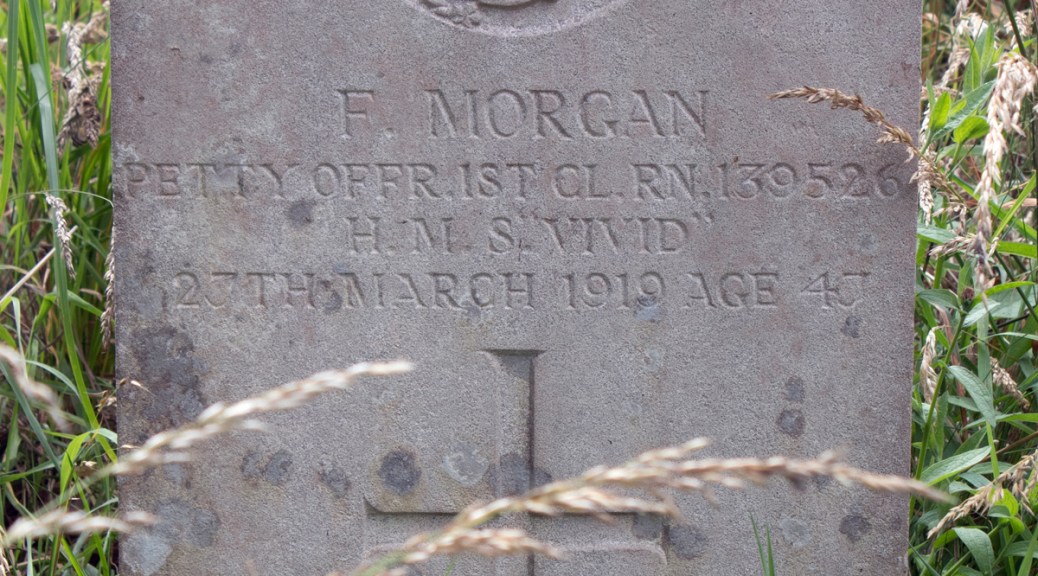
Frederick Morgan died of a heart attack on 27th Match 1919. He was laid to rest in the graveyard of St Clement’s Churchyard, Dartmouth, where he and Beatrice had been married.


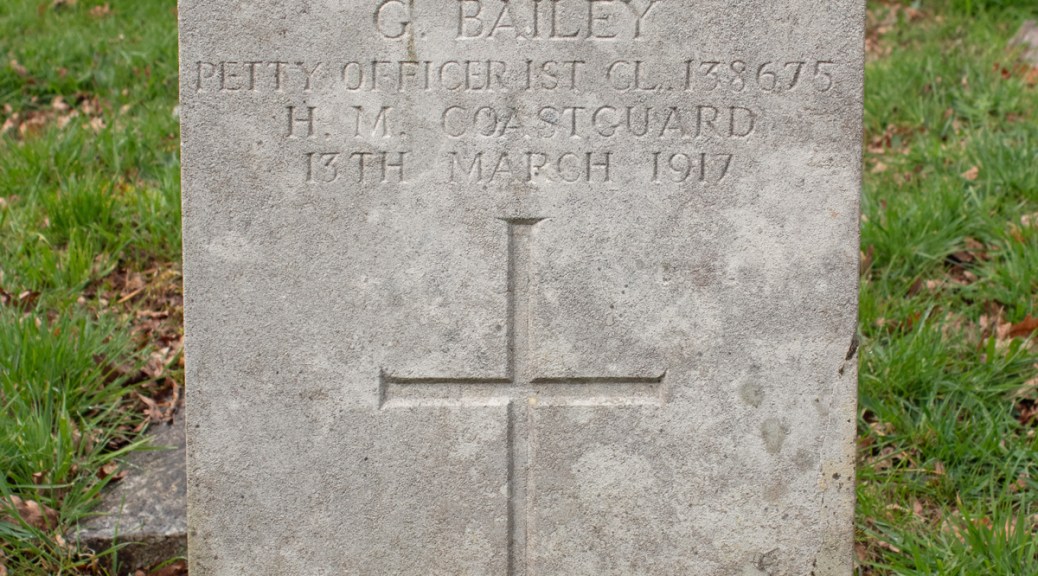
Petty Officer 1st Class George Bailey

Petty Officer 1st Class George Bailey

George Bailey was born in Bedminster, Somerset, on 20th August 1871. One of six children, his parents were George and Anna (or Hannah) Bailey. George Sr was a labourer and, when he died in 1876, Anna moved the family to Clifton, near Bristol.

The 1881 census found the family living in a small cottage at 5 Crosby Row in the then village. Hannah was listed as a late general labourer’s wife, while her three older children were all working for a dairy.

When George finished his schooling, he sought out a career. Joining the Royal Navy, this would prove a long-term role, bringing in a relatively decent wage for him and his family, but also gave him some adventure, not surprising given the number of ships he would have seen going to and fro from Bristol.

George was only 15 years old when he joined up on 25th September 1886, and so was below the age to formally enlist in the navy. Taken on with the rank of Boy 2nd Class, he was sent to HMS Impregnable, the training ship based in Devonport, Devon. Over the next three year he learnt his craft, and served on a few ships, including the battleship HMS Iron Duke.

In October 1887, George was promoted to Boy 1st Class and, on 20th August 1889, while assigned to the Iron Duke, he came of age, and was formally inducted into the Royal Navy. Ordinary Seaman Bailey’s service records show that he was 5ft 5.5ins (1.66m) tall, with auburn hair, blue eyes and a fresh complexion. He was also noted as having a spot tattooed between the finger and thumb of his left hand, a scar on his left leg and another in the centre of his back.

Over the next seven years, George served on a total of ten ships, and saw the world. In between voyages he returned to HMS Vivid, the Royal Naval Dockyard in Devonport. In 1895 he married Elizabeth Bull, from Burrington, Somerset, and the couple went on to have six children.

George’s naval career continued, and he rose through the ranks, to Able Seaman in September 1890, Leading Seaman in June 1895, and to Petty Officer 2nd Class and 1st Class the following year.

In January 1899, George’s life took a different direction. After some time training at HMS Collingwood in Hampshire, he joined the Coastguard service, and would spend the next twelve years serving on the coast of Southern Ireland. This opportunity allowed him to have his family with him, and his and Elizabeth’s four youngest children were born in County Clare and County Cork.

By 1911, the family returned to Britain, setting up home in Brixham, Devon. That year’s census found the Baileys living at 6 Coastguard Station on the waterfront. The family remained there through to October 1913, when George was transferred to the Royal Naval Reserve, having served for 26 years.

George found work as the caretaker of the Electric Theatre in Tiverton, Devon, and this is where he and Elizabeth settled down.

Petty Officer Bailey’s time out of active service was to be limited, however, as, just nine months later, war was declared. Called back into action, he was sent to Western Stack Fort in Milford Haven, Pembrokeshire.

An interesting personality has passed away in First-Class Petty Officer George Bailey, who died suddenly on Tuesday… He came home about a fortnight ago on sick leave, and seemed to be improving in health, and on Tuesday went out for a walk. After retiring to bed his death came suddenly as a result of heart failure.

[Crediton Gazette: Saturday 24th March 1917]

George Bailey died on 13th March 1917: he was 45 years of age. He was laid to rest in Tiverton Cemetery.


Petty Officer William Clark

Petty Officer William Clark

William George Clark was born on 23rd November 1884, and was the oldest child to John and Harriet. John was an agricultural labourer from Exminster, Devon, and this is where the family were born and raised.

When he completed his schooling, William found work as a gardener. However, he wanted bigger and better things for himself, and sought out a career at sea. On 12th March 1900 he enlisted in the Royal Navy: being under the formal age to enlist, he was given the rank of Boy 2nd Class.

William was sent to HMS Impregnable, the training establishment in Devonport, for his induction. Over the next two years – until he turned 18 in November 1902 – Boy Clark started to learn his trade. He was promoted to Boy 1st Class in October 1900, and spent time on the frigate HMS Agincourt and the cruiser HMS Melampus.

When William came of age, he was formally inducted into the Royal Navy as an Ordinary Seaman. His service records show that he was just under 5ft 1in (1.55m) tall, with black hair, blue eyes and a fair complexion. He was also noted as having a tattoo of an anchor in his left arm.

Over the next five years, William served on three further ships, returning to HMS Vivid – the Royal Naval Dockyard in Devonport – in between voyages. He travelled the world and, in May 1904, was promoted to the rank of Able Seaman.

Away from the navy, love blossomed. In May 1907, William married Louisa Cosway in Tiverton, Devon. She was a few months older than her husband, and the couple would go on to have one child, William, who was born the following spring.

Back at sea, and Able Seaman Clark’s career continued. In November 1911 he was promoted to Leading Seaman, reaching the rank of Petty Office in January 1917. During his eighteen year career, he would serve on a total of eleven ships, but in the closing months of the war, William’s health was beginning to suffer. On 9th May 1918, he was medically discharged from service, suffering from heart disease.

William returned home to Tiverton. His time with his family was to prove tragically brief: he passed away from mitral disease and pneumatic fever on 13th May 1918, at the age of 33 years old.

William George Clark was laid to rest in Tiverton Cemetery. His grave was just a 15min walk from where his widow and son lived on Fore Street, in the town centre.


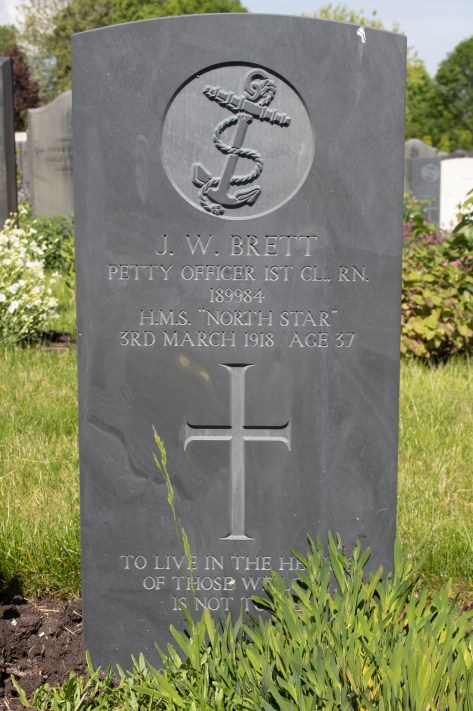
Petty Officer 1st Class James Brett

Petty Officer 1st Class James Brett

The early life of James Watt Brett is lost in the mists of time. He was born on 25th November 1880 in the Scottish village of Fochabers and when he finished his schooling, he found work as an apprentice draper. He sought bigger and better things, however, and, on 25th August 1896, he joined the Royal Navy.

At just fifteen years old, James was too young to formally enlist. He was given the rank of Boy 2nd Class, however, and dispatched to the training ship HMS Caledonia, for his basic instruction. He remained on board until October 1897, by which point he had been promoted to Boy 1st Class.

Over the next year, James served on two cruisers – HMS Blenheim and HMS Dido. His shore base became HMS Pembroke, the Royal Naval Dockyard in Chatham, Kent, and he would return here time and again in between assignments.

It was while James was serving on Dido that he came of age. Now given the rank of Ordinary Seaman, his records show that he was 5ft 1in (1.54m) tall, with fair hair, blue eyes and a fresh complexion. James would remain on board Dido until January 1902, by which time he had been promoted to the role of Able Seaman.

Over the initial twelve years of his service, James would spend time on eight vessels, and travel the world. His dedication to the navy is clear, although his career was not without its hiccups.

In April 1904, James was promoted again, to the rank of Leading Seaman. The following January he was made Petty Office 2nd Class, although this new role only lasted for a couple of weeks, before he was knocked back down to Able Seaman.

In April 1909, he was again made Leading Seaman and, promoted to Petty Officer 2nd Class once more in January 1910. By October that year, he had risen to Petty Officer 1st Class, by which point his initial contract came to an end.

James immediately re-enlisted, and retained his rank for the remainder of his naval career. At some point after the 1911 census, he married a woman called Annie, and the couple seem to have been based at Burnt Oak Terrace, Gillingham, Kent, although there is no further information about Petty Officer Brett’s new wife.

James seemed to have become more shore-based after his marriage, and he served at HMS Actaeon in Portsmouith, Hampshire, and HMS Pembroke and HMS Wildfire in Kent. By the summer of 1917, he was attached to the Dover Patrol, and assigned to HMS Attentive.

On 3rd March 1918, Petty Officer Brett’s service records note that he was accidentally killed by falling into [a] dry dock at Royal Albert Docks. No further information is available, although it is possible that the accident took place in London. He was 37 years of age.

The body of James Watt Brett was taken back to Kent for burial. He was laid to rest in the military section of the Woodlands Cemetery, Gillingham, not far from where his widow still lived.

Ship’s Corporal 1st Class Thomas Barnes

Ship’s Corporal 1st Class Thomas Barnes

Thomas Henry Barnes was born on 19th September 1878 in the Devon village of Blackawton. One of four children, his parents were Thomas and Thirza Barnes. Thomas Sr was a farmworker who passed away in 1890: the following year’s census found Thirza and her three younger children living in Silver Street, Buckfastleigh, Devon.

Keen to earn enough money to support his mother, Thomas found work on a farm. He sought a career, however, and, on 11th March 1896, he enlisted in the Royal Navy. Six months short of the age to formally join up, he was given the rank of Boy 2nd Class, and was sent to the training ship HMS Northampton. He spent those six months wisely, however, rising to Boy 2st Class in June and was given the rank of Ordinary Seaman when he came of age in September.

By this point, Thomas had been moved to HMS Vivid, the Royal Naval Dockyard in Devonport. His service records show that he was 5ft 5.5ins (1.66m) tall, with brown hair, blue eyes and a fair complexion. He was also noted as having a tattoo of an anchor on his right arm.

Over the next few weeks, Ordinary Seaman Barnes moved from Vivid to HMS Victory, the Navy’s dockyard in Portsmouth, Hampshire, and back again. On 13th January 1897 he was given his first formal posting, on board the cruiser HMS Bellona, and from here his naval career flourished.

Thomas’ initial contract of service was for twelve years, and during this time he proved a committed and determined young man. During the term of his enlistment, he served on six ships, returning to Devonport between voyage. He did not rest on his laurels, either, and worked his way through the ranks. In August 1898 he was promoted to Able Seaman, and in May 1902 he made Leading Seaman.

Away from the sea, love was blossoming for Thomas. In January 1903 he married Alice Percy. The daughter of a paper mill fitter, she would spend her married life with her parents, while her husband was away at sea.

Leading Seaman Barnes’ career continued its upward trajectory: in April 1904 he was promoted again, this time to Petty Officer 2nd Class. When his contract came to an end in September 1908, it was inevitable that he would renew it. His service records show that, at 30 years of age, he was now 5ft 8ins (1.73m) tall.

In February 1909, Thomas was promoted to Petty Officer 1st Class: at this point he was serving on his ninth ship, HMS Ramillies. With his next move, to the armoured cruiser HMS Suffolk, came another change in rank. The now Ship’s Corporal 1st Class Barnes’ career was doing well, and his annual reviews confirmed this, regularly highlighting a character that was very good.

By August 1915, Thomas had spent nearly two years aboard the battleship HMS Temeraire. She would go on to play a role in the Battle of Jutland, but Ship’s Corporal Barnes would not be there. Disembarked to HMS Vivid on 13th August, he was subsequently admitted to the Royal Naval Hospital in Plymouth, suffering from a cerebral thrombosis. This would prove fatal: he died on 26th October 1915, at the age of 37 years old.

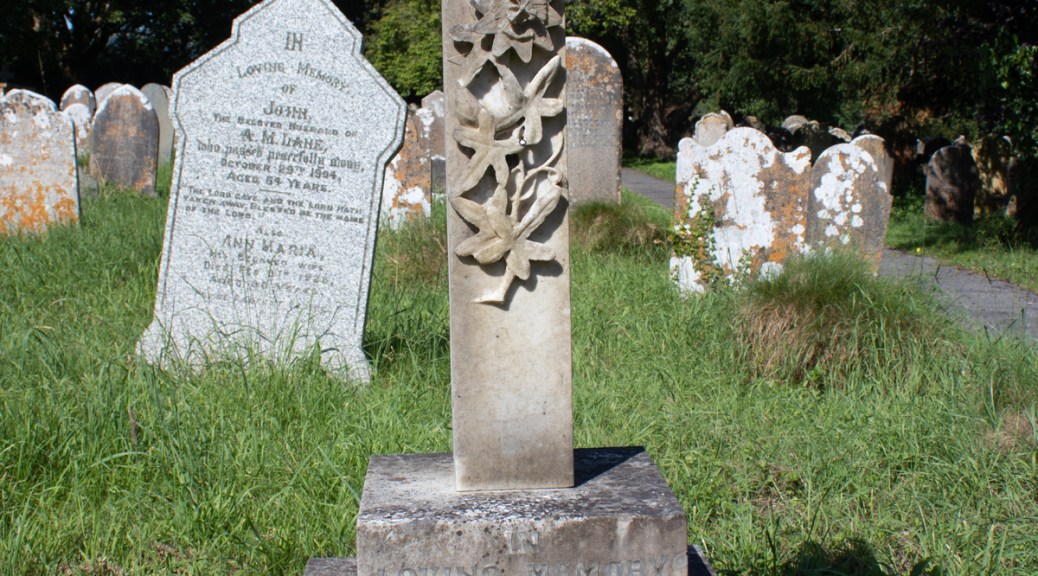
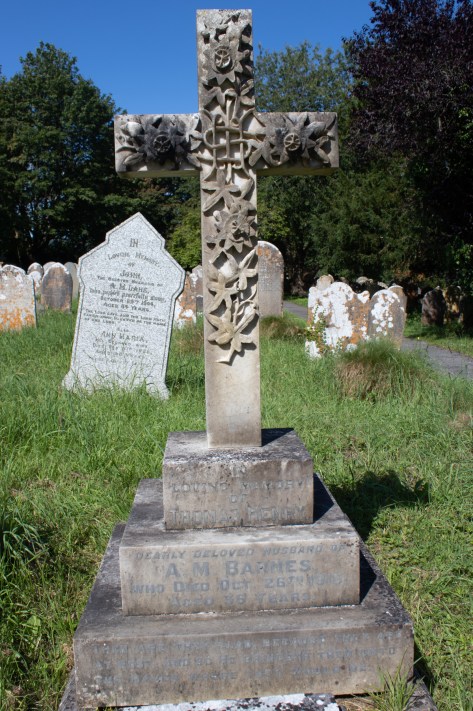
The body of Thomas Henry Barnes was taken back to Buckfastleigh for burial. He was laid to rest in the village’s Holy Trinity Churchyard.


Chief Petty Officer John Henley

Chief Petty Officer John Henley

John Henley was born on 4th September 1878, and was the second of five children to William and Frances. William was a navy pensioner from Maidstone, Kent, but it was in the nearby village of Loose that John was born and the family raised.

Given his father’s background, it was inevitable that John would go to sea as well. The 1891 census recorded him as being one of nearly 1000 pupils of the Royal Hospital School in Greenwich, and just three years later he formally enlisted in the Royal Navy. Just sixteen years of age, he was given the rank of Ship’s Steward Boy. His service records confirm that he was 5ft 4ins (1.63m) tall, with dark brown hair, light blue eyes and a fresh complexion.

Initially based at HMS Pembroke, the Royal Naval Dockyard in Chatham, Kent, over the next eighteen months, John spent time on five ships. This gave him enough grounding so that when he came of age in September 1896, he could be formally inducted into the navy, with the rank of Ship’s Steward Assistant.

Over the next decade, John’s career flourished. He was promoted to Acting Ship’s Steward in January 1901, and full Ship’s Steward fifteen months later. He had spent time on a further ten ship by this point, returning to HMS Pembroke in between postings.

In July 1905, John married Maud Norton, a carpenter’s daughter from his home village. While her husband was away at sea, she set up home at 88 Kingswood Road, Gillingham, Kent, and the couple went on to have three children: John, William and Lionel.

Back at sea, and by the time war broke out, Ship’s Steward Henley had completed more than twelve years in the role. In February 1918, he received a further promotion, this time to Victualling Chief Petty Officer, but this new role was to be cut tragically short. The following month, he was admitted to the Royal Naval Hospital in Chatham, Kent, suffering from a gastric ulcer. This haemorrhaged, and he passed away while still admitted. John died on 14th March 1918: he was 39 years of age.

We regret to announce the death of Mr John Henley, Victualling Chief Petty Officer (Ship Steward)… Deceased was a native of Loose and… had served 25 years in the Royal Navy, having commenced his career in the Royal Hospital School, Greenwich, at the age of eleven years. He took part in the battle off the Falkland Islands, and also in the operations in the Dardanelles whilst serving on HMS Inflexible. He leaves a widow and three sons.

[Kent Messenger & Gravesend Telegraph: Saturday 30th March 1918]

John Henley was laid to rest in the naval section of Woodlands Cemetery, Gillingham, walking distance from where his widow still lived.

Chief Petty Officer John Henley
(from britishnewspaperarchive.co.uk)

Able Seaman Thomas Jago

Able Seaman Thomas Jago

Thomas Henry Jago was born on 3rd June 1872 in Romney Marsh, Kent. The second of ten children, his parents were James and Elizabeth. James was a coastguardman, and his son was destined to be connected to the sea.

Thomas joined the Royal Navy on 19th December 1887. Given the rank of Boy 2nd Class, his records show that he was just 5ft (1.52m) tall, with dark brown hair, grey eyes and a fresh complexion. He was sent to HMS St Vincent, the training ship based in Haslar, Hampshire, and would remain there until June 1889. During this time, he was promoted and given the new rank of Boy 1st Class.

Thomas’ first ocean assignment was on board the corvette HMS Active. She would be his home for the next three years. In June 1890 he came of age, and was formally inducted into the Royal Navy as an Ordinary Seaman. By November 1890, he had proved his worth again, and was promoted to Able Seaman.

Over the next seventeen years, Thomas would serve on 21 ships. Frustratingly, the dates on his service records become a little muddled as time goes on, but it was while he was on board the RMS Empress of India in the late 1890s that he was promoted to Leading Seaman, then Petty Officer 2nd Class and Petty Officer 1st Class, all within a matter of three years.

In March 1903 he was demoted to Petty Officer 2nd Class, but the higher rank was reinstated eighteen months later. In September 1907, while serving on HMS Magnificent, Thomas seems to have been in some sort of trouble. This resulted in the removal of his ranking, and he was downgraded to Able Seaman once more, a rank that he would then hold until the end of his naval career.

In between voyages, Able Seaman Jago would have a shore base to return back to. His most common port seems to have been Chatham, and HMS Pembroke, the town’s Royal Naval Dockyard, features on his records more and more as time goes by.

In June 1912, after 22 years of service, Thomas was stood down to reserve status. Over the next few years his trail goes cold, although a later document suggests that he had moved to Sandgate, Kent, where he was renting rooms at 18 High Street.

War was soon raging across the world, and Able Seaman Jago was called upon to serve again. Assigned to London’s HMS President in December 1915, he quickly returned to Chatham Dockyard again. Over the next couple of years, Thomas serves on two further ships – HMS Diligence and HMS Mars – but HMS Pembroke definitely became a home from home.

In February 1918, Able Seaman Jago returned to the Royal Naval Dockyard in Chatham one last time. He was unwell by this point, and was admitted to the the town’s Royal Naval Hospital for an operation on his mouth. Thomas was suffering from carcinoma of the tongue, and the condition was to prove fatal. He passed away on 26th March 1918, at the age of 45 years old.

Thomas Henry Jago was laid to rest in the naval section of Woodlands Cemetery in Gillingham, Kent, not far from the base he had called home for so many years.