Tag Archives: pneumonia

Private Charles Edwards

Private Charles Edwards

Charles Henry Edwards was born in Padstow, Cornwall, in around 1888. One of three children, his parents were Charles and Elizabeth Edwards. Charles Sr was a farm labourer, and his son, who was one of four children, followed suit when he finished his schooling.

Charles Sr passed away in 1903: the next census record found Charles and two of his sisters living with Elizabeth. She was claiming parish relief, while her daughters were doing occasional char work to bring in a little more money.

Charles married a woman called Florence Dunn in the summer of 1911: little information is available for her, other than she was born in Devon, to Joseph and Maria. The couple set up home in Leadwell Street, Padstow, and went on to have four children: Lilian, Charles, Elsie and Alfred.

When war came to Europe, Charles stepped up to play his part. He enlisted 11th December 1915, by which point, he had found work as a cowman. He joined the Devonshire Regiment as a Private and spend the next fourteen months on home soil, moving across to the 5th Labour Company in February 1917.

At this point, Private Edwards was sent to France, and he spent most of that year overseas. He returned to Britain on 8th November, having contracted bronchitis while serving at Etaples. When he had recovered, Charles returned to duties, and was attached to the 650th Labour Coy.

Alfred, Charles and Florence’s youngest child, was born on 1st April 1918, but seemed to be a sickly boy. He passed away on 27th September, aged just six months, from a combination of influenza and bronchitis. Tragically, Charles was also unwell at this point, and he passed away just four days later from pneumonia. He was just 30 years of age.

Charles Henry Edwards was laid to rest in Padstow Cemetery. The report of his funeral does not mention Alfred, but it seems likely that father and son were buried together.


Florence lived on until 1964. She passed away in Bodmin, at the age of 78, and was laid to rest with her husband, reunited after more than four decades.


Stoker 1st Class John Stone

Stoker 1st Class John Stone

John Edward Stone was born on 10th April 1894 in Torquay, Devon. The oldest of seven siblings – of whom three survived childhood, his parents were John and Hannah Stone.

John Sr was a masons labourer, but when his son finished his schooling, he found work initially as a grocer’s errand boy, then as an outdoor porter. John Jr sought bigger and better things, however, and, in February 1913, he enlisted in the Royal Navy.

Stoker 2nd Class Stone’s service records show that he was 5ft 5ins (1.65m) tall when he joined up, and that he had brown hair, grey eyes and a fresh complexion. He was based at HMS Vivid, the Royal Naval Dockyard in Devonport, and this is where he spent the first six months training.

John’s first sea-going posting was on board the armoured cruiser HMS Defence and she was to be his home from 2nd September 1913 to May 1916, when she was sunk during the Battle of Jutland. During his month aboard, he was placed in the brig for 14 days due to ‘absence’. This imprisonment seemed to have refocused John’s priorities, however, and he was promoted to Stoker 1st Class on 26th February 1914.

Rescued from the lost Defence, John was taken back to Devonport, and he remained there until the end of August 1916. From here he transferred to the depot ship, HMS Blake, which was to be his home until the end of the war.

In the spring of 1917, John married Sarah Juliff in St Columb, Cornwall. The couple went on to have a daughter, Christiana, a few months later.

Stoker 1st Class Stone fell ill towards the close of the war, contracting pneumonia. He passed away while still on board HMS Blake, on 15th November 1918. He was 24 years of age.

Sarah was living in Middle Street, Padstow when her husband passed. He was brought back to the county, and was laid to rest in the town’s cemetery.


The official documents go on to say that Sarah moved to the Caerwilliam Hotel in Cabres Bay. However, there are no records for the hotel or location, although it could refer to Carbis Bay in St Ives, Cornwall.


Gunner Richard Dale

Gunner Richard Dale

Richard George Dale was born Padstow, Cornwall, in the summer of 1889, the oldest child to Alice Dale. She married Frederick Bryant in March 1894, but and went on to have two children – Frederick and Albert – but, by the time of the 1901 census, her husband has passed away. The document gives Richard’s surname as Bryant, but there is no real indication that he was Frederick’s son.

Alice had been living with her greengrocer parents, but the 1901 census in a small cottage off Lanadwell Street, a couple of door away from them. As a widow at 31 years old, she is noted as being on parochial relief.

Details of Richard’s later life are a challenge to track down. Absent from the 1911 census, it was around that time that he married Agnes MacKintosh. While she was born in Edinburgh, the wedding took place in St Columb, Cornwall.

When war broke out, Richard was working as a farmer. He enlisted the day after hostilities were declared, and joined the Royal Garrison Artillery. Gunner Dale was, according to the records, 5ft 3ins (1.6m) tall, with medium colour hair, blue eyes and a fresh complexion. He had a scar between his eyebrows.

Gunner Dale served for nearly four years, all the time being based on home soil. He suffered from epilepsy, however, and this is what led to his eventual discharged from armed service in March 1918.

Richard returned home, but his health was compromised. He passed away on 11th October 1918, from a combination of influenza and pneumonia. He was 29 years of age.

Richard George Dale was laid to rest in Padstow Cemetery, in sight of his younger brother Albert, who had passed away eleven years before.


Captain William Blundell

Captain William Blundell

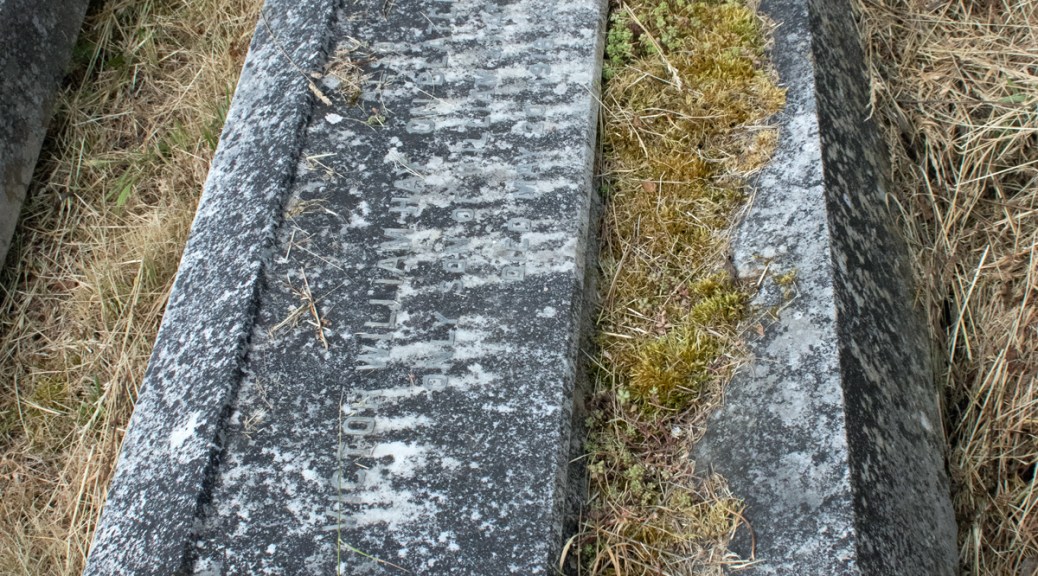
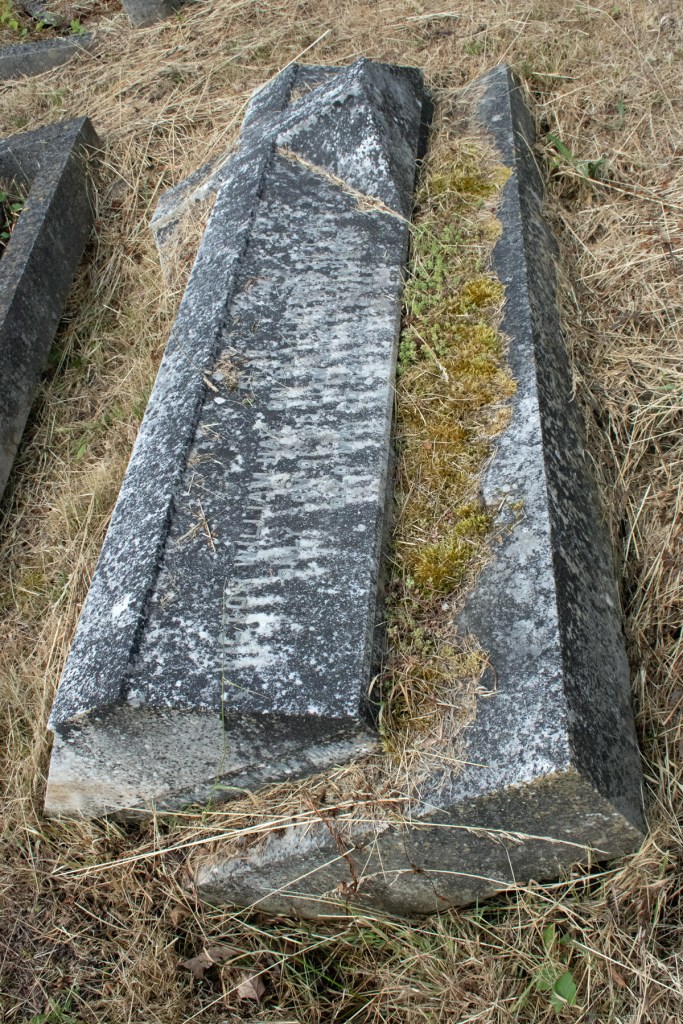
William Kennedy Blundell early life seems anything but ordinary. Born in Cardiff, Glamorgan, in the summer of 1890, he was the only child to bank clerk Edmund Blundell and his wife, Annie. Edmund was born in Staplegrove, Somerset, while Annie had grown up in Lahore, India.

The 1891 census found William living with his maternal grandparents James and Edith Kennedy in the Walcot area of Bath, while his parents were firmly based in Cardiff. Edmund died the following year, so it is possible that he was placed out of the way while Annie tended to her husband (along with her sister-in-law and a domestic servant).

By the time of the next census return, Annie and William were reunited, and were living in Avenue Road, Wimborne Minster, Dorset. Anne was living off her own means, and had a servant, Emily Chaffey, to hep look after the home.

Both Annie and her son disappear from the 1911 census. It is likely that William had embarked on a military career by this point, and may have been serving overseas. Sadly, his trail goes cold, but scraps of later information help identify some of what became of him.

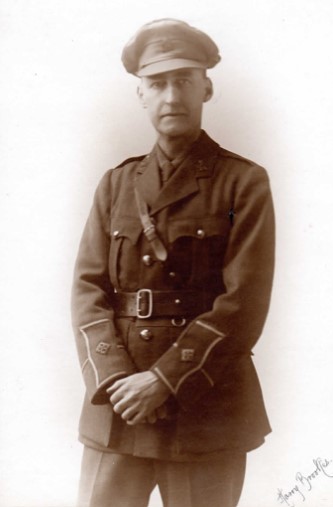
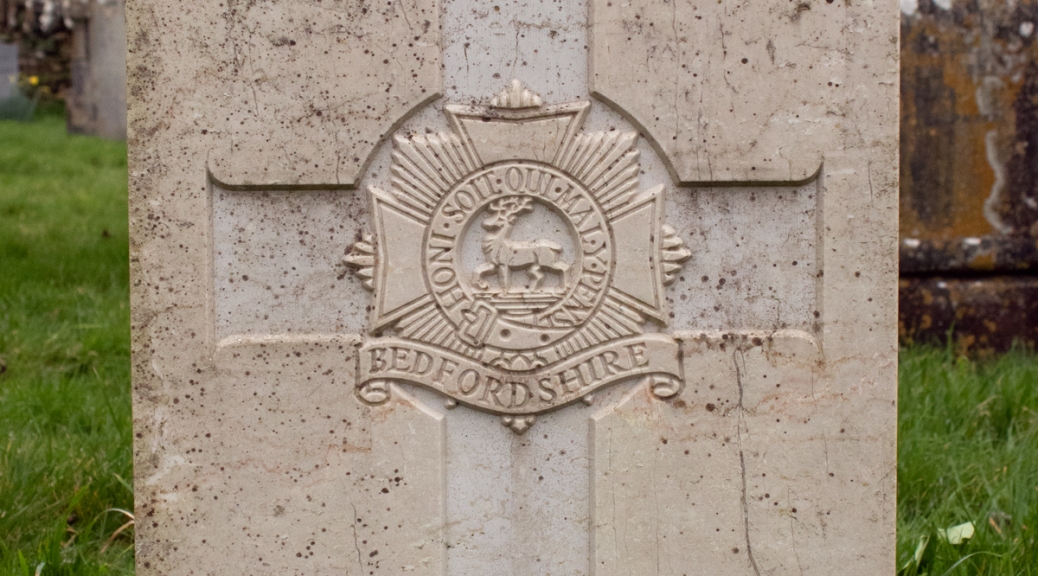
By the outbreak of the First World War, he was serving in the Bedfordshire Regiment. He was based in Egypt from January 1916, and rose to the rank of Captain by the end of the conflict. By 1918, he was attached to the 12th (Transport Workers) Battalion, and was back in Britain.

Captain Blundell was in Sussex by the time of the armistice, and it was here that he fell ill, contracting pneumonia. He was admitted to the General Eastern Hospital in Brighton, but the condition was to prove too severe. He passed away on 13th December 1918, at the age of 28 years old.

William Kennedy Blundell’s body was taken back to Somerset for burial. He was laid to rest in the sweeping grounds of Locksbrook Cemetery in Bath.


Private Clarence Rondel

Private Clarence Rondel

Clarence Philip Rondel was born in 1900 in St Lawrence, Jersey. One of twelve sibling, nine of whom survived childhood, his parents were John and Louisa Rondel. John was a farmer and by the time of the 1911 census, the family had moved to St John’s to take up a new post, a lot of the family pitching in to help out.

When war came to European shores, Clarence was keen to play his part. Too young to enlist when hostilities were declared, it was not until the spring of 1918 that he was able to join up. Private Rondel was assigned to the 53rd (Young Soldier) Battalion of the Devonshire Regiment.

Clarence was sent to England for training, and was based at the Rollestone Camp on Salisbury Plain, Wiltshire. The barracks were breeding grounds for illness and disease, and Private Rondel was not to be immune. He contracted pneumonia, and was admitted to the camp’s hospital. The condition got the better of him, and he passed away on 2nd November 1918: he was just 18 years of age.

The body of Clarence Philip Rondel was taken back to Jersey for burial. He was laid to rest in St John’s New Cemetery, not far from where his family still lived.


Private Richard White

Private Richard White

Richard Ezra Baron White was born in the autumn of 1886 in the Cornish village of St Minver. The third of four children, his parents were Joseph and Zillah White. Joseph was a ship’s carpenter by trade, and Richard served an apprenticeship as a woodworker. By the time of the 1911 census, however, the Whites were working as farmers on the outskirts of the village.

When war was declared, Richard stepped up to serve King and Empire. It is unclear when he enlisted, but he joined the Gloucestershire Regiment, and was attached to the 3rd (Reserve) Battalion. Private White was based in Kent during the conflict, his unit being attached to the Thames and Medway Garrison.

Richard survived the conflict, but the winter of 1918/19 was to prove his undoing. He contracted pneumonia, and was admitted to the military hospital in Aylesford. The condition was to get the better of him: he passed away on 20th February 1919, at the age of 33 years.

The body of Richard Ezra Baron White was taken back to Cornwall for burial. He was laid to rest in the peaceful graveyard of St Menefreda’s Church in his home village, St Minver.


Private George Buse

Private George Buse

George Henry Buse was born in the Cornish village of St Minver in 1880. One of four children, his parents were Richard and Angelina. Richard was an agricultural labourer, but his son followed a different trade, finding employment as a stonemason.

In the summer of 1904, George married a woman called Mary. They went on to have a daughter, Olive, who was born in 1906, and set up home in Splatt, on the outskirts of the village.

When war came to Europe in the summer of 1914, George stepped up to play his part. He enlisted by the summer of 1916, and joined the 2nd Battalion of the Devonshire Regiment. Private Buse’s unit served on the Western Front, but it is unclear whether he fought overseas.

By the winter of 1916, George had fallen ill. He contracted pneumonia, and was admitted to the military hospital in Devonport, Devon. The condition was to prove too severe, however, and he passed away on 28th January 1917: he was 36 years of age.

George Henry Buse was brought back to Cornwall for burial. He was laid to rest in the peaceful graveyard of St Menefreda’s Church in St Minver.


Lance Serjeant John Chapman

Lance Serjeant John Chapman

There is little concrete information available on the life of John Henry Chapman. His headstone, in Amesbury Cemetery, Wiltshire, confirms that he was a Lance Serjeant in the Royal Garrison Artillery, and that he died on 19th December 1920.

John’s pension ledger gives his widow’s name, Caroline, date of birth, 25th August 1900, and her address, High Street, New Romney, Kent. It also gives a cause of death for John, who passed away from pneumonia.

The record for Lance Serjeant Chapman’s headstone gives his next of kin as Mrs C Chapman, c/o Mrs Savage, which would suggest that that was Caroline’s maiden name. The Civil Registration Marriage Index records the union of a John H Chapman to someone with the surname of Savage in the summer of 1920: the wedding took place in Richmond, Yorkshire, although there does not appear to be any direct connection between the Lance Serjeant, Caroline and the town.

There are no further clear documents relating to John Henry Chapman. He lies at rest in the peaceful anonymity of Amesbury Cemetery.


Private William Whaites

Private William Whaites

William Whaites was born on 12th April 1879 in Milverton, Somerset. One of nine children, his parents were George and Anne Whaites. George was an agricultural labourer, and that is work that all of his sons went into at some point.

By the time of the 1911 census, George and Anne were living at Court Bottom in the village, with three of their adult sons – William included – living with them – and doing farm work.

When war was declared, William was called upon to play his part. He enlisted at some point after October 1915, joining the Somerset Light Infantry. Assigned to the 3rd (Reserve) Battalion, Private Whaites was sent to the unit’s base in Devonport, Devon, for training.

Army barracks were cramped places, and often breeding grounds for illness and disease. William was not to be immune to this, and, in the spring of 1916, he contracted pneumonia. He was admitted to the military hospital in Devonport, but quickly succumbed to the condition. He died on 21st April 1916, having just turned 37 years of age.

William Whaites’ body was taken back to Somerset for burial. He was laid to rest in the graveyard of St Michael’s Church in his home town, Milverton.


Stoker James Hurley

Stoker James Hurley

James Hurley was born in Timoleague, County Cork, Ireland, on 1st August 1894. His was not an uncommon name so full details of his early life are a challenge to unpick. However, later records confirm that his father was also called James Hurley, and when he finished his schooling, he found work as a farm labourer.

When war broke out in Europe, James Jr was quick to step up and play his part. He enlisted in the Royal Navy on 12th January 1915, and took the role of Stoker 2nd Class. His service records show that he was 5ft 5.5ins (1.66m) tall, with dark brown hair, grey eyes and a fresh complexion.

Stoker 2nd Class Hurley was sent to HMS Pembroke, the Royal Naval Dockyard in Chatham, Kent, for his training. However, his time there was to be tragically brief. He was admitted to the Welcome Hospital when he contracted pneumonia and empyema, but the condition was to prove too severe. He passed away on 6th February 1915, at the age of just 20 years old. He had been in the Royal Navy for just 25 days.

James Hurley’s parents were unable to bring him back to Ireland for burial. Instead, he was laid to rest in the Roman Catholic section of the Woodlands Cemetery in Gillingham, not far from the dockyard in which he had so briefly served.