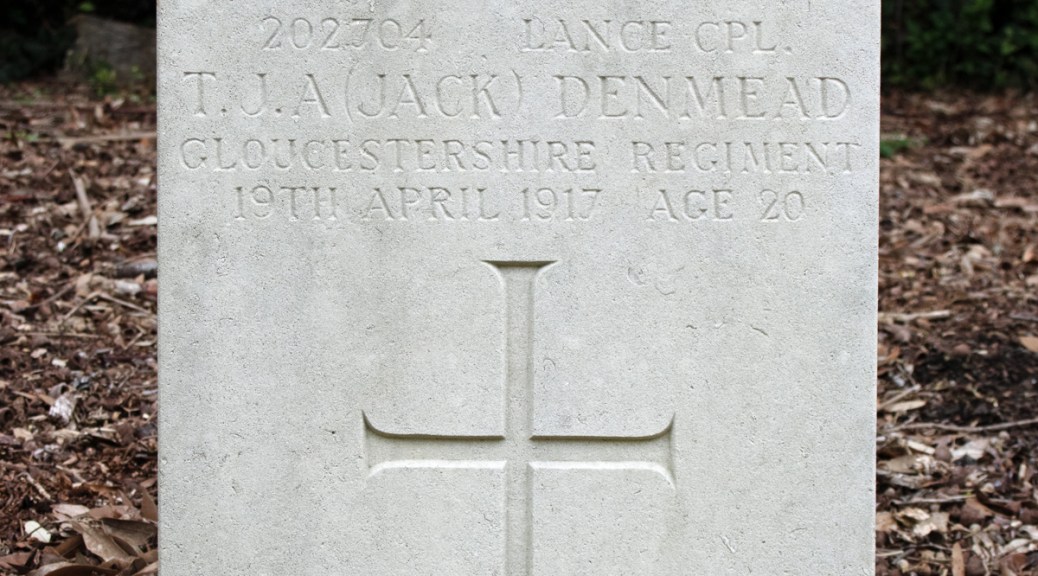
Thomas John Ambrose Denmead – better known as Jack – was born in Yeovil in the summer of 1896. The oldest of seven children, his parents were Thomas and Elizabeth Denmead. Thomas was a glover – the key industry in the Somerset town – who raised his young family in the middle of the town.
When he left school, Jack found work as a clerk at Petters’ Ltd, a local engine manufacturer and iron foundry. War was on the horizon, though, and he enlisted in the spring of 1916.
Jack joined the Gloucestershire Regiment, and was assigned to the 2nd/4th (City of Bristol) Battalion. He was sent to France in May 1916, and was involved in the Attack at Fromelles, part of the larger Somme offensive. He had started as a Private, but rose to the rank of Lance Corporal.
Towards the end of 1916, Jack fell ill. He was medically evacuated to the UK, and was admitted to the Royal General Infirmary in Paisley, Scotland. His condition was serious enough to need an operation, but the Lance Corporal sadly passed away not long after this treatment. He was just 20 years of age.
Jack’s body was brought back to Somerset for burial. He was laid to rest in the cemetery in his home town, Yeovil.
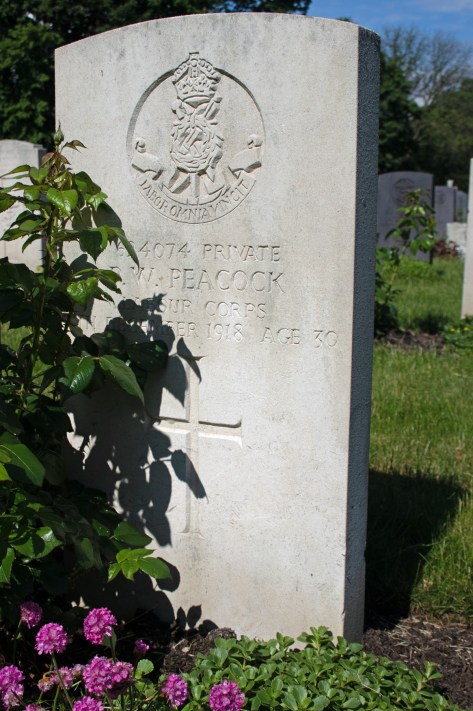
Percival William Peacock was born in early 1888, the son of Thomas and Louisa Peacock. Little information survives about Percival’s early life, other than that he was one of two children, and that, like his parents, he had been born in Gillingham, Kent. Thomas was a sexton and gravedigger, but Percival found work as a hairdresser.
The 1911 census shows him as head of the household in a cottage in the village of Stone, near Dartford; he was living there with his cousin James and his family.
On 21st April 1913, now living in Kensal Green, North London, Percival married Clara Milton, a labourer’s daughter from just a few doors up.
War was now imminent, but again there is limited information about Percival’s involvement. He did enlist, joining the Labour Corps as a Private, but this seems to have been later in the war. He appears to have served on home soil, although there is nothing to confirm this either way.
The next concrete evidence for Percival is the Army Register of Soldiers’ Effects. This confirms that he passed away on 5th December 1918 at the Paddington Military Hospital in London. No cause of death is provided, and the beneficiary given is his father, Thomas. Private Peacock was just 30 years old.
Percival William Peacock was laid to rest in the Grange Road Cemetery in Gillingham, Kent. Hs is commemorated in the nearby Woodlands Cemetery.
Tragedy was not far from the Peacocks’ life. Clara’s mother, Bessie, had passed away just a couple of weeks before Percival. Clara herself died on 5th March 1919, three months after her husband.
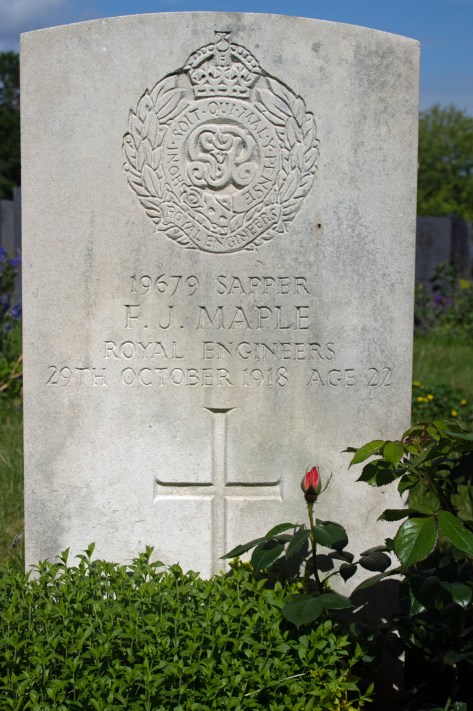
Frederick John Maple was born in 1896, the middle of three children to Royal Engineers Company Serjeant Major Frederick Maple and his wife Amelia. Frederick Jr was born in Brompton, Gillingham, Kent, but it’s interesting to note that the 1901 census gives Amelia’s place of birth as Canada, while Frederick Sr’s is not known.
Frederick Jr lost his father in 1904, and his mother five years later. At the age of just 13, he was an orphan, and this may have spurred him into finding a career. The next census – taken in 1911 – lists him as a Bugler in the Royal Engineers, barracked within walking distance of where he had grown up.
By the time war had broken out – and having come of age – the now Private Maple was assigned to the 15th Field Company. The regiment fought in a number of the key skirmishes of the war, including the Battles of Neuve Chapelle, the Somme, Loos, Ypres and Arras. Frederick went to France in March 1915, although it is not possible to confirm how or if he was involved in these battles. He was awarded the Victory and British Medals and the 1915 Star for his efforts.
Sadly, the next available document for Frederick is the Army Register of Soldiers’ Effects. This confirms that he was admitted to the 2nd London General Hospital in Chelsea, and that he passed away on 29th October 1918. Again, there is no evidence of the cause of his passing, so he may have fallen ill, or been wounded. Either way, Private Maple was just 22 years old when he died.
Frederick John Maple was laid to rest in the Grange Road Cemetery in Gillingham. When this was subsequently turned into a public park, he was commemorated in the neighbouring Woodlands Cemetery.
James Hope Hayden was born in Shorncliffe Military Camp in 1875, the son of Mary Anne Hayden. The youngest of five children, James’ father appears to have died when he was just a toddler; there are no records for him, and Mary Anne – who preferred to caller herself Annie – was listed a a widow by the time of the 1881 census.
The document confirms that Annie was lodging in a house near the Naval Dockyard in Chatham, working as a seamstress. She was living there with her landlady Anne Roberts and her five children, John, William, Annie, Charles and James, who seems to have gone by the name of Mathew.
By the time of the nest census, Annie had moved and was lodging in another house in the same road. She was still employed as a seamstress, and was sharing the rooms with her two youngest children and her brother, William.
The 1901 census finds Annie living in an adjacent road to her previous houses. Head of the household this time, she was working as a laundress. Her brother William was also living there – he was listed as an army pensioner. Mathew is the only one of her children still living with her; he had, by this time, found employment as a labourer in the dockyard.
Moving forward another ten years, and the family have moved one street over. Annie, at 69 years old, remained the head of the household, while Mathew is living there with his wife and three children.
Mathew’s wife is listed as Florence, but there is no record of their wedding, other than the census document which confirms they have been marred for ten years. Mathew is listed as an ex-soldier although again, there is no longer any documentation to confirm this.
From this point, Mathew’s/James’ life goes a bit hazy. The next available record is his army pension document. This confirms that he was a Private in the Royal Marine Light Infantry, under the name James Hope Hayden. By this time, he and Florence had had seven children, although it seems to suggest that they were not actually married.
Sadly, it also confirms that Private Hayden had passed away on 1st May 1917, having been suffering from pneumonia, contracted whilst on active service. He was 42 years old.
Mathew was laid to rest in the Grange Road Cemetery in Gillingham, Kent, under the name James. The cemetery has since been turned into a public park, and he is commemorated in the nearby Woodlands Cemetery.
William Frederick Ridley was born on 7th April 1887 in the New Brompton area of Chatham/Gillingham, Kent, one of eight children to John and Elizabeth Ridley. John was an engine fitter in the nearby naval dockyard and, as the key employer in the area, William followed in his father’s footsteps.
Sadly, John died in 1904, and this seems to have been what spurred his son on to a better life. In 1907 William emigrated to Canada, settling in the town of Wentworth, on the banks of Lake Ontario.
It was in Ontario that William met his future wife. Edith Wass was the daughter of a local labourer; the young couple married on 5th June 1909, and went on to have two children, John, born in 1910, and Wilfred, who was born five years later.
During this time, William was putting his engineering skills to the test; his marriage banns confirm he was a machinist. While there is nothing to confirm any specific trade, given his proximity to the coast, dockyard employment seems probable.
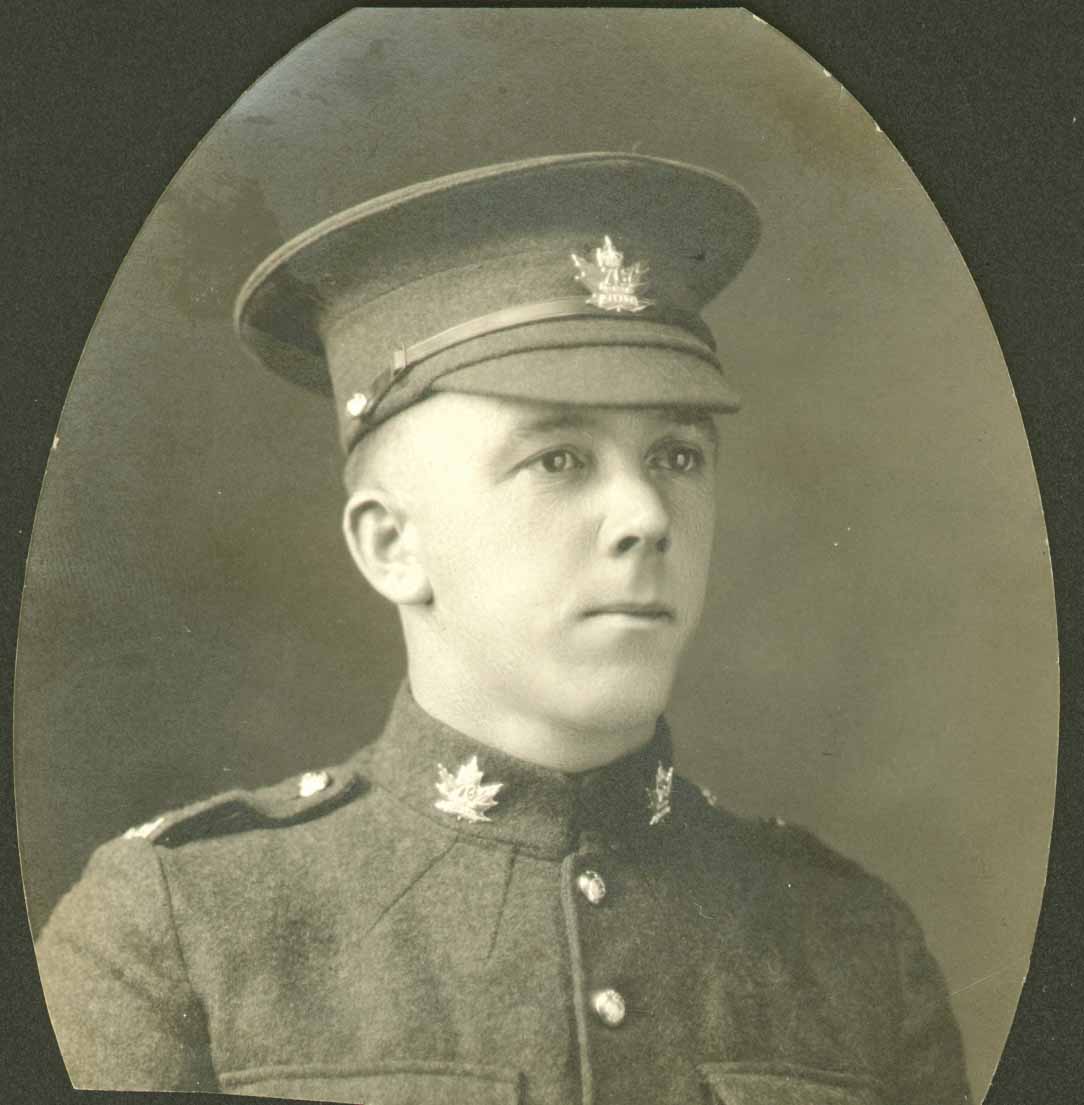
On the other side of the Atlantic, war was breaking out; keen to do his part for King and Country, William enlisted in the Canadian Expeditionary Force on 28th July 1915. Initially enlisting in the 76th Overseas Battalion of the Canadian Infantry, he was shipped to England a year later and transferred across to the 4th Battalion.
Once on the Western Front, Private Ridley was thrown right into the thick of things. His battalion fought at the Battle of Flers-Courcelette – part of the Battle of the Somme – and it was here, on 18th September 1916, that he was wounded.
William received shrapnel wounds to his head, hand and right leg. Initially treated on site, he was quickly evacuated back to England, and admitted to the 2nd London General Hospital in Chelsea. Sadly, however, his wounds appeared to have been too severe; Private Ridley passed away from them on 30th November 1916, aged just 29 years old.
With his widow and children still in Canada, William’s body was taken back to Kent. He lies at rest in the Woodlands Cemetery in Gillingham, close to where his mother was still living.
Joseph Redgrave was born at the start of 1897, the youngest of nine children to Charles and Hannah. Tragically, five of Joseph’s siblings passed away and, by the time of the 1911 census, the family were living in a three-roomed cottage within a few minutes’ walk of Charles’ place of work, the Naval Dockyard in Chatham, Kent.
Sadly, little documentation about Joseph remains. When it comes to his military service, his records confirm that he enlisted prior to November 1916, joining the Army Veterinary Corps as a Private. There is no evidence that he served overseas, but documents place him at the Larkhill Camp just north of Stonehenge in Wiltshire.
Tragically, Private Redgrave died from unrecorded causes at the camp’s hospital on 15th May 1917, at the age of just 20 years old.
Joseph’s body was brought back to Kent; he was laid to rest in the Woodlands Cemetery in Gillingham.
William Osborne is sadly one of those names that seems destined to be lost to time.
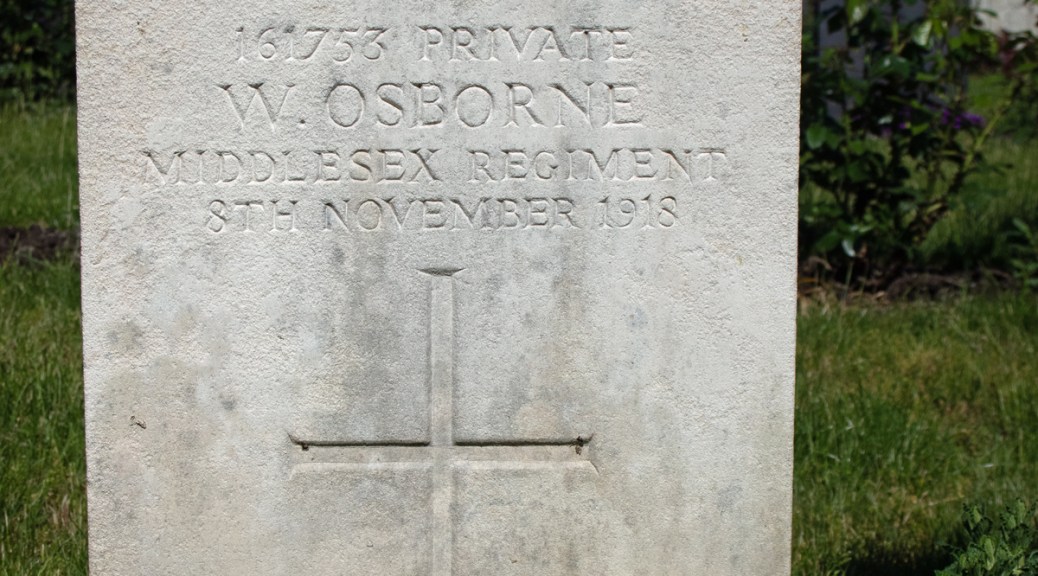
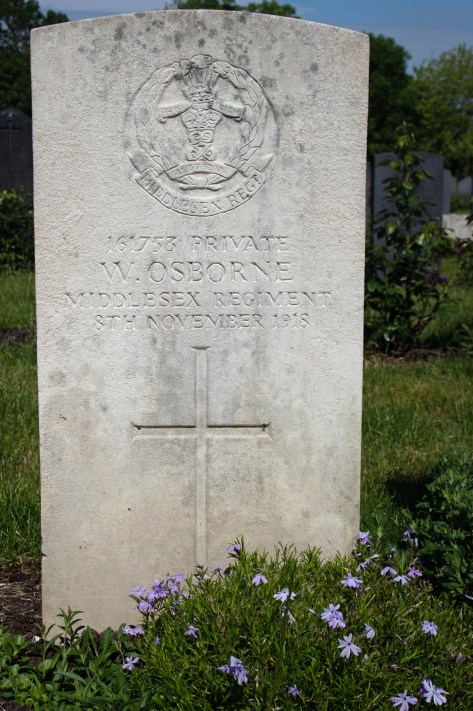
The starting point for any research is always going to be the gravestone; this is situated in the Woodlands Cemetery in Gillingham, Kent and confirms his service number, rank and regiment and the date of his death.
The service number helps confirm his first name, and that his widow was called Eliza, but without his age and confirmation of when he was married, there are too many potential Williams and Elizas/Elizabeths to confirm a definite identity.
The only thing that can be confirmed, therefore, is that William enlisted in the Middlesex Regiment at some point before April 1918, and subsequently transferred across to the Labour Corps. He passed away on 8th November 1918 at the Second Eastern General Hospital in Brighton, Sussex, having contracted pneumonia.
William Osborne lies at rest in that Gillingham Cemetery, not far from where his widow was living.
William Gladstone Jennings was born in Kent, in the summer of 1898, the only child of James and Emma Jennings. James was a marine engineer in the Naval Dockyard in Chatham, and it was here that the family lived.
Sadly, due to his age, and the lack of military service documentation, there is little written about William’s life. He was still at school by the time of the 1911 census, and the next records available confirm that he enlisted in the army. The date for this is not available, but it would have been by May 1917 at the latest and he seems to have enlisted with the surname Hickson, which was possibly his mother’s maiden name.
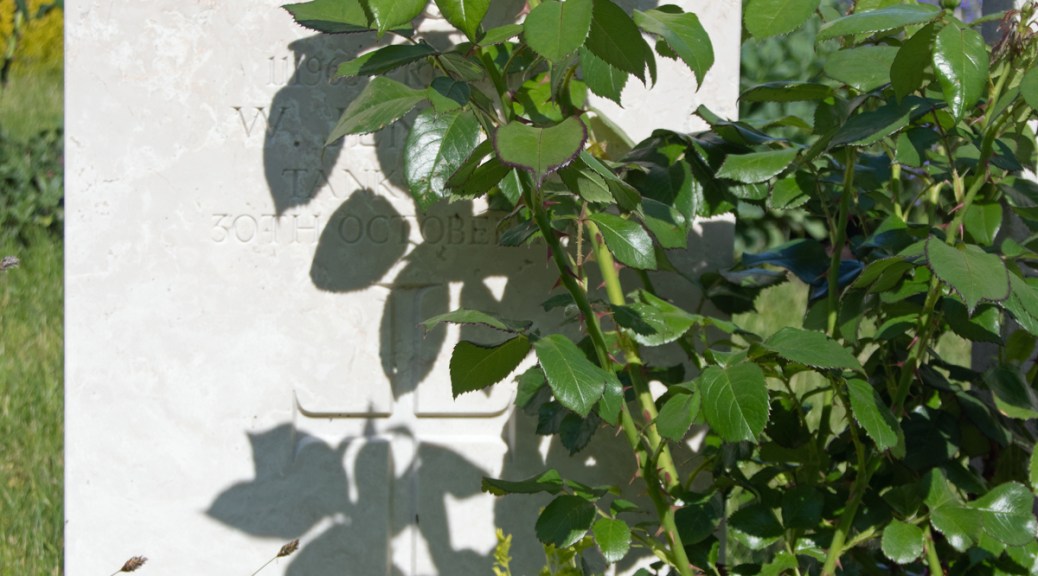
Private Jennings transferred to the Tank Corps when it was formed in July 1917. What his specific role was is lost to time, but it appears that his time in the regiment was short. The next available document is the Army Register of Soldiers’ Effects; this confirms that William passed away on 30th October 1917, in the Military Hospital in Woolwich.
There is no confirmation of the cause of his death, but Private Jennings was just 19 years old.
William Gladstone Jennings was brought back to his home town for burial, and he lies at rest in the Woodlands Cemetery in Gillingham.
Charles William Debney was born in the spring of 1887, one of eight children to George Debney and his wife Susannah. George was a cooper for a cement works, who had brought his family from Norfolk to Kent in the mid-1890s, presumably for employment.
When Charles left school, he found work as a bricklayer; war was on the horizon, though, and when the call came, he signed up quickly.
While full details of Charles’ service are not available, it is evident that he had joined the Northamptonshire Regiment by November 1914. He was assigned to the 5th Service Battalion as a Private. Formed in Northampton, the battalion moved to Kent in the early months of the war, before moving to the Western Front at the end of May 1915.
Sadly, there is limited additional information available on Private Debney. He passed away on 29th May 1915, but there is no confirmation of the cause of his death. He was just 28 years of age.
Charles William Debney was laid to rest in the Woodlands Cemetery, in his home town of Gillingham, Kent.
William Bartin was born in the Somerset village of Montacute in the summer of 1893 and was the oldest of four children to Georgina Bartin. Georgina married George Gaylard in 1895 and, while the 1901 and 1911 censuses record William Gaylard as George’s son, later documentation suggests that George may not have been his father. George was a carter and labourer on a farm, and when he left school, William followed suit.
By the time of the 1911 census, most of the family were working – William was listed as a groom and gardener, while his mother and the oldest of his three sisters were employed as seamstresses.
Little specific information remains of William’s military career. He enlisted as a Private in the Somerset Light Infantry under his mother’s maiden name (and his birth name), Bartin. A local newspaper after he passed provides some information:
[He] enlisted in 1914, was badly wounded and for seven months was treated in the Bethnal Green Hospital, and then sent to the Southern General Hospital, Plymouth, where for 17 months he was treated for lung trouble. He was discharged in 1917 and has been practically ever since under treatment by the Ministry of Pensions. Much sympathy is felt with the bereaved widow and child.
Western Chronicle: Friday 19th November 1920
There are no details of William’s wife or child, albeit that his pension record refuses payment to them as he married after being discharged from the army.
There are similarly no details about the cause of his death, although, based on the newspaper report, it seems likely to have resulted from the lung condition that dogged the last few years of his life.
Private William Bartin died on 17th November 1920, at the age of 27 years old. He was laid to rest in the graveyard of St Catherine’s Church in his home village of Montacute.
George Gaylard had passed away in July 1919, at the age of 47. The Western Chronicle noted that:
There mourners were as follows: Mrs G Gaylard (widow), Mr WC Bartin (step-son), Misses Lucy, Florence and Edith Gaylard (daughters)…
Western Chronicle: Friday 25th July 1919
It was tragic for Georgina to lose both her husband and son within 18 months; it is also sad to note that George’s father – also called George – was still alive, and outlived both his son and step-son.











 Death and Service