Tag Archives: Royal Naval Reserve

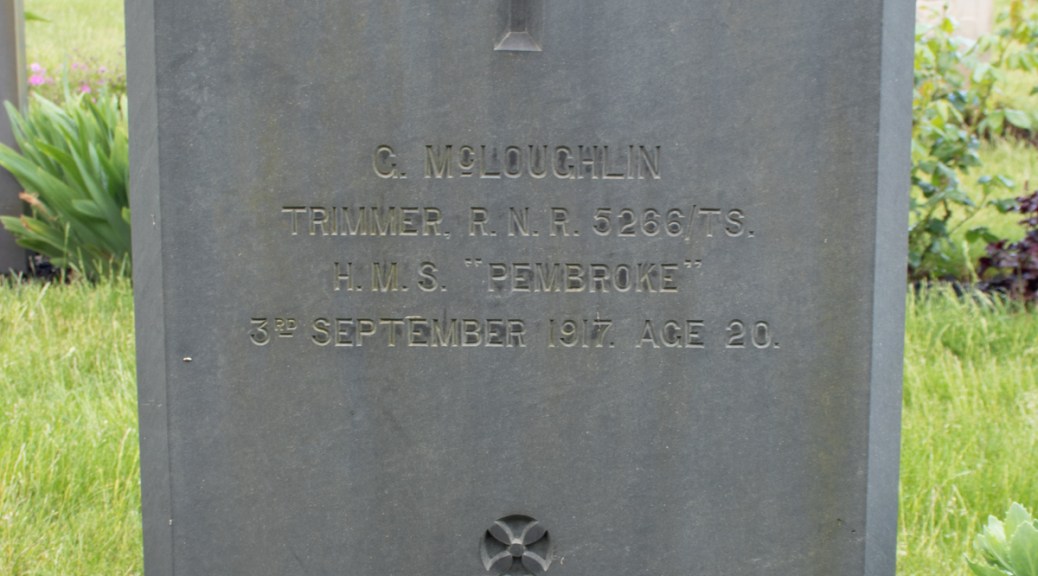
Trimmer Gilbert McLoughlin

Trimmer Gilbert McLoughlin

Gilbert McLoughlin was born in Grimsby, Lincolnshire, on 19th August 1896, one of eight children to Charles and Isabella McLoughlin. Being a fishing port, it is likely that Charles was involved in the industry, and it is no surprise that Gilbert and his siblings followed suit.

When war came to Europe, his skills at sea led to him being brought into the Royal Naval Reserve, and indeed Gilbert joined up on 20th March 1916. His service records show that he stood 5ft 2.5ins (1.59m) tall, had brown eyes and a sallow complexion, and had tattoos on his left arm.

Trimmer McLoughlin was based at HMS Pekin, a shore establishment in Grimsby, from which he would have served on ships patrolling the Lincolnshire coast. He remained posted in his home town until the end of 1916, at which point he moved down the coast to HMS Ganges, the naval base in Ipswich.

Gilbert made a further move in July 1917, when he was posted to HMS Pembroke, the Royal Naval Dockyard in Chatham, Kent. The base was particularly crowded that summer, and he was billeted in temporary accommodation set up in the barracks’ Drill Hall.

On the night of 3rd September, Chatham came under attack from a German air raid, and the Drill Hall received a direct hit. Trimmer McLoughlin was among those to be killed that night. He was just 20 years of age.

Gilbert McLoughlin was laid to rest in the Woodlands Cemetery in Gillingham, Kent, alongside the other victims of the Chatham Air Raid.


Gilbert’s older brother Joseph McLoughlin was also a victim of the First World War. As the conflict began, he continued his work as a trawlerman, although the role of his ship – the Kilmarnock – now also included elements of mine location.

On the afternoon of the 22nd September 1914, the Kilmarnock left Grimsby on a routine trip. She was around thirty miles offshore when the captain spotted floating mines ahead.

The skipper put out a buoy to mark the position, and intended returning to port to report the matter to the Admiralty authorities, but seeing some naval vessels in the distance he made towards them instead with the object of reporting.

Whilst doing so an explosion occurred amidships, and the vessel was blown into two parts, which sank immediately.

The skipper was blown to pieces on the bridge and the chief engineer badly injured.

The naval vessels, attracted by the explosion, hurried to the spot, picked up the wounded engineer, mate, and one member of the crew.

Boston Guardian: Saturday 26th September 1914

Joseph was one of the six crewmen to be killed in the incident. He was just 19 years of age.


Seaman James Anderson

Seaman James Anderson

James Anderson was born on 9th April 1892 in Galway, Ireland. He was one of eleven children to labourer Thomas Anderson and his wife, Mary. Thomas was a labourer and fisherman, and it was into the sea-faring life that James entered into when he finished school. The 1901 census notes that the family were Roman Catholic, and that, while not all of them were able to read and/or write, those that could – James included – could do so in both English and Irish.

James was set on using his knowledge of boats to build a career for himself and, on 9th December 1911, he enrolled in the Royal Naval Reserve. His service records show that he was 5ft 3.5ins (1.61m) tall, had a fresh complexion and blue eyes.

Over the next few years, Seaman Anderson served on a number of different vessels, plying the seas around Ireland, to and from Liverpool. He was on board the Cressy when war was declared, and within a couple of weeks, he had been stationed at HMS Pembroke, the Royal Naval Dockyard in Chatham, Kent.

There is little information about James’ life during the war, although, as he appears to have been permanently based at HMS Pembroke, it is likely that his skills were being put to training new recruits, rather than serving at sea.

As the war progressed, Chatham Dockyard became busier. In the summer of 1917, the base became so overcrowded that temporary accommodation was set up in the barracks’ Drill Hall: this is where Seaman Anderson found himself billeted.

On the 3rd September 1917, the first night air raid carried out by the German Air Force bombarded the town, and scored a direct hit on the Drill Hall; Seaman Anderson was among those killed that night. He was just 25 years of age.

James Anderson was laid to rest, along with the other victims of the Chatham Air Raid, in the Woodlands Cemetery, Gillingham.


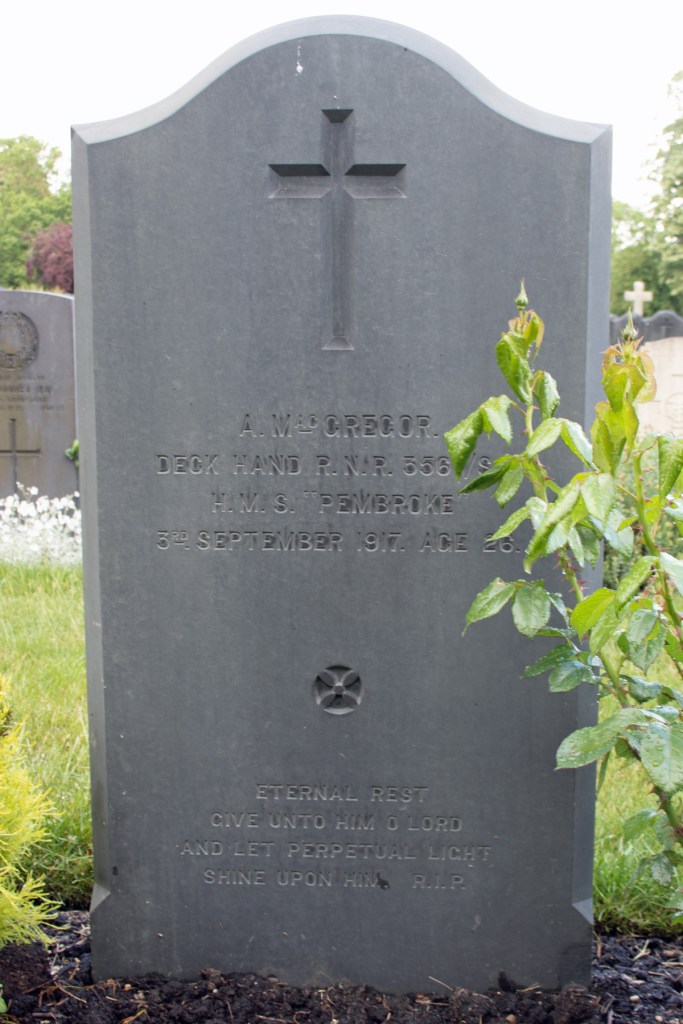
Deck Hand Alexander MacGregor

Deck Hand Alexander MacGregor

Alexander MacGregor was born on 1st January 1890 in the Scottish village of Acharacle. The oldest of eleven children, his parents were Dugald and Mary MacGregor.

There is little concrete information about Alexander’s early life, but, by the outbreak of war, he had moved to London. He married a woman called Bridget in around 1916: the couple settled in Battersea, and went on to have a son, Peter, who was born in December 1916.

Alexander had, by this point, signed up to play his part in the European conflict. He joined the Royal Naval Reserve as a Deck Hand on 1st December 1915. His service records confirm that he was 5ft 7.5ins (1.71m) tall, had grey eyes and a medium complexion. The section of the Royal Navy that he joined suggests that he had had previous sea-faring experience (given the proximity of his home village to the Argyll coast, this is not surprising).

Deck Hand MacGregor’s was assigned to HMS Pembroke, the Royal Naval Dockyard in Chatham, Kent. Details of his military service are unclear, but he spent just under two years at the dockyard. By the summer of 1917, the base was a busy and cramped place, and Alexander found himself billeted in temporary accommodation set up in the barracks’ Drill Hall.

On the night of the 3rd September, the German Air Force conducted the first night time raid on England. Chatham came in the firing line, and the Drill Hall received a direct hit. Deck Hand MacGregor was among those to be killed. He was just 27 years of age.

Alexander MacGregor was laid to rest in the Woodlands Cemetery in nearby Gillingham, along with the other victims of the Chatham Air Raid.


Seaman Alexander Kennedy

Seaman Alexander Kennedy

Alexander Kennedy was born in Cromore on the Isle of Lewis on 15th June 1895. He was one of five children – four of them boys – to John and Isabella Kennedy.

Living in the remote coastal township, he would have grown up knowing the sea and, when the opportunity arose, he volunteered for the Royal Naval Reserve. His service records show that he enlisted on 12th December 1913; they also note that he was 5ft 6.5ins (1.69m) tall, had blue eyes, a fresh complexion and a scar under his chin.

Seaman Kennedy was kept on a retainer until war broke out the following summer, at which point he was sent to the other end of the country – HMS Pembroke, the Royal Naval Dockyard in Chatham, Kent – for formal training. His time in the navy was then split between the dockyard and the battleship HMS Implacable.

Over the next couple of years, Seaman Kennedy toured the Mediterranean, berthing in Egypt, Malta and Gibraltar between stops back in the ports on the English coasts. By the summer of 1917, he had returned to HMS Pembroke for good.

At that point in the war, Chatham Dockyard was a particularly busy place, and Alexander was billeted in overflow accommodation set up in the naval barracks’ Drill Hall.

On the night of the 3rd September, the German Air Force conducted the first night time raid on England. Chatham came in the firing line, and the Drill Hall received a direct hit. Seaman Kennedy was among those killed. He was just 21 years of age.

Alexander Kennedy was laid to rest in the Woodlands Cemetery in nearby Gillingham, along with the other victims of the Chatham Air Raid.


Seaman Alexander Kennedy
(from ancestry.co.uk)

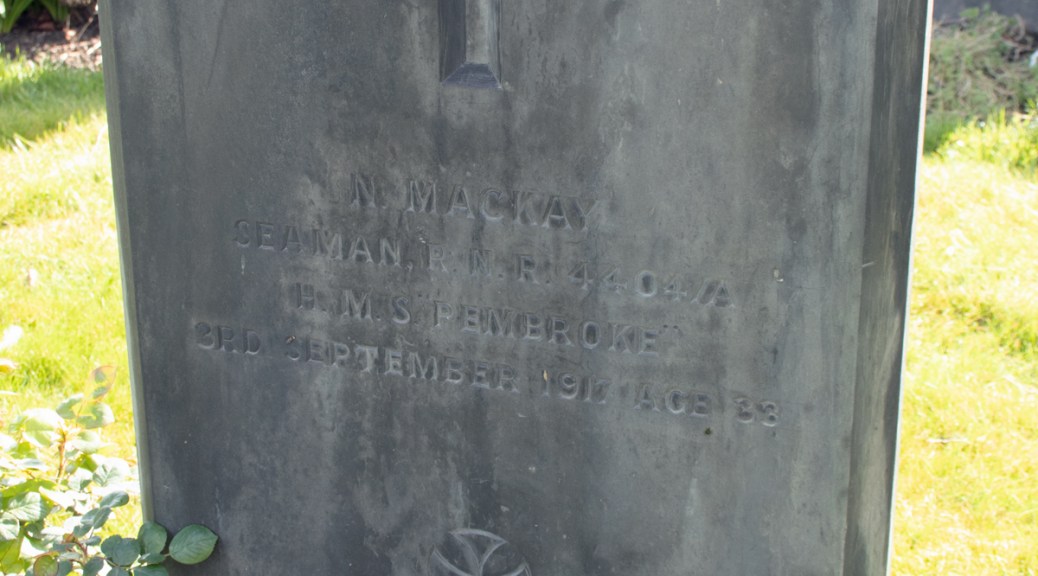
Seaman Neil Mackay

Seaman Neil Mackay

Neil Mackay was born on 16th September 1888 in Stornoway, Scotland, the son of Murdoch and Johanna (known as Murdo and Annie) Mackay.

Sadly, little information remains about his early life; most of what can be gleaned comes from his Royal Naval Reserve records. The document confirms that he was 5ft 9ins (1.75m) tall, had blue eyes, a dark complexion and a scar between his eyes.

Neil enlisted as a Seaman on 3rd September 1912 and, over the next couple of years, he travelled the world, visiting Maine in the United States, New Zealand and Newfoundland on his voyages.

When war broke out, he was assigned to HMS Northbrook, a troopship taking soldiers to India; he returned to the United Kingdom on HMS Dalhousie, in 1915, before making the same round trip, this time on HMS Lawrence, later that year.

In April 1916 Seaman Mackay returned to England, and was based at HMS Pembroke, the Royal Naval Dockyard in Chatham, Kent, for around eighteen months.

The summer of 1917 was to prove a busy time at HMS Pembroke, and Neil found himself billeted in temporary accommodation in the barracks’ Drill Hall. On 3rd September 1917, the town came under fire from a German air raid; the Drill Hall received a direct hit and Neil was killed. He was just shy of his 29th birthday and had completed five years’ service that day.

Neil Mackay was among 98 servicemen to be killed during the Chatham Air Raid that night. The victims were laid to rest in a mass funeral at Woodlands Cemetery in nearby Gillingham a few days later.


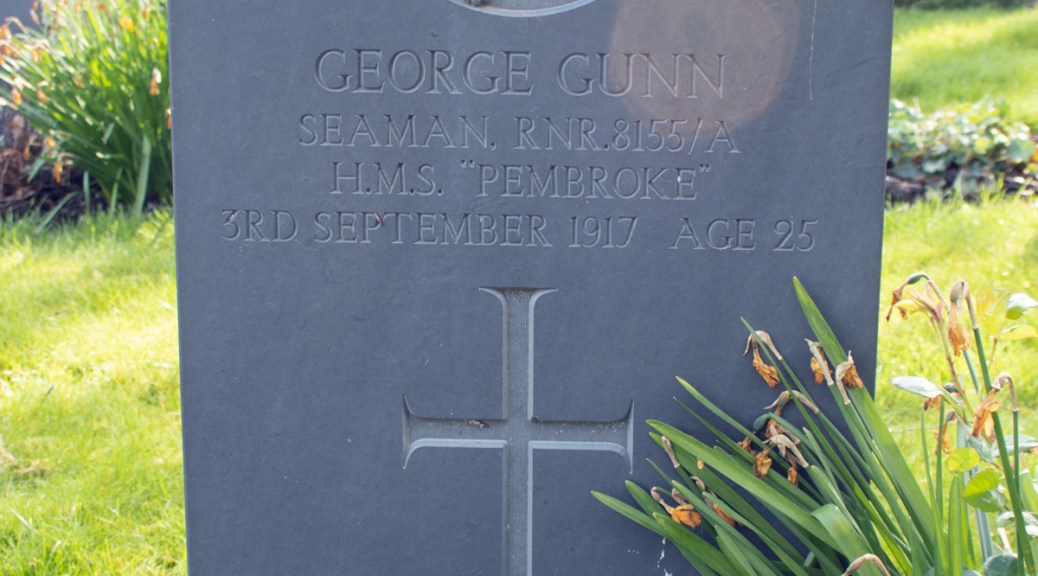
Seaman George Gunn

Seaman George Gunn

George Gunn was born on 15th October 1891, the middle of three children to William and Hughina Gunn. The family lived in the hamlet of Skerray on the North Scottish coast.

Sadly, there is little information about George’s life. When was broke out, he enlisted in the Royal Naval Reserve, which suggests that he had experience of going to sea, although this is likely, because he lived in a coastal village.

George’s service records show that he was 5ft 10.5ins (1.79m) tall, had grey eyes and a fresh complexion. Under ‘personal marks’ the document noted that he had a dimple in his chin.

Seaman Gunn spent most of his time on land; he was initially posted to HMS Pembroke, the Royal Naval Dockyard in Chatham, Kent. In June 1915, however, he was assigned to the minelayer HMS Orvieto, and spent the next year patrolling the North Sea.

By the spring of 1916, George was back in Chatham; by August he was on the move again, this time to London, where he spent twelve months at HMS President, the Royal Naval Base in London. He returned to HMS Pembroke on 3rd September 1917, a move that was to prove fatal.

The base was a particularly busy place that summer, and George was billeted in overflow accommodation in the barracks’ Drill Hall.

That night, Chatham was bombarded by a German air raid, and the Drill Hall received a direct hit. Tragically, Seamen Gunn was among those killed. He was just 24 years old and has been at HMS Pembroke for a matter of hours.

George Gunn’s body, along the other victims of the Chatham Air Raid, was laid to rest in the Woodlands Cemetery in Gillingham, more than 500 miles from home.


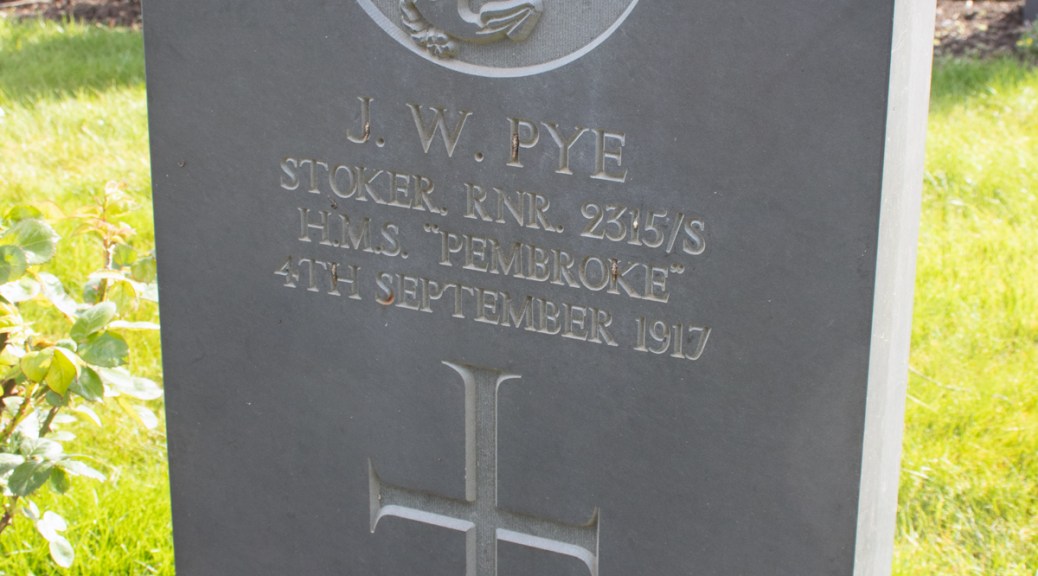
Stoker James Pye

Stoker James Pye

James William Pye was born on 14th August 1892, the oldest of ten children to James and Florence Pye. James Sr was a carter from Lowestoft, Suffolk, and this is where and he and Florence raised their family.

James Jr sought bigger and better things, and a career: he does not appear on the 1911 census, but, on 8th February 1912, he enlisted in the Royal Naval Reserve as a Stoker. His service records confirm that he was 5ft 7ins tall, had a fresh complexion and blue eyes. He was, by this point, living in Bungay, but no further information is given.

James was officially mobilised on 18th August 1914, and was sent to HMS Pembroke, the Royal Naval Dockyard in Chatham, for training. The following year Stoker Pye was assigned to the armoured cruiser HMS Shannon. He spent nearly two years on board, before returning to Chatham.

The summer of 1917 was a particularly crowded time at HMS Pembroke; additional space for the crews was needed, and the barracks’ Drill Hall was given over to accommodation. This is where James found himself billeted for his 25th birthday.

On the night of 3rd September, Chatham came under attack from a German air raid, and the Drill Hall received a direct hit. Stoker Pye was badly injured and admitted to the Chatham Naval Hospital; he succumbed to his injuries the following day.

James William Pye was laid to rest in the Woodlands Cemetery in Gillingham, Kent, alongside the other victims of the Chatham Air Raid.


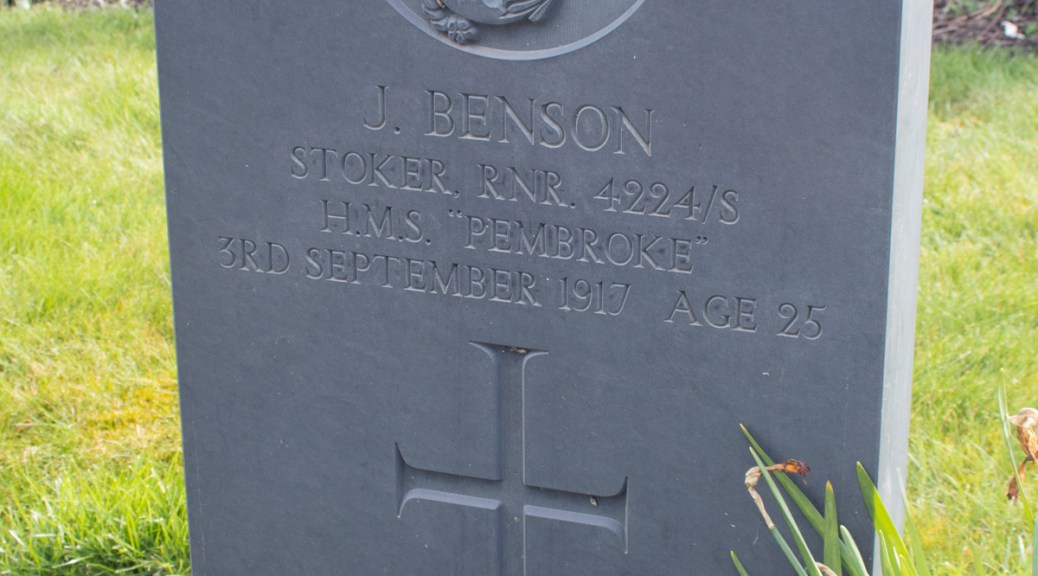
Stoker John Benson

Stoker John Benson

John Benson was born on 29th April 1892, the second of eleven children to Thomas and Annie Benson. Thomas was from Grays, Essex, and this is where the barge captain raised his growing family. While it is likely that John would have also experienced life on the water, by the time of the 1911 census, he was recorded as being a labourer at the town’s brewery.

When war broke out, it’s evident that John wanted to play his part. On 18th November 1914 he enlisted as a Stoker in the Royal Naval Reserve, and was based at HMS Pembroke, the Royal Naval Dockyard in Chatham, Kent.

Stoker Benson’s service records show that he was 5ft 3.5ins (1.61m) tall, had blue eyes and a fair complexion. He was also noted as having a number of tattoos on his forearms, including clasped hands, a bird and a lady’s head.

While John was primarily based at HMS Pembroke, he also served at sea; this included two years on board the cruiser HMS Grafton. In July 1917, however, he returned to Chatham again.

The Royal Naval Dockyard was a busy base that summer, so much so that temporary accommodation was set up in the barracks’ Drill Hall: this is where Stoker Benson found himself billeted.

On the night of the 3rd September, the German Air Force conducted the first night time raid on England. Chatham came in the firing line, and the Drill Hall received a direct hit. Stoker Benson was among those to be killed. He was just 25 years of age.

John Benson was laid to rest in the Woodlands Cemetery in nearby Gillingham, along with the other victims of the Chatham Air Raid.


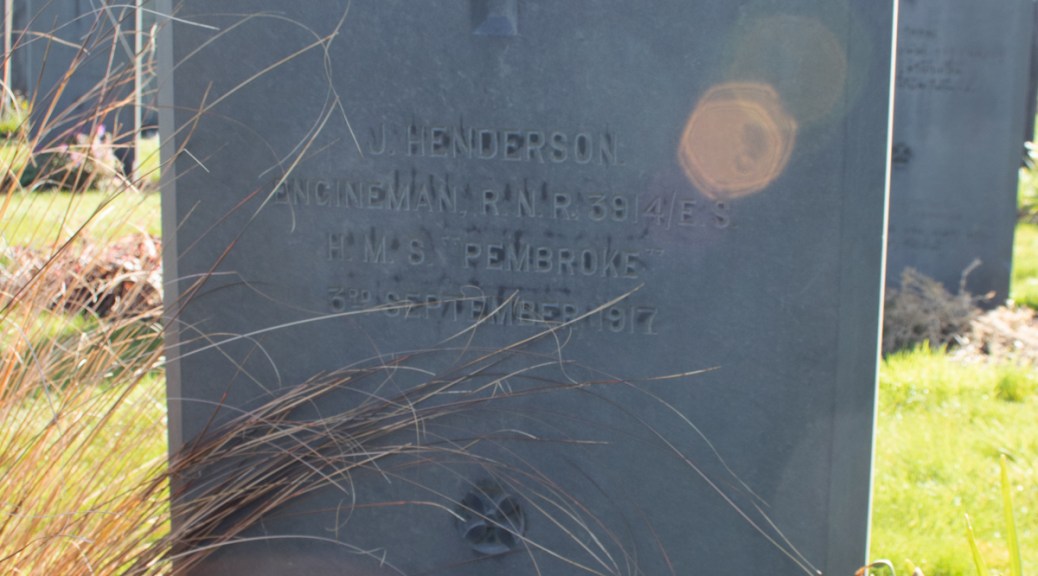
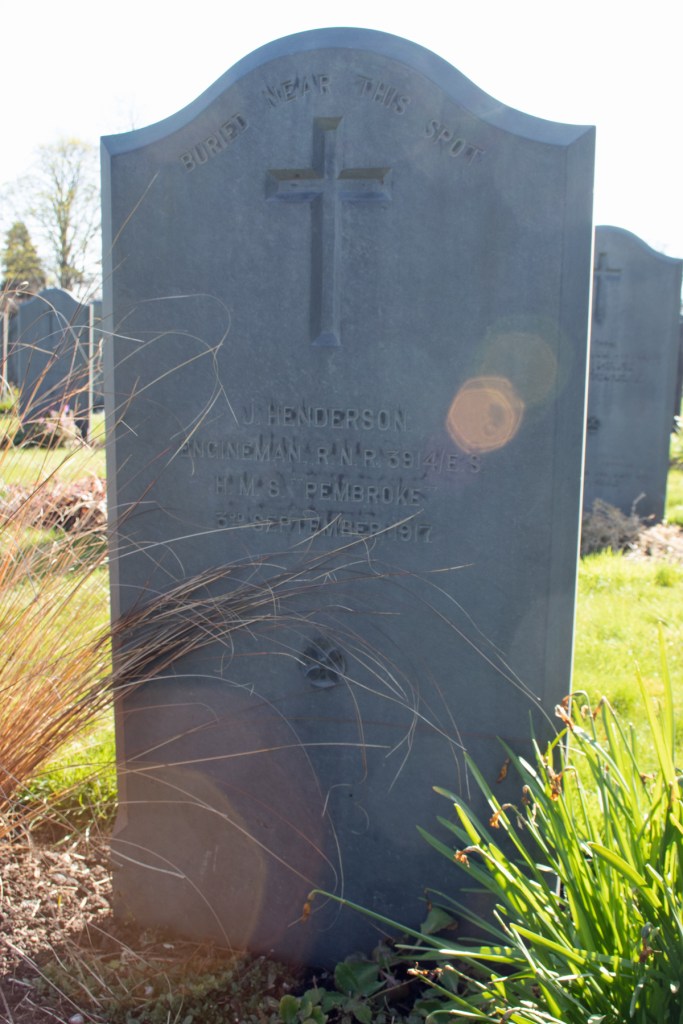
Engineman John Henderson

Engineman John Henderson

John Henderson was born on 21st May 1887 in Leith, near Edinburgh. His parents were John William Henderson (known by both of his first names) and Matilda Jane Henderson (known as Jane), and he was one of eight children.

There is little documented about John’s early life and, in fact, the main information about him comes from his service records during his time in the Royal Naval Reserve. Before enlisting he was already involved in shipping in some form – again, however, this is not detailed – but he formally enlisted on 13th August 1915, serving as an Engineman.

John’s records confirm that he was 5ft 4.5ins (1.63m) tall, with blue eyes and a ruddy complexion. He was also noted as having a couple of tattoos on his forearms, including a pair of clasped hands over a heart.

All of Engineman Henderson’s postings were shore-based. He was initially assigned to HMS Columbine, the naval base at Port Edgar, on the Firth of Forth. This was bring constructed at the time, and John was employed as part of that construction process. While here, he was injured on his left hands while laying some cables in April 1916 and lost the tip of his finger.

When he had recovered, Engineman Henderson was transferred to HMS Gunner, the Granton Naval Base in Edinburgh. He spent fifteen months working there, before being assigned to HMS Pembroke, the Royal Naval Dockyard in Chatham, Kent, in August 1917.

The Dockyard was particularly busy that summer, and the large number of extra servicemen meant that John was billeted in temporary accommodation in Chatham Drill Hall.

On the 3rd September 1917, the first night air raid carried out by the German Air Force bombarded the town, and scored a direct hit on the Drill Hall; Engineman Henderson was among those killed that night. He was just 30 years of age.

John Henderson was laid to rest, along with the other victims of the Chatham Air Raid, in the Woodlands Cemetery, Gillingham.


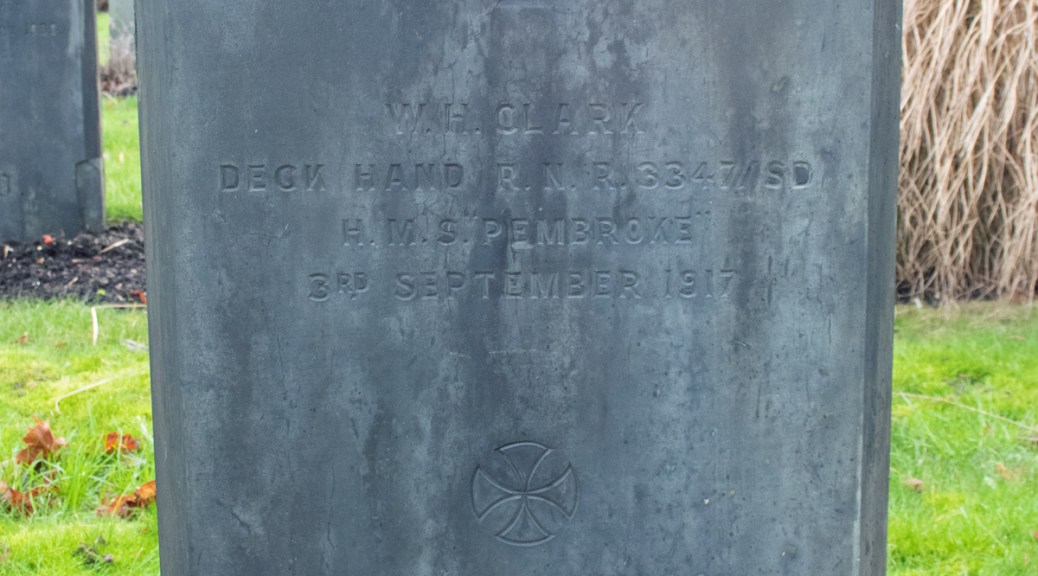
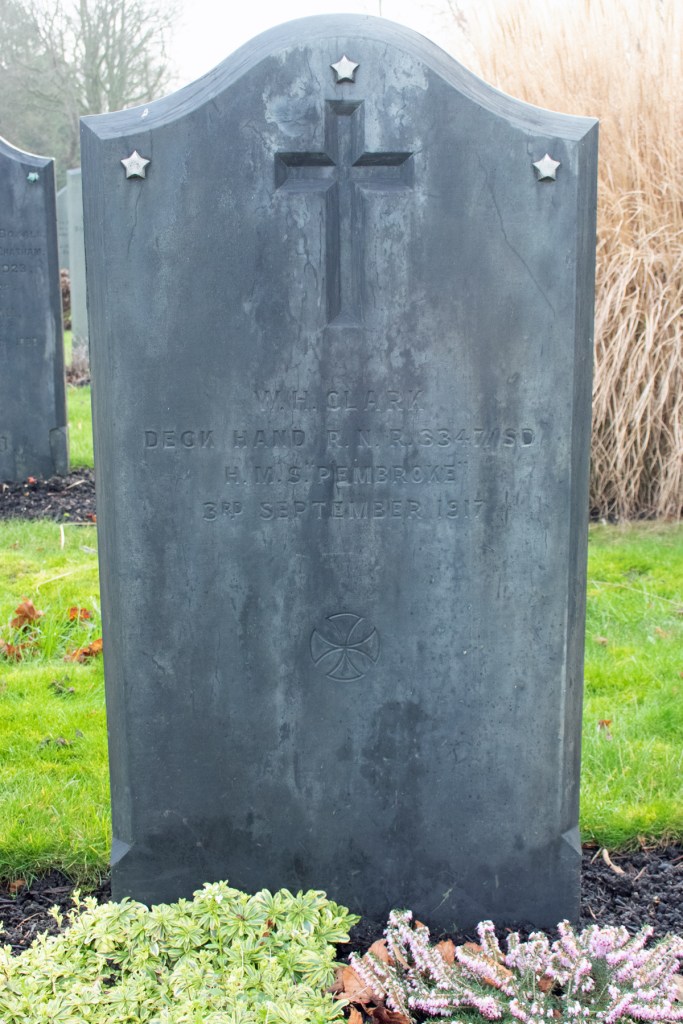
Deck Hand William Clark

Deck Hand William Clark

William Henry Clark was born in Whitby, North Yorkshire, on 15th March 1884 and was the younger of two children to James and Fanny Clark. Fisherman James drowned in September 1885, when the boat owned by his brothers-in-law – Robert and Mark Dryden – capsized.

Fanny and her children moved in with her Robert and her widowed mother, Martha, who was a lodging house keeper. In the spring of 1892, she married quarry labourer William Bennison. Her and James’ two children remained living with their grandmother; she went on to have three children with her new husband.

The 1901 census recorded young William working as a rivet heater in the local iron shipyard. He progressed in his work and, by the next census in 1911, remained living with his grandmother and uncle, but was working as a boilermaker in the shipyard.

When war broke out, William was called upon to play his part. While he had done engineering work, he also worked with his Uncle Robert on his fishing boat; this meant he was placed on reserve in the Royal Navy, and was not formally called upon as a Deck Hand until November 1915. Full details of his service are not available, but it is clear that he was based at HMS Pembroke – the Royal Naval Dockyard in Chatham, Kent – by the summer of 1917.

HMS Pembroke was a generally bustling place, but by the summer of 1917, it had exceeded capacity to the point where temporary accommodation was set up. William found himself billeted at The Drill Hall, away from the main barracks.

On the night of 3rd September 1917, Chatham suddenly found itself in the firing line, as the German Air Force launched a bombing raid. One of the bombs landed squarely on the Drill Hall, and Deck Hand Clark was killed. He was 33 years of age.

Ninety-eight servicemen perished during the Chatham Air Raid that night. They were buried in a mass funeral at the Woodlands Cemetery in nearby Gillingham. This is where William Henry Clark was also laid to rest.


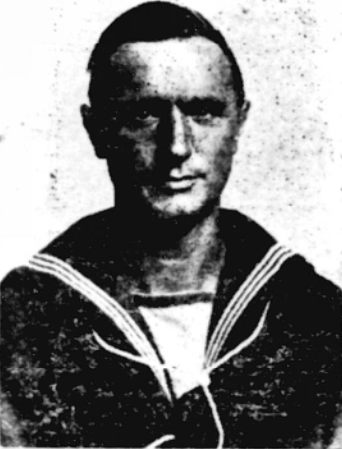
Deck Hand William Clark
(from britishnewspaperarchive.co.uk)

A local newspaper had reported on William’s father’s death:

FATAL COBLE ACCIDENT: SURVIVOR’S NARRATIVE

We append the personal account of Robert Dryden, who was capsized along with his two comrades, James Clark and Mark Dryden, in the fishing coble Ann Maria… off Robin Hood’s Bay, on the morning of Saturday, the 19th inst. The tale tells of the marvellous escape of the narrator and of the sad drowning of his two mates, who each leave a widow and two children. The survivor, who is a stout and healthy fellow, had his left leg amputated some years ago, and a wooden support substituted. The following is his account:

“We were coming in from the fishing grounds on Saturday morning in our coble under a three-reefed sail, with two hundred herrings. There was a stiff breeze blowing form the south-east, with occasional squalls, and it was very dark. We should be, I reckon, about two miles from land… I had just gone into her head to see how she was coming for the land, leaving Mark at the helm, when a puff of wind took her on the starboard quarter and sent her over. We were floated out, and she sank directly, each of us catching hold of an oar.

“Just then a steamer passed us, and we shouted, but could not get their attention, and we all swam about, talking to each other, and I told them to keep their hearts up. We all had knee boots on, and, poor Jim, I think he must have been caught by the cold, for about twenty minutes after he sank. He was a fine fellow, as fine a fellow as you would meet in the streets.

“Shortly after he had gone, poor fellow, a tug boat passed us with a black and flesh-coloured funnel. I was too exhausted to shout much, and had to swim across her bows to keep clear. When she had passed, poor Mark had disappeared. I could then see the land, and with the sea beating on my left shoulder I set out for it…

“I was very disheartened after losing my mates, and all I had – for the coble belonged half to me and half to my brother – nets, money, and, all together, about £60 had gone…

“After a long swim, I neared the shore, and swam for the Blue Rock, because I could not swim further to a calm spot. I found myself on the rock after being, I think, knocked senseless by the seas. I climbed the cliff – it’s a bad coast about here – and walked for about two miles before I met anyone…

“I was several times almost in despair when in the water, and was much distressed at having to return with such a sad tale… It’s a great loss to me. Jim was my brother-in-law, and was 29 years of age, and Mark was my cousin, and 23 years old. It’s thirteen years since I had my other narrow escape, and I would sooner go to the poor-house than go through such another time of it.”

By this melancholy accident, two families have been plunged into deep grief and dire poverty, and deserve the sympathy and practical support of all kind and well-to-do-people.

Whitby Gazette: Sunday 26th September 1885