Tag Archives: Sergeant

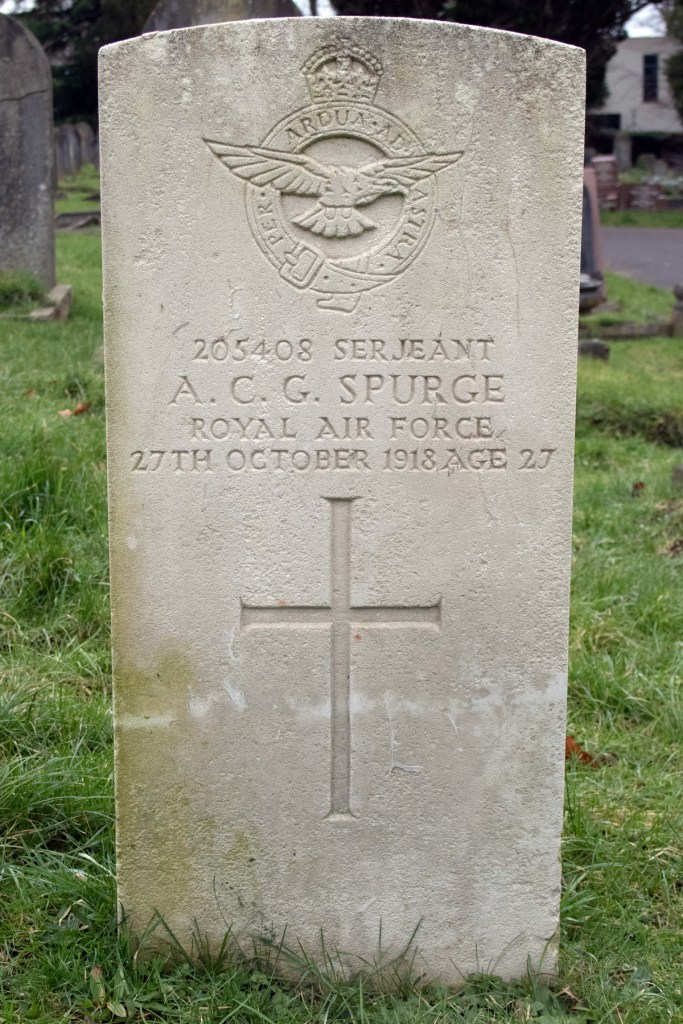
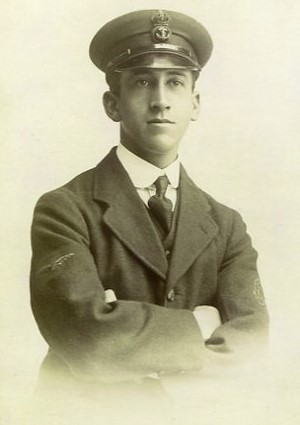
Serjeant Algernon Spurge

Serjeant Algernon Spurge

Algernon Carlyle Graham Spurge was born on 27th August 1891 in Bath, Somerset. The middle of five children, his parents were Algernon and Ida Spurge.

Algernon Sr was a portrait photographer, based in the Twerton area of the city, and this was very much a family business. The 1901 census recorded the Spurges as living in Victoria Road, Bath, with Ida’s brother, Tom Leaman, who was working as a photographic reloader.

Later that year, however, things were to take a turn for the worst. Algernon Sr seems to have been having some business worries and, on the morning of 16th December, he set off for work as usual. His and Ida’s daughter, also called Ida, arrived at the studio to find her father in some distress, a bottle of potassium cyanide – used as part of the photographic process at the time – next to him. He asked Ida to fetch him some water and salt, but when she returned, he declared it was too late, and lost consciousness. A doctor was called, but Algernon passed away shortly after he arrived.

A note was found, which read “My dearest wife, I really cannot stand the worry and anxiety of another day, to say nothing of weeks and perhaps months. Ask Mr Ashman and Mr Withy to be kind enough to help you straighten out matters a little. My best love to you and all my dear ones. AS” [Somerset Guardian and Radstock Observer – Saturday 21 December 1901] Ashman and Withy were family friends, who were also in the photography business.

An inquest was held and a verdict of suicide while temporarily insane was recorded.

The family rallied round, and Algernon’s widow and children moved in with Ida’s widowed mother in Bristol. Algernon’s daughter Ida continued working in photography, and Algernon Jr also took up the business. The 1911 census found him boarding with, and working for, his uncle Tom in Bath.

War was closing in on Europe by this point and, when it was declared, Algernon stepped up to play his part. He enlisted in the Royal Naval Air Service on 4th June 1915 as a Leading Mechanic (Photography). His service records show that he was 5ft 5ins (1.66m) tall, with dark brown hair, brown eyes and a dark complexion.

Algernon was initially assigned to the shore establishment HMS President in London for three years, rising to the rank of Petty Officer Mechanic (Photography). In April 1918, when the Royal Air Force was created he transferred across to HMS Daedalus in Lee-on-Solent, Hampshire, and rising to the rank of Sergeant Mechanic.

That autumn, with the end of the war in sight, Algernon fell ill. He contracted influenza, and this developed into pneumonia. He was admitted to the Military Hospital in York, but the conditions were to prove too much for his body to take. He died on 27th October 1918, aged just 27 years old.

The body of Algernon Carlyle Graham Spurge was brought back to Somerset for burial. He was laid to rest in St James Cemetery, Bath, not far from his father. When Ida passed away in 1926, she was buried in the same cemetery, father, mother and son reunited once more


Serjeant Algernon Spurge
(from ancestry.co.uk)

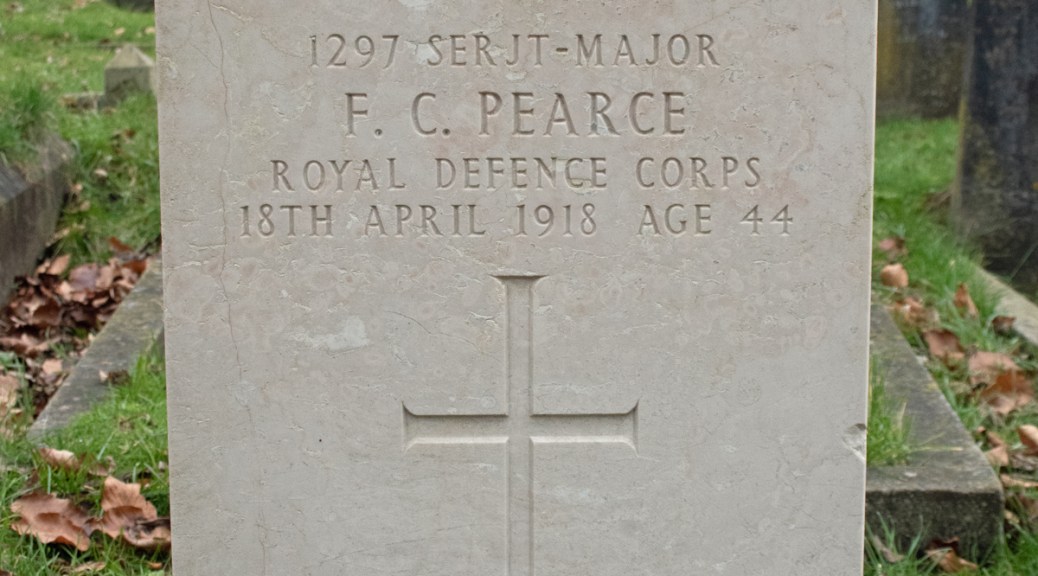
Serjeant Major Frederick Pearce

Serjeant Major Frederick Pearce

Frederick Charles Pearce was born in the spring of 1873 in the Gloucestershire town of Thornbury. The youngest of six children, his parents were Thomas and Elizabeth Pearce. Thomas was an agricultural labourer and, when he finished school, Frederick found work as a ‘rural messenger’.

This was only a step towards the career that Frederick sought, however, and on 12th July 1892, he enlisted in the Gloucestershire Regiment a a Private. His service records show that he was 5ft 5ins (1.65m) tall and weighed 128lbs (58kg). He was noted as having a fresh complexion, blue eyes and brown hair.

Private Pearce spent twelve years in the army, serving in Malta, Egypt, India and Ceylon (Sri Lanka). He had two stints in South Africa, including the 1899-1900 campaign, during which he was wounded in his chest in the battle at Farquhar’s Farm.

By the time he was discharged on 11th July 1904, he had risen through the ranks to Sergeant, his service records noting that his conduct had been “very good” (in capitals and underlined).

Thomas had died in 1896, and Frederick’s widowed brother William moved back in with his mother to help support her. Frederick also returned to Gloucestershire and, on 30th March 1905, he married Mary Rugman in the parish church in Olveston. The couple may have been childhood sweethearts, as the Pearces and Rugmans were Thornbury neighbours.

The marriage certificate noted Frederick as a groom, and it is likely that he was able to turn his hand to any role after his army career. The couple had a son Leslie, who was born in 1909, and, with the new responsibility of fatherhood, Frederick sought a more permanent career.

The 1911 census found the family living in Somerset, where Frederick was employed as a gardener at the Kingswood Reformatory School. This was a boarding school on an estate to the north of Bath, set in 57 acres of grounds, and again it seems likely that his military career stood him in good stead for such a prestigious role.

When war came to Europe, Frederick felt the pull of his military career once more. While his age did not compel it, on 20th November 1914, he re-enlisted in the Gloucester Regiment. He was enlisted with his previous rank, but within a year has been promoted to Acting Colour Sergeant.

In the spring of 1916, the Royal Defence Corps was formed, and, given his experience and age, Frederick was transferred across to the new regiment. Colour Sergeant Pearce was based in London and, over the next eighteen months served in four troops: 109, 149 and 150 Protection Companies and the 10th City of London Volunteers’ Regiment.

Frederick’s age and the demands of his role were beginning to take their toll by this point, and by the end of 1917, he had developed nephritis, or inflamed kidneys. The condition was severe enough to warrant his discharge from service, and the now Sergeant Major Pearce’s military career came to an end on 17th January 1918.

Frederick returned home to Bath, to the bosom of his family. He and Mary three children by this point, Violet and Freddie being two younger siblings to Leslie. Tragically for the Pearces, however, the family life was not to to last for long: Frederick’s condition was to get the better of him just three months later. He passed away on 18th April 1918, at the age of 44 years old.

Frederick Charles Pearce was laid to rest in St James’ Cemetery in Bath; a man of duty resting at last.


Tragedy was to strike again for poor Mary, when just six months later her youngest child, Freddie, also passed away. Details of his death are vague, but he was buried with his father, the two Fredericks reunited too soon.


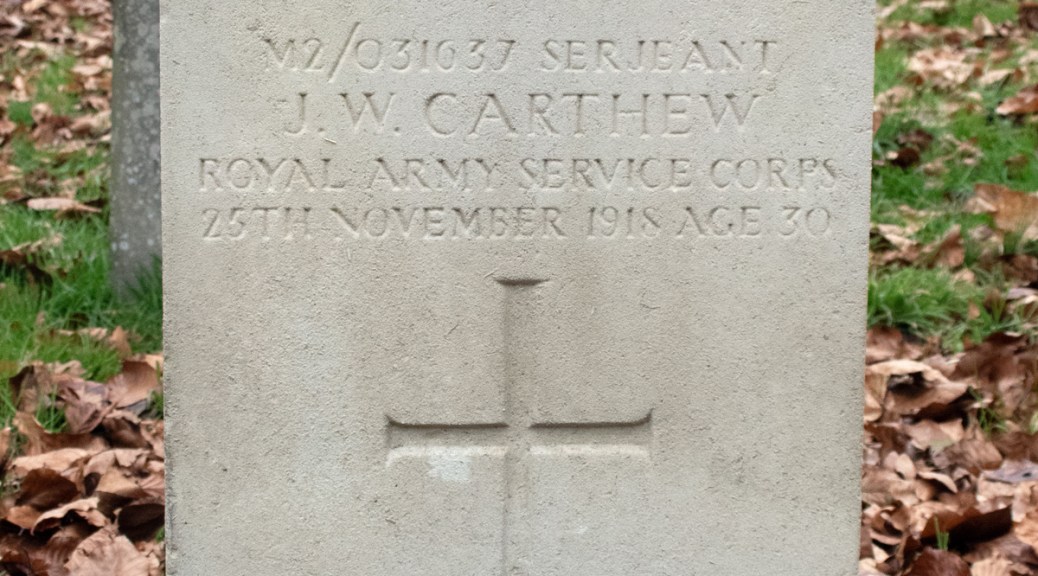
Serjeant John Carthew

Serjeant John Carthew

John Wallace Carthew was born in Warminster, Wiltshire, in the spring of 1892. The second youngest of seven children – three of whom did not survive childhood – his parents were miller James Carthew and his tailoress wife, Sarah.

John was destined to make a path for himself. By the time of the 1911 census, he was boarding with the Southon family in Aldershot, and working as a chauffeur.

On 22nd March 1914, John married Caroline Hamilton, a parlour maid for Captain Charles Woodroffe and his family in Aldershot. The couple set up home in Queensgate Mews, London, and having had a daughter, Cecilia, who was born that February.

When war came to Europe, John was quick to enlist. He joined up on the 21st December 1914, and was assigned to the Mechanical Transport section of the Royal Army Service Corps. His service records note that he was 6ft 1in (1.85m) tall, with a scar on his right eyebrow.

Private Carthew rose through the ranks, becoming a Corporal in 1916, and a Serjeant in 1918. During this time he acted almost exclusively as chauffeur to General Sir William Robertson. His duties were mainly based on home soil, but he did spend a year in France, while Robertson was Chief of the General Staff there.

As the war came to a close, Serjeant Carthew fell ill. Based in a camp in Aldershot, he contracted influenza, and this developed into pneumonia. This was to take his life, and he passed away at the town’s Connaught Hospital on 25th November 1918. He was just 26 years of age.

Caroline was living in Bath, Somerset by this point, and this is where the body of her husband was brought for burial. John Wallace Carthew was laid to rest in St James’ Cemetery, in the family plot where his father, who had died in 1911, was also buried.


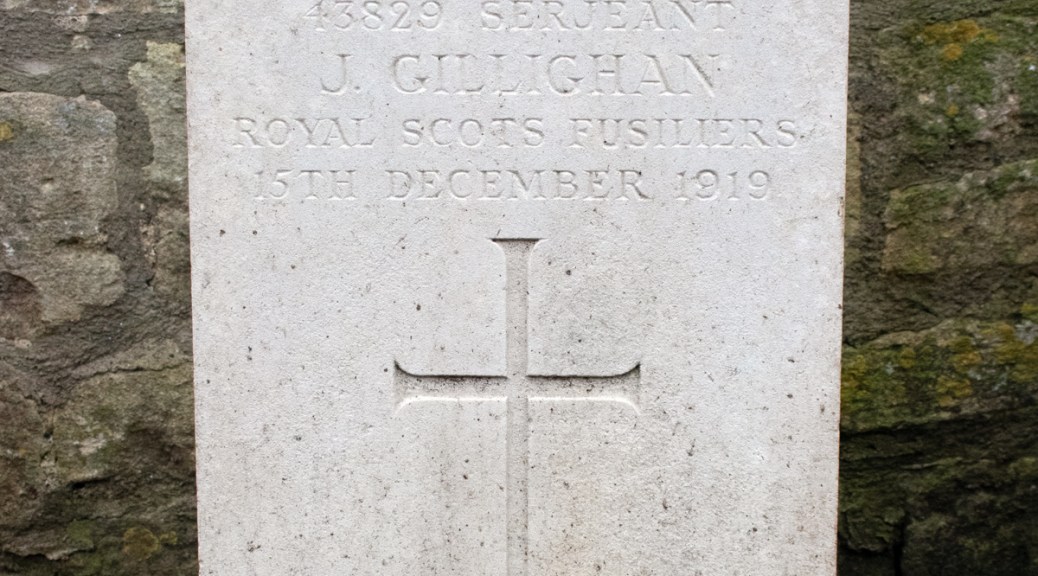
Serjeant James Gillighan

Serjeant James Gillighan

Some lives are destined to remain shrouded in mystery, and James Gillighan’s is one of those to be lost to time.

His headstone sits in the quiet Roman Catholic Cemetery in Bath, Somerset. It provides his regiment – the Royal Scots Fusiliers – and confirms that he was a Serjeant at the time of his death on 15th December 1919. The Commonwealth War Graves Commission adds that he served in the 2nd Battalion, but sadly James’ service records no longer exist.

The Army Register of Soldiers’ Effects notes that his next of kin was his brother, Matthew Gillighan, which suggests that James’ parents were not alive, nor that he was married. The document also notes that Serjeant Gillighan passed away in Bath War Hospital.

Another army document – the Service Medal and Award Roll – suggests that the service number on the headstone – 42839 – was actually James’ second number, given to him when he moved to the battalion depot. Tantalisingly, however, his previous regimental number – 15170 – sheds little more light to his service, other than the date he was sent to France – 15th September 1915.

Contemporary newspapers do not have any records for James’ passing, so it is likely to have been natural causes of some description – possibly an illness contracted while serving.

Sadly, there is little more detail that can be added to James’ life. He lies quietly, in a corner of the Bath cemetery, wrapped in mystery.


Serjeant George Collins

Serjeant George Collins

Details of the lives of those who fell during the Great War can be limited by the documentation that is available more than a century later. Based on what remains, the life of George Collins would have been technical and sparse.

From the formal documents that remain, it is possible to determine that he was born in Bath, Somerset, in 1870 or 1871, and his father was farmer Oliver Collins.

George married Florence Lydyard on 25th January 1896 at the parish church in Bathampton. George was listed as a cellarman, while Florence was noted as being the daughter of George Lydyard, an agent.

The 1901 census found the couple living at the Liberal Club in Bath, which they were both managing. The couple had had a son, George Jr, who was born in 1898, and were employing a servant to help with the daily chores.

The 1911 census shows that George had left the club behind, and was employed as a gymnastic instructor. He and Florence now had four children: Mona, who was 14 (and who didn’t appear on the previous census); George; and twins Marjorie and Dorothy, who were born on 5th July 1904.

The limited military documentation confirms that George enlisted in the North Somerset Yeomanry by October 1917. He was assigned to the 2nd/1st Battalion, which was a mounted division that became a cyclist unit. The troop was based on home soil throughout the war and, depending on when he joined, George could have served anywhere from Northumberland to East Anglia or Southern Ireland.

These details, while uncovering something of George’s life, remain as clinical as the engraving on his headstone. With Serjeant Collins, it is a newspaper article on his passing that adds humanity to his life:

Many friends in Bath will regret to hear that Sergeant George Collins died on Saturday at the Bath War Hospital, where he had been an inmate for seven weeks, suffering acutely from gastritis. Deceased, who was a Bathonian by birth, when a youth joined the Welsh Regiment, and served for seven years in the 1st Battalion… He returned to Bath 21 years ago, and became a drill and physical instructor to several schools… whilst he also instructed evening classes at Guinea Lane and St Mary’s Church House. Being a Reservist he was called upon for the South African War, and Sergeant Collins rejoined his old regiment in 1899. He was wounded and invalided home… When he recovered from his wounds, Sergeant Collins resumed his work as an instructor at schools, and continued to act in that capacity until 1915. Though 44 years of age and not liable for military service, he very patriotically rejoined; he entered the North Somerset Yeomanry and became a drill instructor. He had not been abroad in this war, but had served in several places with the 2/1st NSY. The fatal illness became very pronounced in January when on leave, and he was not able to rejoin his unit. Sergeant Collins was a fine boxer, and became middle-weight champion of the Army when serving with the 1st Welsh. His experience as a trainer was often in request locally, and he had acted in that capacity to the most successful Avon Rowing Club crews. Deceased leaves a widow, one son, and three daughters. His only boy, Sapper George Collins, Wessex [Royal Engineers], has been serving at Salonika since 1915.

Bath Chronicle and Weekly Gazette: Saturday 13 April 1918

Beyond the staid, formal documents is a life well lived. Serjeant George Collins was 47 or 48 years old when he passed on 5th April 1918; the army record noted the cause of his death as a cerebral haemorrhage. His body was laid to rest in the graveyard of St Mary the Virgin Church, Bathwick, overlooking the city he loved.


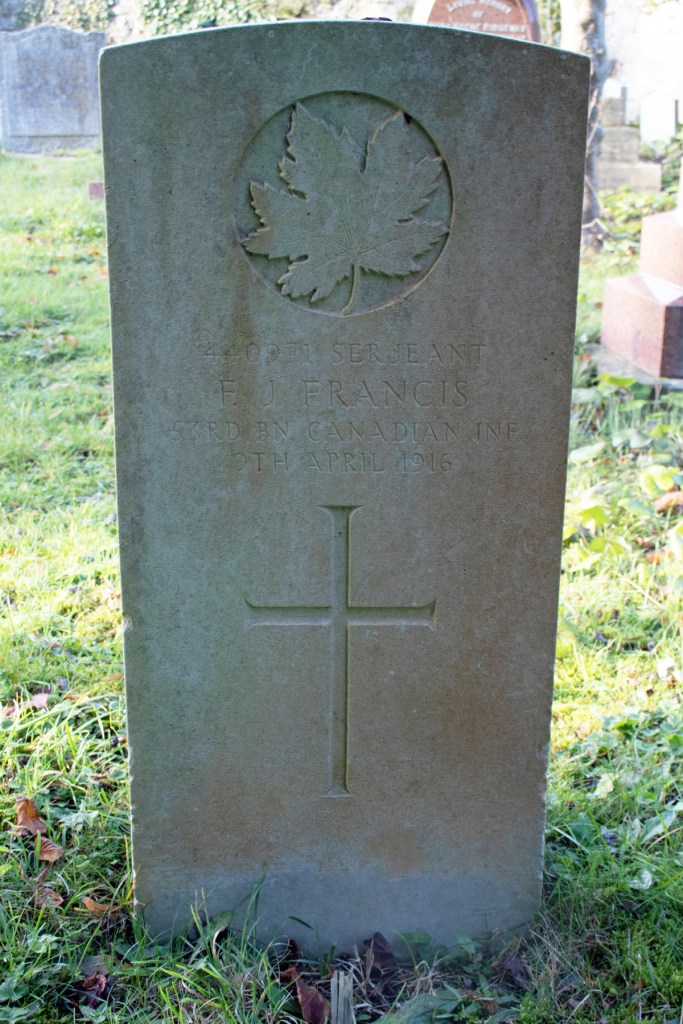
Serjeant Frederick Francis

Serjeant Frederick Francis

Frederick John Francis was born on 15th February 1893, to Henry and Mary Francis. One of nine children, the family lived in the Somerset village of Curry Rivel.

Henry was a labourer, but Frederick had his sights set on a new life and, at some point in his teens, he emigrated to Canada to work as a farmer. Details of his life in North America are scarce, but it is clear that he was in Manitoba when war broke out back in Europe.

Frederick stepped up to serve his King and Country, enlisting at Camp Sewell on 5th April 1915. His service records confirm that he was 5ft 5ins (1.65m) tall, and weighed 145lbs (65.8kg). He was assigned to the 53rd Battalion of the Canadian Infantry. His service papers also note that he was promoted to the rank of Sergeant on 30th April 1915, although whether the date is correct, or whether Frederick had previous military experience is unclear.

Sergeant Francis boarded the SS Empress of Britain to make the journey back to Europe, little knowing that he was not going to see his home again. On 9th April 1916, just one day from docking in Hampshire, he passed away from quinsy, or throat abscess. He was just 23 years of age.

The body of Frederick John Francis was brought back to Somerset for burial. He was laid to rest in the graveyard of St Andrew’s Church in the village of his birth, Curry Rivel.


Frederick’s younger brother, Charles, had also made a life in Canada. He enlisted at Camp Sewell just two months after his brother, joining the same battalion.

Charles, who had the rank of Private, arrived in Europe before Frederick and, and was sent to the front line in February 1916. In June, he was involved in the fighting at Mount Sorrel, on the Ypres Salient, and it was here, on 6th June 1916, that he lost his life. He was just 21 years of age.

Charles Arthur Francis is commemorated on the Menin Gate in Ypres. His parents had to mourn the loss of two sons within two months.


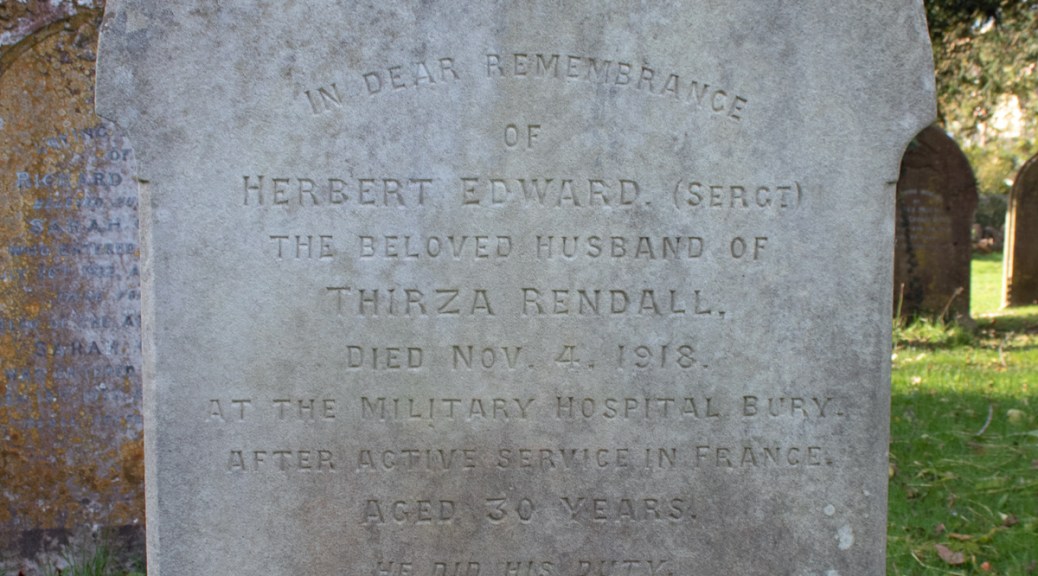
Sergeant Herbert Rendall

Sergeant Herbert Rendall

Herbert Edward Rendall was born in West Coker, Somerset, in the autumn of 1889. He was one of eight children to William and Mary Rendall. William was a foreman at a local twine factory, although by the time of the 1911 census, he had also taken on ownership of a local grocer’s shop. Herbert and his younger brother, Clifford, managed the shop for their father.

In the spring of 1913, Herbert married Thirza Shire. She was the daughter of an agricultural labourer from Yeovil and, by the time of their marriage, she had taken on work as a servant for the vicar of St Leonard’s Church in Misterton, near Crewkerne.

When war was declared, Herbert joined the Somerset Light Infantry. Sadly, little detail of his military service remains. It is clear that he was hard working and well thought of, as he progressed through the ranks to Sergeant, and transferred to the 1st Battalion of the Wiltshire Regiment.

Herbert served on the Western Front, and, as the war entered its final months, he would certainly have been involved in the Battles of the Lys, on the Hindenburg Line and in the closing Battles of the Somme.

By the autumn of 1918, Sergeant Rendall was back on home soil, either for home support, or for medical reasons. He was based in Bury, Manchester, and had fallen ill. While the full details are unclear, whatever condition he had contracted got the better of him, and he passed away on 4th November 1918. He was 29 years of age.

Herbert Edward Rendall was brought back to Somerset for burial. He was laid to rest in the quiet graveyard of St Martin’s Church in West Coker.


Records vary over the date of Herbert’s passing. While his headstone confirms 4th November, military records – and the Commonwealth War Graves Commission website – suggest the following day. Similarly, some documents suggest he was 30 when he died, while his birth and death records confirm he was in his thirtieth year.


Thirza went on to have a full life. She married again in 1923, to a Henry Tregale, and the couple went on to have a daughter. She lived to a ripe age, passing away in the autumn of 1981, at the age of 93.


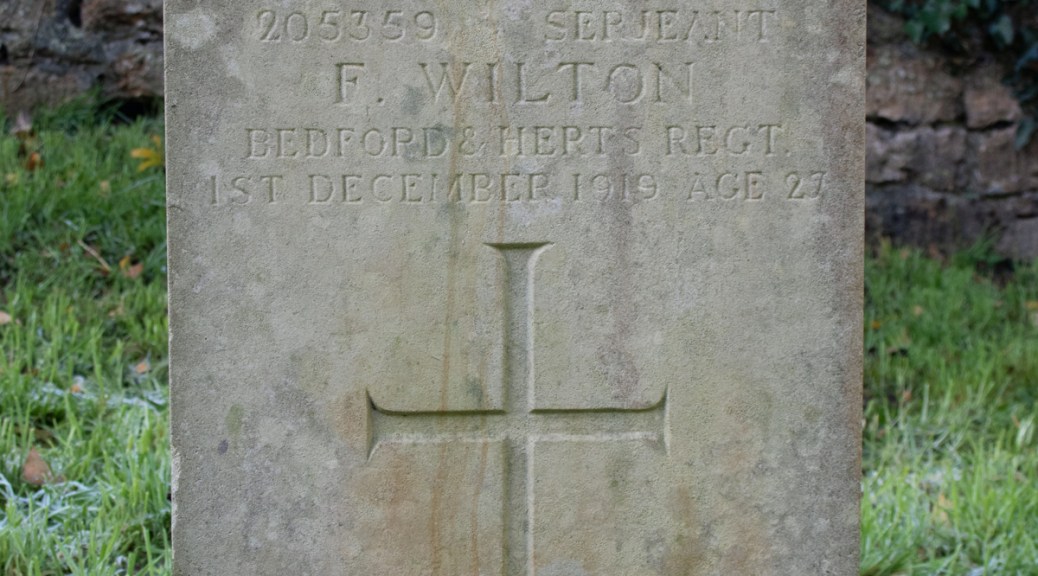
Serjeant Frederick Wilton

Serjeant Frederick Wilton

Frederick Uriah Wilton was born in Yarlington, Somerset, in the spring of 1892. One of thirteen children, his parents were farm labourer Thomas Wilton and his wife Mary.

Frederick and his brothers followed their father into agricultural labouring, and, according to the 1911 census, the family were living and working at Shatwell Farm, on the outskirts of Yarlington itself.

When war broke out, Frederick was keen to play his part. Details of his military service are difficult to piece together, but what is clear is that he enlisted in the Bedfordshire Regiment.

During his time in the army, Frederick rose to the rank of Serjeant. He survived the war and, in 1919, he was placed on furlough while waiting to be demobbed. Sadly, it is likely that he fell ill during this time, and he passed away on 1st December 1919, at the age of 27.

Frederick Uriah Wilton was laid to rest in the graveyard of St Mary’s Church in Yarlington.


Serjeant Wilton’s headstone notes that he served in the Bedfordshire and Hertfordshire Regiment. The two regiments were amalgamated in 1919, and Frederick was recorded as having served in the newly formed regiment.


Serjeant Albert Rumbelow

Serjeant Albert Rumbelow

Albert Edward Rumbelow was born in 1879 in Wycombe Marsh, Buckinghamshire. One of eleven children, his parents were Suffolk-born paper maker Philip Rumbelow and his wife, Jane.

Little information is available about Albert’s early life, although by the time of the 1901 census, he is recorded as being a Private in the Rifle Brigade. The family had moved to the village of Little Chart in Kent by this point, where his father was still continuing in the manufacture of paper.

Private Rumbelow’s military service is evidenced in later documents. He served with the 1st Battalion from 1895 to 1907, was awarded the South Africa medals for 1901 and 1902: he was also granted the clasp for his involvement in the defence of Ladysmith. He appears to have been wounded at this point, and was invalided out of full military service and placed on reserve.

In 1904, Albert was back in England, and living in London. That year he married Ellen Sillis, a cordwainer’s daughter from Norfolk. The couple set up home in Fulham, and went on to have five children: Abert Jr, Iris, Florence, Doris and Hilda.

By the time of the 1911 census, Albert was working at the local Public Hall, as a labourer, hall attendant and cleaner. The family were living at 9 Crabtree Lane in Fulham, sharing the property with the Fitzgerald family.

War was closing in on Europe by this point, and, once again, Albert stepped up to plat his part. He enlisted within days of conflict being declared, and within weeks had been given the rank of Corporal. His service records note that he was 5ft 10ins (1.78m) tall, weighed 156lbs (70.8kg), had brown hair and blue eyes. He was also recorded as having a tattoo of crossed rifles and a crown on his right forearm, and scared on his left calf, knee and eyebrow.

By the spring of 1915, Albert had been promoted again, to the rank of Serjeant. He was sent to France on 19th May, having been assigned to the 7th (Service) Battalion. Serjeant Rumbelow was involved at the Somme and was awarded the Distinguished Conduct Medal “for conspicuous gallantry” on 3rd June 1916. “He exposed himself to machine-gun and rifle fire when going across the open to rescue a wounded man. Later he went under fire to fetch a stretcher.”

Serjeant Rumbelow appears to have been injured in the skirmish, and was invalided to the UK later that month. When he recovered he was posted again, this time to the 18th (London) Battalion of the Rifle Brigade.

The following February he made the transfer across to the Labour Corps, and by March 1917, Serjeant Rumbelow was back in France. In August he was promoted to Company Sergeant Major, but was invalided back to England with bronchitis in February 1918.

When he recovered Albert was assigned to the 364th Area Employment Coy. in Kent, and seems to have voluntarily taken a drop in rank – back to Serjeant – in doing so. His health was dogging him by this point and in the late summer of 1918, he was admitted to Preston Hall Military Hospital in Aylesford, suffering from VDH, or heart disease.

Sadly, the strain of his military service was to be his undoing. He passed away from the heart condition on 21st September 1918, at the age of 39 years of age.

Albert Edward Rumbelow was laid to rest in the graveyard of St Peter & St Paul’s Church in Aylesford, not far from the hospital where he had breathed his last.


Now widowed, Ellen was left with the unenviable task of raising five young children on her own. She married again, to Private William Lake, on 8th June 1919, and the family moved to Essex. She lived until the age of 79, and was laid to rest in Sutton Road Cemetery in Southend.


Lieutenant Thomas Denny

Lieutenant Thomas Denny

Thomas David William Denny was born on 26th December 1890 in Glasgow, Lanarkshire. There is little information on his early life, other than that his parents were Thomas and Annie Denny.

By the time of the 1911 census, Thomas Jr was serving as a Lance Corporal in the 2nd Battalion of the Gloucestershire Regiment, and was based at the Verdola Barracks in Malta.

When war broke out, the battalion was called back to mainland Europe. By 19th December 1914, Thomas found himself in France; two years later, he was in Salonika, Greece.

Thomas’ bravery was not in doubt. While serving in France, he received the Military Medal for conspicuous gallantry. This went hand in hand with a promotion to Sergeant. In 1917, he received a commission as Second Lieutenant and was moved to the regiment’s 3rd Battalion.

In the spring of 1918, Second Lieutenant Denny married Elsie, a woman from Bearsted, near Maidstone in Kent. Sadly, little else is known of her, and even a later newspaper report only referred to her as “a Bearsted lady” [East Kent Gazette: Saturday 15th March 1919].

By early 1919, Thomas was back in Britain. Whether he had been demobbed is unclear, but is seems more likely that he had returned home for medical treatment. On 6th March, he passed away in Maidstone. He was just 28 years of age.

Thomas David William Denny was laid to rest in the graveyard of Holy Cross Church in Bearsted close to where the now-widowed Elsie must have lived.