
George Rose Topp was born in the autumn of 1891 in the Dorset village of Okeford Fitzpaine. The youngest of four children, he was the second son to Herbert and Louisa Topp. The 1901 census found the family living and working at Knacker’s Hole Farm, alongside George and Olive Savory.
When he finished his schooling, he helped with the farm; by the time of the 1911 census, they had moved on from Okeford Fitzpaine, and had taken up employment at Barter’s Farm in Hinton St Mary, Dorset.
War broke out in the summer of 1914, and George stepped up to play his part. There is little information about his time as a Private in the Queen’s Own Dorset Yeomanry, but a later newspaper report detailed what happened to him.
On Saturday morning a profound sensation was created at Hinton St Mary, when it became known that Mr George Rose Topp… had shot himself. It appears that the deceased was a trooper in the Dorset Yeomanry, who were mobilised in August 1914, and had been home on leave for three weeks, and was to return to camp on the day of the tragedy. Although the deceased had helped his father on the farm for some years, yet during the three weeks he had been home he had not been seen about very much. The deceased was well known throughout the district, and was very highly respected. Much sympathy is felt for the family in the sad occurrence.
An inquest was held on Monday at Barter’s Farm… [Herbert] deposed that his son, who had been living with him, was 23 years of age, and a bachelor… He was home on leave… and was supposed to return on Saturday, July 10th. He had been very bad in his head since he came home and had hardly been out. He had always complained of pains in his head, but not so much lately. He had been seen by the army doctor several times. He did not know of anything else except his head, and he had no trouble that he was aware of. He had never threatened to take his life. He was going by the eleven o’clock train on the day of the tragedy. He got up about seven o’clock and had his breakfast. Witness saw him about 9.45am, and he was getting ready to go to the station. He had packed everything ready to start. It was witness’s gun he used which he was in the habit of using, but had not done so for some time. The gun was kept in the kitchen. He did not think there were any cartridges in the house and he thought he used a “Bonex.” He did not know he was going to use the gun. The gun had a very light pull, and he had never seen any cartridge in the house like the one produced. He left no writing, and the gun had not been lent.
Mr Clifford Rose (cousin of the deceased) corroborated [Herbert’s] evidence, and said that on the morning of the tragedy deceased seemed brighter. He did not think he touched the gun at all before whilst home.
Henry Andrews… was working at Barter’s Farm on Saturday repairing the tibs to the back kitchen. They were out and in the house all the time, but he did not see deceased that morning. He heard a noise before the report of the gun about 10am. He went in and deceased was lying on his back with the gun by his right side. He had his coat on and he called for assistance. They heard the report, and Mrs Topp and Miss Topp were saying he was shot. The door he went in was shut, as was also the other door. He thought Mrs Topp thought he was shot through hearing the gun go off. The head was lying towards the furnace, and the body was in the same position when the police arrived. The gun had not been moved before the police came.
Dr THE Watts-Silvester deposed that he had attended deceased about three months ago for influenza. He knew nothing of the pains in the head. He was called and saw deceased at Barter’s Farm soon after 10am. In the back kitchen the deceased was lying dead on his back with his feet towards the two doors, and head resting on a large saucepan close to the copper. Almost the whole of the top of his head had been blown off to a level below the eyes, both having gone. It had practically disappeared. The gun must have been very close. Below the right chin there was a black mark.
The jury returned their verdict that the cause of death was a gunshot wound in the head whilst of unsound mind.
[Southern Times and Dorset County Herald: Saturday 17th July 1915]
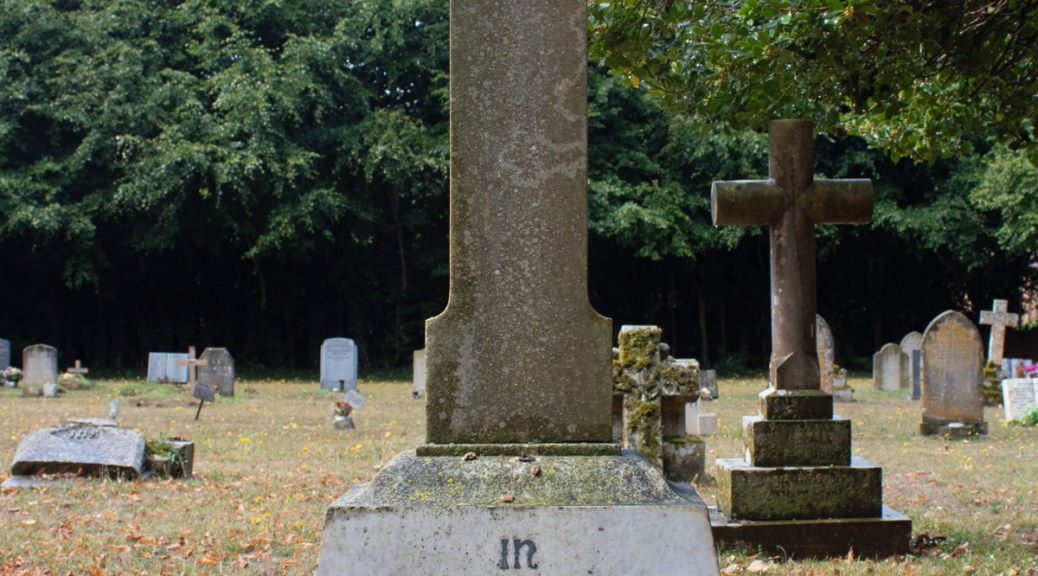
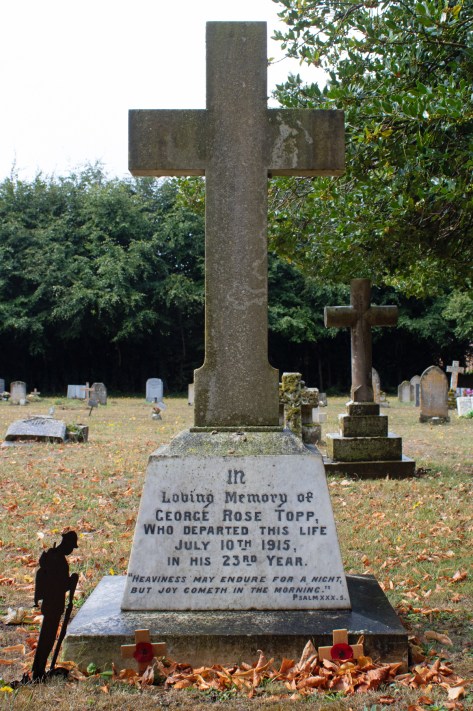
George Rose Topp was just 23 years old when he ended his life on 10th July 1915. He was laid to rest in the church cemetery in the village of Hinton St Mary.







 Death and Service