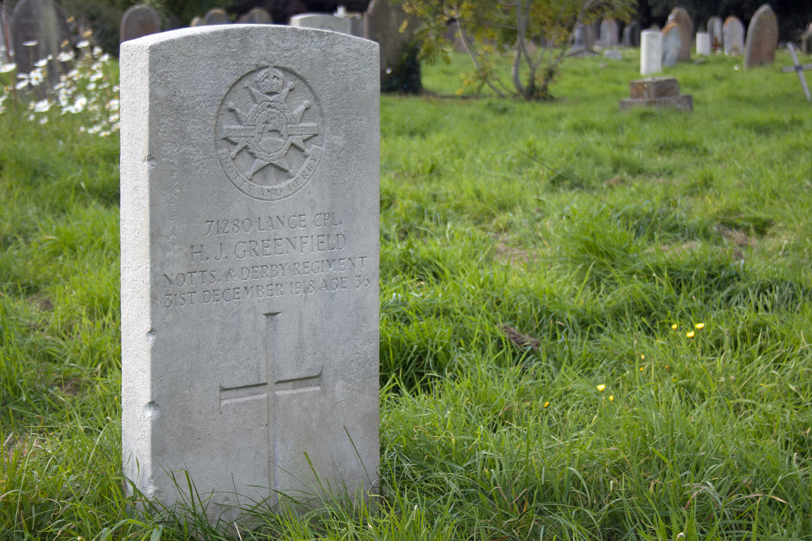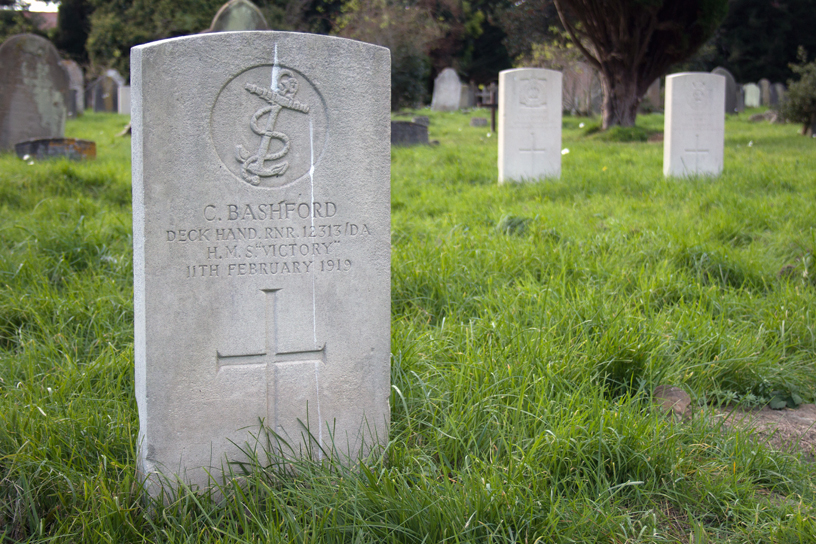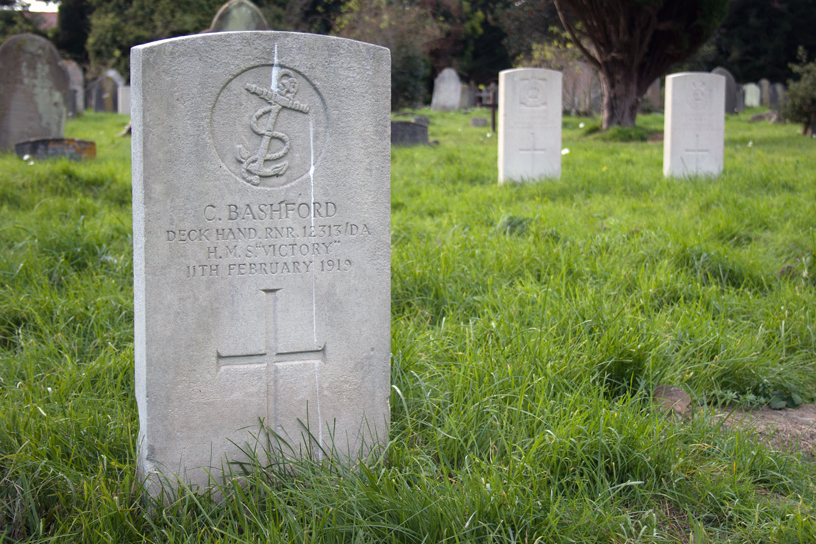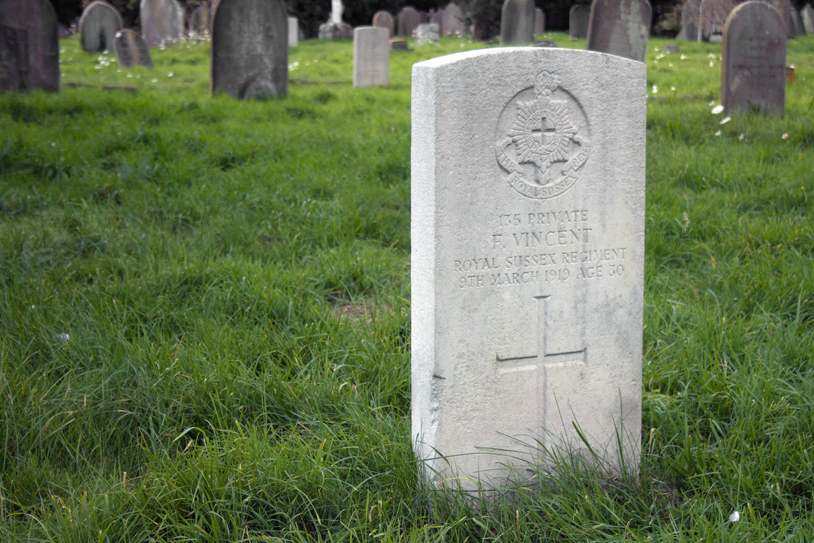
In a corner of the Milton Cemetery in Weston-super-Mare, Somerset, stands the gravestone of Edward Sams. It gives little information away, other than the fact that he passed away on 5th April 1916, and that he served as a Private in the Somerset Light Infantry.
There is no documentation – military or otherwise – that can be concretely connected to Private Sams. None of the available documents for Edward Sams include the service number on his gravestone, and there is nothing to provide a definite date of birth or familial connections.
Sams was not an uncommon Somerset name at the start of the twentieth century, and there are a number men by that name called Edward in the area at the time. Again, however, the information is lacking that allows us to directly connect any of these names with the gravestone in the Weston-super-Mare cemetery.
There is nothing in any contemporary newspapers to suggest that Private Sams’ passing was anything out of the ordinary.
Sadly, therefore, he remains a name lost to history. Edward Sams, whoever he was, and however he died, lies at rest in a Somerset cemetery.
In the Milton Cemetery in Weston-super-Mare is a gravestone to Alfred Harry Howe. He seems destined, sadly, to be one of those servicemen whose stories are lost to time. The stone confirms that he died on 6th April 1916 and that he was a Private in the Gloucestershire Regiment. Further research adds that he was assigned to the 3rd/4th Battalion.
The UK Army Register of Soldier’s Effects gives his father’s name as William. It also confirms that he was not eligible for a war gratuity, as he had insufficient service; given the date of his death, it is likely, therefore, that he enlisted on or after October 1915.
Beyond this information, however, there is little documentation to confirm exactly who Alfred was. As there is no date or place of birth, it is difficult to get an exact match. There are at least three William/Alfred matches in the Somerset/Bristol area, but nothing to connect them to the headstone in Weston-super-Mare, and nothing to even confirm that Alfred was from the South West.
There is nothing in any contemporary newspapers to suggest that Private Howe’s passing was anything out of the ordinary.
Sadly, therefore, he remains a name lost to history. Alfred Harry Howe, whoever he was, and however he died, lies at rest in a Somerset cemetery.
Stanley James Payne was born towards the end of 1882, one of eleven children to Stephen and Elizabeth Payne. Stephen was a leather salesman from Essex, who had moved his family to Weston-super-Mare in Somerset in around 1880.
Stanley seems to have been drawn in to a military life from an early age. In January 1900, he enlisted as a Private in the Somerset Light Infantry, and the 1901 census listed him as living at the Raglan Barracks in Devonport, near Plymouth.
Military service took Private Payne to India, where he served for six years. His success and ambition were clear; in 1906 he was promoted to first to Corporal and then to Sergeant. By 1911 – and now back in England – as a Lance Sergeant, Stanley was working as a military clerk at the Royal Horse Artillery Barracks in Dorchester, although he was still attached to the Somerset Light Infantry.
Stanley’s ambition and sense of adventure continued; by July 1912 he had made the transfer over to the newly-formed Royal Flying Corps, as a Sergeant.
It was while he was based in Dorchester that he met Winifred Bell. She was the daughter of a local council worker, and the couple married in the town in September 1912. Stanley and Winifred went on to have a daughter, Doris, who was born in July 1914.
War had arrived in Europe, and on 7th October, the now Warrant Officer Payne was shipped to France. During his nine months on the Western Front, he was mentioned in despatches and received the Croix de Guerre for his gallantry. The local newspaper also reported that he:
…had also the honour of being presented to the King on the occasion of His Majesty’s last visit to the front, and at a home station had also been presented to Queen Mary.
Western Daily Press: Saturday 8th March 1919
Returning to England on 1st June 1915, he was again promoted to Lieutenant and Quartermaster, although here his military records dry up. By this time, he had been in the armed forces for more than fifteen years, but his military records seem to confirm this as the last day of his service.
The next record for Stanley confirms his passing. Admitted to the Central Air Force Hospital in Hampstead with a combination of influenza and pneumonia, he died on 3rd March 1919. He was just 36 years of age.
Brought back to Weston-super-Mare, where his now widowed father was still living, Stanley James Payne was laid to rest in the Milton Cemetery in his home town.
Stanley’s gravestone gives his rank as Major. While there is no documented evidence of any additional promotions after June 1915, the rank is the equivalent of Quartermaster in the Army Reserve. It seems likely, therefore, that the end date of his military service marked the start of his time in the reserves.
Montague Ashley Palmer was born in Weston-super-Mare, Somerset, in 1886, one of five children to Alfred and Martha. Montague’s father was a postman in the town for 25 years, retiring through ill health in February 1898. Sadly, Alfred’s retirement was not to last long, and he passed away that July aged 48, when his son was just 12 years old.
When he left school, Montague found work as a bus conductor and was now the oldest of Martha’s children to still be living at home. He was obviously an ambitious and inventive young man; by the time of the 1911 census, he had started work for the Ordnance Survey, and had moved to Didcot in Berkshire where he was boarding with Frances Battison, a suiter and greengrocer.
At this point, details of Montague’s life become a little hazier. At some point, he married a woman called Matilda, who either came from, or would go on to live in, Helston, Cornwall.
With war on the horizon, Montague enlisted – documented dates for this, again, are missing. He joined the 12th Battalion of the Somerset Light Infantry, which initially served in Egypt, before transferring to France in May 1918.
Where and for how long Private Palmer served is not clear, although he was definitely caught up in the fighting, and injured, towards the end of the war. Details of his wounds are not clear, but they were enough for him to be repatriated to England, and he was admitted to the Royal Hospital in Salford.
Private Palmer’s injuries appear to have been too severe for him to survive; he passed away in hospital on 5th January 1919. He was just 32 years old.
Montague Ashley Palmer’s body was brought back to Somerset, and he was laid to rest in the Milton Cemetery in Weston-super-Mare.
Reginald Benjamin James Morriss was born in the spring of 1886 and was the youngest of twelve children. His father, Thomas, was a bootmaker from Leeds, who had moved to Somerset and married Mary Ann Pennell. The couple brought their family up in her home town of Weston-super-Mare.
Thomas died in 1901, when Reginald was just 14 years old. Mary Ann, by this point, still had a lot of her family with her, including Reginald, three of his sisters, his brother-in-law and four nieces.
Reginald was about to leave school, and found work as a French polisher in Bristol, eventually moving in with his employer as a lodger. This may not have suited him, however, as, by the time he enlisted, he gave his trade as baker and confectioner, and he was living back with his mother in Weston-super-Mare.
Private Morriss was 30 when he joined up in 1916, and stood 5ft 7ins (1.7m) tall. He joined the Army Service Corps as a baker, and was initially based in Aldershot. He was moved to Kent in September 1918, having been assigned to the 351st Horse Transport Company. The war was drawing to an end, but a new threat was on the horizon.
The following February, Private Morriss was admitted to St John’s Hospital in Hastings, suffering from influenza and pneumonia. Sadly, he was to succumb to the lung conditions, and he passed away on 3rd March 1919. He was just 32 years old.
Reginald Benjamin James Morriss’ body was brought back to Weston-super-Mare, and he was laid to rest in the Milton Cemetery in his home town.
Charles Wood is destined to be one of those servicemen whose lives remain shrouded in mystery.
He was laid to rest in the Milton Cemetery in Weston-super-Mare, and his widow, Ellen, is buried with him. There are two headstones on the site – a family one, and a more recent war grave.
The Commonwealth War Graves Commission website give his age – 48 years old when he died – and states that he was a Private in the 263rd Company of the Royal Defence Corps and gives his service number. This was a territorial force, so it is probable that he served on home soil.
The only remaining military document relating to him is the Army Register of Soldier’s Effects. This confirms that he died in the Red Cross Hospital in Portishead on 12th November 1917, and that his belongings passed to his widow. It does highlight that he received a war gratuity, which was only applicable to soldiers who had completed at least six months’ service, so we know that he enlisted before May 1917.
There are a number of censuses available for the Weston-super-Mare area, but there at least two men called Charles Wood who married women called Ellen, so it is a challenge to identify which is the man buried in this grave.
A usual source of information would be his service record – which, in addition to his military activity, would give an address as well as other family members. However, this document is not available for Private Wood.
There is no mention of his passing in any of the contemporary newspapers, so it seems unlikely that his death was anything out of the ordinary.
Charles Wood is, sadly, lost to time, one of the countless men and women who gave up their lives for King and Country.
Albert Edward Prankard Lloyd was born in Somerset on 25th September 1893, in the Somerset village of Kewstoke (now a suburb of Weston-super-Mare). He was one of eight children to Jabez and Charity Lloyd. Jabez was initially a mason, but later went on to find work as a miner in South Wales. Charity worked as a laundress to help bring in extra money.
When Albert left school, he found employment as a labourer, remaining at home with Charity, with Jabez working away, and three of his sisters working as housemaids or laundresses. By 1911, however, he had moved to Wales with his father to work as a miner; steady employment that brought in a little more money because of the risks involved.
War, however, was on the horizon, and Albert enlisted before hostilities broke out. Joining up on 12th January 1914, his military records show him as standing 5ft 7ins (1.7m) tall and weighing in at 166lbs (75.3kg). He joined the Royal Garrison Artillery and, over the next five years, served three tours of duty in France, totalling just over three years on the Western Front.
Gunner Lloyd’s military service was not without incident, however. In November 1914 he was admitted to hospital for a week, suffering from shock. In April 1917, a shell exploded close to him and he was again found to be suffering from shock. His records note that, following the injury, he had had suicidal thoughts, and wished he was dead.
Just a month later, back on the battlefield, Albert received a gunshot wound to his right thigh. Nine months later, he was admitted to the Hermitage General Hospital in Higham, Kent for three weeks. (The ailment is a mystery, with just the term SCT Toe to identify it.)
When the Armistice came, Gunner Lloyd remained in France, finally returning home on 13th January 1919 ready to be demobbed. While not clear in his records, it seems that the initial ‘shock’ he had suffered from in 1914 had continued throughout the war.
One of the last comments on Albert’s service records is stark. “Found dead on Great Western Railway near Weston-super-Mare. 25.01.19“. Frustratingly, there is no other documentary evidence to expand on this curt phrase, no contemporary newspapers seem to have reported on the event, and nothing more than a scribbled police report was provided for the inquest (again, of which nothing remains).
It seems that the effects of five years of conflict proved too much for Gunner Lloyd; he committed suicide at the age of just 25 years old.
Albert Edward Prankard Lloyd lies at peace at last in the Milton Cemetery in his home town of Weston-super-Mare.
Albert Athay was born in 1887, one of eight children to Thomas and Emily. Thomas was a labourer for the local council in Weston-super-Mare, and the family lived in a small house on a road leading inland from the seafront.
Thomas died when Albert was only 14 years old, and, having left school, he found labouring work to help support his now widowed mother and younger siblings.
In August 1910, Albert married Mable Dunstone, a cowherd’s daughter from Somerset. The couple continued to live with Albert’s mother and brother right up until the outbreak of war. They went on to have three children, Milicent, Freda and Charles.
Albert, by this time, has been volunteering with the local Labour Battalion; he formalised his military service in June 1917, officially enlisting in the Labour Corps. He served as part of the territorial force, in and around Salisbury Plain.
Private Athay fell ill in the summer of 1918, and was admitted to hospital on 11th June with pneumonia. Sadly, as the days progressed, so did the condition, and he passed away from it just eleven days later. He was just 31 years old.
Brought back to Weston-super-Mare, Albert Athay was laid to rest in the Milton Cemetery in his home town.
Cecil William Beresford was born in June 1875, the oldest of five children. He shared the same first name as his father, so became known as William. Cecil Sr was a barrister in London and he and his wife, Caroline, brought the family up in Kingsbury, London.
Things certainly went well for the Beresford family. By 1901, Cecil was a county judge, and had relocated the family to Devon. William, by this time, was training to be a barrister, and lived with his parents, siblings and four servants in Weare Hall, overlooking the village of Weare Giffard, near Bideford.
From this point on, information about William is a bit sketchy. He does not appear on the 1911 census – by this time Cecil and Caroline had moved to Weston-super-Mare, where Cecil died a year later. It is likely that William had enlisted in the army by this point, and was posted overseas.
William’s military records are not available, but when war broke out in 1914, he joined the Royal Defence Corps and, through his service, had attained the rank of Major.
In October 1917, a number of the local newspapers ran this brief report:
The death has occurred in a military hospital at Weymouth of Major Cecil William Beresford (RDC), eldest son of his Honour, the late Judge Beresford and Mrs Beresford, late of Wear Gifford Hall, and subsequently of Penquarry, Weston-super-Mare. He was 42 years old.
Western Times: 17th October 1917
Sadly, this is all that remains to document Major Beresford’s passing. There is nothing to confirm whether he had been wounded or had fallen ill, and there are no newspaper reports around his funeral.
Cecil William Beresford was laid to rest in the Milton Cemetery in his mother’s adopted home town of Weston-super-Mare.
Tom Harvey was born in the spring of 1871, one of four children to John and Caroline. John was a fly driver, hiring out a pony and trap for a fee, while his wife brought in extra money working as a laundress. The family lived in Weston-super-Mare, on the Somerset coast, in a town house they shared with another family, the Painters.
Details of Tom’s early life is a bit sketchy. The 1891 census lists him as a Private in the Royal Marine Light Infantry, with his address as the Royal Naval Hospital in East Stonehouse, Plymouth, where he was ‘receiving treatment’. Sadly, none of his military records survive, so there is nothing to confirm his dates of service.
In 1894, demobbed and working as a cab driver in his home town, Tom married a woman called Sarah. Little other information exists about her, but what is known is that she worked as a dressmaker to supplement her husband’s income, and the couple did not go on to have any children. The couple lived in Hopkins Street, near the centre of Weston-super-Mare, and initially took in boarders to help finances.
By the time war broke out in 1914, Tom was in his forties. Eventually called back into service, he joined the 261st Company of the Royal Defence Corps and, with the role of Serjeant, he would have had men under his command. The 261st was part of Southern Command, which provided a territorial defence force, or Home Guard, and a lot of his time was spent in Birmingham.
It was while he was home on leave that Tom fell ill. The local media picked up the story:
The death occurred on Sunday under sudden circumstances of Sergeant Tom Harvey, Royal Defence Corps… The deceased was proceeding to his residence… when he fell, and was only able to give his address and to state that he was suffering from chronic indigestion before he expired. Prior to joining up as a National Volunteer, the deceased has been engaged as an omnibus driver.
Western Daily Press: Tuesday 3rd July 1917
Tom Harvey was 46 years old when he died. He was laid to rest in the Milton Cemetery in his home town of Weston-super-Mare.