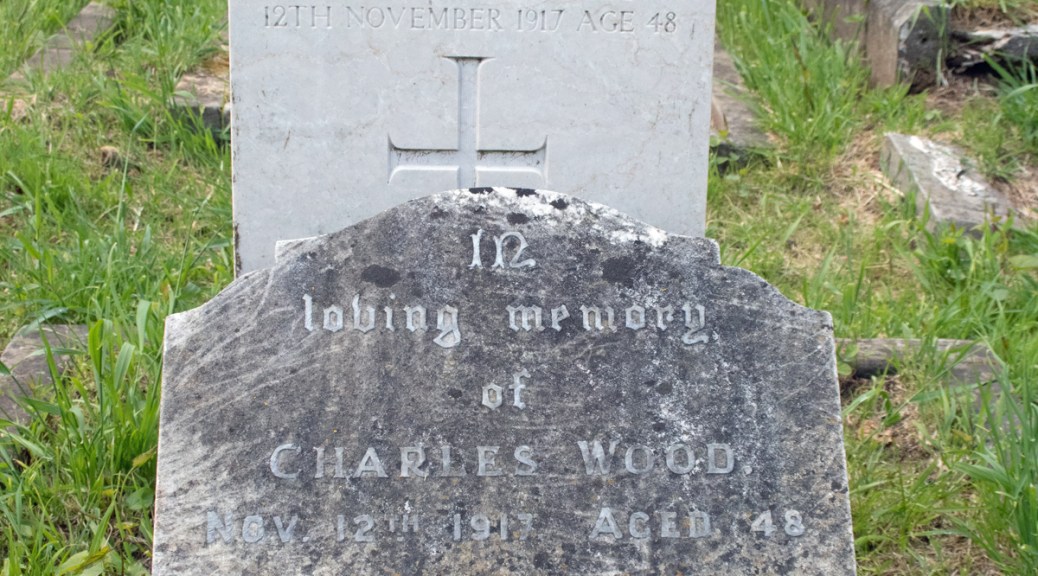
Charles Wood is destined to be one of those servicemen whose lives remain shrouded in mystery.
He was laid to rest in the Milton Cemetery in Weston-super-Mare, and his widow, Ellen, is buried with him. There are two headstones on the site – a family one, and a more recent war grave.
The Commonwealth War Graves Commission website give his age – 48 years old when he died – and states that he was a Private in the 263rd Company of the Royal Defence Corps and gives his service number. This was a territorial force, so it is probable that he served on home soil.
The only remaining military document relating to him is the Army Register of Soldier’s Effects. This confirms that he died in the Red Cross Hospital in Portishead on 12th November 1917, and that his belongings passed to his widow. It does highlight that he received a war gratuity, which was only applicable to soldiers who had completed at least six months’ service, so we know that he enlisted before May 1917.
There are a number of censuses available for the Weston-super-Mare area, but there at least two men called Charles Wood who married women called Ellen, so it is a challenge to identify which is the man buried in this grave.
A usual source of information would be his service record – which, in addition to his military activity, would give an address as well as other family members. However, this document is not available for Private Wood.
There is no mention of his passing in any of the contemporary newspapers, so it seems unlikely that his death was anything out of the ordinary.
Charles Wood is, sadly, lost to time, one of the countless men and women who gave up their lives for King and Country.
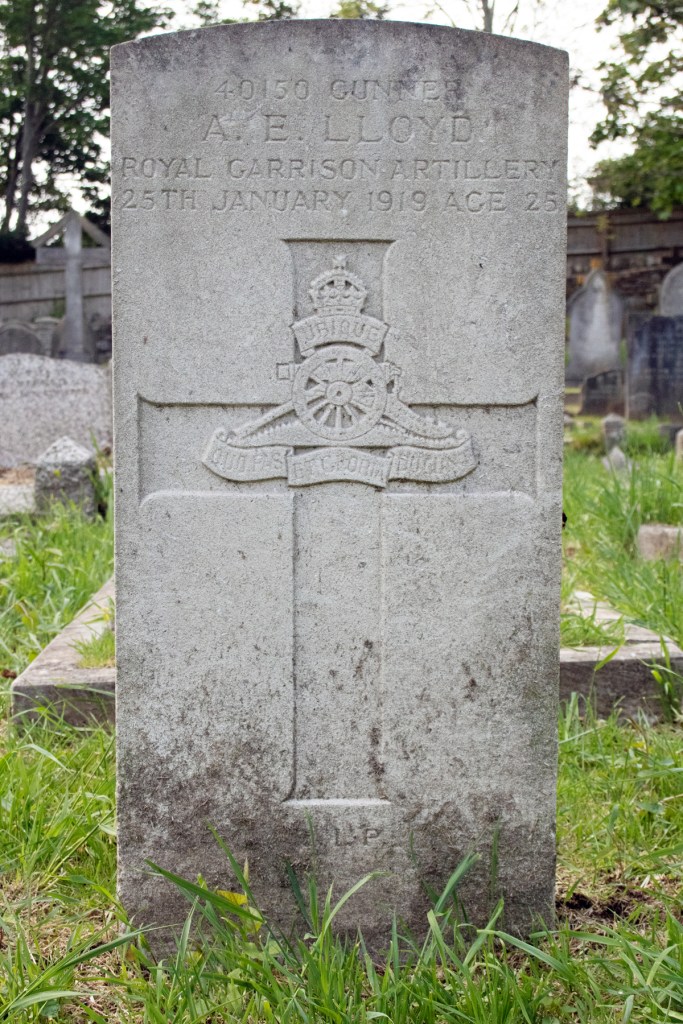
Albert Edward Prankard Lloyd was born in Somerset on 25th September 1893, in the Somerset village of Kewstoke (now a suburb of Weston-super-Mare). He was one of eight children to Jabez and Charity Lloyd. Jabez was initially a mason, but later went on to find work as a miner in South Wales. Charity worked as a laundress to help bring in extra money.
When Albert left school, he found employment as a labourer, remaining at home with Charity, with Jabez working away, and three of his sisters working as housemaids or laundresses. By 1911, however, he had moved to Wales with his father to work as a miner; steady employment that brought in a little more money because of the risks involved.
War, however, was on the horizon, and Albert enlisted before hostilities broke out. Joining up on 12th January 1914, his military records show him as standing 5ft 7ins (1.7m) tall and weighing in at 166lbs (75.3kg). He joined the Royal Garrison Artillery and, over the next five years, served three tours of duty in France, totalling just over three years on the Western Front.
Gunner Lloyd’s military service was not without incident, however. In November 1914 he was admitted to hospital for a week, suffering from shock. In April 1917, a shell exploded close to him and he was again found to be suffering from shock. His records note that, following the injury, he had had suicidal thoughts, and wished he was dead.
Just a month later, back on the battlefield, Albert received a gunshot wound to his right thigh. Nine months later, he was admitted to the Hermitage General Hospital in Higham, Kent for three weeks. (The ailment is a mystery, with just the term SCT Toe to identify it.)
When the Armistice came, Gunner Lloyd remained in France, finally returning home on 13th January 1919 ready to be demobbed. While not clear in his records, it seems that the initial ‘shock’ he had suffered from in 1914 had continued throughout the war.
One of the last comments on Albert’s service records is stark. “Found dead on Great Western Railway near Weston-super-Mare. 25.01.19“. Frustratingly, there is no other documentary evidence to expand on this curt phrase, no contemporary newspapers seem to have reported on the event, and nothing more than a scribbled police report was provided for the inquest (again, of which nothing remains).
It seems that the effects of five years of conflict proved too much for Gunner Lloyd; he committed suicide at the age of just 25 years old.
Albert Edward Prankard Lloyd lies at peace at last in the Milton Cemetery in his home town of Weston-super-Mare.
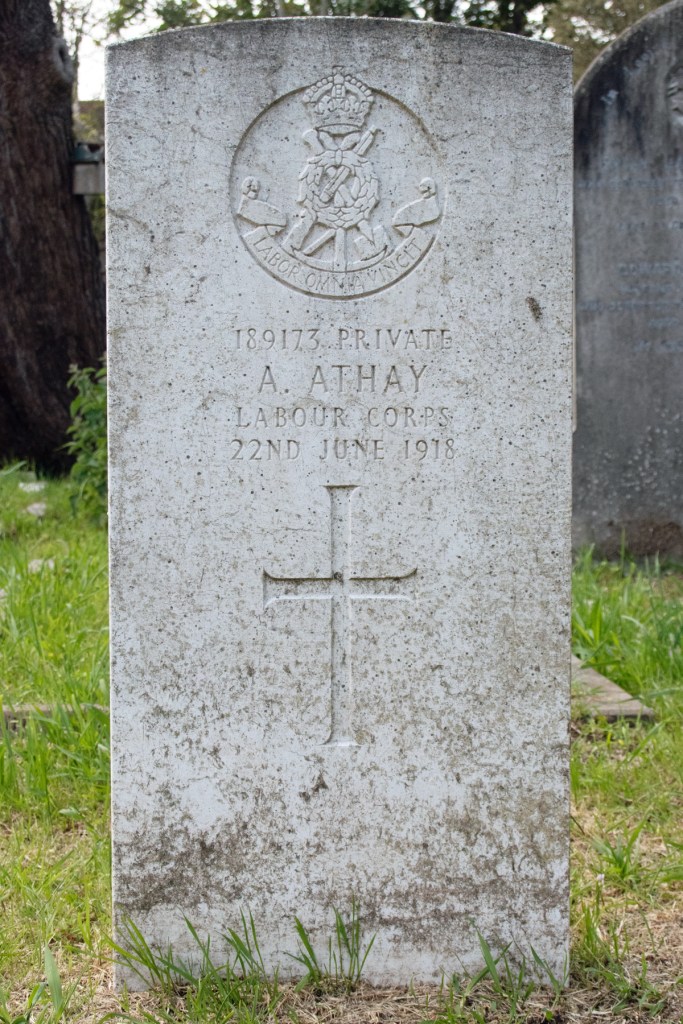
Albert Athay was born in 1887, one of eight children to Thomas and Emily. Thomas was a labourer for the local council in Weston-super-Mare, and the family lived in a small house on a road leading inland from the seafront.
Thomas died when Albert was only 14 years old, and, having left school, he found labouring work to help support his now widowed mother and younger siblings.
In August 1910, Albert married Mable Dunstone, a cowherd’s daughter from Somerset. The couple continued to live with Albert’s mother and brother right up until the outbreak of war. They went on to have three children, Milicent, Freda and Charles.
Albert, by this time, has been volunteering with the local Labour Battalion; he formalised his military service in June 1917, officially enlisting in the Labour Corps. He served as part of the territorial force, in and around Salisbury Plain.
Private Athay fell ill in the summer of 1918, and was admitted to hospital on 11th June with pneumonia. Sadly, as the days progressed, so did the condition, and he passed away from it just eleven days later. He was just 31 years old.
Brought back to Weston-super-Mare, Albert Athay was laid to rest in the Milton Cemetery in his home town.
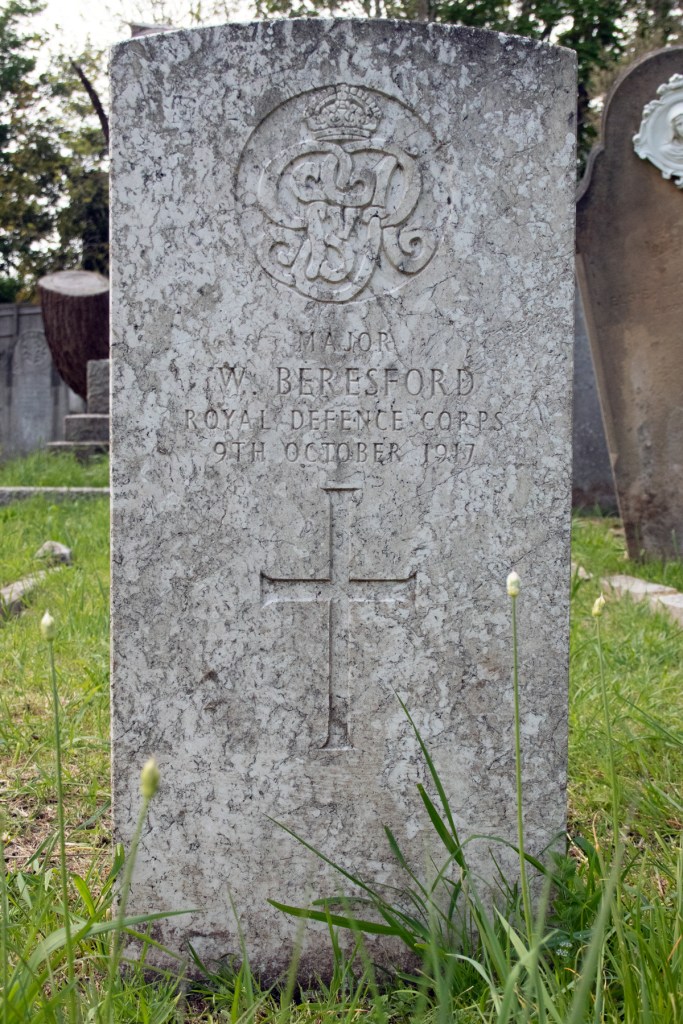
Cecil William Beresford was born in June 1875, the oldest of five children. He shared the same first name as his father, so became known as William. Cecil Sr was a barrister in London and he and his wife, Caroline, brought the family up in Kingsbury, London.
Things certainly went well for the Beresford family. By 1901, Cecil was a county judge, and had relocated the family to Devon. William, by this time, was training to be a barrister, and lived with his parents, siblings and four servants in Weare Hall, overlooking the village of Weare Giffard, near Bideford.
From this point on, information about William is a bit sketchy. He does not appear on the 1911 census – by this time Cecil and Caroline had moved to Weston-super-Mare, where Cecil died a year later. It is likely that William had enlisted in the army by this point, and was posted overseas.
William’s military records are not available, but when war broke out in 1914, he joined the Royal Defence Corps and, through his service, had attained the rank of Major.
In October 1917, a number of the local newspapers ran this brief report:
The death has occurred in a military hospital at Weymouth of Major Cecil William Beresford (RDC), eldest son of his Honour, the late Judge Beresford and Mrs Beresford, late of Wear Gifford Hall, and subsequently of Penquarry, Weston-super-Mare. He was 42 years old.
Western Times: 17th October 1917
Sadly, this is all that remains to document Major Beresford’s passing. There is nothing to confirm whether he had been wounded or had fallen ill, and there are no newspaper reports around his funeral.
Cecil William Beresford was laid to rest in the Milton Cemetery in his mother’s adopted home town of Weston-super-Mare.
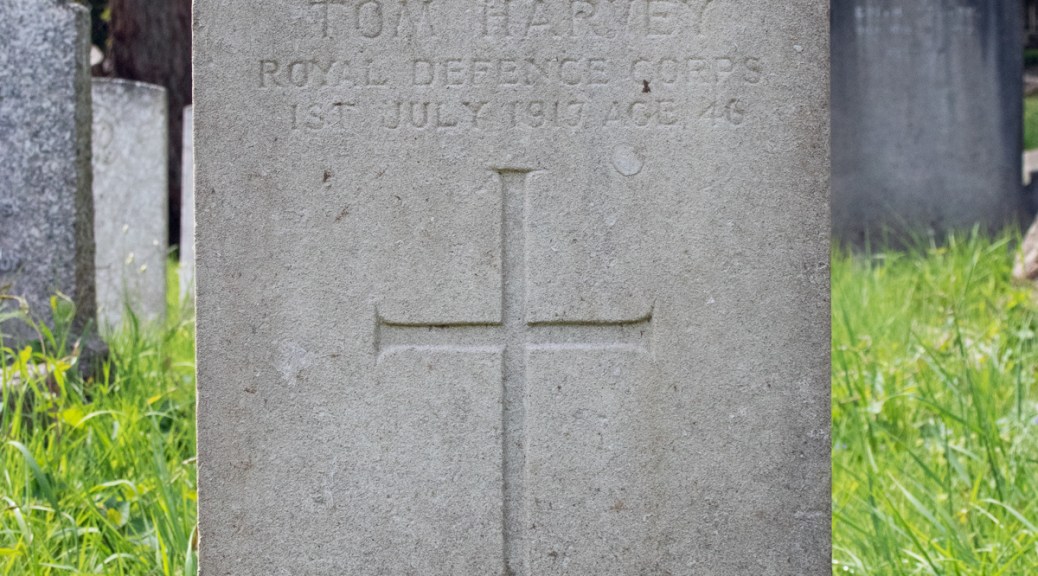
Tom Harvey was born in the spring of 1871, one of four children to John and Caroline. John was a fly driver, hiring out a pony and trap for a fee, while his wife brought in extra money working as a laundress. The family lived in Weston-super-Mare, on the Somerset coast, in a town house they shared with another family, the Painters.
Details of Tom’s early life is a bit sketchy. The 1891 census lists him as a Private in the Royal Marine Light Infantry, with his address as the Royal Naval Hospital in East Stonehouse, Plymouth, where he was ‘receiving treatment’. Sadly, none of his military records survive, so there is nothing to confirm his dates of service.
In 1894, demobbed and working as a cab driver in his home town, Tom married a woman called Sarah. Little other information exists about her, but what is known is that she worked as a dressmaker to supplement her husband’s income, and the couple did not go on to have any children. The couple lived in Hopkins Street, near the centre of Weston-super-Mare, and initially took in boarders to help finances.
By the time war broke out in 1914, Tom was in his forties. Eventually called back into service, he joined the 261st Company of the Royal Defence Corps and, with the role of Serjeant, he would have had men under his command. The 261st was part of Southern Command, which provided a territorial defence force, or Home Guard, and a lot of his time was spent in Birmingham.
It was while he was home on leave that Tom fell ill. The local media picked up the story:
The death occurred on Sunday under sudden circumstances of Sergeant Tom Harvey, Royal Defence Corps… The deceased was proceeding to his residence… when he fell, and was only able to give his address and to state that he was suffering from chronic indigestion before he expired. Prior to joining up as a National Volunteer, the deceased has been engaged as an omnibus driver.
Western Daily Press: Tuesday 3rd July 1917
Tom Harvey was 46 years old when he died. He was laid to rest in the Milton Cemetery in his home town of Weston-super-Mare.
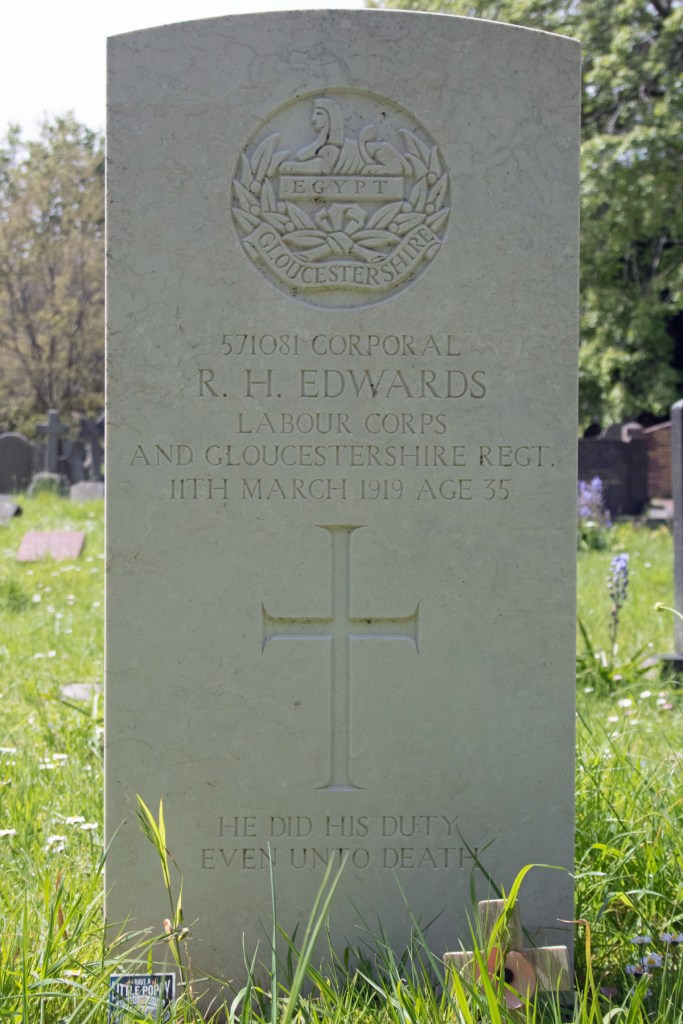
Ralph Henry Edwards was born in December 1883, the oldest of six children to Charles and Emma. Charles was a house painter from Somerset, and raised his family in the coastal town of Weston-super-Mare.
When he left school, Ralph followed in his father’s footsteps, taking over the business when Charles passed away in 1909. By the time of the census two years later, Ralph was living with his mother Emma, his two younger brothers and Emma’s brother Harry. Harry was also a house painter, while Ralph’s siblings were working a grocer’s assistants. The family were living in a five-room, semi-detached house within walking distance of the town centre.
War was on the horizon, and Ralph was keen to do his part. Full details of his service are no longer available, but what is certain is that he enlisted in the Gloucestershire Regiment and was assigned to the 8th (Service) Battalion. Initially formed in Bristol, the battalion spent the first year of the war on home soil, before being sent to France in July 1915.
By the middle of the war, Ralph had been promoted to the rank of Corporal. He transferred over to the Labour Corps and was attached to the 106th Prisoner of War Company. Initially, German POWs had been shipped to England, but by 1916 those with useful skills were retained in France and drafted into the Forestry Companies, Army Service Corps and Royal Engineers. Corporal Edwards’ role would have been to oversee such men. (Whether this was in France or back in England is unclear.)
At this point, Ralph’s trail goes cold. He served out the war, passing away back at home on 11th March 1919, although the cause of his death has been lost to time. He was 35 years of age.
Ralph Henry Edwards lies at rest in the Milton Cemetery in his home town of Weston-super-Mare.
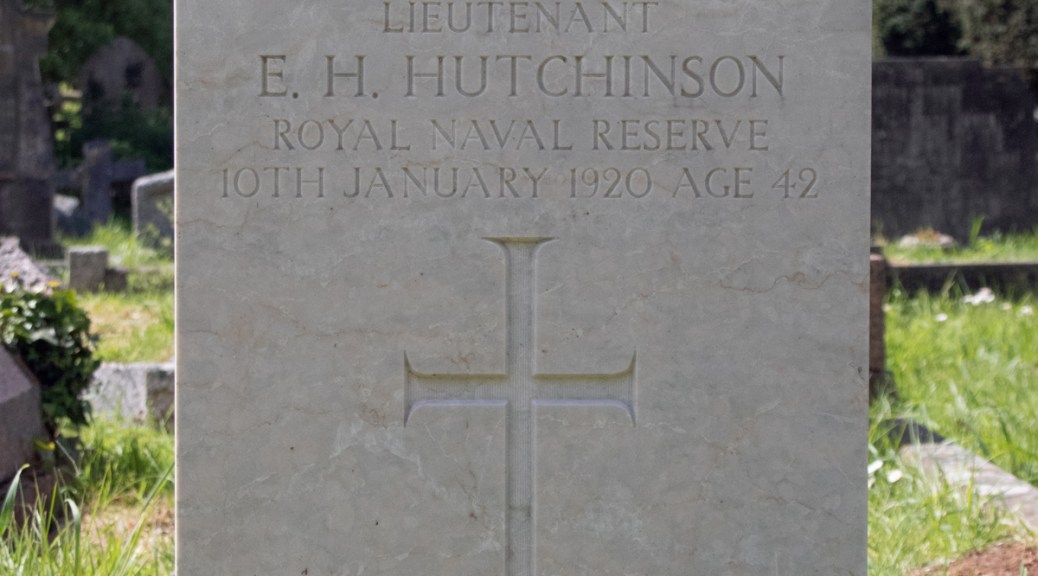
Ernest Henry Hutchinson was born in January 1878, one of four children to Dorothy Hutchinson, from Blyth, Northumberland. Details of Ernest’s father are sketchy and, by the time of the 1891 census, Dorothy seems to have been widowed and remarried, as her surname was now Alexander.
By this time Ernest was at school, and boarding with his aunt and uncle, but his siblings were all living with Dorothy and listed as ‘step-children’. Dorothy gave her employment as ‘housewife; husband at sea’, and it seems that this was likely her first husband’s job and, in fact, it would turn out to be her eldest son’s as well.
Ernest disappears from the census records for a while, but had readily taken to a life at sea. Over the next few years, he became certified as a Second Mate of a Foreign-Going Ship (1897), First Mate of a Foreign-Going Ship (1899) and Master of a Foreign-Going Ship (1904).
When war broke out, Ernest was seconded into the Merchant Navy. Sadly, his military records no longer exist, but during his time he attained the rank of Lieutenant. Ernest survived the war, and was retained as part of the Royal Naval Reserve, while continuing with his own sailing work.
At some point, Ernest married a woman called Emma Jane; documentation on the couple is scarce, so the date of the marriage is lost to time. The couple settled, however, in Weston-super-Mare, Somerset, but do not appear to have had any children.
Ernest’s maritime career continued after the war. One of his commissions was as First Mate aboard the SS Treveal. This was a new vessel in 1919, making its maiden voyage from Glasgow to the Middle East. It then sailed on to Calcutta, and was on its way back to Dundee by the beginning of 1920.
A local Cornish newspaper took up the story.
The terrible toll of 36 lives were levied by the wreck of the St Ives steamer Treveal, off the Dorset Coast on Saturday morning. The crew totalled 43, only seven surviving.
The Treveal, 5,200 tons, one of the Hain fleet of steamers, was caught by a fierce gale during Friday night and was firmly wedged on the Kimmeridge Ledge, near St Alban’s Head.
A Portland tug and Swanage lifeboat came to her assistance, but were unable to lend any practical aid, and on Saturday morning the Treveal was abandoned in favour of the ship’s boats. The latter were soon capsized and only seven of the crew succeeded in reaching the shore.
West Briton and Cornwall Advertiser: Monday 12th January 1920.
The report went into much more detail about the tragedy, including “a warm tribute to the vicar of a parish nearby, the Revd. Pearce, who stood up to his neck helping to pull the men in. The vicar tried for an hour to resuscitate the First Mate [Ernest Hutchinson], but without success.“
Another newspaper gave further information about Ernest’s funeral, and the impact of the shipwreck on his widow.
There was a simple but affecting scene in Weston-super-Mare Cemetery on Saturday afternoon, when the body of Chief Officer EH Hutchinson, one of the 35 victims in the wreck of the SS Treveal… was laid to rest.
It will be recollected that… the first tidings of his tragic fate reached the widow… through the columns of a Sunday newspaper. Only on the previous morning she had received a letter notifying the date on which the Treveal was due to reach Dundee – whither the major portion of her cargo has been consigned from Calcutta – asking him to meet her there.
Western Daily Press: Monday 19th January 1920
Ernest Henry Hutchinson drowned at the age of 42 years old. He was buried in the Milton Cemetery in his adopted home town of Weston-super-Mare in Somerset.
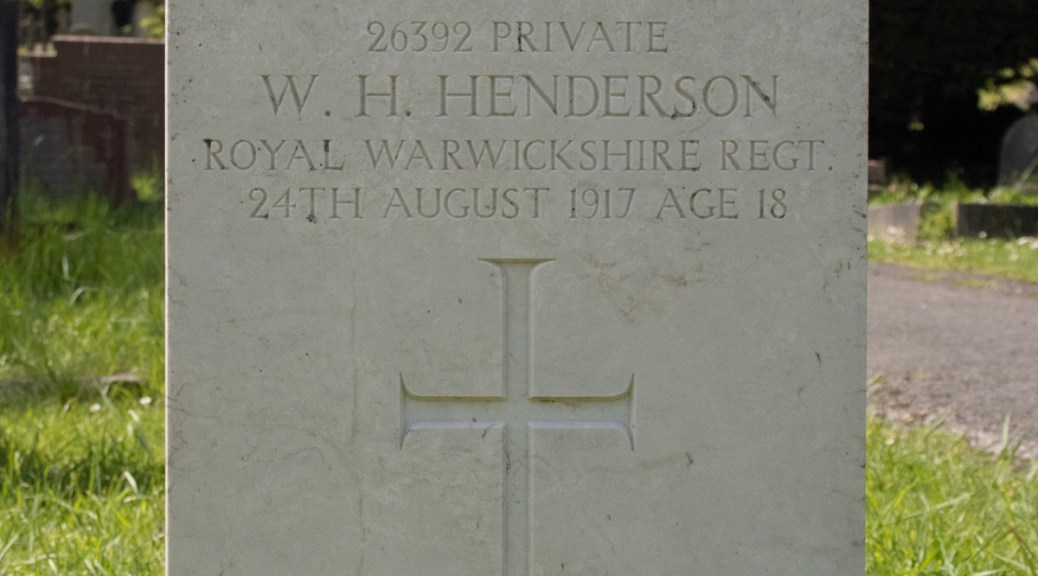
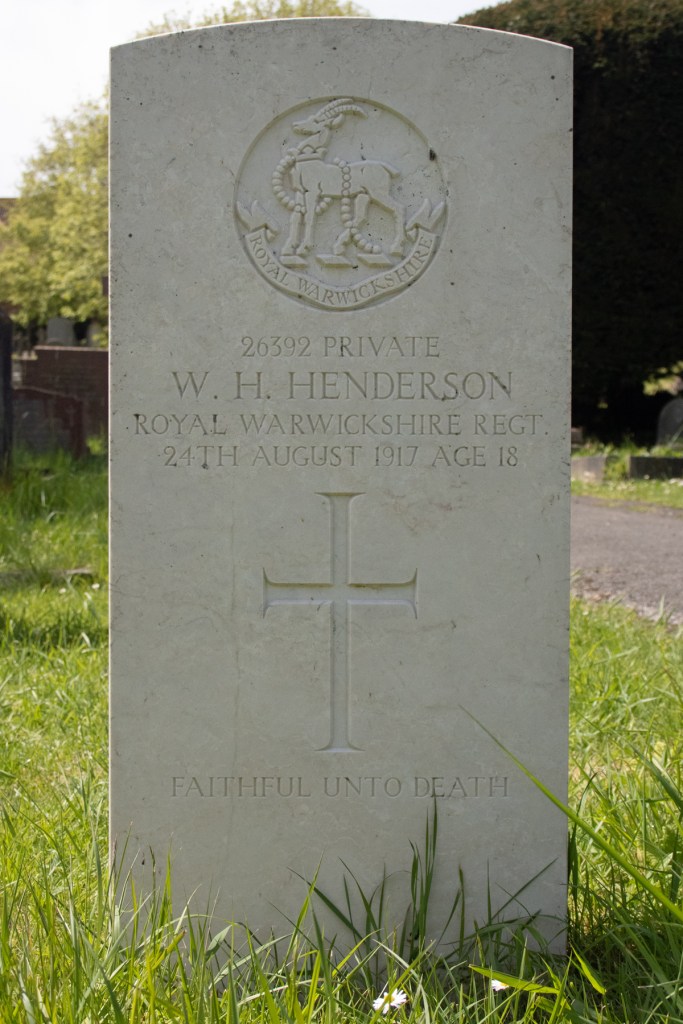
William Henry Henderson was born in Weston-super-Mare in December 1898. The oldest of four children, his parent were tailor Herbert Henderson and his wife Fanny.
As with a lot of servicemen born around 1900, there is little documentation around William’s early life. When war broke out, he was 15 years old, and seems to have been eager to do his bit. Few military records for him survive, but he joined the Royal Warwickshire Regiment and was given the role of Private in the 5th (Reserve) Battalion.
Part of William’s training seems to have taken place in Northumberland, and he was based near the coastal town of Blyth. On 24th August 1917, he was one of 600 men taken on a route march from the camp to the coast. The Somerset Standard took up the story of that day’s events:
Lieutenant Colonel Frank Martin Chatterley, the officer in command, said that he… allowed the men 20 minutes to cool, and after taking all necessary precautions gave orders for them to enter the sea.
The witness inquired from a boy the state of the tide, and was told that it was low ebb; he expected it to rise shortly. The witness undressed, bathed and came out of the water, and was dressing when he was told that some of the men were in difficulties.
Somerset Standard: Friday 31st August 1917
The Morpeth Herald added to this: “The soldiers had not been in the water long when some of them got into difficulties and were washed out seawards, in spite of their struggles. A number of comrades rushed to their assistance until at the fatal spot 13 men were seen struggling and evidently drowning. Soldiers formed a human chain by joining hands and wading as far they could into the fast-ebbing tide. They succeeded in saving 5 of their comrades, three of whom were very exhausted, when they got ashore that they were immediately rushed off by car.”
Nine soldiers, including Private Henderson, drowned that day, despite the commended attempts by Reverend Verschoyle, the Army Chaplain, to save their lives.
Some of the survivors told the inquest that they were from the Midlands; they could not swim, and one had never seen the sea before. The inquest was told that there were terrific currents and shifting sands in that particular spot that day, and the conditions seemed to have changed after the soldiers had entered the water. Chatterley said that he had had men bathing at that spot before, and had also seen civilians bathing there before.
The other eight servicemen who perished that day were Privates Thomas Forley, Henry Southern, Fred Shale, George Beavan, Gordon Noy, William Blann, Lieutenant Kenneth Brown and Sergeant Riley. Private Henderson was just 18 years old.
William’s body was brought back to Weston-super-Mare for burial. He lies at rest in the Milton Cemetery in the town.
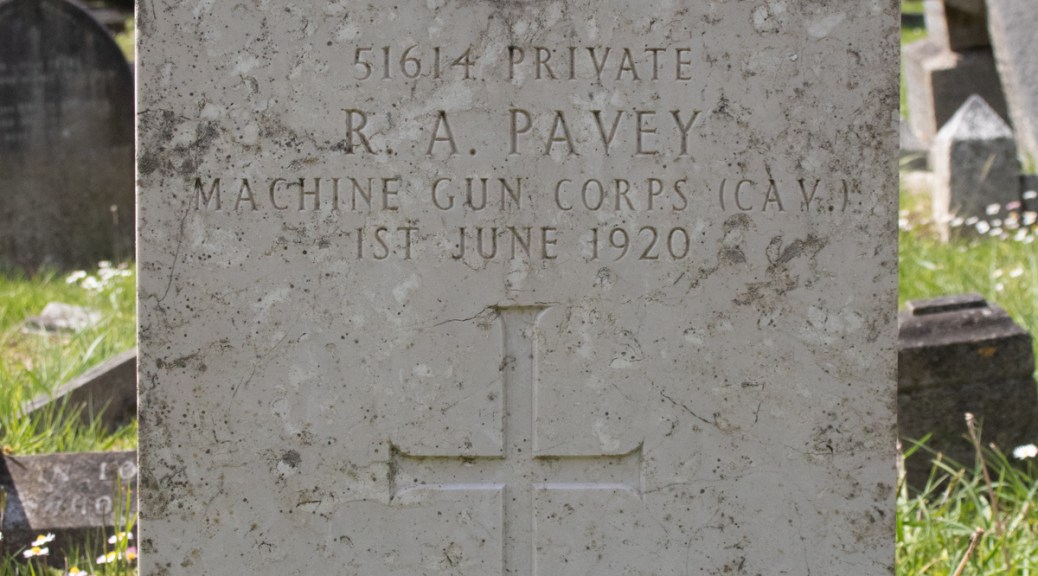
Roland Adams Pavey was born in the summer of 1891, the youngest of three children to Anthony Pavey and his wife, Mary. Anthony was a painter, and both he and his wife were born in the Somerset town of Cheddar. Their life took them travelling, though, with their first child, Edward being born in Cheddar, while their middle child, Ada, was born in Oxford, and Roland born in Bath .
Anthony passed away in 1910, leaving Roland living with his widowed mother, earning a living as a draper’s clerk. War was coming, however, and new opportunities lie in store.
Roland enlisted in the army in January 1915. Initially joining the North Somerset Yeomanry, he soon transferred across to the Cavalry Division of the Machine Gun Corps. Sadly, Private Pavey’s military records are lost to time, but he definitely saw action on the Western Front, gaining the Victory and British Medals and the 1915 Star for his efforts.
The next record for Roland comes in the form of a newspaper article from South Wales.
SAD CASE OF NANTYGLO GIRL
Behind the untimely death of Mr Roland A Pavey, a popular young ex-Service man, and secretary of the Weston-super-Mare Federation of Discharged Soldiers and Sailors, lies a pathetic story of the double bereavement of a pretty Welsh girl, Miss Dorothy Morgan of Nantyglo.
Prior to the war, Miss Morgan was engaged to a compatriot of her own, who answered his country’s call and, like so many thousands of others, made the great sacrifice. Time rolled on and the old wound was eventually healed. Then Miss Morgan went on a visit to Weston last year, and there met young Roland Pavey, just demobilised from the Army.
A mutual attraction soon ripened into affection, and the couple became engaged, and they were to have been married towards the end of the present month, but Fate intervened.
Pavey’s long war service impaired his constitution, though how seriously was probably not realised until the damage was done. Returning from a Whitsuntide visit to Exeter, Mr Pavey was so ill that he was compelled to take to his bed. He rapidly became worse, and though his fiancée was hurriedly summoned, he passed away before she arrived at Weston.
Thus, within a short time, Miss Morgan has been twice bereaved as a result of the war.
Merthyr Express: Saturday 12th June 1920
Roland Adams Pavey was just 29 years old when he died. He was laid to rest in the Milton Cemetery in Weston-super-Mare, where his mother then lived.
Sadly, Dorothy Morgan is too common a name in South Wales to confirm much more information on her life. We are unlikely ever to discover if she ever found a lasting love.
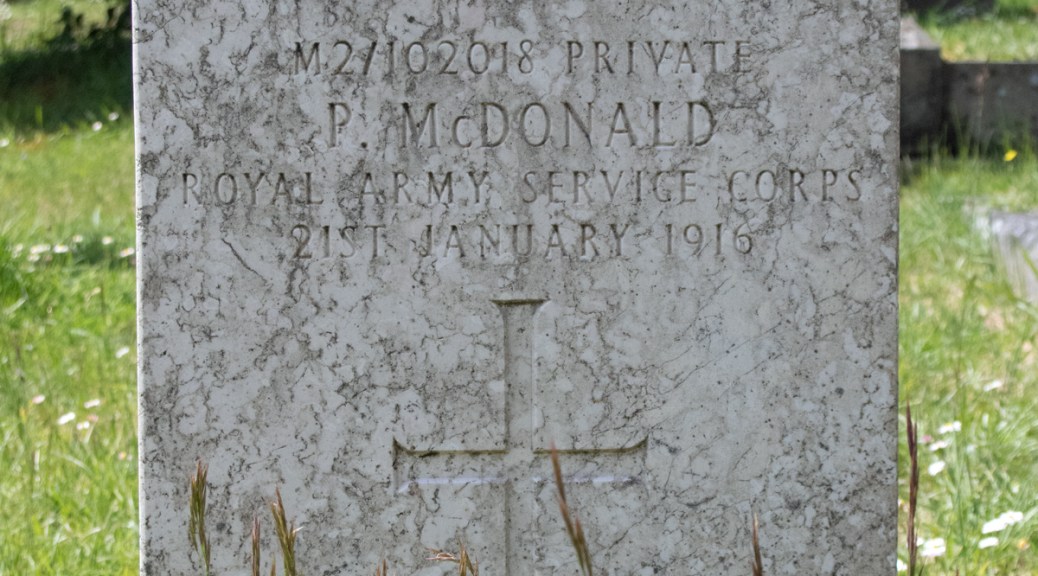
Peter McDonald was born in Tullamore, King’s County (now Offaly County), Ireland, on 28th May 1893 and was one of eight children to Michael and Mary McDonald. Michael had been in the army, and this seems to have been the route that Peter wanted to follow as well.
When he left school, however, he found work as a domestic servant at St Stanislaus College in his home town. War, by this time, was on the horizon, and so Peter was called on to other things.
Unfortunately, a lot of the documentation around Peter’s military service is no longer available. He enlisted in the Royal Army Service Corps; while an exact date for his enrolment is not available, this would appear to have been at some point in the first year of the conflict.
Private McDonald was assigned to the 341st Mechanical Transport Company. This was formed in May 1915, and was designated an Ammunition Park (which was in essence a fleet of lorries and a workshop for maintaining them). While full details of his time with the RASC is not available, Peter certainly came to be based in Weston-super-Mare, Somerset.
Considerable sensation was created at Weston-super-Mare on Friday evening, by a rumour which prevailed that a member of the Army Service Corps billeted in the town had been shot and another man wounded.
Inquiries revealed the fact that the rumour had some foundation, and it appears that some half-dozen members of the corps were attending their motor-bicycles in a shed at headquarters in Beach Road, when Lance Corporal Goldsmith produced an automatic Colt pistol, which he handed to Private McDonald for inspection.
In the course of the examination the weapon went off, and Goldsmith was shot in the leg. He at once took the revolved from McDonald, observing that he was unaware that it was loaded, and was apparently in the act of unloading it when it was again discharged, the bullet entering the lower part of McDonald’s abdomen, severing the main arteries.
Medical aid was at once procured. The unfortunate man died as the result of internal haemorrhage about an hour later.
Goldsmith was removed to hospital, but his injuries are not regarded as serious.
Somerset Standard: Friday 28th January 1916
Private Peter McDonald has passed away from a gunshot wound on 21st January 1916, at the age of just 22 years old. His body was laid to rest in the Milton Cemetery in Weston-super-Mare, where he had met his fatal accident.
Private McDonald’s pension record gives his cause of death as ‘explosion’, something of a misinterpretation of the evening’s events.










 Death and Service