Category Archives: illness

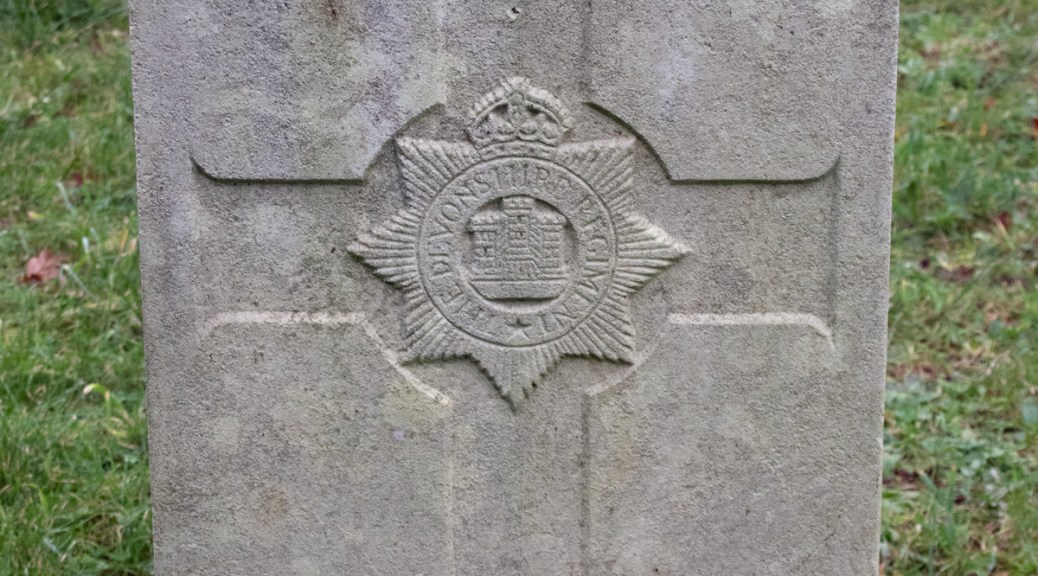
Serjeant John Bunclark

Serjeant John Bunclark

John Bunclark was born in the village of Lustleigh, near Bovey Tracey in Devon in 1888. His father is lost to time, but his mother was farm labourer’s daughter, Elizabeth Bunclark. Elizabeth worked as a kitchen maid for a local solicitor, so John’s grandparents – John and Mary – raised him as their own.

In 1894, Elizabeth went on to marry William Wright – they went on to have four children of their own, while John remained with his grandparents. Tragically, in 1907, Elizabeth died in childbirth; the boy also died.

In 1906, John was longing for bigger and better things, and a military career appeared a good option. He joined the Devonshire Regiment as a Private and, while full details of his service are no available, it seems that John made a good impression.

In 1912, John married Emma Jane Horrell. She was the daughter of an agricultural labourer from Tavistock, who was working as a domestic servant when they met. The couple went on to have four children, between 1912 and 1918.

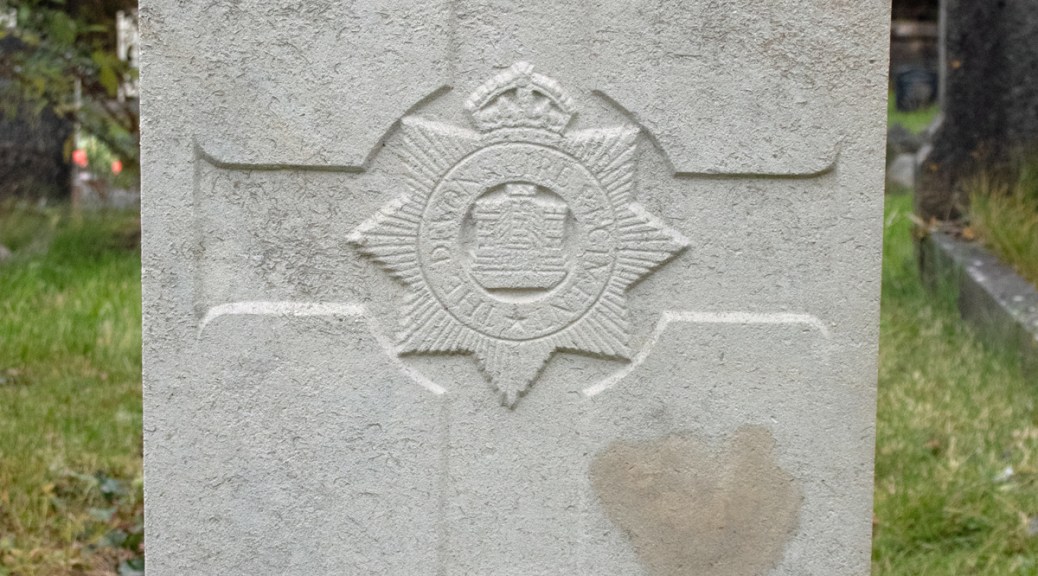
When war broke out, Private Bunclark was posted to France; his battalion – the 2nd – served in many of the key battles of the conflict, including Neuve Chapelle, The Somme, Ypres and Arras. At some point during the war, however, John transferred to the 641st Employment Company of the Labour Corps; this meant work on the Home Front, and a promotion to Serjeant came with it.

It was while John was on leave back in Newton Abbot that he fell ill. His specific ailment is lost to time, but he was admitted to the Temporary Hospital at the Institution in the town. He passed away on 7th November 1918, at the age of 30 years old.

John Clark was laid to rest in Newton Abbot Cemetery.
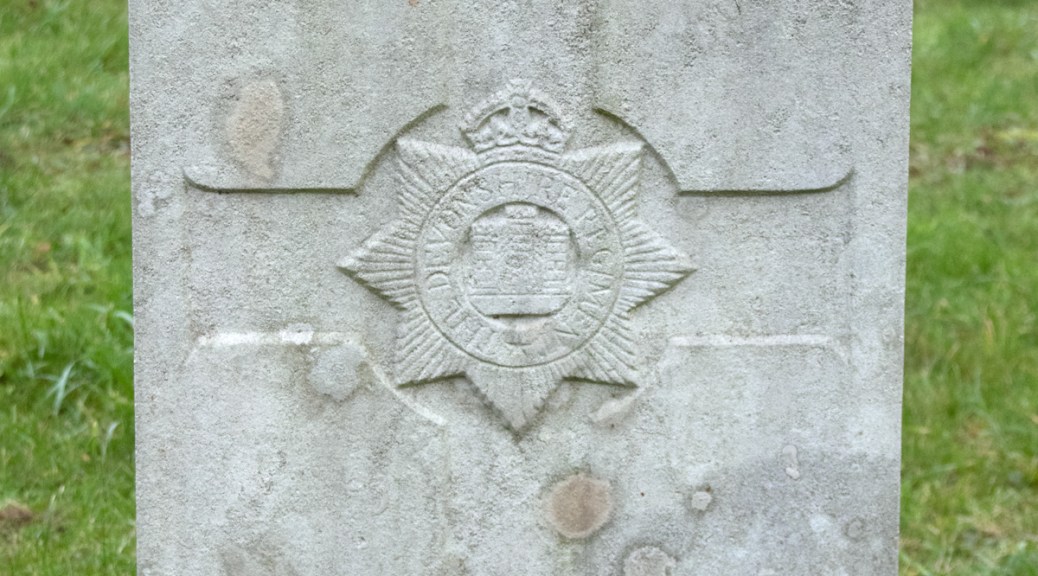

Private James Flood

Private James Flood

James Allan Flood was born in Exeter, Devon, in 1879, and was the oldest of six children to James and Emily. James Sr was a bricklayer, and, according to the 1881 census, the family lived at 2 Stepcote Hill, sharing the house with two other families.

When he left school, James Jr also fell into labouring work. By this time he had met Amy Hobbs, a hotel worker’s daughter who had been born in London. Her father had moved from Devon to the city in the 1870s, but had brought his family back to his home county by 1885.

James and Amy married in the village of Wolborough in December 1899. They set up home in nearby Newton Abbot and went on to have five children.

The storm clouds of war were beginning to hover over Europe and, when the conflict broke out, James was keen to play his part. He enlisted within days of war being declared, joining the Devonshire Regiment as a Private. His service records show that he stood 5ft 6ins (1.68m) tall, and weighed 112lbs (51kg). He had a tattoo of a crown and heart on his right forearm.

Private Flood found himself in France by Christmas 1914 and stayed there for more than a year. During this time, he was promoted to Lance Corporal, although, as a result of missing a role call, he reverted back to Private again a couple of months later.

After a brief two months spent back on home soil, James returned to France again, spending a further ten months on the Western Front. In March 1917, he was transferred across to the Labour Corps, and came back to home soil again.

This transfer appears to have been connected to James’ health; he continued to work as part of 621st Agricultural Company for the next eighteen months, before being discharged from the army on medical grounds in September 1918. Sadly, the cause of his discharge is lost to time.

At this point, James Allen Flood’s trail goes cold. The next time he appears in documentation is nearly a year later: he passed away on 17th August 1919, aged 40. He was laid to rest at the Newton Abbot Cemetery.


Private Arthur Srodzinski

Private Arthur Srodzinski

Arthur Reginald Srodzinski was born in Paignton, Devon, in October 1890. His great grandfather Stanislaus was born in Poland and emigrated to Devon in the early 1840s. He was an upholsterer, and this is a trade that his son Samuel, and his grandson – Arthur’s father – Henry also followed. Henry and his wife, Sarah, had five children, of which Arthur was the middle one; by the time of the 1901 census, Henry has moved the family to Newton Abbot.

Arthur wanted bigger and better things than upholstering, and sought out a career in the army. In March 1909, he enlisted in the Devonshire Regiment as a Private. His service records show that he was 5ft 5ins (1.69m) tall, and weighed in at 131lbs (59kg). He has hazel eyes, brown hair and a fresh complexion.

Private Srodzinski enlisted for a period of twelve years (seven on active duty), and after his initial training, he was sent overseas. Over the next few years, he was posted to Malta, Cyprus and Egypt but, when was came to Europe, he returned to England, before heading to the Western Front.

Arthur’s time in France was not to be a long one – at the end of December 1914, he was medically evacuated to England, suffering from a heart condition. This was to turn out to be a serious issue, and he was formally discharged from the army on medical grounds just four months later.

Back in Devon, Arthur found work as a butcher and, in the autumn of 1917, he married local carpenter’s daughter Carrie Larkworthy; the couple set up home in Newton Abbot.

In March 1918, Arthur was attending a meeting of discharged soldiers at the Commercial Hotel in Newton Abbot, when he collapsed. Medical treatment was sought, but it proved too late; he had died of a heart attack. Arthur was just 28 years of age.

Arthur Reginald Srodzinski was laid to rest in Newton Abbot Cemetery. Three months later, Carrie gave birth to their one and only child, who she named Reginald.


Colour Sergeant John Paulin

Colour Sergeant John Paulin

John Duncan Paulin was born in January 1885 in Liverpool, the youngest of two children. His parents – John Robert (known by his middle name) and Jane Paulin – were born in Scotland, but seemed to have moved to the Lancashire port by the late 1870s.

When he left school, John – who became known as Jack – found work as a clerk, but a life of adventure – and a more reliable career – beckoned. On 14th August 1904, he enlisted in the Border Regiment as a Private for a period of seven years. During that time, he served in barracks across the country – from Carlisle to Plymouth – and, by the time he was put on reserve in 1911, he had reached the rank of Corporal.

When war was declared, those servicemen on reserve were called back into action, and Jack found himself reposted with an increased rank of Sergeant. Over the next few years, he remained based in England and seemed to take on more of a training role, transferring to the Middlesex Regiment and, by the end of 1917, attaining the rank of Colour Sergeant.

At some point Jack met Ethel May Smith, who lived in Frome, Somerset. She was the same age as Jack, and was the daughter of the foreman of one of the cloth manufacturers in the town – she also went on to work in the factory. The couple married in St John’s Church in the town on 1st June 1916, but did not go on to have any children.

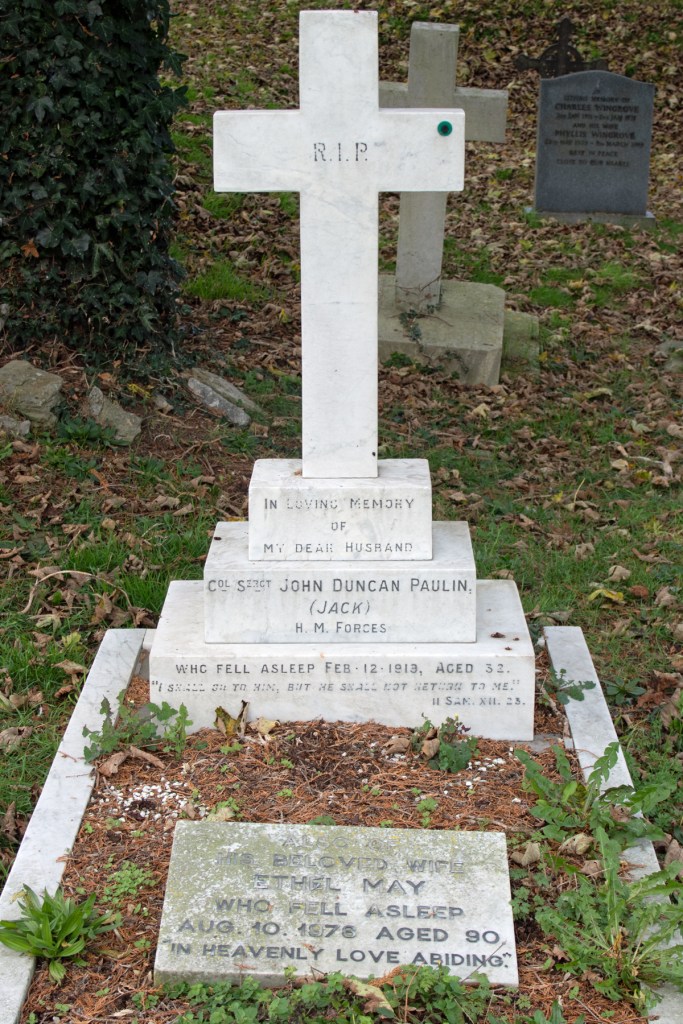
Colour Sergeant Paulin’s military career was free of any medical issues or hospital admissions until February 1919. He had not been demobbed by this point, even though the war was over. However, as with many other servicemen at the time, Jack fell ill with influenza, and was admitted to Grove Military Hospital (now St George’s Hospital) in Tooting, South London. Pneumonia set in, and Jack passed away on 12th February 1919, at the age of 34 years old.

Jack Duncan Paulin’s body was brought back to Somerset, and he was laid to rest in the graveyard of Christ Church, Frome. Ethel lived on until 1978; she was laid to rest with her husband.


Private Charles Sparey

Private Charles Sparey

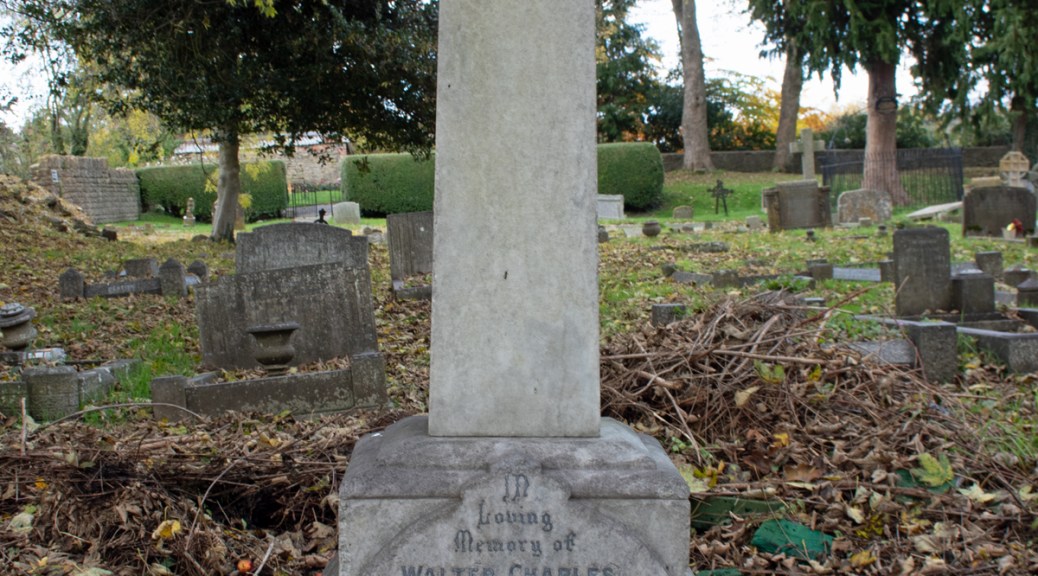
Walter Charles Sparey was born on 3rd Aril 1890 in the Somerset town of Frome. He was a twin, and was one of a total of seven children to Walter and Susan Sparey. Walter Sr was a plasterer and tiler and the family lived on Culver Hill, to the south of the town centre, and next to the Girls’ Asylum Institute.

When he left school, Walter Jr – who was known as Charles, to avoid confusion with his father – found work as a grocer’s porter, while his twin, Henry, was employed as a labourer for the local brewery.

Europe was on the brink of war and, while full details of Charles’ military service are not available, some aspects are clear. He enlisted within weeks of war breaking out, joining the Somerset Light Infantry as a Private. By July 1915, he found himself on the Western Front in France.

Private Carey was caught up in the fighting and, on 3rd April 1916, received gun shot wounds in the back and shoulder. He seems to have recovered, but was dogged by lung and heart afflictions afterwards, and did not return to active duty. He was eventually discharged from military service on 15th August 1917.

Charles returned home, but the effects of his injuries eventually proved too much. He passed away on 1st March 1918, aged just 28 years old, and was laid to rest in the graveyard of Christ Church in his home town of Frome.


Corporal Cyril Allen

Corporal Cyril Allen

Cyril Starr Allen was born on 15th June 1891 in the village of Baughurst, near Tadley in Hampshire. He was the second youngest of five children to Charles and Martha Allen. Charles was a rate collector, and the family moved around the county during Cyril’s early years.

By the time Cyril left school, Charles had become an assistant bursar in Wootton, near Basingstoke. Cyril, meanwhile, had found similar administrative employment and was working as a clerk for a local land agent.

At the start of 1911, Cyril enlisted in the British Army. He joined the 4th Battalion of the Wiltshire Regiment as a Private and was soon based on Salisbury Plain. His service records confirm that he was 19 years and 7 months old, and stood at 5ft 5ins (1.65m) tall. Private Allen served for his initial term of four years, before being remobilised.

In November 1915, Cyril married Mabel Young. She was a printer’s daughter from Wiltshire, and the couple married in Salisbury, before settling down in Frome, Somerset. They went on to have a child, a daughter they called Kathleen.

Remobilised in the autumn of 1915 Private Allen received a series of promotions – to Lance Corporal, Corporal, Lance Sergeant and Sergeant, and, by June 1917, he found himself at the Front.

On 22nd April 1918, Cyril was injured, sustaining gunshot wounds to his shoulder and left arm. He was invalided back to England for treatment, and was hospitalised in the north of the country. He was then transferred to the Royal Welch Fusiliers with the rank of Corporal and sent to Ireland to continue his recovery and work light duties.

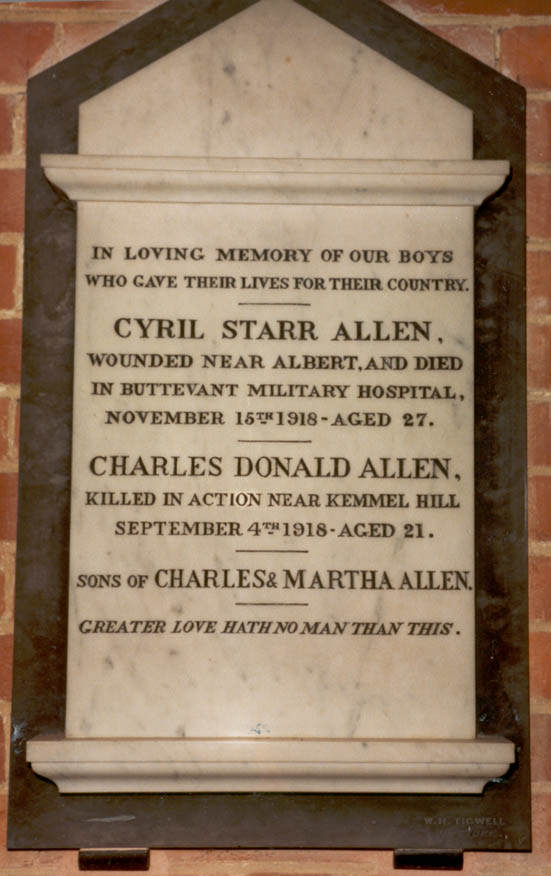
While in Ireland, Corporal Allen contracted influenza and was admitted to the Buttevant Hospital in County Cork. Sadly, in his weakened state, it was something he was to succumb to, and he passed away, with Mabel at his bedside, on 15th November 1918. He was just 27 years of age.

Cyril Starr Allen’s body was brought back to England; he was laid to rest in the graveyard of Christ Church in Frome, Somerset.


Corporal Cyril Allen (from ancestry.co.uk)

After the loss of her husband, Mabel went on to live her life. In 1923, she married James Burr, a draughtsman from Frome; they went on to have a child – a brother for Kathleen – called James.


Cyril’s two brothers, Winthrop and Charles, also fought in the First World War.

(from ancestry.co.uk)

Winthrop had emigrated to North America in 1911, but returned to Europe as part of the Canadian Expeditionary Force when war broke out.

Lance Corporal Charles Allen served with the 15th Battalion of the Hampshire Regiment. He fought on the Western Front and was killed near Kemmel Hill in Belgium on 4th September 1918. He was just 21 years old. Charles is commemorated at the Tyne Cot Memorial in Zonnebeke, Belgium.


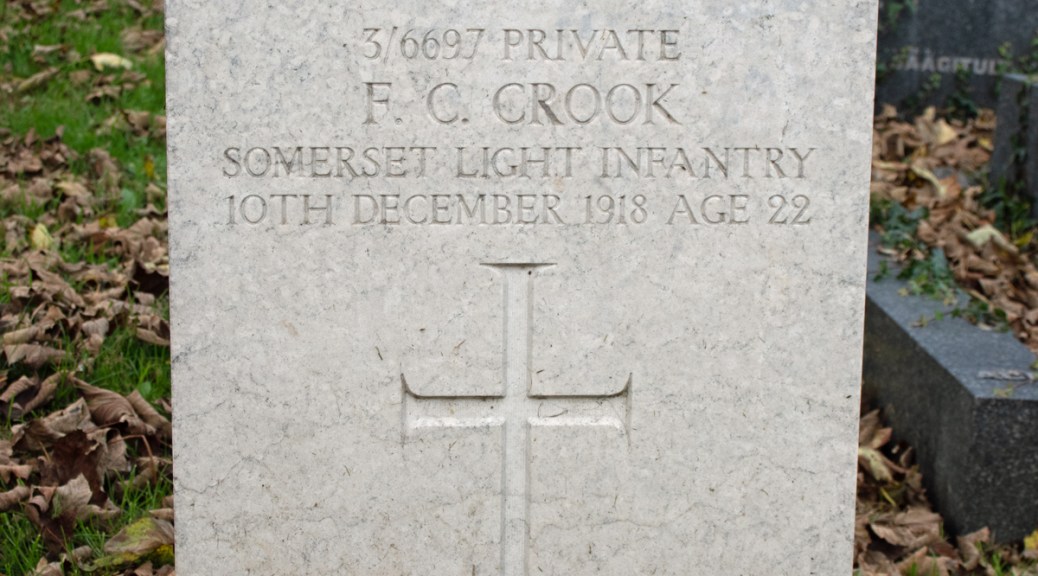
Private Frederick Crook

Private Frederick Crook

Frederick Charles Crook was born in Frome, Somerset, in 1896 and was one of eleven children. His parents were Frank and Bessie Crook, and the family were raised in a house to the south of the town centre. Frank was a plasterer but sadly details of his son’s life are quite sketchy, so it’s not evident if this was a trade he followed his father into.

In the spring of 1912, Frederick married Wiltshire-born domestic servant Hannah Gerrish, a farm labourer’s daughter. The couple wed in Bradford-upon-Avon, and went on to have a daughter, Margaret, who was born in 1913.

Storm clouds were gathering over Europe, and, in November 1914, Frederick volunteered to play his part. He joined the Somerset Light Infantry, and was assigned to the 1st Battalion as a Private.

While it’s not possible to identify exactly where he served, Frederick would certainly have seen action on the Western Front: his battalion fought with the 4th Division at Ypres, The Somme and at Arras in the various phases of the conflict.

The ongoing conflict must have had an impact on Private Crook: he was medically discharged from military service with neurasthenia – a nervous breakdown – just weeks before the Armistice was signed. He returned to Frome, but it must have been too much: he passed away on 10th December 1918, at the age of just 22 years old.

Frederick Charles Crook was laid to rest in the graveyard of Christ Church, in his home town, Frome.


Private Edward Pike

Private Edward Pike

Edward Arthur James Pike was born in Frome, Somerset, in 1888, one of six children to Giles and Annie Pike. Giles was a carter and labourer, and this is something that Edward – who was known by his second name, Arthur – followed his father into.

Arthur later found employment with the local Cooperative Society, and his carting experience led him to work for a Mr Bynoth of Badcox, whose Somerset business later became a well-known local taxi and bus company. On 17th April 1911, Arthur married Ellen Emma Sheppard, a labourer’s daughter from nearby Longbridge Deverill.

War was coming to Europe, and Arthur enlisted when his time came in the autumn of 1917. He joined the Army Service Corps, and was assigned to the 12th Mechanical Transport Company on Salisbury Plain.

While serving, Private Pike quickly contracted rheumatic fever. He was admitted to the Fargo Military Hospital in Larkhill, but succumbed to the condition after three months on 28th March 1918. He was 30 years old.

Brought back to Frome, Edward Arthur James Pike was laid to rest in the graveyard of Christ Church.


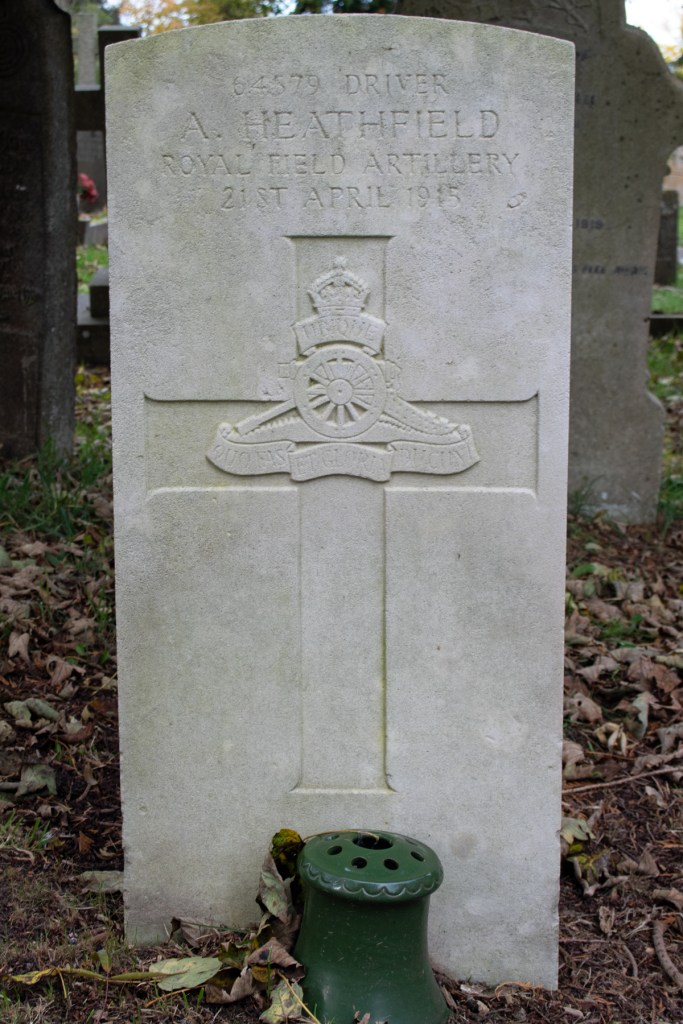
Driver Arthur Heathfield

Driver Arthur Heathfield

Arthur Heathfield was born in Shefford, Bedfordshire, early in 1897, the oldest child to Ellen Grace Heathfield. Ellen married William Lewis in 1903, and went on to have four children in total.

When he left school, Arthur found work as a farm labourer, but by this time, war was coming to Europe. Full details of his military career are not available, but he enlisted in the Royal Field Artillery at some point towards the end of 1914.

Driver Heathfield was assigned to the 14th Brigade, which saw fighting on the Western Front, although it is not possible to determine whether Arthur himself went overseas. What is certain is that, by the spring of 1915, he was admitted to hospital in Frome, Somerset, suffering from meningitis. Sadly, he was to succumb to the disease on 21st April. He had not long turned 18 years old.

Arthur Heathfield was laid to rest in the graveyard of Christ Church, in the town in which he died.


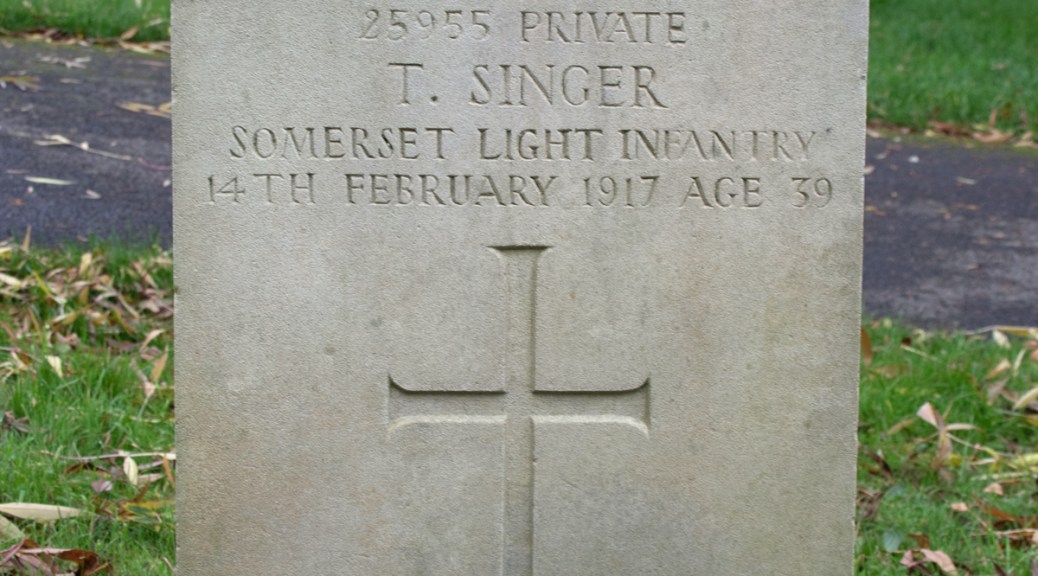
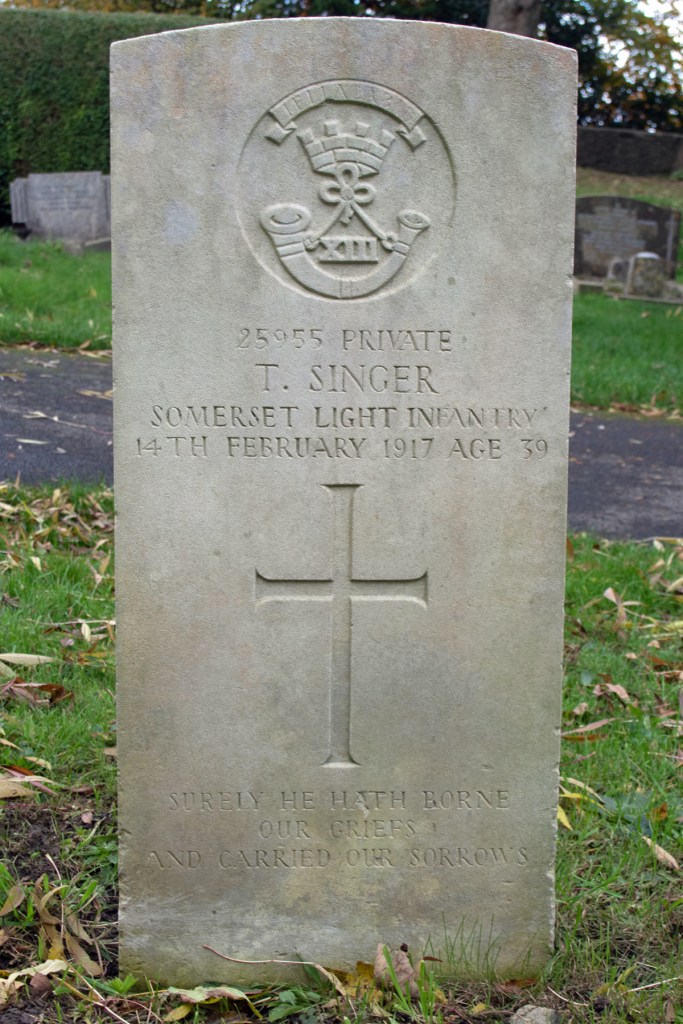
Private Thomas Singer

Private Thomas Singer

Thomas – better known as Tom – Singer was born in Frome, Somerset, in the summer of 1876, the youngest of seven children to John and Sophia Singer. John was a labourer on the railway, who sadly passed away when Tom was only three years old. Sophia was left to raise the family on her own, and she did so by taking in washing for other people (the 1891 census has her listed as a pauper, but she still managed to support her children). Sophia also died in 1892, meaning Tom was an orphan by the time he was just 16 years old.

Tom found work as an errand boy when he left school, although he soon moved on to labouring work. After Sophia’s death, he moved in with his brother Walter, who had also recently been widowed, and the money they brought in helped support Walter’s three children and pay for a housekeeper to do so.

On 21st July 1904, Tom married Edith Mary Bugler, a labourer’s daughter from nearby Selwood; the couple went on to have five children. With a growing family to support, Tom found new work as an ostler at the pub in Witham Friary, to the south of Frome.

War was coming to Europe, and Tom was called upon to do his duty. Full details of his service are not available, sadly, but it is clear that he enlisted as a Private in the Somerset Light Infantry at some point before the summer of 1916.

Private Singer was sent to France in November 1916, but fell ill soon afterwards. He was medically evacuated back to England and admitted to hospital, where he underwent an operation. Sadly, he did not recover, and passed away on 14th February 1917, at the age of 40 years old.

Tom Singer was laid to rest in the graveyard of Christ Church in his home town of Frome.