Category Archives: killed in action

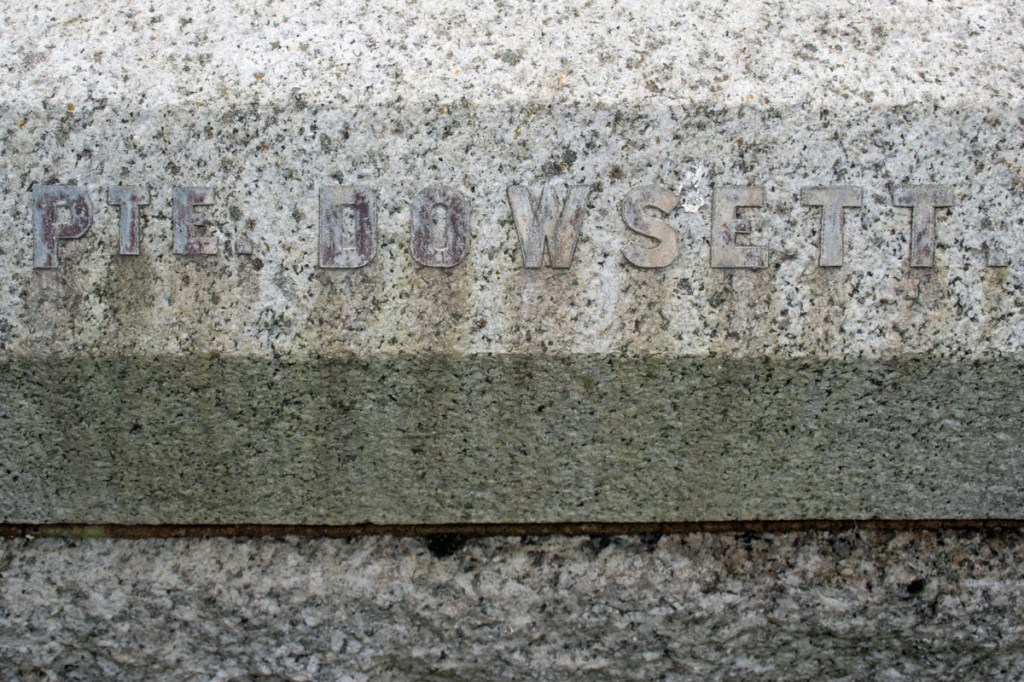
Private Albert Dowsett

Private Albert Dowsett

Albert Dowsett was born in the Essex village of Sible Hedingham in the spring of 1868. He was the fourth of six children – all of them boys – to Stephen and Susan Dowsett. Stephen was an agricultural labourer, while his wife worked as a straw plaiter to bring in a little extra money.

Albert seems to have been a bit of a tearaway. In July 1877, a local newspaper reported that:

Ezekiel Rulton and Albert Dowsett, boys each nine years of age, were indicted for breaking into the dwelling house of Matilda Jaggard, at Sible Hedingham, and stealing two books, value 1s, on the 20th June. Rulton, having once before committed burglary was sentenced to 10 days’ hard labour and five years in a Reformatory School. Dowsett was acquitted.

Essex Standard: Friday 6th July 1877

Stephen died in the autumn of 1884, while Susan died in March 1892. By this point Albert was 23 years of age, and had found solid work in the army. Full details of this early service no longer remain available, but he fought in South Africa in the 1890s.

By 1897 he returned to England and moved to Stone, near Greenhithe, in Kent. It was here that he met and married Anna Davis, the daughter of a local brewery man. The couple set up home in the village, and went on to have three children, William, Dorothy and Margaret.

The 1911 census recorded the family living in a small terraced house close to the railway station in Greenhithe. Albert was working as a labourer in the wash mill of the local cement works, and the family had a boarder, widower William Davies, who was a weighman at the same works.

Away from work, Albert had also found another calling, and was employed as a verger at St Mary’s Church, just a few minutes’ walk from home.

War was now encroaching on Europe, and, with his previous army service, Albert was perfect to resume his military role. Given the age limitations for new recruits early on in the conflict, it is likely that he volunteered for this role. He willingly took up a post with the 3rd Supply Company of the 2nd/4th Battalion of The Buffs (East Kent Regiment).

Private Dowsett was given a guard’s role, and was part of the team given the duty of patrolling two explosives factories near Faversham. He was on duty on the afternoon of Sunday 2nd April 1916 when a fire near one of the factory buildings set off a series of massive explosions. More than a hundred people were killed; sadly this included Private Dowsett. He was 48 years of age.

Albert Dowsett was laid to rest, along with the other victims of the Faversham Explosion, in a mass grave the town’s Borough Cemetery.

Private William Jarvis

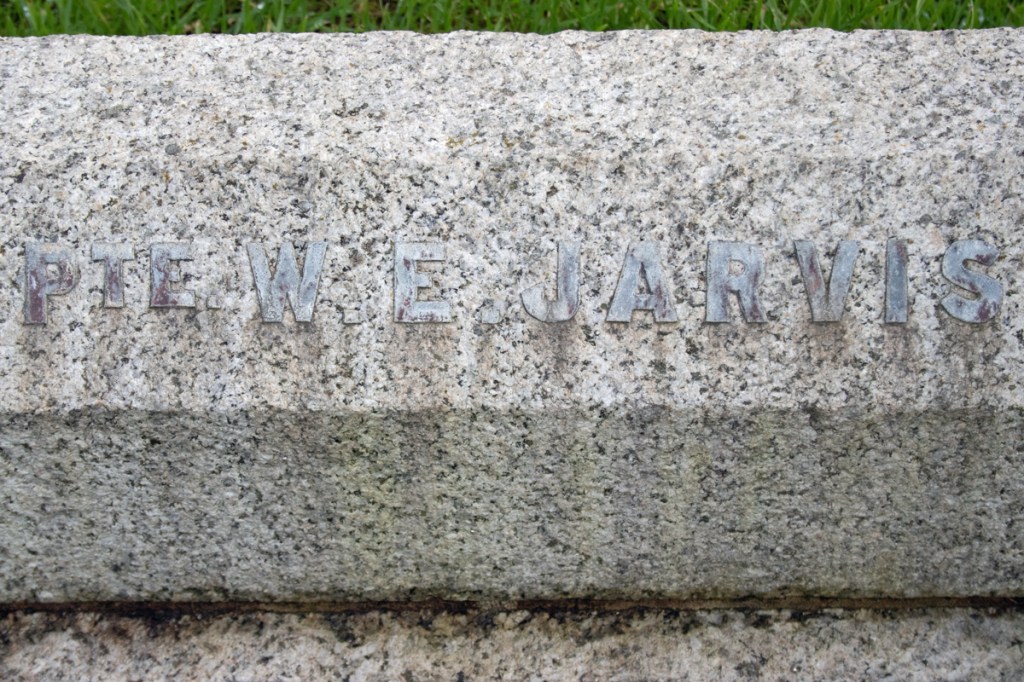
Private William Jarvis

William Edward Jarvis was born in the spring of 1875, the son of silk printer Edward Jarvis and his wife Elizabeth. He was one of five children, and the family were raised in Crayford, Kent.

When he left school, William found work as a stoker, and this is what he was doing when, in the summer of 1903, he married local engineer’s daughter Maud Kitchener. The couple set up home with Maud’s widowed mother, and went on to have three children, Ivy, Edward and Edna.

War was coming to Europe, and while full details of William’s military service are unclear, it is evident that he had enlisted to play his part by October 1915. He was assigned to the 3rd Supply Company of the 2nd/4th Battalion of The Buffs (East Kent Regiment) and served as part of the territorial force.

Private Jarvis was part of the team given the duty of guarding two explosives factories near Faversham. He was on duty on the afternoon of Sunday 2nd April 1916 when a fire near one of the buildings set off a series of massive explosions, killing more than 100 people, William included. He was 40 years of age.

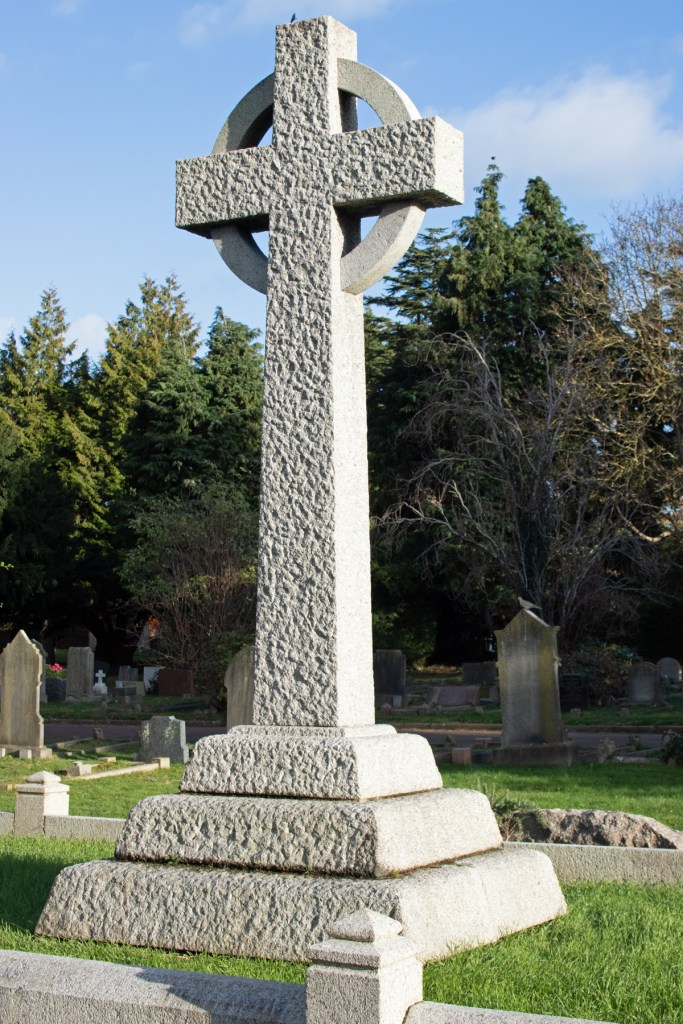
William Edward Jarvis was laid to rest, along with the other victims of the Faversham Explosion, in the town’s Borough Cemetery.

Memorial to the Faversham Explosion, Borough Cemetery

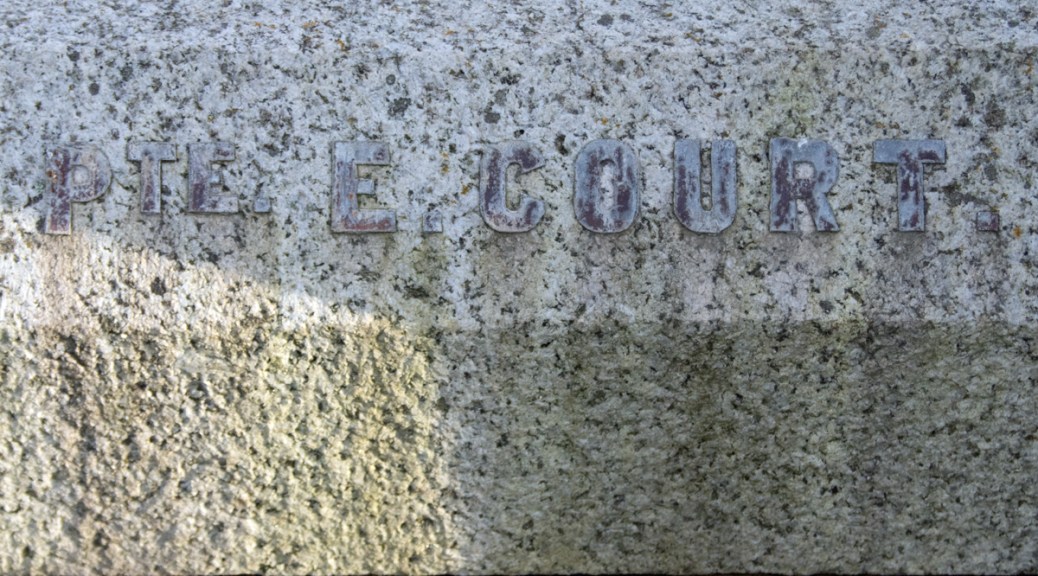
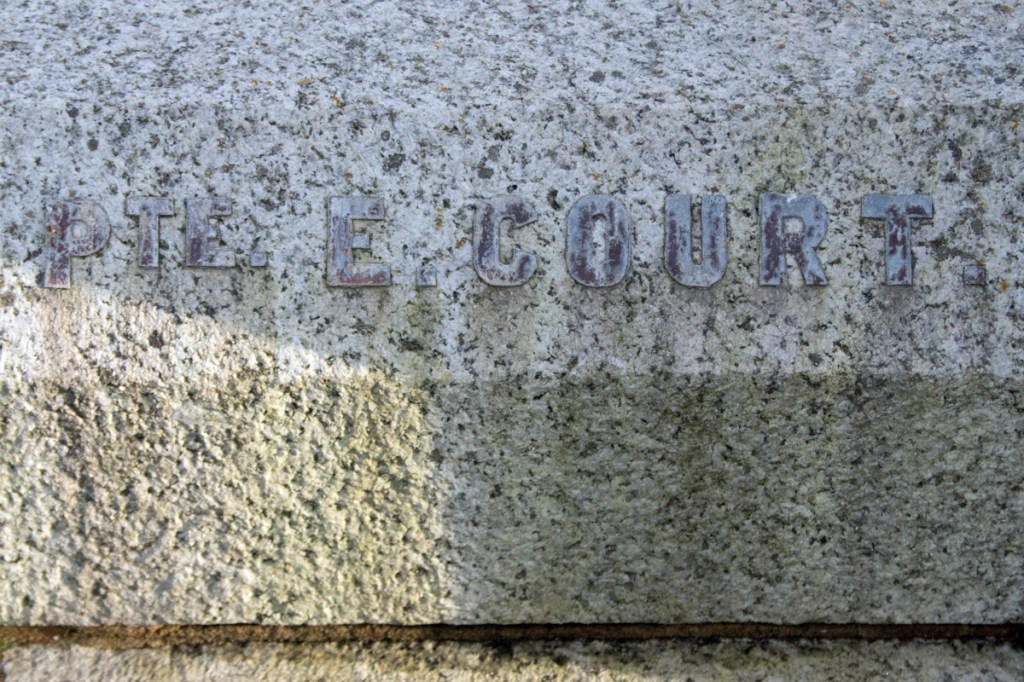
Private Ernest Court

Private Ernest Court

Ernest Court was born in the autumn of 1865, one of eleven children to Stephen and Harriet Court. Stephen was an agricultural labourer from Kent, and the family were raised in the village of St Nicholas at Wade, in the north of the county.

When he left school, Ernest followed his father and became a farm labourer. The 1881 census found him working at St Nicholas Court Farm, under William Broadley, a farmer of some 500 acres (202 hectares).

In the summer of 1894, at the age of 28, Ernest married Catherine Henman; she was a widow nine hears his senior. The couple went on to have a son, Frederick, who was born the same year, a younger half-brother to Catherine’s own son. They soon moved to Faversham, where work was more abundant.

Ernest continued to pick up jobs where he could. The 1901 census recorded him working in the stone pits; the same document gave Catherine working as a charwoman to bring in some extra money. Ten years later, Ernest was working as a road labourer for the town council. Catherine was no longer employed, but Frederick, having left school, was working as a jobbing gardener.

War was approaching Europe by this point and, by October 1915, Ernest had stepped up to play his part. Private Court was assigned to the 3rd Supply Company of the 2nd/4th Battalion of The Buffs (East Kent Regiment). While a good proportion of the regiment served overseas, Ernest remained on home soil, and was given a protective role at the Cotton Powder Company and Explosives Loading Company factories to the north of Faversham.

Private Court was based at the factories on the 2nd April 1916. That afternoon a fire set off a series of massive explosions at the site and around 110 people – Ernest included – were killed. He was 50 years of age.

Ernest Court was laid to rest, along with the other victims of the Faversham Explosion, in the town’s Borough Cemetery.


Memorial to the Faversham Explosion, Borough Cemetery

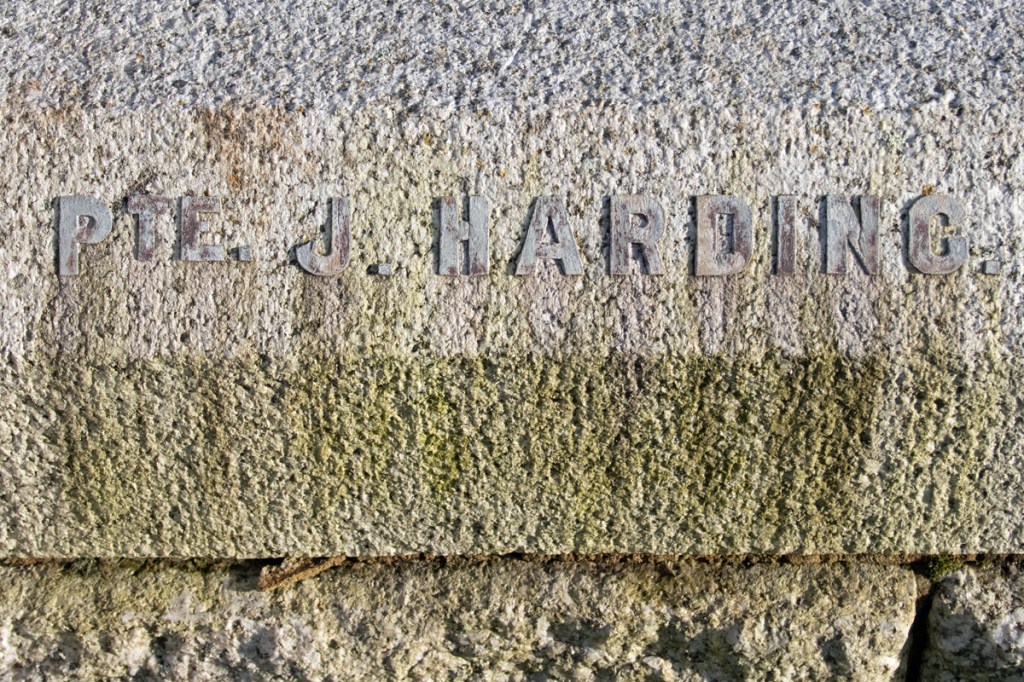
Private John Harding

Private John Harding

In a mass grave in Faversham Borough Cemetery, Kent, is a commemoration to Private John Harding, who died during the Faversham Explosion on 2nd April 1916.

Sadly, there is little concrete information about John, other than the details recorded in the Register of Soldiers Effects. This document confirms that he served in the 3rd Supply Company of the 3rd/4th Battalion of The Buffs (East Kent Regiment). He had enlisted before October 1915 and no next of kin is recorded.

Another document suggests that Private Harding was a resident of Milton Regis, a small village to the north of Sittingbourne. Again, however, there is not enough additional information to corroborate this or to expand on his personal life.

Unfortunately, therefore, Private John Harding is destined to remain a mystery, one of more than a hundred men and women to have died on that fateful day.


Memorial to the Faversham Explosion, Borough Cemetery

Private William Catlow, AKA William Adams

Private William Catlow

William Adams was born in Skelmersdale, near Liverpool, in around 1868. He was the son of George and Harriet Adams, although as his name was quite common in the area at the time, it is not possible to narrow down details of his early life any further.

At some point after leaving school, William joined the army, using the surname of Catlow. The 1891 census records him as a soldier in the Private Infantry, based at the Habergham Eaves Barracks near Burnley, Lancashire.

On leaving the army, William found work as a labourer and, by the 1890s, he had moved to Kent. He met and married a woman called Kate in 1895, and they went on to have a son, Archibald, the same year. The 1911 census records the family living in Cheriton, near Folkestone, William doing labouring work, and Kate employed as a laundress.

With the outcome of the First World War, William stepped forward to play his part again. By this point, he was 46 years old and, while he was assigned to the 4th Battalion of The Buffs (East Kent Regiment), was given more of a territorial role.

Private Catlow was serving at the site shared by the Cotton Powder Company and Explosives Loading Company to the north of Faversham in the spring of 1916. On the afternoon of 2nd April 1916, a fire caused a series of massive explosions at the factories, and William was one of around 110 people to be killed. He was 48 years of age.

William Adams, known militarily as Private William Catlow, was laid to rest, along with the other victims of the Faversham Explosion, in the town’s Borough Cemetery.

Memorial to the Faversham Explosion, Borough Cemetery

Gunner Ernest Millgate

Gunner Ernest Millgate

Ernest Millgate was born in late 1893, the fifth of six children to Henry and Agnes. Henry was a brewer’s drayman from Boughton, Kent, but it was in nearby Faversham that he and Agnes raised their family.

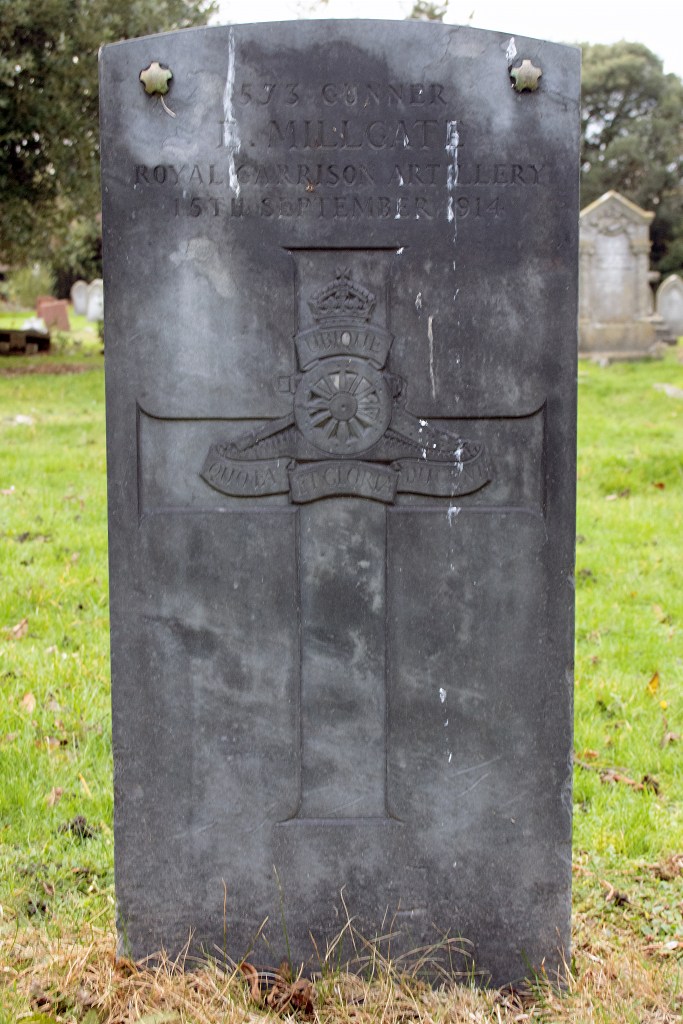
Ernest found work as a labourer in the town’s Cotton Powder Works, but when war was declared, he was one of the first to enlist. He joined the Royal Garrison Artillery as a Gunner on 5th September 1914, and was billeted nearby on the Isle of Sheppey. His service records show that he stood 5ft 9ins (1.75m) tall, had fair hair, blue eyes and a fresh complexion.

Gunner Millgate’s military service was to be tragically short, as a contemporary local newspaper was to report:

A terrible tragedy occurred at Minster, Sheppey, on Tuesday morning last, Ernest Millgate… who joined the Kent Heavy Battery barely a fortnight ago, being accidentally shot by a comrade, George Walter Cornelius… a gunner of three years’ service in the same Battery.

Gunner Cornelius, it appears, was handling a rifle preparatory to going on sentry duty shortly after eleven o’clock on Tuesday morning. On examining the rifle he had found that the magazine was charged but that there as no charge in the bore. Apparently the cut-off was in operation, for he pulled the trigger and there was no discharge. He examined the breech a second time and, afterwards pulled the trigger again. To his dismay there was this time a discharge and Millgate, who was standing near, fell dead, having been shot through the head. The theory is that Cornelius’ great coat, which he was wearing, caught in and released the cut-off, thereby bringing the magazine into operation.

Faversham Times and Mercury and North-East Kent Journal: Saturday 19th September 1914

An inquest was held, and it was a verdict of accidental death was given.

Gunner Ernest Millgate was just 21 years old, and had been in the service of the army for just eleven days. His body was brought back to Faversham, and he lies at rest in the town’s Borough Cemetery, just a few minutes walk from the home he had left just a fortnight before.


The same newspaper also ran a report on on Ernest’s older brother, Henry.

Private Millgate was a volunteer for the Northumberland Fusiliers, and was called into active service a couple of weeks before his brother. He had been caught up in the fighting at Mons, le Cateau and the Marne, and was, according to the newspaper, injured.

Medically evacuated to England for treatment, at the time of his brother’s funeral he was in a hospital in Newcastle-upon-Tyne.

Henry survived the war; he and his wife, Elizabeth, had two children, and he lived until 1939, passing away at the age of 52 years old.


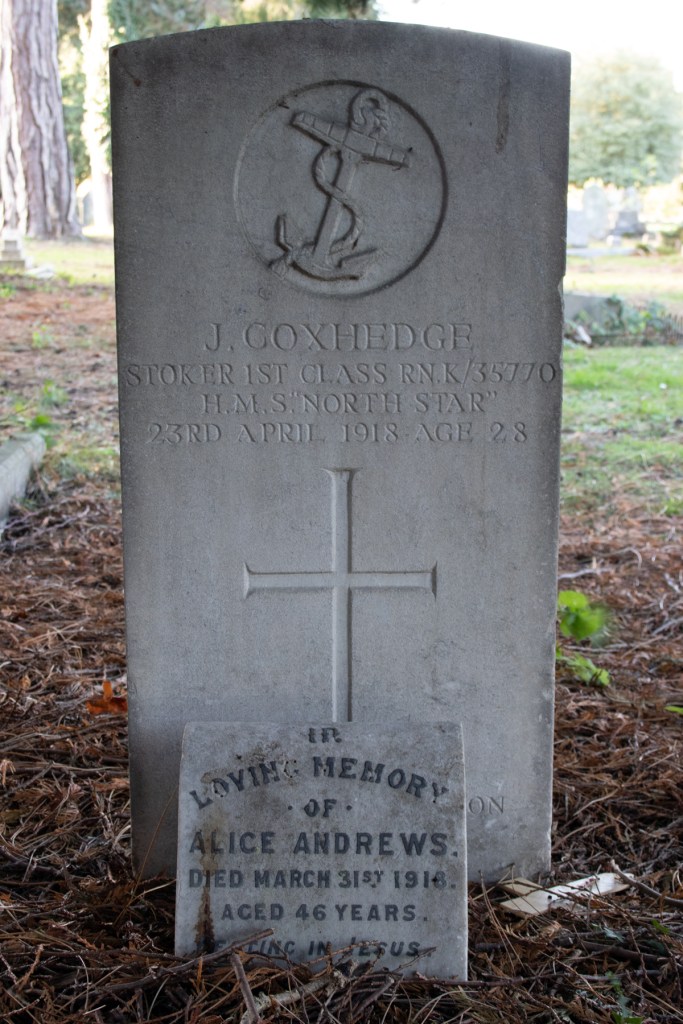
Stoker 1st Class John Coxhedge

Stoker 1st Class John Coxhedge

John Coxhedge was born on 28th October 1889 in Faversham, Kent. It seems that he and his siblings were brought up by an aunt and uncle, Mr and Mrs John Hodge, although why this was the case is lost to time. John attended Davington School, to the north of the town, and, for four years, was a chorister at his local church.

When a youth, [John] went to America and worked in some steel works, but after a year or so he returned home, and for a while prior to joining the Navy he was working at the Cotton Powder Works.

Faversham News: Saturday 27th April 1918

John married a woman called Louisa, and they went on to have five children. He enlisted in the Royal Navy as a Stoker 2nd Class on 21st August 1916. His service records show that he was 5ft 6ins (1.68m) tall, had fair hair, hazel eyes and a fresh complexion.

After his initial training at HMS Pembroke, the Royal Naval Dockyard in Chatham, Kent, Stoker Coxhedge was assigned to the boom defence vessel HMS Wallington. He served on board for nine months, gaining a promotion to Stoker 1st Class, before returning to HMS Pembroke.

While back in Chatham, in the summer of 1917, he would have been involved in the German Air Raid on the Dockyard. Unlike dozens of his colleagues, however, he seems to have escaped unscathed.

On 3rd October 1917, Stoker Coxhedge was given another assignment, this time at HMS Attentive, the Dover Patrol. In April 1918, the patrol was involved in some raids on Ostend and Zeebrugge. The local newspaper again picked up John’s story:

No operation in the present war, distinguished though it has been all along by the indomitable heroism of the sons of Britain, has so thrilled the Empire as that of last week – an exploit, which, as has been remarked, recalls some of the undying deeds of the days of Drake and Nelson.

Stoker Coxhedge… was one of the crew of a vessel detailed for covering duty. This vessel got on a sandbank and could not get off, and so in the brilliant light of star shells, which made the night as bright as day, it became a target for the enemy’s guns and a heavy fire was concentrated upon it. It was during this fire that Stoker Coxhedge was badly wounded. Later he, with others of the ship’s complement, was transferred to another vessel, and his death took place in hospital ashore.

Faversham News: Saturday 4th May 1918

John Coxhedge had died of his injuries on 23rd April 1918. He was 28 years of age. He was laid to rest in Faversham Borough Cemetery, not far from where his widow and family lived.


Seaman Albert Cluett

Seaman Albert Cluett

Albert Cluett was born on 2nd August 1896, one of three children to fisherman Richard Cluett and his wife, Johanna. The couple were third generation immigrants to North America, and had made their home on the remote Fogo Island, to the north of Newfoundland.

There is little concrete information about Albert’s life; given his father’s occupation, it seems likely that he would have had a good working knowledge of seafaring, and this led him to enrol in the Newfoundland Royal Naval Reserve when war broke out.

Details of Seaman Cluett’s military life are scant. All that we know is that, by the summer of 1917, he was based at HMS Pembroke, the Royal Naval Dockyard in Chatham, Kent. He was billeted in the Drill Hall, which had been set up with temporary accommodation because the barracks themselves had become overcrowded.

On the night of the 3rd September 1917, the German Air Force carried out an air raids on Chatham. The town was heavily bombed and the Drill Hall received a direct hit. Seaman Cluett was badly injured and died of his wounds in hospital the following day. He had just celebrated his 21st birthday.

Albert Cluett was laid to rest, along with the other victims of the Chatham Air Raid, in the Woodlands Cemetery, Gillingham.


Seaman Albert Cluett
(from ancestry.co.uk)

Another young man from Fogo, Seaman Thomas Ginn, also died during the bombing raid; given the remoteness of the Newfoundland town, it seems very unlikely that he and Albert did not know each other.


Ordinary Seaman William Nolan

Ordinary Seaman William Nolan

William John Nolan was born in County Kildare, Ireland, on the 8th October 1892, one of ten children to agricultural labourer Thomas Nolan and his wife, Anna.

There is little documentation connected to his early life, but when he left school, William found work as a porter, and is was this that he was doing up until war broke out in 1914.

William was conscripted on 1st March 1915, joining the Royal Navy as an Ordinary Seaman. His service records show that he stood 5ft 5.5ins (1.66m) tall, had brown hair, brown eyes and a fresh complexion. He was also noted as having tattoos on his forearms, and a scar on his right one.

Ordinary Seaman Nolan was sent to HMS Pembroke, the Naval Dockyard in Chatham, Kent, for training. Within a month, he was given his first posting, on board the armoured cruiser HMS Lancaster. He spent fifteen weeks aboard and, over the next two years, he served on four more ships, returning to his base in Chatham after each voyage.

William came back to HMS Pembroke in July 1917: the base was particularly busy and cramped that summer, so much so that additional temporary accommodation was set up in the barracks’ Drill Hall. This is where Ordinary Seaman Nolan was billeted.

On the night of the 3rd September 1917, Chatham was bombarded by a German air raid, and the Drill Hall received a direct hit. Tragically, Ordinary Seamen Nolan was amongst those killed. He was just 24 years old.

William John Nolan’s body was laid to rest in the Woodlands Cemetery in Gillingham, alongside the other victims of the Chatham Air Raid.


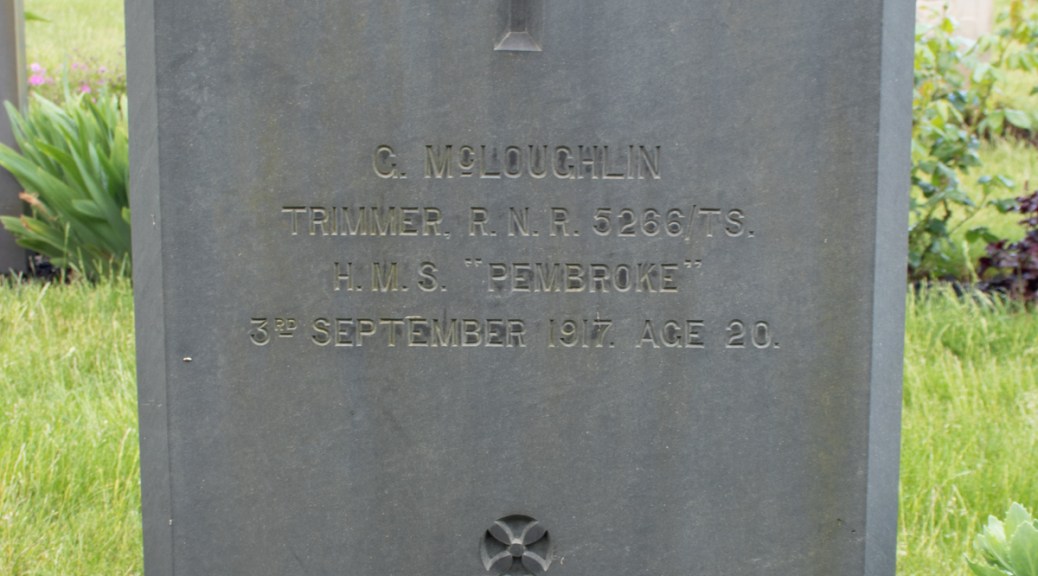
Trimmer Gilbert McLoughlin

Trimmer Gilbert McLoughlin

Gilbert McLoughlin was born in Grimsby, Lincolnshire, on 19th August 1896, one of eight children to Charles and Isabella McLoughlin. Being a fishing port, it is likely that Charles was involved in the industry, and it is no surprise that Gilbert and his siblings followed suit.

When war came to Europe, his skills at sea led to him being brought into the Royal Naval Reserve, and indeed Gilbert joined up on 20th March 1916. His service records show that he stood 5ft 2.5ins (1.59m) tall, had brown eyes and a sallow complexion, and had tattoos on his left arm.

Trimmer McLoughlin was based at HMS Pekin, a shore establishment in Grimsby, from which he would have served on ships patrolling the Lincolnshire coast. He remained posted in his home town until the end of 1916, at which point he moved down the coast to HMS Ganges, the naval base in Ipswich.

Gilbert made a further move in July 1917, when he was posted to HMS Pembroke, the Royal Naval Dockyard in Chatham, Kent. The base was particularly crowded that summer, and he was billeted in temporary accommodation set up in the barracks’ Drill Hall.

On the night of 3rd September, Chatham came under attack from a German air raid, and the Drill Hall received a direct hit. Trimmer McLoughlin was among those to be killed that night. He was just 20 years of age.

Gilbert McLoughlin was laid to rest in the Woodlands Cemetery in Gillingham, Kent, alongside the other victims of the Chatham Air Raid.


Gilbert’s older brother Joseph McLoughlin was also a victim of the First World War. As the conflict began, he continued his work as a trawlerman, although the role of his ship – the Kilmarnock – now also included elements of mine location.

On the afternoon of the 22nd September 1914, the Kilmarnock left Grimsby on a routine trip. She was around thirty miles offshore when the captain spotted floating mines ahead.

The skipper put out a buoy to mark the position, and intended returning to port to report the matter to the Admiralty authorities, but seeing some naval vessels in the distance he made towards them instead with the object of reporting.

Whilst doing so an explosion occurred amidships, and the vessel was blown into two parts, which sank immediately.

The skipper was blown to pieces on the bridge and the chief engineer badly injured.

The naval vessels, attracted by the explosion, hurried to the spot, picked up the wounded engineer, mate, and one member of the crew.

Boston Guardian: Saturday 26th September 1914

Joseph was one of the six crewmen to be killed in the incident. He was just 19 years of age.