Category Archives: unknown

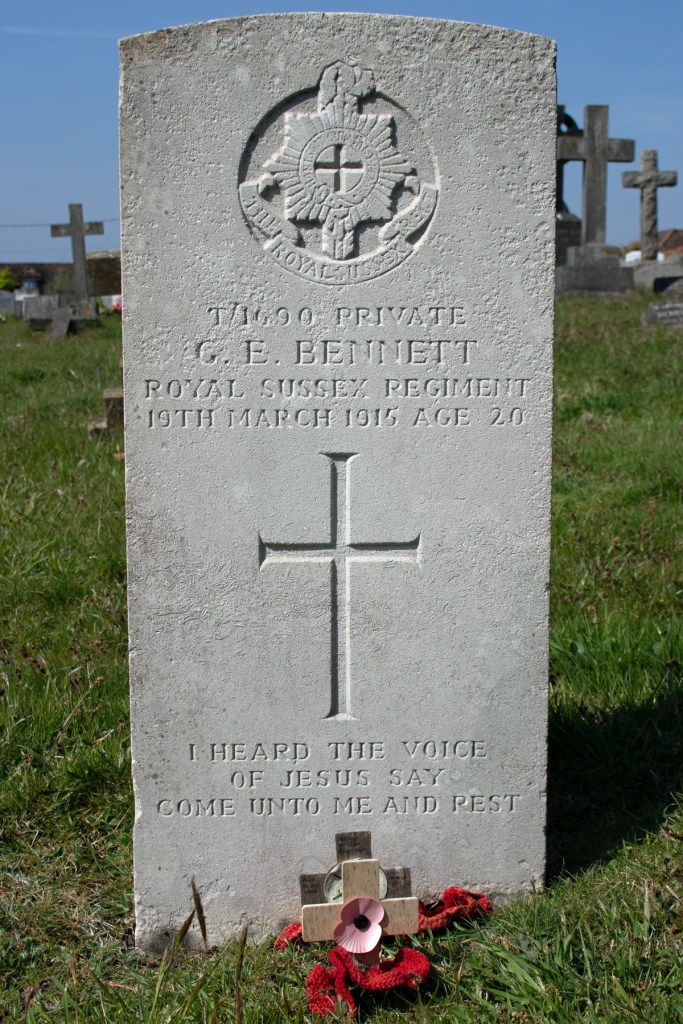
Private George Bennett

Private George Bennett

George Ernest Bennett was born in 1895 in Cuckfield, West Sussex, the oldest of four children to Alfred and Annie Bennett. Much of his early life is a mystery – within eighteen months, his parents had moved to Kent, leaving George with his widowed paternal grandmother.

By the time of the 1911 census, both Alfred and Annie were dead, along with their only daughter. George’s two younger brothers were in a poor school back in Sussex, while George was living with one of his father’s sisters and her family, and working as an errand boy.

By the time war broke out, it seems that George had plans for an army career. He had certainly enlisted by September 1914, and joined the 1st/4th Battalion of the Royal Sussex Regiment. This was a primarily territorial force, and Private Bennett initially received his training on the East Sussex coast.

Full details of George’s military service aren’t available, but what is clear is that he was admitted to the Military Hospital in Newhaven in the spring of 1915, and this is where he died on 19th March. The cause of his passing is not known, but he was just 20 years old.

Brought back to Cuckfield, where his father’s family still lived, George Ernest Bennett was laid to rest in the village’s cemetery, within sight of Holy Trinity Church.

Lieutenant Harry Street

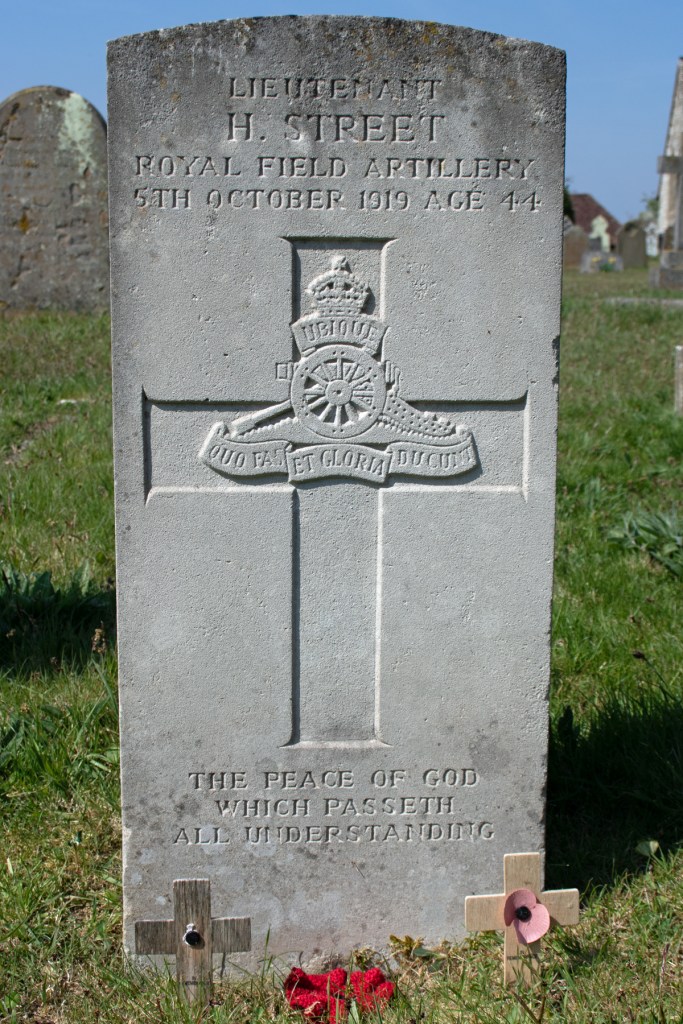
Lieutenant Harry Street

Henry Street – known as Harry – was born on 22nd April 1875 in Oxted, Surrey and was one of thirteen children to Jacob and Emma. Jacob was an agricultural labourer, and this is work Harry initially went into when he left school.

However, it seems that Harry was after more of a career, and looks to have enlisted in the Royal Field Artillery by 1895. His trail goes cold for a while, and it can be assumed that he served abroad, although exact details of his career are lost to time.

By 1906, Harry was back in England, and, on 15th October he married Janette Street at St Peter’s Church in Tandridge, Surrey. The marriage record confirms that Harry was a soldier, while his new wife was the daughter of a labourer. Janette was three years Harry’s junior, and there does not seem to be any close family connection, in spite of their shared surname.

Again, information on Harry’s life at this point is sparse. When war was declared, he was either still serving with the Royal Field Artillery, or was called back in to duty. By December 1914, he had been promoted to Lieutenant: this was to be a rank he would continue to hold until the end of the conflict. He certainly served abroad, and was awarded the Long Service and Good Conduct Medals, in addition to the Victory and British Medals. He was also given the French Medaille Militaire, although reasons for this award are lost to time.

Lieutenant Street survived the war, and by the autumn of 1919, he was living at Bright Farm in Cuckfield, West Sussex. It was here, too, that he passed away, through causes unknown. He died on 5th October 1919, at the age of 44 years old.

Harry Street was laid to rest in Cuckfield Cemetery, in the shadow of the village’s Holy Trinity Church.

Serjeant Frank Carter

Serjeant Frank Carter

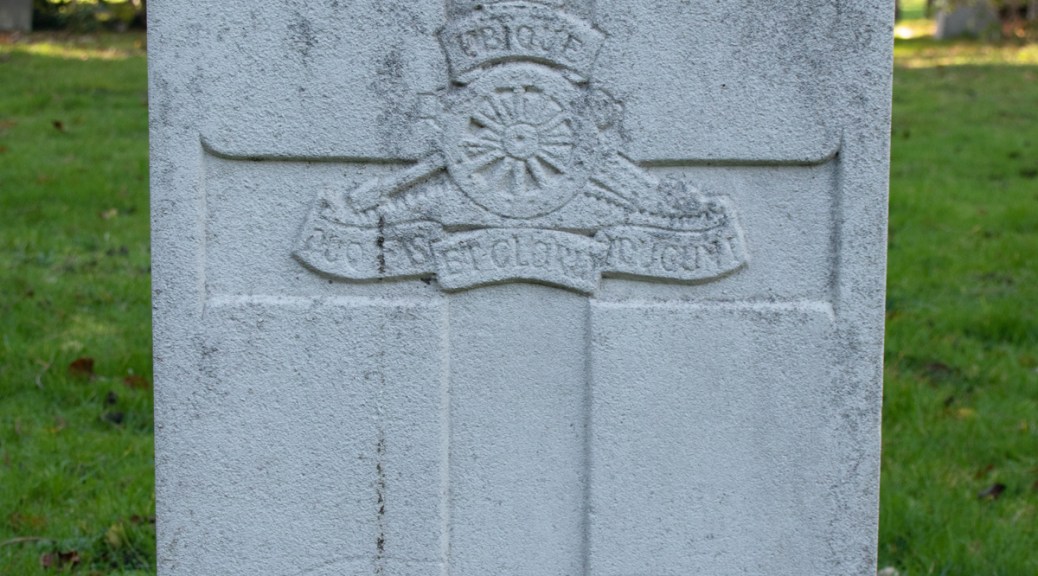
In the graveyard of St Augustine of Hippo Church in Penarth, Glamorgan, lies the Commonwealth War Grave for Serjeant Frank Carter. The headstone confirms that he had died on 31st August 1915 and that he was in the Loyal North Lancashire Regiment.

Little further information is available about him, apart from a few scattered details from a number of documents.

Frank’s burial record shows that he had been residing in The Fort, Penarth, a garrison constructed on the cliffs near the entrance to the harbour and Cardiff Bay. The record, written by George Turner, confirms that his burial was on 2nd September 1915, and that he was 51 years old when he passed.

Serjeant Carter’s record in the Army Register of Soldiers’ Effects confirm that he was in the 2nd/4th Battalion of his regiment, and that he must have enlisted at some point before February 1915. The document states that he died in the Western Hospital in Cardiff, and that his beneficiary was Miss M Smithson.

These few documents add up to very little, and do not provide enough information to concretely uncover anything else of Frank Carter’s life. His is a story that is destined to remain lost to time.


Frank shares his grave with another member of the Loyal North Lancashire Regiment, Private Edward Savage. Read his story here.


Private Robert Creasey

Private Robert Creasey

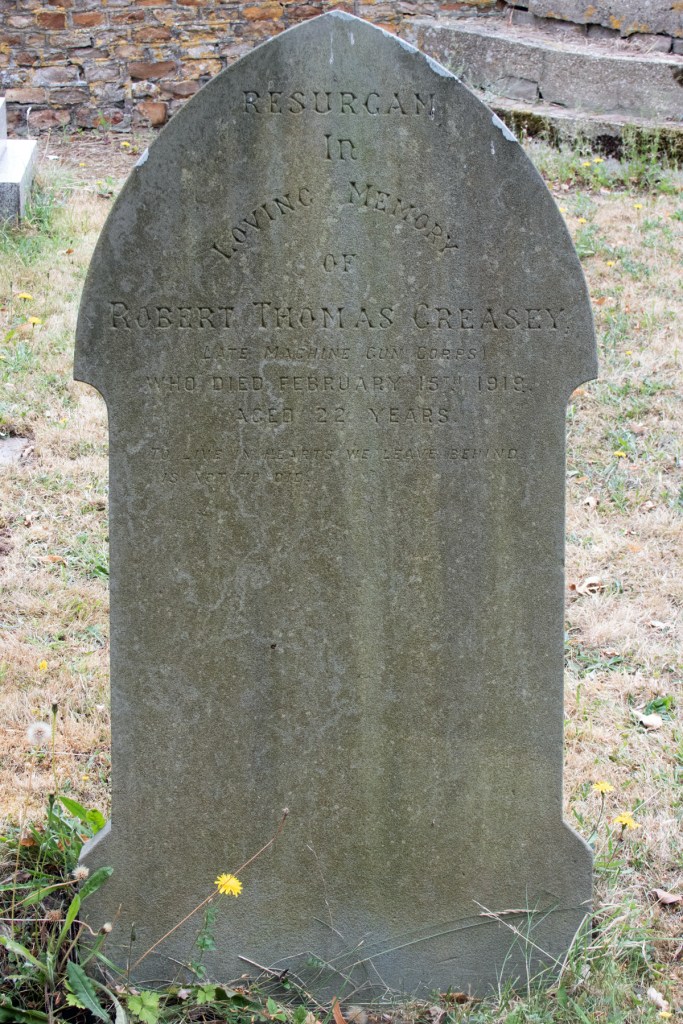
Robert Thomas Creasey (also known as Thomas Robert Creasey) was born in the village of Ash, near Farnham in Surrey, on 3rd January 1896. He was the youngest of four children to Edwin and Elizabeth Creasey. Edwin was the landlord of the Standard of England public house in the village.

When he died in 1902, Elizabeth moved her family to Somerset, where she had been born and where she still had relatives living. With four young children to raise, she married again in April 1903, to local dairy farmer Frederick Gould.

Robert was working as a farmer when war was declared, but was one of the first to step forward and volunteer. He enlisted in the Somerset Light Infantry and in the autumn of 1915 was involved in the fighting in Gallipoli.

In July 1916 Private Creasey transferred to the Machine Gun Corps. Sadly, little further information about his military life is available, but he survived the war, and returned home to Somerset on furlough, before being demobbed.

This is where Robert’s trail ends. He passed away at home on 15th February 1919, presumably from one of the lung conditions running rampant across a war-torn continent. He was just 23 years of age.

Robert Thomas Creasey was laid to rest in the graveyard of St Michael and All Angel’s Church in Angersleigh, Somerset, not far from where his mother lived.


Private Tom Simmons

Private Tom Simmons

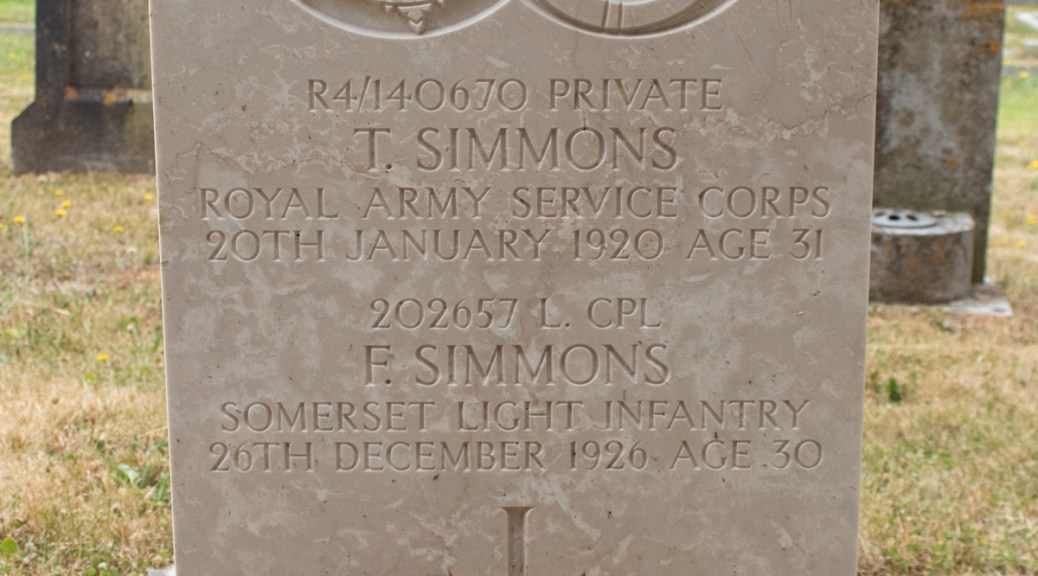
Tom Simmons was born early in 1889, one of fourteen children to William and Elizabeth Simmons. William was a farm labourer from Devon, who had moved to Runnington, near Wellington in Somerset, with Elizabeth in the late 1880s. This was where their growing family was born and raised.

Tom found work away from Somerset when he left school and, by the time of the 1911 census, he was lodging in a house in Llanwonno, Glamorgan. He was employed as an assistant machine repairer at the local colliery.

War was beginning to encroach on England’s shores, and Tom was to play his part. Full service details are not available, but he enlisted in the Royal Army Service Corps and served as part of a territorial force. For the part he played, he was awarded the Victory and British Medals and the Silver War Badge.

It would seem that Private Simmons survived the war and was demobbed, returning to Somerset at some point by the end of 1919. Sadly, his trail goes cold: the next record available is of his death – through causes unspecified – at home on 20th January 1920, at the age of 31 years old.

Tom was buried in Wellington Cemetery, not far from his family home.


Tom’s headstone also includes a dedication to a Lance Corporal F Simmons.

Frederick Simmons was seven years younger than his brother. When he left school, he worked as a wool spinner in the local wool mill. When war came to Europe, he too played his part. Again, full details of his service are sketchy, but he enlisted in the Somerset Light Infantry.

Like Tom, Frederick served as part of the territorial force, and worked his way to the rank of Lance Corporal. After the war he returned home, but his life there was not set to be a long one. He passed away, through causes not noted, on 26th December 1926. He was just 30 years of age.

Frederick was laid to rest in the same grave as his brother. Technically not entitled to an official Commonwealth War Grave (the rules are laid out here), his service was remembered alongside that of Tom’s.


Private Bernard Lane

Private Bernard Lane

Bernard Fred Lane was born in Wellington, Somerset, in the spring of 1880, and was the oldest of nine children to Frederick and Agnes Lane. Frederick was a house painter and, after a stint as a butcher, his son followed the same work. By the time of the 1901 census he was one of four boarders with the Hapgood family, living in Bournemouth, Dorset.

On 5th October 1901, Bernard married Annie Louisa Joyner. The couple wed in St Paul’s Church in Poole, but soon settled back in Wellington, and went on to have four children: Agnes, James, Mildred and Winifred.

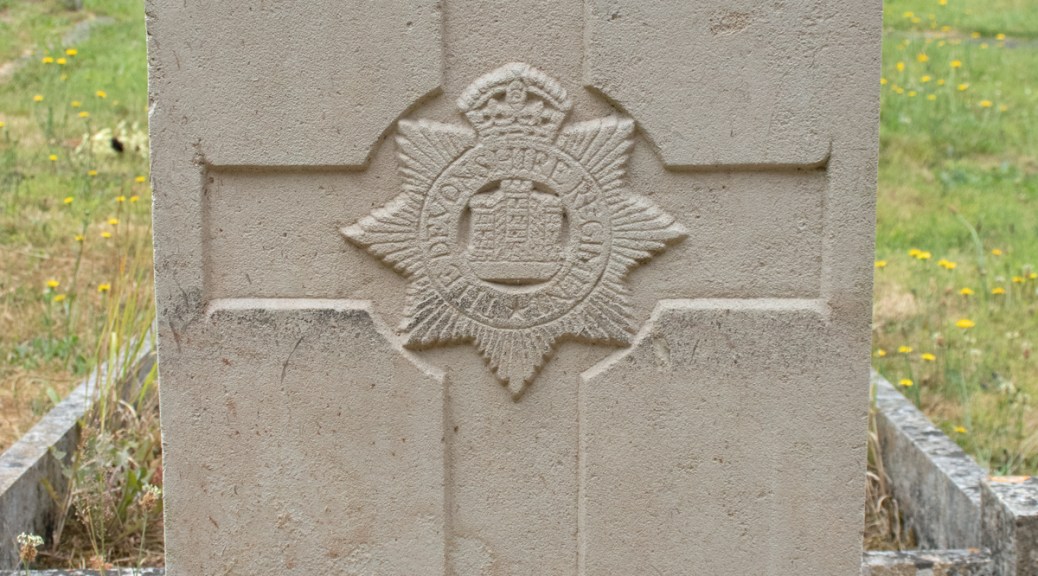
War came to Europe in 1914, and Bernard wanted to play his part. Full details of his military service are not available, but it is clear that he had enlisted in the Devonshire Regiment by March 1918. At some point during the conflict Private Lane was assigned to the Labour Corps, and attached to the 312th Company.

Bernard was serving on Salisbury Plain by the autumn of 1918, and fell ill, although it is not clear what befell him. Admitted to the Fargo Military Hospital at Larkhill, Wiltshire, he passed away on 15th October 1918. He was 38 years of age.

Bernard Fred Lane was brought back to Somerset for burial. He was laid to rest in Wellington Cemetery, the resting place for several other members of his family.


Private Bernard Lane
(from findagrave.com)

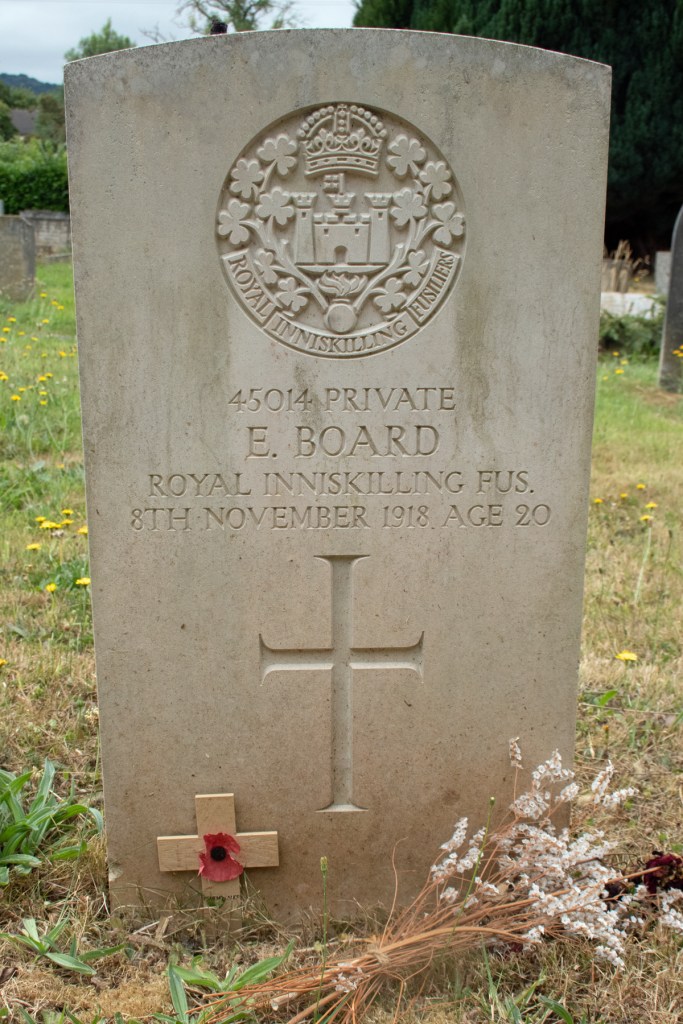
Private Ernest Board

Private Ernest Board

Ernest Board was born in Taunton, Somerset, on 20th September 1898 and was one of at least six children to Walter and Mary Board. Walter was a carter for the town’s gasworks, but, when Mary passed away in 1910, things changed dramatically for the family.

The 1911 census found Walter working as a cowman on a farm in Milverton, Somerset. All but two of his children are missing from that year’s national record, but Ernest and his older brother Arthur are noted as being ‘inmates’ at the National Nautical School in Portishead, near Bristol.

This was an establishment set up in 1869 for the destitute and neglected boys of the area. Ernest and Arthur were two of more than 320 students at the school which, at that time, was under the control of Commander Willoughby Still. School life was very strongly based on the running of a ship, with hammocks instead of beds, and a parade ground in front of the building.

There is no information about how long the brothers remained at the school, but, when war came to Europe, it would seem that they were keen to play their part. Sadly little detail remains of Ernest’s military life.

What can be determined, however, is that he enlisted in the Royal Inniskilling Fusiliers, and was assigned to the 1st Battalion as a Private. His battalion fought at, and were evacuated from, Gallipoli, before moving to France. There is no record where Private Board was involved, sadly, although his Medal Roll Card shows that he was assigned the Victory and British Medals, although may not have actually seen time overseas.

Private Board’s passing is also lost to time. All that can be confirmed is that he died on 8th November 1918, and was just 20 years of age.

Ernest Board was laid to rest in Wellington Cemetery, Somerset: as this is not far from where his father was recorded on the census seven years earlier, it is likely that his place of burial was due to family connections in the area.


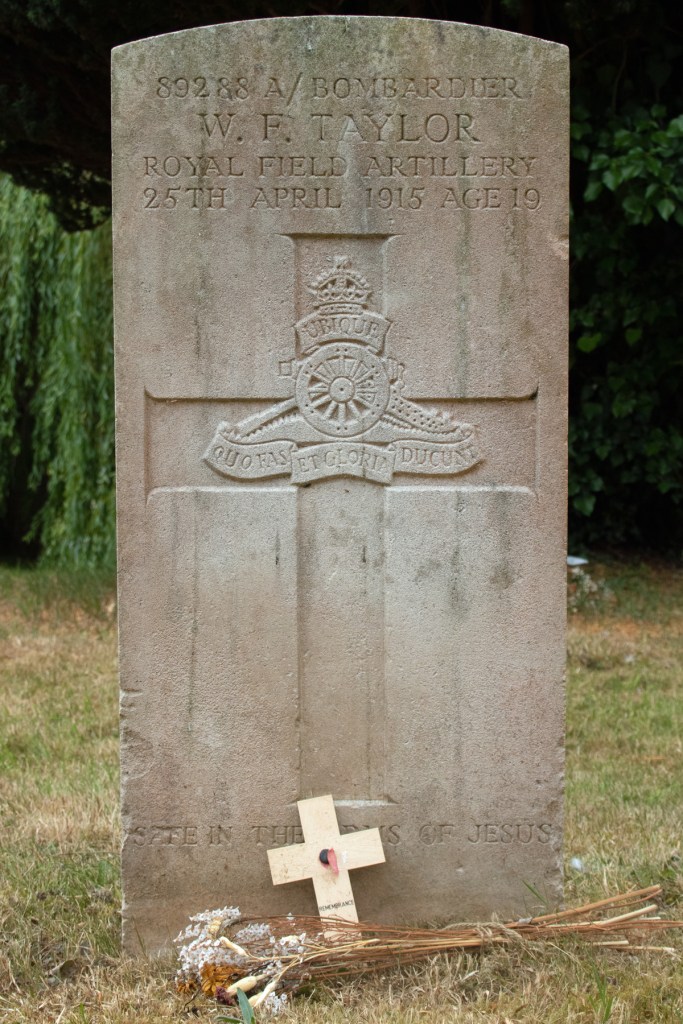
Bombardier Willie Taylor

Bombardier Willie Taylor

Willie Francis Taylor was born early in 1895 and was one of six children to James and Louisa. James worked as a miller in a wool factory in Wellington, Somerset, and this is a job that Willie and his siblings went into when they left school.

At this point, Willie’s trail goes cold. He had enlisted in the Royal Field Artillery by the spring of 1915 – given that he gained the rank of Acting Bombardier, it is likely that he joined up early in the conflict. He never saw active service overseas: Bombardier Taylor’s troop – the 48th Brigade – was sent to France in May 1915, a few weeks after Willie himself passed away.

There are no records pertaining to Willie’s death: all that can be confirmed is that he died at home on 25th April 1915, aged just 19 years old.

Willie Francis Taylor was laid to rest in Wellington Cemetery, close to where his mother, Louisa, had been buried three years earlier, and not far from where James still lived.


Bombardier Willie Taylor
(from findagrave.com)

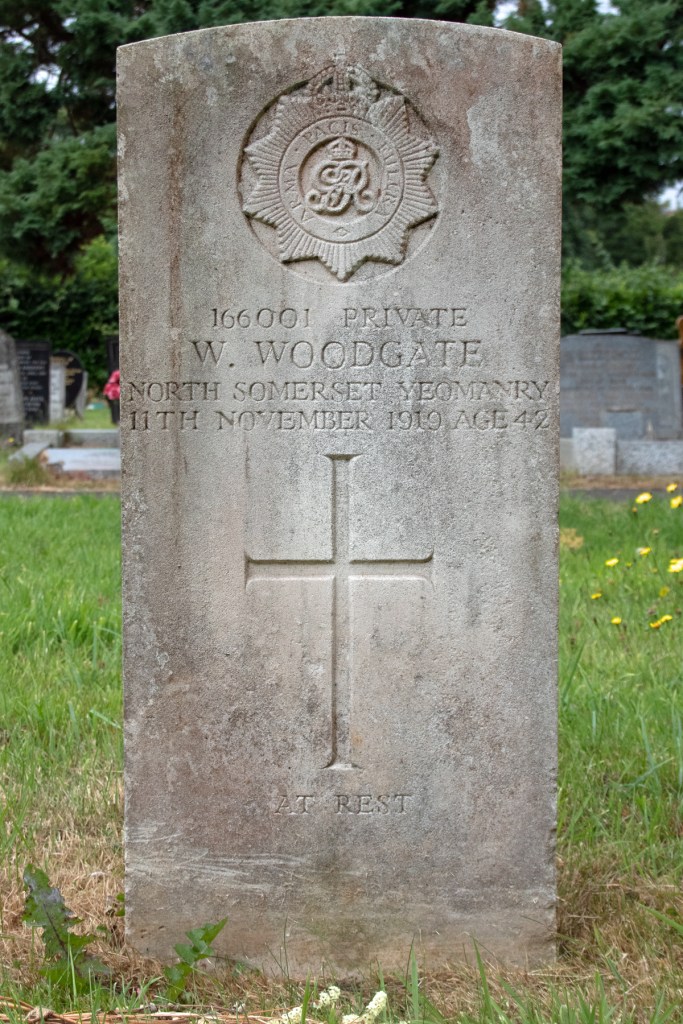
Private William Woodgate

Private William Woodgate

Much of William Woodgate’s life seems destined to remain a mystery. He was born in Dunsford, Devon, in around 1877, and was the son of Lewis Woodgate.

By the age of 14, he was living on a farm on Bovey Tracey, working as an agricultural labourer for the farm owners, Thomas and Betsy Dayment. Ten years later, William had made the move to Wellington in Somerset, where he was lodging with the Denner family, and working as a carter.

On 20th June 1903, William married Mary Jane Grinter, a signalman’s daughter from Wellington; the couple went on to have three children, Lewis, Leonard and Francis. The young family set up home in North Street, near the centre of the town. By the 1911 census, William had changed profession, and was working as a fish salesman.

War was about to descend on Europe, and, in May 1916, William signed up to play his part. He was enlisted as a Private in the North Somerset Yeomanry, and was assigned to the 2nd/1st Battalion. His service record shows that he was 5ft 2.5ins (1.59m) tall, and weighed 117lbs (53kg), and had a fair physical development.

Private Woodgate did not see any service abroad: his battalion became part of the 6th Cyclist Brigade, and he was based in East Anglia and, for a short while, in Northumberland.

There is little further detail about Private Woodgate’s life. He survived the war, and was transferred to the Army Reserve on 9th February 1919, having served for just under three years.

At this point, William’s trail goes cold. He returned home to Somerset, and passed away nine months later, on 11th November 1919. He was 42 years of age.

William Woodgate was laid to rest in Wellington Cemetery, not far from where Mary and their children lived.


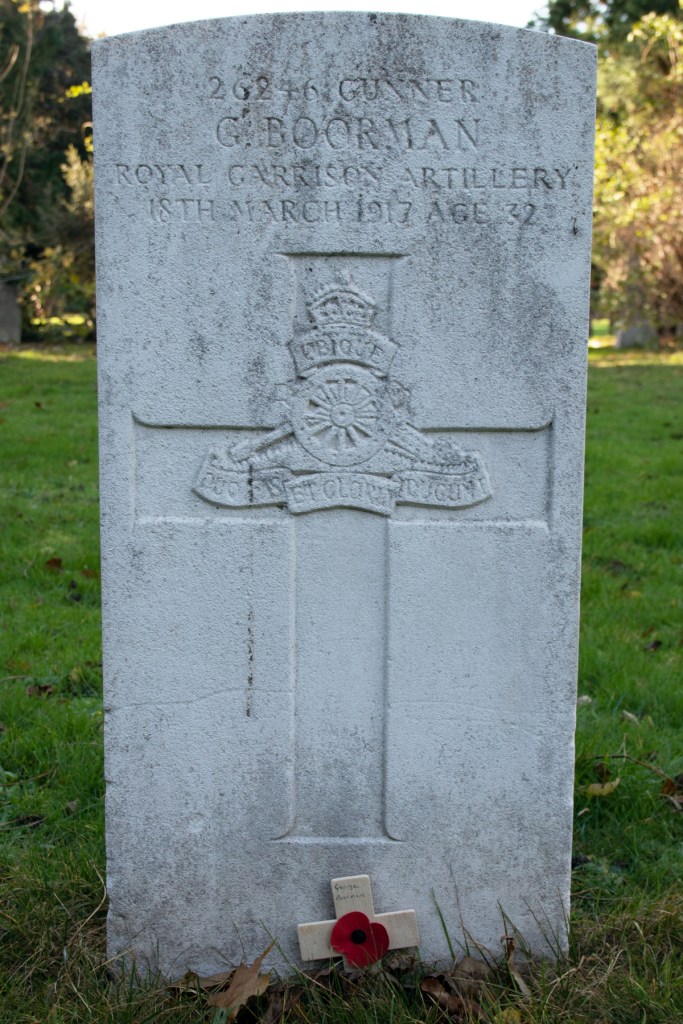
Gunner George Boorman

Gunner George Boorman

George Boorman was born in Lenham, Kent, in the spring of 1886, one of thirteen children to farm labourer George Boorman and his wife, Sarah. There is little further information about his early life, other than that he went into labouring when he finished school.

And agricultural life was not enough for George, however, and, on 15th January 1907, he enlisted in the Royal Garrison Artillery. His records show that he was 5ft 9.5ins (1.77m) tall and weighed 134lbs (60.8kg). George had hazel eyes, brown hair and a fresh complexion.

Full details of Gunner Boorman’s military service are not available, but the 1911 census records him as being attached to the 64th Company, based in Aden.

Further information about George’s life is difficult to piece together. His father died in 1913, and the next evidence of Gunner Boorman is that of his passing, on 18th March 1917. The cause of his death is lost to time, but he was 31 years of age.

George Boorman was laid to rest in the Borough Cemetery in Faversham, Kent.


Tragedy struck Sarah Boorman on more than one occasion. Four of George’s brothers died before they turned eighteen, while only six of her thirteen children outlived their mother.