Category Archives: unknown

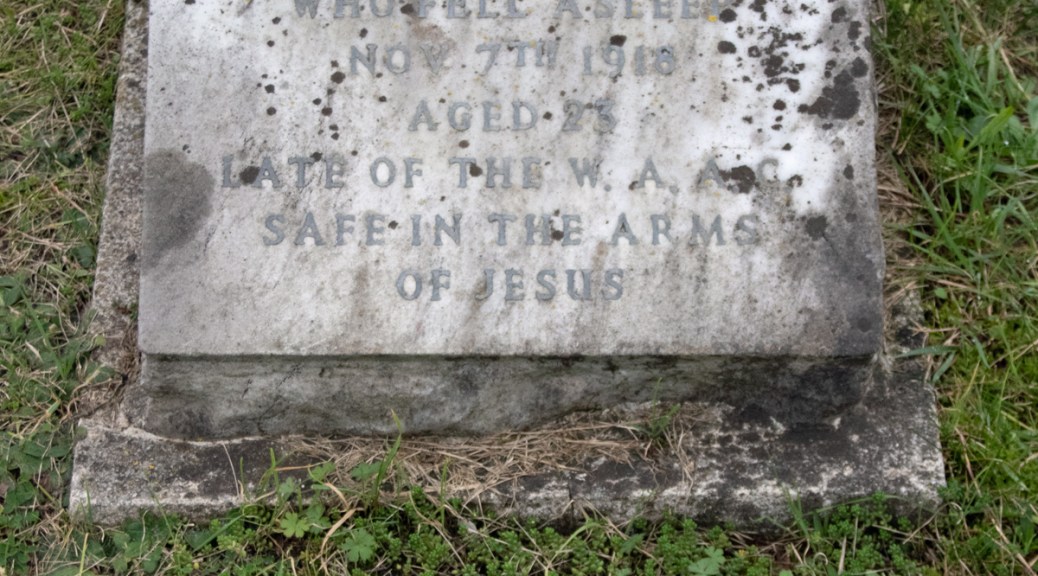
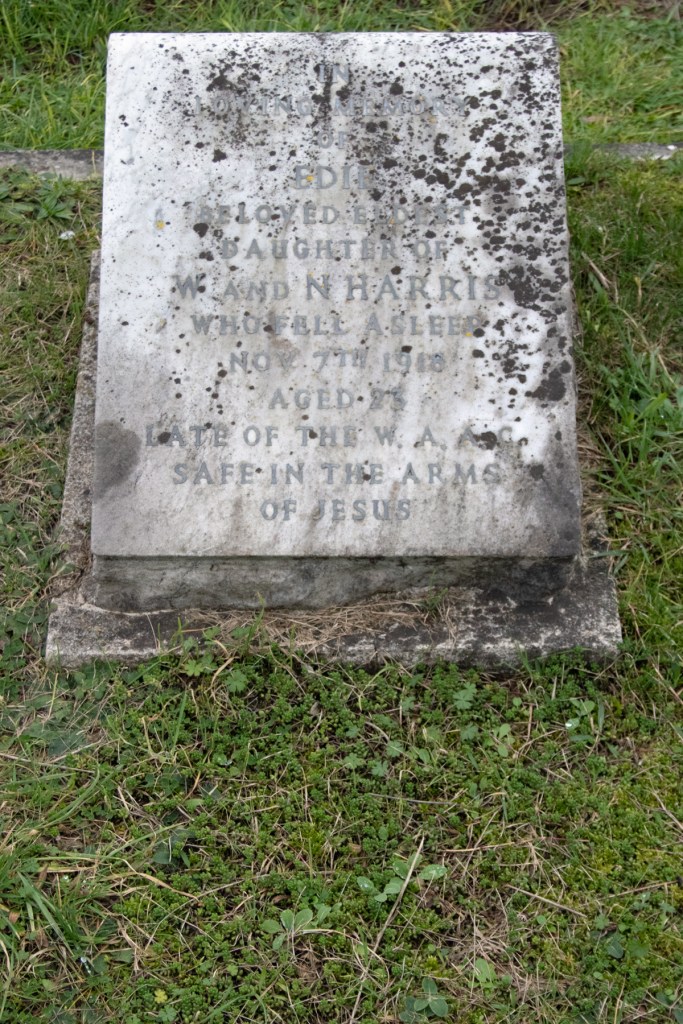
Clerk Mary Harris

Clerk Mary Harris

Mary Edith Harris was born in the autumn of 1895 and was the oldest of five children to Walter and Ellen Harris. Walter was a linesman for the railway, and was based in Taunton, Somerset, which is where the young family were initially raised.

By the time of the 1911 census, Walter and Ellen had moved the family to Weston-super-Mare, and were living to the south of the town centre. Walter’s mother – who had been widowed a number of years by this point – was also living with them.

Mary had left school and found work as a clerk in a local steam laundry. Her younger sister, Sarah, was also employed at the laundry, but as a golfering machinist.

War was beckoning, and Mary obviously wanted to play her part. Her work in the laundry stood her in good stead, and she found herself enlisted in the Women’s Army Auxiliary Corps – later Queen Mary’s Army Auxiliary Corps – as a laundry clerk.

While full details of her time in service are scarce, Mary’s death certificate reveals that she passed away at her home in Weston-super-Mare on 7th November 1918, at the age of just 23 years old. She had been suffering from pulmonary tuberculosis for two years, and had contracted pneumonia just a few days before she died.

Mary Edith Harris was laid to rest in the Milton Road Cemetery in her home town, Weston-super-Mare.
Corporal Bruce Chapple

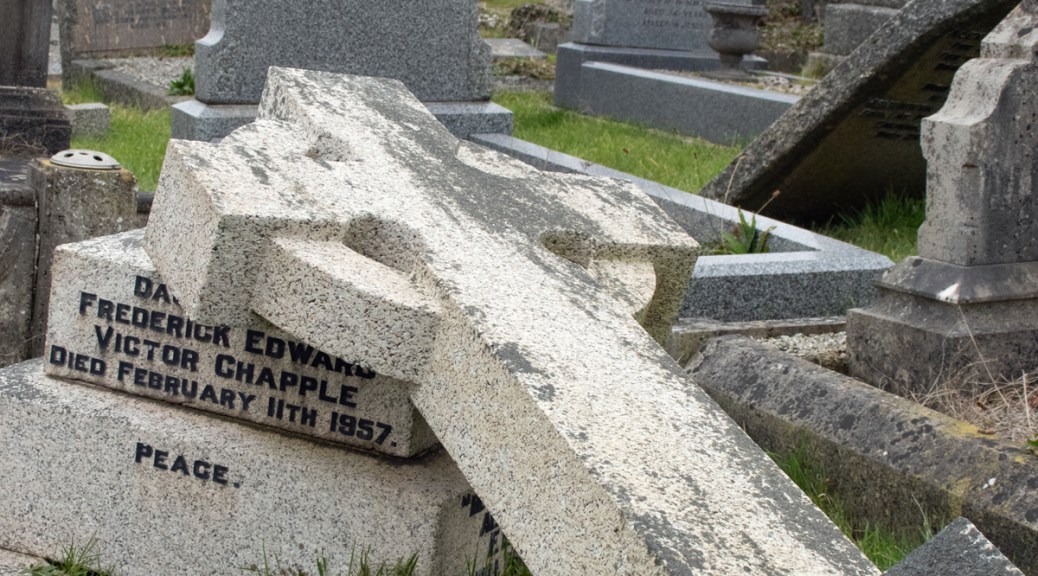
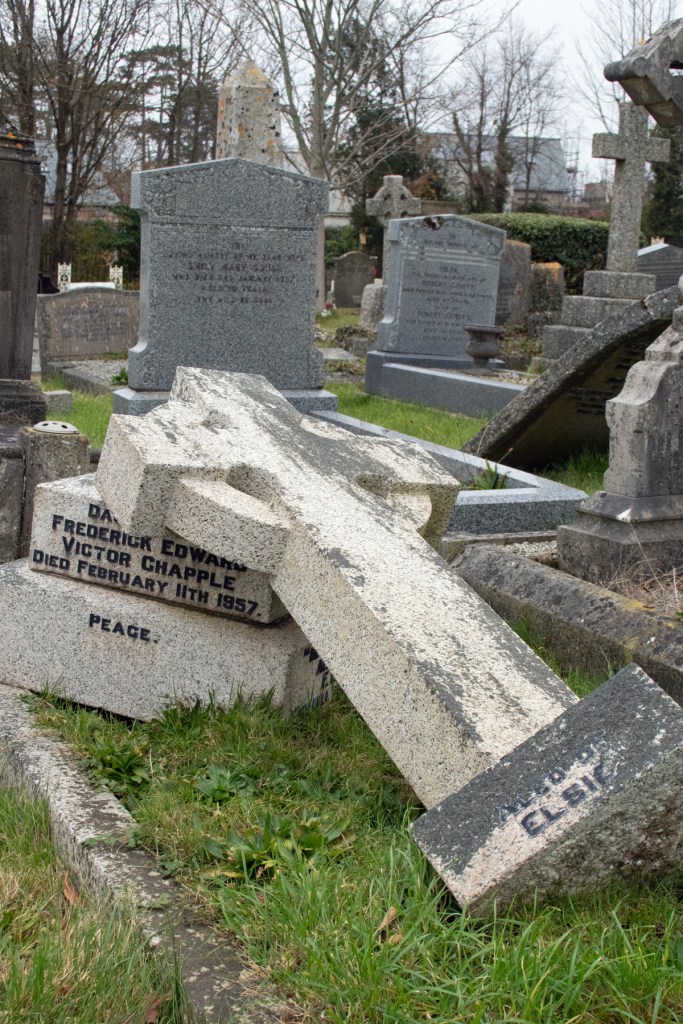
Corporal Bruce Chapple

Bruce Chapple was born in the autumn of 1893, the youngest of four children to Frederick and Elizabeth Chapple. Frederick was born in Newton Abbot and ran the managed a public house in the town (now the Locomotive Inn), although the 1901 census also listed him as a tobacco pipe manufacturer.

According to the next census – in 1911 – Bruce had taken over the pipe making, which meant that Frederick was devoting his time to being a publican. By this time, Bruce had another interest; military service. He had volunteered for the Devonshire Regiment in October 1909 and, over the next few years, the 5ft 3.5ins (1.61m) tall teenager received training in and around the county.

When war broke out in 1914, Private Chapple was formally enrolled and, as part of the 1st/5th Battalion, he set out for India that October. Initially based in Multan – in what is now Pakistan – he subsequently moved on to Lahore.

Bruce spent a total of two-and-a-half years in India, receiving a promotion to Lance Corporal in the process. In March 1917, his battalion transferred to Egypt, and the now Corporal Chapple went with them.

On 23rd November, Bruce was wounded in action, receiving a gun shot wound to his left thigh; he was not medically repatriated for treatment, but appears to have recovered from his injury and remained in Egypt until July 1918.

Back home in England, Corporal Chapple remained in the army for a further couple of months, before he was discharged as being no longer medically fit for service in September. Sadly, the cause for his discharge is lost to time.

It is at this point that Bruce’s trail goes cold. The next available record is of his death, on 16th November 1919; he was 26 years old.

Bruce Chapple was laid to rest in the family plot in Newton Abbot Cemetery.


Stoker Petty Officer Oliver Marchant

Stoker Petty Officer Oliver Marchant

Oliver Marchant was born in Beaminster, Dorset, on 21st September 1874. One of eight children, his parents were agricultural labourer William Marchant and his wife Hannah. Oliver’s parents had been born in Devon, and this is where they moved the family back to.

When he left school, Oliver and his older sister found work as a farm hands. They were employed at Compton Pool Farm, and were fortunate enough to be able to live in. Oliver ended up working on the farm for three years, becoming a groom in the process. A more secure career beckoned, however, and, on 11th January 1894, he enlisted as a Stoker 2nd Class in the Royal Navy.

Oliver’s service records show that he signed up for a period of twelve years. He was 5ft 4ins (1.62m) tall, had dark hair, brown eyes and a ruddy complexion. He was initially posted to HMS Vivid – the Royal Naval Base in Devonport – but soon found himself at sea on board HMS Endymion. He spent a year on board and, during this time, was promoted to Stoker 1st Class.

Over the remaining period of his service, Oliver served on five further vessels, returning each time to HMD Vivid as his base. His hard work paid off, and he was promoted to Leading Stoker and Petty Officer Stoker by the time he renewed his service contract in 1906.

During his time in between sea voyages, Oliver met Alice Honeywill; the couple married in August 1904 and set up home in Newton Abbot. They did not go on to have any children.

Back at sea, and over the next eleven years, Stoker Petty Officer Marchant served on a further eight vessels. In between times, he was based at the barracks in Devonport, and it was here that he returned in November 1917, when he fell ill.

Oliver had contracted tuberculosis and, after a short time in hospital, he was discharged from the Royal Naval on medical grounds, as the condition had rendered him no longer fit enough undertake his work. He returned home to Newton Abbot.

At this point, Oliver Marchant’s trail goes cold. He passed away at his home in Newton Abbot on 4th January 1919, at the age of 44 years old. While the cause is not recorded, it seems likely to have been the result of his lung condition. He was laid to rest in the town’s cemetery.


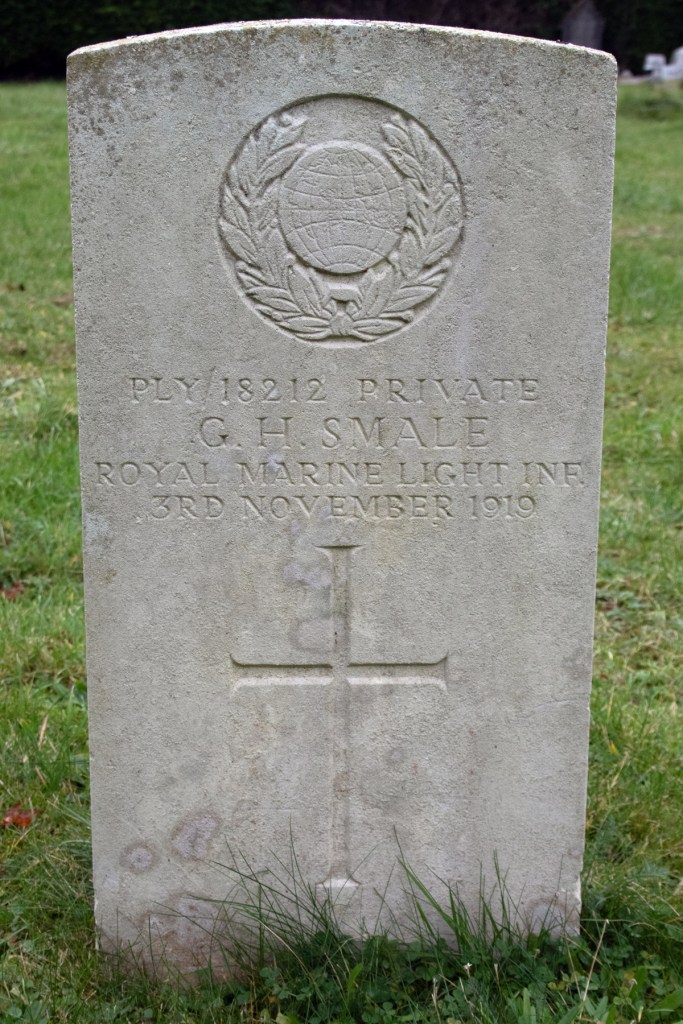
Private George Smale

Private George Smale

George Henry Smale was born in 1899 and was the oldest of four children to George and Alice Smale. George Sr was born in Tavistock, Devon, and worked as a labourer in a tannery. The family were raised in Newton Abbot, which is where George Jr was born.

Sadly, little is documented on young George’s life. He would have been 15 years old when war broke out, but at some point during the conflict, he enlisted in the Royal Marine Light Infantry. Private Smale was based at the Stonehouse Barracks in Plymouth, but no other information about his service is available.

George’s trail goes completely cold at this point, and there is nothing to confirm how or when he left the army, or how he died. All that can be confirmed is that he passed away on 3rd November 1919, and that he was just 20 years old at the time.

George Henry Smale was laid to rest in Newton Abbot Cemetery.


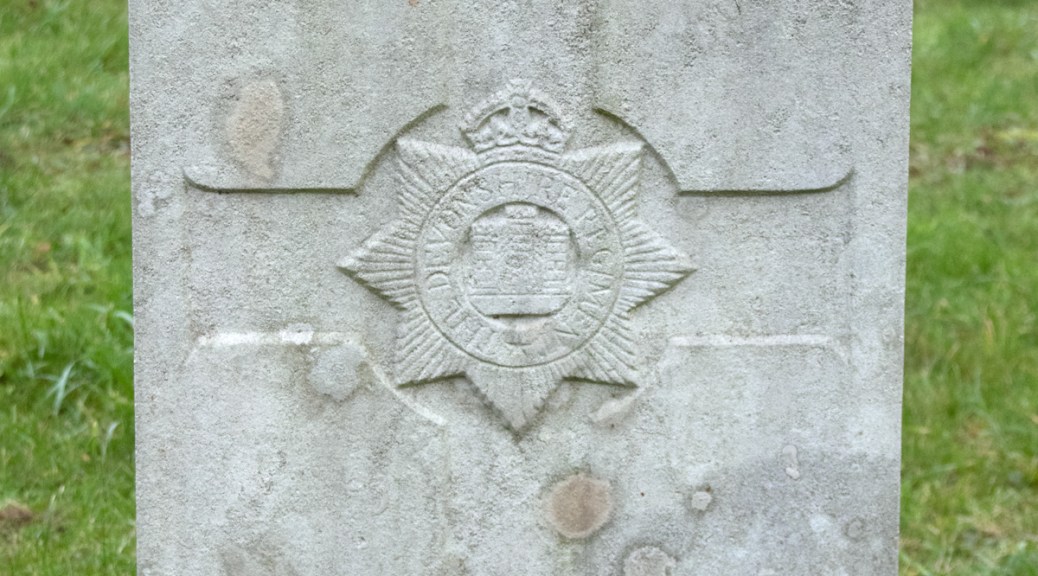
Private James Flood

Private James Flood

James Allan Flood was born in Exeter, Devon, in 1879, and was the oldest of six children to James and Emily. James Sr was a bricklayer, and, according to the 1881 census, the family lived at 2 Stepcote Hill, sharing the house with two other families.

When he left school, James Jr also fell into labouring work. By this time he had met Amy Hobbs, a hotel worker’s daughter who had been born in London. Her father had moved from Devon to the city in the 1870s, but had brought his family back to his home county by 1885.

James and Amy married in the village of Wolborough in December 1899. They set up home in nearby Newton Abbot and went on to have five children.

The storm clouds of war were beginning to hover over Europe and, when the conflict broke out, James was keen to play his part. He enlisted within days of war being declared, joining the Devonshire Regiment as a Private. His service records show that he stood 5ft 6ins (1.68m) tall, and weighed 112lbs (51kg). He had a tattoo of a crown and heart on his right forearm.

Private Flood found himself in France by Christmas 1914 and stayed there for more than a year. During this time, he was promoted to Lance Corporal, although, as a result of missing a role call, he reverted back to Private again a couple of months later.

After a brief two months spent back on home soil, James returned to France again, spending a further ten months on the Western Front. In March 1917, he was transferred across to the Labour Corps, and came back to home soil again.

This transfer appears to have been connected to James’ health; he continued to work as part of 621st Agricultural Company for the next eighteen months, before being discharged from the army on medical grounds in September 1918. Sadly, the cause of his discharge is lost to time.

At this point, James Allen Flood’s trail goes cold. The next time he appears in documentation is nearly a year later: he passed away on 17th August 1919, aged 40. He was laid to rest at the Newton Abbot Cemetery.


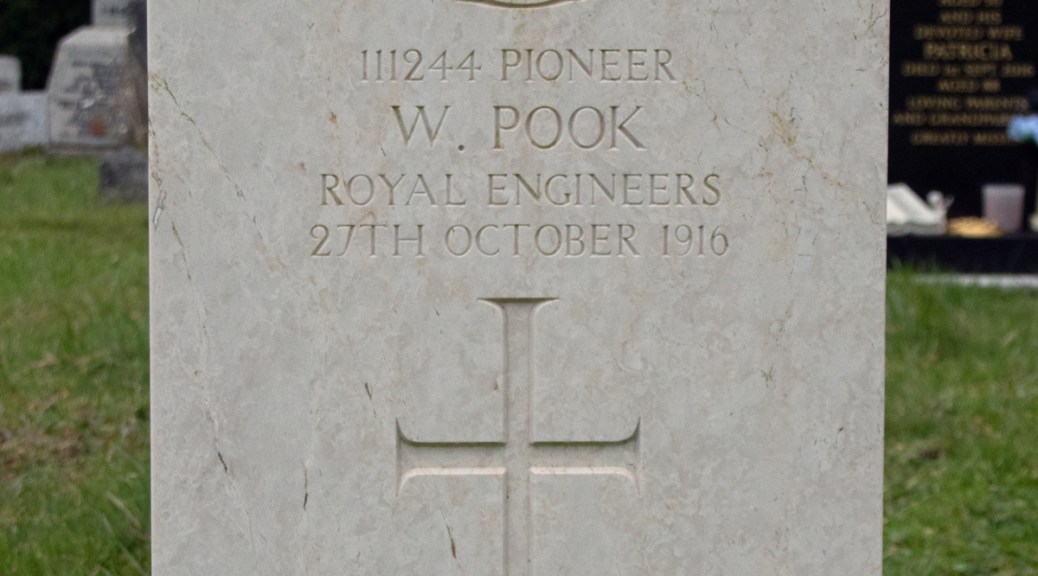
Pioneer William Pook

Pioneer William Pook

William Pook was born in 1869. There is little specific evidence available about his early life, but his service records confirm that he married Jessie Elizabeth Moxey on 25th January 1890: they went on to have four children.

The 1891 census records the young family living in the village of Highweek, near Newton Abbot in Devon, where William was working as a fellmonger, dealing in hides and sheepskins. This was a trade he continued through the years, and is confirmed as his line of work by the time of the 1911 census. At that point, the expanding family had moved from Highweek to nearby Wolborough.

War was coming to Europe and, in August 1915, at the age of 46, William joined up. His age suggests that this was something he did voluntarily – compulsory enlistment was only introduced the following year – and he joined the Royal Engineers as a Pioneer. The role was designed to relieve the infantry from some of the duties that kept them from the front line, effectively acting as a labour force to free up those who were fighting.

Pioneer Pook was sent to France in August 1915, remaining there for nine months. Health issues started to intervene, and, in June 1916, he was dismissed from military service as being medically unfit because of his asthma.

At this point, William’s trail goes cold. The next record confirms that he died on 27th October 1916, in Newton Abbot. No cause of death is evident, but it seems likely to have been related to his lung condition. He was about 47 years old.

William Pook was laid to rest in Newton Abbot Cemetery.


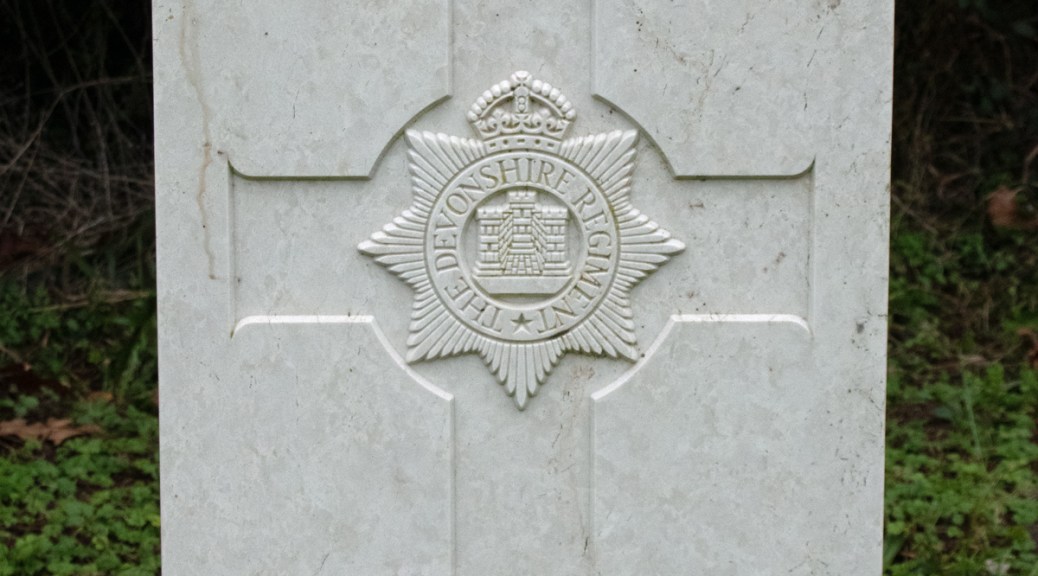
Private William Lamacraft

Private William Lamacraft

William Morrish Lamacraft was born in Guernsey in 1888, the only son of John and Annie Lamacraft. Annie passed away when William was just 4 years old, and John brought his son back to England, returning to Devon, where he himself had been born. John found employment as a porter at St Thomas’ Union Workhouse in Exeter and lived in here, while William was taken in by his paternal grandmother, Mary, who was also in Exeter.

In 1909, John also passed away. William, by this time, had left school and found work as a bootman at the Queen’s Hotel in Newport, Gwent. War was on its way to Europe by this point and, when it broke out, William enlisted as a Private in the Labour Corps.

At some point William transferred across to the Devonshire Regiment, but there is little tangible evidence to document when and where he served. What is clear is that Private Lamacraft survived the war, and had returned to Newton Abbot when he was demobbed.

Sadly, William Morrish Lamacraft was not to live a long life after the Armistice was declared. He passed away on 6th June 1919, aged just 31 years old; the cause of death lost to time. He was laid to rest in Newton Abbot Cemetery.


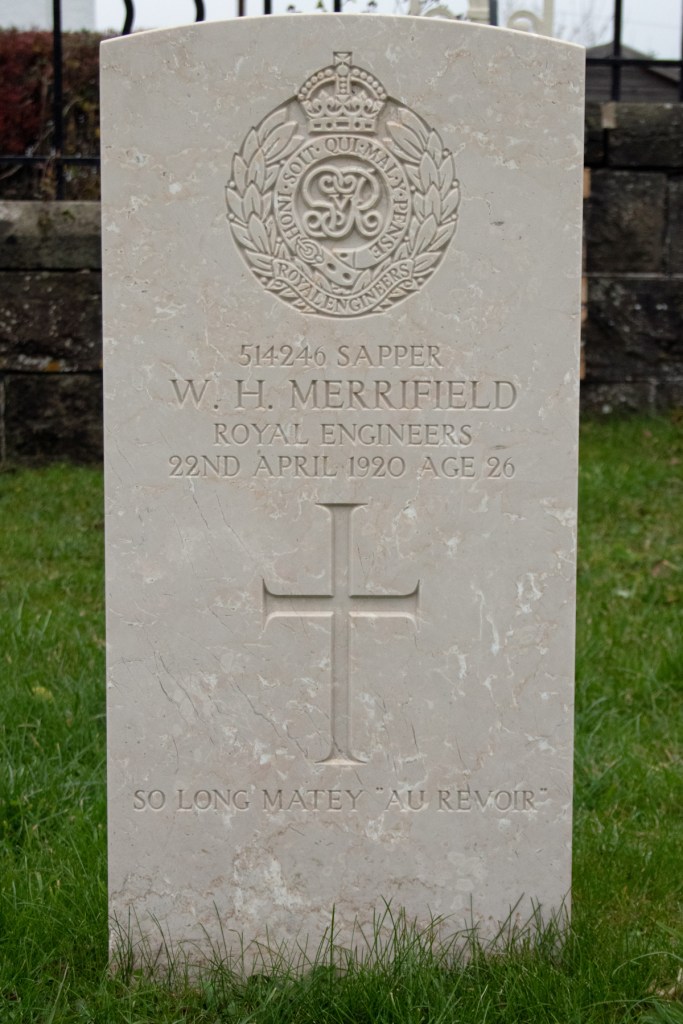
Sapper William Merrifield

Sapper William Merrifield

William Henry Merrifield was born on 29th December 1893, in Newton Abbot, Devon. One of six children to Henry and Kezia Merrifield, his father was an agent for the removal company Pickford’s.

When William left school, he found work as a labourer for a local tannery. War was, by this time, on the horizon, and William soon found himself caught up in it. Full details of his military service are not available, but it is clear that he had a varied career.

William initially worked for the British Red Cross as a cook, and was sent to France in October 1914. He Subsequently joined the Royal Field Artillery as a Gunner, before transferring across to the Royal Garrison Artillery. By June 1915, he had made the move again, and was recorded as a Sapper in the Royal Engineers. During this time, he had been awarded the Victory and British Medals and the 1914 and 1915 Stars for his war efforts.

By this point, William had seen a fair amount of tragedy in his life. Kezia had died in 1905, at the age of 44, and his sister Evelyn had passed away in 1914, aged just 25 years old. The following year, Henry also died, aged 52 years of age.

Sapper Merrifield survived the war and was demobbed in February 1919. At this point, his trail goes cold. He returned to Newton Abbot, and passed away just over a year later, on 22nd April 1920. He was 26 years old.

William Henry Merrifield was laid to rest in Newton Abbot Cemetery; his gravestone marked with the message ‘SO LONG MATEY “AU REVOIR”.


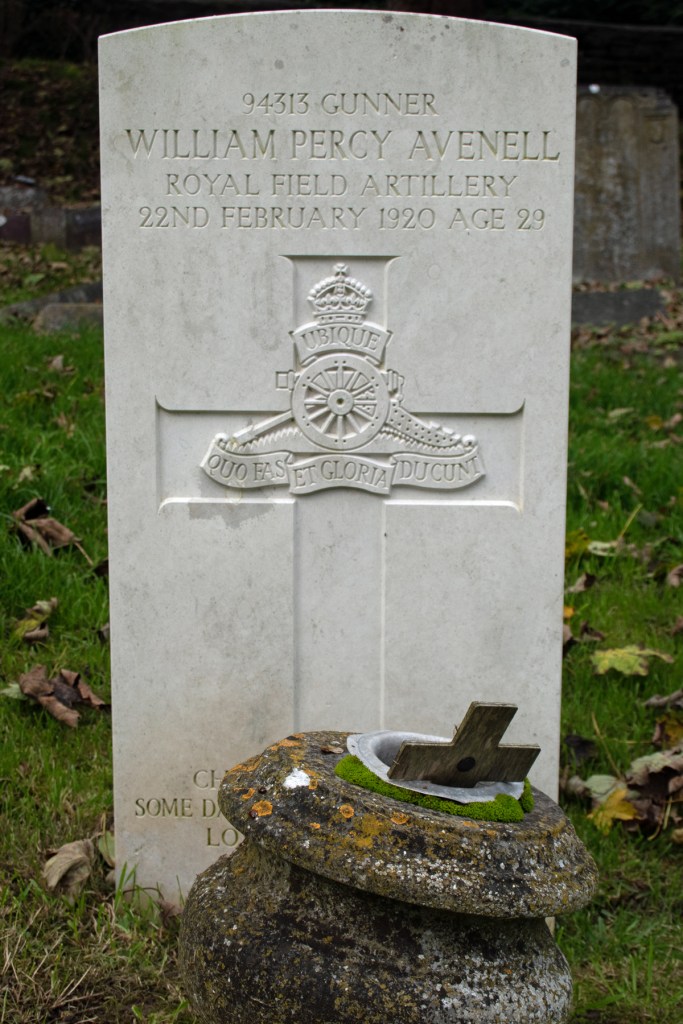
Gunner William Avenell

Gunner William Avenell

William Percy Avenell seems destined to remain lost to time, and there is little documentation about his life.

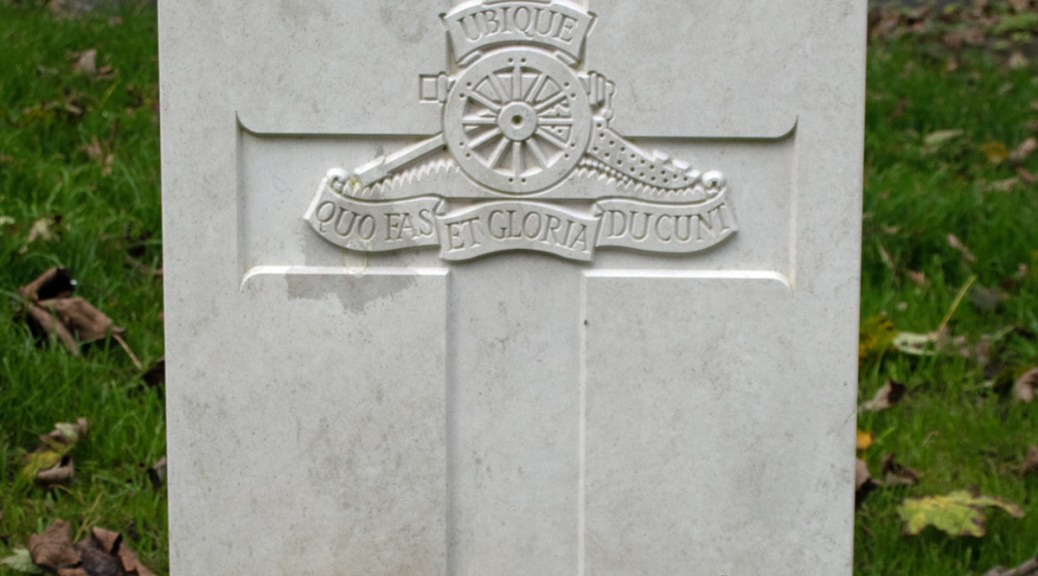
He was born in around 1891, and enlisted in the Royal Field Artillery as a Gunner in the summer of 1915, serving in France and earning the Victory and British Medals and the 1915 Star in the process. Gunner Avenell subsequently transferred to the 861st Employment Company of the Labour Corps.

William survived the war and returned to England. He had settled in the Somerset town of Frome (he may have been from the town, but there is nothing to evidence this) with his wife, Lily Beatrice.

Gunner Avenell’s passing is as lost in time as the rest of his life. He died on 22nd February 1920, at the age of just 29 years old.

William Percy Avenell lies at rest in the graveyard of Christ Church in Frome.


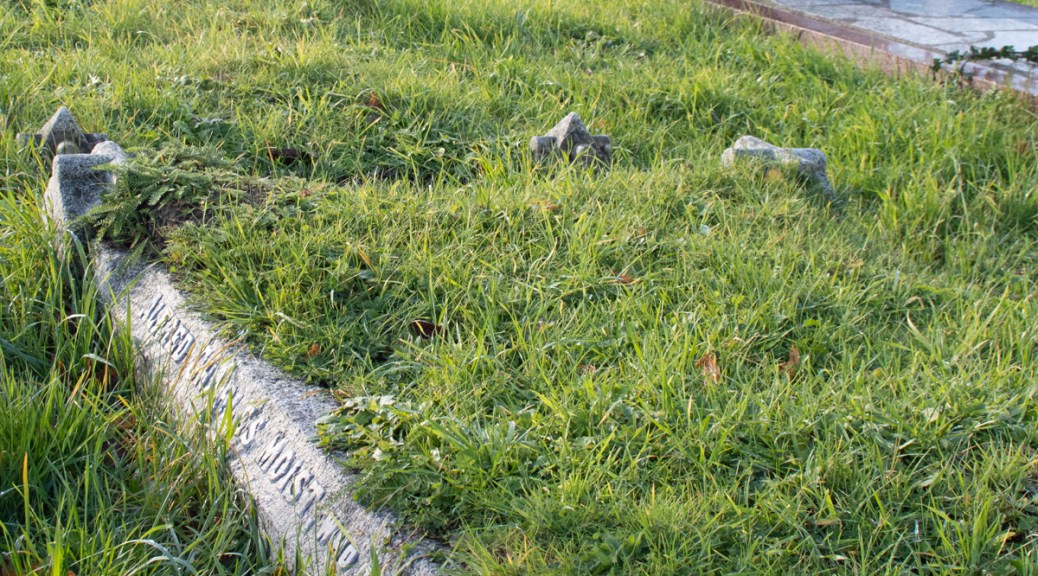
Guardsman Alfred Moist

Guardsman Alfred Moist

Alfred Charles Moist was born early in 1887 in the Devon village of Chudleigh Knighton. His parents were William and Mary Moist, and he was the youngest of eight children. William was a clay miner and his neighbours – who included the young Thomas Willcocks – all worked in the same trade.

William died in 1899, leaving Mary to raise the family alone. By the time of the 1901 census, her widowed daughter Emma had moved back in with her son, and was working from home as a dressmaker. Alfred, meanwhile, and his two older brothers Frank and Reginald were all employed as brick dressers and together they earned enough to keep the family going.

The next census – compiled in 1911 – found Alfred still living with Mary, but the household had a different set up. Emma had remarried and was living in nearby Ilsington with her publican husband. Another of Alfred’s sisters, Bessie, had moved in with her daughter, Florence, and was keeping house for her mother. Reginald was also still living at home and was still employed by the brickyard. Alfred, however, had found now work as a police constable.

Mary passed away in the spring of 1913, by which point, Alfred had met Edith Mary Sampson, a labourer’s daughter from North Devon. The couple married in Broadhempston, near Totnes, on 21st November 1913.

War came to Europe, and Alfred enlisted in December 1915. His job in the police force, however, meant that he was initially placed on reserve, and he was not formally mobilised until April 1918, when he joined the Coldstream Guards. His enlistment papers show that he stood 5ft 11ins (1.8m) tall and weighed in at 10st 4lbs (65kg).

Guardsman Moist was barracked in London, but fell ill in September 1918. He was admitted to the Queen Alexandra Military Hospital with a haematoma and renal calculus (kidney stones). He spent a total of four months in hospital before being discharged back to duty.

At this point, Alfred’s trail goes cold. The next record for him comes in the form of the record of his death, which was registered in Hampstead, London. This suggests that he was either still in the Coldstream Guards or that he had been hospitalised again because of his previous illness. Either way, he died on 28th August 1919, at the age of 32 years old.

Alfred Charles Moist’s body was brought back to Devon. He lies at rest in the Graveyard of St Paul’s Church in his home village of Chudleigh Knighton.