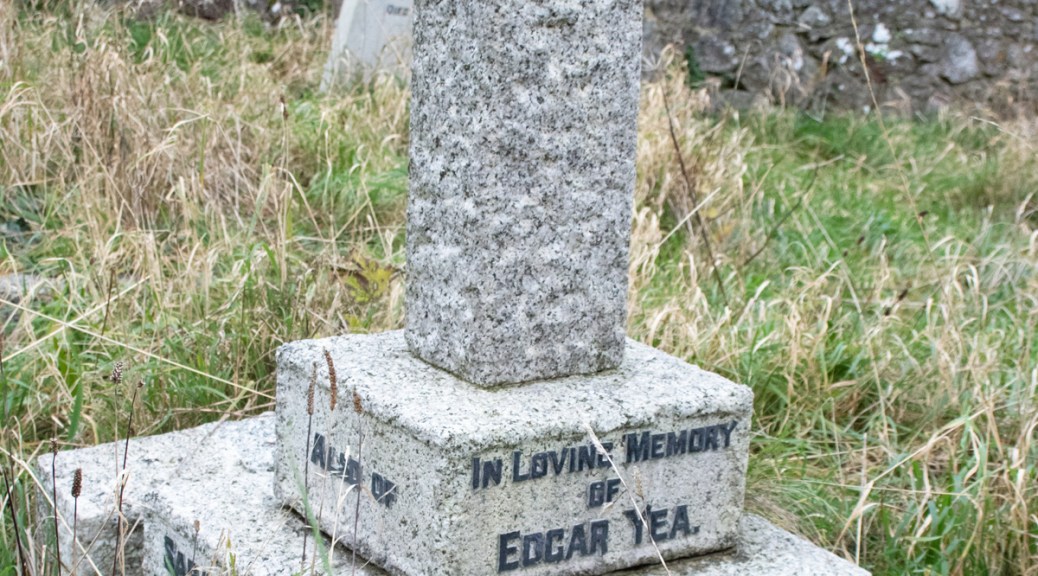
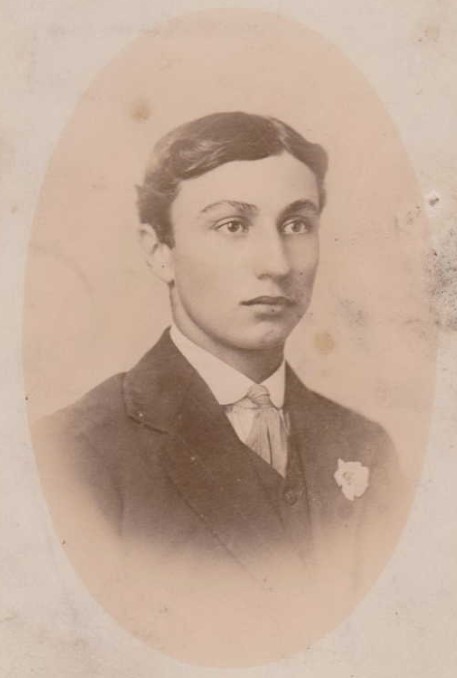
Edgar Thomas Yea was born on 23rd February 1898, the youngest of four children to Enoch and Sarah Yea. Enoch was road contractor from Devon, and it was in Highweek, near Newton Abbot, that he and Sarah raised their young family.
There is little documented on young Edgar’s life: he enlisted in the Royal 1st Devon Yeomanry not long after was war declared in August 1914. He served on home soil, and was medically discharged from service after just 241 days. There is no confirmation on the cause of his removal from the army, but Private Yea’s last day of service was 11th June 1915.
At this point, Edgar’s trail goes cold again. All that can be confirmed is that he passed away at home on 6th February 1919, just a couple of weeks shy of his 21st birthday. The cause of his passing is lost to time.
Edgar Thomas Yea was laid to rest in the graveyard of All Saints Church in his home town of Highweek, Devon.
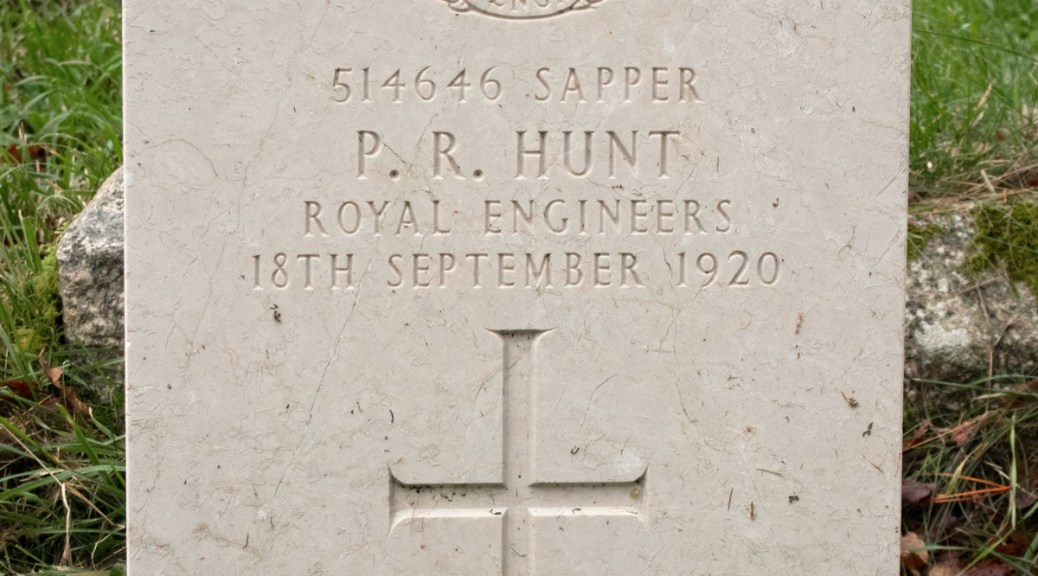
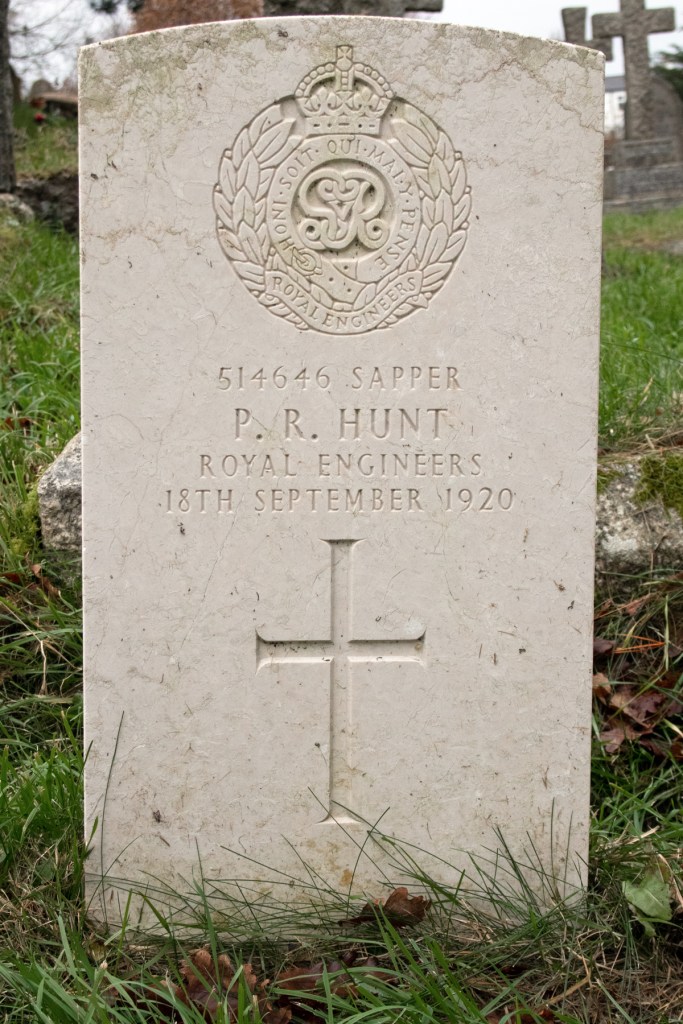
Percy Rendall Hunt was born on 25th May 1893, one of five children to Walter and Mary. Walter was a carpenter for the railway, and had been born in Newton Abbot, Devon, where he and Mary raised their young family.
When Percy left school, he found labouring work, but soon followed his father into carpentry. He met and married a woman called Ellen; the couple married, and went on to have two children. In his spare time, he volunteered for the Devonshire Royal Engineers and, when war broke out, despite now working in Chipping Sodbury, Gloucestershire, this was the regiment he joined.
Sapper Hunt enlisted on 2nd December 1914; his records show that he stood 5ft 7ins (1.70m) tall, had good vision and was of fit physical development. In March 1915, Percy was shipped off to Gibraltar, spending the next eighteen months in the territory. After a couple of months back in England, he was sent to France. He spent the next two years split between serving on home soil and with the British Expeditionary Force, before being demobbed in March 1919.
Percy returned to his old job with the railways, but, in December 1919, he found himself in court, charged with assault. Caroline Webber, an elderly married woman, was on the beach in Dawlish one afternoon, looking for shells, when a man approached her. According to a newspaper report:
“…suddenly he made a grab at me, put his hand under my clothes, and caught hold of my left knee. I screamed, and he ran away. ran after him because I was determined to see where he went. He went over to the railway wall, and disappeared under the archway of Dawlish tunnel.”
Western Times: Wednesday 24th September 1919
Mrs Webber went to the police, who returned to the police with her, then traced a trail of footprints back to the tunnel. Percy was questioned, but denied all knowledge of the incident, and of knowing Caroline. A plaster cast was taken of one of the footprints that evening, and a match alleged with his boots. Percy was committed for trial, with bail being allowed.
When the trial started in January 1920, the boots were again presented as evidence. However, on questioning, the policeman admitted than there had been a delay in getting the impression, and that “there were some other impressions in the sand at the time”.
For the defence, a number of witnesses saw Percy at work around the time of the incident, and the timings seemed to prove that he could not have had enough time to get to the beach and back to carry out the alleged assault. Based on this defence, the jury found Percy not guilty, and the case was concluded.
After this incident, Percy’s trail goes cold for a few months. The next record is that confirming his death, on 18th September 1920. The cause of his passing is not evident, but he was 27 years of age.
Percy Rendall Hunt was laid to rest in the graveyard of All Saints Church in Highweek, Newton Abbot, not far from his family home.
Lionel Shearn was born in April 1895, one of twelve children to, and the youngest son of, Joseph and Emily Shearn. There were two main industries in Paulton, Somerset, where the Shearn family lived, and, over time, Joseph was employed in both. He began in the boot-making industry – this was his trade when Lionel was born – but, by the time of the 1911 census, he had found work as a coal miner. Lionel, who was sixteen by the time of that document, was also working at the colliery as a carter.
War came to Europe in the summer of 1914, and Lionel was one of the first in the town to enlist. Little documentation remains about his military service, but he joined the Royal Field Artillery as a Driver and, by October was in Portsmouth, Hampshire.
Sadly, this is all the service information that’s available, as Driver Shearn passed away in the General Hospital in Southsea, Hampshire on 27th October 1914. His death certificate, which was submitted by his brother, Gilbert, gives a cause of death as otitis media (an infection of the middle ear) and meningitis. He was just 19 years of age.
Lionel Shearn was brought back to Somerset for burial. He was laid to rest in the picturesque Paulton Cemetery.
William John Moore was born in October 1893 in the Dorset village of Puncknowle. He was the second of four children to Richard and Elizabeth Moore. Richard was a farm labourer and Elizabeth’s family were all fishermen, but is was agricultural work that William sought out when he left school.
There is little direct information available about William’s life. When war came to Europe, he joined up, enlisting as a Private in the Dorsetshire Regiment at some point before April 1918. He served on home soil, and was based at one of the regiment’s depots on Salisbury Plain.
At some point late in 1918, Private Moore was admitted to the Military Hospital in Tidworth, although the cause for his admission is not known. Tragically, William died in the hospital on 13th October 1918. He was just 25 years of age.
William John Moore was laid to rest in the cemetery in his home village of Puncknole.
Thomas Greenslade was born in Alcombe, on the outskirts of Dunster in Somerset, in the spring of 1894 and was one of ten children. His parents were Devon-born cab proprietor Richard, and his wife Emma, who passed away in 1905, aged 38 years old.
When he left school, Thomas helped his father with his business; the 1911 census recorded him and his older brother Charles as drivers, his younger two sisters as housekeepers for their father, and his youngest two siblings as still being at school.
Storm clouds were approaching Europe and, in the summer of 1915, Thomas signed up to play his part for King and Country. He joined the Royal Field Artillery, and was assigned as a Bombardier to C Battery of the 74th Brigade. His troop was one of the Howitzer Brigades, and it seems likely that his knowledge of horses stood him in good stead.
Little information on Bombardier Greenslade’s military service survives. His regiment saw conflict at Loos, the 1916 Battles of the Somme and the Third Battle of Ypres, and it is likely that he was involved in these skirmishes.
What can be confirmed is that, by July 1917, Thomas was in the War Hospital in Bristol. The reason for his admission is unclear, but it led to his demise. Bombardier Greenslade passed away on 11th July 1917: he was just 23 years of age.
Thomas Greenslade’s body was brought back to Dunster. He was laid to rest in a quiet corner of the village’s cemetery.
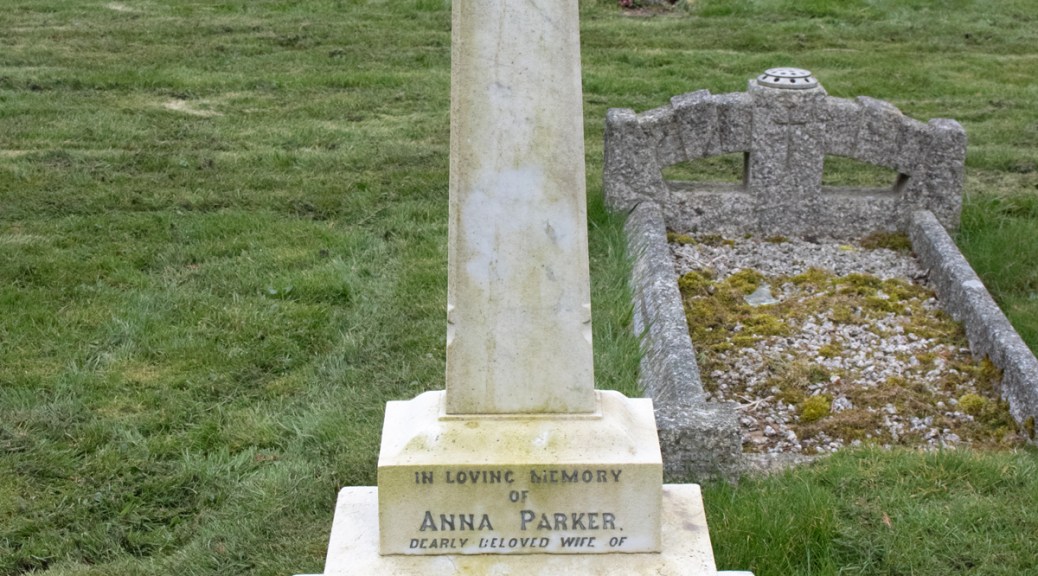
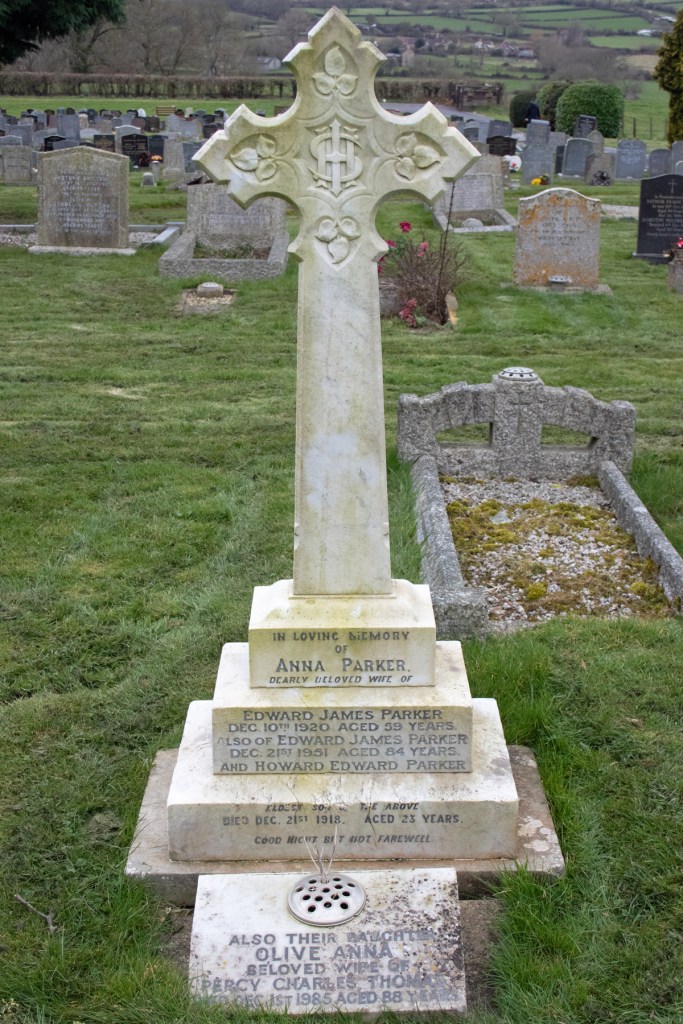
Howard Edward Parker was born in the summer of 1895 and was one of six children to Edward and Anna Parker. Edward was a tailor from Castle Cary, Somerset, and it was in his home town that he raised his young family. When he left school, Edward worked as his father’s clerk.
War was on the way, however, and Edward was keen to play his part. Unfortunately, details of his military service are limited, but from what little remains, it’s possible to piece some bits together.
Edward joined the Army Ordnance Corps at some point before June 1918. During his time in the army, he rose to the rank of Serjeant, but it is unclear whether he served on home soil or abroad.
The only other certain information is Serjeant Parker died in Southampton on 21st December 1918; the cause of his passing is unclear, and there is nothing in contemporary newspapers to suggest anything out of the ordinary. He was just 23 years of age.
Howard Edward Parker’s body was brought back to Somerset for burial. He was laid to rest in the family grave in Castle Cary Cemetery.
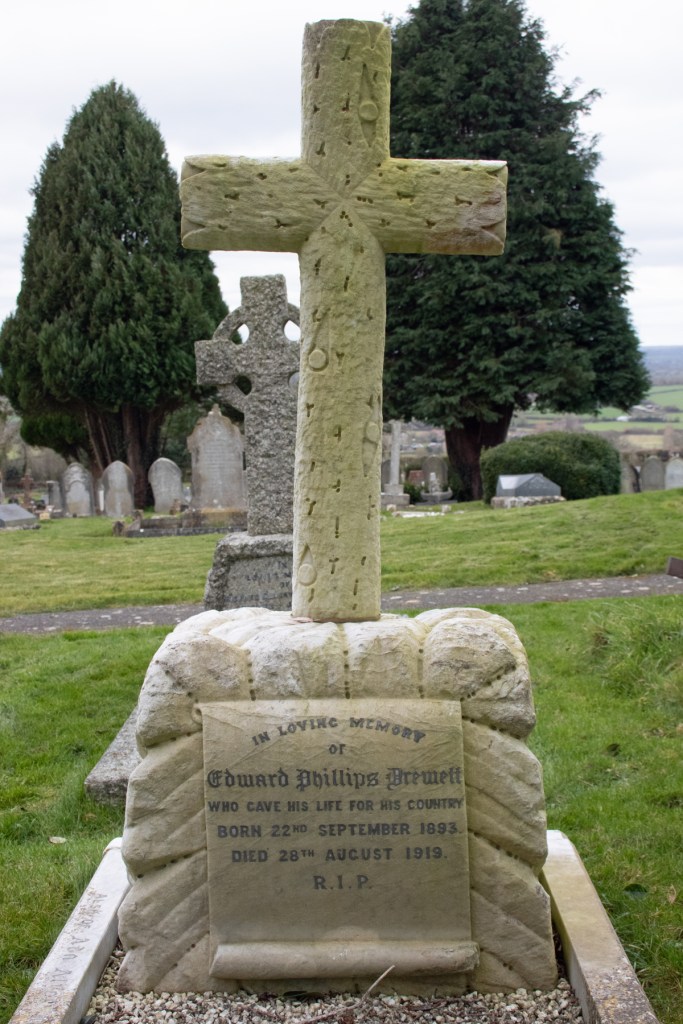
Edward Phillips Drewett was born on 22nd September 1893 in the Somerset town of Castle Cary. He was one of four children to Richard and Martha Drewett; his mother had been widowed before marrying Richard, and had a child from that marriage, Edward’s half-sister.
Richard was a solicitor’s clerk, but when he left school Edward found employment as a grocer’s assistant. It was this that he was doing when war broke out in 1914 and, in November 1915, he joined up to do his bit for King and Country.
Edward joined the 17th Battalion of the London Regiment as a Rifleman: his service records show that he stood 5ft 7.5ins (1.71m) tall, weighed in at 9st (57.2kg) and was of good physical development.
Rifleman Drewett ended up spending three-and-a-half years in the army, and travelled a lot. After nine months on home soil, he was sent to France, Salonika, Malta and Egypt, spending between four and nine months in each place. By July 1918, he was back in France, and by Christmas that year was on home soil again.
By this point, Rifleman Drewett was unwell, and suffering from nephritis – inflamed kidneys. The condition was severe enough for him to be stood down from the army, and he was formally discharged from military service on 31st March 1919, while admitted to the Bath War Hospital.
At this point, Edward’s trail goes cold. He passed away on 28th August 1919 and, while the cause is unclear, it seems likely to have been kidney-related. He was just 25 years of age.
Edward Phillips Drewett was laid to rest in the cemetery of his home town, Castle Cary.
Frederick Davis was born in Street, near Glastonbury, in February 1876. One of four children, his parents were Frank and Ann. Frank was an agricultural labourer, while Ann worked as a shoe binder in the local Clark’s Factory.
By the 1891 census, Frederick had left school, and had also left home, boarding with a farmer in nearby Walton, where he also worked as a labourer on the farm. Ten years later, he was living with his paternal grandmother and his older brother in the village, with both brothers working as labourers.
During this time, it seems that Frederick had his sights on bigger and better things. Full details are not available, although it appears that he enlisted in the Army and served in India and South Africa between at least 1897 and 1902. He was awarded the Distinguished Conduct Medal in 1902 for his actions, although again little information around this survives.
Confirmation of his service overseas at this time appears on Frederick’s later military service records as, in January 1909, he again enlisted in the army. Frederick’s 1909 records show that his next of kin was his wife, Mrs AL Davis, although no marriage documents are apparent. He is also recorded as living in Castle Cary, just to the south of Glastonbury.
This time he was assigned to the 4th Battalion of the Somerset Light Infantry, serving for five years on home soil. During this time, he rose through the ranks from Private to Lance Corporal to Corporal to Sergeant.
When war was declared, the 4th Battalion was sent out to India. Sergeant Davis spent the next eighteen months there, before being moved to the Persian Gulf. He was obviously well thought of as, with the move came a further promotion, this time to Company Sergeant Major.
In June 1917, Frederick returned to England from overseas, and, at the end of his term of service two months later, he was demobbed. He returned home to Somerset, but, within a couple of months, on 2nd October 1917, he passed away. The cause of his death is not recorded, but he was 42 years of age.
Frederick Davis was laid to rest in the peaceful surrounds of the Castle Cary Cemetery.
Walter Matthias Naish was born in the autumn of 1896, and was one of of five children to agricultural labourer Matthias Naish and his wife, Sarah Ann. Born in Lovington, near Castle Cary, Somerset, this is where the family is recorded as living for the 1901 and 1911 censuses.
When he left school, Walter found work as a cabinet maker; war was on the horizon, however, and he enlisted on 28th February 1916. He was immediately put on reserve, however, and was only mobilised in January 1917, when he was assigned to the Royal Flying Corps as an Air Mechanic.
Tragically, Walter’s military career was not to be a long one. He was admitted to the Connaught Hospital in Aldershot with conditions unknown, and passed away on 3rd March 1917, just 51 days after leaving home. He was just 20 years old.
Walter Matthias Naish’s body was brought back to Somerset for burial. He lies at rest in the Castle Cary Cemetery, not far from his home.
Cuthbert William George Collard was born in the spring of 1899, one of nine children to William and Eliza Collard. William was an agricultural labourer from North Newton in Somerset, and this is where he and Eliza raised their family. While probably helping his father out as a child, Cuthbert found work at the local blacksmith’s when he left school.
Cuthbert was barely fifteen when war broke out in Europe, and so had to wait until April 1917 before he was of age to enlist. He joined the Devonshire Regiment, and his service records show that he was 5ft 2ins (1.57m) tall, had black hair, brown eyes and a pale complexion.
Assigned to the 4th (Reserve) Battalion, Private Collard served his time on home soil. While full details are not available, it appears that he contracted tuberculosis during his training. This was serious enough for treatment in a sanatorium to be recommended, and he was medically discharged from military service because of the lung condition on 9th January 1918. He had been in the army for just 280 days.
At this point, Cuthbert’s trail goes cold. Whether he was admitted for medical treatment is unclear, but it appears that he returned to North Newton. He passed away on 19th June 1919 at the family home, aged just 20 years old.
Cuthbert William George Collard was laid to rest in the graveyard of the village church, St Peter’s.