Category Archives: London

Serjeant Albert Romain

Serjeant Albert Romain

Albert William Romain was born in Gillingham, Kent, at the start of 1888, the middle of three children to Henry and Florence. Henry was a Sergeant in the Royal Engineers and is seemed inevitable that his son would follow suit.

Henry died in 1896, and was buried in the Grange Road Cemetery, Gillingham (now a public park). The 1901 census recorded Albert as a pupil at the Duke of York’s Royal Military Asylum in Chelsea. This was, in fact, a school for the children of soldiers, and it is likely that Albert was sent there to be educated when his father died.

The Royal Engineers obviously proved too great a lure for the young Albert. While full details of his service are not available, he had definitely enlisted early on, and was listed as a Lance Corporal in the Tempe barracks in Bloemfontein, South Africa in the 1911 census.

When war broke out, he was called back to Europe, as was on the Western Front by November 1914. Little further information on Albert is available – during the conflict he was assigned to D Company of the Royal Engineers, but the end of the war, he had become a Sergeant in the 1st Reserve Battalion.

In November 1918, back on UK soil, he was admitted to the Fort Pitt Military Hospital in Chatham, Kent. His condition is unclear, but sadly it was to be one to which he would succumb. Sergeant Romain died on 8th November 1918; he was just 30 years old.

Albert William Romain was laid to rest with his father in the Grange Road Cemetery. He is commemorated in the Woodlands Cemetery in his home town of Gillingham, Kent.


Private William Ridley

Private William Ridley

William Frederick Ridley was born on 7th April 1887 in the New Brompton area of Chatham/Gillingham, Kent, one of eight children to John and Elizabeth Ridley. John was an engine fitter in the nearby naval dockyard and, as the key employer in the area, William followed in his father’s footsteps.

Sadly, John died in 1904, and this seems to have been what spurred his son on to a better life. In 1907 William emigrated to Canada, settling in the town of Wentworth, on the banks of Lake Ontario.

It was in Ontario that William met his future wife. Edith Wass was the daughter of a local labourer; the young couple married on 5th June 1909, and went on to have two children, John, born in 1910, and Wilfred, who was born five years later.

During this time, William was putting his engineering skills to the test; his marriage banns confirm he was a machinist. While there is nothing to confirm any specific trade, given his proximity to the coast, dockyard employment seems probable.

On the other side of the Atlantic, war was breaking out; keen to do his part for King and Country, William enlisted in the Canadian Expeditionary Force on 28th July 1915. Initially enlisting in the 76th Overseas Battalion of the Canadian Infantry, he was shipped to England a year later and transferred across to the 4th Battalion.

Once on the Western Front, Private Ridley was thrown right into the thick of things. His battalion fought at the Battle of Flers-Courcelette – part of the Battle of the Somme – and it was here, on 18th September 1916, that he was wounded.

William received shrapnel wounds to his head, hand and right leg. Initially treated on site, he was quickly evacuated back to England, and admitted to the 2nd London General Hospital in Chelsea. Sadly, however, his wounds appeared to have been too severe; Private Ridley passed away from them on 30th November 1916, aged just 29 years old.

With his widow and children still in Canada, William’s body was taken back to Kent. He lies at rest in the Woodlands Cemetery in Gillingham, close to where his mother was still living.


Larger memorial image loading...
Private William Ridley
(from findagrave.com)

Private William Jennings

Private William Jennings

William Gladstone Jennings was born in Kent, in the summer of 1898, the only child of James and Emma Jennings. James was a marine engineer in the Naval Dockyard in Chatham, and it was here that the family lived.

Sadly, due to his age, and the lack of military service documentation, there is little written about William’s life. He was still at school by the time of the 1911 census, and the next records available confirm that he enlisted in the army. The date for this is not available, but it would have been by May 1917 at the latest and he seems to have enlisted with the surname Hickson, which was possibly his mother’s maiden name.

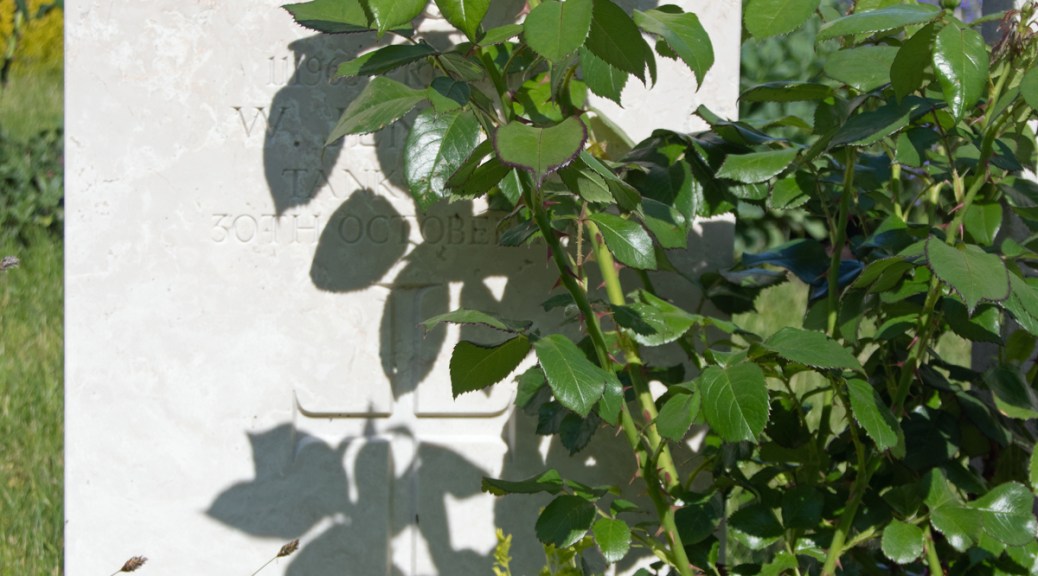
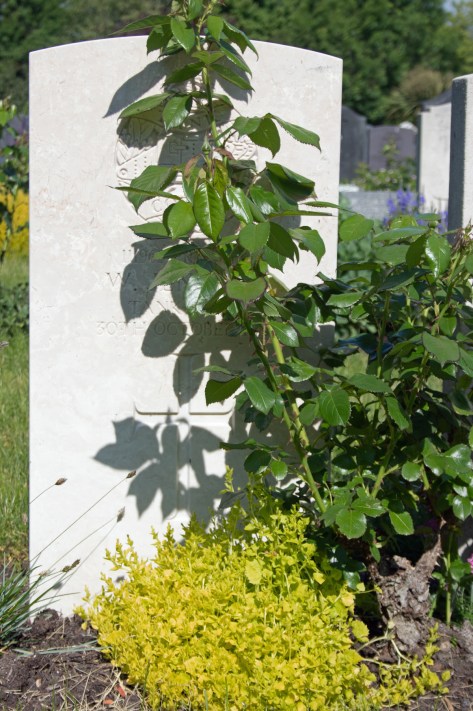
Private Jennings transferred to the Tank Corps when it was formed in July 1917. What his specific role was is lost to time, but it appears that his time in the regiment was short. The next available document is the Army Register of Soldiers’ Effects; this confirms that William passed away on 30th October 1917, in the Military Hospital in Woolwich.

There is no confirmation of the cause of his death, but Private Jennings was just 19 years old.

William Gladstone Jennings was brought back to his home town for burial, and he lies at rest in the Woodlands Cemetery in Gillingham.


Company Sergeant Major Hugh Caston

Company Sergeant Major Hugh Caston

Hugh Charles Caston was born in Chelsea in the summer of 1881, the oldest of three children to Emily and Hugh Caston. Hugh Sr died in the late 1880, leaving Emily to raise the family on her own. She moved the family to Gillingham, Kent, to be near her family. She found work as a seamstress and took in boarders.

As the effective head of the family, Hugh obviously felt he had to earn a wage. On 1st August 1896, he enlisted in the Royal Engineers as a Bugler.

Hugh’s medical report shows he stood at 5ft 4.5ins (1.63m) tall and weighed 97lbs (44kg). He had a medium complexion, with brown eyes and brown hair. The report also gave his distinctive marks as being a scar on his forehead, a brown patch on his left buttock and that his eyebrows meet.

Initially too young for full active service, Hugh formally joined up on 1st June 1897. He spent more than five years on home soil, rising through the ranks from Sapper to Lance Corporal to 2nd Corporal. In May 1902, he was posted to Malta, returning home nearly two years later. Hugh’s promotions continued over the next decade, and, by the time war broke out, he had reached the rank of Company Sergeant Major.

By this point, Hugh had married, wedding Rochester woman Mary May Coast in September 1907. The couple went on to have two children, Hubert, who sadly died young, and Joan.

War came to Europe, and things took a turn for Company Sergeant Major Caston. He was admitted to Netley Hospital near Portsmouth, with mania:

Patient’s very restless, often gets ‘excited’ is thwarted in any way. Has a delusion that he is to be promoted to Major and that he possesses great wealth. He continually asks that his motor may be sent round to take him out, also that his tailor be sent for to rig him out. Stated this morning that he wished all the other patients be supplied with Egyptian cigarettes.

Medical Report on Hugh Caston, 20th January 1915

The medical officer went on to state that he did not consider that military service had in any contributed to the mania; he was dismissed from the army on medical grounds on 2nd February 1915, after nearly 20 years’ service.

Sadly, at this point Hugh’s trail goes cold. There is no documentation relating to his time after being discharged from the army and, tragically, after his death Mary was not granted a war pension, as he had served for less that six months during the First World War.

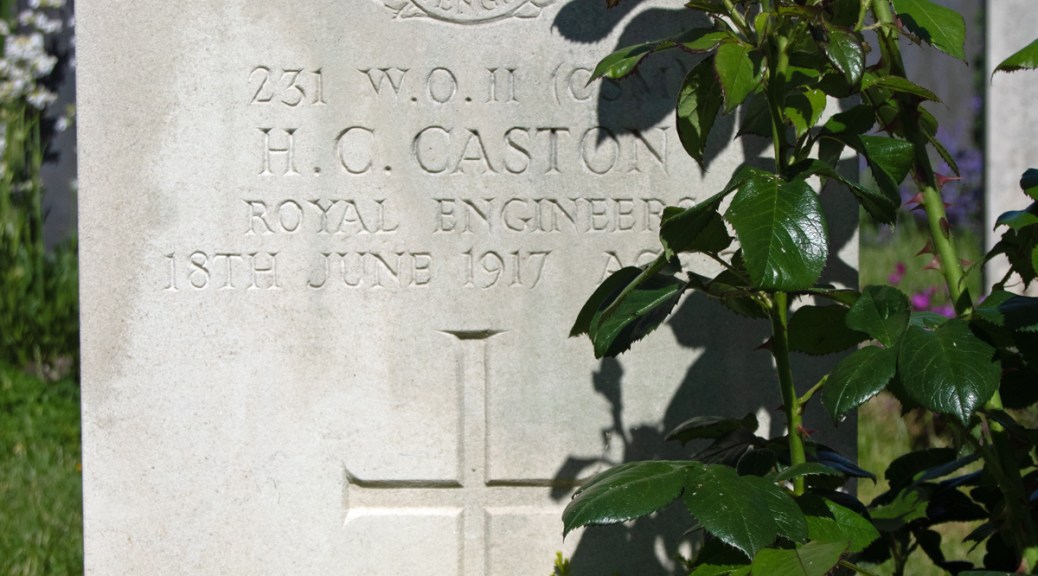
Hugh Charles Caston died on 18th June 1917, at the age of 36 years old. While the cause of his passing is lost to time, he was laid to rest in the Woodlands Cemetery in Gillingham, Kent.


Private Charles Leach

Private Charles Leach

Charles George Leach was born in 25th July 1872 and was the second of eight children. His parent were Gloucestershire-born painter William Leach and his laundress wife Ellen who raised the family in Greenwich, South London. William had married previously, but his first wife, Emma, had died in 1868, leaving him a widow at 40, with five children to raise. He had married Ellen shortly after, and the family grew in size.

There is little information on Charles’ young life. It seems like the family had moved down to Sussex at some point; this is where Charles met his future wife, fisherman’s daughter Ellen. By the time William died in 1909, the family had again relocated, this time moving back to Gloucestershire.

The 1911 census gives Charles and Ellen visiting Charles’ sister Alice and her husband. The couple had two children by this point, as did Alice. Charles’ mother Ellen was also living there; a family of nine living in a house in the town of Cinderford.

Details of Charles’ military life as somewhat sketchy. He did enlist, joining the Royal Army Service Corps on 6th December 1915, and certainly served in France, gaining the Victory and British Medals and the 1915 Star. However the records suggest that Private Leach was discharged from the army on medical grounds in the spring of 1916, and the refusal of a war gratuity – paid once soldiers had attained six months’ service – seems to back this up.

There is little more information available on Charles Leach. He and Ellen went on to have four children in all, and moved back to Sussex, close to her family. He passed away on 4th March 1919, at the age of 46, but no cause of death is available.

Charles George Leach lies at rest in the Broadwater Cemetery, in Worthing, West Sussex.


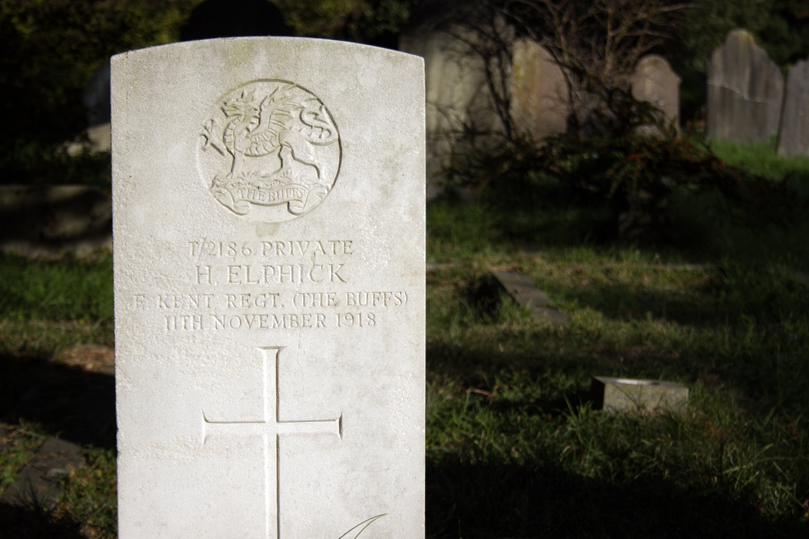
Private Holdsworth Elphick

Private Holdsworth Elphick

Holdsworth Elphick was born on 7th June 1891, one of five children to Herbert and Mary Elphick. Herbert was a billiard marker and professional player, who had been born in Brighton. Mary was from Ireland, but the couple raised their family in London, presumably as this is where the best opportunities for work were.

When he left school, Holdsworth found work at the George Hotel in Balham, South London, where he was employed as a barman. The 1911 census shows another barman there called Geoffrey Elphick, who, while not one of Holdsworth’s brothers, may well have been a cousin.

When war broke out, Holdsworth was quick to sign up. He enlisted as a Private in the Buffs (the East Kent Regiment) on 9th September 1914 and, after a year on the Home Front, he was sent out to France as part of the British Expeditionary Force in August 1915.

There is little further information available about Private Elphick’s time in the army. He returned to England on 25th February 1916; this appears to have been a medical evacuation as, two months later, he was discharged from the army as he was no longer physically fit to continue.

Life continued for Holdsworth. In September 1917, he married Lydia Ann Armstrong, a dock labourer’s daughter from Southampton, although this is where his trail seems to end.

The next available evidence for Private Elphick is his gravestone. This confirms that he passed away on 11th November 1918 – Armistice Day – but no further information is available. He was just 27 years of age.

Holdsworth Elphick lies at rest in the Broadwater Cemetery in Worthing, West Sussex (presumably this is where he and Lydia moved after their marriage, although there is nothing to confirm this).


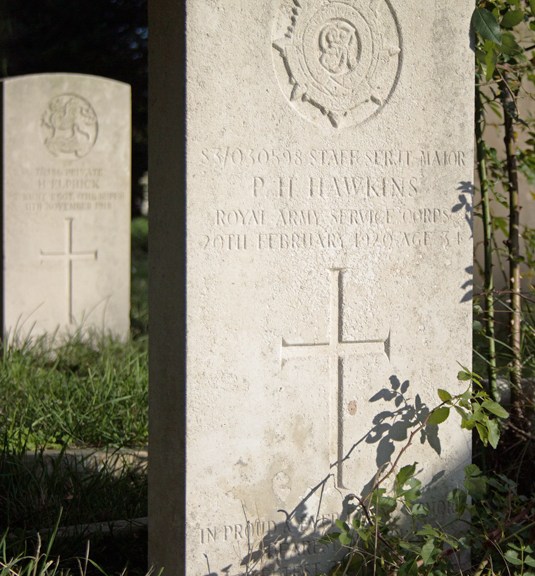
Serjeant Major Percy Hawkins

Staff Serjeant Major Percy Hawkins

Percy Harry Hawkins was born in Waltham Green, London, in 1886. One of five children, all boys, his parents were Frederick and Elizabeth Hawkins. Frederick initially worked as a brewer’s collector – collecting rent from tenant pub managers on behalf of the brewery – before working as a tobacconist.

In July 1908, Percy married Gladys Parnell. Sadly, tragedy was to strike and, over the next couple of years both Elizabeth and Frederick passed away in 1909 and 1910 respectively.

By the time of the following year’s census, Percy and Gladys were boarding with a dispensing doctor (or GP), and his wife. Percy listed his occupation as a ‘traveller’, was probably employed as some kind of salesman.

Tragedy was to strike Percy again. Months after the couple had their first child in July 1911, Gladys also passed away, leaving him as a widower and single parent at just 26 years old.

From his later military documentation, it seems that Percy married again in August 1915, this time to a woman called Mildred, and, by September 1919, he had gone on to have three children in total; one boy and two girls.

When war broke out, Percy was quick to enlist. He joined up in Birmingham on 10th August 1914, and gave his profession as a commercial traveller. His records show that he was 28 years and 120 days old, stood 5ft 6ins (1.69m) tall and weighed 131lbs (59.5kg).

After initially joining the Royal Warwickshire Regiment, Private Hawkins was transferred to the Royal Army Service Corps, and was assigned to one of the supply companies.

Over the four years of the war, Percy served on home soil, and was promoted a number of times, rising from Private to Lance Corporal, Staff Sergeant to Quartermaster Staff Sergeant. In September 1917, he was again promoted, this time to Staff Sergeant Major, a position he held for the remainder of the conflict, and on into 1919, when he volunteered for an extra year’s service, rather than being demobbed.

In February 1920, Staff Serjeant Major Hawkins fell ill; he was admitted to the military hospital that had been set up in Brighton Pavilion, Sussex. The diagnosis was heart failure, and, sadly, it was to this that he was to succumb. He passed away on 20th February 1920, aged just 34 years old.

Percy’s family was, by this time, living down the coast in Worthing; his body was brought there for burial and he lies at rest in the Broadwater Cemetery in the town.


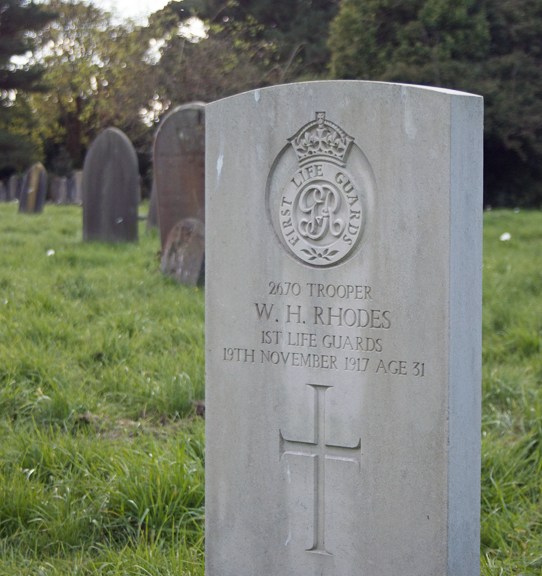
Trooper William Rhodes

Trooper William Rhodes

William Henry Rhodes was born in the summer of 1886 and was the youngest of six children. His father Reuben was a gardener who, with his wife Ellen, raised their family in a small cottage near the central station in Worthing, West Sussex.

When he left school, William found work as an assistant in a bookshop. This was just a stepping stone, however, and his mind was on a life of adventures. In March 1908, he enlisted in the army, joining the Household Cavalry, and was assigned to the 1st Life Guards. William’s medical report showed that he stood at just under 6ft (1.83m) tall, and weighed 141lbs (64kg). He had a fresh complexion, grey eyes and brown hair.

Trooper Rhodes was initially based on home soil; his barracks were in London and he served in Hyde Park, Regents Park and at Windsor, where he would have been called upon to be involved in royal duties that would have taken place. This changed when the Great War broke out, however, and his division was sent out to northern France as part of the British Expeditionary Force.

The 1st Life Guards were involved in the First Battle of Ypres, and went on to fight in many of the fiercest battles of the conflict. His service record identifies that he was wounded in February 1915, when he received a gunshot wound to the head, although, surprisingly, there is nothing in his medical record that suggests any subsequent hospital admission.

In fact, Trooper Rhodes did receive hospital treatment during his military service; he was admitted for bronchial catarrh in April 1908 and May 1909 and headaches in June 1911. Four years later, he contracted tuberculosis while in action in France, and moved back to London for treatment.

William’s condition was serious enough for him to be medically discharged form the army; having spent more than a month in hospital, he was released from duty on 31st August 1915.

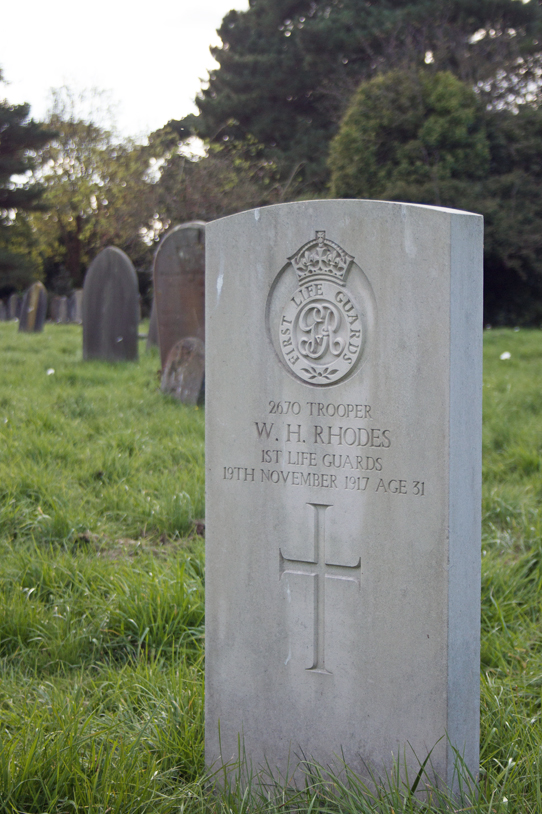
There is little further information about William’s life back home. The next document on him confirms that he died on 19th November 1917. While the cause is not noted, it seems likely to have been connected to the lung conditions he suffered during the war. William was 31 years of age.

William Henry Rhodes was laid to rest in Broadwater Cemetery in the town of his birth, Worthing, West Sussex.


Corporal Richard Cadenaci

Corporal Richard Cadenaci

Richard Edward Cadenaci was born in Sutton, Surrey, in around 1886. His father, who was also called Richard Edward Cadenaci, was a house painter and, with his wife Maria, had thirteen or fourteen children, of whom Richard Jr was the middle one.

Documentation on the Cadenaci family is scarce. On 5th April 1896, when Richard Jr was 10, he and three siblings were baptised together.

By the turn of the century, the family were living on Merton High Street, in Wimbledon. Richard Sr and Maria were there with their youngest five children.

Richard Jr seemed keen on a life of adventure – the 1911 census lists him as a Private in the 3rd Battalion of the Royal Fusiliers, and that he was based in Mauritius. His full military service records are not available, but it is likely that his term of service with the army was extended as war loomed.

Private Cadenaci was sent to France in January 1915 and, during his time in the Great War, he received the Victory and British Medals and the 1915 Star. At some point during the conflict he was transferred across to the Labour Corps, though the move came with a promotion to Corporal. Again, there is little further information about his service, but records suggest that he was discharged from the army – possibly through health reasons – on 20th September 1918.

Here, Richard’s trail goes cold. He died on 23rd March 1920, just eighteen months after the end of this military service, at the age of 32. There is no record of the cause of his passing and nothing to connect him to the town in which he was buried, Worthing, West Sussex.

It is possible that Corporal Cadenaci left the army for medical reasons, and his move out of London was for cleaner air, but this is only presumption on my part, and there is nothing to confirm this either way.

Richard Edward Cadenaci lies at rest in the Broadwater Cemetery in Worthing.


Serjeant Henry Rowe

Serjeant Henry Rowe

Henry Samuel Rowe was born in Shoreditch, London, on 18th August 1873. He was one of three children to Henry and Amelia Rowe. Henry Sr was a stonemason, who died in 1876, when Henry was only three years old.

Amelia moved her and her children to the Sussex Downs, and married again in 1883. Her new husband was John Herrington, and the couple went on to have three further children, Henry’s half-siblings. John was a farm labourer, and his stepson followed in his footsteps when he left school.

Henry soon sought other accomplishments, however, and, in October 1895, he joined the King’s Royal Rifles. During his twelve years’ service, he travelled the world, from Mauritius, to India, South Africa to Sri Lanka. He returned home in December 1903 serving on home soil until the end of his contract in 1907.

On 23rd April 1905, he married a widow, Amelia Routledge, in Brighton. There is no confirmation of the couple going on to have children.

Once demobbed, Henry found employment with the railways, and, by the time of the 1911 census, was working as a signalman. The document records him as boarding in a house in the village of Rudgwick, near Horsham; Amelia, meanwhile, was lodging with a family in South East London.

War was on the horizon, and, in August 1914, Henry volunteered. His time with the King’s Royal Rifles, stood him in good stead; after initially enlisting as a Private in the Royal Sussex Regiment, he was quickly promoted to Corporal and, by November 1914, had transferred to the Royal Engineers and attained the role of Sergeant.

Henry had spent just over a year in France, when he was shot in the right arm on 18th July 1916. Medically evacuated to England, he spent three months recuperating, before heading back into the fray in October the same year.

Henry served another eighteen months on the Front Line, before being admitted to hospital. His medical admission records show that he was suffering from “tremulous speech, confused… conversation, transitory admissions [sic?] of a grandiose type, outbursts of excitement, says he is a man of importance, childish, facile, simpleminded…” His condition was recorded as General Paralysis of the Insane (GPI), more commonly known these days as shellshock, and he was medically discharged from the Army on 4th September 1918.

Sadly, at this point Sergeant Rowe’s trail goes cold. He seems to have been hospitalised following his discharge, but the documents give conflicting suggestions about where he was admitted. Amelia was still living in South London, one record suggests Henry was in the Welsh Metropolitan Hospital in Whitchurch, near Cardiff. But, as he was buried in Worthing, West Sussex, it seems unlikely that he remained in Wales.

The cause of Henry’s passing is not evident either. There is no confirmation that GPI was to blame, but nothing to suggest it was not either. Whatever the cause, Sergeant Rowe died on 14th November 1918, three days after the conflict to which he had given so much had been brought to a close. He was 49 years old.

Henry Samuel Rowe lies at rest in the Broadwater Cemetery in Worthing, West Sussex.