David William Slocombe was born on 9th November 1893, the oldest of seven children to William and Kate. William was a tin worker from Huntspill, Somerset, and it was in nearby Highbridge that the family were born and raised.
David appears to have been a bright lad, receiving a sponsorship from the King James Foundation to attend Dr Morgan’s School in Bridgwater. He spent six years there, from September 1906 to July 1912, and went on to become a customs and excise clerk when he left.
When war arrived in Europe, David was called upon to play his part. He initially enlisted on 1st December 1915, but was placed on reserve for nearly a year. His service records show that he was 22 years of age and 5ft 8.5ins (1.74m) tall. When he was finally mobilised, he was given a commission in the Royal Flying Corps.
At this point, David’s trail goes cold. Later documents confirm that he transferred across to the Royal Air Force when it was founded in April 1918, and that he rose to the rank of Lieutenant. He served in France and Italy and, by the end of the war, was attached to the 44th Training Depot Station in Oxfordshire.
By the autumn of 1918, Lieutenant Slocombe had come down with pneumonia. He was admitted to the 3rd Southern General Hospital in Bicester, and this is where he was to breathe his last. David died on 24th October 1918, aged just 24 years old.
David William Slocombe was brought back to Somerset for burial. He was laid to rest in Highbridge Cemetery.
Arthur Edward Devas was born in Devizes, Wiltshire, on 29th July 1877. One of ten children, his parents were Reverend Arthur Devas and Louisa. Arthur Sr was chaplain at the County House of Correction, the prison a short walk away from the family home, over the Kennet and Avon Canal. The 1881 census showed the Devas’ were living to the south of the town centre, and were supported by three servants.
Arthur standing as a vicar’s son earned him an education. He was sent to the prestigious Haileybury College in Hertfordshire. When his father died in 1901, he felt a pull to see more of the world, and joined the army. Enlisting in the Essex Regiment in September 1902, he was taken on as a Second Lieutenant.
Promoted to the rank of full Lieutenant in January 1906, the next census, in 1911, recorded Arthur at the Warley Barracks in Billericay. When war broke out in August 1914, he was based in Mauritius: he remained there for the next five months, before his battalion – the 1st – were brought back to England.
Setting up camp in Banbury, Oxfordshire, the aim was to train the battalion in readiness for an assault in Gallipoli. For Lieutenant Devas, however, this was not to be. He had fallen ill on the journey back to Blighty and, having contracted typhoid, he was admitted to the 3rd Southern General Hospital in Oxford. He died at the hospital on 15th February 1915, at the age of 37 years old.
Louisa and some of her children had moved to Minehead, Somerset, after her husband’s death, and this is where Arthur Edward Devas’ body was brought for burial. He was laid to rest in the extensive Minehead Cemetery, to be reunited with his mother when she passed away some eighteen years later.
Gilbert Henry Hurford was born in the spring of 1896, the second of five children to George and Elizabeth. George was a farmer from North Petherton, Somerset, but it was on Parsonage Farm, in nearby Kingston St Mary, that the family were raised.
Gilbert was helping his father on the farm when war broke out. At the time he was also a volunteer in the West Somerset Yeomanry, and in May 1916, he stepped up to play a full part in the conflict. His service records confirm that he was assigned to the 22nd (Service) Battalion of the Middlesex Regiment.
Private Hurford spent the first six months of his service on home soil, before being shipped off to Europe on 1st December 1916. He had not been in France for long when, on 10th February 1917, he was injured. His documents confirm this was a gun shot wound to his head, but, as he was treated on site, it thankfully appears not to have been too serious an injury.
Trouble struck a second time, however, on 4th September 1918, when Gilbert was injured again. This time his records confirm multiple gun shot wounds, and he was medically evacuated home for treatment. He was admitted to the 3rd Southern General Hospital in Oxford, and remained there for some three months.
This time, Private Hurford’s injuries proved too severe for his body to overcome. He passed away on 29th December 1918, at the age of just 22 years old.
Gilbert Henry Hurford’s body was brought back to Somerset for burial. He was laid to rest in the peaceful churchyard of St Mary’s Church, in his home village of Kingston St Mary.
Robert Cogle Gillo was born in December 1880 in Bridgwater, Somerset. He was the only child to Jane and Robert Gillo who, in the 1881 census was listed as a wholesale photographer, employing four male and four female assistants.
The following census, a decade later, found the family living in Walcot, Bath, where Robert Sr was listed as living on his own means. The household also included Jane’s sister, Elizabeth, and a certified nurse, Jane Moreton.
When he left school, Robert Jr found work as an auctioneer’s clerk. By the time of the 1901 census, both of his parents had passed away, and he was boarding at Hanover House, Hanover Street in Bath. The document, however, throws up an anomaly, however, in that the house’s three other occupants are listed as Edna and Majorie White, who are identified as Robert’s daughters, and Lily Holvey, who was a servant. Whether the head of the household was not there at the time of the census return is not known, but given that ages of Edna and Marjorie were 9 and 5, to Robert’s 20, it is extremely unlikely that they were actually his children.
By the following summer Robert had taken up employment as an auctioneer in Dorset. On 4th June 1902 he married Kathleen Seward, an agent’s daughter from Bath. The couple would go on to have two children, Molly, in 1904, and Robert in 1911.
By the time Robert’s son was born, the family were living back in Bath. He was, by now, listed as living on his own means in his own right, and the family occupied a seven room house in a quiet cul-de-sac within spitting distance of the city’s Alexandra Park.
When war came to Europe, Robert stepped up to play his part. He had enlisted in the Army Ordnance Corps by the autumn of 1915, and was stationed in Didcot, Oxfordshire. When he wrote to Kathleen, he complained of not being able to sleep in the barracks, and this insomnia led to him suffering from headaches.
Sent home on sick leave in March 1916, he was quite depressed and worried, his short term memory was affected, and he had to write even the simplest tasks down, including remembering to shave. He was seen by his doctor, who had written to his commanding officer, suggesting that an extension to this leave was be beneficial. Whether this was granted or not is unknown, but after a short period back in camp, Private Gillo returned to Bath on 17th April.
Kathleen had gone out at about 5pm the following day and when she returned home just after 7pm, she was told that Robert had just left. This was not unusual, as far as she was concerned, because he often went out for a walk in the evening. Sadly, she was not to see him alive again.
Terrible Railway Fatality
On Wednesday morning last week [18th April] the much-mutilated dead body of Mr R Gillo… was picked up on the Great Western Railway at Bathampton… He was home on leave from Didcot. Deceased suffered from neurasthenia, and was depressed at times.
Central Somerset Gazette: Friday 28th April 1916
Robert had walked the five miles east to Bathford and, made his way to the railway track over the river in the village. He got onto the tracks as the express train from Paddington was coming through at around 10:30 that evening, and never stood a chance.
The the following morning the alert was raised by a signalman at Bathampton and the gruesome discover was made of parts of Robert’s body over the half-a-mile from Bathford Bridge. His glasses were found on the bridge itself and a note to Kathleen was found in his pocket. Blood was subsequently found on the front of the railway engine, although the driver was oblivious to anything out of the ordinary having happened the previous night.
An inquest found that Private Gillo had committed suicide while in a state of temporary insanity. He was just 35 years of age.
Robert Cogle Gillo was laid to rest in St James’ Cemetery in Bath, a short walk from the family home.
Private Robert Gillo (from ancestry.co.uk)
Robert’s headstone notes the burial of Adelaide Julia Seward, Kathleen’s mother, who died in March 1936.
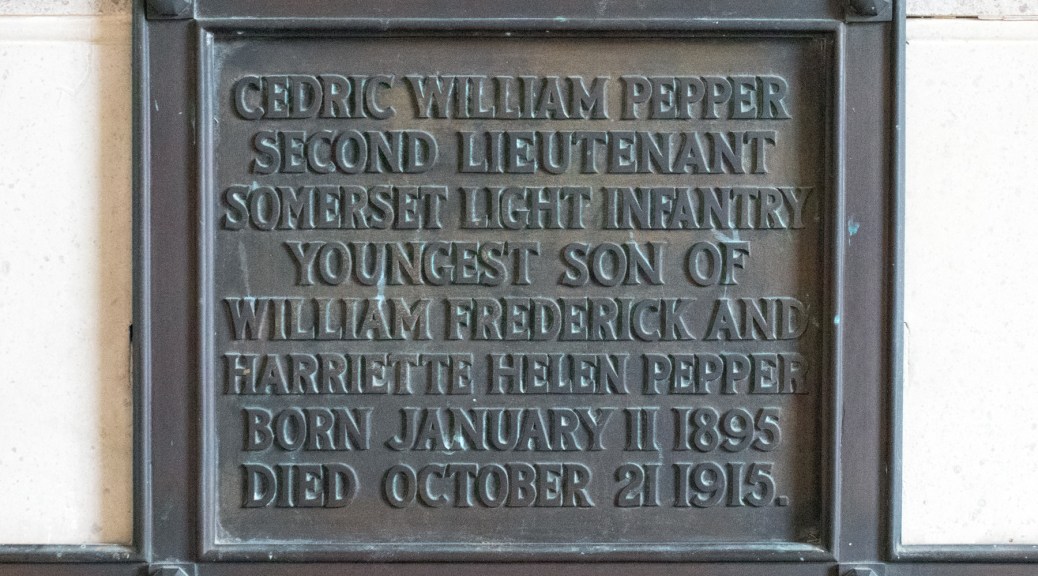
Cedric William Pepper was born in 1895 in South Kirkby, Yorkshire. He was the middle of three children to William and Harriette Pepper. William was a colliery owner from Leeds, and the family lived in some comfort in Rawdon Hill in Wharfdale. The 1901 census records show that they employed a governess, cook, two housemaids, a kitchen maid and a page.
By the time of the next census, in 1911, the Pepper family had moved to Shipton in Oxfordshire, where they lived in the 27-room Shipton Court. Cedric, by this time, was still studying, having been taught at Winchester College, where he lasted only a year, Tonbridge School, and then Worcester College in Oxford.
When war broke out, he had taken time away from his studies, and was working on a ranch in Rhodesia (present-day Zimbabwe). He returned to Britain at the start of the conflict and enlisted in the King’s Royal Rifle Corps. Assigned to the 2nd Battalion, Private Pepper arrived in France in November 1914, and was wounded in his thigh the summer of 1915.
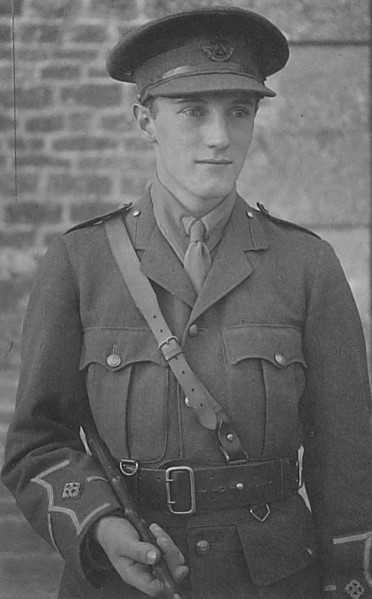
Private Pepper returned to Britain to recuperate and, when he had recovered, he was given a commission in the 3rd Battalion of the Somerset Light Infantry. It was while he was training in Oxfordshire that the now Second Lieutenant Pepper met his end.
The evidence at the inquest… suggested that the death from a bullet wound… was accidental.
Second-Lieutenant William Eric Warburton… stated that early last week Lieutenant Pepper told him he was in some difficulty with a woman, but he did not explain it. Lieutenant Warburton did not think that this caused him to take his life. In his opinion Lieutenant Pepper knew nothing of the working of an automatic pistol he possessed.
The medical evidence was that a bullet entered the centre of the forehead. The doctor said that if the wound was self-inflicted it was quite possible that it was accidental.
The jury returned a verdict of Death from a bullet from an automatic pistol, but that there was no evidence to show how the wound was inflicted.
Central Somerset Gazette: Friday 29th October 1915
Second Lieutenant Pepper died from the bullet wound on 21st October 1915. He was just 20 years of age.
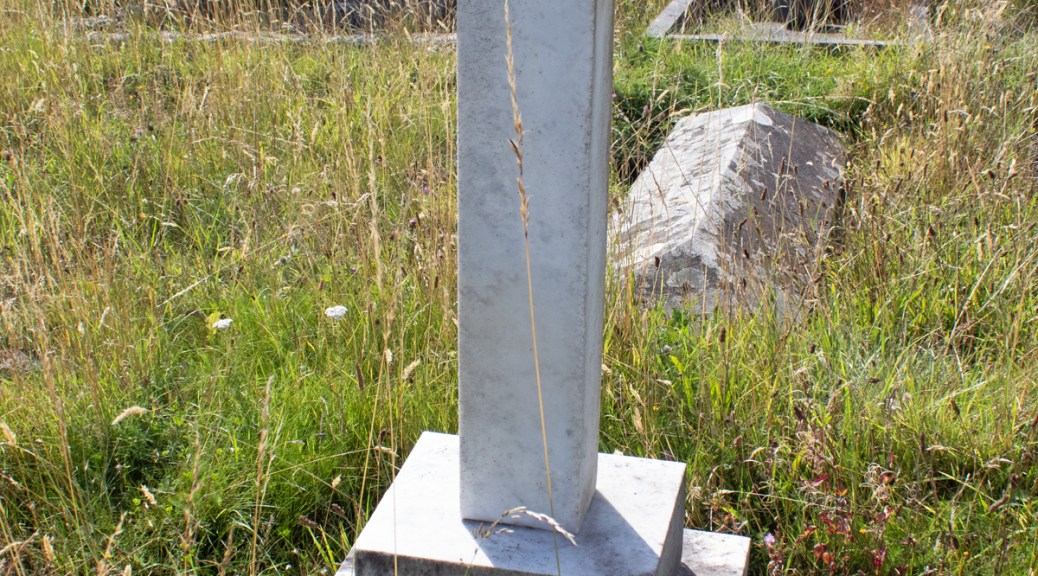
Pepper Family Memorial
Cedric William Pepper’s family were, by this time, living in Redlynch House, near Bruton, Somerset. He was cremated, and his ashes immured in the wall of St Peter’s Church in the hamlet.
Second Lieutenant Cedric Pepper (from findagrave.com)
In researching Cedric’s life, there is a definite sense of a young man desperately looking to please his father. A successful Yorkshire colliery owner, he may have expected more from his oldest son, a drop out from Winchester College, possibly sent to Southern Africa to find himself. While an immediate return to Britain to serve his country would have been commonplace, the suggestion of difficulty with a woman and the subsequent accident with his gun just adds to the sense of a need for Cedric to not disappoint his father.
Fred Radford Meatyard was born in Penselwood, Somerset, in September 1882. The son of Henry and Ellen Meatyard, they seem to have been distant in his life. Fred was raised by his paternal grandparents, Henry and Caroline, in nearby Wincanton.
Fred was an intelligent young man. The 1901 census found him boarding with printer and stationer Walter Eaglestone and his family, on Erith High Street, in Kent. He was working as a compositor himself, pulling the type together for his boss to print. This appeared to be a springboard for him, and he soon moved to Oxford finding similar work there.
In 1907 Fred briefly returned to Penselwood, where he married Lily Extence in the parish church. The marriage certificate showed that Fred was living in William Street, Oxford, and was still employed as a compositor, working for the local newspaper, the Oxford Chronicle. His father, Henry, is listed as deceased, and as having been employed as an engineer. Lily was the same age as her new husband, and was the daughter of labourer Francis Extence.
The couple moved back to Oxford, and went on to have three children: Linda (born in 1908), Joan (born 1913) and Frances (born in 1915). The 1911 census record found them living in an end of terrace house in Boulter Street, the River Cherwell flowing past the bottom of their cul-de-sac. Theirs was a five-room house, and they had a boarder, Mancunian William Murphy, who was employed as a vocalist and guitarist.
When war came to Europe, Fred stepped up to play his part. He enlisted on 30th August 1916, but was not formally mobilised into the Royal Field Artillery until the following January. Gunner Meatyard’s service records show that he was a wiry man, 5ft 10ins (1.78m) tall, and weighing 126lbs (57.2kg).
In June 1917, Fred was transferred across to the Royal Garrison Artillery, and was sent to France. Aside from a couple of periods of leave, he remained overseas until the end of the war, and was attached to a couple of the regiment’s Siege Batteries.
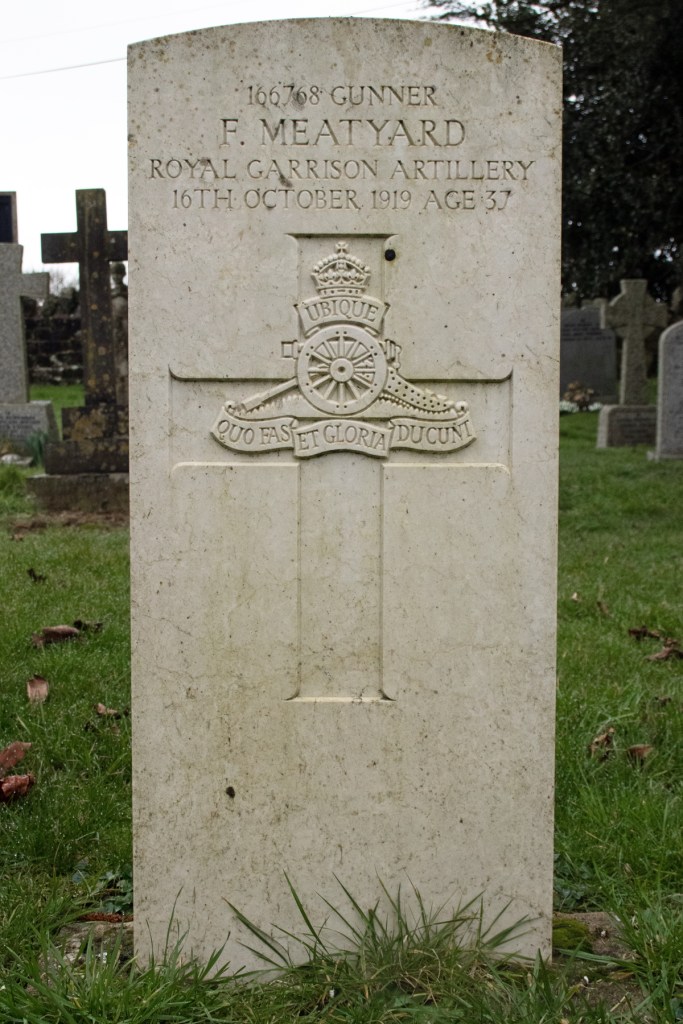
When hostilities ceased, Gunner Meatyard finally returned to Britain in the summer of 1919. Based on Salisbury Plain, Wiltshire, while waiting to be demobbed, he fell ill, and was admitted to the Fovant Military Hospital. He was suffering from acute appendicitis, and the condition came on so quickly, that any treatment did not come soon enough. Fred passed away at the hospital on 16th October 1919, at the age of 37 years of age.
Fred Radford Meatyard was brought back to Somerset for burial. He was laid to rest in the quiet graveyard of St Michael’s Church in Penselwood. The newspaper for which he had worked for so long noted that “he was buried with full military honours… Deceased was on the printing staff of the ‘Oxford Chronicle’ for some years… He was a member of the St John’s Ambulance Brigade. Some time ago he returned from the Rhine, having previously fought in France. Much sympathy is felt with the widow and three children, two of whom, it will be remembered, took a prominent part as dancers in the pagent.” [Oxford Chronicle and Reading Gazette: Friday 24th October 1919]
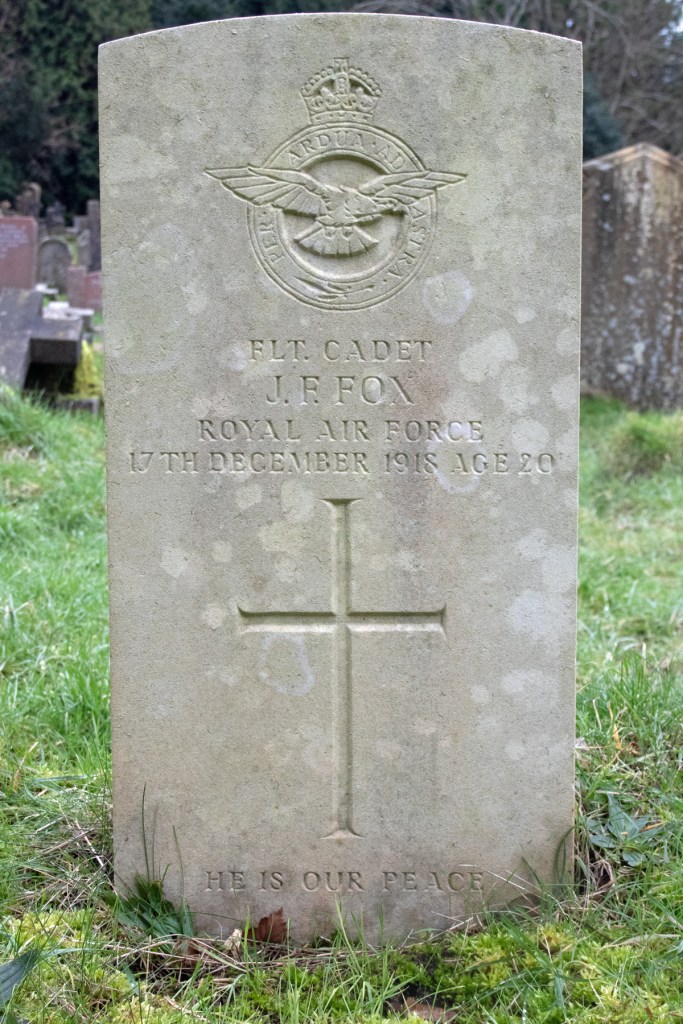
John Francis Fox was born early in 1898 in the village of Alkerton, Oxfordshire. One of eight children, he was the only son to miller-turned-butcher George Fox, and his wife, Ann. The family remained in Oxfordshire until at least the outbreak of war, when George and Ann appeared to have moved to Somerset.
When John left school, he took up an apprenticeship at Stothert & Pitt’s engineering works in Bath and in May 1918, with the First World War entering its last few bloody months, he was finally old enough to enlist. He joined the Royal Air Force as a Flight Cadet and was based at the 13th Training Depot Station near Market Drayton, Shropshire.
On 21st December 1918, Flight Cadet Fox was undertaking his first solo flight, on board an Avro 504K. His aircraft collided with another, which was piloted by a Captain Edgar Beamer. Both were killed in the accident: John was just 20 years of age.
An inquest into the crash, which also involved a third man, Captain Harrison, who was a passenger in Beamer’s plane, returned verdicts of accidental death.
John Francis Fox’s body was brought back to Somerset for burial. He was laid to rest in the graveyard of St Mary the Virgin’s Church, Bath.
James Toms was born in Tintagel, Cornwall, early in 1886, and was the youngest of seven children to Lavinia Toms. Lavinia’s husband, quarry worker John Toms had passed away a few years before, and she had moved her young family in with her mother, Mary Emmett, by the time James was born.
James found work in the local slate quarry when he left school and, by the time of the 1911 census, he was living with his mother and two of his siblings in the town.
When war came to Europe, James stepped forward to play his part. While his service records are no longer available, other documents confirm that he enlisted in the Duke of Cornwall’s Light Infantry, and was on the Western Front by October 1915.
At some point, Private Toms transferred to the Royal Defence Corps: as this regiment was not created until March 1916, his move could obviously not have been before this point in the conflict. He was based back on home soil, and, by the end of the war, he was serving in Oxfordshire.
In the closing weeks of the war, Private Toms was admitted to the 3rd Southern General Hospital in Oxford, having contracted pneumonia. The condition was to get the better of him and, he passed away on 6th November 1918. He was 33 years of age.
Brought back to Cornwall for burial, James Toms was laid to rest in the quiet and picturesque graveyard of St Materiana’s Church. His epitaph reads: Home at last thy labour done, safe and blest the victory won.
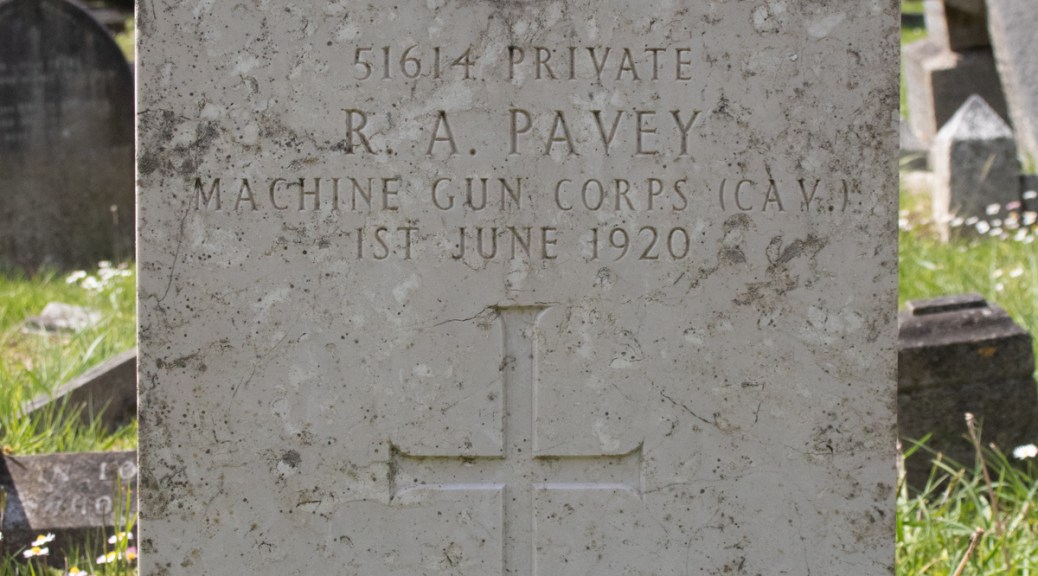
Roland Adams Pavey was born in the summer of 1891, the youngest of three children to Anthony Pavey and his wife, Mary. Anthony was a painter, and both he and his wife were born in the Somerset town of Cheddar. Their life took them travelling, though, with their first child, Edward being born in Cheddar, while their middle child, Ada, was born in Oxford, and Roland born in Bath .
Anthony passed away in 1910, leaving Roland living with his widowed mother, earning a living as a draper’s clerk. War was coming, however, and new opportunities lie in store.
Roland enlisted in the army in January 1915. Initially joining the North Somerset Yeomanry, he soon transferred across to the Cavalry Division of the Machine Gun Corps. Sadly, Private Pavey’s military records are lost to time, but he definitely saw action on the Western Front, gaining the Victory and British Medals and the 1915 Star for his efforts.
The next record for Roland comes in the form of a newspaper article from South Wales.
SAD CASE OF NANTYGLO GIRL
Behind the untimely death of Mr Roland A Pavey, a popular young ex-Service man, and secretary of the Weston-super-Mare Federation of Discharged Soldiers and Sailors, lies a pathetic story of the double bereavement of a pretty Welsh girl, Miss Dorothy Morgan of Nantyglo.
Prior to the war, Miss Morgan was engaged to a compatriot of her own, who answered his country’s call and, like so many thousands of others, made the great sacrifice. Time rolled on and the old wound was eventually healed. Then Miss Morgan went on a visit to Weston last year, and there met young Roland Pavey, just demobilised from the Army.
A mutual attraction soon ripened into affection, and the couple became engaged, and they were to have been married towards the end of the present month, but Fate intervened.
Pavey’s long war service impaired his constitution, though how seriously was probably not realised until the damage was done. Returning from a Whitsuntide visit to Exeter, Mr Pavey was so ill that he was compelled to take to his bed. He rapidly became worse, and though his fiancée was hurriedly summoned, he passed away before she arrived at Weston.
Thus, within a short time, Miss Morgan has been twice bereaved as a result of the war.
Merthyr Express: Saturday 12th June 1920
Roland Adams Pavey was just 29 years old when he died. He was laid to rest in the Milton Cemetery in Weston-super-Mare, where his mother then lived.
Sadly, Dorothy Morgan is too common a name in South Wales to confirm much more information on her life. We are unlikely ever to discover if she ever found a lasting love.
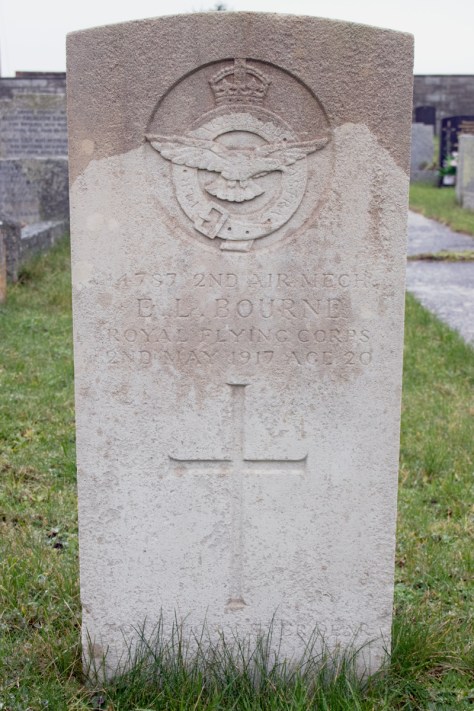
Eustace Lionel Bourne was born in 1897, one of six children to Robert and Eve, from Westonzoyland, Somerset. Robert was a wheelwright and carpenter and, after leaving school, Eustace followed in a similar vein, becoming an apprentice to an ironmonger.
When war broke out, Eustace’s interest in engineering led him to join the Royal Flying Corps, where he was appointed as an Air Mechanic. His enlistment papers – dated November 1915 – give his trade or calling as “motor cyclist”, so it is obviously a passion that he had.
Air Mechanic Bourne was assigned to Milton Airfield near Abingdon, Oxfordshire and it was there that he served for nearly eighteen months. He seems to have enjoyed his time off as much as his time working, and boating on the Thames nearby was a hobby. Sadly, it was also to be his undoing.
On 2nd May 1917, he was out on the river at Culham Reach; the local newspaper account picked up the story.
Accidentally drowned was the verdict returned at the inquest last Saturday on Eustace Lionel Bourne, 21 [sic], attached to the mechanical department of the RFC, stationed at Milton.
It appeared that while sculling with a colleague in Culham Reach on May 2nd, he lost a scull. His companion, who had dropped a rudder-line, was turning round at the time. Deceased, in leaning over to pick up the scull, fell into the river and disappeared. It was twilight at the time, and a search was unavailing.
The other man, who could neither swim nor scull, was left in the boat, which was half filled with water.
The body was discovered on Friday morning near Sutton Weirs.
Reading Mercury: Saturday 19th May 1917
Eustace Lionel Bourne was just 20 years old when he drowned. He lies at rest in the cemetery of Westonzoyland, his home village.