Category Archives: Wales

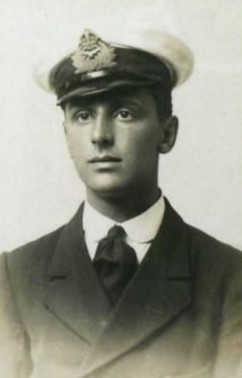
Flight Lieutenant Richard Bush

Flight Lieutenant Richard Bush

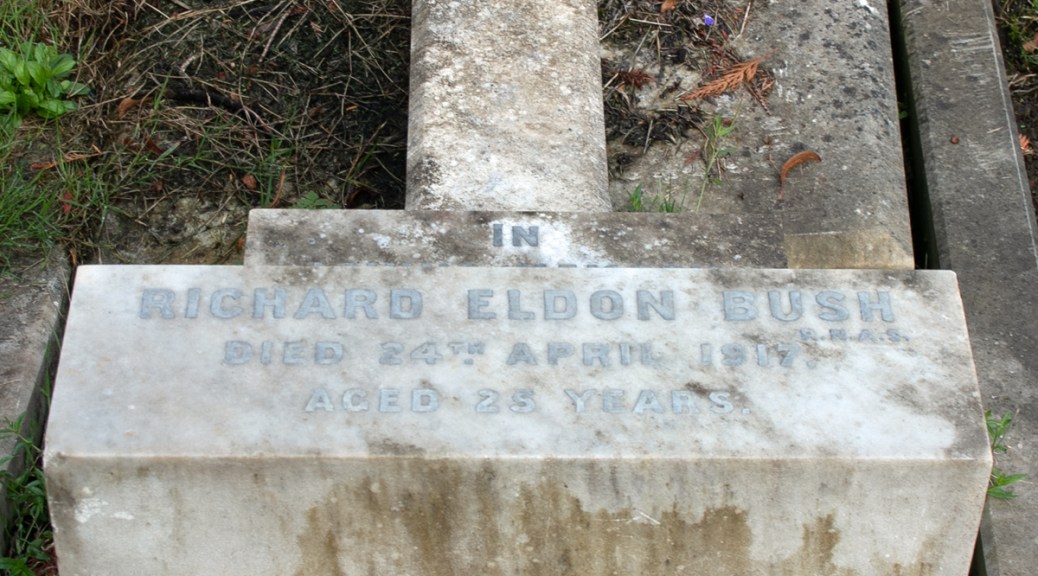
Richard Eldon Bush was born on 16th June 1891 in Keynsham, Somerset. The second of four children (all of whom were boys), his parents were Philip and Maria Bush. Philip was a solicitor, and with that status came opportunity for his children.

The 1911 census recorded the Bush family living in Keynsham with two servants – cook Clara Jones and parlour maid Laura Day. The two older boys – Richard and his older brother, Whittington, were both listed as Cambridge undergraduates, while his two young brothers were boarding at a private school in Repton, Yorkshire.

Richard had aspirations for a good life. In March 1914, he set sail for a life in Canada, looking to take up architecture in the colony. His time overseas wasn’t to be long, though, and, when war broke out in Europe, he returned home.

Full details of Richard’s military service are not available, but he joined the Royal Naval Air Service and, on 20th August 1915, he gained his wings. Richard rose to the rank of Flight Lieutenant, but tragedy was ahead.

On 24th April 1917, he was piloting a scout seaplane around the harbour in Fishguard, Pembrokeshire.

[He] failed to clear some overhead wires, and the seaplane swerved against the cliff with considerable violence, smashing the machine, which the petrol set alight, and crashed to the earth. When liberated from the blazing machine Lieutenant Bush rolled and extinguished his burning clothes.

Somerset Guardian and Radstock Observer: Friday 27th April 1917

Sadly, Flight Lieutenant Bush’s injuries proved too severe. He passed away a couple of days later, on 24th April 1917, at the age of 25 years old.

Brought back to Somerset for burial, Richard Eldon Bush was laid to rest in the cemetery of his home town, Keynsham.


Flight Lieutenant Richard Bush
(from astreetnearyou.org)

The same newspaper report noted that Richard’s brother Graham was an officer in the Royal Flying Corps. He had also been badly injured in a flying accident, but was, according to the report, “flying again now.


Private Owen Owen

Private Owen Owen

Owen Jonah Owen was born in 1880, the oldest of eleven children to Jonah and Elizabeth Owen. Jonah was a quarryman at one of the slate mines around Llanberis, Gwynedd, and this is where the family were raised.

Owen followed his father into the slate quarries and, on 26th September 1903, he married Ann Jones, the daughter of another quarry worker. The couple went on to have four children: Richard, Jonah, Delia and Gwyneth.

He was well known and respected in the village, had a passion for singing and “had conducted singing festivals held by the Congregationalists of the district.” [Caernarvon & Denbigh Herald: Friday 24th November 1916]

War was closing in on Europe, and Owen was keen to play his part. Sadly his service records have been lost over time, but it is clear that he had enlisted in the army by May 1916. Private Owen joined the Royal Welch Fusiliers, and was assigned to the 14th Battalion.

Part of the 38th Division, the battalion was to be caught up in some of the fiercest and most desperate fighting of the First World War. In July 1916, Owen would have been entrenched at The Somme and, after the first few horrific days, his battalion was one of those involved in the fighting at Mametz Wood.

Private Owen was badly wounded during the battle and medically evacuated to Britain for treatment. Admitted to a military hospital in Birmingham, he was to remain there for a number of months until, on 12th November 1916, his body finally succumbed to his injuries. He was 36 years of age.

Owen Jonah Owen was brought back to his home village for burial. He was laid to rest in the graveyard of St Peris Church in Llanberis.


Private Hugh Jones

Private Hugh Jones

Hugh Henry Jones was born in around 1876 in the Welsh village of Llanberis, Gwynedd. He was one of seven children to quarryman John Jones and his wife Mary.

Slate was the big industry in Snowdonia, and Hugh and his brothers all followed his father into the quarries. Labour was plentiful and wages would not have been high, so when the opportunity arose for employment overseas, he seems to have taken it.

Exact details are sketchy, but Hugh emigrated to Australia at some point in the early 1900s. He settled in the city of Goulburn, New South Wales and the experience he had built up back home stood him good stead, as he continued working as a quarryman.

When war broke out in Europe, those in the British colonies were called upon to play their part, and Hugh was among those to serve King and Country. He enlisted on 29th December 1915, joining the 55th Battalion of the Australian Infantry.

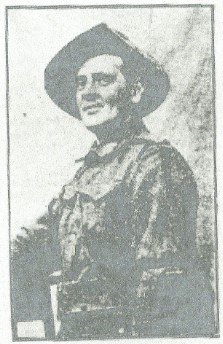
Private Jones’ service records show that he was 40 years and six months old, stood 5ft 4ins (1.63m) tall and weighed 130lbs (59kg). He had a dark complexion, blue eyes and black hair. He also appears to have had a denture in his lower jaw.

After initial training, Private Jones set off for Europe at the end of September 1916, arriving in Plymouth six weeks later. Within a matter of weeks he was on the move again, sailing for France, and arriving at Etaples at the start of 1917.

Private Jones was ensconced on the Western Front for the next few months but, as spring came, he was starting to have some health issues. In April he was admitted to a field hospital suffering from dyspepsia (indigestion), which was subsequently diagnosed as gastritis.

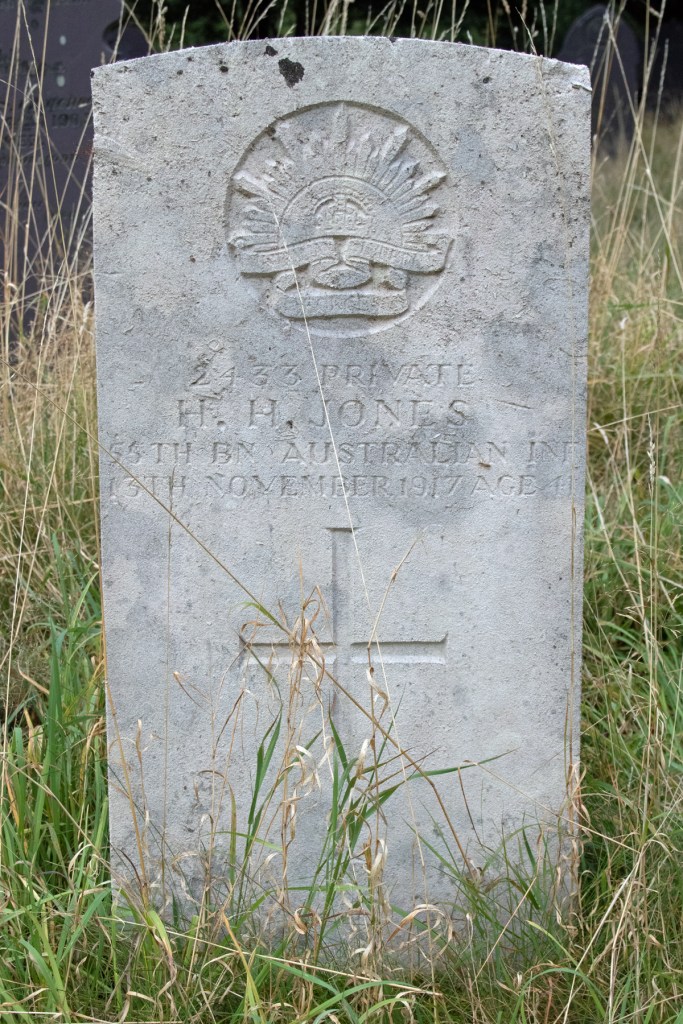
Medically evacuated to Britain for treatment, Hugh spent the next few months being treated in hospitals in Kent, and Dorset, before being admitted to the Royal Infirmary in Liverpool. Sadly, by this point, his condition had been identified as stomach cancer and, while in Liverpool, he passed away. Private Jones breathed his last on 13th November 1917, at the age of 41 years old.

Hugh Henry Jones was brought back to Wales for burial. He was laid to rest in the graveyard of St Peris Church in his home village of Llanberis.


Private Hugh Jones
(from findagrave.com)

Private William Rowlands

Private William Rowlands

William Pierce Rowlands was born the summer of 1891 and was the oldest of three children to Thomas and Ellen Rowlands. Thomas was a slate dresser and quarryman from North Wales, and William was born in Ffestiniog, Gwynedd. By the time his sister Margaret was born, the young family had moved to Llanberis, settling in a small cottage on the outskirts of the village.

When he left school, William found work as a clerk, and this was the work he was carrying out when was broke out. He enlisted on 10th April 1915, joining the 14th (Service) Battalion of the Royal Welch Fusiliers. His service records show that he was 5ft 8ins (1.73m) tall.

Private Rowlands served on home soil for just over seven months, before being sent to France on 30th November 1915. He had been suffering from a cough for a couple of weeks, and this came to a head while he was overseas. He reported sick on 16th December, and was sent back to Britain for treatment a month later.

His condition was identified as pulmonary tuberculosis, aggravated by military service. Private Rowlands was medically discharged from the army on 8th February 1916, and returned home.

At this point, William’s trail goes cold. His condition appears to have worsened, however, and it was from tuberculosis that he was to die. He passed away at home on 18th February 1917, at the age of 25 years old.

William Pierce Rowlands was laid to rest in the quiet graveyard of St Peris Church, in the family home village of Llanberis.


Thomas and Ellen lived until 1932, when the passed away within a couple of months of each other (Thomas in August, Ellen in November). They were reunited with the son, and lie together in the family grave, along with Ellen’s brother, also called William, who had passed away in 1930.


Private Griffith Hughes

Private Griffith Hughes

Griffith Hughes was born in Llanberis, in modern day Gwynedd, in 1893. Sadly, there is little information about his early life, and records mention his mother – Margaret – but no father. The 1901 census records Griffith as living with his grandmother, Ann Hughes.

Ten year later, the two are living in a two-up, two-down cottage – 19 Snowdon Street, Llanberis – with Griffith’s aunt, Ann’s daughter Jane, and her husband, Thomas. Griffith is earning money by now, working as a slate dresser at one of the local quarries.

War was coming to Europe by this point, and Griffith was called upon to play his part. He initially enlisted in the Welch Regiment as a Private, although he seems to have transferred across to the South Wales Borderers during his service.

Private Hughes’ time in the army was spent on home soil, although he earned the Victory and British Medals for his service. He remained in the army through to the end of the war and beyond until, on 15th August 1919, he was medically discharged. He had developed tachycardia, and this was having an impact on his life.

When Griffith left the army, he was based in Lancashire, and was living in the village of Bryn, to the south of Wigan. He remained in the area for the next year, his health sadly deteriorating. Admitted to the cottage hospital in nearby Pemberton, he passed away from his heart condition on 18th September 1920. He was just 27 years old.

Griffith Hughes was brought back to Wales for burial. He was laid to rest in the quiet graveyard of St Peris Church, in his home village of Llanberis.


Driver Griffith Williams

Driver Griffith Williams

Griffith Owen Williams was born the autumn of 1876 in Llanberis, Gwynedd. One of nine children, his parents were blacksmith William Williams and his wife, Alice.

Little information remains about Griffith’s teenage years. The 1891 census record that, at 14 years old, he was a scholar, but the next document that can be attributed to him comes fourteen years later.

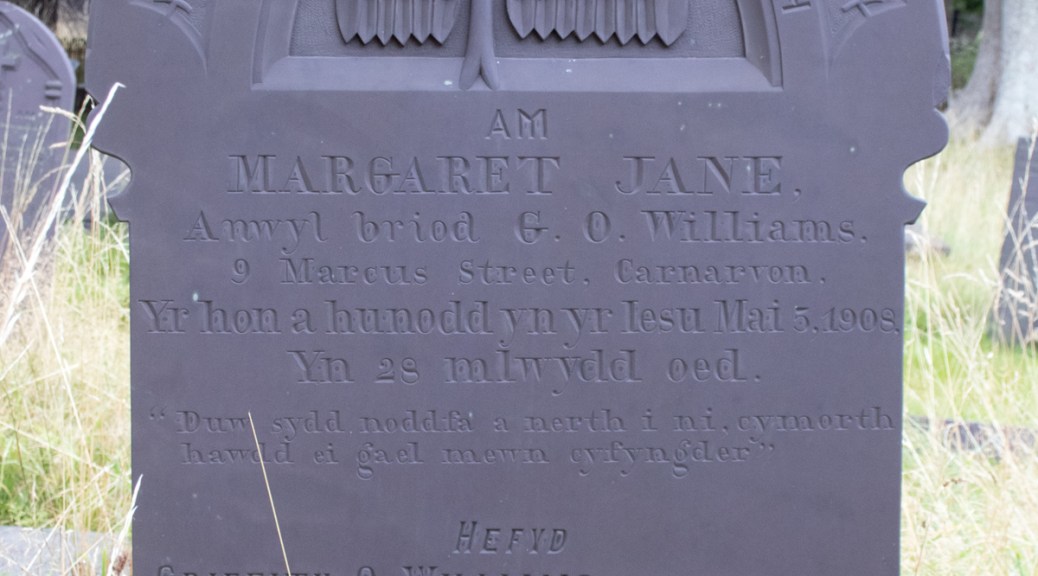
At this point, on 7th March 1905, he married Margaret Jane Williams at the parish church in Llanberis. Margaret was 24 years old, and the daughter of a quarryman: Griffith gave his profession as Post Office official, and he was living in Caernarfon, eight miles away, on the Menai Strait.

The young couple went on to have a daughter, Maggie, in January 1906. Sadly, Margaret died on 5th May 1908, when she was just 27 years of age. While the young family had been living in Caernarfon, she was laid to rest in the graveyard of St Peris Church in Llanberis.

At this point, Griffith’s trail goes cold once more. When war broke out, he enlisted in the Royal Field Artillery, and was assigned as a Driver in the 248th (Howitzer) Brigade. By April 1915, Griffith found himself on the Western Front and, by the next spring he was fighting at the Somme.

During the winter of 1916/17, Driver Williams fell ill. He contracted bronchial pneumonia, and was medically evacuated to Britain to recuperate. Sadly, the condition was to prove too much for his body to take. He passed away on 23rd February 1917, at the age of 46 years old.

Griffith Owen Williams’ was laid to rest with his late wife in St Peris Churchyard, in their home village of Llanberis.


Rifleman Joseph Collins

Rifleman Joseph Collins

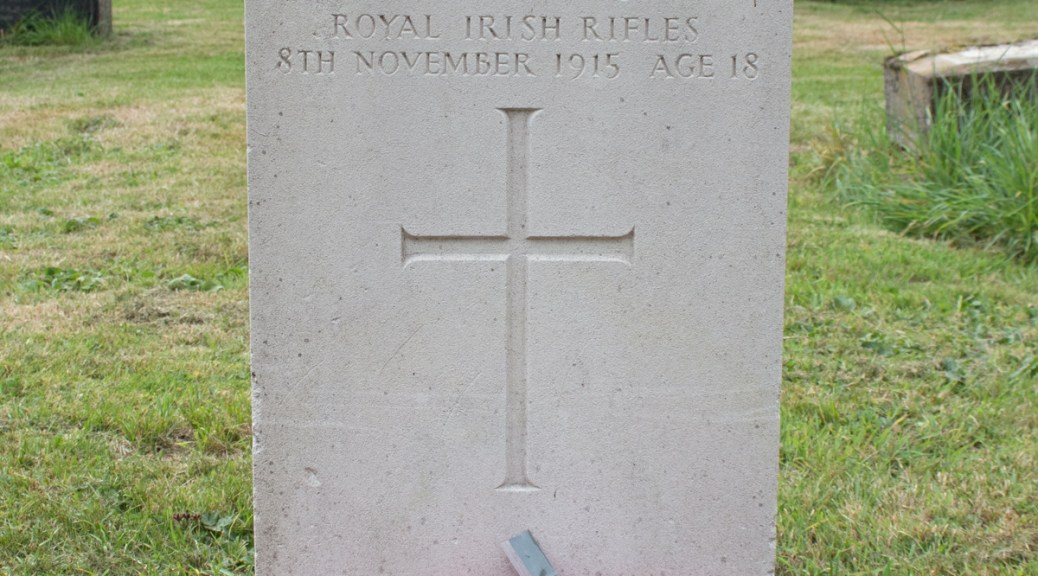
Much of Joseph Collins’ life is destined to remain a mystery. He was born in Northern Ireland on 8th November 1897, and was the son of William and Minnie Collins, who lived near Lurgan, in Armargh.

When war broke out, Joseph enlisted, joining the 16th (Service) Battalion – the 2nd County Down Pioneers – of the Royal Irish Rifles. Formed in Lurgan, the regiment moved from Northern Ireland to Seaford in East Sussex in July 1915. By that October, Rifleman Collins found himself on the Front Line in Northern France.

Joseph was invalided on 26th October, and medically evacuated to Britain for treatment. Admitted to the Brynkinalt Hospital in Chirk, Denbighshire, he was operated on, but this was to prove insufficient, and he passed away from his injuries on 8th November 1915 – his eighteenth birthday.

Rifleman Collins was well thought of in his regiment, as the comments in the Lurgan Mail [Saturday 20th November 1915] confirmed. Captain HF Sheppard, who commanded Joseph’s Company, noted “I need hardly say I was shocked, as I thought when he left us that the operation necessary for his complaint was certain to prove successful. I had always been attracted by his cheerful temperament, and I was always keenly interested in him as he was one of the first to join my Company.

Lieutenant E Somerfield noted that Joseph “was a great favourite with the rest of his platoon, and a boy I had great regard for. I can assure you we all feel his loss very keenly.

The most touching comments, however, come from one of Joseph’s colleagues, Rifleman R McKeown: “I am sending you these few lines to let you know I got a letter today which Joe wrote before he died. The nurse found it in his locker and sent it on to me I am sending you a copy of it and the nurse’s letter. I was never so badly struck in my life as when I heard of his death, for his could not have grieved me more has it been my own brother. The day he went away I never got bidding him good-bye, for the morning he went on the sick list I was on parade, and when I came in he was away. The boys in the platoon and company he was in were all greatly grieved at hearing about his death. You have my sincerest sympathy in your trouble. I don’t know how I am ever going to go home – if I ever do – without him. He was like a brother to me.

Unable to bring their son back to Ireland, William and Minnie had to be content with the fact that their son was given a military funeral in the town where he died. Joseph Collins was laid to rest in the graveyard of St Mary’s Church in Chirk.


Sapper James Tod

Sapper James Tod

James Tod was born in the spring of 1891 in Chirk, Denbighshire, and was one of nine children. His parents were builder John Tod, who was from Scotland, and Margaret Tod, who had been born in Llangollen.

John passed away when James was in his teens and, when he left school, James found work as a joiner to help support his mother financially.

When war came to Europe, James was called upon to play his part. Full details of his military service are not available, but he had enlisted by the beginning of 1917. James joined the Royal Engineers as a Sapper, and was assigned to the London Electrical Engineers.

It is unclear whether Sapper Tod served overseas, but he certainly would have been based in the London area, carrying out repair works as needed. The London Electrical Engineers were also pioneers in the use of searchlights to spot enemy aircraft and Zeppelins raiding the capital. A detachment was also sent to France to position and man searchlights on the Western Front, although, again, it is not clear whether James was one of those involved.

It is clear that James was back in Wales at the start of 1917, however, as, on 18th January, he married his sweetheart, Emily Mary Edwards, at the parish church in his home town. Emily was the daughter of a gamekeeper from nearby Pontfadog, but it was in Chirk that the coupler were to make their home.

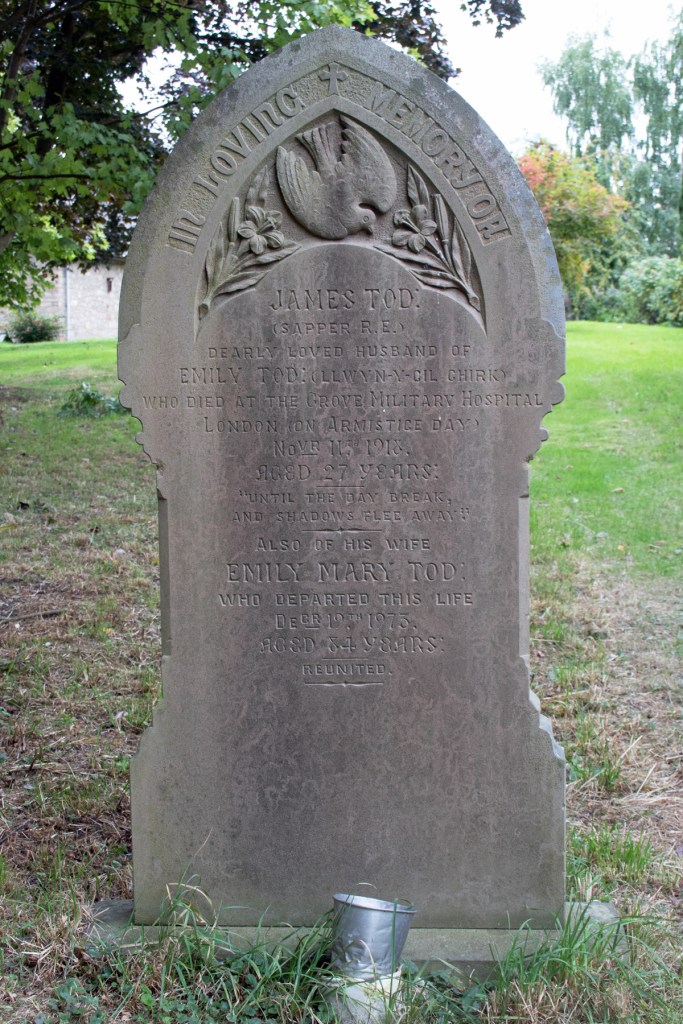
Sapper Tod was soon back on duty, however, and the next evidence available for him is that of his admission to the Grove Military Hospital in Tooting, South London. He had contracted a combination of influenza and pneumonia, and these lung conditions were sadly to get the better of him: he passed away on Armistice Day, the 11th November 1918. He was just 27 years of age.

James Tod was brought back to Wales for burial. He was laid to rest in the family plot in the graveyard of St Mary’s Church in the town.


It seems that James had been in some debt when he passed, as some of his war pension was held over to cover those costs.

Tragically, Emily was five months pregnant when James died. She gave birth to a son, who she named after his father, on 9th March 1919.

Emily never remarried, and, by the time of the 1939 Register for England and Wales, was recorded as the Lodgekeeper for Deer Park Lodge, which was attached to Chirk Castle. She passed away on 19th December 1973, at the age of 84 years old. She was laid to rest with her late husband, a couple reunited at last after more than five decades.

James Jr lived a long life, passing away in the spring of 1999, in his eightieth year.


Second Lieutenant Francis Wakeford

Second Lieutenant Francis Wakeford

Francis Reginald Steele Wakeford was born in the summer of 1893 in Penarth, Glamorgan. The middle of five children, his parents were Herbert – who was a master printer – and Mary Wakeford. When he left school, Francis became a stockbroking clerk, but when war broke out, he was quick to ensure he played his part.

Initially enlisting in the Royal Engineers, he was attached to the Glamorgan Yeomanry. By the time he was sent to France, however, he had been assigned to the Lancashire Fusiliers.

After eighteen months of fighting, in the spring of 1918, Second Lieutenant Wakeford transferred to the Royal Air Force and gained his wings. “During six months’ flying he had many encounters with enemy airmen, many of whom he brought down, and was also in several bombing raids over Germany.” [Western Mail: Monday 30th December 1918]

When the Armistice was declared, Francis returned to Wales. He has been suffering from an ongoing illness, and this was to be to what he was to succumb. Second Lieutenant Wakeford passed away in Cardiff on Christmas Day, 25th December 1918. He was just 25 years of age.

Francis Reginald Steele Wakeford was laid to rest in the graveyard of St Augustine’s Church in his home town of Penarth.


Second Lieutenant Wakeford (from findagrave.com)

Francis’ grave also commemorates the passing of his only brother, Charles Herbert Stanley Wakeford.

Four years Francis’ senior, Charles had enlisted in the 24th (Pembroke and Glamorgan Yeomanry) Battalion of the Welch Regiment. As the war moved through its final year, Lieutenant Wakeford found himself caught up in the fierce fighting of the Second Battles of the Somme.

Charles was killed on 7th September 1918, aged 28 years old. He was laid to rest in Tincourt British Cemetery, in Picardie, France. He is also commemorated on the family grave in St Augustine’s Church, Penarth.


Private Charles Tucker

Private Charles Tucker

Charles Wilfred Tucker was born in the summer of 1898 in Penarth, Glamorgan. He was the oldest of four children to Wilfred and Elizabeth Tucker, restaurant owners on Windsor Terrace in the centre of the town.

Little information is available about Charles’ early life. When war broke out, he enlisted in the Welch Regiment, before transferring to the Machine Gun Corps at some point during the conflict. In the autumn of 1919, Private Tucker was put on furlough while waiting to be demobbed, and he returned home.

Sadly, it was while here that Charles contracted pneumonia, and it was from the lung condition that he was to pass away. He breathed his last on 30th October 1919, at the age of just 21 years old.

Charles Wilfred Tucker was laid to rest in the family grave in St Augustine’s Churchyard in his home town of Penarth.