Category Archives: Labour Corps

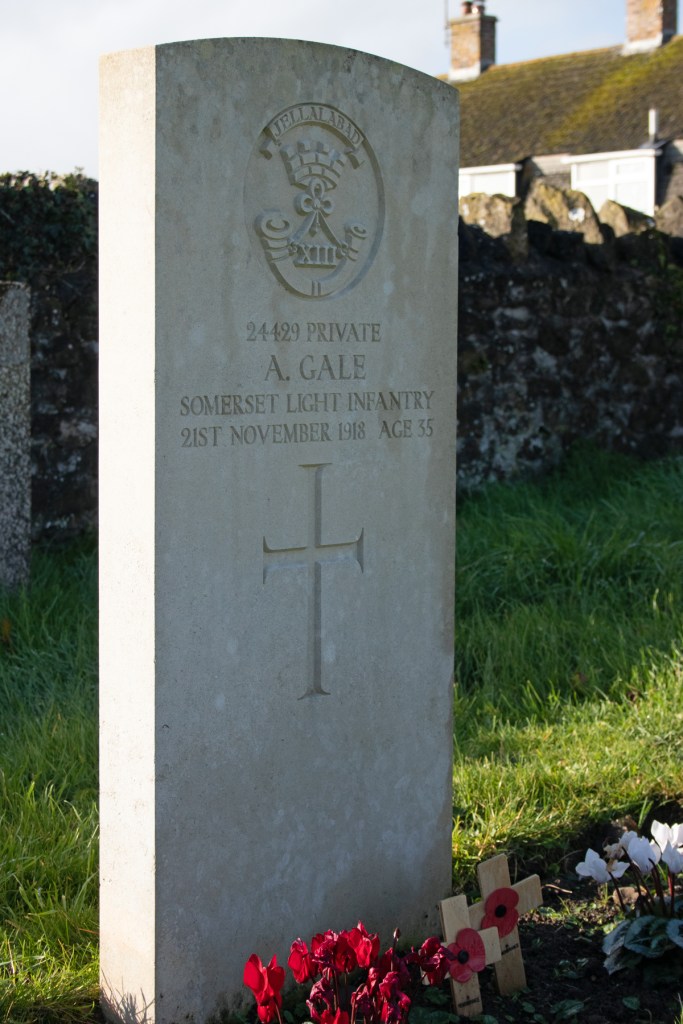
Private Albert Gale

Private Albert Gale

Albert Gale was born in the Devon village of Chudleigh Knighton in October 1883, one of five children to John and Elizabeth Gale. It seems that Elizabeth may have died when Albert was young, as, by the time of the 1901 census, John was married to a Sarah Gale, and the family were living in the village of Hennock.

John was a clay cutter, and this was a trade into which Albert followed his father. Again, as time moves on, things change; the 1911 census found Albert boarding with his sister Sophy and her husband, fellow cutter Thomas Willcocks, back in Chudleigh Knighton.

War was coming to Europe and, in April 1916, Albert enlisted, joining the Somerset Light Infantry as a Private. He would have cut a commanding figure; his enlistment papers show that he stood at 5ft 10ins (1.77m) tall.

Albert served on home soil. While attached to the Somerset Light Infantry, he was assigned to the 661st Agricultural Company of the Labour Corps, working in Kent and Sussex.

During this time, he received hospital treatment on four separate occasions: in August 1916, he was admitted with cellulitis of the arm; in December 1916 and January 1917, he was treated on two separate occasions for scabies. In November 1918, however, he was admitted to the Military Hospital in Chichester, West Sussex, as he was suffering from influenza. Sadly, this last condition was to worsen and, on 21st November 1918, Private Gale died, having subsequently contracted pneumonia. He was 35 years old.

Albert Gale’s body was brought back to Devon for burial. His brother-in-law Thomas had died the previous summer; his story can be found here. Albert was laid to rest in the grave next to his sister’s husband in the churchyard of St Paul’s in Chudleigh Knighton.


With Thomas dead, Sophy had been left a widow. Understandably bitter at what the war had taken from her, when she was asked if she wanted a memorial for her brother, she returned the form with the following statement: “I don’t require the plaque and scroll in memory of my dear brother; a piece of paper won’t keep me.”

Quartermaster Serjeant Percy Macey

Quartermaster Serjeant Percy Macey

Percy George Macey was born in Frome, Somerset, in the autumn of 1889. He was the oldest of six children and the only son to Arthur and Susan Macey. Arthur was a general labourer and domestic gardener from Wiltshire, whose family had moved to Somerset in the 1870s.

When he left school, Percy found work at a local foundry, and, by the time of the 1911 census, was listed as a brass fitter. By this point he had met Winifred Rowe, a labourer’s daughter from Wiltshire, who had found work as a servant to a Frome butcher. The couple married at the start of 1913, and went on to have a son – who they called Arthur, after Percy’s recently deceased father – later that year.

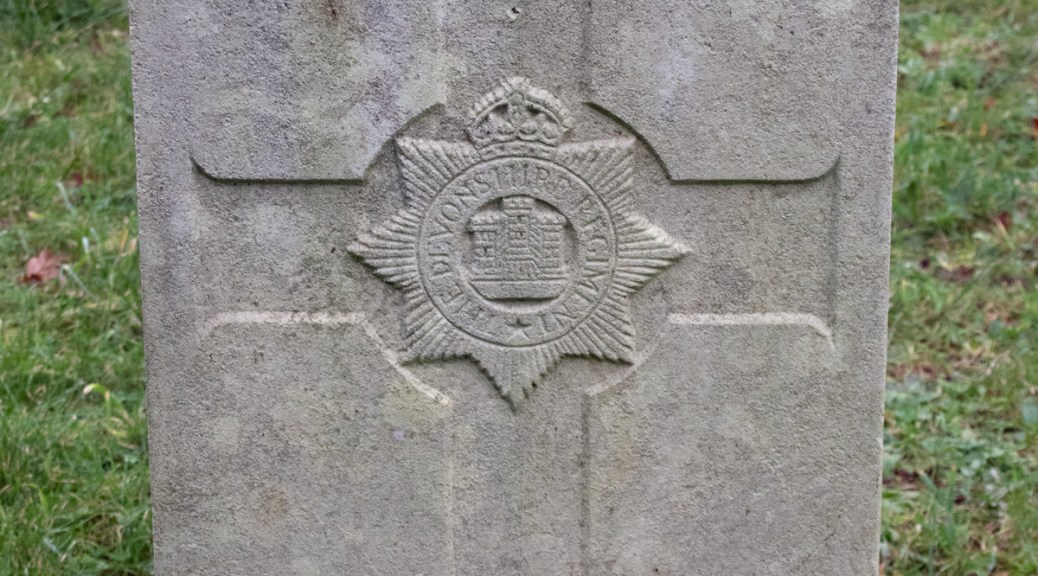
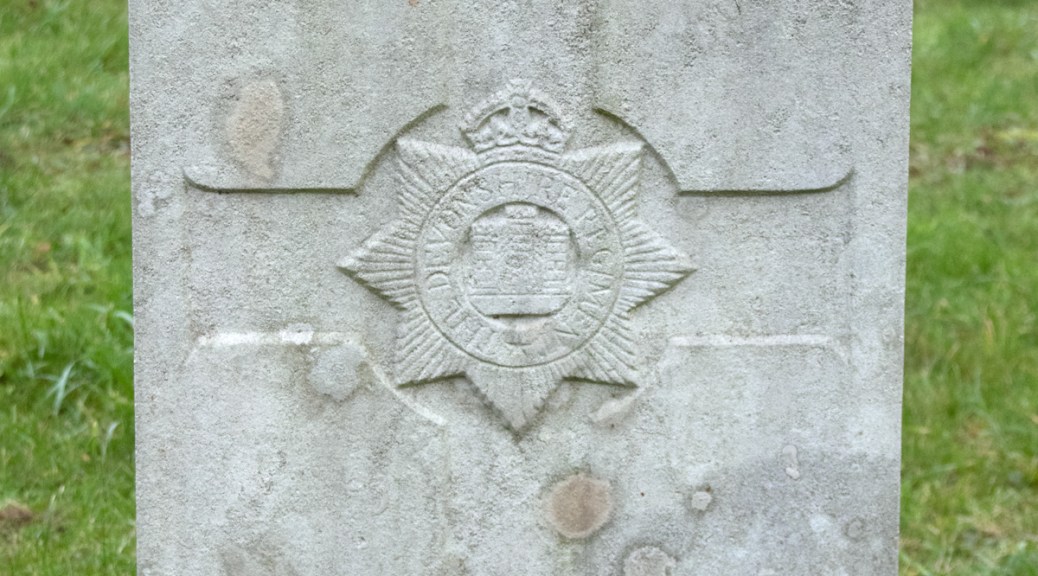
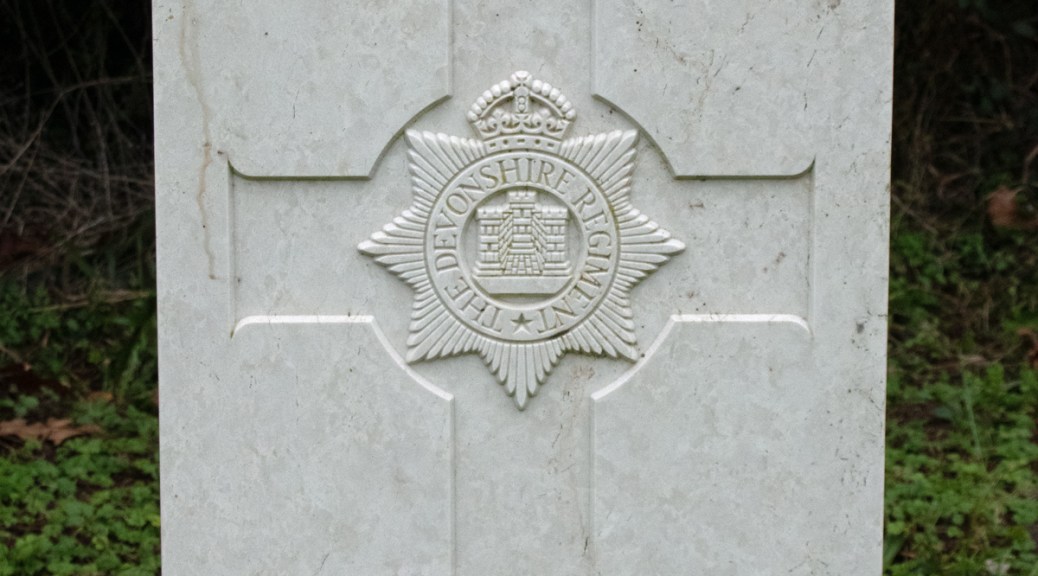
War was coming, and Percy joined the Somerset Light Infantry. Full details of his military service are not available, although at some point during the conflict he was promoted to Serjeant and transferred to the Labour Corps under the Devonshire Regiment. He was awarded the Victory and British Medals, but does not appear to have seen any service overseas.

By the end of the war, Percy had risen to the rank of Quartermaster Serjeant. The end of his life is, however, shrouded in a bit of mystery. He passed away on 15th March 1921 in Cheltenham, Gloucestershire; although no cause for his death is evident, it seems likely to have been from an illness of some sort, as there are no contemporary newspaper reports to suggest anything out of the ordinary. He was just 31 years old.

Percy George Macey was brought back to Frome; he was laid to rest in the Dissenters’ Cemetery in Vallis Road.


Gunner Percy Gast

Rustington

Percy Cyril Edward Gast was born in the West Sussex village of Nutbourne in 1889. His parents were William and Eliza Gast and he was one of sixteen children, seven of whom survived.

William was an agricultural labourer, and farming was the line of work the whole family went into; by the time of the 1911 census, they had moved to Rustington, near Worthing, where Percy was working as a cowman.

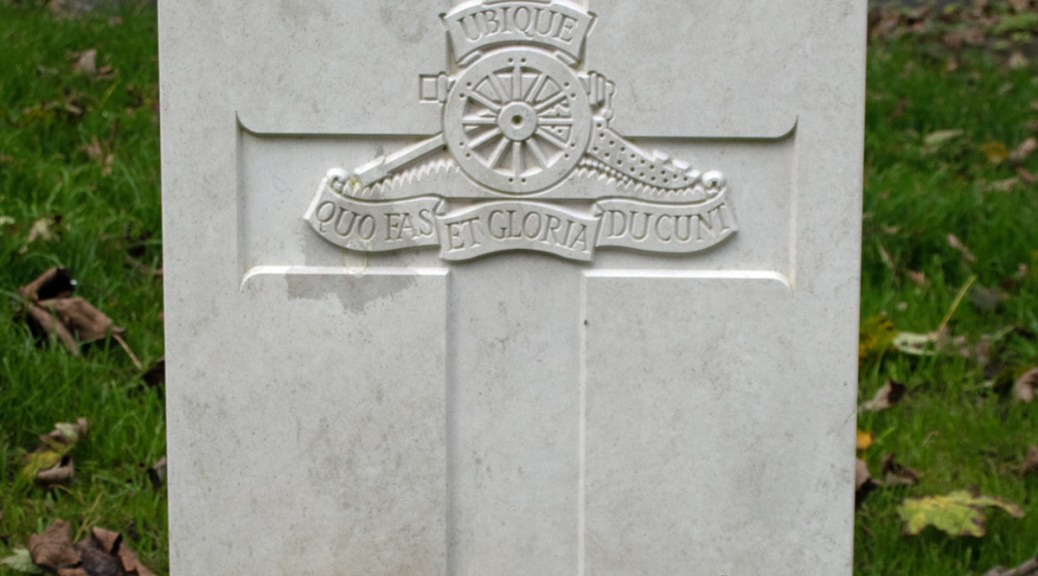
When war broke out, Percy enlisted, joining the Royal Garrison Artillery. His skillset soon identified, he was transferred over to the 696th Agricultural Company of the Labour Corps.

While full details of his time in the army are not readily available, Private Gast served his time on home soil. Towards the end of the war he contracted influenza and pneumonia and was admitted to the Mile End Military Hospital in Newham, East London.

Sadly, the lung conditions were to prove his undoing; Private Gast passed away on 20th November 1918, at the age of just 29 years old.

Percy Cyril Edward Gast’s body was brought back to Rustington for burial. He lies at rest in the graveyard of St Peter and St Paul’s Church in the Sussex village.


Pioneer Charles Churchill

Pioneer Charles Churchill

Charles Churchill was born towards the end of 1883, in the Somerset village of West Chinnock. One of six children, his parents were Isaac Churchill and his wife Elizabeth. Isaac was an agricultural labourer, and the family lived in a cottage on Eastfield Farm, where he worked.

When he left school, Charles also found work on the farm. He knew the owners well and, in 1909, married their servant, Ellen Mary Young, in the parish church. The couple moved in with Ellen’s widowed mother, Harriet, and went on to have two children, Florence, born in 1909, and George, who was born three years later.

By this time war was on the horizon. Full details of his military service are not available, but it appears that Charles initially enlisted in the Royal Berkshire Regiment. He subsequently transferred to the Labour Corps, before being reassigned again to the Royal Engineers.

There are no dates available for the transfers, so it’s impossible to know how quickly they took place. Charles’ record shows that he was awarded the Victory and British Medals while in the Royal Engineers, however, so it is likely that he spent most of his time in this regiment.

The medal record also confirms that Pioneer Churchill did not serve in a theatre of war, so would have spent his time on home soil.

Sadly, this is where information on Charles seems to dry up. He survived the war, but contracted pneumonia late in 1919 and passed away on Christmas Day that year. He was just 36 years of age.

Charles Churchill was laid to rest in the graveyard of St Mary’s Church in his home village of West Chinnock, the place where he and Ellen had been married ten years earlier.


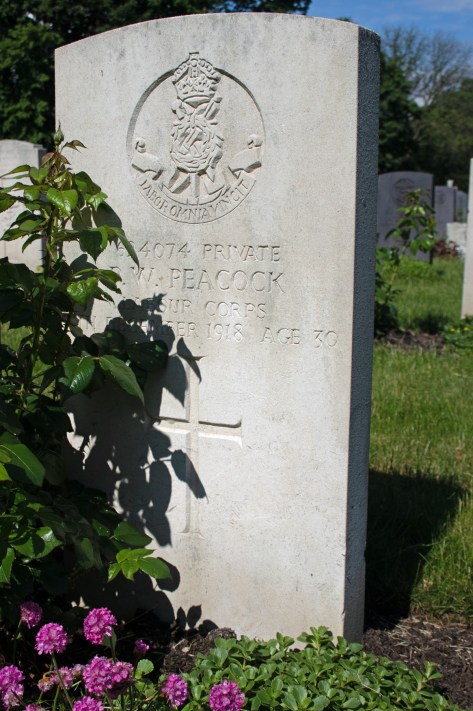
Private Percival Peacock

Private Percival Peacock

Percival William Peacock was born in early 1888, the son of Thomas and Louisa Peacock. Little information survives about Percival’s early life, other than that he was one of two children, and that, like his parents, he had been born in Gillingham, Kent. Thomas was a sexton and gravedigger, but Percival found work as a hairdresser.

The 1911 census shows him as head of the household in a cottage in the village of Stone, near Dartford; he was living there with his cousin James and his family.

On 21st April 1913, now living in Kensal Green, North London, Percival married Clara Milton, a labourer’s daughter from just a few doors up.

War was now imminent, but again there is limited information about Percival’s involvement. He did enlist, joining the Labour Corps as a Private, but this seems to have been later in the war. He appears to have served on home soil, although there is nothing to confirm this either way.

The next concrete evidence for Percival is the Army Register of Soldiers’ Effects. This confirms that he passed away on 5th December 1918 at the Paddington Military Hospital in London. No cause of death is provided, and the beneficiary given is his father, Thomas. Private Peacock was just 30 years old.

Percival William Peacock was laid to rest in the Grange Road Cemetery in Gillingham, Kent. Hs is commemorated in the nearby Woodlands Cemetery.


Tragedy was not far from the Peacocks’ life. Clara’s mother, Bessie, had passed away just a couple of weeks before Percival. Clara herself died on 5th March 1919, three months after her husband.


Private William Osborne

Private William Osborne

William Osborne is sadly one of those names that seems destined to be lost to time.

The starting point for any research is always going to be the gravestone; this is situated in the Woodlands Cemetery in Gillingham, Kent and confirms his service number, rank and regiment and the date of his death.

The service number helps confirm his first name, and that his widow was called Eliza, but without his age and confirmation of when he was married, there are too many potential Williams and Elizas/Elizabeths to confirm a definite identity.

The only thing that can be confirmed, therefore, is that William enlisted in the Middlesex Regiment at some point before April 1918, and subsequently transferred across to the Labour Corps. He passed away on 8th November 1918 at the Second Eastern General Hospital in Brighton, Sussex, having contracted pneumonia.

William Osborne lies at rest in that Gillingham Cemetery, not far from where his widow was living.


Private James Butcher

Private James Butcher

James Butcher was born in the village of Durrington, West Sussex, on 12th April 1880. He was one of seven children to agricultural labourer Henry Butcher and his laundress wife, Sarah. The family were dedicated to the countryside life; by the time of the 1891 census, James was listed as a cowboy, as was his older brother, so at 10 years old, his time would have been spent up on the South Downs, tending a farmer’s bovine herd.

In 1904, James married Eleanor Andrews, the daughter of a publisher’s packer from London. The couple would go on to have six children: William, Thomas, George, Walter, Ernest and Gladys. By the time of the 1911 census, the family were living in Broadwater, to the north of Worthing, and James was listed as a general labourer for the town council.

When war arrived on England’s shores, James was keen to to his bit. He initially joined the Royal Sussex Regiment, although subsequently moved to the Agricultural Company of the Labour Corps. Sadly, Private Butcher’s military service records are no longer available, so it’s impossible to confirm exact dates for his time in the army.

James survived the conflict, but the next record for him is the Army Register of Soldiers’ Effects. This confirms that he was admitted to the Swandean Isolation Hospital on the outskirts of Worthing, and subsequently passed away there. There’s nothing to confirm his cause of death, although, based on the nature of the hospital, it is likely to have been one of the lung conditions prevalent at the close of the war.

James Butcher died on the 22nd March 1919, at the age of 38 years old. He was laid to rest in the Broadwater Cemetery, not far from his home.


James Butcher
James Butcher
(from ancestry.co.uk)

Private Henry Greenfield

Private Henry Greenfield

Henry Gordon Greenfield was born in Worthing, West Sussex, in 1890. The fourth of nine children, his parents were Edmund and Caroline. Edmund was a carter from the town, who raised his family in a small terraced house near the station.

By the early 1900s, Edmund had changed profession, becoming a plasterer, and this was employment that his son followed him into. This seems to have been more lucrative for the family, and they moved to a larger property to the north of the town.

In August 1911, Henry married Edith Tombs. Edith was a gardener’s daughter from London, who had moved to Worthing for work. When the couple married, she was employed as a domestic servant for a solicitor and his wife. The young couple would go on to have three sons.

When war broke out, Henry was quick to enlist. He initially joined the Royal Sussex Regiment, serving his time as part of the 10th Battalion. This was a reserve company, that was based on home soil. When hostilities came to an end, Henry was transferred to the Labour Corps, and was billeted in Belfast.

Little further information about Henry’s service can be confirmed; he was admitted to the Military Hospital in Belfast with pneumonia, but sadly died of the condition on 27th February 1919. He was just 28 years old.

Brought back to Worthing, Henry Gordon Greenfield lies at rest in the Broadwater Cemetery there, not far from his parents and widow.


Henry’s younger brother Frederick also served during the Great War. Joining the Royal West Kent Regiment as a horse driver, he fought on the Western Front. He was killed on 17th August 1917, and is buried at the Duisans Cemetery in northern France. He was just 21 years of age.


Private Fred Vincent

Private Fred Vincent

Fred Vincent was born in Crewkerne, Somerset, in 1889, one of seven children to Charles and Elizabeth Vincent. Charles was a dairyman, and, over the years, the whole family helped out in the business. This seemed a transitory business – over the years, the family moved around Dorset and, by the time of the 1911 census, were living in Wiltshire.

Frustratingly, after that document, Fred’s trail goes quiet. He married a woman called Dorothy, and at some point the couple moved to Worthing, West Sussex, although there are no records to confirm dates for either of these.

When war broke out, Fred enlisted in the Royal Sussex Regiment. Documents are again lacking, so it is impossible to tell which battalion he served in, or whether he was based at home or abroad. Private Vincent did subsequently transfer to the Labour Corps, although again, dates and the location of his service are not available.

Sadly, Fred has disappeared into the mists of time. He and Dorothy were living in Worthing when he passed away on 9th March 1919, at the age of 30 years old. There is nothing in contemporary newspapers to suggest that his passing was anything out of the ordinary.

Fred Vincent lies at rest in the Broadwater Cemetery of his adopted home town of Worthing.


Gunner Alfred Taylor

Broadwater Cemetery

Alfred R Taylor was born in Portsmouth, Hampshire, in 1886, and was one of six children to James and Agnes Taylor. James was a jobbing gardener, who had been born near Chichester in West Sussex.

Agnes had been born in Tarring, near Worthing, and strong connections to her home town seemed to remain. In the 1891 census, Alfred was boarding with his aunt – Agnes’ sister – in Worthing and, ten years later, both of his parents and all of his siblings were also living there.

By 1911, Alfred was working as a nursery gardener – given his father’s work, this is not surprising, and, at the time, the coastal slopes of the South Downs were filled with orchards, farms and nursery greenhouses.

Tantalisingly, there is not a lot more documentation relating to Alfred’s life. When war broke out, he enlisted in the Royal Field Artillery as a Gunner. He joined up in October 1915 and was sent to the Balkans and, as a result of his service, was awarded the Victory and British Medals and the 1915 Star.

Back home on leave, Gunner Taylor married Ellen Mary Sayers at the start of 1918. She was a plumber’s daughter from Worthing, and this was where she and Alfred married.

When the Armistice was declared, Alfred was transferred to the Labour Corps, as part of the Army Reserve force. He passed away on 23rd April 1919, and, while there are no details of his death, it is likely that he fell victim to one of the lung conditions impacting the returning troops at the time. He was just 33 years of age when he died.

Alfred R Taylor was laid to rest in the Broadwater Cemetery in Worthing, not far from where his widow lived.


There are some further details about Ellen Taylor. She and Alfred did not have any children, and she never married again. She passed away in the spring of 1968 in her home town, at the age of 88 years old.