Category Archives: Royal Berkshire Regiment

Flight Cadet Douglas Baker

Flight Cadet Douglas Baker

Douglas Walter Baker was born in Newbury, Berkshire, in 1898. One of seven children, his parents were Henry and Rosa Baker. Henry was a commercial traveller for a cornmeal, cake and flour merchants, and the family lived at 91 Crescent Road, Reading at the time of the 1901 census, then at 196 King’s Road, Reading, ten years later.

There is little concrete information about Douglas’ early life. When war broke out, he enlisted in the 4th Battalion of the Royal Berkshire Regiment, later documents seeming to suggest that he had added three years to his age to enable him to do so. His unit served in France from April 1915, but, as his army service records have been lost, it’s unclear when or if Private Baker went with them.

Douglas seemed to want more, though, and, on 18th December 1915, he transferred to the Royal Flying Corps. Given the rank of Air Mechanic 2nd Class, he was attached to No. 1 Aircraft Repair Depot. By March 1917, he had been promoted to Air Mechanic 1st Class. Again, however, he sought more and, just a few months after the Royal Air Force was formed, he started flying lessons.

The now Flight Cadet Baker had transferred to 29 Training Depot Station in Hampshire. Based at an aerodrome near Beaulieu, Douglas was taught in a Sopwith Camel. Two months into his instruction, he was undertaking a routine flight, when his aircraft got into a spin he was unable to get out of. The machine fell to the ground, and Douglas was killed instantly.

A report of the incident noted that: “the cause of the accident was in our opinion due to the machine spinning to the ground from about 500ft. The reason the pilot could not regain control of the machine is unknown.” [Royal Air Force Casualty Card]

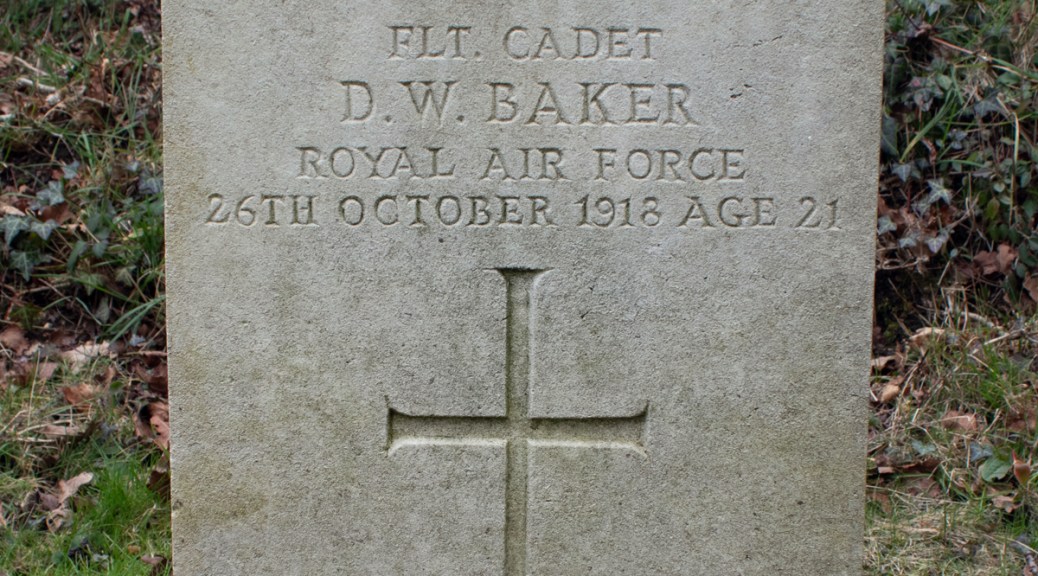
Douglas Walter Baker was just 20 years of age when he died on 26th October 1918. His body was taken to the graveyard of St Paul’s Church, East Boldre, not far from the air base at which he had been billeted.
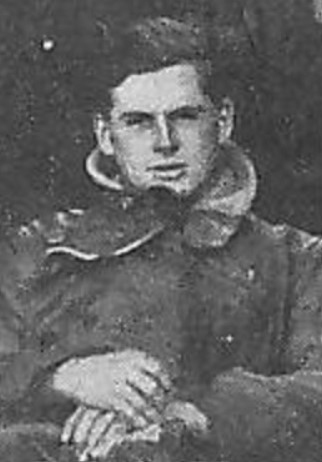

Flight Cadet Douglas Baker
(from findagrave.com)

The life of a WW1 pilot was notoriously dangerous. On the same day of Douglas’ death, and at the same airfield, fellow pilot Second Lieutenant Malcolm Vande Water lost his life in a separate incident.

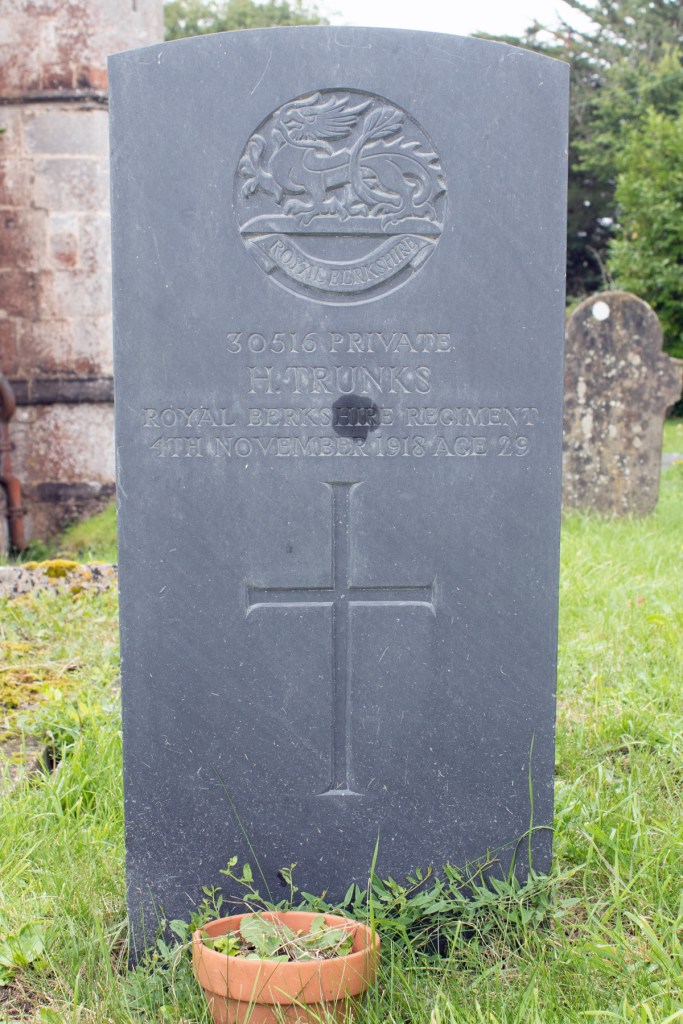
Private Herbert Trunks

Private Herbert Trunks

Herbert Henry Trunks was born in Williton, near Watchet, Somerset, in the spring of 1888. One of fourteen children, his parents were George and Rosa. George was a labourer in a timber yard, but when Herbert left school, he found work as a labourer in a paper mill.

On 10th June 1911, Herbert married Lily Sully at St Decuman’s Church in Watchet. Four years Herbert’s senior, she was a labourer’s daughter: the couple went on to have three children: Lilian, Henry and Dorothy.

Herbert was called up to serve his country on 5th June 1916. Assigned to the Royal Berkshire Regiment, his service records confirm that he was 5ft 9ins (1.75m) tall, and weighed 135lbs (61.2kg). He soon found himself in France, leaving for the continent on 20th September 1916.

Attached to the 13th Labour Battalion, Private Trunks spent the next 15 months overseas, returning to Britain in February 1918 for medical treatment. He was suffering from albuminuria, a side effect of kidney disease, and was hospitalised for a couple of months.

When he had recovered, Private Trunks was transferred to the 397th Home Service Company. He was based on the Isle of Wight, but his health had been impacted, and he came down with pneumonia. He was admitted to Parkhurst Military Hospital on the island on 28th October 1918, but died there just a week later, on 4th November. He was 30 years of age.

Herbert Henry Trunks was taken back to Somerset for burial. He was laid to rest in the peaceful graveyard of St Decuman’s Church, where he had been married just seven years before.


Private Leonard Floyd

Private Leonard Floyd

Leonard Lionel Floyd (or Floyde) was born in the Somerset village of Watchet in 1898. The eldest of five children, his parents were journeyman tailor Thomas Floyde and his wife, Louise.

Interestingly, at the time of the two censuses in 1901 and 1911, Leonard was away from the family home: the earlier document recorded him living with his maternal grandparents on the outskirts of Minehead. Ten years later he was back in Watchet, residing with his mother’s brother and sister.

Little additional information is available to document Leonard’s young life. With war raging across Europe, he appears to have joined up as soon as he came of age. He was assigned to the 1st Battalion of the Princess Charlotte of Wales’ (Royal Berkshire Regiment) and sent to Portsmouth, Hampshire, for training.

Tragically, it seems that Private Floyd fell ill while billeted in the cramped barracks there. He was admitted to the 5th Southern General Hospital in the city, but died soon after. He breathed his last on 21st April 1917, aged just 18 years old.

Leonard Lionel Floyd’s body was brought back to Somerset for burial. He was laid to rest in the sweeping Minehead Cemetery, not far from where his parents lived, on the outskirts of the town.


Private Henry Wiggs

Private Henry Wiggs

Henry Wiggs was born in Camberwell, Surrey, in the autumn of 1880. One of eleven children, his parents were dock labourer Thomas Wiggs and his wife, Sarah.

When he finished his schooling, Henry also took up labouring work and, by the time of the 1911 census, was working as a partition block maker in the building trade. The census shows him a living with his brother William and his family.

On 3rd August 1913, Henry married Blanche Hill. She was eight years older than Henry, and the daughter of a Sergeant in the Royal Horse Artillery. Blanche had been widowed ten years earlier, and had four children, who Henry took on as his own.

At this point, Henry’s trail goes cold. When war broke out, he stepped up to play his part, initially joining the Worcestershire Regiment. At some point he was transferred to the Royal Berkshire Regiment, subsequently becoming attached to the Labour Corps.

Details of Private Wiggs’ military service are lost to time, and it is unclear whether he served on the Home Front or overseas. He survived the war, and was discharged from the army on 13th March 1919. He was suffering from heart disease, directly attributable to his military service.

Again, Henry falls off the radar at this point. He and Blanche made the move to Somerset, setting up home in Weston-super-Mare. His heart problem seems to have dogged him, however, and likely caused his admission to a hospital in Bath towards the end of 1920. It was in the city that he passed away, on 28th December 1920, at the age of 40 years old.

Henry Wiggs’ body was not brought back to Weston-super-Mare for burial – the cost of doing so may have been too much for the now twice-widowed Blanche to afford. Instead, he was laid to rest in the sweeping Locksbrook Cemetery in Bath.


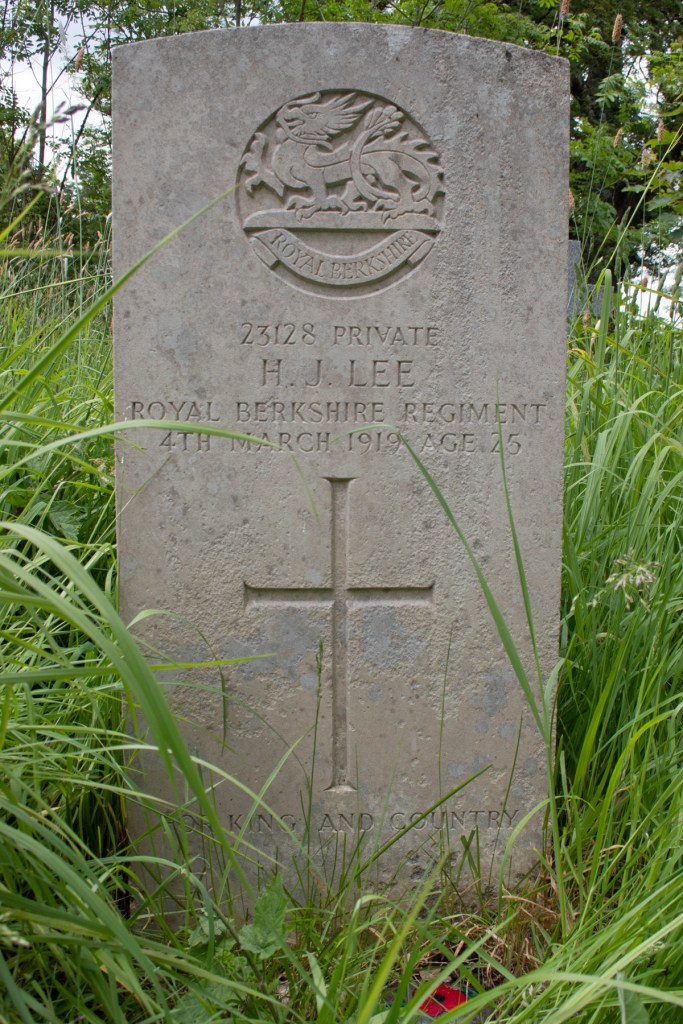
Private Herbert Lee

Private Herbert Lee

Herbert Jack Lee was born in the autumn of 1893 and was one of twelve children. His parents were Devon-born John Lee and his wife, Emily, who came from Churchstanton, Somerset, and it was here that the young family were raised. John was a bootmaker-turned-innkeeper, and the Lees lived in the village’s Rising Sun Inn.

By the time of the 1911 census, John had returned to boot-making once more. Herbert, meanwhile, had found work as a domestic gardener, bringing in a second wage to a household that included his parents and two younger siblings.

When war came to Europe, Herbert – who was better known by his middle name – stepped up to serve his King and Country. Little of his service documentation remains, but a contemporary newspaper report outlined his time in the army:

[Jack] joined the service in January, 1916, and was posted to the Wilts Regiment. He was subsequently transferred to the Royal Berks, and with them proceeded to France, returning to England suffering from trench feet at Easter, 1917. He was then posted to the Devon Regiment, and put into an Agricultural Company, and employed at Offwell, near Honiton.

Taunton Courier and Western Advertiser: Wednesday 12th March 1919

Private Lee’s health had suffered badly during the winter of 1916/17 and, in the spring of 1919, he came down with a severe bout of influenza. His body was too weakened to recover, and he passed away on 4th March 1919, aged just 25 years old.

Herbert Jack Lee was brought back to Somerset for burial. He was laid to rest in the peaceful graveyard of St Paul’s Church, in his home village of Churchstanton.


Interestingly, in the same edition of the Taunton Courier and Western Advertiser that had reported on Herbert’s funeral, was a report on the state of the Lee’s former home, the Rising Sun Inn.

…some of the rooms were very damp through water having come in… [and] was not fit to live in. The house had been very well conducted by the present tenant [Frank Gill], but… trade… had gone down by four-fifths since the war..

Taunton Courier and Western Advertiser: Wednesday 12th March 1919

Frank Gill was applying to the Licensing Board to avoid paying taxes for the year, given the drop in clientele and the number of other public houses in the area to support any customers. His case was referred on.


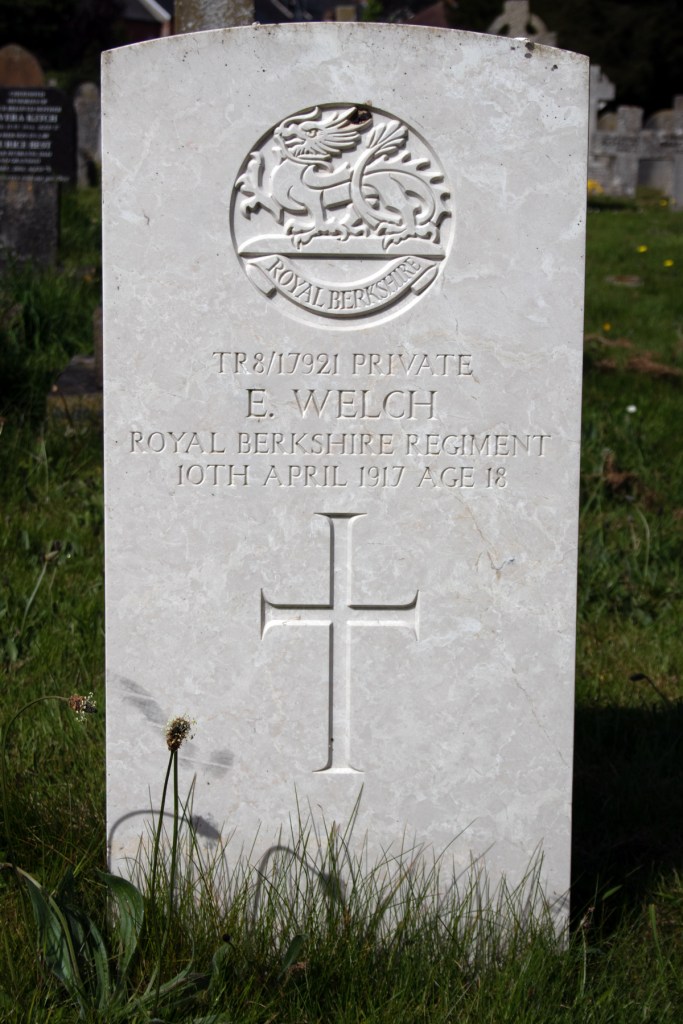
Private Edward Welch

Private Edward Welch

Edward Welch was born in Chard, Somerset, at the start of 1899. His parents were Edward and Sarah and he was one of five children, although he also had three half-siblings from Sarah’s previous marriage.

Edward Sr was a gardener who passed away in 1910, leaving Sarah a widow for a second time. She was already working as a lace maker, and this was a trade that Edward Jr’s older siblings also followed.

War was coming to Europe and, while he was too young to enlist when it was first declared, Edward was keen to play his part when he could. He enlisted in the Royal Berkshire Regiment at some point after October 1916, and was assigned to the 9th (Reserve) Battalion. Private Welch was part of the territorial force, and so did not see any action overseas.

There is little additional information about Private Welch’s life: all that can be confirmed is that he passed away “of disease” in hospital on 10th April 1917. He was just 18 years of age.

Edward Welch’s body was brought back to Somerset for burial. He was laid to rest in Chard Cemetery, not far from his family home.


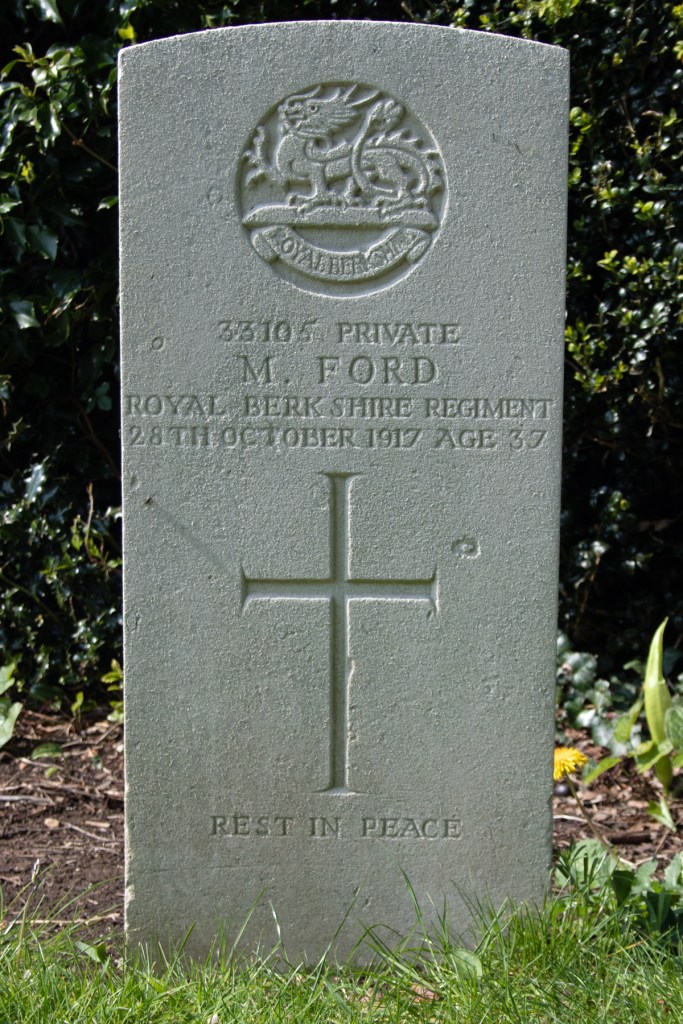
Private Mark Ford

Private Mark Ford

Mark Ford was born early in 1881 in Wellow, near Peasedown St John in Somerset. He was the youngest of eleven children, and the son of Thomas and Ellen Ford. Thomas was a coal miner, and this was a trade that his seven sons, including Mark, went into.

The 1901 census recorded Mark as boarding in a house in Abertillery, Monmouthshire, learning his trade. Within a few years, however, he was back in Peasedown St John. In the summer of 1910, he married local woman Emily Tucker and the couple set up home in Wellow, where they went on to have four children: George, Phyllis, Hubert and Ethel.

War was coming to Europe and, while records are scarce, it’s possible to build up a picture of the service Mark undertook. He initially enlisted as a Private in the Royal Berkshire Regiment, and was assigned to the 10th (Labour) Battalion. They were sent to France in June 1916, although it is not possible to confirm if Mark went at the same time.

His battalion became the 158th and 159th Labour Companies in April 1917, and it seems that Private Ford transferred to the former and, at this point, was definitely serving in France. That summer, he was wounded in the hip and head by an exploding shell and was medically evacuated to England for treatment.

Private Ford was admitted to the Military Hospital in York, where he lay injured for some time; long enough, thankfully, for Emily to make the journey to be with him. Sadly, his wounds were to prove too much: he passed away at the hospital on 28th October 1917, at the age of 36 years old.

Mark Ford’s body was brought back to Somerset for burial He was laid to rest in the churchyard of St John the Baptist, in Peasedown St John.


Private Lawrence Scott

Private Lawrence Scott

Lawrence Arthur Scott was born in the spring of 1889 in the Devon town of Kingsteignton. He was one of nine children to George and Louisa Scott. George was a lighterman – transporting clay and other goods on a barge. When his father passed away in 1905, Lawrence found work as a clay cutter, bringing in money to help support his mother. By the time of the 1911 census, he was on the only one of Louisa’s children to still be living at home, and was the main breadwinner.

In the spring of 1915, Lawrence married Elizabeth Webber in Newton Abbot. The young couple settled in Kingsteignton, and went on to have a son, Frederick, who was born the following year.

By now war had descended upon Europe. Lawrence enlisted, joining the Royal Berkshire Regiment in the summer of 1916. His service records confirm that he was 5ft 7in (1.7m) tall, had dark hair, blue eyes and a fair complexion.

Private Scott arrived in France on 20th August 1916 and, over the next couple of years he served on the Western Front. In September 1917, he was transferred to the Labour Corps, but by now his health was suffering. On 22nd March 1918 he was admitted to a hospital in Rouen with bronchitis. He was transferred to a hospital back in England and, on 17th June 1918 he was formally discharged from the army, with arteriosclerosis.

Lawrence returned home, but his health was to get the better of him. He passed away from heart failure on 30th March 1919, aged just 30 years old.

Lawrence Arthur Scott was laid to rest in a family plot in the graveyard of St Michael’s Church, Kingsteignton. Elizabeth was finally reunited with her husband 67 years later and was buried with him.


Private Arthur Foote

Private Arthur Foote

Arthur Thomas Foote was born on 18th June 1880 in the Dorset town of Sherborne. One of three children to Jane Foote, his mother married widower James Rose in 1887, giving Arthur a half-sibling. James passed away in 1889, and Jane married another widower – Albin Pitman – and Arthur had a further six siblings and half-siblings.

By this point, the family had moved to Somerset, settling in Compton Pauncefoot. The 1901 census recorded Arthur as having left the family home and he was boarding in nearby Holton. He had, by this time, found work as a carter.

Arthur had met Agnes Wetherall, a tailor’s daughter from the village of Baltonsborough. The couple married in Wells in April 1902, and set up home in nearby Glastonbury. They went on to have two children – Robert, who had been born in 1898, and Lillian, who was born in 1902 – and Arthur continued working as a carter for a miller.

When war broke out, Arthur enlisted. While full details of his service are not available, he joined the Royal Berkshire Regiment as a Private, and was assigned to their Labour Corps.

Robert had also enlisted early on in the war. He joined the 2nd Battalion Coldstream Guards, and was killed in fighting in Northern France in September 1916. He was awarded the Mons Star, and is commemorated on the memorial at Thiepval.

Arthur survived the war, and returned home in early 1919. He quickly came down with pneumonia, and passed away within a week of his return, on 11th February 1919. He was 38 years old.

Arthur Thomas Foote was laid to rest in a now overgrown plot at the top of Glastonbury Cemetery, walking distance from the family home.


Pioneer Charles Churchill

Pioneer Charles Churchill

Charles Churchill was born towards the end of 1883, in the Somerset village of West Chinnock. One of six children, his parents were Isaac Churchill and his wife Elizabeth. Isaac was an agricultural labourer, and the family lived in a cottage on Eastfield Farm, where he worked.

When he left school, Charles also found work on the farm. He knew the owners well and, in 1909, married their servant, Ellen Mary Young, in the parish church. The couple moved in with Ellen’s widowed mother, Harriet, and went on to have two children, Florence, born in 1909, and George, who was born three years later.

By this time war was on the horizon. Full details of his military service are not available, but it appears that Charles initially enlisted in the Royal Berkshire Regiment. He subsequently transferred to the Labour Corps, before being reassigned again to the Royal Engineers.

There are no dates available for the transfers, so it’s impossible to know how quickly they took place. Charles’ record shows that he was awarded the Victory and British Medals while in the Royal Engineers, however, so it is likely that he spent most of his time in this regiment.

The medal record also confirms that Pioneer Churchill did not serve in a theatre of war, so would have spent his time on home soil.

Sadly, this is where information on Charles seems to dry up. He survived the war, but contracted pneumonia late in 1919 and passed away on Christmas Day that year. He was just 36 years of age.

Charles Churchill was laid to rest in the graveyard of St Mary’s Church in his home village of West Chinnock, the place where he and Ellen had been married ten years earlier.