Category Archives: Private

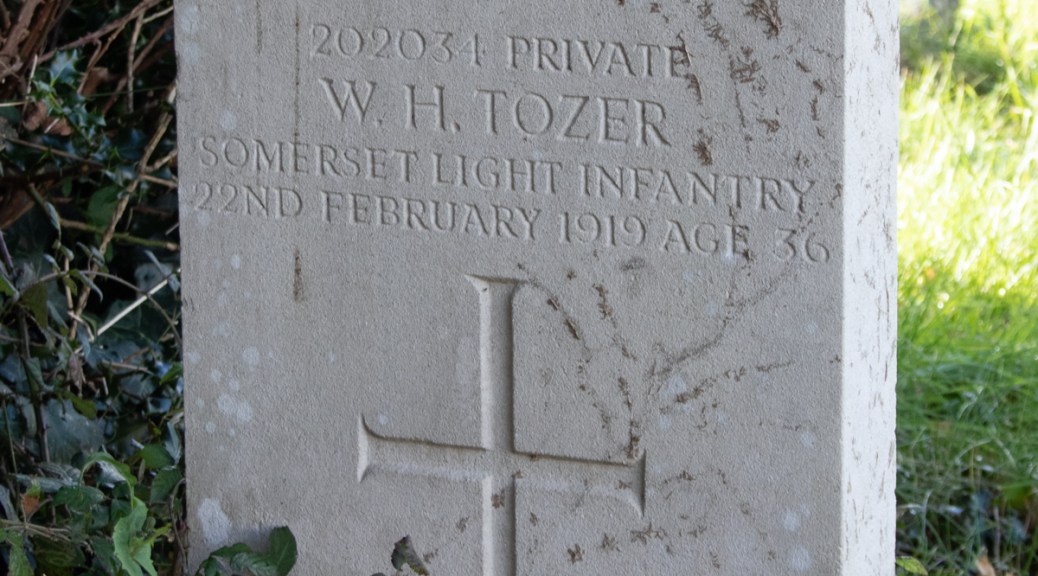
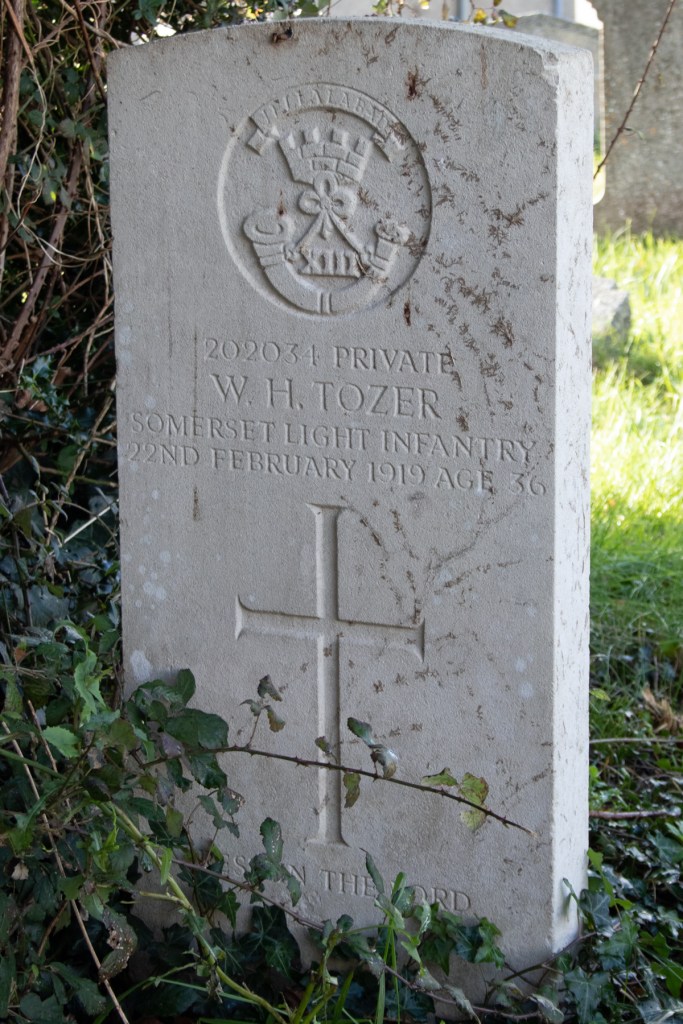
Private Albert Gale

Private Albert Gale

Albert Gale was born in the Devon village of Chudleigh Knighton in October 1883, one of five children to John and Elizabeth Gale. It seems that Elizabeth may have died when Albert was young, as, by the time of the 1901 census, John was married to a Sarah Gale, and the family were living in the village of Hennock.

John was a clay cutter, and this was a trade into which Albert followed his father. Again, as time moves on, things change; the 1911 census found Albert boarding with his sister Sophy and her husband, fellow cutter Thomas Willcocks, back in Chudleigh Knighton.

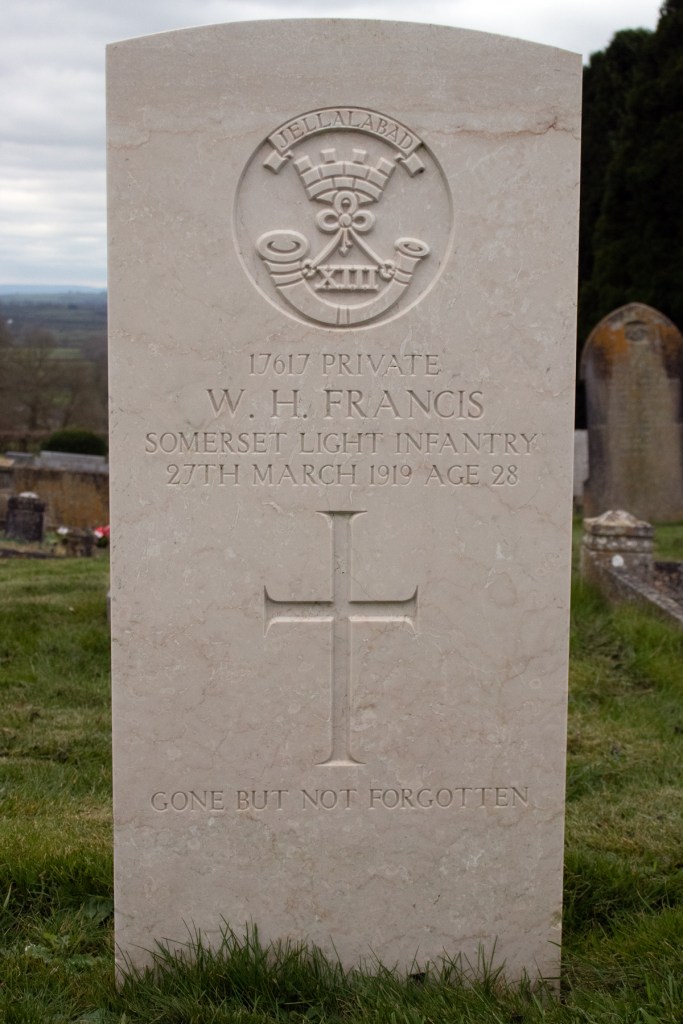
War was coming to Europe and, in April 1916, Albert enlisted, joining the Somerset Light Infantry as a Private. He would have cut a commanding figure; his enlistment papers show that he stood at 5ft 10ins (1.77m) tall.

Albert served on home soil. While attached to the Somerset Light Infantry, he was assigned to the 661st Agricultural Company of the Labour Corps, working in Kent and Sussex.

During this time, he received hospital treatment on four separate occasions: in August 1916, he was admitted with cellulitis of the arm; in December 1916 and January 1917, he was treated on two separate occasions for scabies. In November 1918, however, he was admitted to the Military Hospital in Chichester, West Sussex, as he was suffering from influenza. Sadly, this last condition was to worsen and, on 21st November 1918, Private Gale died, having subsequently contracted pneumonia. He was 35 years old.

Albert Gale’s body was brought back to Devon for burial. His brother-in-law Thomas had died the previous summer; his story can be found here. Albert was laid to rest in the grave next to his sister’s husband in the churchyard of St Paul’s in Chudleigh Knighton.


With Thomas dead, Sophy had been left a widow. Understandably bitter at what the war had taken from her, when she was asked if she wanted a memorial for her brother, she returned the form with the following statement: “I don’t require the plaque and scroll in memory of my dear brother; a piece of paper won’t keep me.”

Private John Clarke

Private John Clarke

John Clarke was born in Devon on 28th June 1881, the son of Edward and Mary Ann Clarke. Sadly, little documented information remains on his life, but from what does exist, a semblance of his life can be pieced together.

Edward and Mary Ann lived in the village of Ashcombe in their later years, although it seems that John had been born closer to Exeter. At some point before October 1915, he married local woman Rhoda; they did not go on to have any children.

When the First World War broke out, John was working as a farm labourer. He signed up, joining the 7th Battalion of the Devonshire Regiment. His enlistment papers confirm that he had already been volunteering for the 8th Battalion of the same regiment. They also note that he stood 5ft 6ins (1.68cm) tall, weighed 140lbs (63.5kg) and, intriguingly, that he was of poor physical development.

Private Clarke’s time in the army was not destined to be a lengthy one. In January 1916, he was admitted to the Canadian Red Cross Hospital in Taplow, Buckinghamshire, suffering with neuralgia. A couple of months later, he was admitted again, this time with influenza.

Shortly afterwards John’s military service came to an end. He was dismissed as medically unfit due to a gastric ulcer; his final day in the army was 30th March 1916, and he had served for 175 days.

At this point, Private Clarke’s trail once again goes cold. He passed away on 3rd December 1918 – more than eighteen months after leaving the Devonshire Regiment – although there is no documentation to confirm the cause of his passing. He was 37 years of age.

John Clarke was laid to rest in the graveyard of St Nectan’s church in Ashcombe, Devon.


Private Edmund Bevan

Private Edmund Bevan

Edmund Thomas Bevan was born in Weston-super-Mare, Somerset, in November 1867, the son of blacksmith George Bevan and his wife, Mary Ann.

Unfortunately, little documentation remains on Edmund’s early life; after his baptism record, the next evidence for him comes in the form of his military service record, twenty years later.

Looking for a life of adventure, Edmund gave up his labouring job and joined the Somerset Light Infantry. His enlistment papers confirm the date – 12th May 1887 – and showed that he stood at 5ft 4ins (1.62m) tall and weighed in at 120lbs (54.4kg). The papers also note that he had dark brown hair, hazel eyes and a fresh complexion. He also had a scar above his right eye.

Private Bevan joined up for twelve years’ service. He spent his first four years at bases in Essex and Hampshire, before being sent to Gibraltar in November 1891. He returned home after two years, and spent his remaining time in the army in his home county, Somerset. Noted that he had shown a very good character, he was discharged to the reserve brigade on 11th May 1899 in Taunton.

Sadly – tantalisingly – Edmund’s trail goes cold again at this point. When hostilities were declared in August 1914, it seems likely that he was brought out of reserve, but given his age at this point – he was 46 – he was assigned to the territorial force. As a Private in the 125th Coy of the Royal Defence Corps, he would have had civil protection in the London area, although again, specific details are not known.

The next confirmation of Private Bevan’s life is his gravestone. This confirms that he passed away 19th July 1917, at the age of 49. While no cause of death is evident, his pension record sheds a little more light onto his life in the early years of the twentieth century.

Edmund had married a woman called Martha, and the couple had gone on to have a child. Martha passed away in September 1913 and, according to the pension record, Edmund passed guardianship on to his brother Henry.

Edmund Thomas Bevan was laid to rest in the Milton Road Cemetery in his home town of Weston-super-Mare.


Private Charlie Badman

Private Charlie Badman

Charles Badman – better known as Charlie – was born in 1895 in the Somerset seaside town of Weston-super-Mare. His parents were stonemason Henry Badman and his wife Caroline.

Unfortunately, there is little documented information about Charlie’s early life. By the time of the 1911 census, the family were living in a terraced house in Clevedon Road, Weston-super-Mare, a short distance from the sea. Charlie’s four oldest brothers had left home by this point, but his other two siblings – his dressmaker sister Martha and his plasterer brother Arthur – were still living with their parents. Charlie, at this point, was still at school.

When war was declared, Charlie was keen to do his bit. He enlisted in the Royal Army Medical Corps, and was assigned to the 65th Field Ambulance as a Private. This section was connected to the 21st Division, which saw action on the Western Front at Loos, the Somme, Arras, Passchendaele and Cambrai, although it is not possible to determine how Private Badman was involved in these battles. He was awarded, however, the Victory and British Medals for his service.

The only other concrete information available for Charlie is the inscription on his gravestone. This confirms that he was wounded in France on 7th September 1918. It seems that he was medically evacuated to England, and was admitted to a military hospital in Bristol, not far from his family in Somerset.

Sadly, it seems that his wounds proved too severe; he died at the hospital five months later, on 4th February 1919, aged just 25 years old.

Charlie Badman was brought back to Weston-super-Mare for burial. He lies at rest in the Milton Road Cemetery in the town.


Private John Lodge

Private John Lodge

John Thomas Inskip Lodge was born in Shefford, Bedfordshire, on 31st January 1899, one of seven children to John and Florence Lodge (née Inskip). When his son was young, John Sr worked as a bead lace manufacturer, but by the time of the 1911 census, he had become the manager of a steam laundry.

Florence, by this time, had passed away, and in November 1911, John Sr married again, to Florence Yarnell. The couple would go on to have four children, John Jr’s half-siblings.

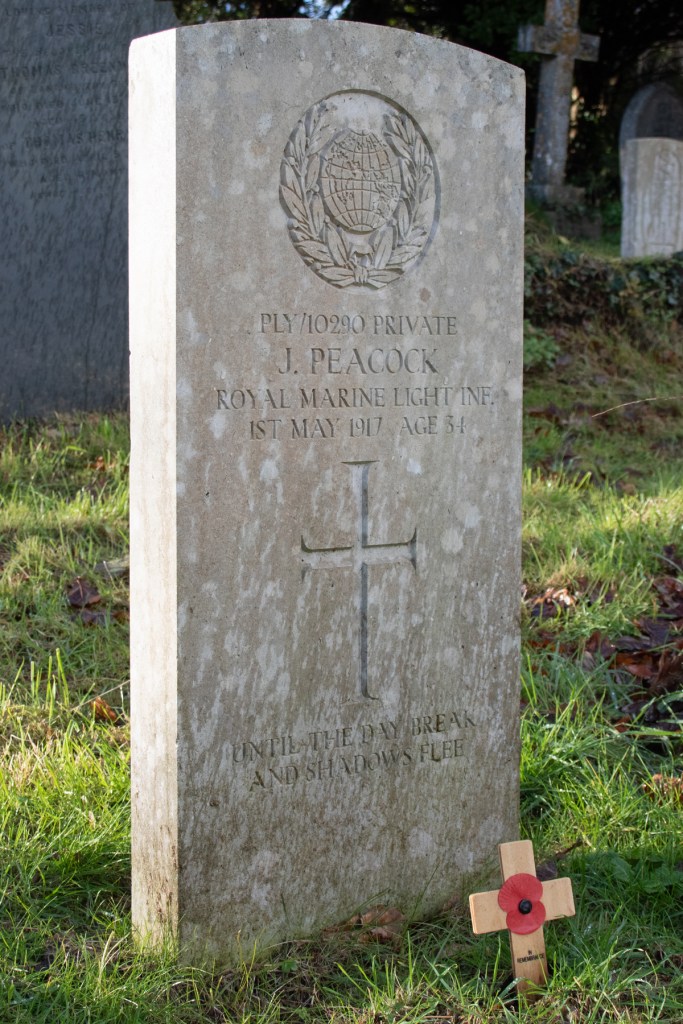
By this time, war was on the horizon, and John was eager to leave his laundry job and volunteer. He joined the Royal Marine Light Infantry on 4th September 1915, giving his date of birth as three years earlier in order to ensure he was accepted. His service record shows that he stood 5ft 4ins (1.62m) tall, had a fresh complexion, brown eyes and brown hair.

As a Private, John served with the Chatham Division of the regiment; he would have seen action in some of the key battles of the war, including at Gallipoli in 1915/16 and later on the Western Front. It was while he was fighting in France in September 1916 that he was injured, and he was medically evacuated back to England for treatment.

Private Lodge recovered, and served on in Chatham, Kent, where he was billeted at the naval barracks in the town. At the start of June 1917, he had some leave owing, and so visited his parents back in Bedfordshire. When he returned to Kent, he fell ill and was admitted to the Naval Hospital in the town. Sadly, John was not to recover; he passed away on 23rd June 1917, aged just 18 years old.

John Thomas Inskip Lodge was laid to rest in the Woodlands Cemetery in Gillingham, not far from the Chatham barracks at which he was based.


Private Percy Coward

Private Percy Coward

Percy Herbert Coward was born in the Wiltshire town of Westbury in the autumn of 1896. He was one of seven children – all boys – to Lily Coward and her weaver husband Charles. Not long after Percy was born, the family moved across the county border to Frome, Somerset, presumably for Charles’ work.

By the time of the 1911 census, the Coward family were living in a five-room end-of-terrace cottage on the outskirts of the town. Charles and Percy were both working as warpers – threading looms – in the cloth industry; two of his brothers were working for a printer in the town. Percy was proving himself an integral part of the community.

[Percy] was very highly esteemed by a large circle of acquaintances… He was a worker with the YMCA and Frome Brotherhood, a member of the band and in other directions showed himself a young man of much promise. He was employed successively at Messrs Houston’s [Woollen Mill] and at the Silk Factory.

Somerset Standard: Friday 26th April 1918

An active member of the town’s territorial force, when the Great War broke out he was mobilised. Initially attached to the Royal Army Medical Corps, he subsequently served with the Royal Army Service Corps and the North Staffordshire Regiment, before obtaining his final transfer to the 42nd Company of the Machine Gun Corps.

During his time in the army, Private Coward would have seen action in some of the fiercest battles of the war – at the Somme, Arras and Ypres. In the spring of 1918, his battalion was involved in the Battles of St Quentin and the Avre, and it was during this last skirmish that he was wounded.

Percy’s injuries were severe enough for him to be medically evacuated back to England and, once there, he was admitted to the Royal Woolwich Hospital in South London. His wounds were to prove too much for him, however, and he passed away at the hospital on 12th April 1918. He was just 21 years of age.

Percy Herbert Coward was brought back to Somerset for burial. He was laid to rest in the Dissenters’ Cemetery, Vallis Road, within walking distance of his family home.


Private Percy White

Private Percy White

Percy White was born in the spring of 1890, the youngest of four children to Frank and Fanny White. Frank was a tailor from Frome, Somerset, and this is where the family were raised and settled for most of Percy’s life.

By the time of the 1911 census, Frank and Fanny had been married for 30 years. Frank was still working as a tailor, while Percy’s three older siblings – all girls – were working as silk weavers and packers. Percy had moved away from the family’s clothing heritage, and had found work as a hairdresser.

War was on the horizon, however, and Percy was called upon to do his duty for King and Country. He was initially assigned as a Private to the King’s (Liverpool Regiment) when he joined up in the autumn of 1914. Full details of his military service are not readily available, but it seems that he served on the Front Line in France, but was invalided out late in 1917.

By that point, he had met Bessie Cundick, who had been born in Wiltshire. They married in Andover in the spring of 1916, when they were both 26 years old.

Back in England, and discharged from the King’s (Liverpool Regiment), Percy was transferred to the Labour Corps and, for the last year of the war had done agricultural work in Cambridgeshire. After the armistice was signed, Frank fell ill and died on 4th February 1919.

Private White attended the funeral at the Vallis Road Cemetery in Frome with his family, before returning to his unit. By this point, however, he had himself fallen ill with influenza, and was admitted to the East General Hospital in Cambridge. The condition was to prove too much, however, and he passed away on 16th March, less than six weeks after his father’s death. He was just 29 years of age.

Percy’s body was brought back to Frome; he too was laid to rest in the Dissenters’ Cemetery in Vallis Road, Frome.


Private Everett Ferriday

Private Everett Ferriday

Everett Ferriday was born in February 1899 in the Cornish town of Camborne. The second of four children, his parents were Methodist minister Jonah Ferriday and his wife, Elizabeth. Jonah’s calling took the family around the country, and, by the time of the 1911 census, they had settled in Frome, Somerset.

When Everett left school, he found employment at a motorcycle works in Bristol, and left home to move to the city. War was coming to Europe, however, and things were soon to change.

Everett got the call to join up in January 1917, just shy of his eighteenth birthday. His enlistment papers give his height as 5ft 11ins (1.8m) tall, and confirm that he weighed in at 126lbs (57.2kg). They also confirmed that he had found new employment as an insurance agent.

Private Ferriday was assigned to the 94th Training Reserve Battalion and sent to the army camp at Chiseldon, near Swindon at the beginning of March. Tragically, within a matter of weeks, he was admitted to the camp hospital with bronchial pneumonia. Sadly, this was too much for his body to take; he died at the hospital on 3rd April 1917, at just eighteen years old.

Everett Ferriday’s body was brought back to Frome; he was laid to rest in the Vallis Road Cemetery in the town.


Everett was not the only Somerset soldier to succumb to pneumonia at Chiseldon Camp that spring. Private Charles Oborne, died from the same condition a few weeks before him. Private Ivan Day, of the 93rd Training Battalion, passed away in the same hospital on the same day as Everett, also from pneumonia.

You can read their stories by following the links above.


Private Frederick White

Private Frederick White

Frederick James White was born in the autumn of 1898, one of four children to Frederick and Emma White. Frederick Sr was a gas fitter from Frome, and the Somerset town was where the family were raised.

As a youngster, Frederick Jr attended the Primitive Methodist Sunday School in the town. He also acted as treasurer for the local YMCA. He was only 15 when war broke out, so was not able to enlist immediately.

However, by 1916 he had joined the 1st Battalion of the Devonshire Regiment as a Private and, at some point, was assigned to the Royal North Devon Hussars.

Either way, in whichever regiment he served, Frederick saw fighting in France, and was wounded in the autumn of 1917. Medically evacuated back to England, he was admitted to the temporary military hospital at Collegiate Hall in Sheffield.

The local newspaper shed a little more light into Frederick’s life:

Deceased, who was in the North Devon Hussars, died on November 22nd, at Sheffield, of wounds he received on November 5th. He was brought back to England three weeks to the day from the time he sailed for France.

Somerset Standard: Friday 30th November 1917

Private White’s wounds were too much; he passed away at the age of just 19 years old.

Frederick James White’s body was brought back to his home town. He was laid to rest in the Dissenters’ Cemetery in Vallis Road, Frome.


Frederick Sr and Emma White would have been understandably saddened by their son’s passing. They had four children; their eldest, Florence, had passed away before reaching her first birthday. Their youngest, Reginald, had died in childbirth. Frederick had died as a result of the First World War.

Sadly, the tragedy wasn’t yet over. Their only surviving child, Frederick’s younger brother William, passed away in August 1919, aged just 17 years old.

Frederick Sr and Emma had outlived all of their children, none of whom had reached or survived their teenage years.


Private Donald Mees

Private Donald Mees

Donald Mather Mees was born on 14th July 1900, the only child of Arthur and Mary from Mells, Somerset. Arthur was a grocer and wine merchant, who, by the time of the 1911 census, had set the family up in Warminster.

Given his young age, there is little documented about Donald’s early life; most of the information available comes from the newspaper reports of his passing:

The military funeral which passed through Frome on Wednesday afternoon was a very sad one. It was that of Private Donald Mather Mees, only son of Mr AH Mees, grocer… formerly of Mells…

The deceased was a somewhat delicate lad, and had only joined up a few weeks – less, we believe, that a month – when he was taken ill and succumbed to pneumonia at King George V Hospital at Dublin on 15th inst.

His parents had been notified of his illness and were preparing to visit him when their journey was interrupted by the news of his death.

Somerset Standard: Friday 23rd August 1918

Private Donald Mather Mees, of the Wiltshire Regiment, had died on 15th August 1918, at the age of 18. He was laid to rest in the graveyard of St Andrew’s Church in the village of his birth, Mells.