Category Archives: Sapper

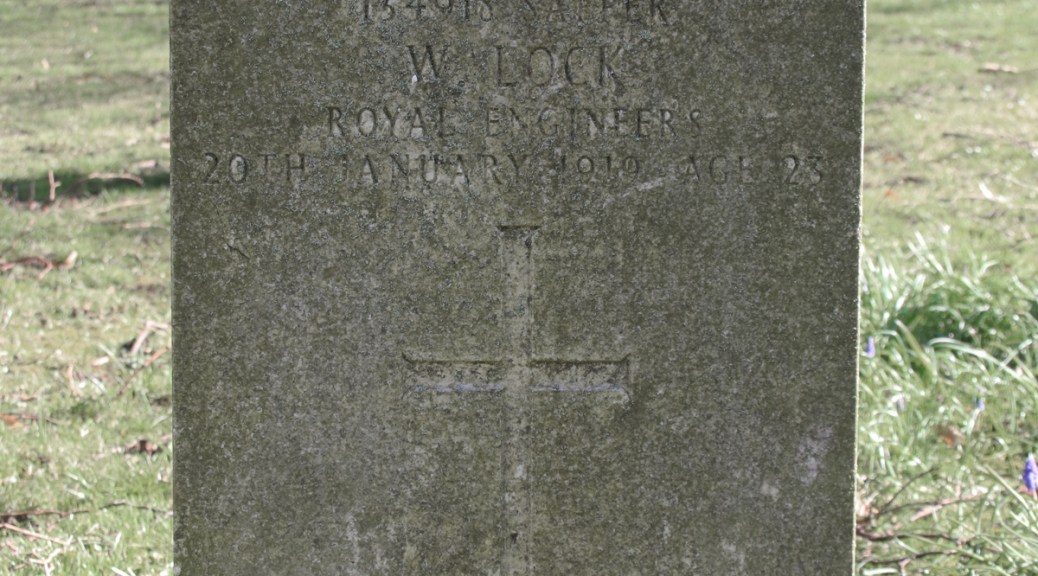
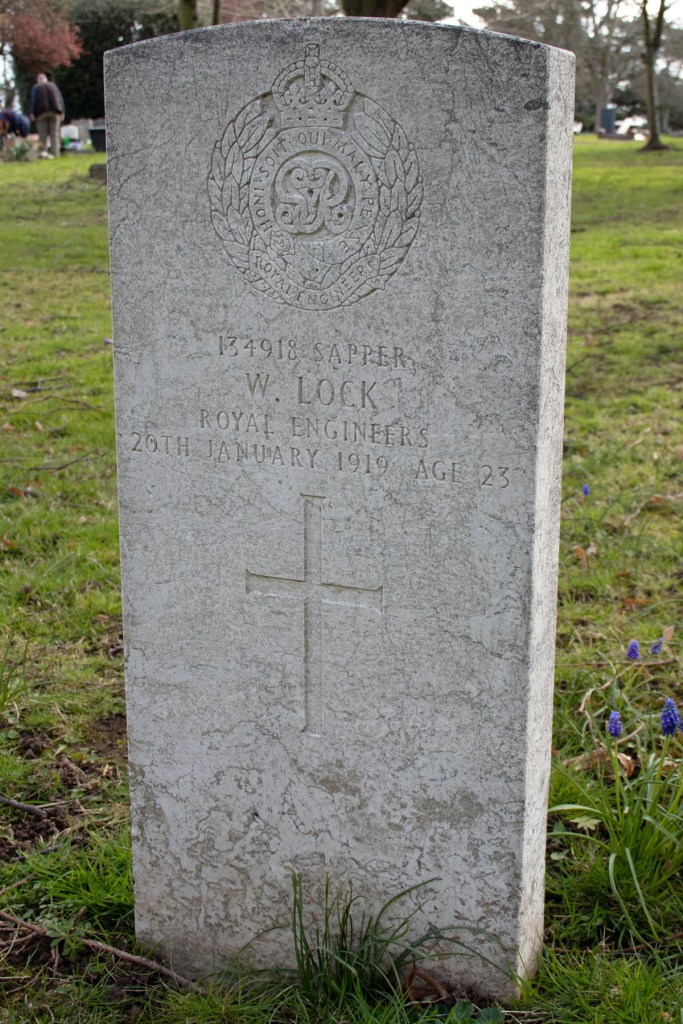
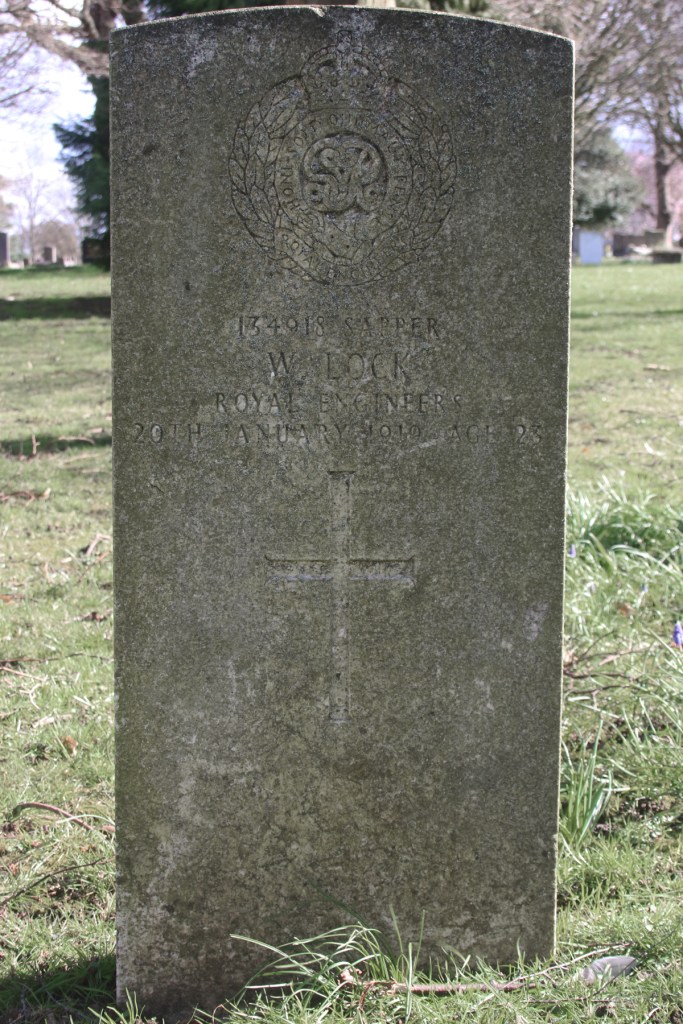
Sapper William Lock

Sapper William Lock

William Lock was born in Devon in 1896, one of three children to Tom and Mary Lock, although sadly only William survived childhood. Tom was a shipwright in on the Devon coast, but brought his young family to Kent, where he found work in the Naval Dockyard in Chatham.

When William left school, he set about finding a trade. By the time of the 1911 census, aged 15, he was listed as “learning house joinery”, presumably a trade for which his father’s work would have stood him in good stead.

War was looming, however, and William enlisted. He joined the Royal Engineers at a time where they were being inundated with volunteers. Sapper Lock was assigned to G Company, a provisional troop that formed part of the Depot Battalion.

Documentation relating to Sapper Lock’s military service are no longer available; he was awarded the Victory and British Medals, which suggests that he saw some kind of service overseas, but there is nothing on file to confirm this.

The next document relating to William is his war pension, which confirms that he died on 20th January 1919 from ulcerated endocarditis, or heart disease. He was just 23 years old.

Tom and Mary had lost the third of their three children.

William Lock was laid to rest in the Woodlands Cemetery in Gillingham, Kent.


Sapper William Lock

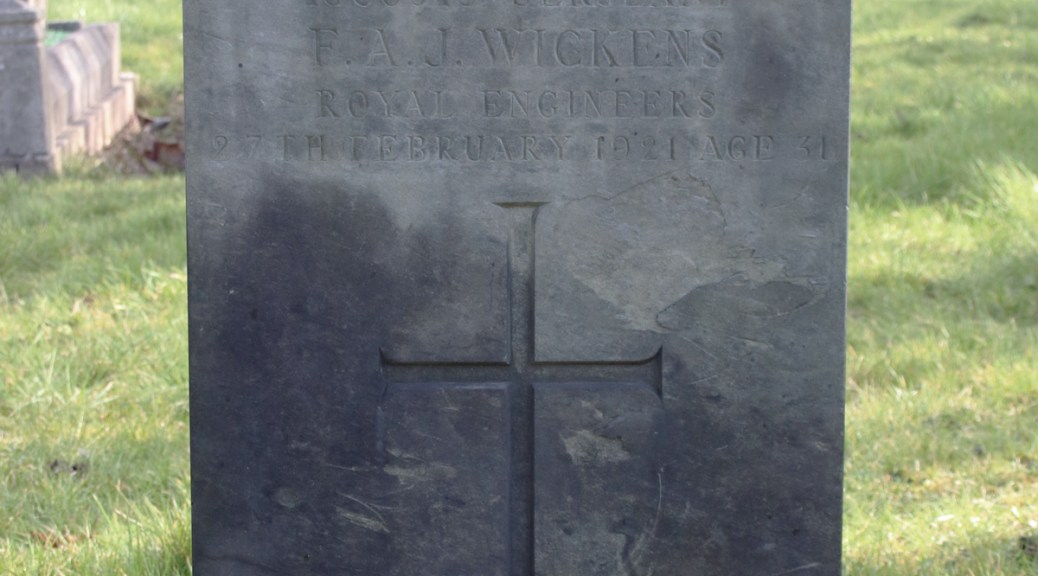
Serjeant Frederick Wickens

Serjeant Frederick Wickens

Frederick Albert John Wickens was born in Newbury, Berkshire, in the summer of 1889. The oldest of four children to Alfred and Emily Wickens, his father was a brewer’s labourer.

The military life proved more of a draw to Frederick, however. While his full records no longer exist, by the time of the 1911 census, he was recorded as being a Sapper with the 2nd Field Troop of the Royal Engineers. He was based at Potchefstroom, around 75 miles (120km) south east of Johannesburg in South Africa, and his trade was listed as a tailor.

Sadly, it is at this point that Frederick’s trail goes tepid, if not cold.

From a personal perspective, he married a woman called Rose, who was a year younger then him. Her details are scarce, and there is nothing to confirm when or where they married (other than the 1911 census, when Frederick was listed as ‘single’).

The couple must have had some connection to Gillingham, as this is where they lived; given the proximity of the Royal Engineers Barracks in neighbouring Chatham.

Sapper Wickens’ military service continued into the Great War. He was awarded the medaille militaire by Belgium, and achieved the rank of Serjeant during his career. Unfortunately, there are no details of the actions around either the award or his promotion.

Serjeant Wickens passed away on 27th February 1921; he died in Chatham, although the cause was not recorded. He was 31 years old.

Frederick Albert John Wickens lies at rest in the Woodlands Cemetery in Gillingham, Kent.


Frederick’s younger brother Thomas, also served in the Great War. He enlisted in the Princess Charlotte of Wales’s (Royal Berkshire) Regiment, and was involved in the battles on the Western Front. Sadly he was killed in the fighting on 24th May 1916, at the age of 19 years old.


Sapper Harry Paterson

Sapper Harry Paterson

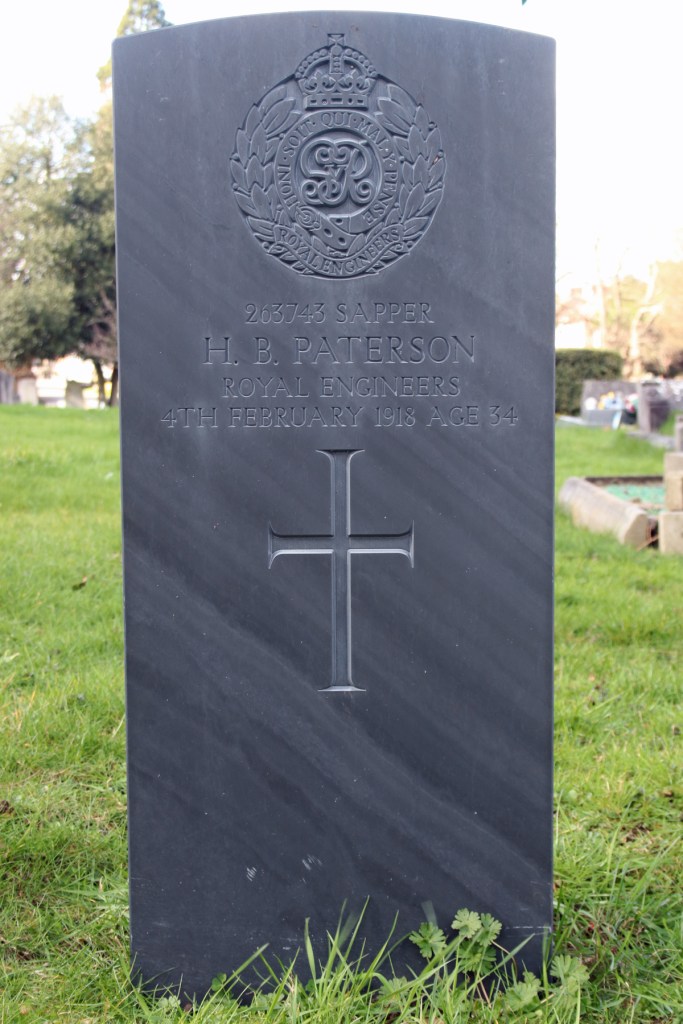
Harry Bruce Paterson was born towards the end of 1893, one of two children to John and Jane Paterson. John worked at Chatham Dockyard fitting ships’ engines, and the family lived in a small terraced house close to the centre of Gillingham in Kent.

When Harry left school, he became a plumber’s apprentice, soon qualifying as a full plumber.

He married Ellen Keeler in 1906, and the couple lived a short walk away from his parents’. They went on to have four children, Lilly, Harry Jr, Mabel and Kathleen.

War was on the horizon, but Harry’s military service records are a bit sketchy.

He enlisted as a Sapper in the Royal Engineers on 14th July 1915, and served in France. He attained the Victory and British Medals as well as the 1915 Star.

Sadly, Sapper Paterson’s health seems to have been impacted by his service. In January 1918 he was invalided back to England and admitted to the military hospital at the army camp in Thetford, Norfolk. Diagnosed with pulmonary tuberculosis, he quickly succumbed to the disease, and passed away on 4th February 1918. He was 34 years old.

Harry Bruce Paterson lies at rest in the Woodlands Cemetery, Gillingham, just a few minutes’ walk from both his parents and his widow and children.


Sapper Harry Paterson
(from ancestry.co.uk)

Corporal Richard Langley

Corporal Richard Langley

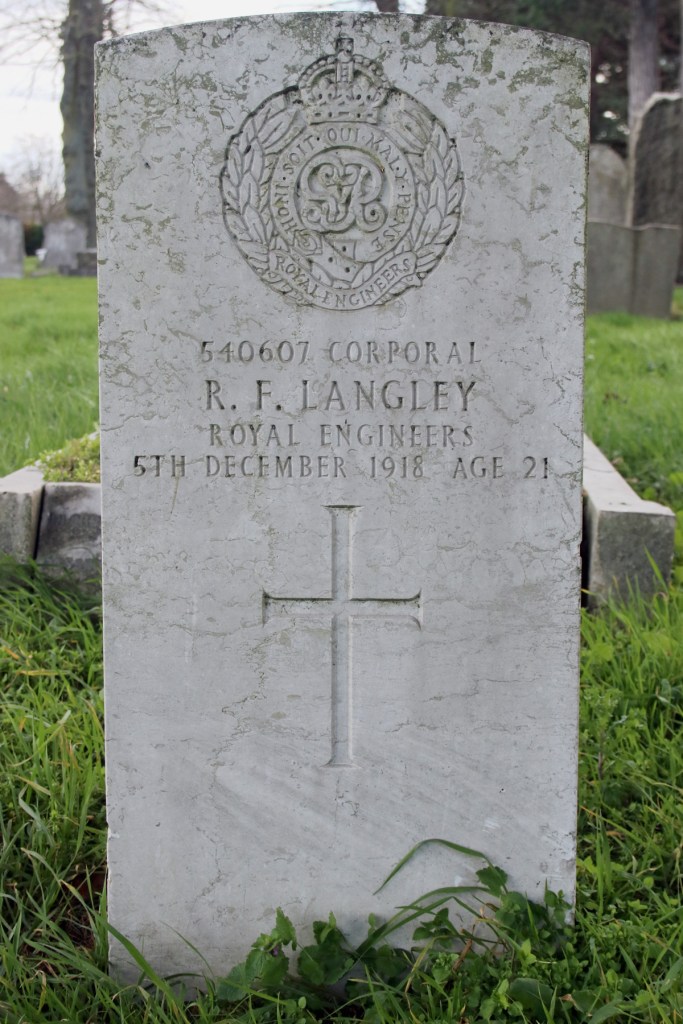
Richard Frederick Langley was born in January 1897 in Chatham, Kent. He was one of seven children to Albert Langley, who was a bricklayer, and his wife, Elizabeth.

Richard enlisted almost as soon as he was able to. His papers, dated 18th October 1914, show that he was 17 years and 10 months old, as was working as an apprentice boilermaker. He was assigned to the Royal Engineers.

Sapper Langley’s war service was spent in England. Initially based in Kent, he was promoted to Acting Lance Corporal in October 1915. Transferring to the Royal Engineers Anti Aircraft Battalion in July 1916, Richard was again promoted to Corporal.

Corporal Langley was injured while serving for the Royal Engineers AA; he was admitted to the General Hospital in Tunbridge Wells, and has a hernia operated on. After two months recovering in hospital, he re-joined his battalion.

Richard was transferred again in January 1918, this time being assigned to the London Electrical Engineers. It was here that he saw out the remainder of the war.

It was while he was serving in Sheerness that Richard contracted influenza. Hospitalised on the island on 28th November 1918, he sadly did not recover. Corporal Langley passed away from pneumonia on 5th December 1918. He was just 21 years of age.

Richard Frederick Langley lies at rest in the Woodlands Cemetery in his home town of Gillingham, Kent.


Richard’s older brother Albert was also involved in war service and was a skilled labourer at Chatham Dockyard. In February 1916, he boarded the SS Maloja, a steamship bound for Bombay with over 400 passengers and crew on board.

At around 10:30am on Sunday 27th February, the ship was sailing through the Straits of Dover when it struck a mine. The vessel sank within 24 minutes. Over 150 people died in the explosion, from drowning or from hypothermia.

Sadly, Albert’s body was not recovered. He was just 21 years old. He is commemorated on the Naval Memorial in Chatham, Kent.


Sapper Edward Britton

Sapper Edward Britton

Edward Britton was born in Bridgwater in 1870, one of nine children to Edward and Eliza Britton. Edward Sr was a mariner, and the family lived on the main road from the town to Bath.

There is a gap in the documentation for Edward Jr; when we next meet him on the 1911 census he is married with children of his own. His wife is Ada Olive Martin, the daughter of a bricklayer from Topsham in Devon. They had eight children, six of them girls, and, according to the document, Edward was working as a ‘deal carrier’, moving wood from the ships arriving in Bridgwater to the timber yard.


A Gloucestershire deal carrier
(from gloucesterdocks.me.uk)

Sadly, Edward’s service records are also sparse. He enlisted in the Royal Engineers as a Sapper and, given his age, it is likely that this was not early in the conflict. He was involved in the Inland Water Transport division – given his father’s work as a mariner, this doesn’t come as a surprise.

The Army Register of Soldiers’ Effects provides a surprising insight into Sapper Britton. It gives the date of his death, but notes the cause as “Drowned, River Stour, Kent”.

An inquest was held on Monday by Dr Hardman at the Military Hospital, Stonar, respecting the death of Sapper Edward Britton… who was drowned through the capsizing of a boat… It appeared that Britton was ferrying Lance-Corporal Griggs to a barge which was in tow with three others when a collision occurred, the boat overturned and Britton was drowned.

[Kentish Gazette: Saturday 7th September 1918]

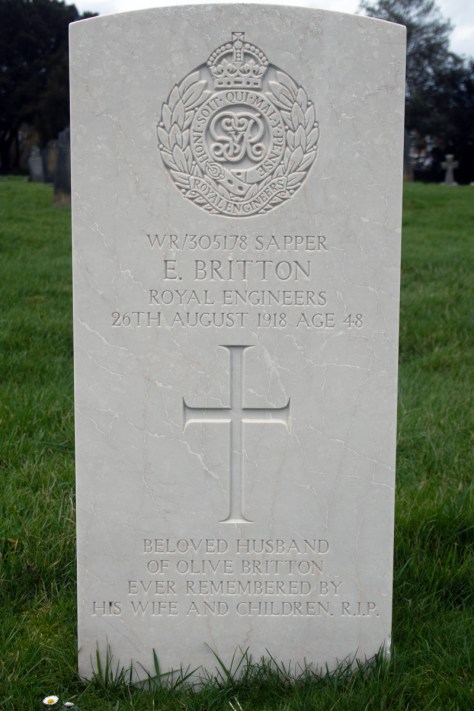
Sapper Britton passed away on 26th August 1918, at the age of 48.

Edward Britton lies at rest in St John’s Cemetery in his home town of Bridgwater, Somerset.


Sapper Francis Hawkins

Bridgwater (Wembdon)

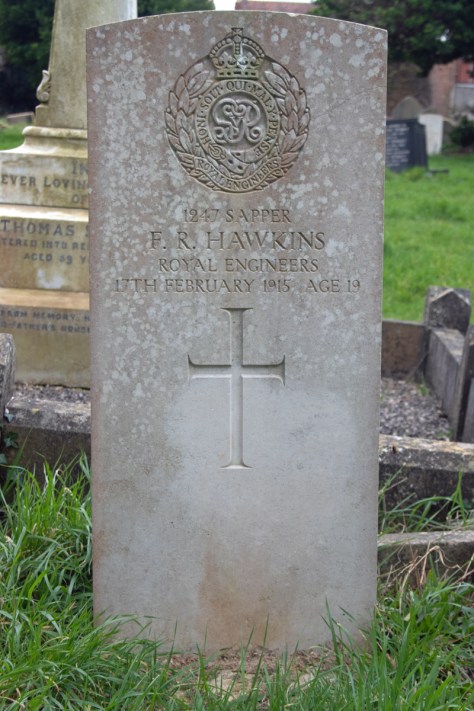
Francis Ralph Hawkins was born in Somerset in March 1895 and was one of twelve children to Charles and Jane Hawkins. Charles was a police sergeant and the family lived in Bishop’s Lydeard, a village to the west of Taunton.

By the time of the 1911 census, Charles had retired from police work, and was operating as a licenced victualler in nearby Bridgwater. While Jane was supporting her husband running the business, Francis was apprenticed to a local clothier.

When war broke out, Francis was quick to enlist – he joined the Royal Engineers, and was appointed a Sapper. He wasn’t with the company for that long, however, as by February he had been admitted to the Red Cross Hospital in Christchurch, Dorset, with a fever.

Sadly, he was not to recover; Sapper Hawkins passed away from spinal meningitis on 17th February 1915. He was just 19 years of age.

Francis Ralph Hawkins lies at rest in the Wembdon Road Cemetery, Bridgwater.


Sapper John Chapman

Sapper John Chapman

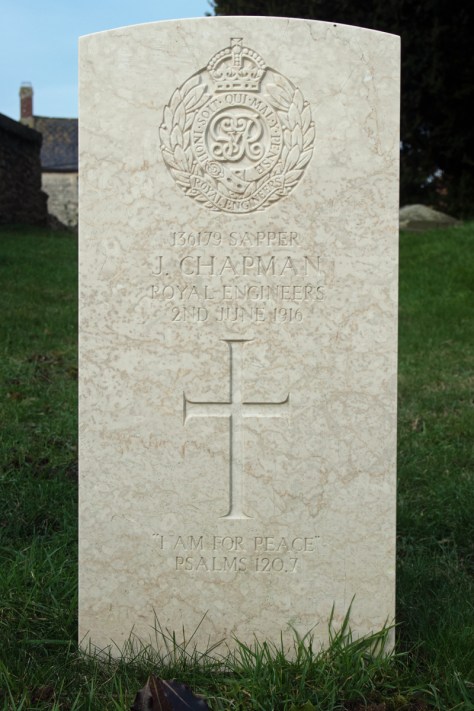
John Chapman was born in October 1892 in the small Somerset village of Ashwick, just to the north of Shepton Mallet. One of five children to Albert and Mary Ann, John followed his father into mining, and, by the time of the 1911 census, he was listed as a coal mining hewer.

In November 1914, he married Louisa Elizabeth Perkins from Shepton Mallet. The war had begun by this point, and before the couple had even been married a year, John had enlisted.

His background made him ideal for the Royal Engineers, and soon Sapper Chapman was bound for France with the British Expeditionary Force. He seems to have been abroad for around six months, and was shipped back to England at the end of April 1916.

John was admitted to a military hospital in Brockenhurst, Hampshire, with bronchial pneumonia, and this is what he succumbed to a matter of weeks later. He died on 2nd June 1916, at the age of 23 years old.

John Chapman is buried in the village of Croscombe, Somerset, where his widow now lived.


An additional tragedy to the loss of this young life is that Louisa was pregnant at this point. The birth of their daughter, Selina, was registered between April and June 1916, and, while I have been unable to pinpoint an exact date of birth for her, it is likely that John never got to see his daughter.


Serjeant Arthur Heard

Serjeant Arthur Heard

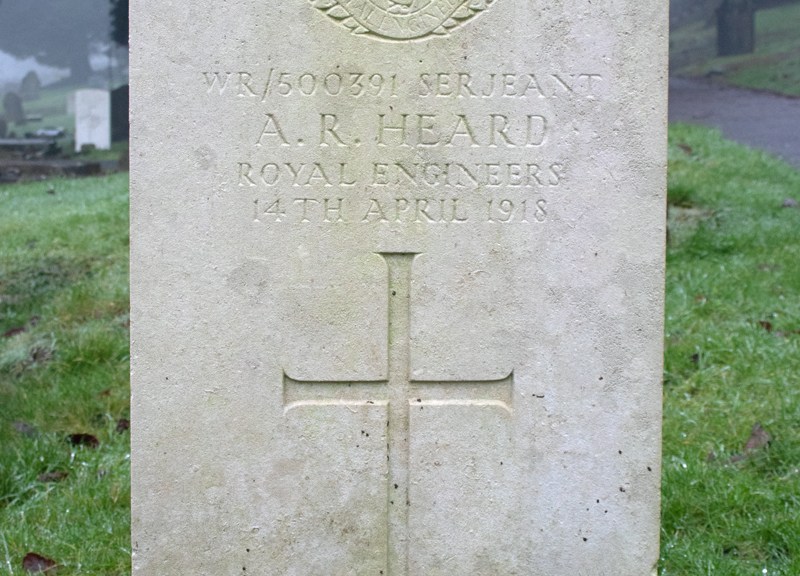
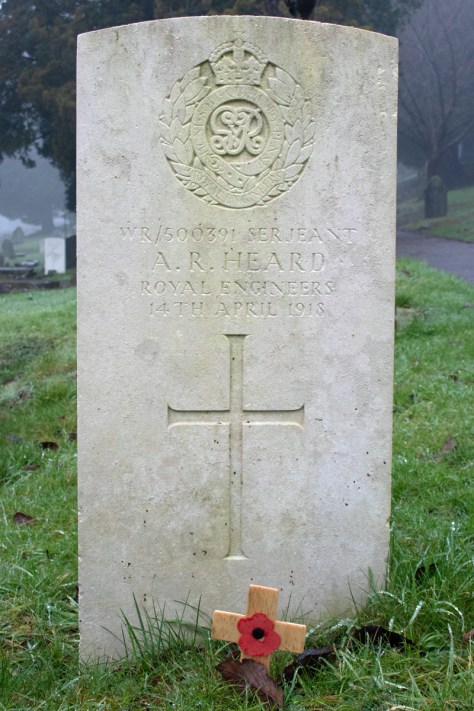
Arthur Reginald Heard was born in 1887, the youngest son to Herbert and Emily. Herbert was a local surveyor and land agent, and the family lived in the middle of Shepton Mallet in Somerset, two doors up from the town’s Baptist Church and within sight of the Magistrate’s Court.

In 1908, aged 21, Arthur made the journey across the Atlantic to Argentina, settling in Buenos Aires and working for the Pacific Railway Company. When war broke out, however, he immediately returned to England, when he enlisted in the army, and was assigned to the Royal Engineers.

Sapper Heard was shipped out to France and was quickly promoted, first to Corporal, then to Serjeant. In November 1917, Arthur was caught up in a shell impact on the front, and was buried. He was quickly dug out, and not severely hurt.

On 25th March 1918, Serjeant Heard was due to return home on leave, but was taken ill. Back in England, he was hospitalised in Birmingham, where meningitis was confirmed. He seemed to recover – even going out for tea with his sister-in-law when she visited him – and was transferred to recuperate in Saltash, Cornwall.

Within days of arriving, he collapsed with a fit, and passed away within half an hour. Subsequent examination confirmed that Arthur had died from a brain tumour. He was just 30 years old.

Arthur Reginald Heard lies at rest in the cemetery of his home town, Shepton Mallet.


Sapper Leonard Francis

Sapper Leonard Francis

Leonard George Francis (who was known by is middle name) was born in October 1895. He was one of fourteen children to Jonas and Eleanor (or Ellenora) Francis, and his father worked on the railways as a plate layer or ganger.

George followed his father into manual labour, and, by the time of the 1911 census, aged 15, he was already listed as a mason.

He seems to have enlisted fairly early on in the war, and by January 1915 had joined his troop – the 2nd Wessex Field Company of the Royal Engineers – on the front line.

Sadly, Sapper Francis’ time in the army was to be brief. He was caught up in the fighting at Ypres, and he was injured at Hill 60 on 27th April. He was moved to a local hospital for treatment.

It seems that messages crossed in the communication with George’s family. They received a letter confirming that he was recovering in hospital after receiving a wound to the body, but not to worry. A day or so later his postcard confirming his arrival in France was received, but by this time he had been shipped back to England for treatment.

His parents received a telegram to confirm this, and his father and brother set out to visit him. By the time they had reached the hospital, however, he had sadly passed from a tetanus infection. In his pocket was a piece of shell; a sad souvenir of his frontline action.

Leonard George Francis died at Netley Hospital 3rd May 1915. He was just 19 years old.

He lies at rest in the cemetery of his home town, Shepton Mallet in Somerset.


Sapper Percy Rodgers

Sapper Percy Rodgers

Percy Wright Rodgers was born in June 1888 in Pilton, Somerset. He was the fifth of eleven children to Levi and Elizabeth Rodgers.

In the 1901 census Levi was listed as a butcher and publican; ten years later, he listed himself as a butcher, slaughter man and shopkeeper.

Percy followed in his father’s footsteps – by the time of the 1911 census, he was boarding with a family in Swanage, Dorset, and worked as a butcher’s assistant.

1913 was a busy year for Percy. He married Frances Bower, they had their first child, Percy Augustus, and he emigrated to the United States (Frances and Percy Jr followed a year later).

In the 1915 New York census, Percy and his family are listed in in the town of Cortland, around 200 miles north of New York City. Percy describes himself as a meat cutter – following in his father’s footsteps – and he and his wife now have a second child, Vera, who was born in the States.

Sapper Rodgers joined the Canadian Engineers in May 1918; he was shipped abroad, back to Europe, but his service appeared short-lived. He contracted pneumonia, and was admitted to the Canadian Hospital in Eastbourne, East Sussex. He passed away on 5th November 1918, at 30 years of age.

Sapper Percy Wright Rodgers lies at rest in the churchyard of St John the Baptist in his home village of Pilton. His grave is topped with a cross dedicated by his widow, Frances.