Tag Archives: 1918

Sapper Nuriel Evans

Sapper Nuriel Evans

Nuriel Ivor Evans was born on 22nd October 1892 in Lefroy, Tasmania, Australia. The older of two children, his parents were Powel and Mary Evans. There is little definitive information about Nuriel’s early life. The first concrete details come from his First World War service records.

Nuriel enlisted in the Australian Imperial Force on 31st August 1915. He was working as a tailor at the time, bring in money for his wife, Ida, who he had married in May 1913, and their daughter, Mollie, who was born that December.

Sapper Evans’ records confirm he was 5ft 3.5ins (1.61m) tall and weighed in at 131lbs (59.4kg). He was noted as having brown hair, grey eyes and a fair complexion, with a scar on his right shin.

Nuriel sailed for Europe on 23rd November, having been attached to the Australian Engineers. His unit left the Egyptian port of Alexandria in March 1916, and arrived in Marseille, France, ten days later. Leave aside, he was to serve on the Western Front for the next two years.

Barring one offence of being absent from parade (on 23rd March 1916, for which he was confined to barracks for a day), Sapper Evans had an unblemished record. On 23rd June that yeah, he was admitted to a field hospital because of a scald to his left foot. The injury was severe enough for him to be medically evacuated to Britain for treatment, and he only eventually returned to his unit on 24th February 1917.

Sapper Evans was badly wounded again on 27th April 1918, having received shrapnel wounds to his back, left buttock and right hand. Initially treated on site, he was moved to a hospital in Rouen, before being evacuated to Britain once more. By 1st May, he was in Bath War Hospital, Somerset, for treatment.

Sadly, any medical support was to prove too little. Sapper Evans passed away on 15th May 1918, from an “aneurysm shock following [a] secondary haemorrhage.” He was 25 years of age.

Thousands of miles from home, Nuriel Ivor Evans was laid to rest in the military section of Bath’s Locksbrook Cemetery.


Sapper Nuriel Evans
(from findagrave,com)

Chief Officer Percival Boyce

Chief Officer Percival Boyce

Percival Osmond Bean Boyce was born in Calcutta, India, in January 1887. The oldest of seven children, his parents were Edward and Mary. While details of his early life are not readily available, it would seem that Edward had some military connections. He had been born in Calcutta in 1859, while Mary was Welsh. Most of Percival’s siblings had been born in India, although two – Cecil in 1891, and Dorothy in 1896 – had been born in Somerset.

The 1901 census recorded Percival as boarding at Keyford College in Frome, Somerset. His family do not appear on that census return, nor does he appear on any other census document. He went on to study at Bristol Grammar School, Gloucestershire, making the First XI rugby team.

In May 1915, Percival married Florence Cooper. There is little information available about her, but the couple exchanged vows in Paignton, Devon.

Percival seemed to have taken to a life at sea by this point, and was the Chief Officer of the cargo ship SS Indore. On 25th July 1918, she was torpedoed by the German submarine U-62, off the Irish coast. The Indore was beached, and two of the crew were killed. Chief Officer Boyce managed to get the ship re-floated and safely back to shore. 

At this point, Percival’s trail goes cold again. He survived the war, but died in Scotland on 27th November 1918, the cause of his passing unknown. He was 30 years of age.

In a traditionally Edwardian obituary, it was noted that “great sympathy is felt for Mr JH Cooper, Chairman of Paignton District Council, in the death of his son-in-law, Mr Percival OB Boyce, master mariner, at Glasgow. Both of Mr Cooper’s daughters are now widows, and he lost a son not long since.” [Western Times: Tuesday 3rd December 1918]

Percival Osmond Bean Boyce was laid to rest in Paignton’s sweeping cemetery.


Chief Officer Percival Boyce

Private James Payne

Private James Payne

The early life of James Payne is a challenge to piece together. The first document that can be properly attributed to him is his marriage certificate from 27th May 1901.

This confirms that he was 21 years old, and working as a labourer. His father’s details are noticeable by their absence. The document also gives his wife’s name, Kate Bessie Warr, and information about her father – labourer Sydney Warr. James was also working as a labour at this point, and the two of them were living in Pulham, Dorset.

By the time of the 1911 census, the newlyweds had moved to the village of Yetminster. James was working as domestic gardener, and the couple had two children – Cyril and Louis. James’ place of birth is given just as Somerset, further clouding his past.

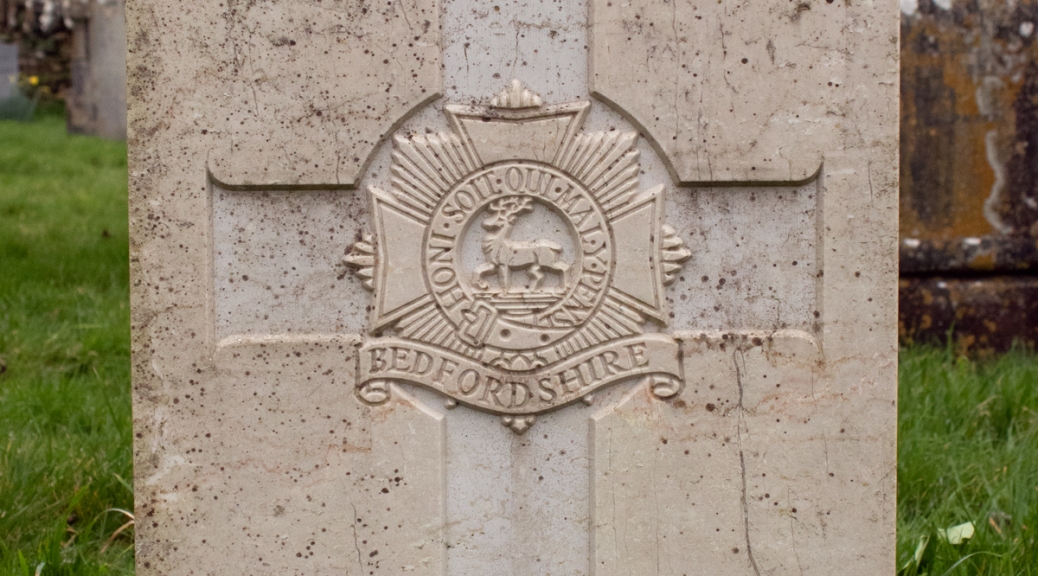
When war came to Europe, James stepped up to play his part. Full details of his time in the army are lost to time, but documents suggest that he had enlisted by October 1917 at the latest. Private Payne joined the Bedfordshire Regiment, and was attached to the 1st Battalion. His unit service on the Western Front throughout the conflict, although there is no evidence that James spent any times overseas himself.

Piecing the sparse number of documents together suggest that in March 1918, James was admitted to the 3rd Western General Hospital in Cardiff, Glamorganshire. He was suffering from nephritis and pneumonia, but it is unclear whether he was serving in Wales at the time, or was taken there for treatment. Either way, his condition was to prove too severe. Private Payne passed away on 20th March 1918: he was 38 years old.

James Payne’s body was taken back to Dorset for burial. He was laid to rest in the peaceful graveyard of St Andrew’s Church in his adopted home of Yetminster.


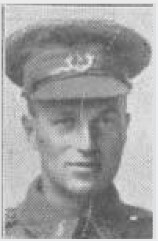
Company Serjeant Major Robert Pollard

Company Serjeant Major Robert Pollard

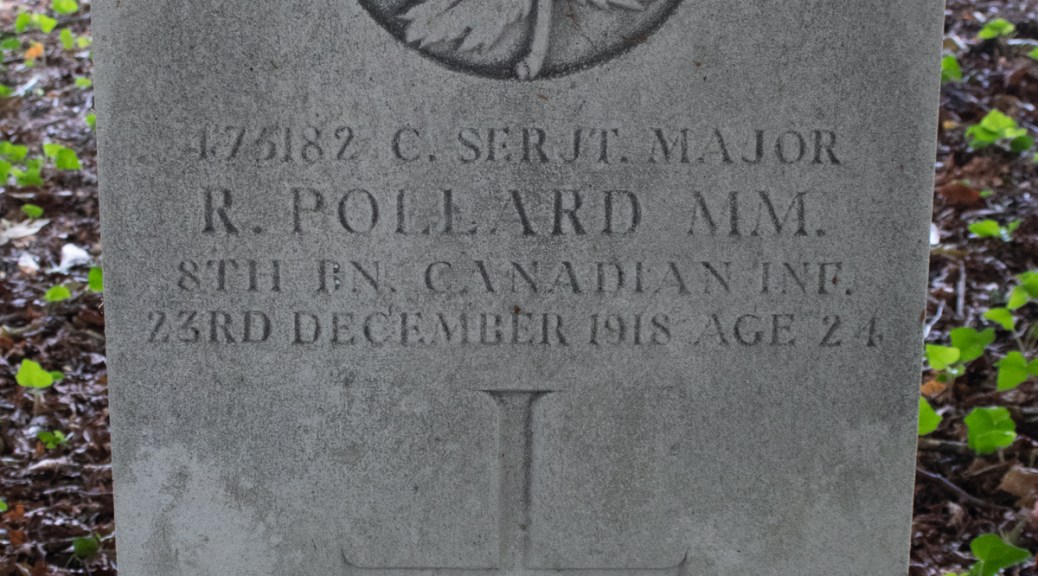
Robert Edwin Dawe Pollard was born on 8th April 1894 in Bath, Somerset. The youngest of three children, his parents were Joseph and Elizabeth Pollard. Joseph was a gardener from Banwell, but it seems that Robert had his sights on bigger and better things.

At some point Robert emigrated to Canada, and, by the time war was declared in Europe, he was working as an insurance clerk in Winnipeg. He felt a duty to serve his country, however, and on 2nd August 1915, he enlisted in the Canadian Expeditionary Force.

Private Pollard’s service records confirm he was 5ft 6ins (1.69m) tall, with dark brown hair, brown eyes and a fair complexion. He was also noted as being a Presbyterian.

Robert’s commitment to the cause is underlined by his rise through the ranks. Attached to to the 8th Battalion of the Canadian Infantry (also known as the 90th Winnipeg Rifles), he arrived in France on 27th February 1916.

The 8th Battalion was involved in some of the fiercest fighting of the war, and, on the 1st June 1916, he was wounded in his left arm. Admitted to a hospital in Camiers, he was moved to Etaples, before returning to his unit before the month was out.

For good or for bad, this was just before the Battle of the Somme and, over the next few months, Private Pollard fought bravely and hard. Moving from the Somme, his unit fought at Passchendaele and Ypres. On 1st October 1916, Robert was promoted to Corporal, and made Sergeant just three months later.

In April 1917, Robert was admitted to hospital again, this time with an infected foot. Within six weeks he was back with his unit, though, and on 7th November 1917, he was promoted to Company Serjeant Major. He was obviously good at what he did, and this was recognised. On 28th December 1917, he was mentioned in despatches, and the following June he was awarded the Meritorious Service Medal.

As the war entered its closing months, Company Serjeant Major Pollard, still led from the front. He returned to Britain at the end of November 1918, and was attached to the 18th Reserve Battalion in Seaford, Sussex ahead of being demobbed.

It was here that Robert contracted influenza. Whether at his family’s request is unclear, but he was admitted to Bath War Hospital for treatment but, after everything that he had been through, it was a combination of the flu and toxaemia, or blood poisoning, that was to prove his undoing. Company Serjeant Major Pollard died on 23rd December 1918, aged just 24 years old. His mother, Elizabeth was by his side.

Robert Edwin Dawe Pollard was laid to rest Bath’s sweeping Locksbrook Cemetery, not far from where his family lived. His headstone recognises the Military Medal he was posthumously awarded.


Company Serjeant Major Robert Pollard
(from findagrave.com)

Private Sydney Ecobichon

Private Sydney Ecobichon

Sydney William Ecobichon was the youngest of five children to French-born farmers Mathurin and Ann Ecobichon. The couple had moved to Jersey in the Channel Islands in the late 1860s, setting up home in St Peter’s by the time their children were born.

Mathurin passed away in 1895, aged 53 years old, leaving Ann and the children to managed the farm. By the time of the 1901 census, Sydney’s older brother Ernest was the farm manager, with Ann remaining head of the household.

When Sydney finished his schooling, he also started work on the farm. The 1911 census recorded Ernest and his family living in on part of the farm, with Ann, and Sydney living in their own accommodation with Sydney’s sister Anna, her husband and two children.

On 28th February 1917, Sydney married Lilla Amy, a farmer’s daughter from St Ouen. Sydney’s trade was listed as farmer, and it seems likely that the young couple married ahead of his conscription into the army.

Details of Sydney’s military service are lost to time. It is clear from his headstone that he enlisted in the Royal Jersey Militia, and the Commonwealth War Graves Commission records suggest that he was attached to the regiment’s Garrison Battalion.

The only other details for Private Ecobichon’s life are that of his passing. Sydney died on 19th October 1918, and was laid to rest in St Ouen’s Churchyard. The cause of his death is unclear, but he was 30 years old when he died.


Gunner Daniel Davies

Gunner Daniel Davies

Daniel Rees Davies was born on 10th August 1887, one of eight children to Daniel and Katherine Rees. Daniel Sr was a coal miner, born in Brecon, South Wales, and it was in Aberdare that the family were born and raised.

By the time of the 1901 census, five of the Davies family were working as coal miners. However, something changed dramatically over the following decade. The next census return, taken in 1911, found Daniel Sr working as a butcher, with Daniel Jr employed as his assistant. The two Daniels and Katherine were living in a six-roomed house with Daniel’s younger brother, Moses, his older sister, Margaret, and her husband, another Daniel.

In the autumn of 1913, Daniel Jr married Daisy Loud. She was a milliner from Bath, and it was in the Somerset city that the couple exchanged their vows. The couple set up home in Bath, and went on to have two children, Maurice and Norman. He continued working as a butcher and, by the time war was declared, he was employed by Larkhall.

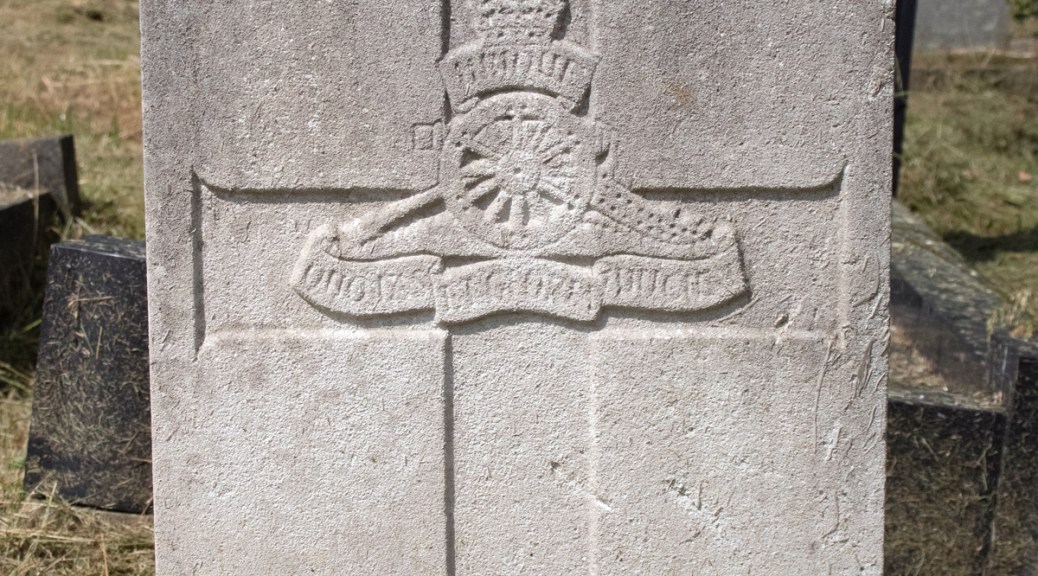
When war came to Europe, Daniel stepped up to play his part. Sadly, full details of his service have been lost to time, but it is clear that he enlisted in the Royal Field Artillery in the spring of 1917 and he was attached to the 88th (Howitzer) Brigade.

Gunner Davies served in Northern France and was badly injured on 3rd June 1918. He was initially hospitalised in Rouen, but then medically evacuated to Britain for treatment. Admitted to Netley Hospital in Hampshire, the wounds he had received to his arm and shoulder were to prove too severe. A telegram was sent to Daisy for her to come to the hospital, but her train was delayed, and she arrived too late to see her husband before he passed away. He died on 17th June 1918, at the age of 30 years old.

The body of Daniel Rees Davies was taken back to Somerset for burial. He was laid to rest in Bath’s majestic Locksbrook Cemetery.


Gunner Daniel Davies
(from ancestry.co.uk)

Lieutenant Stanley Syvret

Lieutenant Stanley Syvret

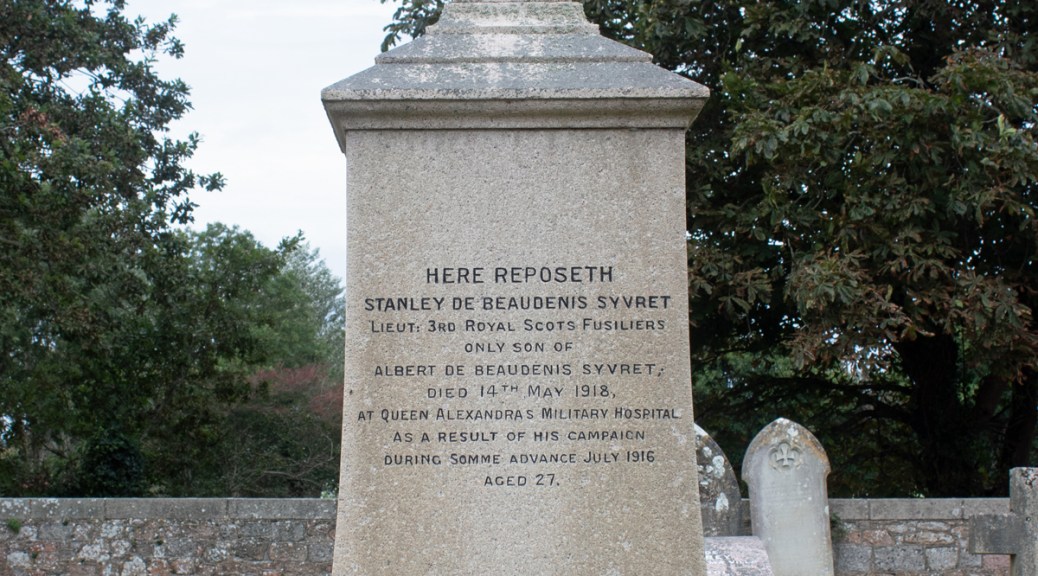
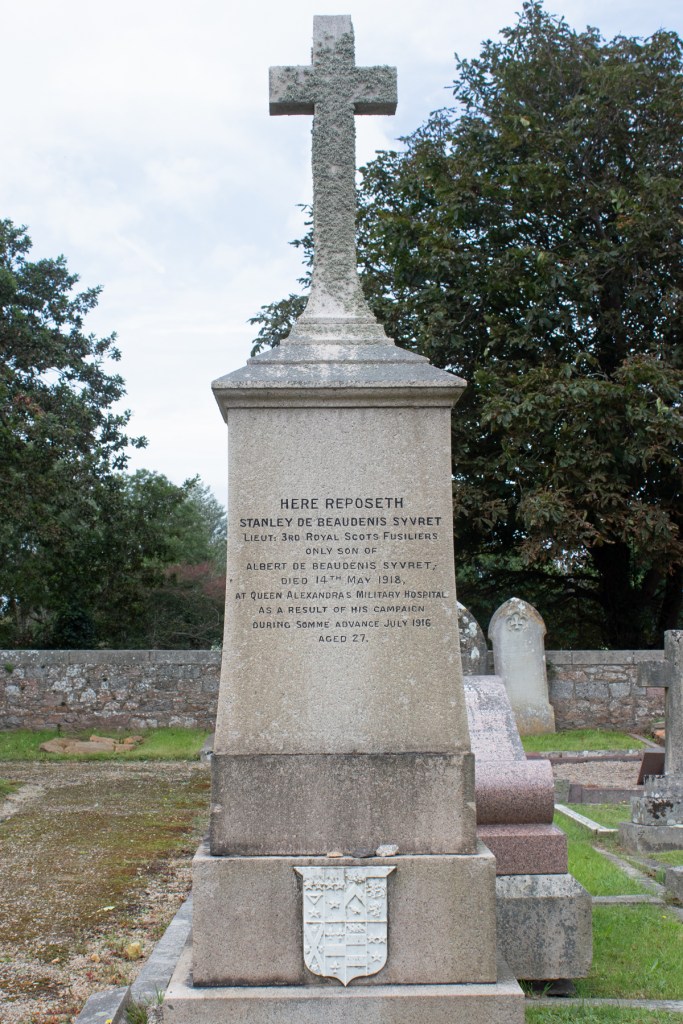
In the graveyard of St Lawrence Church in Jersey, stands an imposing monument. The dedication reads “Here reposeth Stanley de Beaudenis Syvret, Lieut. 3rd Royal Scots Fusiliers. Only son of Albert de Beaudenis Syvret. Died 14th May 1918 at Queen Alexandra’s Military Hospital as a result of his campaign during Somme Advance July 1916. Aged 27”.

Stanley de Beaudenis Syvret was born in South America in 1891. He was the only child of Anthony and Amy, both of whom were born in Jersey. Records for South America are not available, but by the time of the 1911 census, the family were living in Stamford Hill, London. Anthony was employed as an attendance officer for London County Council schools, while Stanley had found work as a clerk for a wool broker.

At this point, Stanley’s trail goes a bit hazy. The 3rd (Reserve) Battalion of the Royal Scots Fusiliers was based in Scotland for the whole of the conflict, so it is likely that he was transferred to that battalion after being injured.

There is little additional information for Lieutenant Syvret. He was brought back to Jersey after his death, and lies at rest in the churchyard close to his family home.


Lieutenant Hugh Lorimer

Lieutenant Hugh Lorimer

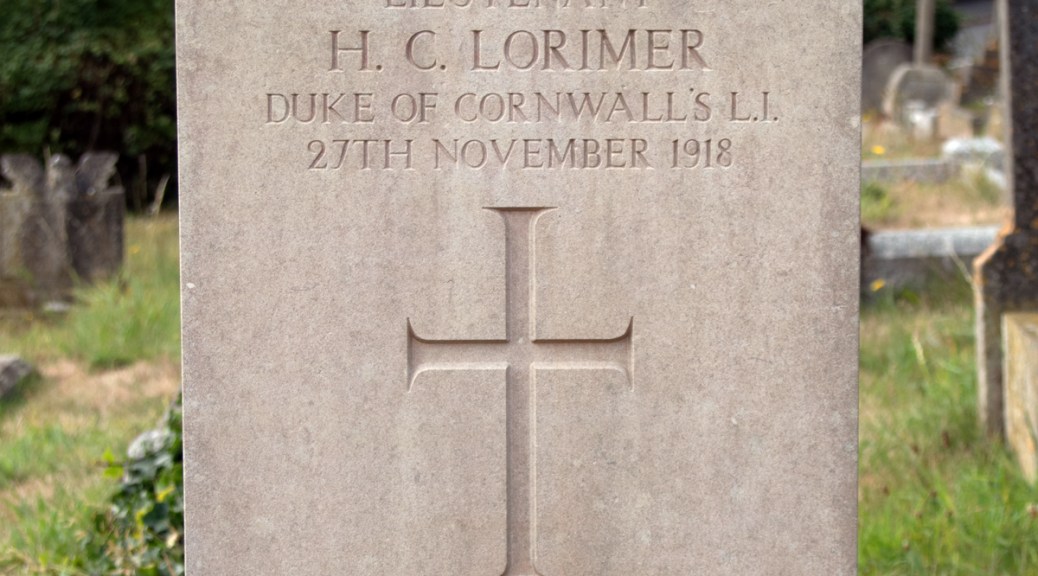
Hugh Cowan Lorimer was born on 27th November 1886 in Totnes, Devon. The oldest of four children, his parents were Scots-born draper Robert and his Devonian wife, Susan.

This was a family business, with Robert’s father – also called Robert – running the drapery at 59 Fore Street since the 1871 census. By 1891, Hugh’s father had taken over, and the family remained there until at least the time of the 1911 census return.

Hugh, by this point, had also taken on the mantle of draper. With the Lorimer business firmly set up in Totnes, he moved to Paignton, and opened a shop on the central Victoria Street. By 1911 he was listed as being the main employer, with his sister Muriel at his side, and a live-in servant, Bella Loram, helping to manage the household.

In the spring of 1914, Hugh married Gwendoline Pridham. Little information about her is available, but she had been born in Newton Abbot, and was a year younger than her new husband.

When war came to Europe later that year, Hugh was called upon to play his part: “He joined the Army in June, 1915, and received a commission in the 1/5th [Duke of Cornwall’s Light Infantry] with whom he served in France for 15 months prior to March 30th, where he was severely wounded, with the result that he had to undergo several operations, and only recently rejoined his Regiment.” [Western Times: Monday 2nd December 1918]

Lieutenant Lorimer was not fully out of harm’s way, however. As the summer moved to autumn, he fell ill, contracting influenza, which became double pneumonia. Admitted to hospital in Eastbourne, East Sussex, he succumbed to the condition on 27th November 1918: his 32nd birthday.

Hugh Cowan Lorimer was brought back to Devon for burial. He was laid to rest in Paignton’s sweeping cemetery, on the outskirts of the town he had made his home.


Gwendoline was pregnant when she was widowed: the couple’s child, Joyce, was born on 29th June 1919, never to know her father.


Hugh’s younger brother Kenneth was also caught up in the Great War. He had emigrated to Canada at some point after the 1911 census, but volunteered for army duty in 1915.

Lieutenant Lorimer was attached to the 4th Battalion of the Canadian Machine Gun Corps, and was entrenched on the Western Front. “He was in command of a section that was in a tank taking part in an attack north west of Le Quesnel. The tank was put out of action by enemy shell fire, and Lieutenant Lorimer was wounded by a splinter from a shell. He was removed from the tank and received First Aid but died shortly afterwards.” [Canadian War Graves Registers (Circumstances of Casualty)]

Kenneth Lorimer died on 8th August 1918, days short of his 30th birthday. He was laid to rest in Beaucourt British Cemetery in Picardie.


Able Seaman Walter Brett

Able Seaman Walter Brett

Walter Brett was born in Batheaston, Somerset, on 12th July 1896. The fourth of seven children, he was the second son of George and Louisa Brett. George was a groom and coachman from Norfolk, and his work took the family around the country. Louisa had been born in Staffordshire, their oldest child, daughter Florence, had been born in South Wales. By 1893, the family had settled in Somerset, but the next census, taken in 1901, found them in Branksome, Dorset.

When Walter finished his schooling, he found work as an errand boy for a hairdresser. By now the Bretts had moved back to Somerset, where George – and his widowed father, John – were working as coachmen for a Mr Page. There were seven in the household – George, Louisa, Walter and three of his siblings, and George Sr – and the family were living at 1 Nelson Terrace, on Walcot Street, Bath, in a six-roomed cottage.

Walter sought bigger and better things for himself. His older brother, Frederick, had left home, and was working as a grocer’s assistant in Brislington – now a suburb of Bristol – and he too wanted a career. On 23rd January 1912, he enlisted in the Royal Navy. As he was only 15 year of age, he was given the rank of Boy 2nd Class, and was sent to HMS Impregnable, a training ship based in Devonport, Devon, for his induction.

Obviously showing signs of ability and commitment to the role, Walter was promoted to Boy 1st Class just seven months later. His first assignment was on board the battleship HMS Cornwallis, and he spent the remainder of 1912 serving with her.

After a brief period back in Devonport – this time at HMS Vivid – and six weeks aboard HMS Lancaster, Boy 1st Class Brett was assigned to the ship that would become his home for the next three years. HMS Lion was a battlecruiser, and she was to serve as the flagship of her class of ships during the First World War.

Walter came of age while serving on Lion, and was given the rank of Ordinary Seaman on his eighteenth birthday. His service records show that he was 5ft 6ins (1.68m) tall, with brown hair, blue eyes and a fresh complexion. He was also noted as having a mole on his stomach.

Walter was promoted to Able Seaman in the summer of 1915, and remained on board HMS Lion until the end of April the following year. His ship had been involved in a number of skirmishes by this point, including the Battle of Heligoland Bight, the defence of the raid on Scarborough and the Battle of Dogger Bank. In June 1916, she would be caught up in the Battle of Jutland, but Able Seaman Brett was back on terra firma by this point, and was billeted in Devonport.

On 1st August 1916, Walter was given a new posting, when he was assigned to the dreadnought battleship HMS Ajax. Acting as support to the Norwegian convoys in the North Sea, he was to remain on board until the closing weeks of the war.

Walter’s brother Frederick, meanwhile, was also caught up in the conflict. He had enlisted in the Gloucestershire Regiment, and was assigned to the 12th Battalion. By the spring of 1917, his unit was based in Arras, and was Private Brett was heavily involved. Following an attack on 8th May, he was declared missing, presumed dead. He was 24 years of age, and is commemorated on the Arras memorial.

Back at sea, in October 1918, Able Seaman Walter Brett became unwell, contracting a combination of influenza and pneumonia. He was transferred to the Hospital Ship Garth Castle, but the conditions were to get the better of him. He passed away on 27th October, at the age of 22 years old.

Walter Brett was brought back to Somerset for burial. His parents had lost both of their sons, but were able to lay their youngest to rest in Locksbrook Cemetery, Bath.


Lance Corporal Ernest Pond

Lance Corporal Ernest Pond

Ernest Charles Pond was born in the autumn of 1889 in Bath, Somerset, and was the younger of two children. His father, Charles, who worked as a wheelchairman, died in 1904, leaving his mother, Eliza, to raise the Ernest and his older sister, Daisy, on her own.

The 1911 census shows the determination the Pond family had in the wake of Charles’ death. Eliza had opened up a tea room in River Street Place, and was living above the business with Daisy and two servants. Daisy, meanwhile, was employed as a school teacher, something she had been doing for at least ten years. Ernest had left Bath, and headed for London: he had taken a room in a house in Tufnell Park, and was working as a furniture designer.

When war came to Europe, Ernest was called upon to play his part. Sadly, full details of his service have been lost to time, but it is clear that he had enlisted by the summer of 1918. He joined the Middlesex Regiment, and was assigned to the 6th (Reserve) Battalion. His unit formed part of the Thames and Medway Garrison, and there is no evidence that Ernest spent any time overseas.

By the autumn of 1918, Ernest had risen to the rank of Lance Corporal. With the war coming to an end, he fell ill, however, and was admitted to a military hospital in Chatham, Kent. Details of his illness are unclear, but it was severe enough that he succumbed to it: he passed away on 2nd November 1918, at the age of 28 years old.

The body of Ernest Charles Pond was taken back to Somerset for burial. He was laid to rest in Bath’s sweeping Locksbrook Cemetery, not far from where his father was buried.