Tag Archives: Battle of the Somme

Lance Corporal Henry Rowell

Henry Edward Rowell was born on 22nd May 1898 in Southwark, Surrey. One of five siblings, of whom only three survived childhood, his parents were Henry and Jane Rowell. Henry Sr was a bricklayer’s labourer from Southwark, and the family were brought up in a small terraced house on Brandon Street, Walworth.

When he finished his schooling, Henry Jr found work as a turner’s improver but, when war came to Europe, he was called upon to play his part. He enlisted on 29th May 1915, and, as a Private, was attached to the 12th (Service) Battalion (Bermondsey) of the East Surrey Regiment. His service records tell a little of the man he was, confirming that he stood 5ft 3.5ins (1.61m) tall, and suggesting that he gave his age a 19 years old (he was just 16 at the time).

Henry seemed to have made an impression on his superiors as, in early October, he was promoted to Lance Corporal. His early service was based on home soil, primarily in Witney, Surrey.

In December 1915, Henry was temporarily released from military duty for munitions work. Sent to work for the engineering company Peter Hooker Ltd, in Walthamstow, Essex, Lance Corporal Rowell was to remain here for the next four months. On 25th March 1916, however, he was called back to service, as his battalion readied itself to move from its base, by that point in Aldershot, Hampshire, to Northern France.

Lance Corporal Rowell found himself in the thick of things very quickly. From 1st July, the 12th Battalion was caught up in the Battle of the Somme, and he remained entrenched there for the next couple of months.

On 15th September 1916, the British launched an attack on the German front line at Flers-Courcelette, mid-way between Albert and Bapaume. Lance Corporal Rowell was involved in the battle, which lasted until the end of the month, and was cut down on the very first day. He was just 18 years of age.

Henry Edward Rowell was laid to rest in the Bulls Road Cemetery in Flers, Picardie.


Henry Edward Rowell was my paternal grandmother’s first cousin.


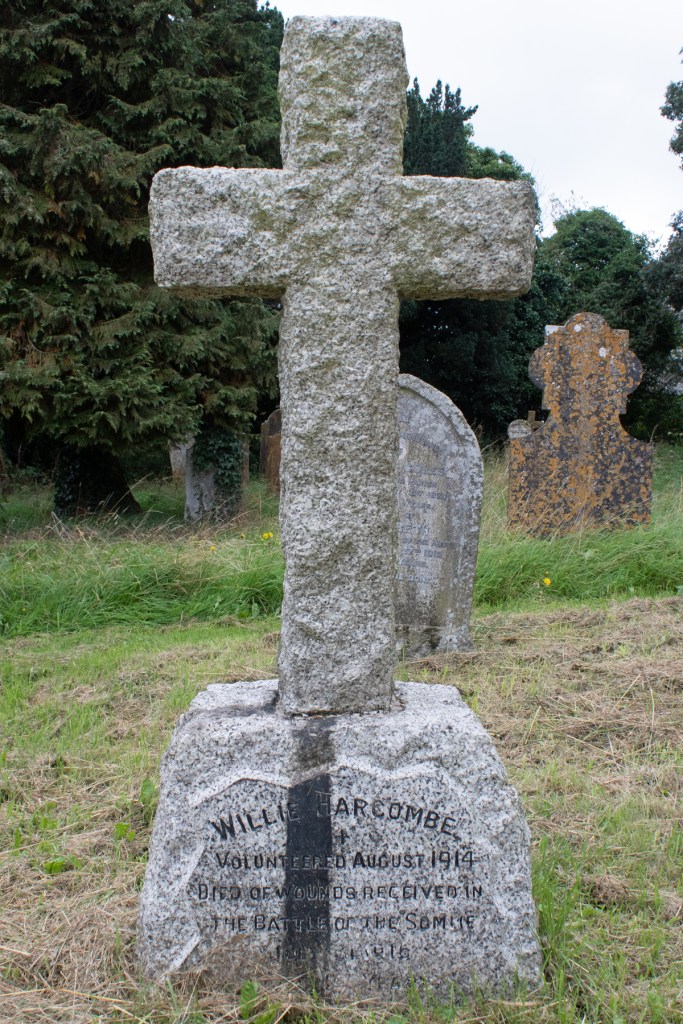
Private William Harcombe

Private William Harcombe

William Harold Harcombe was born on 25th September 1897 in Sampford Arundel, Somerset. One of twelve children, his parents were William and Jane Harcombe. William was an agricultural engine driver who, by the time of the 1911 census, had moved the family five miles north west to Ashbrittle.

When war came to Europe, William was one of the first to enlist, joining the Devonshire Regiment in August 1914. He was assigned to the 8th Battalion, and after nine months’ training, he found himself in Northern France.

Private Harcombe’s troop was involved in some of the fiercest skirmishes of the conflict, at Loos in the autumn of 1915, and at the Somme the following year. It was during this battle – probably at Delville or High Wood – that he was injured.

William was medically evacuated to Britain for treatment, and was admitted to a military hospital in Mile End, London. His injuries were to prove too severe, however, and he succumbed to them on 31st July 1916: he was just 18 years of age.

The body of William Harold Harcombe was brought back to Somerset for burial. He was laid to rest in the tranquil graveyard of St John the Baptist Church in Ashbrittle.


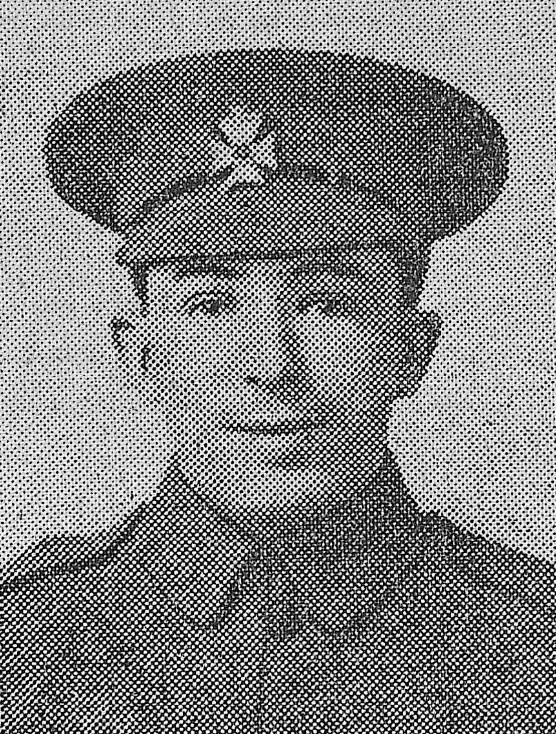
Rifleman Frederick Avards

Rifleman Frederick Avards

Frederick John Avards was born in Lamberhurst, Kent, in the summer of 1891. The oldest of three children, his parents were Frederick and Lucy Avards. Frederick Sr was a licenced publican and went on to run the Beckingford Arms in Tovil, near Maidstone.

Frederick Jr helped his father with the business, but when war came to Europe, he stepped up to play his part. He enlisted on 1st January 1915, joining the 7th (Service) Battalion of the King’s Royal Rifle Corps.

Rifleman Avards was sent to France on 19th May 1915 and very quickly found himself in the thick of things. Based on the Western Front, his regiment was involved in a number of skirmishes during the Battle of the Somme.

Last week [Rifleman Avards’] parents received a telegram stating that he was lying at the Royal Victoria Hospital, Netley, dangerously wounded. They at once proceeded to Netley but only to find that he had passed away.. Meanwhile his lieutenant, knowing he had been hit and thinking he had been killed on the battlefield, had written a feeling letter to the parents, saying his gallantly he had done his duty and that he had died a true rifleman’s death in the hour of victory, and worthily upheld the name of his regiment.

Kent Messenger & Gravesend Telegraph: Saturday 9th September 1916

Rifleman John Avards had passed away from his injuries on 3rd August 1916: he was just 24 years of age. His body was brought back to Kent for burial and he was laid to rest in the graveyard of St Peter & St Paul’s Church in Aylesford, Kent, not far from the Lower Bell public house, which his parents were then running.


Rifleman Frederick Avards
(from britishnewspaperarchive.co.uk)

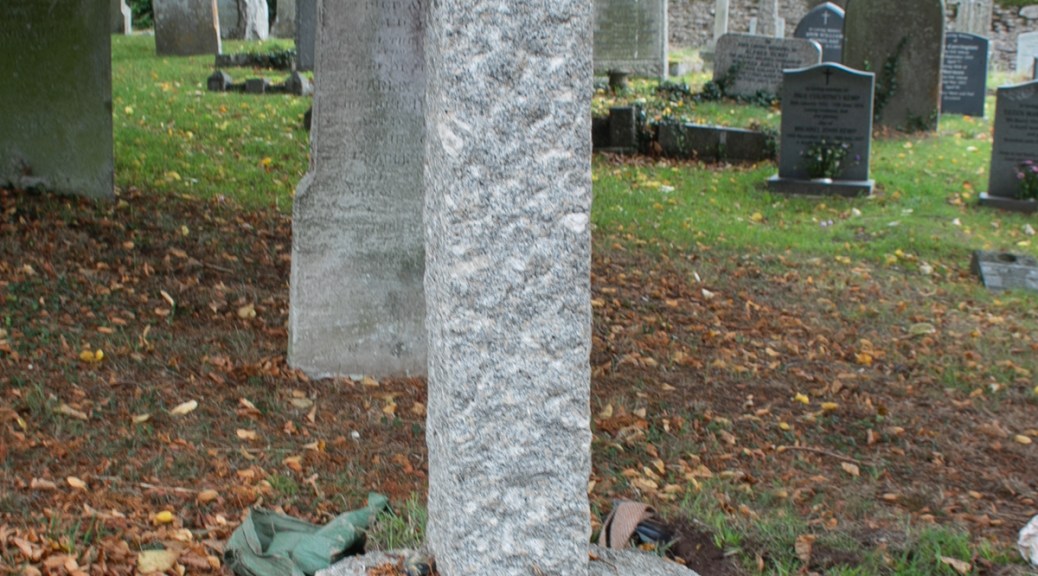
While buried in the churchyard, the location of Frederick’s grave is not known. Instead, he is commemorated on a joint headstone in the First World War section of the graveyard.


Private George Garrett

Private George Garrett

George Garrett was born in early 1895 in Abbotskerswell, Devon. He was the oldest of five children to George and Annie Garrett. George Sr was a labourer and the family seemed to travel with his work: his and Annie’s younger children were born in Aldershot, Plymouth and London.

When he left school, George Jr found work as an errand boy – the family were back in Devon by this point. War was on the horizon, however, and he would feel compelled to play his part. Full details of his service are not available, but it is known that he enlisted in the Devonshire Regiment, and was assigned to the 2nd Battalion.

Private Garrett arrived in France in December 1915, and was soon entrenched on the Western Front. Hi battalion was caught up in the Battle of the Somme and George was badly injured, having received a gunshot wound to his spine.

Medically evacuated to Britain, his wounds proved too severe for him to return to duty, and he was discharged from the army on 28th December 1916. It is not clear whether he returned home, but it seems likely that he remained in hospital in Exeter. He would never recover from his injuries. He passed away at the hospital on 18th April 1917, at the age of 22 years old.

George Garrett was laid to rest in the graveyard of St Andrew’s Church in Ipplepen, Devon, where his family were, at that point, living.


Private Owen Owen

Private Owen Owen

Owen Jonah Owen was born in 1880, the oldest of eleven children to Jonah and Elizabeth Owen. Jonah was a quarryman at one of the slate mines around Llanberis, Gwynedd, and this is where the family were raised.

Owen followed his father into the slate quarries and, on 26th September 1903, he married Ann Jones, the daughter of another quarry worker. The couple went on to have four children: Richard, Jonah, Delia and Gwyneth.

He was well known and respected in the village, had a passion for singing and “had conducted singing festivals held by the Congregationalists of the district.” [Caernarvon & Denbigh Herald: Friday 24th November 1916]

War was closing in on Europe, and Owen was keen to play his part. Sadly his service records have been lost over time, but it is clear that he had enlisted in the army by May 1916. Private Owen joined the Royal Welch Fusiliers, and was assigned to the 14th Battalion.

Part of the 38th Division, the battalion was to be caught up in some of the fiercest and most desperate fighting of the First World War. In July 1916, Owen would have been entrenched at The Somme and, after the first few horrific days, his battalion was one of those involved in the fighting at Mametz Wood.

Private Owen was badly wounded during the battle and medically evacuated to Britain for treatment. Admitted to a military hospital in Birmingham, he was to remain there for a number of months until, on 12th November 1916, his body finally succumbed to his injuries. He was 36 years of age.

Owen Jonah Owen was brought back to his home village for burial. He was laid to rest in the graveyard of St Peris Church in Llanberis.


Guardsman Bertie Thomas

Guardsman Bertie Thomas

Bertie John Thomas was born in Penarth, Glamorgan, in 1890, one of twelve children to Henry and Elizabeth Thomas. Henry was a ship’s rigger, but much of Bertie’s life remains a mystery.

The 1901 census recorded the family living together in a small terraced house in Cliff Street, but ten years later, with the family having grown, many had dispersed. Bertie’s older sisters had moved on – Hannah as a live-in barmaid in nearby Barry; Gladys working as a dressmaker in the Rhondda, living with her aunt and uncle. Of Bertie himself, however, there is no record.

When war came to Europe, Bertie would have played his part. He had enlisted in the Welsh Guards by the spring of 1916, and was a Guardsman in the 1st Battalion. The Guards Division were involved in many of the key conflicts of the war, including at Loos in 1915 and at the Somme the following year.

Guardsman Thomas was caught up in the Battle of Flers-Courcelette in September 1916, and was badly wounded. He was medically evacuated to home soil for treatment, and was admitted to a hospital in Cardiff. His wounds were to prove too severe, and he died on 26th September 1916, aged just 26 years of age.

Bertie John Thomas was brought back to Penarth for burial. He was laid to rest in the graveyard of St Augustine’s Church in the town.


Rifleman Frederick Partridge

Rifleman Frederick Partridge

Frederick George Partridge was born on 26th May 1890 in Kingsteignton, Devon. He was one of ten children to clay cutter George Partridge and his wife, Anna. George passed away in 1903, but Frederick left school, and also found work as a cutter, helping to pay his way at home.

When was came to Europe, Frederick was keen to play his part. He enlisted on 18th November 1915, and was assigned to the King’s Royal Rifle Corps as a Rifleman. His service records show that he stood 5ft 9ins (1.75m) tall and weighed 145lbs (66kg). He was of good physical development, but had slightly flat feet.

After his initial training, Rifleman Partridge was sent to France, arriving in April 1916. His regiment soon found itself on the front line and, that summer, was firmly ensconced at the Somme. Sadly, Frederick was not to escape injury – he received a gun shot wound to his left thigh on 2nd September.

The wound was serious enough for him to be medically evacuated back to England for treatment. He was admitted to the Royal Victoria Hospital in Netley, near Southampton, but died of his injuries on 12th September 1916. He was just 26 years of age.

Frederick George Partridge was brought back to Devon for burial. He was laid to rest in the graveyard of St Michael’s Church in Kingsteignton.


Bombardier Harold Cornall

Bombardier Harold Cornall

Harold William Cornall was born on 16th August 1890 in Kingsteignton, Devon. He was the oldest of six children to William and Elizabeth Cornall. William worked as a carter and labourer for a tannery in the town, and, when he left school, this was where Harold also went for work.

In the autumn of 1912, Harold married Hilda Potter, from nearby Newton Abbot. The couple set up home and went on to have one child, a daughter called Winifred.

War broke out and, on 29th August 1914, Harold enlisted in the Royal Field Artillery. He was assigned to the A-Battery of the 90th (Howitzer) Brigade and was given the rank of Bombardier. He soon found himself in the thick of battle, as the brigade was sent to The Somme.

Bombardier Cornall was injured in the spine by some shrapnel, and medically evacuated to England in June 1916. Sadly, his injuries led to him becoming paralysed, and he passed away at the King George’s Hospital in London on 20th August 1916. He was just 26 years of age.

Harold William Cornall’s body was brought back to Devon; he was laid to rest in the graveyard of St Michael’s Church in his home town of Kingsteignton.


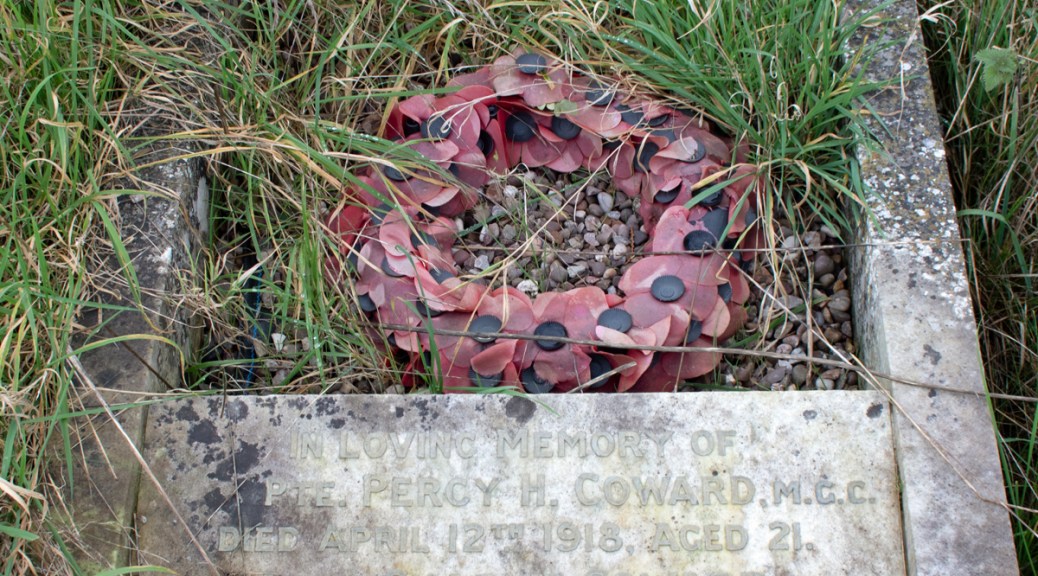
Private Percy Coward

Private Percy Coward

Percy Herbert Coward was born in the Wiltshire town of Westbury in the autumn of 1896. He was one of seven children – all boys – to Lily Coward and her weaver husband Charles. Not long after Percy was born, the family moved across the county border to Frome, Somerset, presumably for Charles’ work.

By the time of the 1911 census, the Coward family were living in a five-room end-of-terrace cottage on the outskirts of the town. Charles and Percy were both working as warpers – threading looms – in the cloth industry; two of his brothers were working for a printer in the town. Percy was proving himself an integral part of the community.

[Percy] was very highly esteemed by a large circle of acquaintances… He was a worker with the YMCA and Frome Brotherhood, a member of the band and in other directions showed himself a young man of much promise. He was employed successively at Messrs Houston’s [Woollen Mill] and at the Silk Factory.

Somerset Standard: Friday 26th April 1918

An active member of the town’s territorial force, when the Great War broke out he was mobilised. Initially attached to the Royal Army Medical Corps, he subsequently served with the Royal Army Service Corps and the North Staffordshire Regiment, before obtaining his final transfer to the 42nd Company of the Machine Gun Corps.

During his time in the army, Private Coward would have seen action in some of the fiercest battles of the war – at the Somme, Arras and Ypres. In the spring of 1918, his battalion was involved in the Battles of St Quentin and the Avre, and it was during this last skirmish that he was wounded.

Percy’s injuries were severe enough for him to be medically evacuated back to England and, once there, he was admitted to the Royal Woolwich Hospital in South London. His wounds were to prove too much for him, however, and he passed away at the hospital on 12th April 1918. He was just 21 years of age.

Percy Herbert Coward was brought back to Somerset for burial. He was laid to rest in the Dissenters’ Cemetery, Vallis Road, within walking distance of his family home.


Private William Ridley

Private William Ridley

William Frederick Ridley was born on 7th April 1887 in the New Brompton area of Chatham/Gillingham, Kent, one of eight children to John and Elizabeth Ridley. John was an engine fitter in the nearby naval dockyard and, as the key employer in the area, William followed in his father’s footsteps.

Sadly, John died in 1904, and this seems to have been what spurred his son on to a better life. In 1907 William emigrated to Canada, settling in the town of Wentworth, on the banks of Lake Ontario.

It was in Ontario that William met his future wife. Edith Wass was the daughter of a local labourer; the young couple married on 5th June 1909, and went on to have two children, John, born in 1910, and Wilfred, who was born five years later.

During this time, William was putting his engineering skills to the test; his marriage banns confirm he was a machinist. While there is nothing to confirm any specific trade, given his proximity to the coast, dockyard employment seems probable.

On the other side of the Atlantic, war was breaking out; keen to do his part for King and Country, William enlisted in the Canadian Expeditionary Force on 28th July 1915. Initially enlisting in the 76th Overseas Battalion of the Canadian Infantry, he was shipped to England a year later and transferred across to the 4th Battalion.

Once on the Western Front, Private Ridley was thrown right into the thick of things. His battalion fought at the Battle of Flers-Courcelette – part of the Battle of the Somme – and it was here, on 18th September 1916, that he was wounded.

William received shrapnel wounds to his head, hand and right leg. Initially treated on site, he was quickly evacuated back to England, and admitted to the 2nd London General Hospital in Chelsea. Sadly, however, his wounds appeared to have been too severe; Private Ridley passed away from them on 30th November 1916, aged just 29 years old.

With his widow and children still in Canada, William’s body was taken back to Kent. He lies at rest in the Woodlands Cemetery in Gillingham, close to where his mother was still living.


Larger memorial image loading...
Private William Ridley
(from findagrave.com)