Tag Archives: Dorset

Private Sidney Lord

Private Sidney Lord

Sidney George Lord was born on 29th March 1895, one of six children to Sidney and Clara Lord. Sidney Sr was a shipwright from Bideford in Devon, and he brought the family to Kent, presumably for work at the Naval Dockyard in Chatham.

Sidney Sr passed away in 1912 and his son left school, finding work as a plumber’s apprentice. War was on the horizon, however and he was keen to do his bit as soon as possible. Sidney Jr enlisted in November 1914, joining the Queen’s Own Royal West Kent Regiment.

After his initial training, Private Lord was sent to the Front on 22nd April 1915, serving in France with his regiment for just over a year. Towards the end of this time he became anaemic, and was shipped back to England for treatment.

Private Lord was admitted to the Yeatman Hospital in Sherborne, but sadly succumbed to his anaemia a matter of weeks later. He passed away on 12th July 1916, having not lung turned 21 years of age.

Sidney George Lord was laid to rest in the Woodlands Cemetery in Gillingham, Kent, close to where his father was buried.


Private Sidney Lord

Sapper Francis Hawkins

Bridgwater (Wembdon)

Francis Ralph Hawkins was born in Somerset in March 1895 and was one of twelve children to Charles and Jane Hawkins. Charles was a police sergeant and the family lived in Bishop’s Lydeard, a village to the west of Taunton.

By the time of the 1911 census, Charles had retired from police work, and was operating as a licenced victualler in nearby Bridgwater. While Jane was supporting her husband running the business, Francis was apprenticed to a local clothier.

When war broke out, Francis was quick to enlist – he joined the Royal Engineers, and was appointed a Sapper. He wasn’t with the company for that long, however, as by February he had been admitted to the Red Cross Hospital in Christchurch, Dorset, with a fever.

Sadly, he was not to recover; Sapper Hawkins passed away from spinal meningitis on 17th February 1915. He was just 19 years of age.

Francis Ralph Hawkins lies at rest in the Wembdon Road Cemetery, Bridgwater.


Saddler Tom Rawlings

Saddler Tom Rawlings

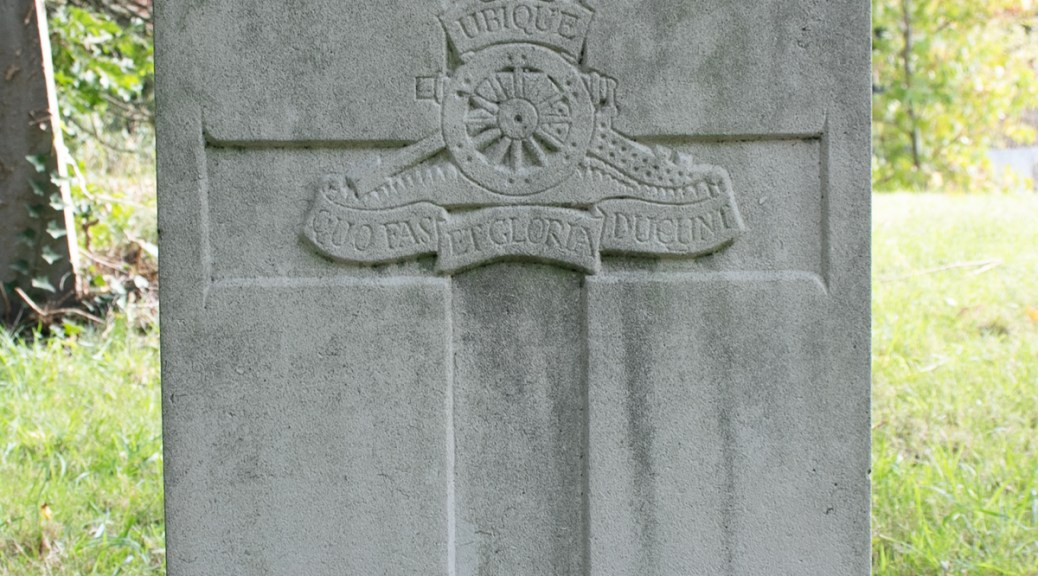
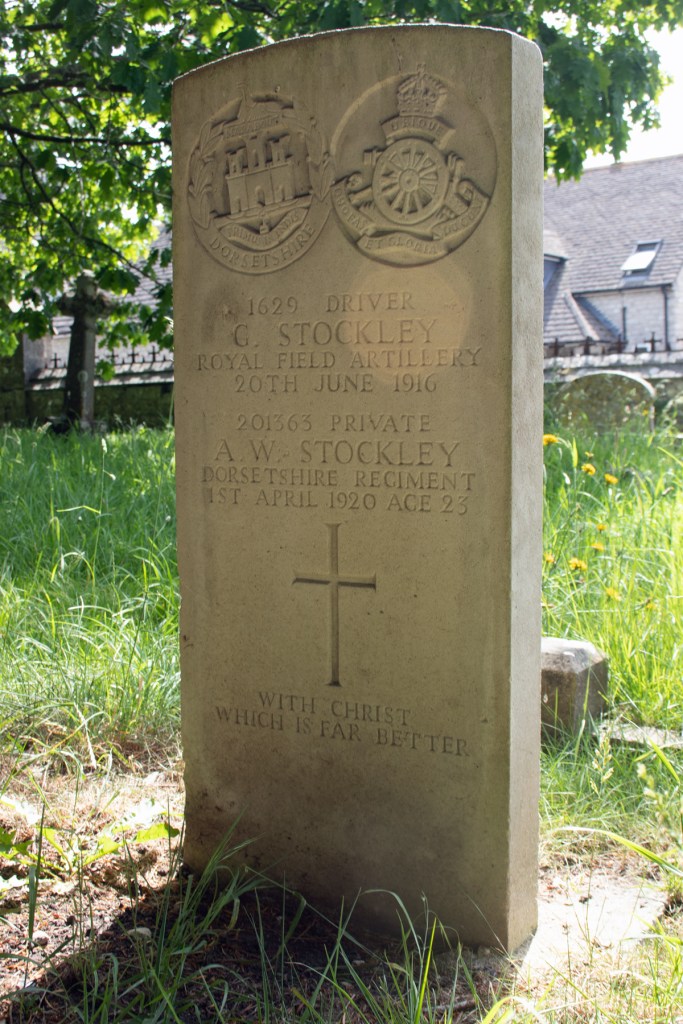
Tom Hallett Walter Rawlings was born in 1896, the eldest of six children (and only son) to Walter and Jane Rawlings. Dorset-born Walter had worked as a carpenter and a groom, and Tom had joined him as a stable lad by the time of the 1911 census.

By the time he enlisted in July 1915, Tom’s work with all things equine helped land him a role in the Royal Army Service Corps as a Saddler. His role was backed up as he had previously been apprenticed to Ernest Cottle, a saddler in Blandford, Dorset.

Initially he worked on the Home Front, but he was posted to France as part of the British Expeditionary Force in January 1916, as part of the 1st Company.

Saddler Rawlings’ time overseas was brief; within three months of being shipped overseas he had contracted phthisis (also known as tuberculosis), and he was sent home for treatment on 22nd April 1916.

His health reached the point where he was discharged as being medically unfit on 12th June, and within a matter of weeks, Tom has passed away.

Tom Hallett Walter Rawlings died on 20th June 1916; he was 19 years old. He lies at rest in the cemetery of his home town, Sherborne.


Tom’s father Walter also entered the army as worked in the Royal Army Service Corps. While records of his military career are not immediately evident, it seems that he survived the war, although he may have been discharged in 1919 having fallen ill with malaria.


Lance Corporal Harold Russell

Lance Corporal Harold Russell

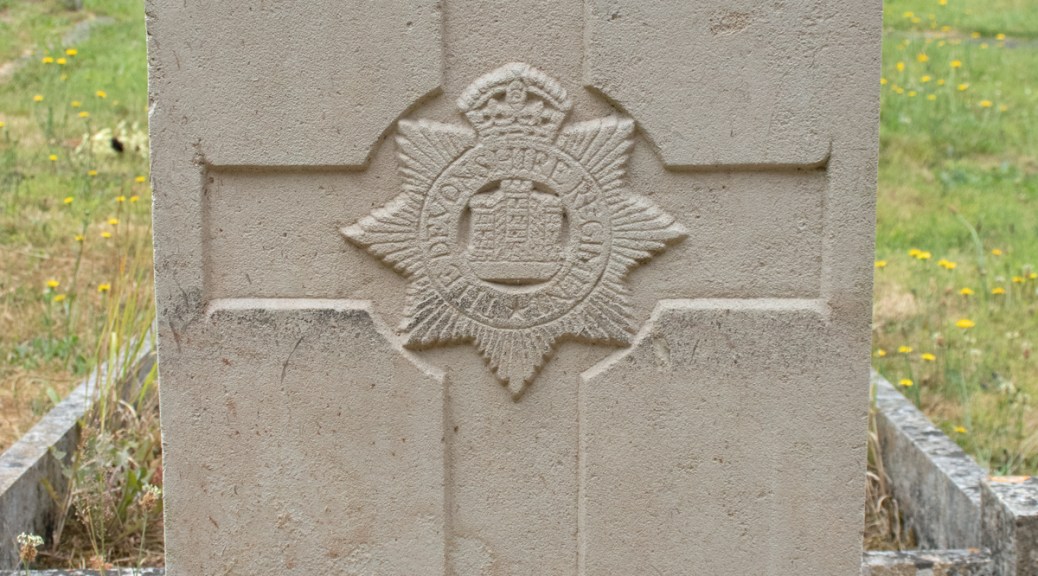
Harold Stanley Russell was born in 1895, the third of six children to carpenter Henry Russell and his wife Mary. The family lived in Sherborne, Dorset, and this is where Harold grew up; by the time of the 1911 census, he was working as a hairdresser in the town.

While Harold’s military records are not readily available online, his last few weeks can be determined through the local press of the day.

He enlisted in the Dorsetshire Regiment in the summer of 1915, but was attached to the Wiltshire Regiment when battalions went to France in May 1916.

Lance Corporal Russell’s Lieutenant wrote to his parents to report on Harold’s injury:

[He] was wounded by a bomb on the morning of July 28th while on duty in the trenches. “At the moment of writing I do not know if it is a very serious case, but I do know he will lose the use of his left hand. He was a most popular fellow, and always willing to do his part nobly with a brave heart, and nothing grieved me more than to see him in pain. His wants were immediately attended to, and I suppose by now he is under treatment in the hospital. He is being well cared for, and the authorities will let you know how he is progressing.

Western Gazette, Friday 4th August 1916

A week later, the newspaper reported an update:

Lance-Corporal Harold Russell… is now at the Leicester Military Hospital in a critical condition. His parents were telegraphed for on Friday last, and visited him. They found he had been very seriously wounded by a bomb whilst on duty in the trenches in France. His injuries are in the chest and right arm, while his left hand has been amputated. [He] was acting platoon-sergeant at the time he was wounded, and had taken part in three battles. After being wounded he walked one and a-half miles to the dressing-station, but afterwards collapsed. His parents returned to Sherborne on Tuesday as he was slightly better, but were telegraphed for again on Wednesday.

Western Gazette, Friday 11th August 1916

The day of the second article, Lance Corporal Harold Russell lost his fight for life, dying in a Military Hospital in Leicester. He was just 21 years old.

The next week, the young soldier featured in the newspaper again, with an 80-line report on his funeral being featured on the Roll of Honour page.

Harold Stanley Russell lies at rest in the cemetery of his home town, Sherborne.


Private Arthur Palmer

Private Arthur Palmer

Arthur Palmer was born in Bicester in 1889 to groomsman George Palmer and his wife Annie. Arthur was the eldest of five children, five boys and one girl.

By 1911, the family had moved to Dorset, where George continued to work as a groom. His son, Arthur, had also gone into domestic service, and was a footman. Presumably this was under the same employ as his father, although the records do not confirm this.

This is where the trail for Arthur Palmer dries up.

From his gravestone, we know he served in the Machine Gun Corps (MGC). The Register of Soldiers’ Effects confirms he was in the 3rd Company; this was formed in January 1916, so Private Palmer can only have enlisted after that date.

Online research only brings up MGC military service records for an Arthur George Palmer, who lived in Kettering. However, this Private survived the war, so could not be the one buried in Dorset. There is nothing in contemporary newspapers to suggest that there was anything untoward or unusual about his passing.

All I can say for certain is that Private Arthur Palmer died at the Cannock Chase Military Hospital on 13th November 1918.

He lies at rest in Sherborne Cemetery, Dorset. He was 30 years old.

Private Cecil Paine

Private Cecil John Paine

Cecil John Paine was born in Sherborne, Dorset, in May 1899, the son of John and Emily Paine. He was the fifth of seven children, and the second son.

Cecil’s military records are sparse, but the local newspaper provides more information. According to the Western Gazette, Cecil joined up on reaching his 18th year, and had only been in service for three weeks, when he succumbed to pneumonia at Chiseldon Camp in Wiltshire on 6th June 1917.

Private Cecil Paine lies at rest in Sherborne Cemetery.


As an aside, Chiseldon Camp was initially set up to train new soldiers. In 1915, part of it was developed into a hospital for wounded soldiers before, in 1916, it began to treat soldiers coming back from the front who had contracted VD. Interesting times that Private Paine probably knew little about.


Cecil’s eldest brother, Frederick William Paine also served in the Great War. He had enlisted in the navy in 1903, initially for 12 years, but continued on and was finally discharged in 1919.

Private John Kennell

Private John Kennell

John Kennell was born in Yeovil in 1872. One of five children, he was the only son of bootmaker Francis Kennell and his wife Elizabeth.

John enlisted in the Dorsetshire Regiment in 1888. Interestingly, his enlistment records give his surname – and that of his parents – as Hosegood. When he was discharged, however, the documents give him as John Hosegood alias Kennell (the census records confirm his family name as Kennell, however).

Private Hosegood was initially based at The Citadel Military Barracks in Plymouth. His service meant he travelled the world – he spent two years in Egypt, four in India and two in South Africa (where he was involved in the relief of Ladysmith). In all, John served 14 years in the army and was discharged in May 1902.

John married Bessie Greenstock six weeks after being demobbed; the Banns show they wed in the Parish Church of Sherborne (or Sherborne Abbey), and list John as a soldier. He was 30, Bessie seven years older.

By the time of the 1911 census, the couple were living with their two young children – Francis and Edith – and Bessie’s widowed mother in the village of Oborne, two miles to the west of Sherborne in Dorset.

When war broke out, John reenlisted within weeks. After a period of re-training, Private Kennell was posted to France as part of the British Expeditionary Force on 23rd October 1914, and served nearly three years on the Western Front.

Private Kennell returned to the UK on 30th December 1916, and remained there until being discharged as no longer fit for war service in July 1917. Sadly, I have been unable to find any details of what led to him being discharged, but the service records do not suggest that he was wounded in any way.

After his discharge, details of John’s life are sparse. His name does not appear in any newspapers of the time, and all I have been able to find it that he passed away on Christmas Eve 1919. He was 47 years old and was buried five days later.

Private John Kennell lies at rest in Sherborne Cemetery, Dorset.

Rifleman Frederick Batson

Rifleman Frederick Batson

Frederick Batson was born in Sherborne in 1888, the eighth child of Cornelius and Mary Ann Batson.

Far too young, Frederick was an orphan as Cornelius died when he was just a year old; Mary Ann passed away in 1906, when he was 18.

There was positive news on the horizon, however; in January 1909, Fred married Elsie Frances Marshallsea and by the time of the 1911 census, the couple were living in Sherborne and had a year old daughter, Eveline. Fred was working as a carpenter and journeyman and the young couple went on to have three further children.

Rifleman Batson enlisted in the Prince of Wales Volunteers (South Lancashire Regiment) in 1916. This battalion fought on the Western Front during the Great War, and was involved in both Ypres, the Somme and Passchendaele.

It is not clear whether Frederick was involved in these battles. Back on home soil, he was admitted to a military hospital in Newport, South Wales, and passed away on 22nd March 1918, following an illness.

Rifleman Frederick Batson lies at rest in Sherborne Cemetery, reunited with his parents.

Private Augustus Dodge

Private Augustus Dodge

Augustus Kenneth Seymour Dodge was born in September 1898 to shoe and furniture dealer Augustus William Dodge and his wife Mildred. The elder of two children, Augustus and his family lived on Cheap Street, the main retails thoroughfare of his home town, Sherborne.

Augustus William had been plying his trade for a number of years, having been apprenticed to his father – another Augustus – in Frome and Devizes.

Augustus Kenneth joined the 7th Battalion of the Dorsetshire Regiment, a territorial reserve, which was trained in North Wales and based on a camp in Wool, near Bovington, Dorset. Sadly, I have been able to find little else of his military life, but it is unlikely that he was involved on the front line.

Private Dodge died on 31st March 1917, aged just 18. Nothing in the newspapers of the time suggest an unusual or violent passing, so it can only be assumed that he died from an illness, possibly influenza or pneumonia.

Augustus Kenneth Seymour Dodge lies at peace in the cemetery of his home town, Sherborne.


I was intrigued that Augustus Kenneth’s gravestone also commemorates his father – Augustus William Dodge – and so I did a bit more research. I found that the 1910s were not a good time for the Dodge family.

Augustus Dodge Sr (Augustus William’s father) died in 1912, at the age of 88. He left his estate – totalling more than £500,000 in today’s money – to his widow, Mary Ann, and two of his sons, including Augustus William.

Mary Ann Dodge passed away in April 1916, as the local newspaper reported:

Mrs Dodge, widow of the late Mr Augustus Dodge [Sr] died unexpectedly at her residence at Butts-hill on Thursday last. Mrs Dodge, who was in her 82nd year, walked down to St John’s Church in the morning and attended a service, and then walked up the hill to her home. She was taken ill at noon and passed away two hours later. On Saturday morning, the family received the news that Mr Hubert Dodge, bootmaker, or Warminster (brother of the late Me Augustus Dodge) had died.

Somerset Standard: Friday 28th April 1916

By this point, and within six years, Augustus William Dodge had lost both of his parents and his uncle Hubert. He had also lost his daughter, Ethel, who had died in 1910.

Another of Augustus William’s uncles, Albion Dodge, died in 1917, as did Private Augustus Kenneth Dodge, his son, and the protagonist of this post.

The effect of these losses – particularly that of his eldest son – cannot be underestimated and may well have contributed to his own passing, a year later.

Augustus William Dodge died on 17th June 1918, aged 51.

The Somerset Standard show how much of a businessman he had been, however, with an announcement of the sale of his estate, which included:

LARGE SHOP AND DWELLING-HOUSE, with extensive Premises in the rear, No 3 Stony-street, Frome, in the occupation of Mr Arthur Dodge, at £40 per annum.

SHOP AND PREMISES, No 4 Stony-street, Frome, in the occupation of the Argentine Meat Co. Ltd’, t £25 per annum.

SHOP AND PREMISES, No 13 Market-place, Frome, in the occupation of the National Party, at £18 per annum.

Substantially-built and Commodious TWO-STOREY WAREHOUSE, with Accommodation for Motor Car or Van, situate in the Blue Boar Yard, Frome. The top story is in the occupation of the Frome Town Band, at £12 per annum. The bottom storey is void.

DWELLING-HOUSE AND PREMISES, No 25 King-street, Frome, in the occupation of Mrs Thomas at £13 8s 8d per annum.

DWELLING-HOUSE AND PREMISES, No 1 Willow Vale, Frome, lately occupied by Mr Clarke, a £15 12s per annum.

TWO Substantially-built RESIDENCES with large Gardens, Nos 1 and 2 Hythe House, Rodden Lake, Frome, together with PADDOCK adjoining, in the occupation of Messrs Webb, Golden and Haddrell, at the net annual rental of £37.

FIVE COTTAGES AND GARDENS, Nos 2, 3, 4, 5, 6 Rodden Lake, Frome.

A commodious 3-storey WAREHOUSE, with double-door entrance for vans and side entrance, situate and being No 22 Vicarage-street Frome, in the occupation of Mr E Glass at £8 per annum.

SHOP, with DWELLING-HOUSE AND GARDEN, in Cheap-street, Sherborne, Dorset, in the occupation of Miss Beedell, at £20 per annum.

Somerset Standard: Friday 25 October 1918.

Lance Corporal William Warne

Lance Corporal William Warne

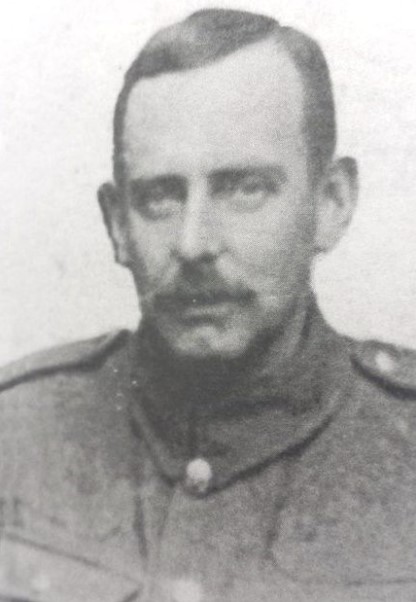
William Henry Warne was born in Walworth, South London, in March 1892. His father is not named, but his mother was Ellen Warne (or Gould), who was “living on her own means”. He had two older siblings, Fred – whose surname is listed as Gould – and Gertie Warne.

By the time of the 1911 census, William was a law clerk in West Coker, near Yeovil in Somerset. The record shows him living with his mother and sharing her surname – which was now listed as Gould. Again, Ellen’s occupation was “private means”.

William’s full military service records are not available, but various sources produce a little information.

Private William Warne had enlisted in the Dorset (Queen’s Own) Yeomanry by April 1915, as this is when he was dispatched to Egypt. August 1915 saw his battalion shipped to Gallipoli; William survived this horrendous battle and returned to Egypt by the end of that year. As a result, he earned the 1915 Star medal.

When the Dorset Yeomanry was retitled, Private Warne became part of the Corps of Hussars. After Egypt, the battalion moved to Palestine, where they saw out the war. He was appointed Lance Corporal at some point during this time.

The exact details of his passing are lost to time; he passed away on 9th October 1918 at the British Red Cross Hospital in Netley, and his records suggest that he died of wounds. He was 26 years old.

Lance Corporal Warne’s life was an intriguing one from start to finish.

The Army Register of Soldiers’ Effects is a document that shows how much was paid out to the relatives of soldiers who have passed away in service; in the research I have carried out over the last few months, this amount has generally ranged between £2 and £8, rarely reaching double figures.

William’s mother and sister, however, received a significant amount. The initial payment was £31 13s 8d, and this was followed by a second figure of £19 10s. There may be various reasons for this – the campaigns William fought in, the prestigious regiment, the appointment to Lance Corporal – but again this is another mystery that will remain such.

Lance Corporal William Warne lies at rest in Sherborne Cemetery.