Tag Archives: history

Officer’s Steward Giovanni Teuma

Officer’s Steward Giovanni Teuma

Giovanni Teuma was born on 25th December 1878 in Valetta, Malta. There is little information about his early life, but documents confirm that his parents were Paulo and Vinza Teuma.

Most of the information about Giovanni comes from his service records. He enlisted in the Royal Navy on 13th February 1898 as a Domestic 3rd Class. He was noted as being 5ft 5ins (1.65m) tall, with brown eyes, black hair and a dark complexion.

Giovanni’s first posting was on the cruiser HMS Venus. He remained on board for more than three years, which would be his longest assignment. Over the next fifteen years, he would serve on another dozen vessels, returning to shore at HMS Victory and HMS Pembroke – the Royal Naval Dockyards in Portsmouth, Hampshire, and Chatham, Kent, respectively – in between voyages.

Giovanni continually attained a Very Good rating at his annual reviews, and rose through the ranks over the years. He was promoted to Domestic 2nd Class in March 1905 and Officer’s Steward 2nd Class in October 1907. At this point, however, his ranks started to vary, spending just over a year as Officer’s Cook 1st Class before returning to the rank of Officer’s Steward 2nd Class.

On 21st January 1914, Giovanni was stood down: he seems to have requested extended shore leave. He returned to action three months later, retaking his previous rank. On 11th August, just a few weeks after war was declared, he was assigned to the light cruiser HMS Arethusa, as Officer’s Steward 1st Class.

The Arethusa had been launched in the autumn of 1913, and was confirmed as the flotilla leader of the Harwich Force when was was declared. Within weeks of Officer Steward Teuma boarding her, she was involved in the Battle of Heligoland Bight. Severely damaged by two German cruisers, a number of the crew were killed and injured, and she had to be towed home.

When the Arethusa docked at HMS Pembroke, those who were injured were taken to the Royal Naval Hospital in Chatham. Officer’s Steward Teuma was one of those treated there but, sadly, his wounds were to prove too severe. He passed away on 29th August 1914, the day after the battle: he was 35 years of age.

Givoanni Teuma was laid to rest in Woodlands Cemetery, Gillingham, not far from the Kent naval base he had visited regularly.
Petty Officer John Baker

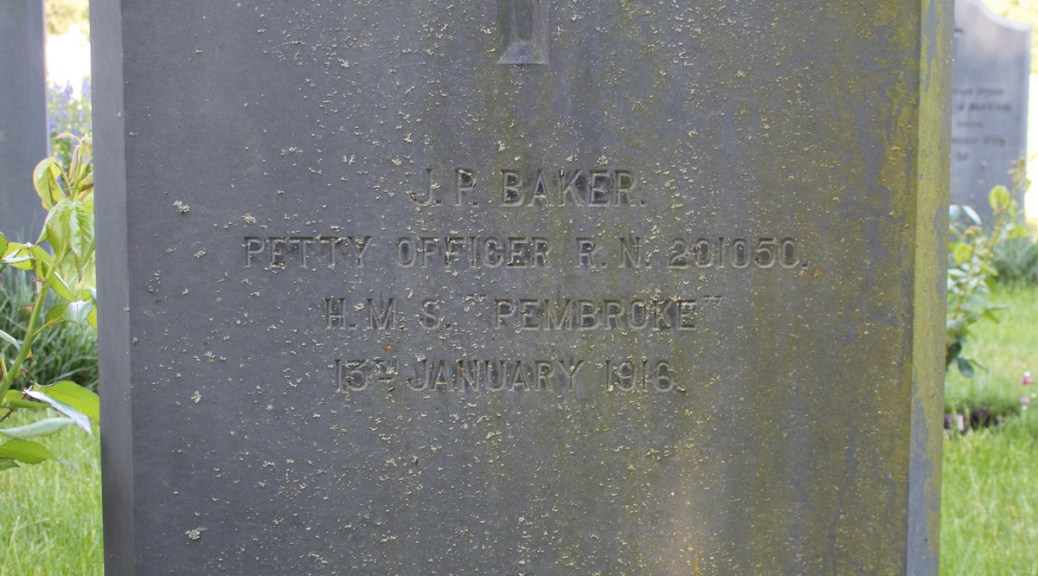
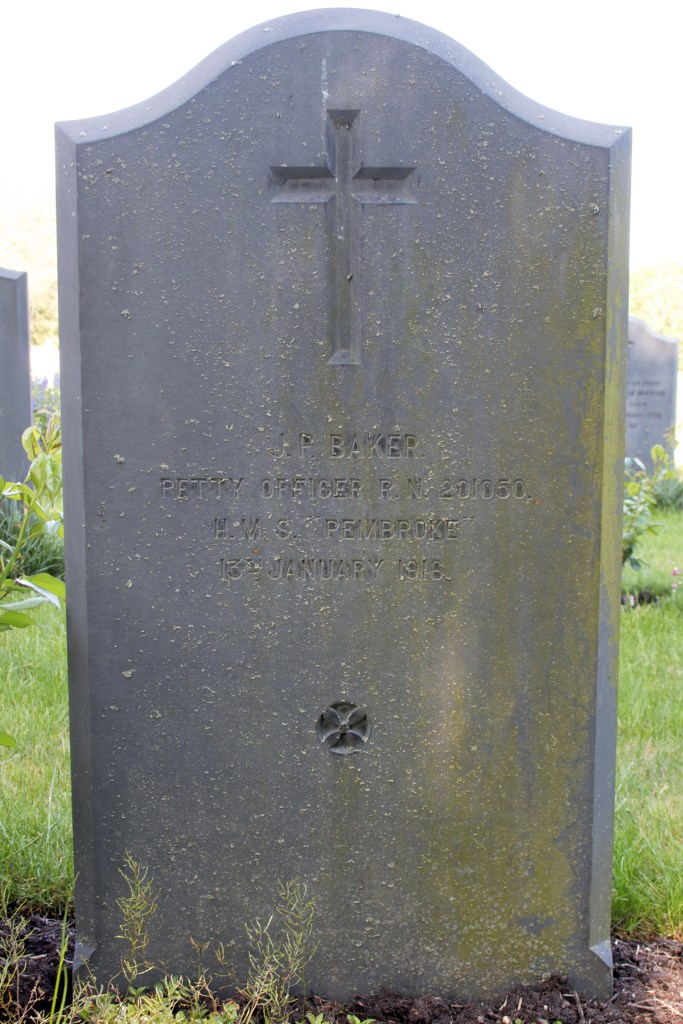
Petty Officer John Baker

John Patrick Baker was born on 20th March 1883, the only child to Henry and Mary Baker. Henry was naval pensioner-turned-labourer from Belfast, Ireland, while Mary was born in Queenstown, Ireland. By the time of the John’s birth, however, they had moved to Kent, settling in the village of Cheriton.

John is noticeable by his absence in the coming years. The 1901 census return found his parents living in the same home, but the only other resident was boarder Jesse Fuller.

The 1911 census, however, helps explain this disappearance. The document records John as being one of more than 500 crew on board the cruiser HMS Highflyer. He was notes as being a Leading Seaman and, on the day that the census was taken, the ship was in the Laccadive Sea, off the coast of western India, to the south of Goa.

John is also noted as being married, and it seems that he wed a woman called Adela the previous year. Her entry in the 1911 census noted she was living in a room at 206 Risboro Lane in Cheriton, Kent. The house was also occupied by the Leach family – William, Hannah and daughter Margaret – and a Christina Hawkes, who was also married. Whether they were all related is unclear, but Adela, at 30 years of age, was working as a domestic servant to pay her way.

Adela and John would go on to have two children: John Jr was born on 31st July 1911 – just four months after the census. His younger brother Ernest was born on 21st May 1914, four months before the outbreak of war.

There is little further information available on the Baker Family. John progressed in his naval career, and had risen to the rank of Petty Officer by the end of 1915. That winter he became unwell, although the condition is not readily documented. He was posted at HMS Pembroke, the Royal Naval Dockyard in Chatham, Kent, by this point, and he may well have been admitted to the nearby Naval Hospital.

His illness was to prove fatal, however, and Petty Officer Baker passed away on 13th January 1916. He was 32 years of age.

John Patrick Baker was laid to rest in the Roman Catholic section of the Woodland Cemetery in Gillingham, Kent, not far from the base he had known so well.


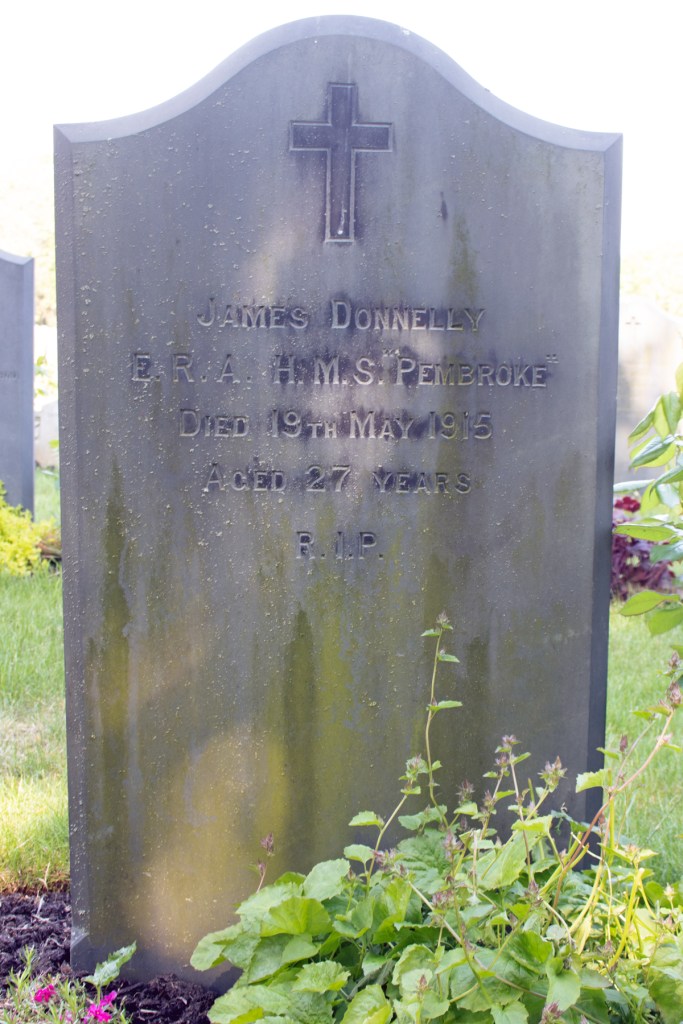
Engine Room Artificer James Donnelly

Engine Room Artificer James Donnelly

James Donnelly’s life is a challenging one to pin down. Based on the Commonwealth War Graves Commission information, he was born in 1888 in Cappagh, County Tyrone, Northern Ireland, and was the son of Owen and Mary Donnelly. Unfortunately, there are no baptism or census records to expand on his family background.

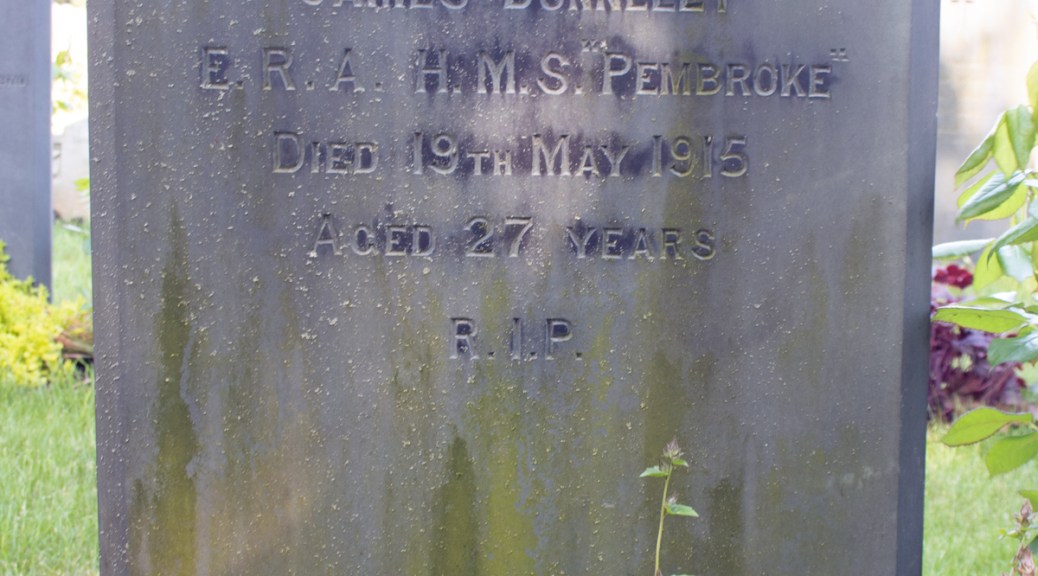
Military records are equally sparse. James enlisted in the Royal Navy as an Engine Room Artificer 4th Class. He was assigned to HMS Pembroke, the Royal Naval Dockyard in Chatham, Kent; given how early in the conflict, and his position at the lower end of the ERA rankings, is it likely that he was posted there for training.

James’ time in the military was to be brief. He was admitted to the Royal Naval Hospital in Chatham, suffering from cerebrospinal meningitis. The condition was to prove severe: he succumbed to it on 19th May 1915, at the age of 27 years old.

Finances may have prevented the Donnelly family from bringing their boy back home. Instead, James was laid to rest in the Roman Catholic section of Woodlands Cemetery, Gillingham, not far from the naval base at which he had served.


Engine Room Artificer James Donnelly
(from findagrave.com)

Private Harold Randall

Private Harold Randall

Harold Stanley Randall was born in Taunton, Somerset, in the autumn of 1898. One of twins, his parents were Joseph and Elizabeth Randall. Joseph was a carpenter, and when Elizabeth died in 1900, he was left with nine children to raise on his own. This led to Harold being raised Joseph’s brother and sister-in-law, George and Caroline, and he is noted as living with them in Bath, Somerset, in the 1901 and 1911 censuses.

There is little direct evidence of Harold’s life: at the time of the 1911 census he was still at school, so it is not clear what employment he took up once his education came to an end. When war broke out, he played his part, and had enlisted in the Gloucestershire Regiment by the summer of 1918.

Private Randall was attached to the 17th Battalion, a territorial force based in Essex. By the end of the war, Harold was billeted in St Osyth, and it was here that he fell ill. Details of his condition are lost to time, but his health was impacted enough for him to be admitted to the general hospital in Colchester.

Harold Stanley Randall’s illness was to get the better of him. He passed away on 7th December 1918, aged just 20 years old. His body was brought back to Somerset for burial, and he was laid to rest in Bath’s sweeping Locksbrook Cemetery. His next of kin was noted as his aunt Caroline, who had raised him from a toddler.


Private Victor Blatchford

Private Victor Blatchford

Victor William Haydon Blatchford was born in Bath, Somerset, on the 20th November 1897. The younger of two children, his parents were William and Kate Blatchford.

William was a draper, and the family lived in the bustling city centre, above the shop he and Kate ran. By the time of the 1911 census, the family were registered as living in 12 rooms at 52 & 53 Southgate Street. As well as the Blatchfords, four other people made up the household: draper’s assistants Edith Letts and Nellie Harris, milliner Florence Carke, and general domestic servant Ellen Heskins.

War came to Europe in the summer of 1914, and Victor was called upon to play his part. Full details of his military service have been lost to time, but a later newspaper report suggest he had enlisted early in 1916. William had died in October 1914, but it is unclear whether his son’s decision to enlist was related to his father’s passing.

Private Blatchford joined the Royal Army Service Corps, and was attached to the Mechanical Transport Depot in Norwood, Surrey. While information about his time in the regiment is no longer available, the same newspaper report hints at time spent overseas:

Private Victor WH Blatchford, ASC, MT, only son of Mrs William Blatchford, Okehampton Lodge, Kipling Avenue, died on May 20th, at Manor War Hospital, Epsom, from pneumonia, contracted in East Africa, after two years and three months’ active service. The funeral will be at Locksbrook Cemetery, and it is asked that no flowers be sent.

[Bath Chronicle and Weekly Gazette: Saturday 25th May 1918]

Victor William Haydon Blatchford died on 20th May 1918: he was just 20 years of age. He was laid to rest in Locksbrook Cemetery, Bath, alongside his father. When Kate passed away in 1941, she was also interred in the family plot.


Second Lieutenant Algernon O’Donoghue

Second Lieutenant Algernon O’Donoghue

Algernon Leopold O’Donoghue was born on 4th June 1869 in Plymouth, Devon. The youngest of five children, his parents were Charles and Frances O’Donoghue. Charles had worked for the East India Company and the family travelled a lot while the children were growing up. He was in India when, in the spring of 1872, he passed away.

By the time of the 1881 census, Frances had moved the family to the Walcot area of Bath, Somerset. She was working as an assistant, and employed a servant of her own to help support the four children.

Over the next few years, Algernon’s trail goes cold. In 1900, he married Janette Hay, the daughter of a Justice of the Peace, who had been born in Ceylon. It seems likely that they met overseas: the 1911 census return records that she had been born in Ceylon, while he was a retired forest manager whose job had taken him to Burma (now Myanmar).

The census document found the couple living in a seven-room villa in Combe Down, on the outskirts of Bath. The had had a son by this point, with Algernon Jr making up the family.

Algernon was working for the Bombay Trading Company, and back out in India, when war broke out. He returned home, and stepped up to serve his King and Empire. While his service records have been lost to time, Private O’Donoghue joined the Royal Defence Corps, and quickly rose through the ranks: by the spring of 1917, he was a Second Lieutenant.

It was while serving in the north west of Britain that he fell ill: “[he got] wet while out in heavy rain, pneumonia following, and then double pneumonia.” [Bath Chronicle and Weekly Gazette: Saturday 26th May 1917] Second Lieutenant O’Donoghue was admitted to the Whitman Military Hospital in Manchester, but his condition was too severe. He passed away on 22nd May 1917, two weeks before his 48th birthday.

The body of Algernon Leopold O’Donoghue was taken back to Somerset for burial. He was laid in the family plot in Bath’s panoramic Locksbrook Cemetery, reunited with his mother, Frances, who had died a decade before.


Second Lieutenant Algernon O’Donoghue
(from findagrave.com)

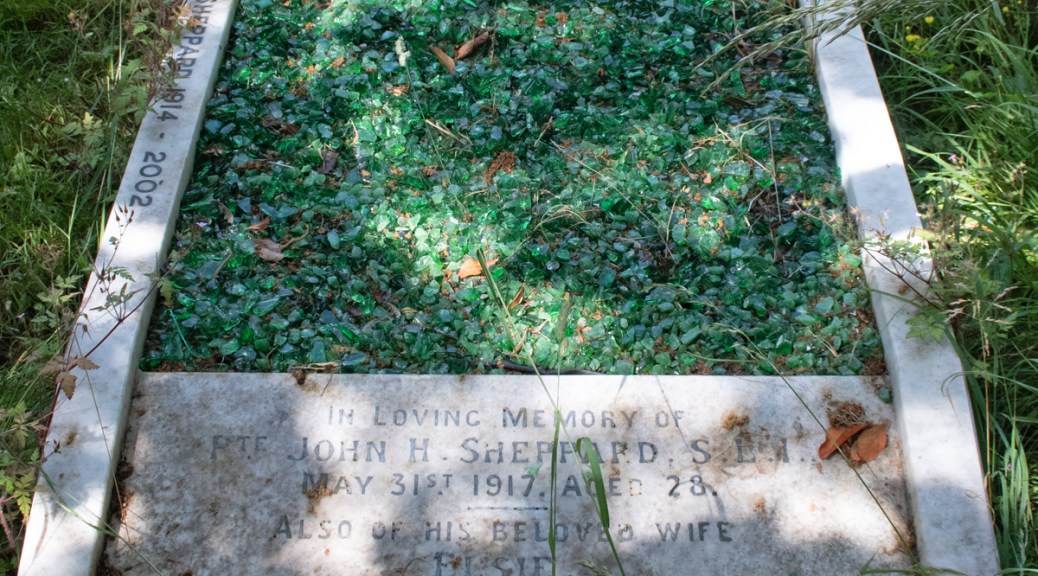
Private John Sheppard

Private John Sheppard

John Henry Sheppard was born in the autumn of 1889, the older of two children to John and Ellen. John Sr was a general labourer from the Weston area of Bath, Somerset, and when he died, Ellen found work as a laundress to bring in some money.

From the census returns of 1891, 1901 and 1911, it seems that John remained living on Church Street, Bath. The earliest record noted him living with his parents and younger brother, Charles. By 1901, his father had died, and Charles was also noticeable in his absence, so it may be that he had also passed away.

The 1911 census adds a little mystery to the Sheppard line. Although signed off by Ellen, she is not listed as being at the house on the day the return was taken. There are three occupants: John, working as a farm labourer; eight year old Nellie, whose relationship is listed as daughter; and Charles Crane, a 73 year old retired gardener.

On 27th September 1913, John married Elsie Holbrow. The daughter of a gardener, she was working as a domestic servant and he was a groom when the couple exchanged vows. They went on to have a son, Albert, who was born in October 1914.

When war came to Europe, John stepped up to play his part. Full details are lost to time, but it is clear that he had enlisted by the autumn of 1916, initially joining the North Somerset Yeomanry, before transferring across to the Somerset Light Infantry. Private Sheppard was attached to the 1st Battalion and soon found himself on the Western Front.

There is little concrete information about his service, but is appears that he was wounded at Arras in the spring of 1917. He was medically evacuated to Britain for treatment, and was admitted to the 3rd Northern General Hospital in Sheffield, Yorkshire.

Private Sheppard’s wounds were to prove too severe however, and he succumbed to them on 31st May 1917. He was 27 years of age.

John Henry Sheppard’s body was taken back to Somerset for burial. He was laid to rest in the family plot in Bath’s sweeping Locksbrook Cemetery. He was reunited with Elsie when she passed away in December 1949: husband and wife together again after more than three decades.


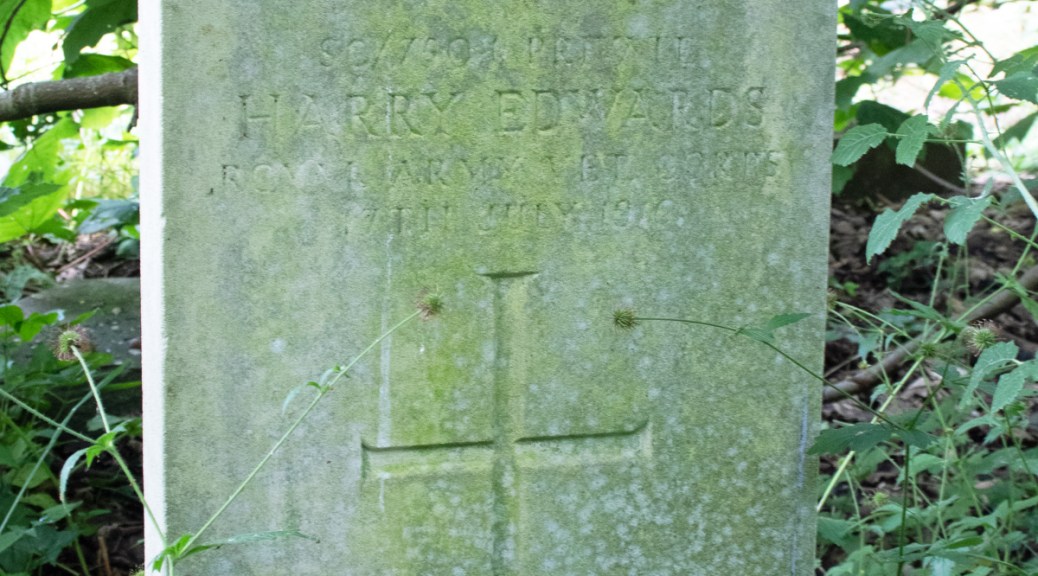
Private Harry Edwards

Private Harry Edwards

Harry Edwards was born early in 1855 in South London. One of eleven children, his parents were John and Sarah Edwards. John was a carpenter, and the family were raised in Bermondsey, first in a small terrace in Chapel Place, then sharing a slightly larger house in Grange Walk.

Much of Harry’s life is lost to time. He married Mary Ellerington on 27th July 1879: she was a tailor’s daughter from Southwark, and the couple set up home at 29 Newington Causeway. The marriage certificate confirmed that Harry was employed as a warehouseman at the time, and their daughter, Amelia, was born the following spring.

A later document suggests that Harry went on to join the army, fighting as part of the South Africa Campaign. Sadly, however, his service records are lost to time, and so it is not possible to confirm when and for how long he served. Certainly, there is no mention of the family in the census returns from 1881 to 1911, so he may well have been overseas.

The next records available for Harry are those relating to his military service during the First World War. He enlisted early in 1915, joining the Royal Army Veterinary Corps. He found himself in France by mid-April, and was awarded the British and Victory Medals and the 1915 Star for his service.

Private Edwards came down with bronchitis in the spring of 1916: he was medically evacuated to Britain for treatment, and was admitted to the Bath War Hospital in Somerset. It seems that Harry’s age was against him: he passed away from the condition on 17th July 1916, at the age of 61 years old.

Harry Edwards’ family may have been unable to afford the cost of bring him back to London for burial. Instead, he was laid to rest in the sweeping Locksbrook Cemetery, not far from the hospital in which he had breathed his last.


Second Lieutenant Clement Edwards

Second Lieutenant Clement Edwards

Clement Edward Arthur Edwards was born in the summer of 1898, and was the oldest of six children to Clement and Caroline Edwards. Clement Sr was a colonel in the army, and had been born in Dublin, Ireland. His wife hailed from Cheltenham, Gloucestershire, but it is clear that the family travelled as it grew, as each of the Edwards children were born in a different location. Clement Jr was born in Devon, while Caroline had given birth to his younger siblings in locations as distant as Sussex, Hampshire and the West Indies.

By the time of the 1911 census, Clement Sr had retired from duty. The family had settled back in Devon, and were living in the 12-roomed North Grange in the village of North Lew. Clement and Caroline employed five staff, including a cook, a nurse, a housemaid, a kitchen/parlour maid and a stable boy.

It seemed inevitable that Clement Jr would have followed his father into the army. Sadly his service records are lost to time, but a later newspaper report gives an insight into this time in the army:

Colonel and Mrs Edwards of Townsend House, Halberton, have the sympathy of all their friends and neighbours in the loss they have sustained by the death of their eldest son, 2nd-Lieut. Clement Edwards Alexander Edwards, of the Worcestershire Regiment, from pneumonia, following influenza, at the Northern General Hospital, Newcastle-on-Tyne [sic]. Edwards was formerly at Blundell’s School. He joined up at the earliest possible opportunity, obtaining a commission in his father’s regiment. He was a great favourite with all who knew him.

[Tiverton Gazette: Tuesday 10th December 1918]

Clement Edward Alexander Edwards died on 5th December 1918: he was just 20 years of age. His body was taken back to Devon for burial. He was laid to rest in the peaceful graveyard of St Andrew’s Church in Halberton.


Private George Babb

Private George Babb

George Henry Babb was born on 6th October 1900 in the village of Halberton, Devon. One of ten children, his parents were stonemason Clem Babb and his wife, Emily.

There is little documented about George’s life. The 1911 census records that he was still at school, and there is nothing to confirm the work he found when he completed his education.

George was not yet 14 years old when was was declared, and the Army Register of Soldiers’ Effects suggests that he didn’t enlist until the late spring of 1918. He was assigned to the Royal Warwickshire Regiment and was attached to the 5th Battalion.

Private Babb was sent to the north east for training, and it seems that he became unwell while there. He was admitted to the 1st Northern General Hospital in Newcastle-upon-Tyne, suffering from a combination of influenza and pneumonia. The conditions were to prove fatal: Private Babb passed away on 8th November 1918, a month after his eighteenth birthday.

George Henry Babb was taken back to Devon for burial. He was laid to rest in the peaceful graveyard of St Andrew’s Church in his home village of Halberton.