Tag Archives: injury

Private Jack Alston

Private Jack Alston

John Thomas Alston, also known as Jack, was born in Chorley, Lancashire, in 1865 and was one of thirteen children to Richard and Elizabeth Alston. Before he died in 1878, Richard was a stripper and a grinder in a cotton mill, and it was millwork that the majority of his and Elizabeth’s children went into.

When he left school, Jack and his siblings worked as cotton piecers in the mills, tying together any threads that broke on the machines. This was a job aimed at children, whose hands were often the only ones small enough to reach into the equipment.

By 1895, Elizabeth too had passed away. Jack, who was 30 by this point, had moved from Chorley to nearby Oswaldtwistle, and met Mary Ellen Wilcock. She was a widow with two children, and the couple married on 14th February 1897. Their marriage certificate shows that she was the daughter of a weaver, while Jack was working as a furnace man in the mill. The couple went on to have a child together, Amy, who was born in 1900.

The couple settled into if not a comfortable life, then a continued existence. While Mary and her two older children were working in the cotton mill, Jack began labouring at the local chemical works. The family lived in a small, two up, two down cottage right next to Mary and the children’s place of work, and life continued apace.

War was coming however, and Jack volunteered to do his bit. His service records no longer exist, but it can only be assumed that he joined of his own accord; he would have been 50 when hostilities commenced, and so exempt from the initial call-up.

Private Alston was assigned to the Somerset Light Infantry, and was based at their Depot in Taunton. Little information about his time there is available, and sadly, the next accessible document is his pension record. This confirms that he died on 7th April 1916, from “shock caused by a fall while on duty”. There is no other reference to what or how this happened, so the circumstances will remain a mystery. He was 51 years old when he passed away.

It seems that his widow may not have had the funds to bring Jack back home; instead he lies at rest in St Mary’s Cemetery in Taunton, Somerset, close to the depot where he was based.


Driver Frederick Virgin

Driver Frederick Virgin

Frederick Henry Virgin was born in 1888, the second eldest of ten children. His parents were carter Thomas Virgin and his wife, Ellen, and the family lived in Taunton, Somerset.

Frederick craved adventure and this came in the form of military service. In August 1906, he enlisted in the Royal Field Artillery, and was assigned as a driver. Initially serving at home, he was shipped to India for four years, returning to England in December 1912.

Driver Virgin met and married Alice Shattock in April 1914, but had been shipped off to France within months, when war broke out. He served overseas for eighteen months, before transferring back to England again. By this point he was suffering with sciatica, and this is what saw him assigned lighter duties in the Reserve Brigade on the home front.

Alice fell pregnant, and the couple had a little boy in February 1917; sadly, his life was brief, and he passed away at the age of just two days. One can only imagine the impact this had on his parents.

Frederick’s health issues continued to be a problem, and he was medically discharged from the army later that year. While the sciatica was not solely attributed to his military service, his discharge report confirmed that his time in the army contributed to the issue. Driver Virgin’s time with the Royal Field Artillery came to an end in December 1917.

Sadly, it is at this point that Frederick’s trail goes cold. His records confirm that he passed away nearly a year later, on 26th November 1918, but there is no record as to the cause of his death. He was 30 years of age.

Frederick Henry Virgin lies at rest in St Mary’s Cemetery in his home town of Taunton, Somerset.


Private Francis Packer

Private Francis Packer

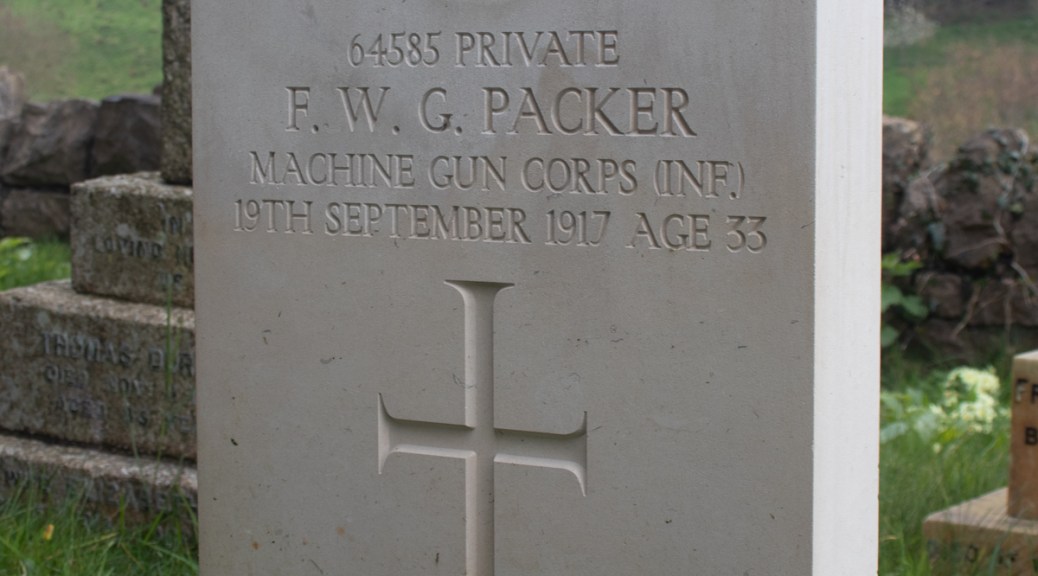
Francis William George Packer was born in Bristol on 28th July 1884. The eldest of three children, he was the son of a grocer, Francis Packer Sr, and his wife, Eliza.

When Francis left school, he followed his father into the grocery business and married Kate Taverner on 1st September 1907. They had one child, a daughter called Dora, in 1909 and, by the time of the census two years later, Francis had moved his young family to Bath.

By the time he was called up, in December 1915, Francis had moved the family again, this time to the sleepy village of Blagdon, in the Somerset Mendips. He formally enlisted in the Machine Gun Corps of the Somerset Light Infantry in July 1916, and was sent to the front in January the following year.

Private Packer’s battalion fought at Arras, and it was here that he was injured. On 1st May 1917, he received a gunshot wound to his right thigh, which fractured his femur. He was initially treated on site, before being shipped back to England, where he was admitted to King George’s Hospital in London.

Sadly, it seems there were complications with his treatment, and Private Packer died from his wounds four months later, on 19th September 1917. He was 33 years old.

Francis William George Packer was brought back to his family in Blagdon, and lies at rest in the churchyard of St Andrew’s there.


The local paper reported on Francis’ funeral, but what struck me is that there seems a glaring omission in the list of those who attended. It was obvious that he wanted a strictly private funeral, but:

The mourners were Mr FE Packer (father), Mr S Emery (brother-in-law), Mr SG Packer (uncle), Mr W Taverner (uncle), Mrs ES Packer (mother), Mrs E Emery (wife’s sister), Amy Parker and Nellie Parker [his sisters-in-law], A Packer (aunt), Dolly Parker, Dolly Flower, Mr J Jones (uncle), Mr CJ Redwood, Mr J Nelson and Mr AH Bleacove.

Western Daily Press: Wednesday 26th September 1917

There is nothing in the report to suggest that Francis’ widow attended the funeral.


Francis’ younger brother, Albert Packer, also fought and died in the First World War. Find his story here.

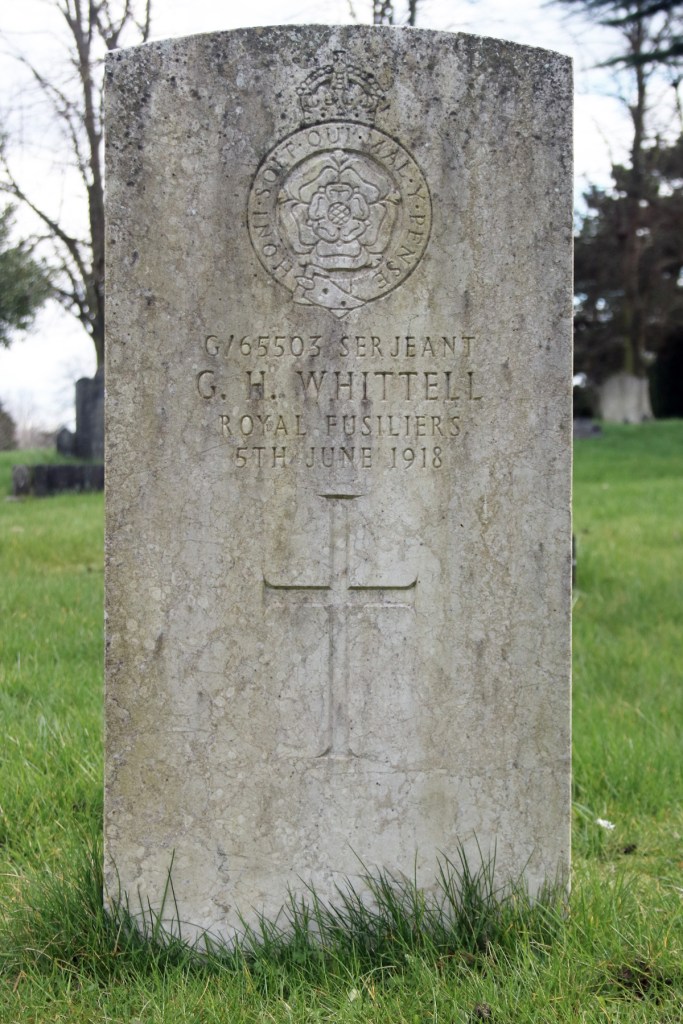
Serjeant George Whittell

Serjeant George Whittell

George Henry Whittell was born in the spring of 1891, the son of engine fitter William and his wife, Florence. George was the oldest of two children, both boys, but sadly lost his mother in 1897, at just six years old.

William remarried two years after her death, and, with his new wife, Frances, he had two further children, Gladys and Leslie.

By the time of the 1911 census, the family were living in Gillingham, Kent, and George and his brother Frederick were both working as boiler makers in the largest employer in the area, the naval dockyard in Chatham. War was on the horizon, and William was also working there as a torpedo fitter.

In 1915, George married Minnie Baker; they went on to have a son, Ronald, who was born in the September of that year.

I have not been able to track down all of George’s military records; he enlisted in the Royal Fusiliers, and was assigned to the 10th (Service) Battalion. While his date of enlistment is not recorded, his troop set off for France at the end of July 1915. If George had been involved from that point, he would have departed shortly after his marriage, and would have been at the Front when his son was born.

Little is known of Serjeant Whittell’s service; he was wounded in May or June 1918, and was repatriated to England for treatment. Admitted to the Western General Hospital in Manchester, he sadly did not recover from his wounds, and passed away on 5th June 1918. He was 27 years old.

George Henry Whittell lies at rest in the Woodlands Cemetery in his home town of Gillingham, Kent.


Private Alfred Lowes

Private Alfred Lowes

Alfred William Lowes was born in 1893, one of eight children to George and Ann. George was a railway porter from Kent, Ann was born in Berkshire, and the couple had settled in Gillingham, Kent, by the time they started a family.

The naval dockyard in Chatham was one of the main employers in the Medway area of Kent, and Alfred was drawn there for work. After leaving school, he found a job there as a messenger, following his older brother George, who was a labourer there.

In the spring of 1916, Alfred married Edith Kennett, and it seems like the timing was due to his military service. Private Lowes joined the Prince of Wales’ Own Civil Service Rifles (also known as the 15th Battalion London Regiment) and by the beginning of August his troop was bound for France.

Full details of Private Lowes’ military service is not available, although it seems not to have been a lengthy one. He would have fought on the front line, and was wounded as a result. Repatriated back to England for treatment, Alfred passed away at home on 12th November 1916. He was just 23 years of age.

Alfred William Lowes lies at rest in the Woodlands Cemetery in his home town of Gillingham.


Private Frederick Hobbs

Private Frederick Hobbs

Frederick Hobbs was born in December 1886, the fourth of ten children to William and Martha Hobbs, from Bridgwater in Somerset. William was a mason, and all of his children seemed to be good with their hands. Frederick went on to become a plumber’s apprentice, while his siblings worked as a mason, a dressmaker and a carpenter.

The 1911 census found him living in Polden Street, Bridgwater with his mother and youngest sibling, Florrie. William, however, was living round the corner in Bath Road, with three of his other children, Clara, Tom and George. Both of Frederick’s parents are listed as married, which adds to the confusion of them being in separate houses.

Frederick enlisted with weeks of was being declared; he joined the 10th (Service) Battalion of the Devonshire Regiment and, after a year on home soil, his troop was shipped to France. This wasn’t the end of the Private Hobbs’ journey, however as, within a couple of months, he journeyed on as part of the Mediterranean Expeditionary Force, finally arriving in Salonica, Greece, in November 1915.

Private Hobbs has only been serving for a month when he was admitted to the Hospital Ship Asturias in Alexandria, with lacerations to his cheeks and eyelids. The initial report seemed to suggest the wounds were as a result of gunshot, although a more detailed report later confirmed that the injuries were caused by barbed wire.

While in hospital, Frederick’s urine was found to include a high level of sugar. He also confirmed having lost a lot of weight in recent months, but could not confirm when this had begun. He was diagnosed with diabetes, and was evacuated back to England for treatment for both his injuries and his illness.

The damage to his left eye healed, but he was left with significant ptosis, or drooping of the eyelid. When it came to his diabetes, specialists back in England determined that, while it could not be put down to Private Hobbs’ service, it had definitely been aggravated by it. He was deemed no longer fit for military service and furloughed in June 1916, with a follow-up report confirming this three months later.

Sadly, whether Frederick’s life returned to normal is not recorded. It seems likely, however, that the diabetes got the better of him, and he passed away on 25th November 1916, aged just 29 years old.

Frederick Hobbs lies at rest in St John’s Cemetery in his home town of Bridgwater, Somerset.


Frederick’s younger brother Herbert Hobbs also fought in the Great War. He enrolled in the Royal Marines Light Infantry and fought on the Western Front. Caught up in the Battle of Gavrelle Windmill, he was one of 335 Royal Marines to be killed in that skirmish. He lies buried at the Arras Memorial in Northern France.


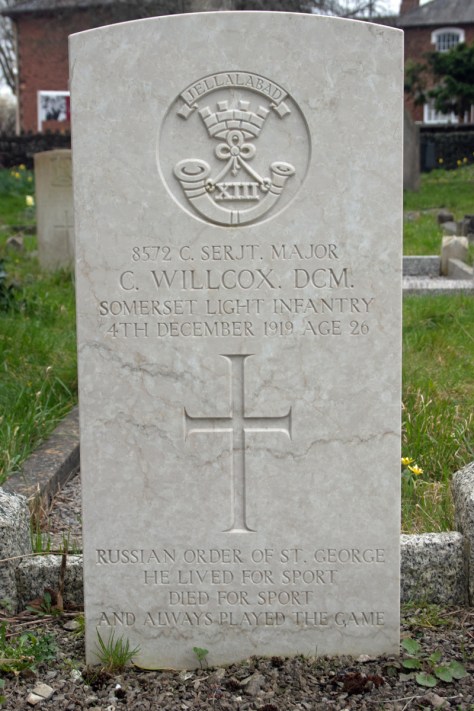
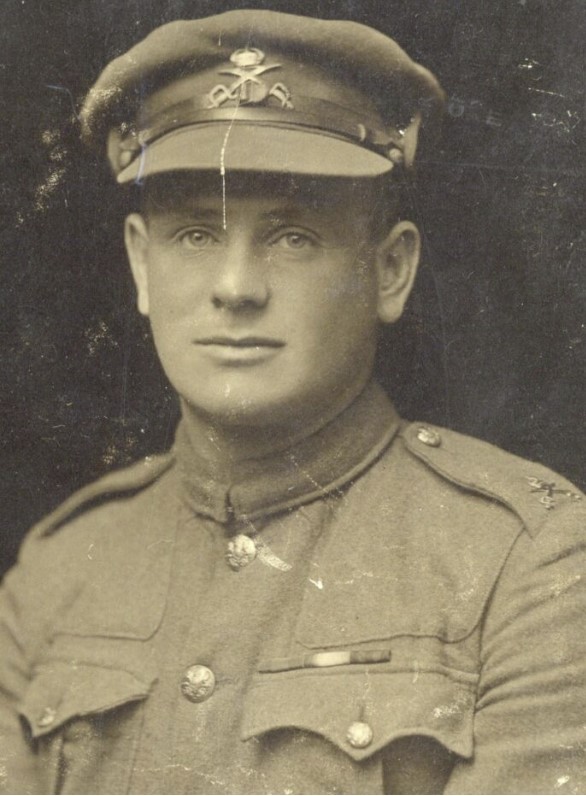
Serjeant Major Charles Willcox

Sergeant Major Charles Willcox

The early life of Charles Willcox is a bit of a mystery. From fragments of information, we can determine that he was born in 1893 and had a brother called Edmund and a sister called Beatrice. His mother was a Mrs S Willcox, who, by the early 1920s was living in Johannesburg, South Africa.

Piecing together the tiny pieces of information online, it seems likely, therefore, that his parents were Frank and Sarah Willcox. Frank was a cabinet maker and upholsterer, he and Sarah were from Bridgwater in Somerset, and they had eleven children.

By 1895, Frank had moved the family from Somerset to Cardiff; Charles was the last of the siblings to be born in England. The family did eventually move to South Africa – alongside Sarah, both Beatrice and Edmund lived and died there in their later years.

Back to Charles and, once the Great War started, he was quick to enlist. He joined the Somerset Light Infantry in August 1914, and had a narrow escape in October of that year. The Bridgwater Mercury reported that he was in the trenches and had had a near miss when his backpack was hit by a shell.

Corporal Willcox was wounded at Ypres in November, when a piece of shrapnel hit him in the shoulder, went through the lung and had to be cut out of the centre of his back. He was expected to make a full recovery within a year. Charles was also awarded the Distinguished Conduct Medal for his actions in the battle.

In September 1915, Sergeant Willcox received another award; the Russian Cross & Order of St George; the Bridgwater Mercury noted that Charles was the first man from the town to be awarded both this and the DCM. The town’s mayor also subsequently presented him with a gold watch and chain on behalf of the town.

Promotion continued for Charles, and, by 1917, he had been elevated to Company Sergeant Major. He was heavily involved in recruitment for the Somerset Light Infantry, and it is likely that, standing at a strapping 6ft 4ins (1.93m) tall and weighing in at 17st (107kg), he would have been the perfect advert for the battalion.

When the war came to a close, things quietened down for him. A keen sportsman – he played rugby for Somerset – he had been a gym instructor in the army, and had taken up boxing around 1912. He entered a novices’ boxing competition in Southampton in December 1919, and found himself up against Seaman Merrilees, from the HMS Hearty.

In the fight, Charles received a body blow and a blow to the jaw, he fell to the floor, landed awkwardly and was knocked out. Attended to by doctors in the sports club, he was sent to Charing Cross Hospital when he did not regain consciousness after a couple of hours.

At the hospital, bruising was reported to Charles’ eye and cheek, but no skull fracture was found. They operated on him, two pieces of bone were removed, and a large clot on the left-hand side of his brain discovered. Sadly, the operation did no good, and Charles died that afternoon, the 4th December 1919. He was just 26 years old.

His death was recorded as concussion and a cerebral haemorrhage, attributed to the fall he had had in the ring. An inquest was held, although one report suggests a verdict of accidental death, while another states excusable homicide by misadventure.

Charles Willcox lies at rest in the Wembdon Road Cemetery in his home town of Bridgwater in Somerset. His gravestone remembers that he lived for sport, died for sport and always played the game.


Serjeant Major Charles Willcox
(from wembdonroadcemetery.com)

Private Henry Morgan

Private Henry Morgan

Henry Morgan was born in 1892 in Bridgwater, Somerset. He was the oldest of two children, both boys, to Charles Morgan and his wife Ellen. Charles managed the local collar works, making collars for shirts.

While Henry’s younger brother, Herbert, followed his dad’s business, according to the 1911 census, Henry was learning the farming trade. This was to stand him in good stead, and in 1912, he emigrated to Australia, to become a farmer.

Henry settled in Gunnedah, New South Wales, but was called up when war broke out. He enlisted in May 1916 and joined the Australian Machine Gun Corps. His troop left Australia on the ship Borda in November 1916, arriving in Plymouth two months later, and he finally reached France in March 1917.

Initially part of the 9th Machine Gun Battalion, Private Morgan transferred to the 3rd Machine Gun Corps in April 1918. Involved in the Allied defence of the German Spring Offensive, he was caught up in a gas attack and injured.

Wounded on 17th April 1918, Henry was evacuated back to England and admitted to the Voluntary Aid Detachment Hospital in Cheltenham. Sadly, Private Morgan was not to recover, and he died from his injuries on 8th May 1918. He was just 25 years old.

Henry Morgan lies at rest in the Wembdon Road Cemetery in his former home town of Bridgwater, Somerset.


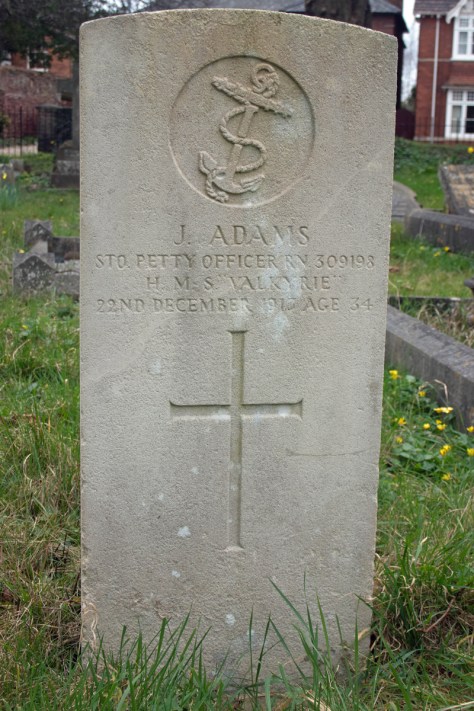
Petty Officer Stoker James Adams

Petty Office Stoker James Adams

James Adams was born in June 1883, son of Robert and Eliza Adams from Bridgwater in Somerset. Robert was an agricultural labourer; James was one of seven children.

James was keen to get out and see the world. In November 1905 – aged just 12 years old – he enlisted in the Royal Navy as a stoker. After training in Devonport, Plymouth, Stoker Adams served on a number of different vessels, including HMS Victorious, Ramillies, Amphitrite, Monmouth, Andromeda and Halcyon.

By the time war broke out, James has been promoted to Leading Stoker, and was assigned to HMS Cornwall. This was an armoured cruiser that was involved in the Battle of the Falklands in December 1914.

Promoted to Stoker Petty Officer in October 1915, James continued to serve on HMS Cornwall until he was transferred to the brand new ship, HMS Valkyrie. The vessel was involved in offensive sweeps and convoy escorts based out of Harwich.

On 22nd December 1917, the Valkyrie was part of the escort for a convoy travelling to the Netherlands, when she struck a mine. In total, nineteen men were killed, twelve instantly; this included Stoker Petty Officer Adams. He was 34 years old.

James Adams lies at rest in the Wembdon Road Cemetery in his home town of Bridgwater.


Private Clarence Fry

Private Clarence Fry

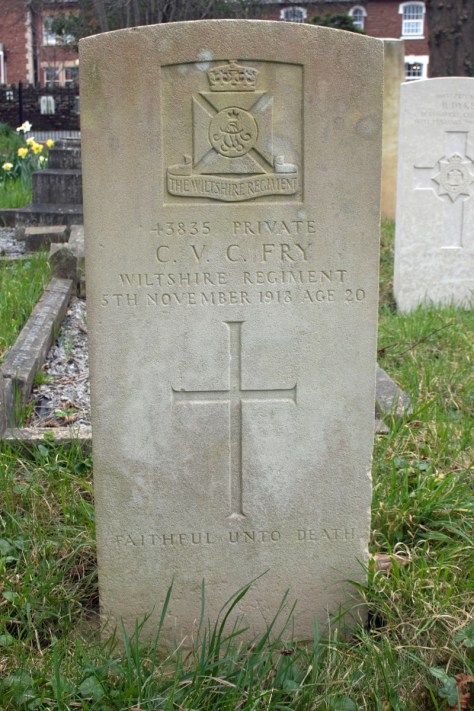
Clarence Vivian Clements Fry was born in November 1898 to William and Rosa Fry. William was a ‘provisions merchant clerk’, who went on to become a ‘cheese and provision dealer’, or grocer. Sadly, Rosa passed away in 1904, at the tender age of 31, leaving Clarence without a mother at just six years old.

William remarried in 1908, and he and new wife Amy had a daughter, also called Amy, a year later. By the 1911 census, the family of four were living in a three storey Victorian Terraced house to the south of Bridgwater town centre.

Sadly, little of Clarence’s military career remains documented. Initially joining the Royal Army Service Corps, Private Fry soon transferred over to the Duke of Edinburgh’s Wiltshire Regiment.

The 1st Battalion found in some of the key battles on the Western Front, including Mons, Ypres, Messines and Vimy Ridge. As his enlistment date isn’t known, it’s impossible to say whether Private Fry was involved in these conflicts or not.

What is likely is that Private Fry was involved in the Battle of the Selle, which took place near the towns of Cambrai and Valenciennes in northern France in October 1918. Clarence was certainly injured at this point, and was evacuated to England for treatment.

Admitted to the Cambridge Military Hospital in Aldershot, it seems that his injuries were too severe and he succumbed to them on 5th November 1918, just a week before the Armistice was signed. Private Fry was just 19 years old.

Clarence Vivian Clements Fry lies at rest in the Wembdon Road Cemetery in his home town of Bridgwater in Somerset.