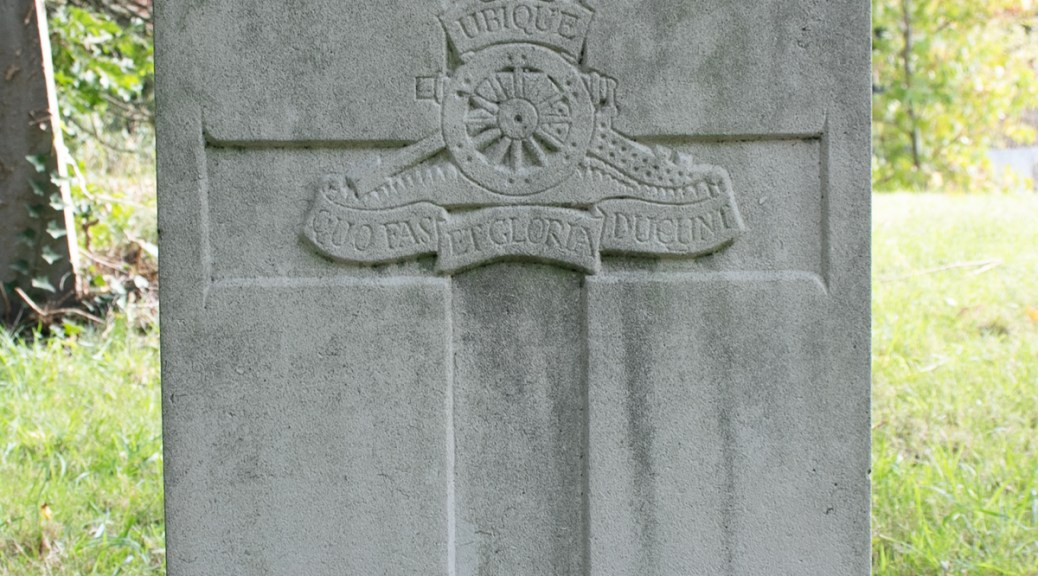
Tag Archives: kidney

Fleet Surgeon Edward Ward

Fleet Surgeon Edward Ward

Edward Copley Ward was born in Charleville, County Cork, Ireland, on 2nd November 1862. The middle of three children, his parents were Thomas and Elizabeth Ward. Thomas died in 1868, and there is scant information about Edward’s life until he reached his early 20s.

It is clear that he had a focus on education, and a leaning towards the medical side of things. By December 1883, he had qualified as a Master Surgeon at the Royal University of Ireland, and was licenced in midwifery through the King & Queen’s College of Physicians.

Edward was not one to rest on his laurels, however, and he soon tasked himself to a naval career. On 21st August 1900 he was recorded on the Navy Lists as being a Fleet Surgeon, although there is little specific information about this service at this time.

MARRIAGES: WARD-CROWE

October 28, by special licence, at Kill Church… Staff-Surgeon Edward C Ward, RN, to Eleanor, daughter of the late Michael F Crowe, JP, of Melfield, Blackrock, County Dublin.

[Northern Whig: Saturday 1st November 1902]

Edward and Eleanor’s trail goes cold again at this point, and it is not until the 1911 census that we are able to pick them up again. By this point, Eleanor, now 45 years old, is living with four of her sisters, Kate, Charlotte, Isabella and Susanna in a house in Monkstown, Dublin. The family are supported by a domestic servant, Mary Collins.

Edward, meanwhile, was serving on board the battleship HMS Jupiter, which was moored in Weymouth Bay, Dorset. There were 548 crew members on board, and the now Fleet Surgeon Ward was one of seventeen commissioned officers, serving under Rear Admiral Arthur Limpus.

Over the next three years, Edward would serve on six further ships, but, by the time war was declared in the summer of 1914, he found himself shore-based. From December of that year, he served at HMS Pembroke, the Royal Naval Dockyard in Chatham, Kent. His role: to oversee the treatment of incoming wounded troops, and their preparation for onward transport to whichever hospital they would end up.

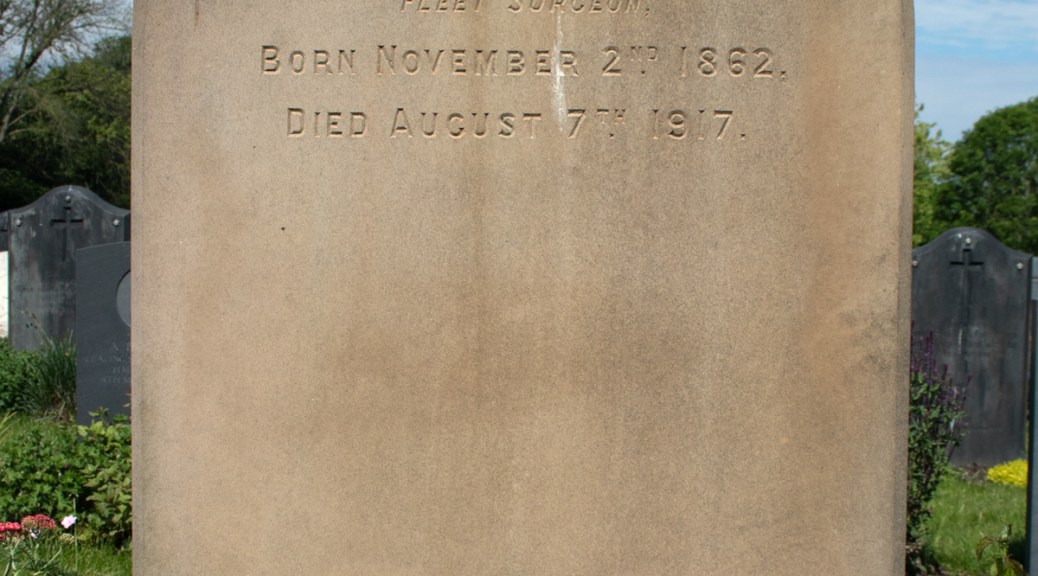
Fleet Surgeon War would spend the next three years fulfilling this task, but, by the summer of 1917, it would be Edward himself who needed support. Admitted to the Royal Naval Hospital in Chatham, he was suffering from tubercular disease of the kidney, and it would be this condition to which he would succumb. He passed away on 7th August 1917, at the age of 54 years old.

The body of Edward Copley Ward was laid to rest with a simple headstone in Woodlands Cemetery, Gillingham, Kent, not far from the dockyard he had come to know as home.


Interestingly, when Edward’s estate went to probate, he left his estate – worth £1257 7s 11d (approximately £111,500 in today’s money) to Geoffrey Holt Stillwell, with no mention of Eleanor. Geoffrey was a member of a banking family from the south of England, who served as a Lieutenant Colonel in the 4th Hampshire Regiment.


Fleet Surgeon Edward Ward
(from ancestry.co.uk)

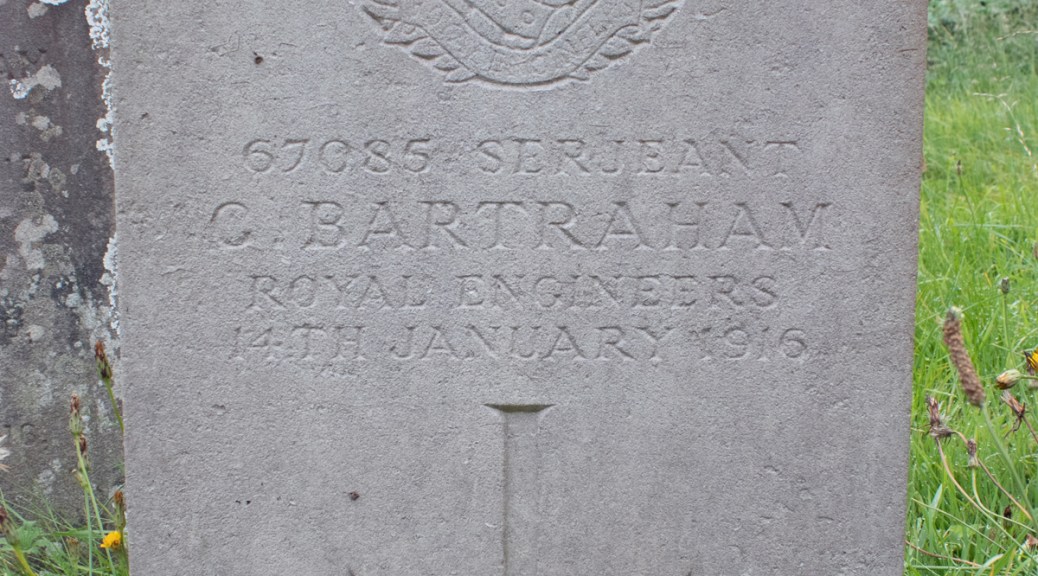
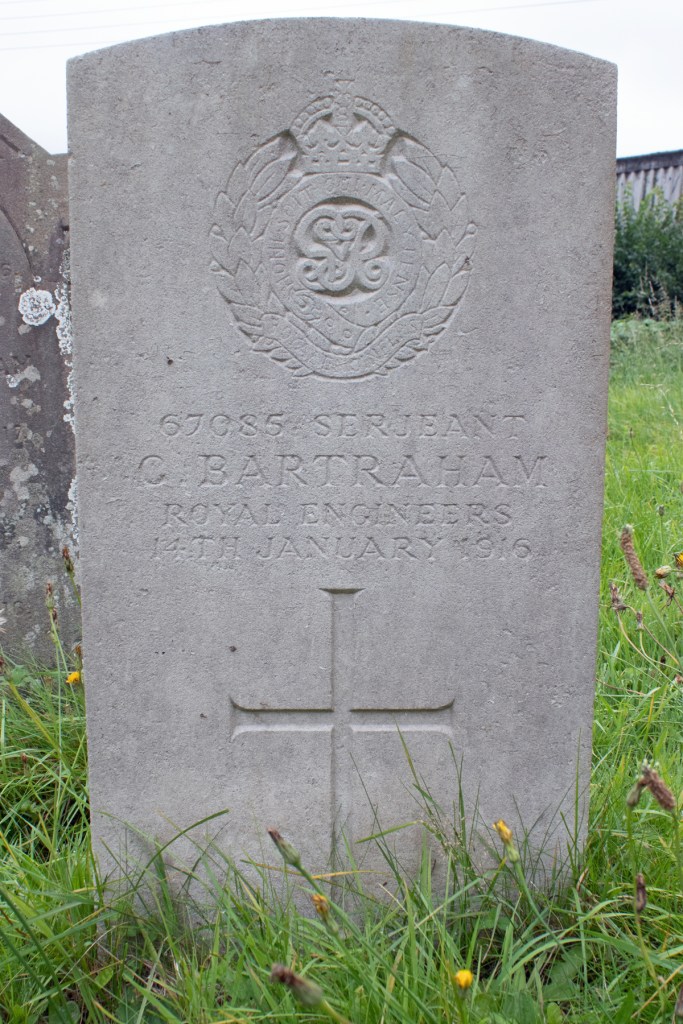
Serjeant George Bartraham

Serjeant George Bartraham

George Bartraham was born in the autumn of 1868 in the Somerset village of Sampford Brett. One of seven children, his parents were George and Sarah Bartraham. George Sr was a farm labourer and, while his son initially followed suit, he sought a life of adventure in the wilder world.

George Jr had found work as a tailor, and was apprenticed to a Charles Taylor, who lived in the village. That bigger and better life was niggling away, however, and, on 11th June 1888, he enlisted in the Royal Engineers. His service records show that he was 5ft 5.5ins (1.66m) tall, with black hair, dark eyes and a fair complexion. Sapper Bartraham was also noted as having a scar on his left foot.

George initially signed up for seven years’ service, with an additional 5 years on reserve status once that was completed. The 1891 census recorded him as being based at Fort Blockhorse in Alverstoke, Hampshire. Early in 1894, he married Mary Bowden, in Portsmouth: the couple would go on to have two children, George and Albert. The following year, Sapper Bartraham opted to remain on full service with the Royal Engineers, partially, it is fair to assume, as the pay would be better to support his family than on reserve.

By 1901, George had been moved to barracks in Pembroke Docks, Wales. Mary and the children remained in Hampshire, living with her parents in Unicorn Street, close to the town’s naval base. Wales was not to be the last stop for George, however, and in October 1902, he was sent to Ceylon, where he remained for the next three years.

During his time in the army, George did not sit on his laurels. He received a certificate as a master tailor, became skilled in submarine mining, and also received a qualification in signalling. He was promoted to Lance Corporal in 1899, and full Corporal four years later.

George returned to Britain in January 1906, and seems to have returned to a base in Hampshire. It was here, on 28th December 1908, that an altercation led to him being convicted of assault. He was charged with ‘unlawfully and maliciously wounding one Albert Edward Bartraham, by stabbing him with a pair of scissors, at Aldershot… and counts for assault occasioning actual bodily harm and common assault’ [Calendar of Prisoners, 1868-1929]

Albert was George’s older brother, and he was convicted to six months’ hard labour for the assault. Corporal Bartraham returned to base on 6th June 1909, and was discharged a few days later, having completed 21 years’ service in the Royal Engineers.

The next census record, taken in 1911, found a family divided by work or circumstance. Mary and the children remained firmly ensconced in Portsmouth with her parents, while George was living in Aldershot, where he was employed as a tailor. His employer is noted as being the Government, so it seems likely that he was still connected to the army camp there.

When war came to Europe, George was called upon to play his part once more. Promoted to the rank of Serjeant, he was attached to the 136th Fortress Company of the Royal Engineers. He arrived in Egypt in June 1915, although it is unclear how long he remained overseas.

By the start of 1916, Serjeant Bartraham was back in Britain, primarily because of ill health. He had come down with nephritis, or inflamed kidneys. Admitted to hospital in South London, he died from the condition on 14th January 1916, at the age of 47 years old.

Brought back to Somerset, George Bartraham was laid to rest in the peaceful graveyard of St George’s Church in the village of his birth, Sampford Brett.


This was a time of tragedy for the Bartraham family.

George’s father, George, had died around the same time as his son, and was buried near him.

George and Mary’s son, George, had enlisted in the Hampshire Regiment when war was declared and, by the summer of 1916, was based in Iraq. He died on 23rd September 1916, through causes unclear, and was laid to rest in Baghdad War Cemetery.

Three generations of Bartrahams, all called George, had passed away within nine months.

In the summer of 1917, Sarah Bartraham also passed away. She was laid to rest with her husband and son in St George’s Churchyard.


Private George Watts

Private George Watts

George Watts was born in the autumn of 1892, one of ten children to James and Caroline. The family were raised in Ottery St Mary, Devon, but by the time of the 1911 census, they had moved to Williton, Somerset, where James was running the Railway Hotel. At this point George is noted as being a grocer’s assistant.

Little further information is available for George. He courted a Withycombe farm labourer’s daughter called Ellen Gould, and the couple had a son together in 1917, but there is no evidence that the couple got married.

When war broke out, George stepped up to play his part. He listed in the Somerset Light Infantry and, while his service record has been lost to time, other evidence confirms that he had joined the 2nd/5th Battalion long before the conflict finished. Private Watts’ troop spent the conflict in India, although there is no evidence that he left Britain’s shores.

The next record for George shows that he was admitted to a military hospital in Devonport, Devon, suffering from nephritis, a form of kidney disease. Sadly, he was to succumb to the condition, and passed away on 22nd November 1919, at the age of 27 years old.

George Watts was taken back to Somerset for burial. He was laid to rest in the peaceful graveyard of St Decuman’s Church in Watchet, not far from where his family still lived.


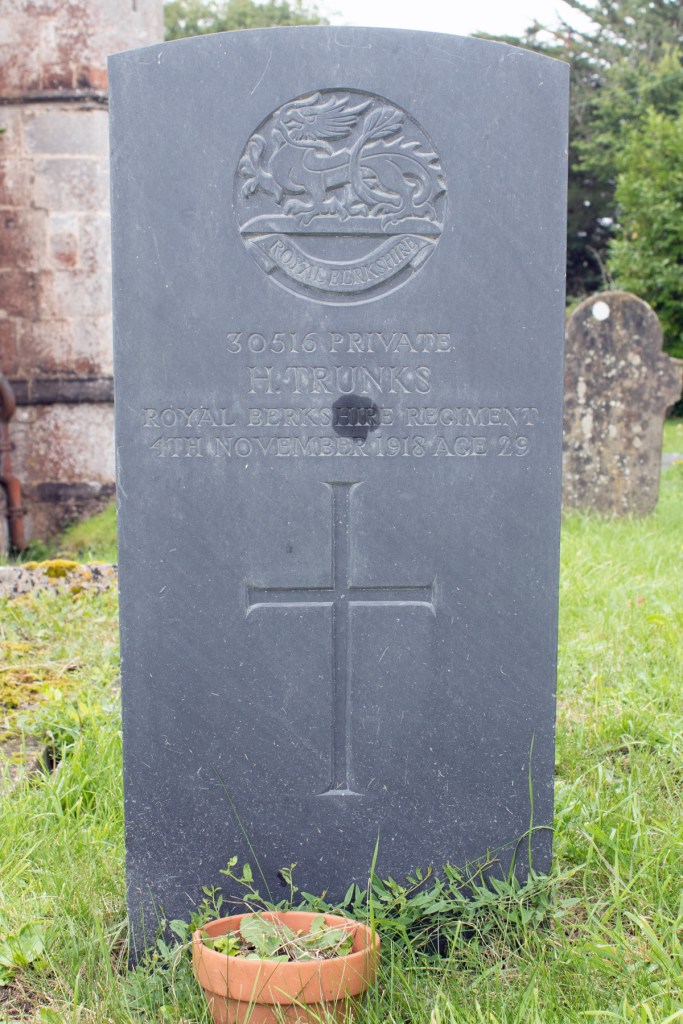
Private Herbert Trunks

Private Herbert Trunks

Herbert Henry Trunks was born in Williton, near Watchet, Somerset, in the spring of 1888. One of fourteen children, his parents were George and Rosa. George was a labourer in a timber yard, but when Herbert left school, he found work as a labourer in a paper mill.

On 10th June 1911, Herbert married Lily Sully at St Decuman’s Church in Watchet. Four years Herbert’s senior, she was a labourer’s daughter: the couple went on to have three children: Lilian, Henry and Dorothy.

Herbert was called up to serve his country on 5th June 1916. Assigned to the Royal Berkshire Regiment, his service records confirm that he was 5ft 9ins (1.75m) tall, and weighed 135lbs (61.2kg). He soon found himself in France, leaving for the continent on 20th September 1916.

Attached to the 13th Labour Battalion, Private Trunks spent the next 15 months overseas, returning to Britain in February 1918 for medical treatment. He was suffering from albuminuria, a side effect of kidney disease, and was hospitalised for a couple of months.

When he had recovered, Private Trunks was transferred to the 397th Home Service Company. He was based on the Isle of Wight, but his health had been impacted, and he came down with pneumonia. He was admitted to Parkhurst Military Hospital on the island on 28th October 1918, but died there just a week later, on 4th November. He was 30 years of age.

Herbert Henry Trunks was taken back to Somerset for burial. He was laid to rest in the peaceful graveyard of St Decuman’s Church, where he had been married just seven years before.


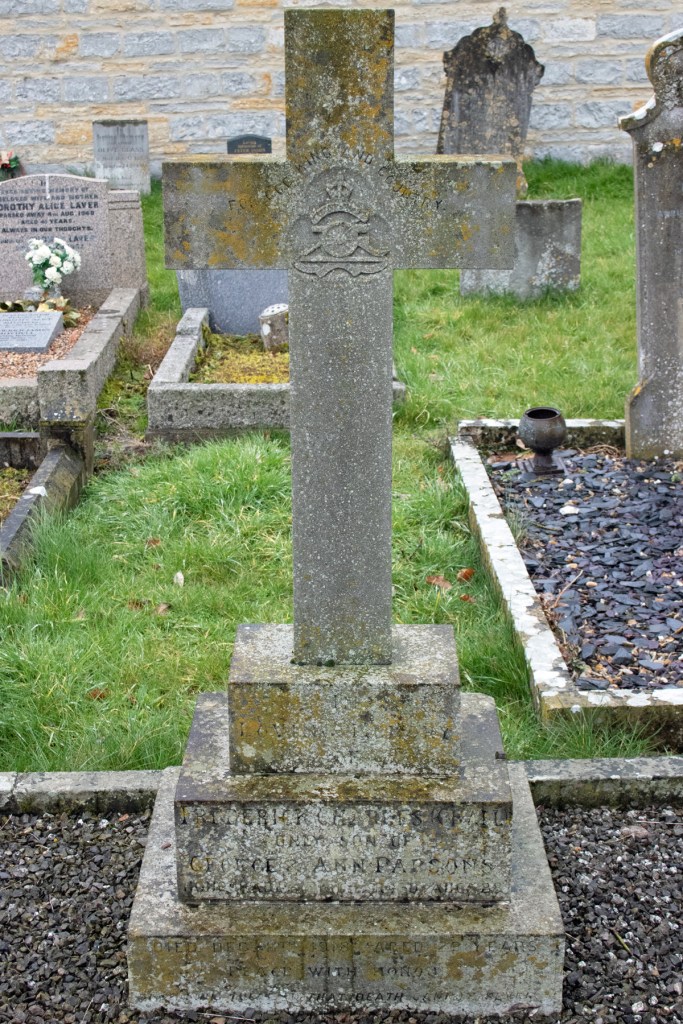
Driver Frederick Parsons

Driver Frederick Parsons

Frederick Charles Harold Parsons was born in 1889, the older of two children to George and Ann Parsons. George was a general labourer from Drayton in Somerset, and this is where he and Ann raised their young family.

Ann’s mother, Elizabeth, was a constant presence in the family’s lives, moving in with them when her own husband, William, died. The 1911 census found a packed family home, with George, Ann, Frederick, Elizabeth, Ann’s widowed brother Joseph and her nephew Robert all living under the same roof.

Frederick – who was known by the nickname Chall – was working as a grocer’s assistant by this point, but when war broke out, he was quick to step up and serve his King and Country. He enlisted on 2nd September 1914, joining the Royal Field Artillery as a Driver. His service records note that he was 5ft 6ins (1.68m) tall and weighed 116lbs (52.6kg). He had dark hair, brown eyes and a dark complexion, and had a scar below his left eye.

For the first ten months of Driver Parsons’ service, he remained on home soil. He was finally sent to France in the summer of 1915 and spent nearly two-and-a-half years overseas. Towards the end of that time, he began to have issues with his kidneys, and was posted back to the UK for treatment.

Initially admitted to Milton Hospital in Portsmouth, Chall was then moved to the VAD Hospital in Ryde on the Isle of Wight. He was initially diagnosed as having kidney stones, but was subsequently found to have enlarged kidneys. He was placed on furlough in May 1918, before being medically discharged from service at the end of August.

At this point, Chall’s trail goes cold. He appears to have returned home to Drayton, as it was in nearby Langport that his death was subsequently registered. He died on 11th December 1918, at the age of just 29 years old.

Frederick Charles Parsons was laid to rest in the family plot in St Catherine’s Churchyard, Drayton.


Gunner Henry Brewer

Gunner Henry Brewer

Henry William Brewer was born the spring of 1869 in Bitton, Gloucestershire. His is a common name for the area, and so it is not easy to unpick details of his early life.

On 5th May 1895, Henry married Ann Williams, a carter’s daughter from Keynsham, Somerset. The couple wed in St Thomas’ Church in Widcome, near Bath, and their marriage certificate gives Henry’s trade as a labourer, and his father as Louis Brewer.

The young couple up home in Kingswood, near Bristol, and went on to have three children, Henry, Lucy and Ethel. The 1901 census recorded Henry’s trade as a coal miner and hewer, but noted that he was also a Gunner in the Royal Artillery.

Sadly, Henry’s military records are lost to time, but if he was employed in the army, this would account for the lack of documents relating to his early life. It may be that he had completed his initial term of service by the time he and Ann married, or that he was a volunteer with the Royal Artillery at the time of the census.

Whatever his connection with the army, when war broke out he was called into service. He joined the 30th Company of the Royal Garrison Artillery, and was based in Weymouth, Dorset, as part of Britain’s South Coast defences.

Without military documents, it’s challenging to identify Gunner Brewer’s trail during the war. Sadly, the next documents relate to his passing. He was admitted to a military hospital in Weymouth, suffering from the kidney condition nephritis. This was ultimately to kill him, and he passed away on 28th February 1917, at the age of 48 years old.

Henty William Brewer’s body was brought back to Gloucestershire for burial. He was laid to rest in the graveyard of St Mary’s Church in Bitton.


Lance Corporal Edmund Durnford

Lance Corporal Edmund Durnford

Edmund George Durnford was born in the spring of 1881 in the Somerset village of Pitcombe. The second oldest of twelve children, he was the oldest son to Edmund and Eliza Durnford. Edmund Sr was an agricultural labourer who travelled with the work – the 1891 census recorded the family living in Mells, near Frome.

When Edmund Jr left school, he found work at an ironmonger’s. He moved to Midsomer Norton and, in 1907, he married local carter’s daughter Bessie Welch. The young couple set up home in a terraced house on the road to nearby Radstock, and went on to have two children: Ian, who was born in 1908, and Ronald, born the following year.

War came to Europe, and Edmund was keen to play his part. He enlisted in the Royal Army Service Corps as a Driver, and was assigned to the 827th Company. Full details of his service are not available, but he remained a part of the territorial force and was promoted to Lance Corporal.

The local newspaper of the time reported on what became of Edmund:

Lance Corporal Edward [sic] G Durnford, Army Service Corps… son of Mr and Mrs EG Durnford… died suddenly on April 18 at Duston Hospital, Northampton, from shell shock and hemorrhage [sic] of the brain, was 38 years of age. The body was brought back from Northampton, and the deceased accorded a military funeral at Midsomer Norton last week.

Somerset Guardian and Radstock Observer: Friday 3rd May 1918

There are a couple of inconsistencies with the report. The newspaper has Edmund’s name wrong, while his pension record does not mention shell shock as the cause of death (it confirms the cerebral haemorrhage, but also cites a granular kidney). Given that Lance Corporal Durnford did not serve abroad, it seems unlikely that shell shock was a contributing factor.

The same article also places three of Edmund’s brothers in the war, and gives an insight into what had become of them before the conflict. Gunner Percy Durnford was with the Canadian Field Artillery, training in the South of England; Sergeant Major Arthur Durnford, of the Australian Light Horse, was based in Sydney; Bombardier Horace Durnford, of the Royal Garrison Artillery, had served in France, where he had been gassed, but was, at the time of his oldest brother’s death, based in Egypt.

Edmund George Durnford died in Northampton on 18th April 1918. He was 38 years of age. His body was brought back to Somerset, and he was laid to rest in the graveyard of St John the Baptist Church in Midsomer Norton.


Edmund’s younger son, Ronald, served in the Second World War. He joined the Royal Artillery, reaching the rank of Lance Bombardier. Ronald was serving in the Far East early in 1942, and for the next year, no news was heard of him.

However, contact was made in March 1943, confirming that Ronald had been captured by the Japanese, and was a prisoner of war in Borneo. Three months later, his wife, Kathleen, received a postcard from him, confirming he was a prisoner of war, well and unwounded.

Tragic news was quick to follow, however:

In last week’s issue it was stated that Mrs [Bessie] Durnford… had received through her daughter-in-law news that her son, Lance Bombardier Ronald Durnford, was a prisoner of war in Jap hands and was unwounded.

On Saturday she received the sorrowful news that he was dead in the following messages, which her daughter-in-law had sent on:

“I deeply regret to inform you a report has been received from the War Office, that [Ronald], who was reported a prisoner of war in Borneo Camp, had died from dysentery. The date of his death is not yet known, but you may rest assured as soon as any further information is received, I will immediately let you know.”

Somerset Guardian and Radstock Observer: Friday 30th July 1943

Lance Bombardier Durnford was laid to rest in the Labuan War Cemetery in Malaysia.


Further family tragedy, albeit with a life well-lived, was to follow as, on 6th September 1943, Bessie too died at the age of 86. She was laid to rest alongside Edmund in the family plot. Her obituary confirmed that “She leave a husband, seven daughters, and four sons to mourn her loss. One son and one daughter are in Canada, and one son in Australia, and one daughter and son in London.” [Somerset Guardian and Radstock Observer, Friday 17th September 1943]

Bessie had not, in fact, remarried: the husband was, in fact, the one who had died some 25 years before.


Private Herbert Spiller

Private Herbert Spiller

Herbert George Spiller was born in 1881, the second of four children to George and Emily Spiller. George was a timber merchant and ironmonger, born in Taunton, Somerset, who raised his family in his home town.

When Herbert left school, he found work as a clerk in a solicitor’s office, and this was the trade he followed, eventually becoming a solicitor in his own right.

In March 1907, he married Winifred Lewis, an outfitter’s daughter, and the couple soon emigrated, arriving in Perth, Australia, later that year. They had two children in Australia; a son, who sadly passed as a babe in arms, and a daughter. Within three years, however, the Spillers were back living in England again and went on to have four further children, three of whom survived infancy.

War had arrived, and Herbert enlisted on 11th December 1915, but was initially placed as a reserve. He was finally called to do his duty for King and country on 6th September 1917 and joined the 28th Battalion of the London Regiment. After initial training, Private Spiller was sent out to the Front, arriving in France in April 1918.

Herbert was back on home soil after three months, suffering from albuminaria (a disease of the kidneys) and served in territorial depots until he was demobbed in December 1918.

At this point, Herbert disappears from the records. It seems likely that his illness was the cause of his passing, but this cannot be confirmed. Either way, Herbert George Spiller died on 7th May 1920, at the age of 39 years old. He lies at rest in the St James Cemetery in his home town of Taunton, Somerset.


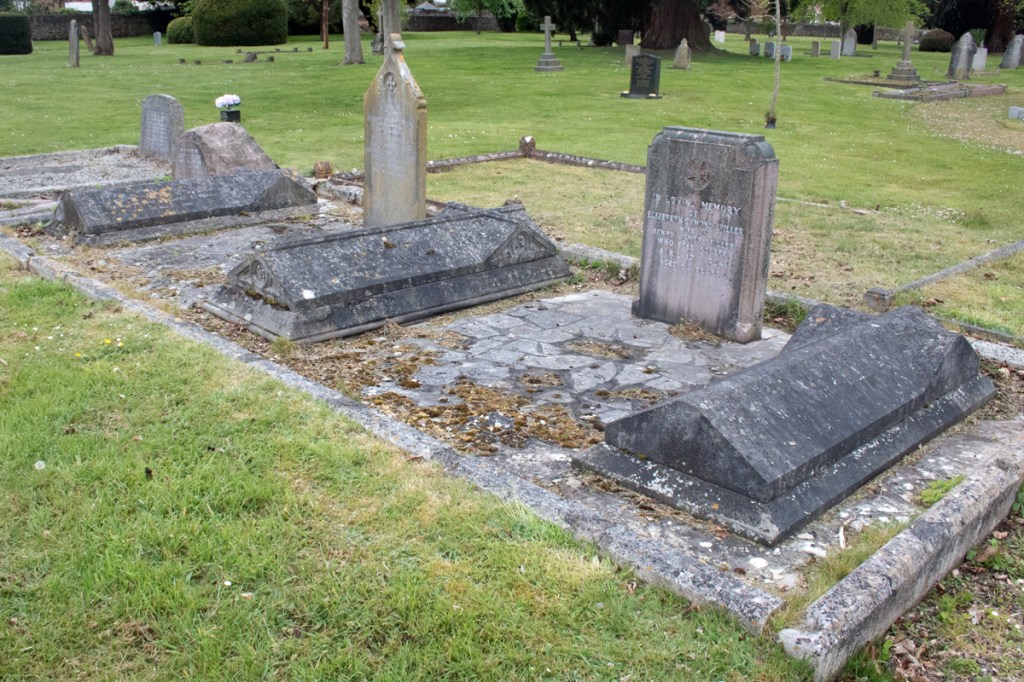
Please note: While Private Spiller was afforded a Commonwealth War Grave, his exact burial location is not identifiable. The image at the top of this post, therefore, is of the other family graves in the cemetery.


Herbert Spiller (from findagrave.com)