Tag Archives: meningitis

Private Bertie Ball

Private Bertie Ball

Bertie Ball was born in Westcott, Berkshire, in the spring of 1890, the oldest of ten children to John and Matilda Ball. John was from Berkshire, who raised his family in Wantage. He began life as a farm labourer, but, by the time of the 1901 census, he had found other employment, as a groom at a racing stable.

Details of Bertie’s life are scarce. When he left school, he found work as a garden labourer and, when war broke out, he enlisted in the Royal Army Service Corps. Private Ball was assigned to the Mechanical Transport Company, but whether he served overseas or on home soil is unknown.

Bertie died on 4th March 1915 from cerebrospinal meningitis. He was just 24 years old. He was laid to rest in the graveyard of St John the Baptist Church in Midsomer Norton – I can find no Somerset connection, so can only imagine that he passed away in or near the town.


Bertie’s younger brother Percival Ball also served in the First World War. He served with the 5th Battalion of the Wiltshire Regiment and fought in Mesopotamia. Sadly, he was killed there, dying on 5th April 1916. He was just 17 years of age. He is commemorated on the Basra Memorial in Iraq.

Lance Corporal Thomas Taylor

Lance Corporal Thomas Taylor

Thomas George Taylor was born in the summer of 1886, and was the youngest of five children to George and Sarah Taylor. George was a gamekeeper in Clutton, Somerset, and he and Sarah raised their family in Rudges Cottage opposite the village church.

Thomas’ older brother John found a variety of jobs, from boot finisher to coal miner, but Thomas followed in his father’s footsteps, and, by the 1911 census, was recorded as a butcher’s apprentice.

Storm clouds were brewing across Europe by this point and, when war broke out, Thomas was one of the first to enlist. Sadly, there is little information on his military service, but it is clear that he joined the 7th Battalion of the Somerset Light Infantry and was quickly promoted from Private to Lance Corporal.

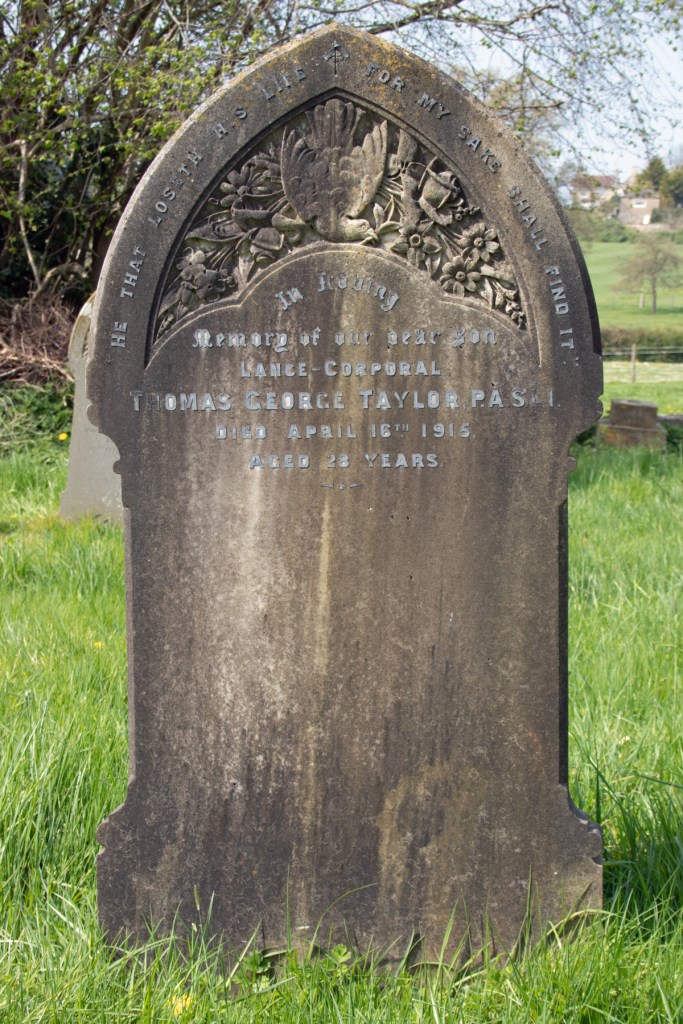
The only other documentary evidence for Thomas is his entry in the Army Register of Personal Effects. This confirms that he was admitted to the Isolation Hospital in Aldershot, suffering from meningitis. Lance Corporal Taylor passed away from the condition on 16th April 1915, aged just 29 years old.

Brought back to Somerset for burial, Thomas George Taylor was laid to rest in the graveyard of St Augustine’s Church, across the road from his family home in Clutton.


Private George Franklin

Private George Franklin

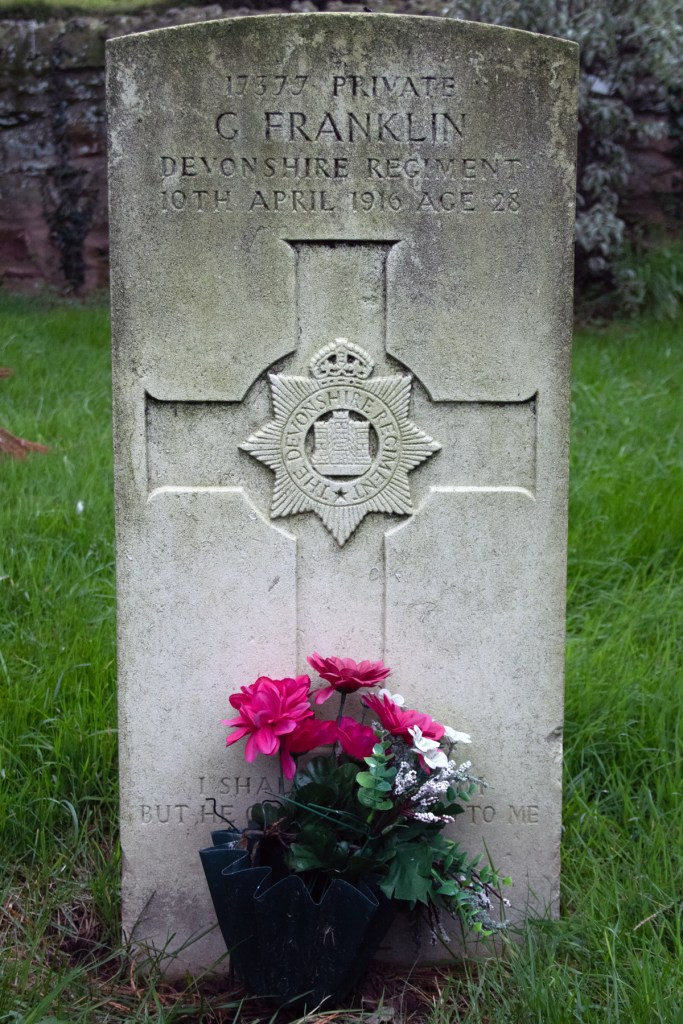
George Franklin was born in the autumn of 1887, one of eleven children to James and Eliza. James was a farm labourer from North Newton, Somerset, and this is where the young family were raised. Given the rural location, it is no surprise that, when he left school, George followed his father and became an agricultural labourer.

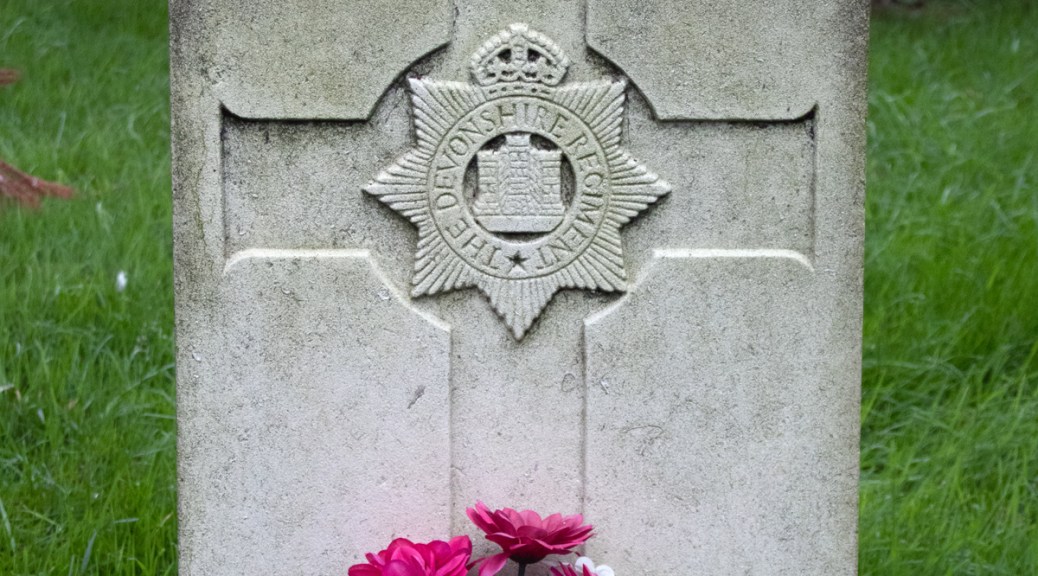
When war came to Europe, George was keen to play his part. Full details of his military service are not available, but he enlisted in the Devonshire Regiment as a Private. Little information is available about his role or where he was posted, and, sadly, the next set of documents relate to his passing.

Private George Franklin died on 10th April 1916, having been suffering from cerebro-spinal fever – meningitis. He was just 28 years of age. He was laid to rest in the graveyard of his village church, St Peter’s in North Newton.


Driver Arthur Heathfield

Driver Arthur Heathfield

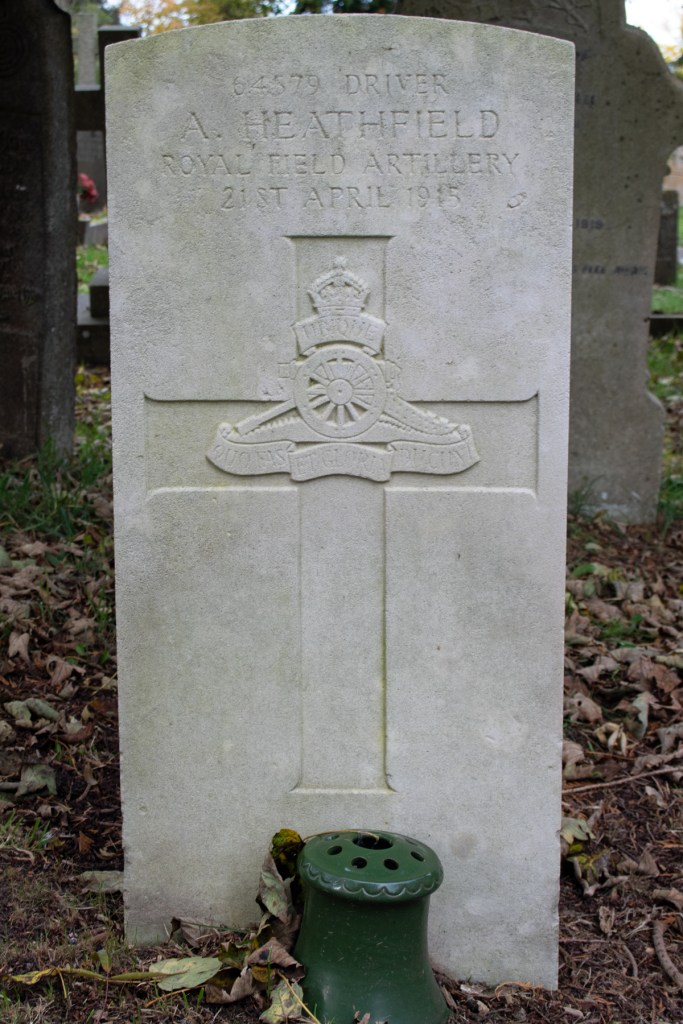
Arthur Heathfield was born in Shefford, Bedfordshire, early in 1897, the oldest child to Ellen Grace Heathfield. Ellen married William Lewis in 1903, and went on to have four children in total.

When he left school, Arthur found work as a farm labourer, but by this time, war was coming to Europe. Full details of his military career are not available, but he enlisted in the Royal Field Artillery at some point towards the end of 1914.

Driver Heathfield was assigned to the 14th Brigade, which saw fighting on the Western Front, although it is not possible to determine whether Arthur himself went overseas. What is certain is that, by the spring of 1915, he was admitted to hospital in Frome, Somerset, suffering from meningitis. Sadly, he was to succumb to the disease on 21st April. He had not long turned 18 years old.

Arthur Heathfield was laid to rest in the graveyard of Christ Church, in the town in which he died.


Private William Eglon

Private William Eglon

William Ernest Eglon (also known as Ernest William Eglon) was born in the Somerset village of Stoke-under-Ham (or Stoke-sub-Hamdon), in the spring of 1898. One of five children, his parents were stonemason Arthur Eglon and his glovemaker wife Sarah Elizabeth Eglon (who was better known as Bessie).

Unfortunately, little information on William’s early life remains documented. When war broke out, he was working at the Co-operative Bakery in the village. He was keen to do his bit, however, and enlisted in the Royal Army Service Corps as a Private not long after his eighteenth birthday.

Private Eglon was sent to serve in Essex, working as a baker in the Supply Section there. Within a couple of weeks of arriving, however, he was admitted to the Field Hospital in Chelmsford. He was suffering from an ear infection, and this turned out to be significant enough for him to be transferred to the Horton County of London War Hospital in Epsom.

William developed an abscess in the temporo sphenoidal region of his skull (in front of his right ear), which was operated on on the 27th May 1917. By this time meningitis had set in and, despite a second operation just over a week later, the conditions took hold.

Private Eglon passed away at 9:55am on 11th June 1917. He was just 19 years of age.

William Ernest Eglon’s body was brought back to Stoke-under-Ham for burial. He lies at rest in the family plot in the graveyard of St Mary’s Church in the village.


Private Daniel Norman

Private Daniel Norman

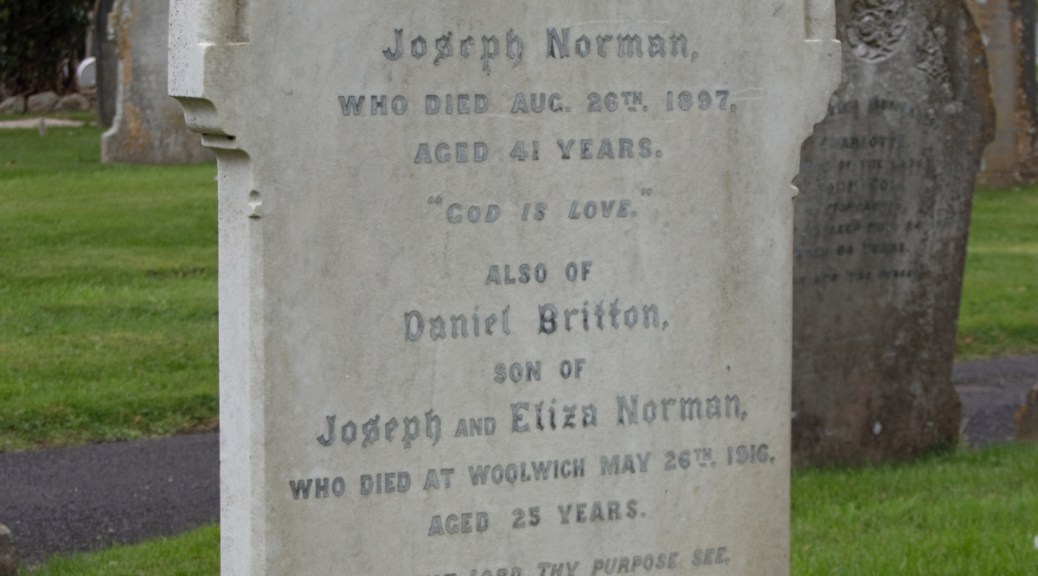
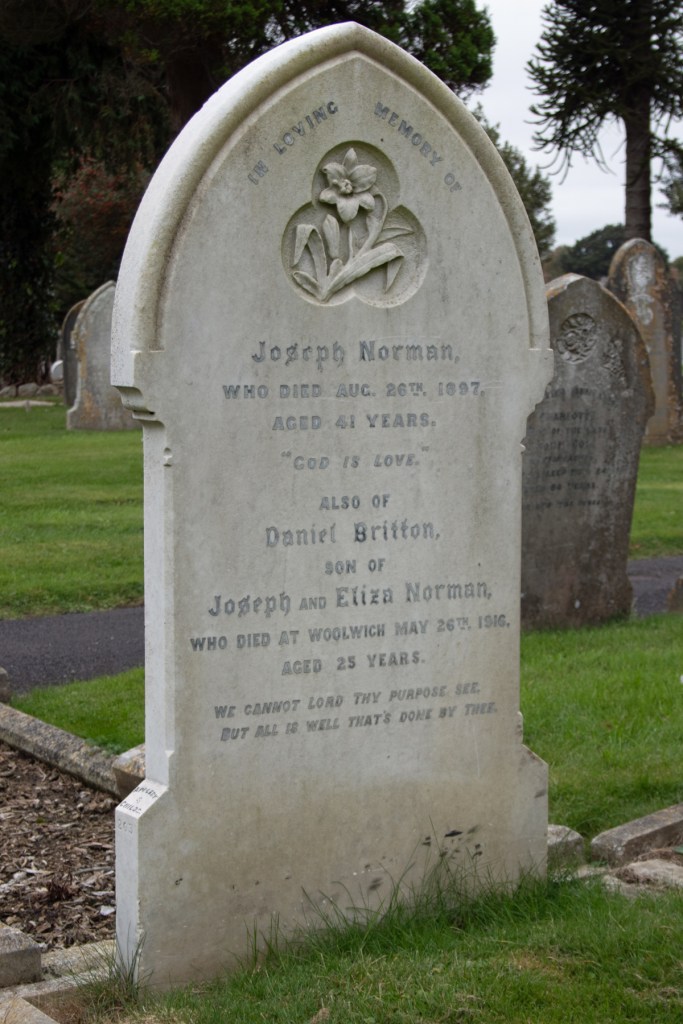
Daniel Britton Norman was born in Yeovil, Somerset, in early 1891, the youngest of four children. Joseph and Eliza Norman, Daniel’s parents, ran the Blue Ball Inn in the town centre, something Eliza took over when her husband died.

There is little information on Joseph’s passing, but a report in the local newspaper may allude to what led to his death:

On Friday [16th January 1891], Mr J Norman, of the Blue Ball Inn, was riding in a waggon through the Borough when he was jerked off onto the road. One of the wheels passed over his right leg, breaking a vein.

Western Chronicle: Friday 23rd January 1891

By the time of the 1911 census, Eliza too had given up the reins of the Blue Ball Inn. At the age of 59, she was living with her two sons in a house on the outskirts of the town; Daniel was listed as a motor mechanic, while his older brother Rowland was a cabinet maker.

War broke out and Daniel enlisted in April 1916. He joined the Royal Army Service Corps and was assigned to the Motor Transport Division. Based in London, Private Norman had received three weeks’ training, when he was taken ill.

Admitted to the Royal Herbert Hospital in Woolwich with cerebro-spinal meningitis, Private Norman quickly went downhill. He died in the hospital on 26th May 1916, aged just 26 years old.

Brought back to Yeovil, Daniel Britton Norman was buried in Yeovil Cemetery, alongside his father.


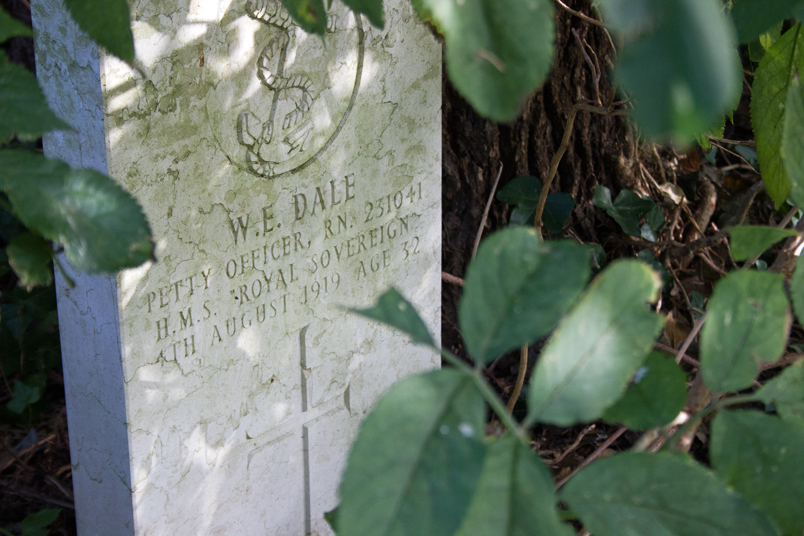
Petty Officer William Dale

Petty Officer William Dale

William Edmund Dale was born in Worthing, West Sussex on 25th November 1886 and was the older of six children. His father, also called William, was a carman, and he and William’s mother, Eliza, brought the family up in the Sussex town.

William Jr seems to have had a number of jobs, working as a draper’s errand boy, a milkman’s assistant and a gardener. He found his true calling at the age of 12, however, when he enlisted in the Royal Navy.

Initially acting as a Boy 2nd Class, over his initial twelve years’ employ he served on eleven vessels, and rose through the ranks to Boy, Ordinary Seaman and Able Seaman.

It was while serving on HMS Blake in 1910, that he married Mary Williams. The couple went on to have two children, William, born in 1910, and Harry, born the following year. The family set up home in Portsmouth, where the sailor was based.

With his initial service complete in 1916, William’s term of duty was extended until the end of hostilities. A promotion to Leading Seaman followed, and he was assigned to HMS Attentive, part of the Dover Patrol guard.

In 1917, William was promoted again, this time to the role of Petty Officer, and was assigned to HMS Royal Sovereign, the Navy’s new battleship. He served on the vessel for the remainder of the way, and through into the summer of 1919.

It was in the last month of his service, that Petty Officer Dale fell ill. He was taken ashore, and sent to the Royal Naval Hospital in Chatham, Kent. He had contracted meningitis, and sadly succumbed to it within days of being admitted. He died on 4th August 1919, at the age of just 32 years old.

William Edmund Dale was brought back to the town of his birth; he lies at rest in a quiet corner of the Broadwater Cemetery in Worthing, West Sussex.


Lance Corporal Joscelin Currey

Lance Corporal Joscelin Currey

Joscelin William Currey was born in the summer of 1897, one of six children to Job Arthur Currey and his wife, Eliza Jane. Job was a shoesmith, and brought his young family up in his home town of Taunton, Somerset.

When Joscelin left school, he worked as an errand boy, before becoming an apprentice with local foundry of Messrs. Rudman, Lancey and Co. But with war on the horizon, things were about to change.

Along with his older brothers, Joscelin enlisted in the army, joining the 3/5th Reserve Battalion of the Somerset Light Infantry in August 1914. Initially based on Salisbury Plain, he was soon transferred to Bath, and attained the position of Lance Corporal.

It was in Bath that he fell ill, and was admitted to hospital with cerebrospinal meningitis. Sadly, Joscelin was to succumb to this condition, and he passed away on 28th June 1915. He was just 18 years of age.

Joscelin William Currey was laid to rest in the St James Cemetery of his home town of Taunton.


Joceslin Currey
(from britishnewspaperarchives.com)

The newspaper report of Lance Corporal Currey’s funeral confirmed that one of his brothers was a prisoner of war in Germany, while another was in the Royal Field Artillery. Joscelin was the only one of the three to die during the conflict.


Joscelin’s name is spelt variously as Jocelyn and Joslin across the documents relating to him, and his surname is also spelt Curry. For the purposes of this post, I have chosen to use the spelling cited on the Commonwealth War Graves Commission records.


Private Albert Percy

Private Albert Percy

Albert Rudolph Percy was born in April 1889 in Taunton, Somerset. His parents were William Percy, a draper, and his wife, Elise, who had been born in Baden Baden, Germany. Elise’s background certainly influenced the naming of the couple’s five children, all sons with middle names ranging from Rudolph and Frederick, to Leopold and Felix.

All but the eldest of William and Elise’s children followed their father into the drapery business; after initially doing so when he left school, Albert’s older brother Frederick took holy orders, a following he continued for the rest of his days.

On the outbreak of war 1914, Albert volunteered for military service, leaving his father’s business behind him. Enlisting in the West Somerset Yeomanry, he was shipped off to to Colchester in Essex for training.

While taking two days’ leave in September that year, Private Percy returned home, and, on the first evening complained of feeling unwell. A doctor was summoned and diagnosed spinal meningitis. Albert was swift to succumb to the illness, passing away on 4th October 1914. He was just 25 years old and likely one of the first from Taunton to die whilst on active service.

Albert Rudolph Percy lies at rest in St Mary’s Cemetery in his home town of Taunton, Somerset.


Private Arthur Lee

Private Arthur Lee

Arthur Henry Lee was born in April 1895, and was one of five children. His parents were Arthur and Hannah (or Annie) Lee, and the family lived in the Chard area of Somerset. Arthur Sr worked as a ‘twist hand’, operating the machines in a lace factory and, when his son left school, he too found work in the same factory.

There is little documented about Arthur’s early life. When war broke out, however, he was quick to enlist, and joined the Somerset Light Infantry as a Private. He was assigned to the 5th (1st Reserve) Battalion, and was stationed at Mansfield House.

Sadly, Private Lee’s military service was not to be a long one. As happened with lots of young men from different parts of the country coming together in large numbers, illness and disease spread quickly in the military encampments,

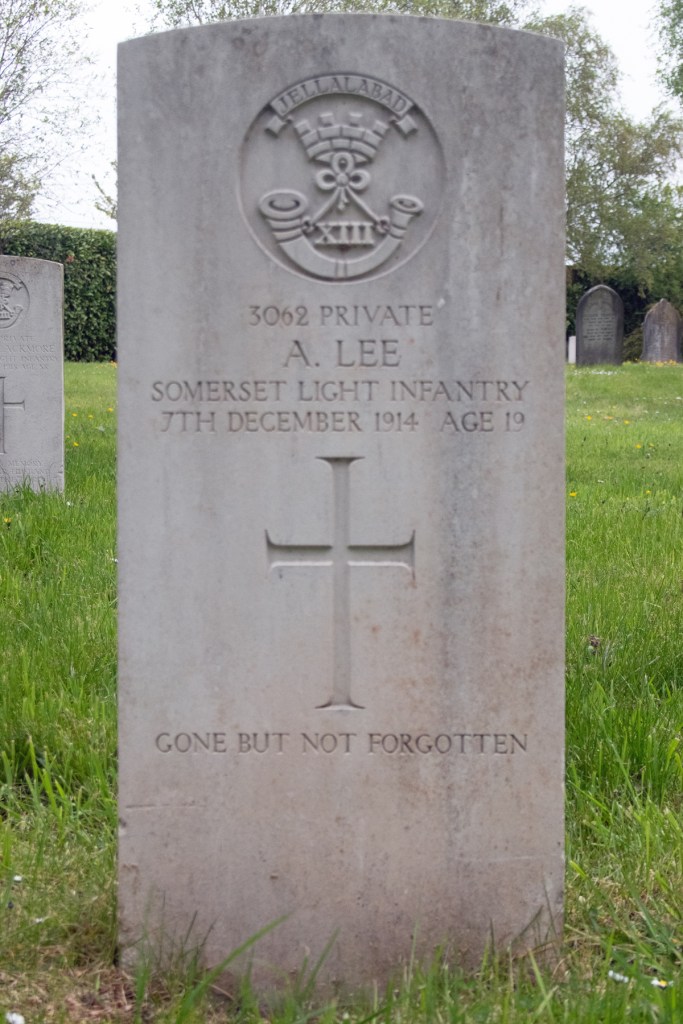
Arthur was not immune to this and was admitted to the Military Hospital in Taunton with meningitis. He passed away on 7th December 1914, aged just 19 years old.

Arthur Henry Lee lies in St Mary’s Cemetery in Taunton, Somerset.