Tag Archives: Princess Irene

Stoker 1st Class Albert Willingham

Stoker 1st Class Albert Willingham

Albert Willingham was born in Upchurch, Kent, on 4th January 1888. One of eleven children, his parents were George and Annie Willingham. George was a brickmaker and labourer, who moved his family to where the work was. By the time of the 1891 census, they had relocated to the nearby town of Gillingham, and were living on the waterfront at 5 Danes Hill.

As the family grew, so they kept moving. The census of 1901 found the ten Willinghams – George, Annie and eight children including 13-year-old Albert and his youngest sibling, 11-day-old Ada – residing at 5 Court Lodge Road. The small terraced house would still be crowded, however, and this may have been one of the factors pushing Albert to bigger and better things.

Having followed his older brothers into labouring work, Albert decided enough was enough. On 13th July 1908, he enlisted in the Royal Navy, joining up as a Stoker 2nd Class. His service records show that he had brown eyes, dark brown hair and a ruddy complexion. He was 5ft 8.5ins (1.73m) tall.

Stoker Willingham was first sent to HMS Acheron, the training frigate, for his induction. He remained on board for six months, before moving to the cruiser HMS Dido in January 1909. Over the next six years, Albert served on seven further ships, returning to what became his home base, HMS Pembroke in Kent, in between voyages.

Albert quickly became well-travelled, and he served in the Somaliland Expedition, and in the operations in the Persian Gulf between 1909 and 1914. The 1911 census recorded him as being a stoker on board HMS Hyacinth, which was then moored in Bombay (now Mumbai), India.

While on board Hyacinth, Albert was promoted to Stoker 1st Class, and in April 1915, with the war raging around him, he was promoted again, to Acting Leading Stoker. At the end of that month, he was transferred to what would be his final ship, HMS Princess Irene.

She was an ocean liner that had been requisitioned at the outbreak of war, and converted to a minelayer. On 27th May 1915, while moored off Sheerness, Kent, a series of explosions ripped through the ship, killing more than 350 crew. Acting Leading Stoker Willingham was among those who perished: he was 27 years of age.

The body of Albert Willingham was buried in Woodlands Cemetery, Gillingham, Kent, just a short walk from his family’s home.


Albert’s headstone records the permanent rank he held at the time of his passing, rather than acting one he had been temporarily given. He is therefore noted as Stoker 1st Class, instead of Acting Leading Stoker.

Stoker 1st Class Albert Knieriem

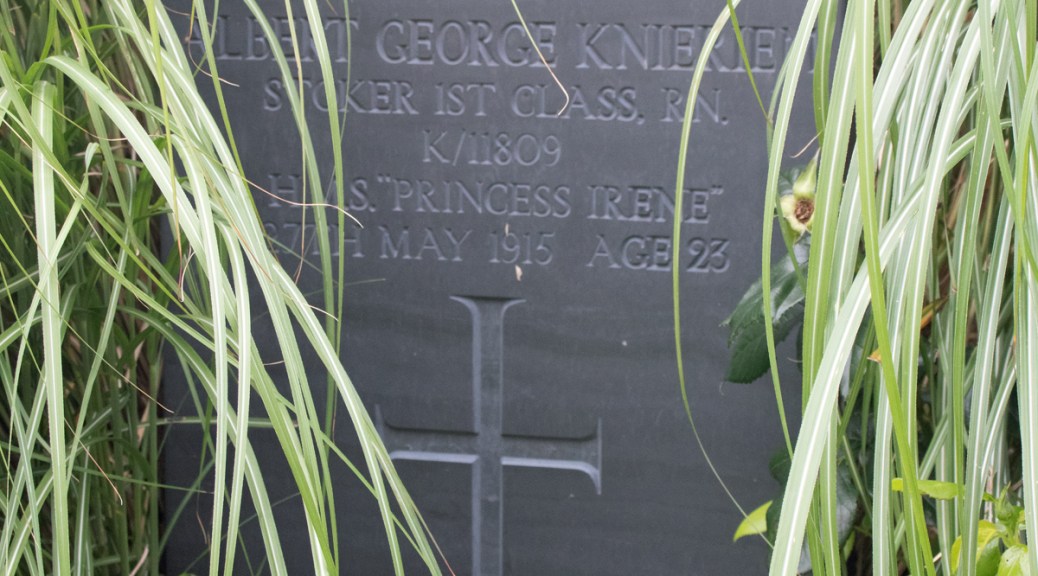
Stoker 1st Class Albert Knieriem

Albert George Knieriem was born in Bromley-by-Bow, Middlesex, on 1st January 1892. The eighth of nine children, his parents were German-born Gottliept (anglicised to George) Knieriem, and his London-born wife, Caroline.

George was a labourer at the local gas works, and the family had rooms at 3 Hancock Road. Their home has long since gone, but the Knieriems shared the property with the Richard and Eliza Bone and their four children.

George passed away in March 1906, with Caroline dying less than eighteen months later. Albert found himself an orphan at just 15 years of age. It seems that his oldest brother, also called George, found him employment as a local iron foundry. By the time of the 1911 census, he was boarding with the Fryatt family, at 29 Hancock Road, not far from the old family home.

Albert sought bigger and better things for himself, however, and was drawn to a life at sea. On 14th July 1911 he enlisted in the Royal Navy as a Stoker 2nd Class. His service records confirm that he was 5ft 5.5ins (1.66m) tall, and that he has light brown hair, grey eyes and a fresh complexion.

Stoker Knieriem was initially sent to HMS Pembroke, the Royal Naval Dockyard in Chatham, Kent, for his training. He remained there for four months, before being given his first posting, on board the cruiser HMS Intrepid. She would be his home for the best part of a year, during which time Albert was promoted to Stoker 1st Class.

In September 1912, Albert transferred to HMS Acteon. A former hulk, she was based at Sheerness, Kent, as was used as a torpedo school. Albert would remain there for more than two years, attached to the school’s tender, HMS Kestrel.

On 18th January 1915, Stoker 1st Class Knieriem’s service records note one word: “Run”. Albert had absconded, remaining at large for two months. He was apprehended on 23rd March, and sentenced to 28 days’ detention for going AWOL. Put back on duty on 28th April, he was reassigned, to the former cruise liner, HMS Princess Irene.

The Princess Irene had been requisitioned by the Royal Navy on the outbreak of war and converted into a minelayer. On the morning of 27th May 1915, she was moored in the Medway Estuary and was being loaded with mines. A faulty primer set off a series of explosions, destroying the ship and killing more than 250 crew, Stoker 1st Class Knieriem among them. He was 23 years of age.

Albert’s name comes up in a newspaper article about one of the subsequent enquiries. The Coroner’s inquest on 18th June focused on the bodies in coffins 29 to 34.

No. 32 body was very much shattered. It was dressed as a stoker. The name “A. G Knieriem” was no the band of the trousers.

The body was identified as that of Albert George Knieriem, aged 23, stoker, 1st class, of Bromley-by-Bow.

[Sheerness Guardian and East Kent Advertiser: Saturday 19th June 1915]

Albert’s body was laid to rest in the naval section of Woodlands Cemetery in Gillingham, Kent. He was buried alongside some of the other crew whose bodies had been rescued and identified.


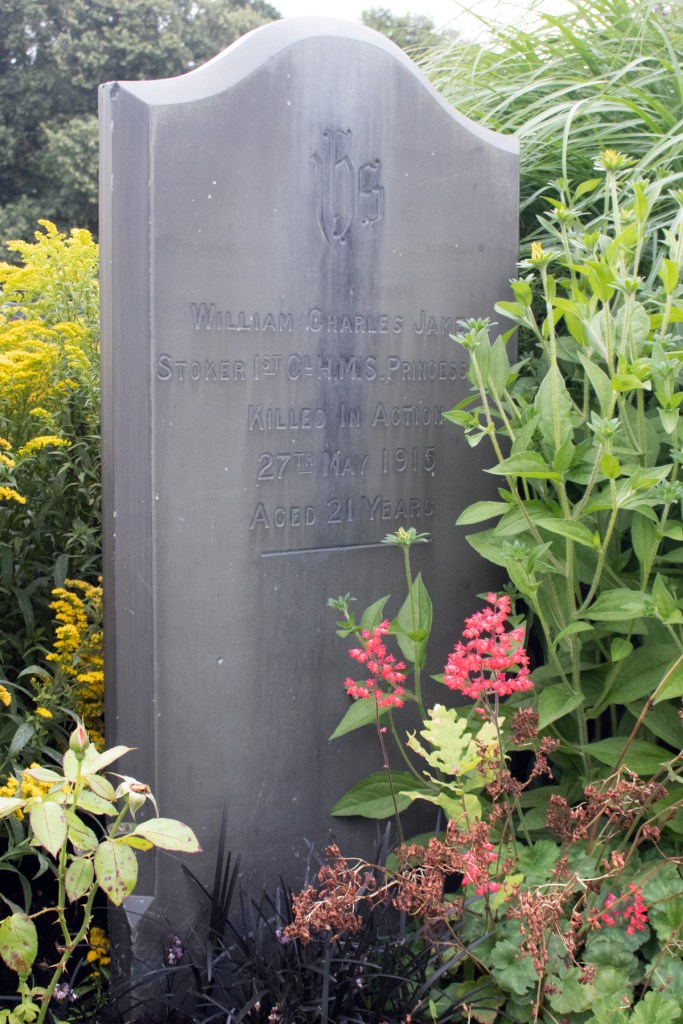
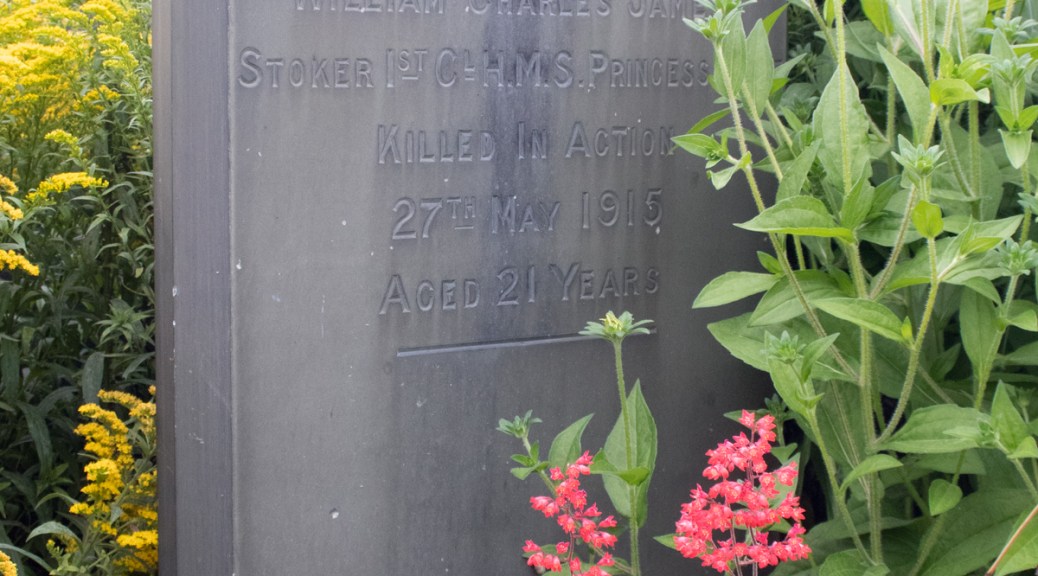
Stoker 1st Class William James

Stoker 1st Class William James

William Charles James was born on 12th September 1893, the ninth of ten children to John and Isabella James. John was a sawyer from Shoreditch, Middlesex, and this is where he and his Surrey-born wife raised their family.

By the time of the 1911 census, John and Isabella were living in four rooms at 36 Falkirk Street, Hoxton, Middlesex with three of their children – including William – and Isabella’s brother, Charles. The building was inhabited by 17 people in total, four families renting out the nine rooms of the house.

The James family had three wages coming in. In addition to John’s work at the wood mill, his brother-in-law was employed as a casual winder cleaner. William was also in work, serving as an office boy a a draper’s warehouse. Isabella would have been running the household and looking after her youngest, schoolboy Thomas. William’s 27-year-old sister, Rachel, completed the household: she was not working, but was noted as having been suffering from a chest disease for at least four years.

Whether seeking a life away from London’s East End, or to bring in a more permanent wage for his family, William sought a more stable and financially lucrative career. On 8th January 1913, he enlisted in the Royal Navy for the standard twelve-year contract. His service records show that he had progressed from an office boy to a clerk, and confirm his physical features: he was 5ft 5.5ins (1.66m) tall, with dark brown hair, grey eyes and a fresh complexion. His records also highlight a scar on his left forearm and another above his right eye.

William was given the rank of Stoker 2nd Class, and sent off to HMS Pembroke, the Royal Naval Dockyard in Chatham, Kent, to be trained. After six months he was given his first assignment, on board the cruiser HMS Forward, which would remain his home for the next two years.

During his time on Forward, William, rising to Stoker 1st Class in January 1914. The ship was assigned to patrol the eastern coast of England, and, in December that year, bore witness – but was not directly involved in – the German bombardment of Hartlepool.

In April 1915 Stoker James was moved to HMS Princess Irene, an ocean liner requisitioned on the outbreak of war and converted to a minelayer. On the morning of 27th May 1915, she was moored in the Medway Estuary and was being loaded with mines in preparation for a mission. At 11:14am, a faulty primer on board set off a series of explosions, and she blew apart and sank. More than 250 crew – including Stoker 1st Class James – were killed. He was just 21 years of age.

The body of William Charles James was brought ashore and laid to rest in the Woodlands Cemetery in Gillingham, Kent. He was buried alongside some of the other crew whose bodies had been rescued and identified.


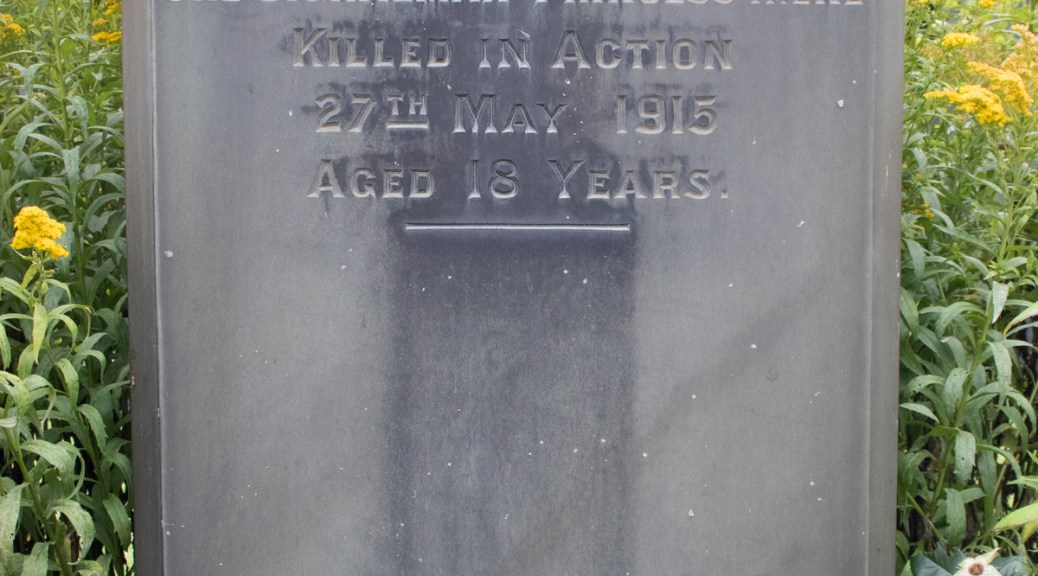
Ordinary Signalman Frederick Timms

Ordinary Signalman Frederick Timms

Frederick James Timms was born on 21st January 1897 in Watford, Hertfordshire. One of ten children – and the oldest surviving boy – his parents were Frederick and Rosina Timms. Frederick Sr was a farm labourer, but when his son completed his schooling, he found work with a blacksmith.

Frederick Jr wanted bigger and better things, however, and, on 18th April 1913, he enlisted in the Royal Navy, set on a life at sea. As he was below the age to be a full recruit, he was given the rank of Boy 2nd Class, and was sent to HMS Ganges, the navy’s training base on the outskirts of Ipswich, Suffolk, for his induction.

During his initial training, Boy Timms seems to have had some educational affinity. Seven months after enlisting, he was moved to the signal corps, and ranked as Signal Boy accordingly. In April 1914, a year after enlisting, he was transferred to HMS Victory, the Royal Naval Dockyard in Portsmouth, Hampshire, for posting. He was assigned to the battleship HMS Duncan, his first formal service at sea.

Over the next year, Frederick served on three further ships, coming of age on board the cruiser HMS Latona. Now formally inducted into to the Royal Navy, he was assigned the rank of Ordinary Signalman.

In March 1915, Frederick was transferred again, to HMS Princess Irene, an ocean liner built in 1914 for the Canadian Pacific Railway. With the outbreak of the war, she was requisitioned by the Royal Navy, and converted to a minelayer. In the spring of 1915, she was involved in laying a minefield to the north west of Heligoland, but spent much of her time in and around the Thames Estuary.

On the morning of 27th May 1915, Princess Irene was moored in the Medway Estuary and was being loaded with mines in preparation for a mission. At 11:14am, she exploded and disintegrated, taking two neighbouring barges with her. More than 250 crew – including Ordinary Signalman Timms – were killed. He was just 18 years of age.

Frederick James Timms body was laid to rest in the Woodlands Cemetery in Gillingham, Kent, alongside some of the other crew whose bodies had been rescued and identified.


Frederick’s death was the second tragedy to strike the Timms family in less than a fortnight. Back in Hertfordshire, Rosina had been pregnant with her eleventh child. On 16th May, she had had an internal haemorrhage, which resulted in the loss of both mother and child.


Leading Signalman Alexander Daisley

Leading Seaman Alexander Daisley

Alexander William Arthur Daisley was born on 13th November 1886, and was the second of four children to William and Judith Daisley. William was a Private in the Royal Marines and, as the time his son was born, the family were based in Dartmouth, Devon. By the time of the 1891 census, however, they had moved to Kent, and were billeted in family accommodation in the Milton Barracks, near Gravesend.

Ten years on, and the 1901 census confirms that the Daisleys had relocated again. William had left his military service behind him, and had taken up work as a publican at the Seven Stars Inn in Litlington, Cambridgeshire. Alexander is noticeable in his absence from the record, however. The following year, he surfaces again, however, and seems that he was destined to follow his father’s naval career.

On 10th April 1902, Alexander enlisted in the Royal Navy. At just 15 years of age, he was assigned the rank of Boy 2nd Class, and was sent to HMS St Vincent, a training ship based in Haslar, Hampshire, for his induction. He remained there for the next fifteen months, gaining promotion to Boy 1st Class in February 1903.

Alexander spent the second half of that year at HMS Victory, the Royal Naval Dockyard in Portsmouth, Hampshire, before being given his first posting in November. His assignment was on board the armoured cruiser HMS Good Hope: she was to become his home for the next year and a half, during which he came of age, and was formally inducted into the Royal Navy.

At this point, Alexander’s service records give an insight into the man he was becoming. He was noted as being just 5ft 1in (1.55m) tall, with hazel eyes and light brown hair. He had a fair complexion and three scars on the back of his head. It seems that he had some aptitude, as he was given the rank of Signalman, rather than being directed to the role of seaman.

Over the next twelve years – the term of his contract – Signalman Daisley would serve on eight ships: in between assignments he would return to his Portsmouth base. His time in the Royal Navy was not without incident, and he spent three separate periods in the cells – 14 days in 1907, 17 days in 1908 and 10 days in 1909. Despite this, he was promoted to the rank of Leading Seaman in January 1913, while serving on board HMS Egmont, an armoured frigate.

On 9th March 1915, Leading Signalman Daisley was assigned to HMS Princess Irene, an ocean liner that had been converted to a minelayer at the start of the war.

On 27th May 1915, while Irene was moored off Sheerness, Kent, a series of explosions ripped through the ship, killing more than 350 crew. Leading Signalman Daisley was among those who perished: he was 29 years of age.

The body of Alexander William Arthur Daisley was buried in Woodlands Cemetery, Gillingham, Kent, alongside the other victims of the disaster.


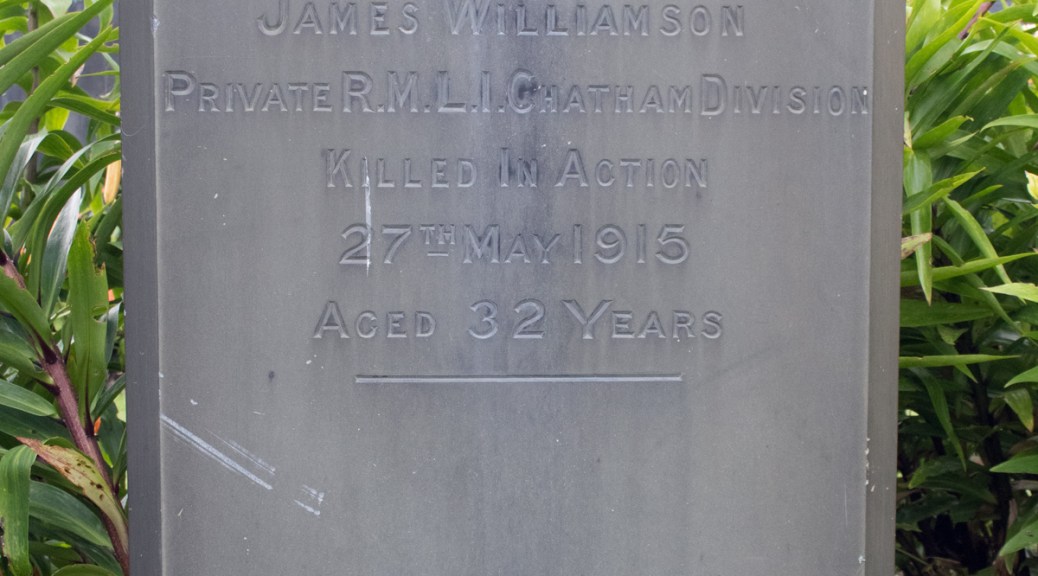
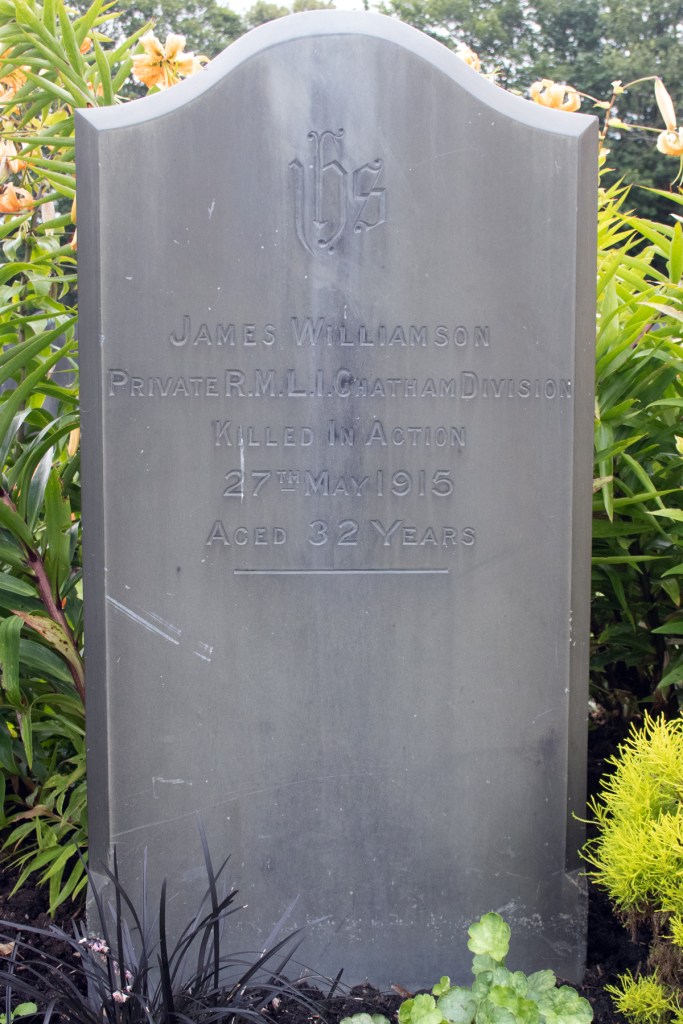
Private James Williamson

Private James Williamson

In amongst the rows of naval headstones in the Woodlands Cemetery in Gillingham, Kent, is one dedicated to James Williamson, a Private in the Royal Marine Light Infantry. He was killed in action on 27th May 1915, while attached to the ship HMS Princess Irene, and was 32 years of age when he passed.

There is little specific documentation relating to Private Williamson’s life, but what remains allows us to piece together something of the man he was.

James was born in the Dennistoun area of Glasgow in around 1883, and was one of five children to William and Jane Williamson. When he finished his schooling, he seems to have had a pull to the sea: whether this was because he was following in his father’s footsteps, or because of his home’s proximity to the river and docks is unclear.

By the time of the 1911 census, James was already serving in the Royal Marines. He was based on the cruiser HMS Philomel, which was in the Gulf of Oman on the day the census was taken, and was one of 19 Royal Marines on board our of a total compliment of 244 crew.

There is little more concrete information about Private Williamson’s life. By the spring of 1915, he had been assigned to the HMS Princess Irene, an ocean liner requisitioned during the war and converted into a mine layer. On 27th May, she was moored off Sheerness in Kent, when a series of explosions ripped her apart. More than 270 crewmen were killed: this included the 32-year-old James.

The crew whose bodies were not able to be identified were laid to rest in a communal grave in Woodlands Cemetery: James Williamson was laid to rest nearby, in a burial of his own.


Interestingly, James’ entry on the Royal Navy and Royal Marines War Graves Roll gives his next of kin as a friend, Miss J Malone of 3 Ashview Terrace, Newton Mearns, near Glasgow. There is no other information about her.


Writer 1st Class Harry Goodger

Writer 1st Class Harry Goodger

Harry Goodger was born on 15th April 1885, the fourth of five children – and the only boy – to George and Emma Goodger. George was a canal labourer from Aylesbury in Buckinghamshire, but by the time of his son’s birth, the family had settled in Tipton, Staffordshire.

Harry was initially committed to education and, by the time of the 1901 census, he was working as a school teacher. His heart seemed set on a career with more prospects, however, and so, on 2nd November 1904, he enlisted in the Royal Navy.

Harry’s service records show that he was 5ft 2ins (1.57m) tall and that he had bark brown hair, dark brown eyes and a fresh complexion. He was also noted as having a mole on his wight upper arm and another on his left breast.

Harry’s rank was Writer 3rd Class, which was the naval equivalent of a clerk. After an initial training period, he was assigned to the cruiser HMS Terrible. Over the next decade, he served on ten further ships, and was based at HMS Victory, the Royal Naval Dockyard in Portsmouth, in between voyages.

Writer Goodger slowly progressed through the ranks during his naval service. On 1st November 1908 he was promoted to Writer 2nd Class, and on 31st October 1912 was raised to Writer 1st Class. Harry seems to have needed extra support, however, and he was knocked back to Writer 2nd Class on 25th April 1913, and sent back to Portsmouth for further training. By 23rd October 1914, however, while serving on HMS Bulwark, he again received a promotion to Writer 1st Class.

By the spring of 1915, Harry had been assigned to HMS Princess Irene. She an ocean liner that has been converted to a minelayer at the start of the war.

On 27th May 1915, while Irene was moored off Sheerness, Kent, a series of explosions ripped through the ship, killing more than 350 crew. Writer Goodger was among those who perished: he was 30 years of age.

The body of Harry Goodger was buried in Woodlands Cemetery, Gillingham, Kent alongside the other victims of the disaster.


Writer 1st Class Harry Goodger
(from findagrave.com)

Harry’s surname is variously spelt Goodger and Goodyer across the documents that trace his life. While his headstone has the latter spelling, I have used Goodger, as this is what is recorded on his naval service records.


Private William Preston

Private William Preston

William Robert Preston was born on 2nd January 1888, and was the oldest of six children to William and Alice Preston. William Sr was a blacksmith from Norwich, Norfolk, and this is where the family were initially raised.

The 1901 census saw a move to Northamptonshire, however, the document confirming that the family were living at Tanner Cottages in the village of Walton.

When he finished his schooling, William Jr found work as a painter’s labourer. However, he sought bigger and better things and, on 5th June 1905, he enlisted in the Royal Marine Light Infantry. His service records show that he was 5ft 6ins (1.67m) tall, with dark brown hair, blue eyes and a fresh complexion. He was also noted as having a number of tattoos on his arms.

Private Preston was sent to barracks in Deal, Kent, for his initial training. He spent the best part of a year there, before being transferred to the Royal Naval Dockyard in Portsmouth, Hampshire, in April 1906. He was given his first ocean-going posting in January 1907, when he joined the crew of the cruiser HMS Terrible.

Over the next eight years, Private Preston served on three further ships, returning to HMS Victory, Portsmouth, in between trips. In March 1915, he was assigned to HMS Princess Irene, an ocean liner converted to a minelayer at the start of the war.

On 27th May 1915, while Irene was moored off Sheerness, Kent, a series of explosions ripped through the ship, killing more than 350 crew. Private Preston was among those who perished, but whose body was identified: he was 27 years of age.

The body of William Robert Preston was buried in Woodlands Cemetery, Gillingham, Kent alongside the other victims of the disaster.


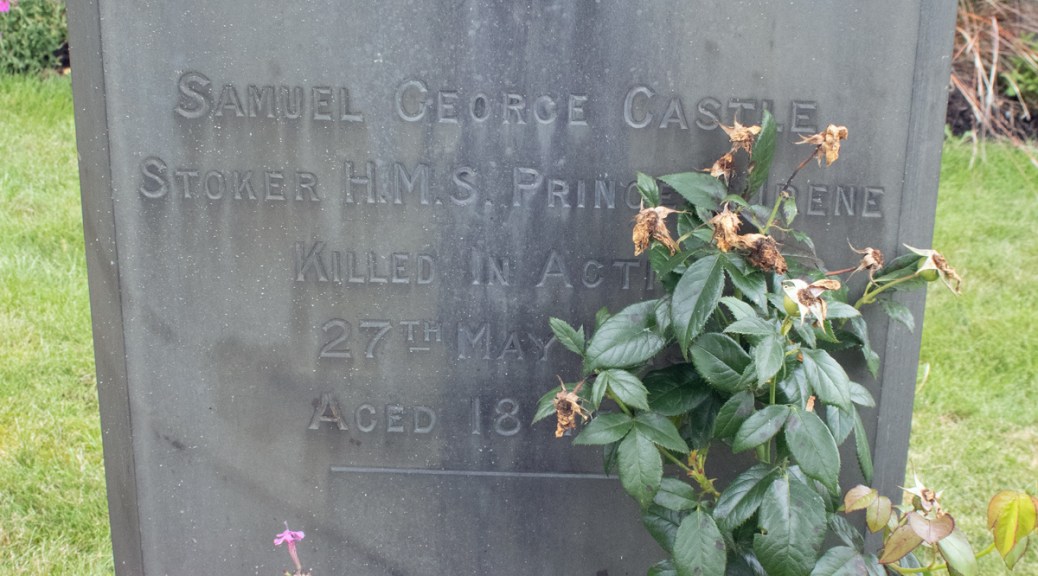
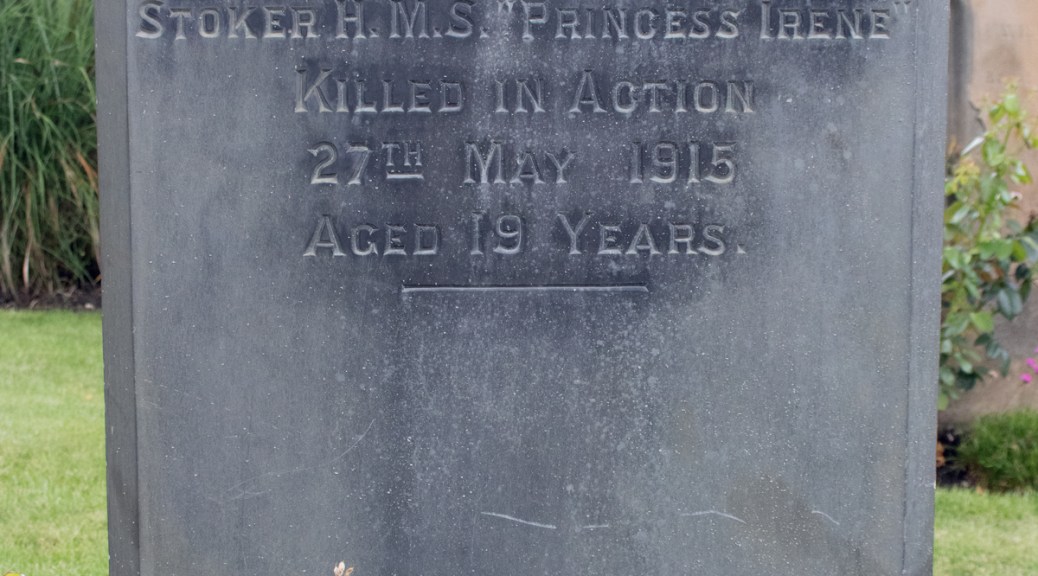
Stoker 2nd Class Samuel Castle

Stoker 2nd Class Samuel Castle

Samuel George Castle was born on 1st November 1896 in Battersea, Surrey. The third of ten children, his parents were Samuel and Louisa Castle. His father was a gas fitter turned blacksmith and, by the time of the 1911 census, Samuel Jr was working as an errand boy for Army & Navy Stores.

When war broke out, Samuel was quick to step up and serve his country. On 6th March 1915, he gave up his job – he was by then employed as an equipment maker – to enlist in the Royal Navy as a Stoker 2nd Class.

George was sent to HMS Pembroke, the dockyard in Chatham, Kent, for his training. His service records show that he was 5ft 4ins (1.62m) tall, with black hair, brown eyes and a fresh complexion.

Tragically, Stoker Castle’s time in the navy would not prove a lengthy one. By the end of May he was part of the crew of HMS Princess Irene, an ocean liner that had been put into service as a minelayer when war was declared. On 27th May 1915, a series of explosions ripped through the ship, killing more than 350 crew, Samuel included. He was just 18 years of age.

Samuel George Castle was laid to rest in Woodlands Cemetery, Gillingham, alongside the other victims of the disaster.


Stoker George Marshall

Stoker George Marshall

George Patrick Marshall was born in Dublin, Ireland, on 17th March 1896. One of ten children, his parents were plumber and gasfitter Robert Marshall and his wife, Rachel.

When he finished his schooling, George found work as a messenger. By the time war broke out, however, he was working as a builder’s mate. Keen to play his part and serve his country, he decided to enlist in the Royal Navy.

Stoker 2nd Class Marshall enlisted on 7th March 1915. His service records show a little of the man he had become. He was noted as being 5ft 4ins (1.62m) tall, with brown hair, grey eyes and a fresh complexion. His first trip overseas took him to HMS Pembroke, the Royal Naval Dockyard in Chatham, Kent, where he would receive his training.

Tragically, George’s time in the navy would not prove a lengthy one. By the end of May he was part of the crew of HMS Princess Irene, an ocean liner that had been put into service as a minelayer when war was declared.

On 27th May 1915, a series of explosions ripped through the ship, killing more than 350 crew, Stoker Marshall included. He was just 19 years of age.

George Patrick Marshall was laid to rest in Woodlands Cemetery, Gillingham, alongside the other victims of the disaster.