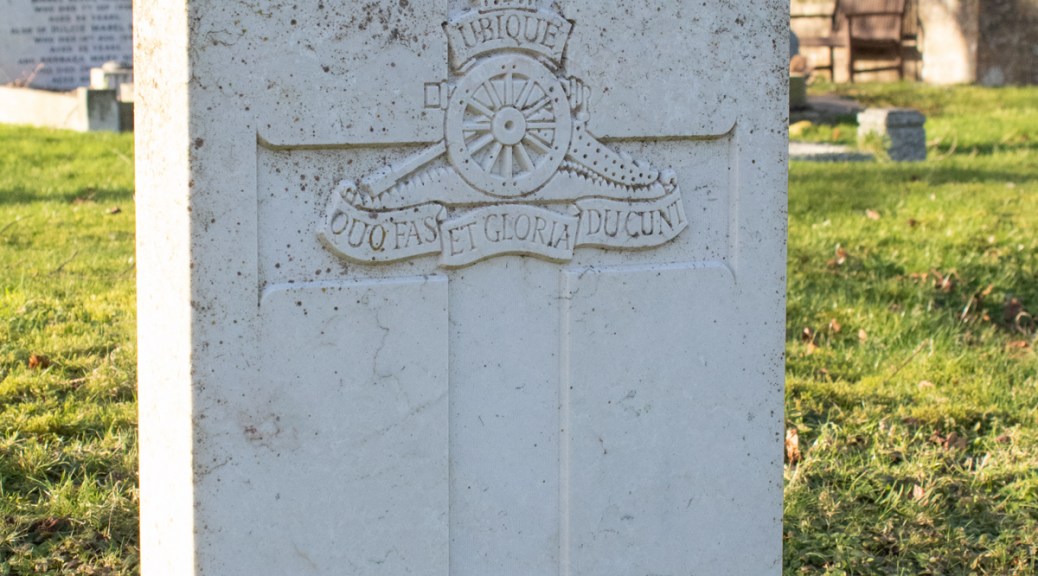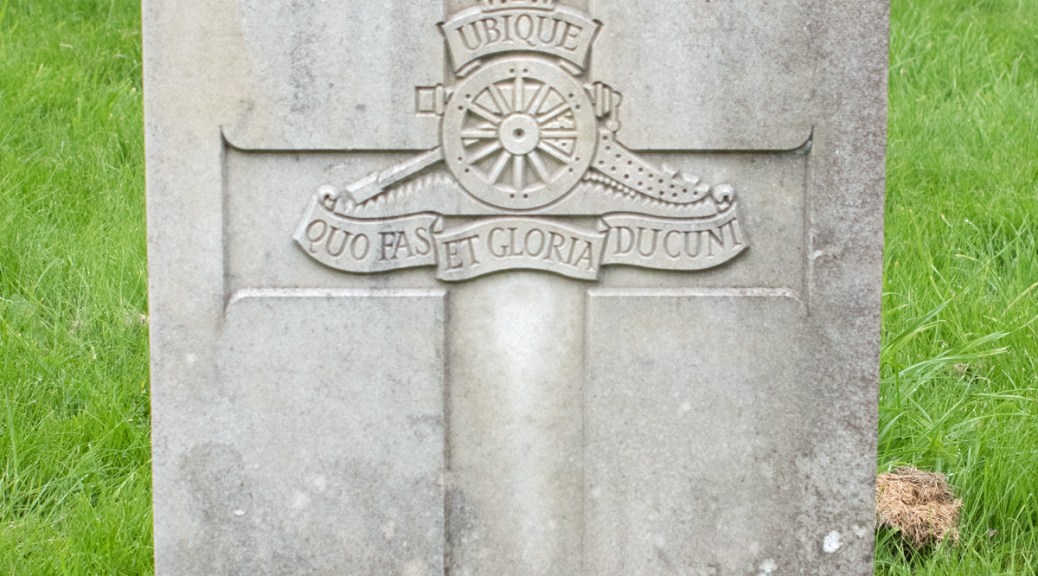
Tag Archives: Royal Field Artillery

Gunner Willie Smith

Gunner Willie Smith

In a quiet corner of St Mary’s Churchyard, Codford, Wiltshire, is a headstone dedicated to L/17006 Gunner W Smith of the Royal Field Artillery. His pension ledger confirms that he passed on 14th January 1916 from osteomyelitis, a bone infection, contracted whilst on active service.

The document gives Gunner Smith’s first name – Willie – and that of his widow, Ada, who lived at 157 Gisburne Road, Barnoldswick, Yorkshire. Their only child, Winifred, had been born on 22nd March 1914.

The couple’s marriage certificates are not available, while the 1911 census return shows at least three Willie Smiths in the Barnoldswick area. It is not possible, therefore, to uncover more of his family’s past.

Willie Smith had enlisted in the Royal Field Artillery by the summer of 1915. He acted as a Driver in the 32nd Division Ammunition Column, although it is unclear whether or not he spent any time overseas.

Gunner Smith was based on Salisbury Plain by the winter of 1915. He was admitted to the Military Hospital near Codford with the infection he had contracted, and succumbed to is on 14th January 1916. He was laid to rest in the peaceful country churchyard, the burial records confirming he was 26 years of age.


Serjeant William Dutch

Serjeant William Dutch

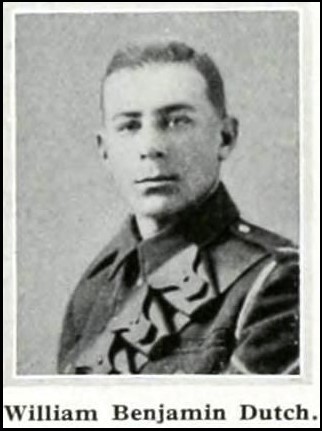
DUTCH, WILLIAM BENJAMIN, Sergt., No. 83812, 47th Brigade, Royal Field Artillery, [son] of William Dutch, of Bladud House, Bath, Accountant, by his wife, Alice, [daughter] of Alderman Alfred Taylor, of The Red House, Bath; b. Lower Weston, Bath, 21 April 1894; educ. Bathforum, and Bath City Secondary School 93 years’ Scholarship), and was employed in the engineering works of Stothert and Pitt Ltd., of Bath. He joined the Army, 17th Aug. 1914; was made Bombardier, 1 November 1914; Corpl., 14 November 1914; and Sergt., 1 January 1915; and died at the Thornhill Isolation Hospital, Aldershot, 11 April 1915, of septic scarlet fever; [unmarried]. He was buried at Locksbrook Cemetery, Bath, will full military honours. His Capt. wrote: “I cannot exaggerate the loss he is to me personally and to the whole battery, had picked up a wonderful knowledge of gunnery and his work in general was out and out the best sergeant I had, and would have gone far in the service.” He was a keen sportsman and a popular football player.

[De Ruvigny’s Roll of Honour, 1914-1919]

William Benjamin Dutch was the second of five children to William and Alice. His father initially worked as a grocer and wine and spirit shopkeeper, and the 1901 census found the family living above the shop on the corner of Chelsea Road and Park Road, Bath.

By the time of the 1911 census, however, things had changed. The Dutches had moved to Walcot, nearer the centre of Bath, and William was working as a tramway clerk. Alice was running the family home – 3 Bladud Buildings – as a boarding house, and employed a housemaid and kitchen maid to help look after the lodgings.

William’s dedication to his army role – and his rapid rise through the ranks – is outlined in the article above. He seems, however, to have spent his time on home soil, remaining at his Hampshire base from his enlistment to his passing. His service records give an insight into his physical nature: he stood 5ft 6.5ins (1.69m) tall, and weighed 153lbs (69.4kg). He had light brown hair, grey eyes and a fresh complexion.

Serjeant Dutch’s illness seems to have come on him quickly:

On Sunday a telegram reached [his parents] saying that their son… was seriously ill in hospital at Aldershot. Mr Dutch went thither at once, only to find that his son had passed away. He was attacked last week with bronchial pneumonia, and tracheotomy was performed in the hope of saving his life, but in vain. The deceased was… a young soldier of rare promise and fine physique.

[Bath Chronicle and Weekly Gazette – Saturday 17 April 1915]

William Benjamin Dutch was just 20 years old when he passed away. His body was taken back to Somerset for burial. He was laid to rest in the family plot in Bath’s sweeping Locksbrook Cemetery, within sight of William Sr’s former shop on Chelsea Road.


Serjeant William Dutch
(from findagrave.com)

Driver Charles Millson

Driver Charles Millson

Charles Millson was born in Scullcoates, Yorkshire, in the summer of 1897. One of nine children, his parents were called Charles and Eliza. Charles Sr was a general labourer and while still at school, his son found work as a newsboy, hawking papers for a local newsagent.

Sadly, there is little more concrete information about young Charles’ life. When war broke out, he stepped up to enlist, although the exact dates of his service are lost to time. He joined the Royal Field Artillery and, as Driver, was assigned to the 107th Brigade.

By the summer of 1915, Driver Millson was based on Salisbury Plain, near Amesbury, Wiltshire. This is where he was to breathe his last. Charles died on 7th June 1915, through causes unknown: he was just 18 years of age.

It would seem that the Millsons were unable to bring their son back to Yorkshire for burial. Instead Charles was laid to rest in Amesbury Cemetery, not far from where he had passed away.


Gunner Arthur Bond

Gunner Arthur Bond

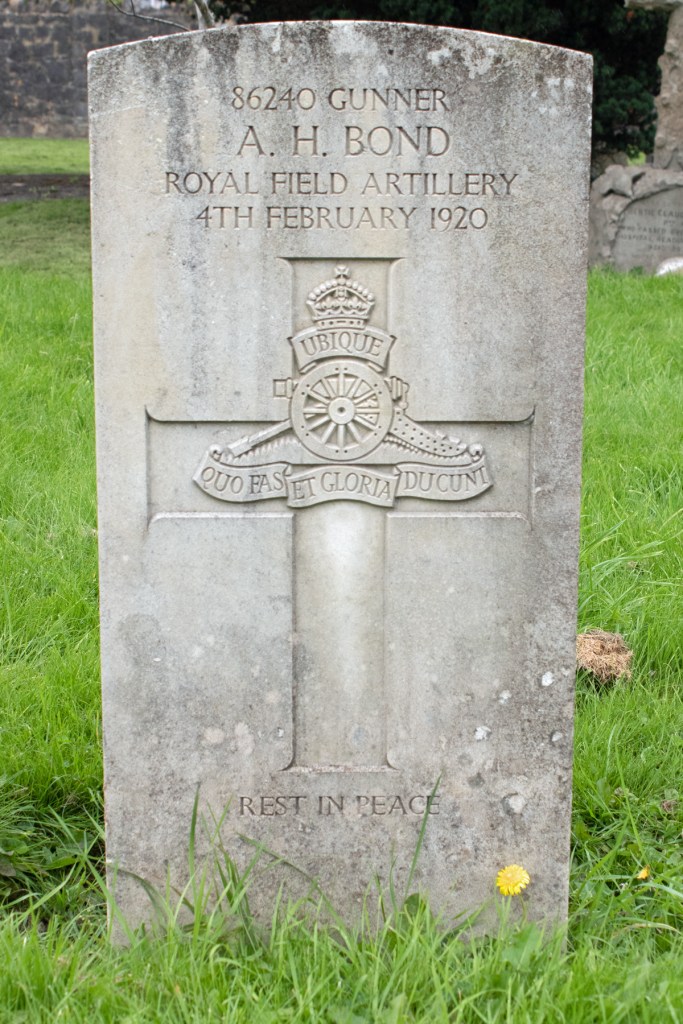
Arthur Henry Gordon Bond was born on 28th July 1894 in Huntspill, Somerset. He was the younger of two children to Henry and Sarah. Henry was a sawyer, something Arthur’s older brother, Frederick, also became. According to the 1911 census, however, Arthur took work as a land refiner. The family were living in a four-roomed cottage on Clyce Place, to the south of the town, overlooking the river.

Details of Arthur’s military career are sparse. He enlisted in the Royal Field Artillery and was attached to the 5th Reserve Brigade. It is unclear whether we served overseas or not, but Gunner Bond survived the war as was eventually stood down on 7th May 1919.

At this point, Arthur’s trail goes cold although he seems to have returned to Somerset. He passed away on 4th February 1920, his death being registered in Shepton Mallet. He was 25 years of age.

Arthur Henry Gordon Bond was laid to rest in Highbridge Cemetery, walking distance from where his family still lived.


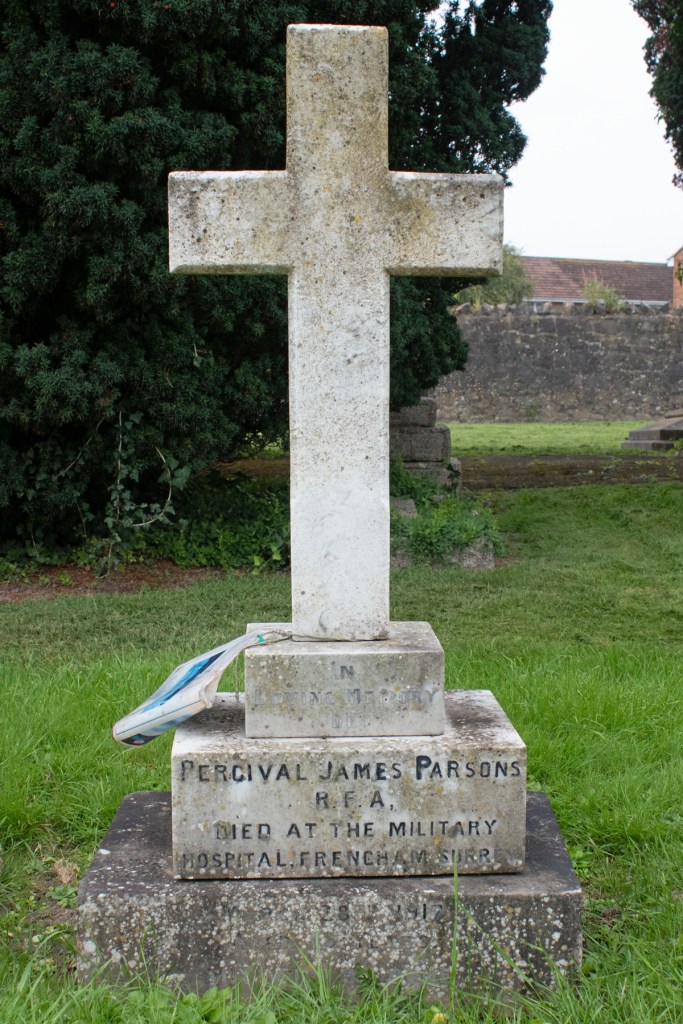
Gunner Percival Parsons

Gunner Percival Parsons

Percival James Parsons was born in the summer of 1898, and was the fourth of eight children to Henry and Emily. Henry was a railway labourer from Chilton Burtle, Somerset, and it was in the neighbouring hamlet of Chilton on Polden (now Chilton Polden) that the family were born and raised.

There is little documented about Percival’s short life. When war came to Europe, he was just 16 years of age. He was keen to play his part, however, probably spurred on by seeing his older brothers or friends step up.

Percival enlisted as soon as he turned 18 years old. He joined the Royal Field Artillery and was sent to Hampshire for training. Gunner Parsons was attached to E Battery of the 7th (Reserve) Brigade, a unit based ultimately in India during the confluct.

Gunner Parsons, however, was not to see service abroad. While he was training, he became unwell, contracting pneumonia. Admitted to the Frensham Hill Military Hospital, he was to succumb to the condition, passing away on 28th March 1917. He was just 18 years of age.

Percival James Parsons’ family had moved to Highbridge by this point, and it was here that Henry and Emily’s boy was taken for burial. He was laid to rest in the town’s cemetery.


Gunner Percival Parsons
(from andestry.co.uk)

Driver Henry Gibbs

Driver Henry Gibbs

Henry Gibbs was born in Wiveliscombe, Somerset at the start of 1871. The youngest of five children, he was the second son to John and Emma Gibbs. John was a farm labourer, but when he finished his schooling, Henry went in a different direction.

By the time of the 1891 census, Henry was boarding with his sister Lucy and her husband and young son. The extended family were living in Taunton, Somerset, where Henry was employed as a boot and shoemaker. This appears not to have satisfied him, however, and he soon found other work, enlisting in the Royal Field Artillery. While his army records are lost to time, he seems to have spent twelve years in service.

By the early 1900s Henry living back in Somerset, settling in Bishops Lydeard, to the west of Taunton. On 2nd May 1906, he married a young woman called Florence Gange. Fifteen years his junior – she was 20 years old to her husband’s 35, even though the marriage certificate gave his age as 30 – she a labourer’s daughter from the village, who was working at the Lethbridge Arms public house at the time of their marriage. The couple set up home in a small cottage, and went on to have four children: Ernest, Florence, Mabel and Arthur.

Henry’s work seems to have been transient. On his marriage certificate, he was noted as being a groom, but the next census return, taken in 1911, gave his employment as a labourer for a corn miller.

When war came to European shores, despite his growing family, Henry felt the pull to serve once more. He enlisted in the Royal Army Service Corps in the summer of 1915, with the rank of Driver. As with his previous time in the army, details are scarce, but Henry seems to have been based in Aldershot, Hampshire, or at least this is where he was based towards the end of the conflict.

Driver Gibbs had become unwell by this point, and he was suffering from oesophageal cancer. He was admitted to the military hospital in Farnham Hill, but was to succumb to the condition. He passed away on 1st September 1918, at the age of 47 years of age.

Henry Gibbs was brought back to Somerset for burial. He was laid to rest in the quiet graveyard of St Mary’s Church in his adopted home village, Bishops Lydeard.


Gunner William Stevens

Gunner William Stevens

William James Stevens was born in the autumn of 1891, and was the fourth of eight children to William and Emily Stevens. William Sr was a carter on a farm in Stogumber, Somerset, and this is where the family would come to be raised.

William Jr followed his father’s trade when he finished his schooling, but stepped up to serve his King and Country when war was declared. Little information remains about his time in the army, but it is clear that he had enlisted in the Royal Field Artillery by the spring of 1916.

The only other records relating to William are those connected to his passing. He was discharged from the army on medical grounds in November 1916, and was suffering from tuberculosis. He appears to have been admitted to a hospital that winter, and died from the lung condition on 16th February 1917. He was 25 years of age.

William James Stevens was laid to rest in the tranquil surroundings of St Mary’s Churchyard in Stogumber.


Lieutenant John Davey

Lieutenant John Davey

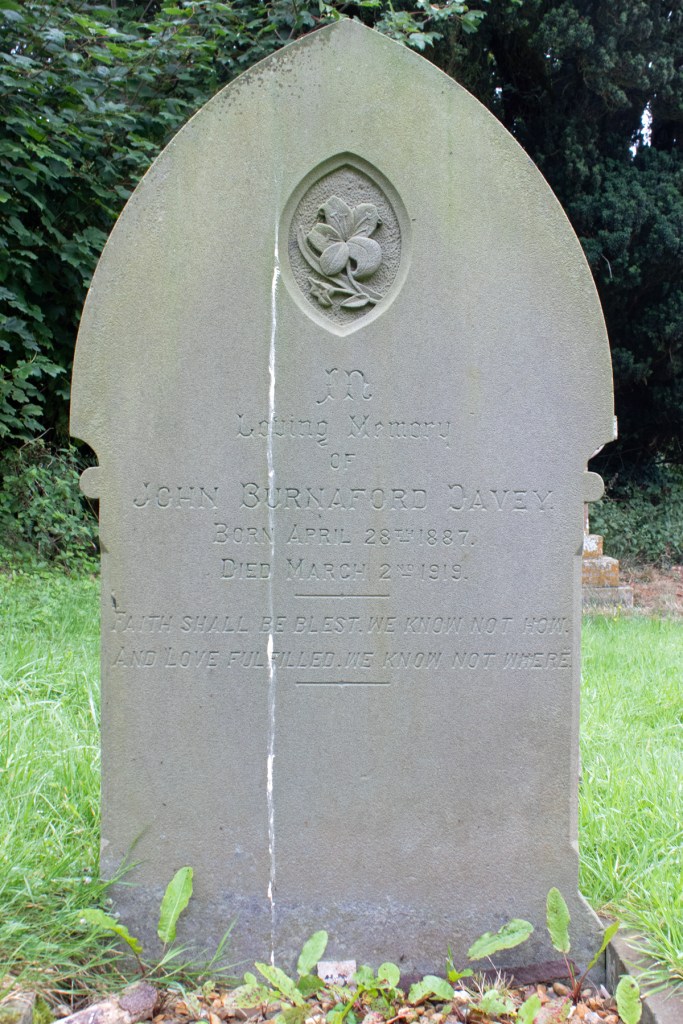
John Burnaford Davey was born on 28th April 1887 in Cannington, Somerset. The youngest of nine children, his parents were farmers Thomas and Emma Davey. Emma died in 1899, and the next census, two years later, found John and two of his siblings living with their father at Beere Manor Farm on the outskirts of the village.

John’s trail goes cold at this point, and it seems that he may have emigrated to South Africa. When war broke out, he enlisted in the Natal Light Horse, and was awarded the 1915 Star in Pretoria for his involvement in fighting in Africa. Private Davey’s troop later moved to England, and it was here that he transferred to the Royal Field Artillery.

The move, in September 1915, included a promotion to Second Lieutenant. Within a couple of years his dedication meant that he advanced to the rank of Lieutenant. By this point, John was based in London, and it was here, on 16th July 1917, that he married Katherine Trayler, a tanner’s daughter from Bridgwater, who had gone on to become a teacher of gymnastics. The couple went on to have a daughter, Jean, who was born in November 1918.

Illness caught up with John and, with the Armistice signed, he was invalided out of service on 8th February 1919. The family were now living in Bridgwater, and this is where John returned. His time back with family was to be tragically short, however, as he passed away just weeks after leaving the army, on 2nd March 1919. He was 31 years of age.

John Burnaford Davey was laid to rest in the peaceful graveyard of St Mary’s Church in Holford, Somerset.


Lance Corporal Henry Grandfield

Lance Corporal Henry Grandfield

Henry Grandfield was born in the spring of 1887, the third of six children to William and Martha Grandfield. William was a bootmaker from the Somerset village of Over Stowey, and it was here that he and Martha raised their family.

Henry found work as a labourer on a local estate when he finished his schooling. When war came to Europe, however, he stepped up to play his part.

Service records for Henry are pretty scarce. He appears to have enlisted in the Royal Field Artillery, but then transferred across to the Tank Corps. Separate research appears to suggest that Lance Corporal Grandfield served in the Eastern Mediterranean, but fell ill.

Suffering from rheumatism he returned to Britain for medical support. Based at Bovington Camp in Dorset, Henry was later admitted to a hospital near Wareham, having contracted pneumonia. This latter condition was to prove too much for his body to bear: he passed away on 1st October 1918, at the age of 31 years old.

The body of Henry Grandfield was taken back to Somerset for burial. He was laid to rest in Over Stowey Cemetery, not far from where his family still lived.


Gunner Stanley Parry

Gunner Stanley Parry

Stanley William Parry was born in the spring of 1890 in St George’s on the outskirts of Bristol, Gloucestershire. One of four children to Herbert and Susannah Parry, Stanley was a twin to brother Roland. Herbert was a commercial clerk for a chemical manufacturer, and this afforded the Parry boys a level of education, with both Roland and Stanley attended the Colston Endowed School in Bristol.

Tragically, Susannah had died when Stanley and Roland were just 3 years old: their younger brother, Wilfred, had died the year before, when just a babe-in-arms. By the time of the 1911 census, Herbert had moved the family to Portishead. He was still working as a clerk, while both of the twins were employed as insurance clerks. Their older brother, Edwin, was also a clerk, in the docks at Bristol, and Herbert had employed a live-in housekeeper, Mary Govier, to look after him and his sons.

When war came to Europe, both Stanley and Roland enlisted. The two of them joined the Royal Field Artillery as Gunners. While full service records are not available, Stanley was assigned to the 40th Trench Mortar Battery, while Roland became attached to A Battery of the 240th Brigade.

Stanley was serving in France in the summer of 1916, when he became ill.

The funeral took place on Saturday afternoon, at Portishead Cemetery, of Gunner Stanley Wm Parry, who… died at Mile End Hospital, London, on September 19th. The deceased, who was 27 years of age, was always somewhat delicate in health, but was anxious to serve his King and country, and joined the [Royal Field Artillery]. He was brought to London from France on the previous Saturday suffering from enteritis, and although he lived until his father reached him, he died shortly after. He was the third son of Mr HC Parry… whose two other sons are also serving, one in France and the other in Egypt.

Bristol Times and Mirror: Monday 25th September 1916

Gunner Stanley William Parry was laid to rest in Portishead Cemetery, just a short distance from the family home.


Gunner Stanley Parry
(from findagrave.com)

Roland continued to serve his country in France, but tragedy was to strike the family once more.

Mr HC Parry… has received the sad intelligence that his son, Rowland G Parry [sic], of the [Royal Field Artillery], was killed in action on the 17th September. A letter from deceased’s officer stated that Gunner Parry was returning to the battery when a shell burst on the track, killing deceased instantaneously, death being absolutely painless. The letter further states that Gunner Parry had been a very valuable member of the battery, and will be missed by them all. Gunner Parry was the second of Mr Parry’s three sons to lay down his life in the great fight, a twin brother having died in a military hospital in London last year. The other son, the eldest, is serving in Palestine.

Bristol Times and Mirror: Saturday 29th September 1917

Roland George Parry was 28 years of age when he died. He was laid to rest in the Vlamertinghe New Military Cemetery, in Ypres.

Gunner Roland Parry
(from findgrave.com)

Herbert Parry passed away in the summer of 1920, at the age of 62. He had outlived three of his sons, as well as being a widower for 27 years. He was laid to rest in Portishead Cemetery with his son Stanley.

Edwin Parry, Stanley and Roland’s older brother, had returned from the First World War by the summer of 1919. He resumed his work as a clerk at the docks in Bristol, and married schoolteacher Annie Homewood in August 1919. They went on to have three children, Barbara, Gwladys and Roland. Edwin died in September 1959, at the age of 71 years old.