Category Archives: illness

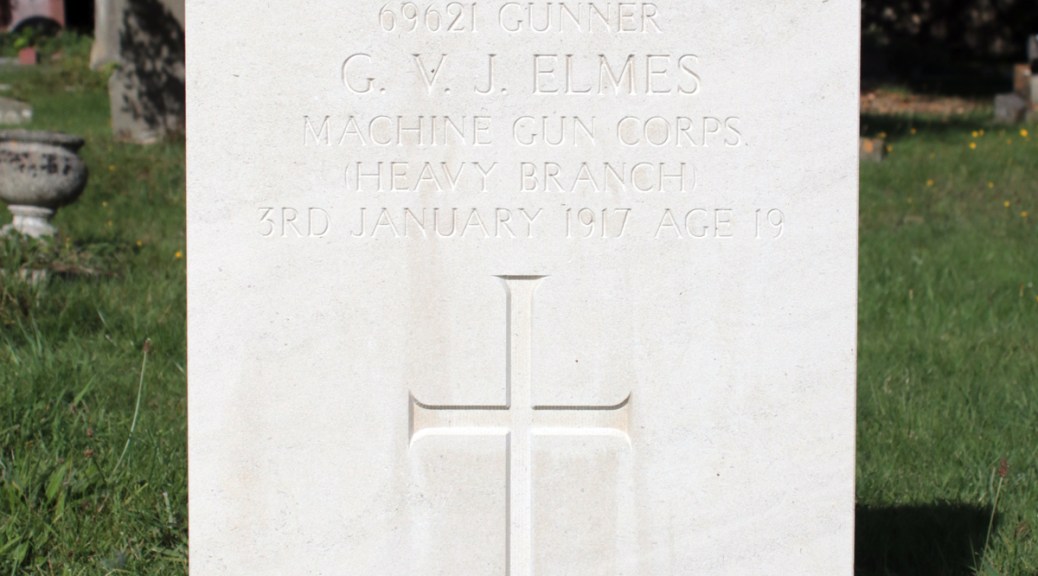
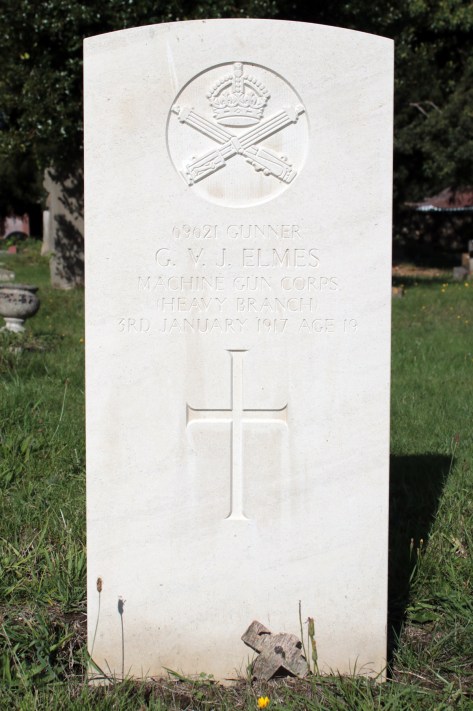
Gunner George Elmes

Gunner George Elmes

George Victor Jim Elmes was born in the autumn of 1897 in the village of Derry Hill, between Calne and Chippenham in Wiltshire. One of six children, his parents were Nelson and Hannah Elmes. Nelson was a shepherd, and when George completed his schooling, he found work as a labourer on the same farm. Money must have been tight, and the 1901 and 1911 census returns both show that the family had taken in boarders for a little extra.

There is little further documentation about George’s life. He would enlist in the Machine Gun Corps at some point after June 1917, and would undertake his training in Dorset.

The death took place at the Trowbridge Red Cross Hospital on Wednesday of Gunner George Elmes, Machine Gun Corps. Gunner Elmes, whose home is at Chippenham, was travelling thence from Bovington Cap on Monday when he was found to be seriously ill at Trowbridge. Dr Bond conveyed him to the hospital in his motor car, but he got rapidly worse and died on Wednesday. He was going to Chippenham to visit his mother, who is seriously ill.

[Wiltshire Times and Trowbridge Advertiser: Saturday 6th January 1917]

George Victor Jim Elmes died on 3rd January 1917: he was just 19 years of age. Hannah passed away soon after her son: she was 55 years old.

With two funerals to pay for, money must have been incredibly tight for Nelson and the rest of the family. While Hannah was buried locally, the body of George Elmes was laid to rest in Trowbridge Cemetery, not far from the hospital to which he had been taken when he fell ill.


Private Howard Rees

Private Howard Rees

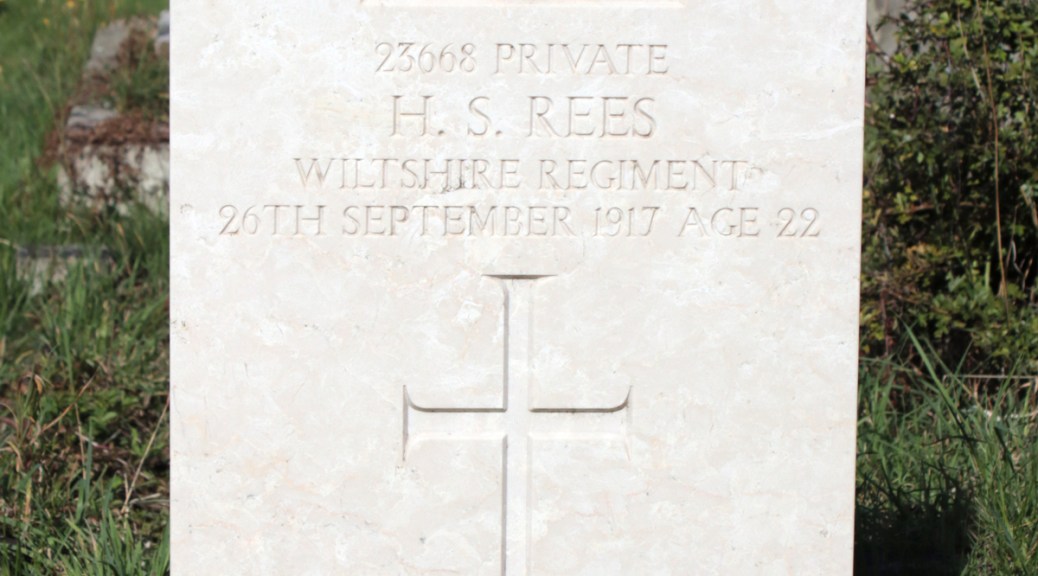
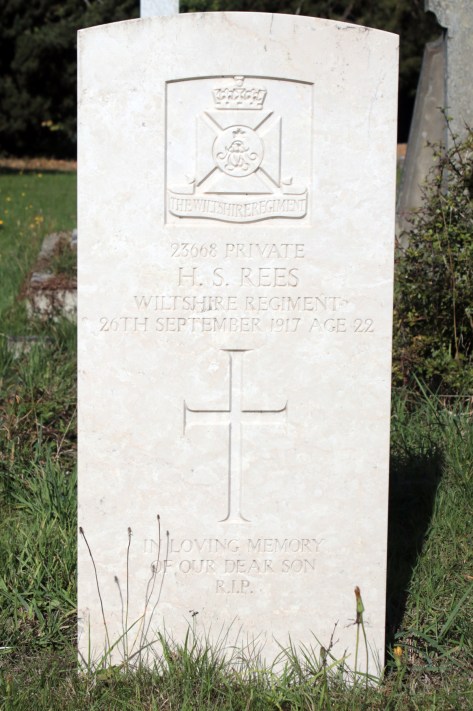
Howard Stephen Rees was born in the spring of 1895 in Trowbridge, Wiltshire. He was the second of six children – and the older of two sons – to Stephen and Annie. Stephen was an engine driver, and the 1901 census found the family living in a small terraced house at 18 Gloucester Road, a short walk from the town’s railway station.

By the time of the next census, the family had moved to a larger house, and were living at 15 Innox Road, to the north of the town centre. Stephen was still employed as an engine driver, while there were too further wages coming into the household. Howard’s older sister, Catherine, was working as a rug weaver, while he himself was employed as a page boy, a bell hop for one of the hotels in the town.

By the time war broke out, Howard had moved from page boy to cellarman. The pull to serve his country was strong, though, and he gave up his job to enlist in the army on 7th September 1914, just a month after the start of the conflict.

Private Rees was assigned to the Wiltshire Regiment. His service papers show that he was 5ft 11ins (1.8m) tall and weighed 120lbs (54.4kg). He was noted as having brown hair, brown eyes and a fair complexion. Howard’s medical examination was to conclude that he was not fit for army service, due to a ‘very poor physique and.. an impediment of speech’. He was recorded as being quite unfit for a soldier. His time in the army was to last just 20 days.

Howard was not deterred by this setback, however, and it seems that he tried to enlist again at some point, and this time succeeded. Full details have been lost, but from the documents that remain, he had joined the 2nd Battalion of the Wiltshire Regiment by the spring of 1917.

The funeral took place on Monday a the cemetery of Private Howard Stephen Rees, Wilts Regiment, aged 22 years, who passed way after a painful illness lasting five months, at the Bath War Hospital on Wednesday September 26th from wounds received in action in France on April 23rd.

[Wiltshire Times and Trowbridge Advertiser: Saturday 6th October 1917]

Howard Stephen Rees received his injuries during the Arras Offensive of 1917, his eagerness to be included in the war having led to his death. His body was taken back to Wiltshire, and was laid to rest in Trowbridge Cemetery.


Lance Corporal Edward Hollis

Lance Corporal Edward Hollis

Edward Joseph Hollis was born in the village of Cogges, Oxfordshire, in the spring of 1876. The youngest of four children, his parents were Joseph and Rebecca Hollis. Joseph was a blacksmith, who died shortly before Edward’s birth, leaving a son who would never know his father.

Rebecca had children to raise, and did so while continuing her job as a gloveress. The 1881 census found the family living on Oxford Road, with her widowed father, cowman James, also residing at the house.

Edward remained living with his mother through to the 1901 census, records suggesting that they stayed living in the same property. By this point, Rebecca had give up her work making gloves, and was listed as a charwoman. Her son, however, had found employment as a gardener’s assistant.

Rebecca died in 1902, at the age of 60 years old. Soon after, her son moved to Wiltshire, having found work as a labourer in Trowbridge. On 20th January 1907, he married local woman Rose Banks in the parish church. A cloth worker, she was nine years her new husband’s junior. The couple set up home at 9 Court Street, to the south of the town centre, and went on to have three children, daughters Elsie, Margaret and Bessie.

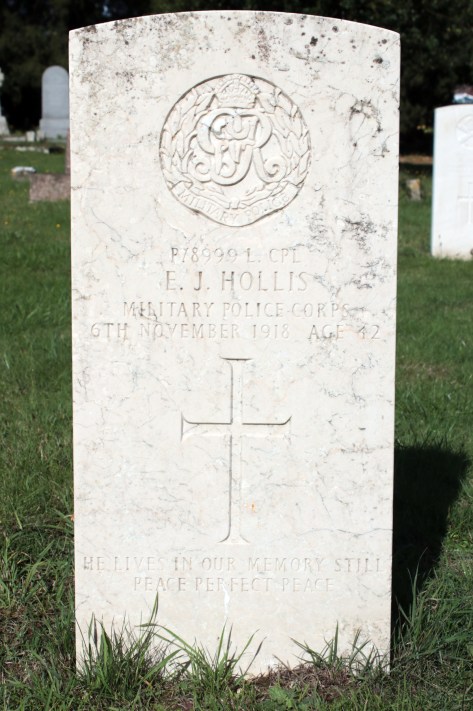
War broke out in the summer of 1914, and Edward stepped up to play his part. There is little information about his time in the military, but it is clear that he had enlisted by the summer of 1918. He saw the war out as a Lance Corporal in the Military Police Corps, and was based at Chiseldon Camp, near Swindon, Wiltshire.

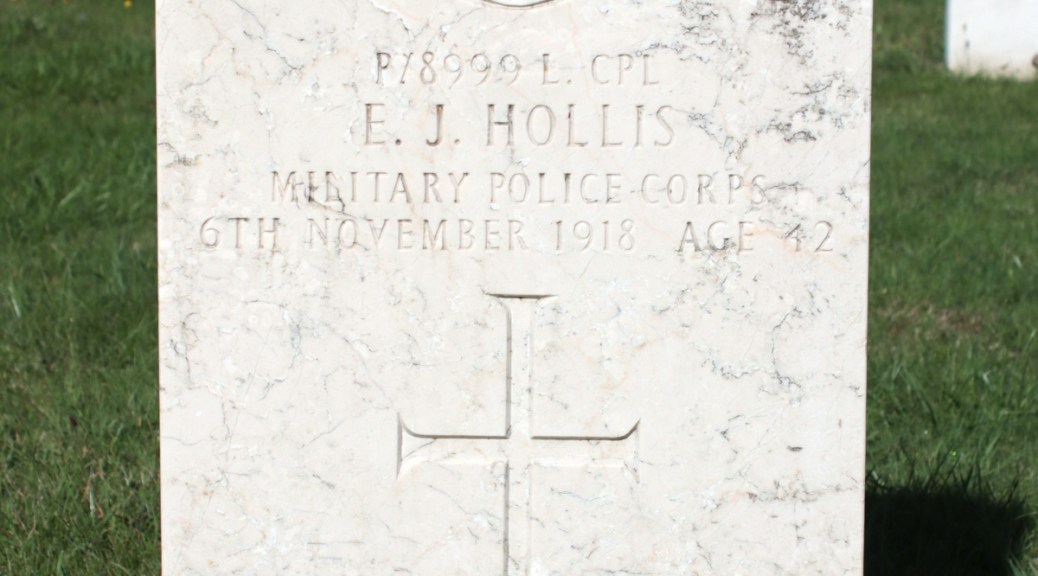
While there, Edward’s health was becoming impacted. He was admitted to the camp hospital with a combination of influenza and bronchial pneumonia, but his heart gave out. He died on 6th November 1918, at the age of 42 years old.

The body of Edward Joseph Hollis was taken back to Trowbridge for burial. He was laid to rest in the town’s cemetery.


Like her mother-in-law before her, Rebecca was now a widow, with young children to raise. She took the risk of emigrating, and moved the family to Ontario, Canada. Here she met farmer James Morgan, and the couple married on 5th July 1920. She died in 1918, also aged 42.

Her and Edward’s legacy were their children. All three married and had families in Canada.


Private William Cockerton

Private William Cockerton

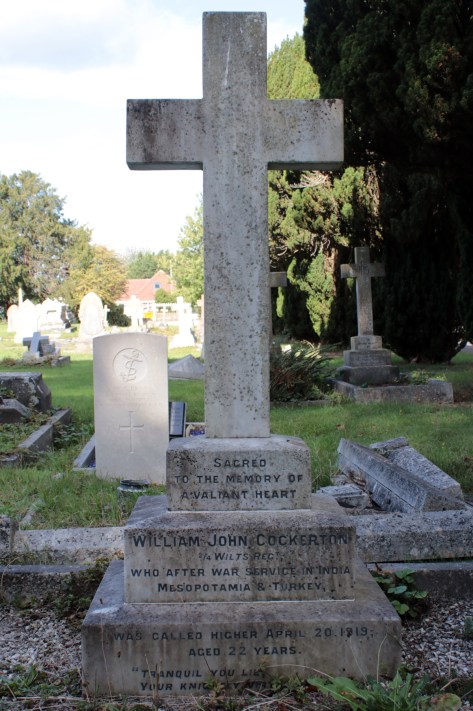
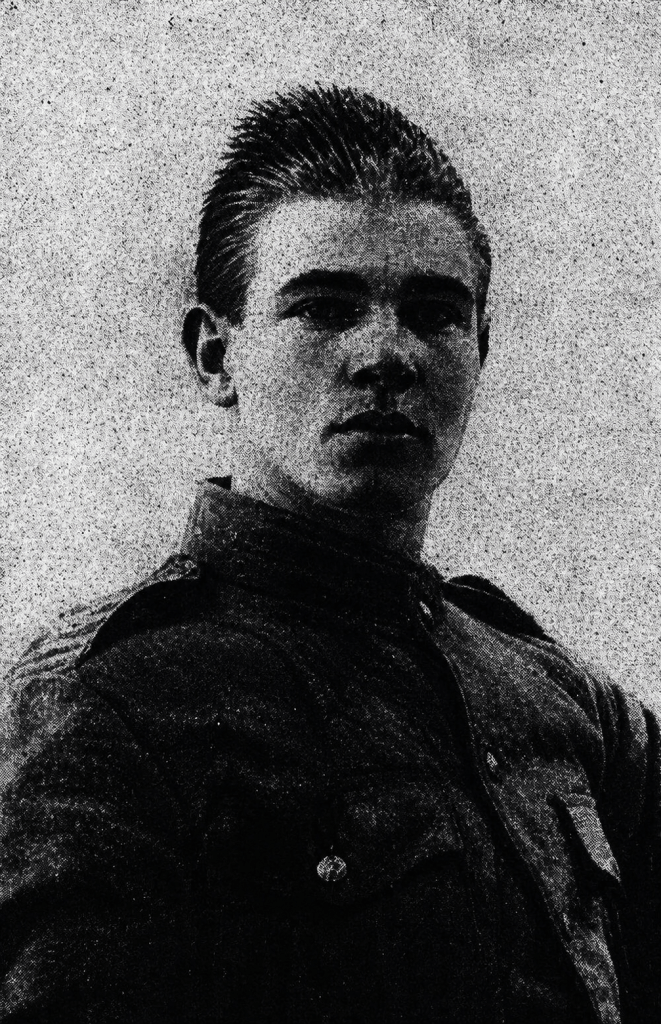
William John Cockerton was born in the autumn of 1896 in Holloway, Middlesex. The older of two children, his parents were baker John Cockerton and his wife, Elizabeth.

The 1901 census found the family living at 28 Highbury Station Road. The house is long since gone, but the Cockerton’s neighbours included a horse keeper, porter and a police constable.

By the time of the 1911 census, William had left London, and was living with his paternal uncle and aunt, Fred and Amy, in Trowbridge, Wiltshire. Fred was an ironmonger, and his nephew had taken an apprenticeship with him. The census notes two visitors to the property – 22 Clarendon Villas – William’s mother and sister, Elizabeth and Dolly.

In his spare time, William started volunteering with the local militia. When war broke out, he was quick to enlist, formally joining the Wiltshire Regiment as a Private. Assigned to the 2nd Battalion, by December 1914, he found himself in India. A later newspaper report detailed how his military service unfolded:

..after a period of garrison duty in India, he volunteered for duty with the Mesopotamian Expeditionary Force, and took part in some of the biggest engagements against the Turks, being eventually wounded, captured and reported dead. For some two years he was held in captivity, during which he ensured great hardships that seriously undermined his health.

[Wiltshire Times and Trowbridge Advertiser: Saturday 26th April 1919]

William was reported missing in February 1917, with an understandably grief-stricken John and Elizabeth later being informed that he had been severely wounded in the chest, succumbing to his injuries half-an-hour later. His name was placed on the roll of honour at Trowbridge, but in July 1917, William’s parents received a card from Turkey in his handwriting, explaining that he was a prisoner of war.

Private Cockerton was released on 16th November 1918, and returned to Britain.

Early in March, he went to Harrow-on-the-Hill for a holiday, staying with his uncle. Here he was taken ill with malarial fever and pneumonia, which resulted in his death.

[Wiltshire Times and Trowbridge Advertiser: Saturday 26th April 1919]

William John Cockerton was just 22 years of age when he passed away on 20th April 1919. His body was taken back to Wiltshire for burial, and he was laid to rest in Trowbridge Cemetery. He lies at rest in the family plot, alongside his father, who had passed away in the autumn of 1916.


Private William Cockerton
(from britishnewspaperarchive.co.uk)

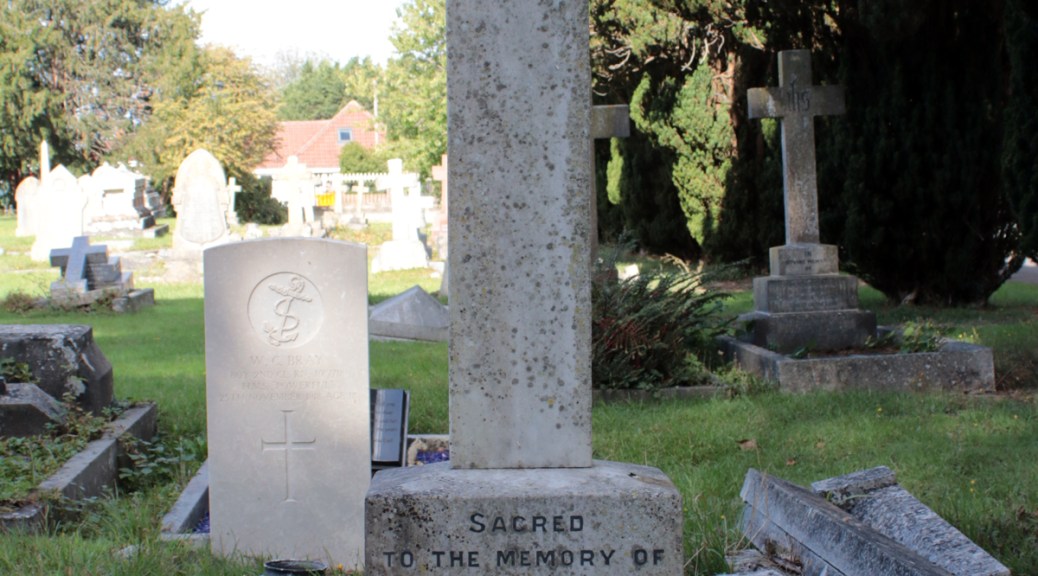
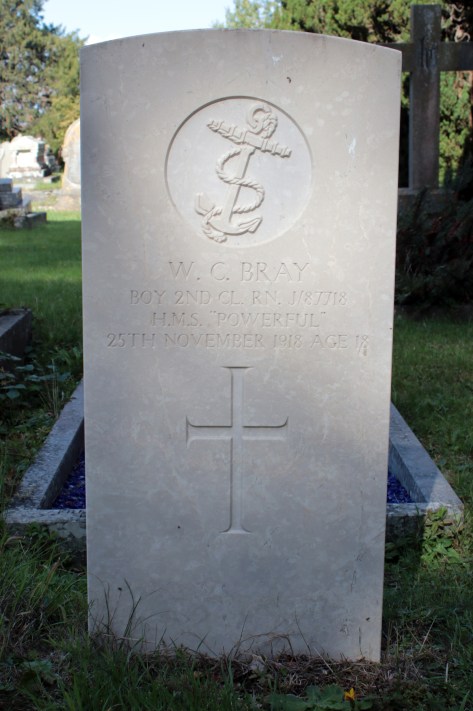
Boy 2nd Class William Bray

Boy 2nd Class William Bray

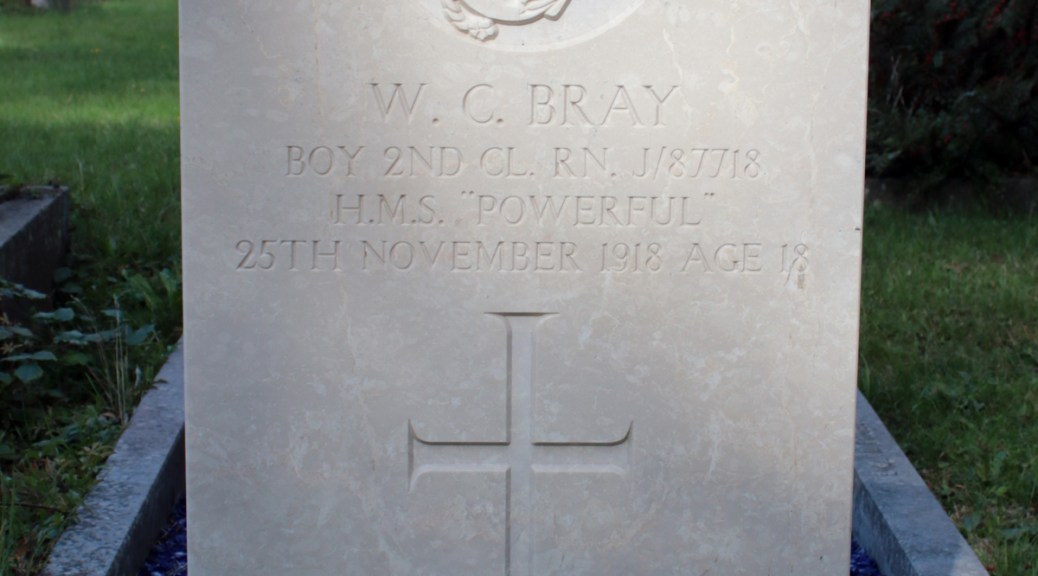
William Clements Bray was born on 14th October 1900. One of six children, his parents were Frederick and Annie. Frederick was a Private in the Wiltshire Regiment, and was based out of Trowbridge, Wiltshire. His work took him away from home a lot, however, and so Annie was left to raise the children on her own.

By the time of the 1911 census Frederick had left the army, and had instead found work as a canal labourer for the Great Western Railway. The family of eight were living in a four-roomed cottage at 22 Prospect Place, to the north of the town centre. William was still at school, but two of his siblings – brother Frederick Jr, and sister Florence – were both employed and bringing a wage into the household.

War broke out in the summer of 1914, and it seems that William was keen to play his part. He enlisted on the 12th April 1918, joining the Royal Navy. As he was under age, he was given the rank of Boy 2nd Class, and sent to HMS Powerful, a training ship based in Portsmouth, Hampshire. His service papers note that he was 5ft 4ins (1.62m) tall, with brown hair, brown eyes and a fresh complexion. He was also noted as having a large scar across his chest.

Boy Bray’s time in the navy was to be tragically short. After just a few weeks he was admitted to hospital in Plymouth, Devon, with scarlet fever, and developed emphysema. He passed away on 25th November “after a long and painful illness” [Wiltshire Times and Trowbridge Advertiser: Saturday 14th December 1918] He was just 18 years of age.

The body of William Clements Bray was taken back to Wiltshire for burial. He was laid to rest in Trowbridge Cemetery, not far from where his parents were living.


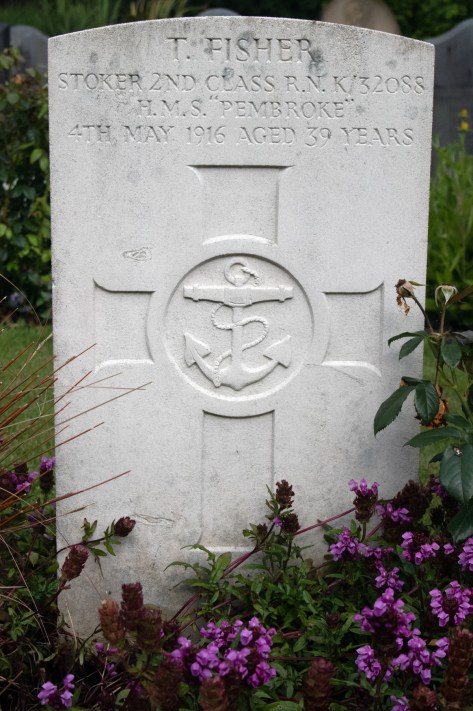
Stoker 2nd Class Thomas Fisher

Stoker 2nd Class Thomas Fisher

Thomas Fisher was born in Lyminge, Kent, on 7th October 1876. One of eleven children, his parents were agricultural labourer William Fisher and his wife, Frances.

William moved the family to where the work was. The 1881 census found them living away from the coast to Crundale, Kent; they had moved to Rough Common near Canterbury by 1891.

Thomas followed in his father’s footsteps, and by the time of the 1901 census, he was the oldest of three of the Fisher siblings to still be living at home. Frances died in 1910, and William moved in with his son Albert’s family in Rough Common. Albert was employed as a stoker with the Royal Navy, so presumably this gave his wife, Daisy, and their children, Albert Jr and Esther, some support.

Thomas, meanwhile, was boarding with his sister, Harriet, and her children, also in Rough Common. Again, this was probably to provide her with some financial support while her husband Charles, who was a Stoker Petty Officer in the navy, was also away at sea.

When war broke out, Thomas was called upon to play his part. He enlisted on 22nd March 1916, joining the Royal Navy as a Stoker 2nd Class. His service records show that he was 5ft 4.5ins (1.63m) tall, with brown hair, blue eyes and a fresh complexion.

Thomas was sent to HMS Pembroke, the Royal Naval Dockyard in Chatham, Kent, for his training, but his time there was not to be lengthy. By the end of April, he had been admitted to the naval hospital in the town, suffering from pneumonia. The condition would prove his undoing: he passed away on 4th May 1916, at the age of 39 years old. He had been in the Royal Navy for just six weeks.

The body of Thomas Fisher was laid to rest in Woodlands Cemetery, Gillingham, Kent, not far from the base at which he had spent his naval career.


Petty Officer 1st Class Frederick Russell

Petty Officer 1st Class Frederick Russell

Frederick Russell was born in Woolwich, Kent, on 8th August 1868, and was the younger of two children to Elizabeth Russell. Of Frederick’s father there is no trace, and it is likely that he passed away soon after his son’s birth. Only Elizabeth’s name appears on her son’s baptism record, the ceremony carried out at St Nicholas’ Church, Plumstead, Kent, on 1st August 1869.

The 1871 census found Elizabeth and her children – Caroline and Frederick – living in rooms at 1 Armstrong Place, Plumstead. She was employed as a hat trimmer, and the document confirms that she had been born in Matlock, Derbyshire.

Money must have incredibly tight, and by the 1881 census, Frederick was one of 115 students at the South Metropolitan Schools Branch in Herne Bay, Kent. The former Pier Hotel on the seafront, this had been set up as a convalescent home for pauper children from the Woolwich area.

The next record for Frederick shows the start what would become a thirty year naval career. He enlisted as a Boy 2nd Class on 10th January 1884, and was assigned to the Royal Navy’s school ship, HMS Impregnable. She would remain his home for the next eighteen months, and he was promoted to Boy 1st Class during his time on board.

In August 1885, Boy Russell was given his first sea-going assignment, on the battleship HMS Ajax. The following spring, he transferred to the corvette HMS Comus, and she would become his home for the next six years. During this time, he came of age, and was formally inducted into the Royal Navy as an Ordinary Seaman. His papers show that he was 5ft 1in (1.55m) tall, with brown hair, grey eyes and a fresh complexion. They also note an abscess scar under his jaw and a dog bite on his right arm.

Frederick was a determined young man, and his commitment to the navy paid off. Over the ten years of his contract, he would serve on three ships after Comus, and was promoted three times – to Able Seaman in April 1888, Leading Seaman in 1894 and Petty Officer 2nd Class on 1st January 1895.

In August 1896, Frederick’s contract with the navy came to an end, but he immediately re-enlisted. Over the next decade he added a further six vessels to the list of those he had served on, and had been promoted again, to Petty Officer 1st Class, taking the rank in August 1897. As time wore on, more and more of his service was spent on shore, and he spent the last two years of his second contract based at HMS Pembroke, the Royal Naval Dockyard in Chatham, Kent.

Petty Officer Russell’s contract came to an end in August 1906 and his trail goes cold for a few years. An entry on the 1911 census suggests that he may have found work as a servant in the St Aloysius School on Hornsey Lane, Upper Holloway, Middlesex.

Frederick had also met someone by this point, and on 7th January 1911, he was due to marry Elizabeth Stone at Holy Trinity Church on Haverstock Hill. The nuptials did not take place, however, the vicar noting that the entry was cancelled, ‘the parties not having presented themselves at the time appointed.’ The couple were still very much together, however, and went on to have four children: Frederick, Gladys, Ernest and George.

When war broke out, Frederick was called back into service in his previous role of Petty Officer 1st Class. Over the course of two years, he spent six months on board the battleship HMS Duncan. The rest of the time he served at his former base HMS Pembroke, and is seems likely that this was so that he was closer to his family.

By the summer of 1916, Frederick’s health was starting to fail. He contracted pneumonia, and the condition would get the better of him. He passed away on 29th July 1916, a few days short of his 48th birthday.

The body of Frederick Russell was laid to rest in the military section of Woodlands Cemetery, Gillingham, Kent, not far from the base he had called home for a lot of his navy career.


Stoker Petty Officer William Bruce

Stoker Petty Officer William Bruce

William Bruce was born in Chatham, Kent, on 3rd July 1873. The oldest of fourteen children, his parents were David and Sarah Bruce. David worked as a blacksmith in the local dockyard, and this is a job that William also followed when he finished his schooling.

For the early part of William’s life, the Bruce family lived on Fort Pitt Street, initially at No. 29, then, as the family grew, No. 42. Working as a blacksmith brought in a salary, but the navy offered William more of a career and, on 20th June 1893, he signed up.

Stoker 2nd Class Bruce’s service papers show that he was 5ft 4ins (1.63m) tall, with dark brown hair, brown eyes and a fresh complexion. He would spend a total of 13 years with the Royal Navy and, unsurprisingly, given where he was living, he would be based out of HMS Pembroke, the Royal Naval Dockyard in Chatham.

William spent six months at HMS Wildfire – the dockyard in Sheerness, Kent – during the summer of 1893, before returning to Pembroke. She would remain his home for the next three years, during which time he was promoted to Stoker 1st Class. His time back at Pembroke was not without incident, however, and he spent three days in the cells for an unconfirmed misdemeanour in August 1894.

On 14th January 1896, Stoker Bruce was given his first sea-going posting, on board the cruiser HMS Endymion. Over the remaining nine years of his initial contract, he would go on to spend time on three further ships. William’s commitment to the role was now becoming evident: he was promoted to Leading Stoker 2nd Class in October 1900, and Leading Stoker 1st Class less than four years later.

Away from the sea, love was blossoming for William. On 12th February 1900, he married Nellie Benster, a dressmaker and lady’s companion from Chatham. The couple took rooms at 145 Thorold Road, a home for the new bride while her husband was away at sea.

When Leading Stoker Bruce’s 12-year contract came to an end, he immediately renewed it. In August 1905, he was assigned to the battleship HMS Resolution, and he remained on board for the next nine months. William’s next assignment was another battleship, HMS Triumph, and he would be attached to her for nearly six years.

On 1st July 1906, William was promoted to Stoker Petty Officer. He retained this rank until December 1910, when he reverted to Leading Stoker. His papers hint at the cause for this demotion: his annual review had dropped from very good to merely good after he took the new role.

Over the next two years, Leading Stoker Bruce went on to serve on three further ships: the depot ship HMS Aquarius, the cruiser HMS Talbot and the sloop HMS Cadmus. By December 1912, William seems to have proved his mettle once more, and was promoted to Stoker Petty Officer again.

William remained on Cadmus for more than three years, returning to Chatham in the spring of 1916. Over the next few months, his health began to suffer and he was admitted to the town’s Royal Naval Hospital with pneumonia. The condition would get the better of him, and he passed away on 20th October 1916, at the age of 43 years old.

The body of William Bruce was laid to rest in the naval section of Woodlands Cemetery, Gillingham, Kent.


Private Thomas Adams

Private Thomas Adams

Thomas Charles Adams was born on 18th April 1891 in Ilfracombe, Devon. The oldest of four children, his parents were Thomas and Amanda Adams. Thomas Sr was a mason turned builder, but his son seemed keen to carve his own path in life.

On 5th October 1905, Thomas Jr enlisted in the Royal Navy. His papers show that he was 5ft 6ins (1.67m) tall, with dark hair, hazel eyes and a dark complexion. His time with the navy seems to have been brief, he was sent to HMS Impregnable for training, but was discharged on 9th November 1905, the reason given being “Invd”. Later documents suggest that he was dismissed because he was under the regulation chest measurement, but it was likely due to the fact that he had added two years to his age in order to be accepted.

Thomas returned home, and found employment as a fitter. He was not to be deterred, however, and joined the Dorsetshire Regiment as a volunteer. On 30th January 1907 he gave up his job, and enlisted in the army full time. Thomas’ papers give similar physical descriptions to his naval record, but also include his weight, 123lbs (55.8kg).

Private Adams was assigned to the 3rd Battalion, and spent the next two years on home soil. On 5th January 1909, however, the life of adventure he had wanted truly began. His unit was sent to India, and he would remain overseas for more than six years. His time overseas was not without incident, however, and he had four separate admissions to hospital with neuralgia (in April 1909), gonorrhoea (1910 and 1912) and malaria (in 1914).

By May 1915, Thomas was back in Britain. He was still having health issues, however, and he was admitted to Netley Hospital, Hampshire, suffering from tuberculosis. The condition would lead to his discharge from the army, and he was formally stood down on 15th June 1915.

At this point, Thomas’ trail goes cold. It is likely that he returned to his family, who were now living in Combe Martin, Devon. This is where he passed away, on 14th October 1915, at the age of 24 years old.

The body of Thomas Charles Adams was laid to rest in the graveyard of St Peter’s Church, Combe Martin.


Private Augustus Hines

Private Augustus Hines

The funeral of Pte. Augustus Hines, of the Australian Imperial Forces, took place on Monday in Combe Martin Parish Churchyard. Wounded in Northern France, he was sent to a hospital in Middlesex, and when convalescent was granted leave to pay a visit to Mr and Mrs John Dovell, of Glen Cottage, whose two sons, Corpl. Herbert Dovell and Pte. Lewis Dovell, were his comrades in Western Australia, and also in the field of battle. Unfortunately he developed pneumonia, and passed away on August 16th… The coffin was followed by the members of the Parish Council, convalescent soldiers, and a large number of friends, the late soldier’s genial and frank disposition having made him popular during his brief stay in the parish.

[North Devon Journal: Thursday 24th August 1916]

Augustus Hines was born in 1874 in the town of Concord, New South Wales. Details of his early life have been lost to time, but he was the son of Allen and Elizabeth Hines, and had at least one sibling, a sister called Lily.

By the time war was declared, Augustus had moved to the outskirts of Perth, and was employed as a timber worker. He enlisted in the army on 27th September 1915, his service records showing that he was 5ft 6.5ins (1.68m) tall, and weighed 10st 4lbs (65.3kg). He had fair hair, blue eyes and a fair complexion.

Private Hines was assigned to the 28th Battalion of the Australian Infantry and, by the start of 1916, he was on his way to Europe. After a two-month stop in Egypt, Augustus’ unit travelled on to France. They disembarked in Marseilles on 21st March, and headed from there to the Front Line.

Private Hines’ unit was sent to the village of Marle, but he would not remain there for long. Within a matter of weeks he received a gun shot wound to his foot. Initially treated by the 7th Field Ambulance, he was transferred to a hospital in Etaples, then taken to Britain on board the Hospital Ship Brighton.

Augustus was admitted to the 1st Australian General Hospital in Harefield, Middlesex, where he remained for the next six weeks. From there, he was discharged to convalesce, and made his way to his friends’ family in Devon.

It was while he was here that Private Augustus Hines fell ill. He passed away on 16th August 1916, at the age of 42 years old. He was laid to rest in the graveyard of St Peter’s Churchyard, Combe Martin.