Category Archives: illness

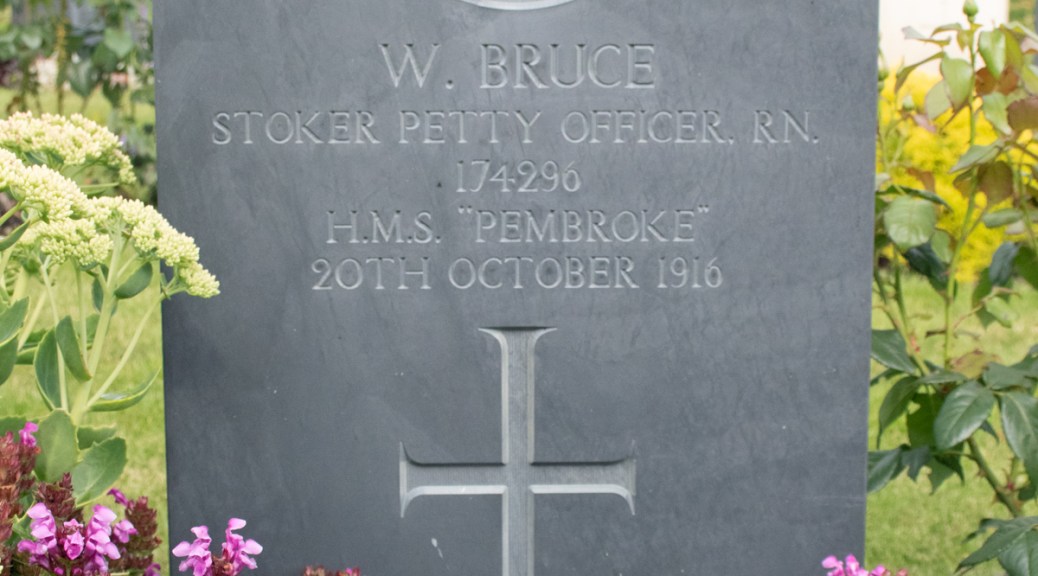
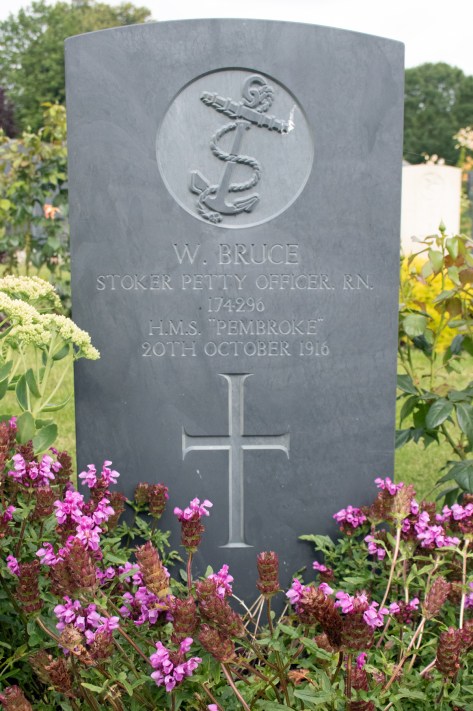
Stoker Petty Officer Alfred Bishop

Stoker Petty Officer Alfred Bishop

Alfred Bishop was born on 18th June 1892 in the Oxfordshire town of Burford. The oldest of eleven children, his parents were Samuel and Emily Bishop. Samuel was employed by a local tannery, and the 1901 census found the family living on Guildenford, to the east of the town centre.

Alfred would initially follow his father into the tannery, where he was employed as a harness maker. However, he had his sights set on bigger and better things and, on 24th January 1911, he enlisted in the Royal Navy. His service records show that he was just under 5ft 9ins (1.75m) tall, with brown hair, hazel eyes and a ruddy complexion. The document also noted a scar on his left groin following a varicocele operation.

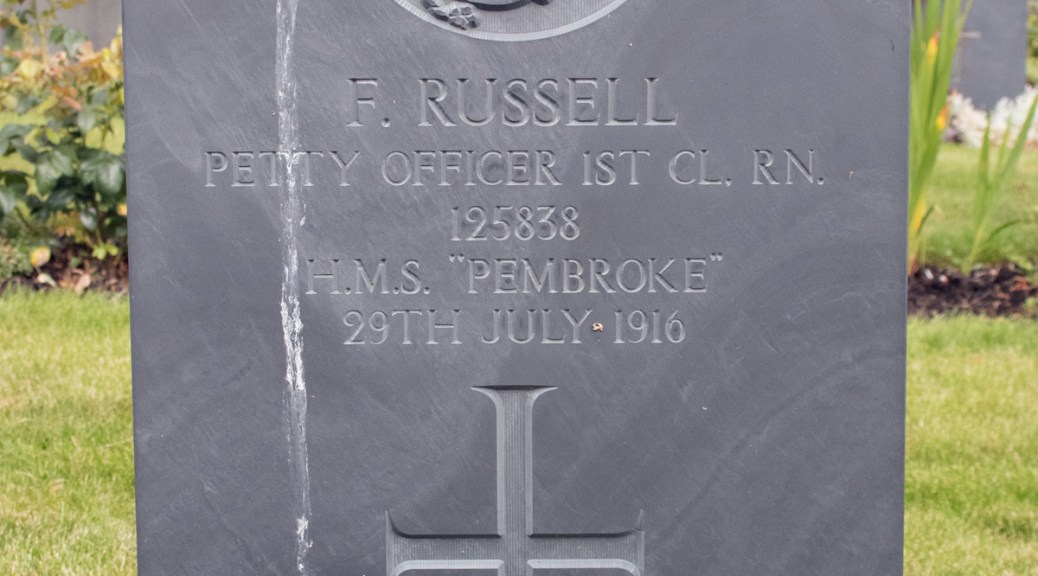
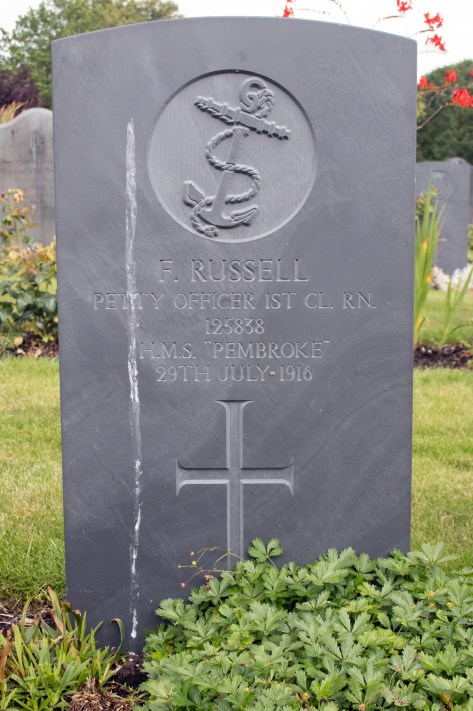
Stoker 2nd Class Bishop was sent to HMS Pembroke, the Royal Naval Dockyard in Chatham, Kent, for his training. In August 1911 he was given his first posting, on board the cruiser HMS Black Prince. She would remain his home for the next nine months, during which he was promoted to Stoker 1st Class.

Over the next four years, Alfred would serve on five further vessels, returning to HMS Pembroke between each assignment. On 10th April 1916, he joined the crew of the cruised HMS Liverpool, and would remain with her for more than two years.

By this point Stoker Bishop’s annual reviews were increasingly positive, noting a very good character and a superior ability. This would pay off: in June 1916 he was promoted to Leading Stoker, with a rise to Stoker Petty Officer following two years later.

Alfred remained in the Royal Navy until 6th August 1919, when he was medically discharged with tuberculosis. By this point he had served for more than eight years, and had served on eight vessels.

Following his discharge, Alfred returned to Oxfordshire. The 1921 census found him living at 9a Market Square with his wife, Eliza, and their five-month-old daughter, Bertha. There is little information about Eliza, but it seems likely that the couple met after her husband had returned home.

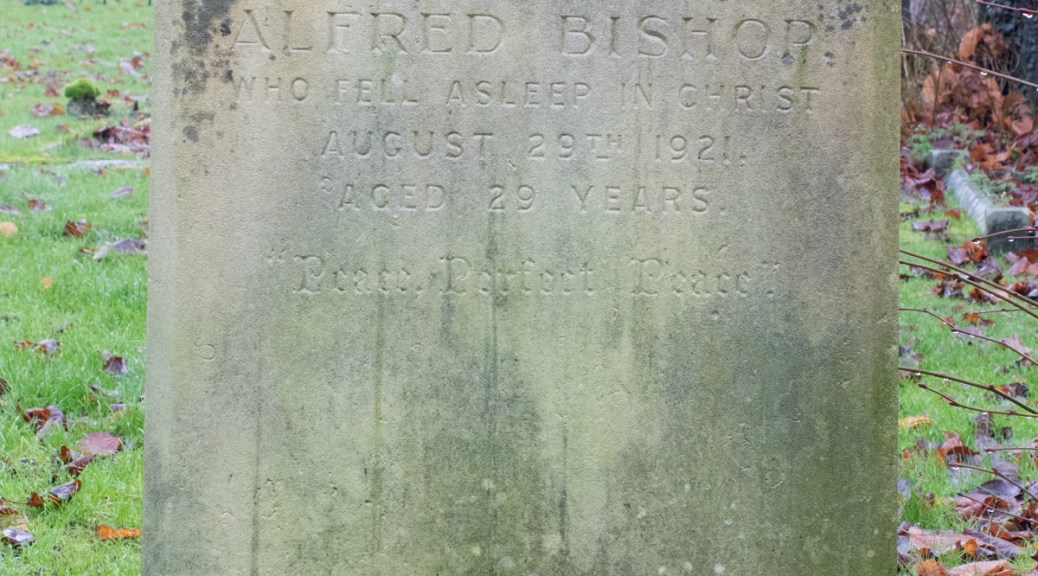
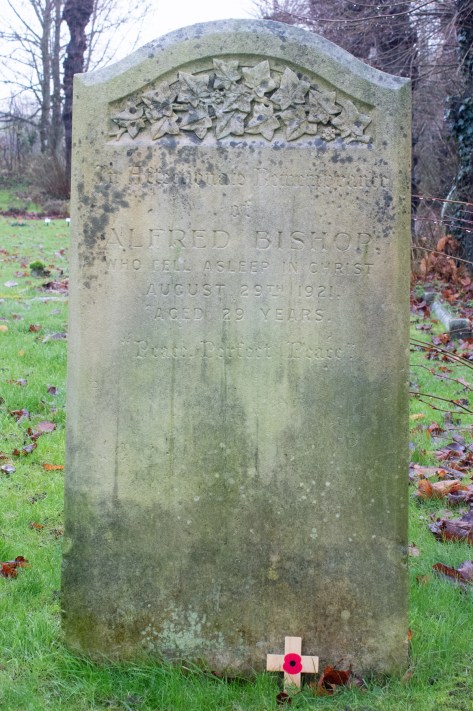
At this point, Alfred Bishop’s trail goes cold. He passed away on 29th August 1921, at the age of 29 years old. His body was laid to rest in the graveyard of St John the Baptist’s Church, in his home town of Burford.


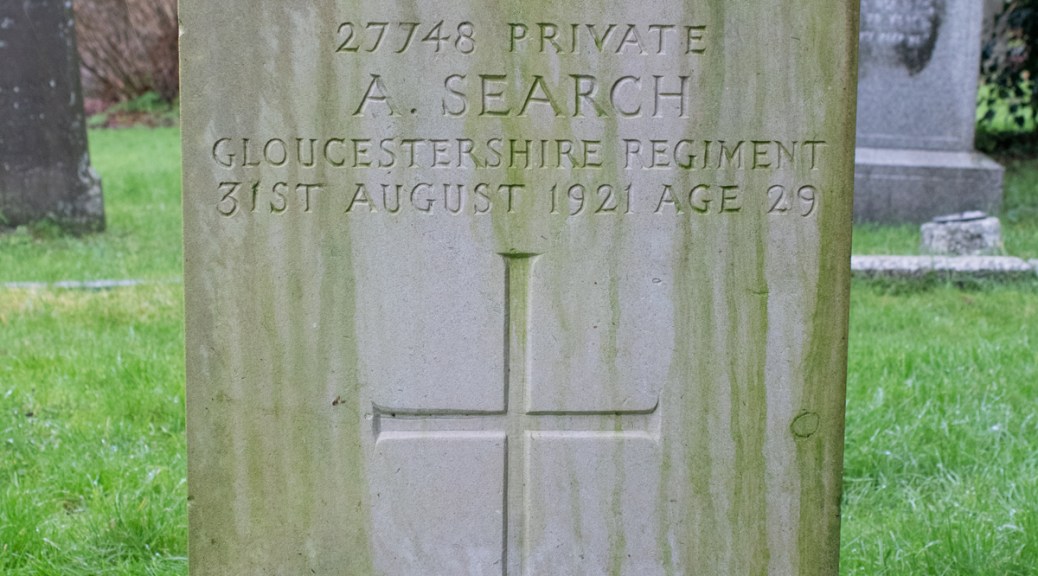
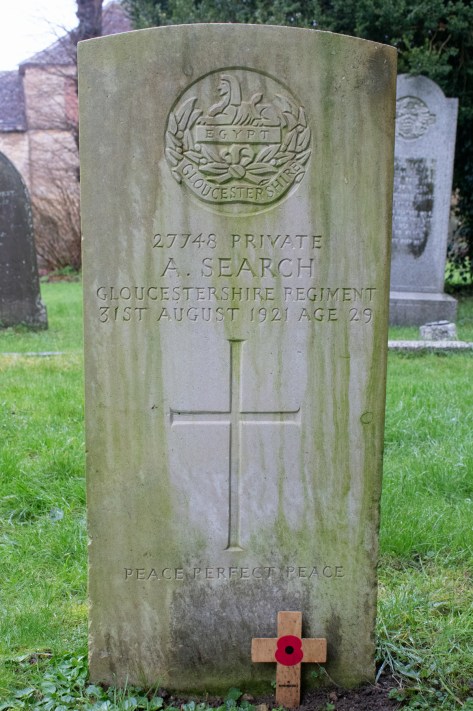
Private Albert Search

Private Albert Search

Albert Search was born in Burford, Oxfordshire, in the autumn of 1891. One of thirteen children, he was the third son to William and Fanny Search. William was a farm labourer, and this is work into which Albert followed.

The 1911 census found the family living on Guildenford, close to the town centre and St John the Baptist’s Church. Three of the household were employed, three of the children were still at school, and they had a lodger – 71-year-old widower Steven Lange, who was also working on the farm.

On 15th August 1915, Albert married Annie Pearse. The same age as her new husband, she was also from Burford, and was the son of a cowman, possible connected to the same farm as her father-in-law. The couple set up home in Lawrence Lane, and went on to have a child, Albert Jr, who was born the following year.

Albert was called upon to serve his country some time after the wedding, and he joined the Gloucestershire Regiment as a Private. Assigned to the 3rd (Reserve) Battalion, he was soon sent to the Eastern Mediterranean. Private Search would spend more than two years there, but contracted malaria.

He was in hospital six months, and was afterwards invalided home for a month. He then returned back to his unit in Bristol, was sent back to hospital, and was discharged in 1920.

[Oxford Chronicle and Reading Gazette: Friday 9th September 1921]

Albert returned home to Annie and his son. When his health had recovered enough, he returned to farm work, and the 1921 census recorded him working on Tangley Farm. During that summer, however, his health deteriorated once more:

..on August 23 he was taken ill and died within eight days. Deceased was a native of Burford, where he was well known and highly respected.

[Oxford Chronicle and Reading Gazette: Friday 9th September 1921]

Albert Search was just 29 years old when he died. His body was laid to rest in the graveyard of St John the Baptist’s Church: this was where he had both been christened and married, and was at the end of the road from where his widow still lived.


In dying when he did, Albert became one of the last servicemen eligible for a Commonwealth War Grave.


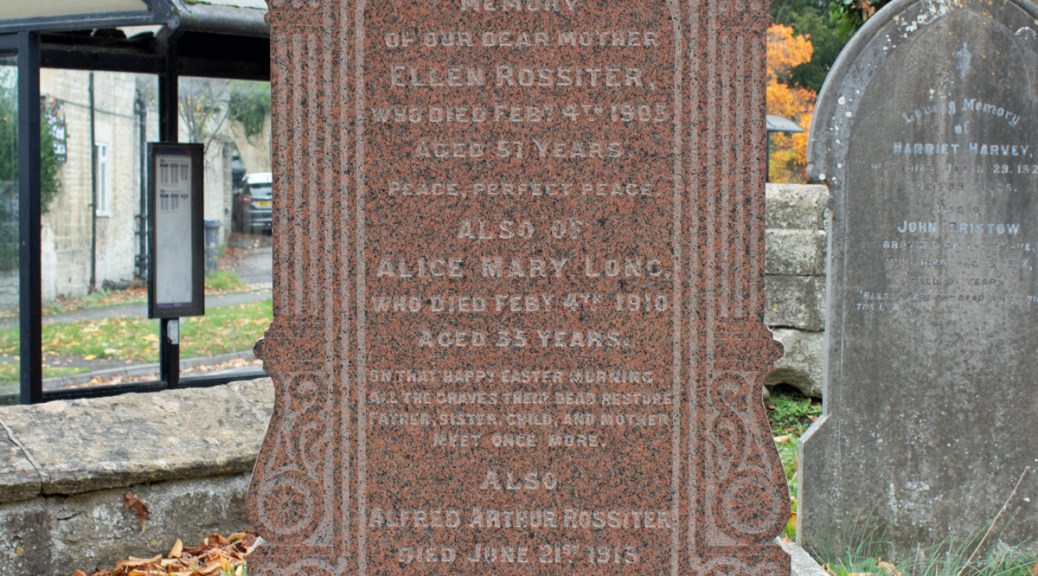
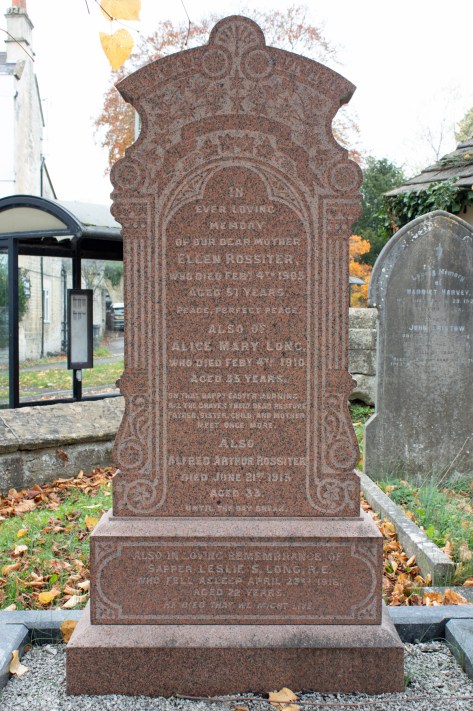
Sapper Leslie Long

Sapper Leslie Long

Leslie Stanfield Long was born in Bradford on Avon, Wiltshire, on 15th November 1893. He was an only child, the son of Albert and Alice Long. Albert ran a building company and, at the time of the 1901 census, the young family were living at 46 Newtown, a terraced house to the west of the town centre.

Alice died in 1910, at the age of 35, and was laid to rest in the graveyard of Christ Church, Bradford on Avon. Albert remarried, to a woman called Emeline, and the next census found the family living at 8 St Margaret’s Villas, a large detached property to the south of the town. Also recorded on the census were Albert’s niece, Beatrice, and domestic servant Gladys Stone. Leslie had completed his schooling by this point, and was working as an apprentice motor care repairer.

When war broke out, Leslie was quick to step up and play his part. He enlisted on 14th September 1914, and was assigned to the Royal Engineers as a Sapper. His service records show that he was 5ft 11ins (1.8m) tall, with good vision and good physical development. He was attached to the 1st/1st Wessex Field Company, and found himself in France before the year was out.

Sapper Long would spend the next six months in France, but would be medically discharged from the army on 23rd June 1915. There is no evidence that he was injured, so the likelihood is that he fell ill with a contagious illness such as tuberculosis. He returned home, and would remain there until the following spring.

Leslie Stanfield Long’s health was obviously impacted: he passed away at home on 25th April 1916, at the age of just 22 years old. He was laid to rest alongside his mother in the family plot in Christ Church graveyard.


Gunner James Cole

Gunner James Cole

James Rees Cole was born in the spring of 1881, and was the oldest of four children to Thomas and Jane. Thomas was a groom from Pembrokeshire, Wales, and, at the time of James’ birth, he and Jane were living in the village of Chancery, to the south of Aberystwyth, Ceredigion, Wales.

The 1901 census recorded that the Cole family had relocated to England and had set up home at 15 Woolley Street, Bradford on Avon, Wiltshire. Thomas was employed as a domestic coachman, while James, now 19 years old, was an ironmonger’s assistant.

By 1911, James was boarding with widow Sarah Goodman in the Devon village of Withycombe Raleigh, now a suburb of Exmouth. His was engaged by this point, and just a couple of months later, on 5th July, he married his sweetheart, Bessie Livings, in Christ Church, Bradford on Avon. The couple went on to have two children, Irene and Dennis.

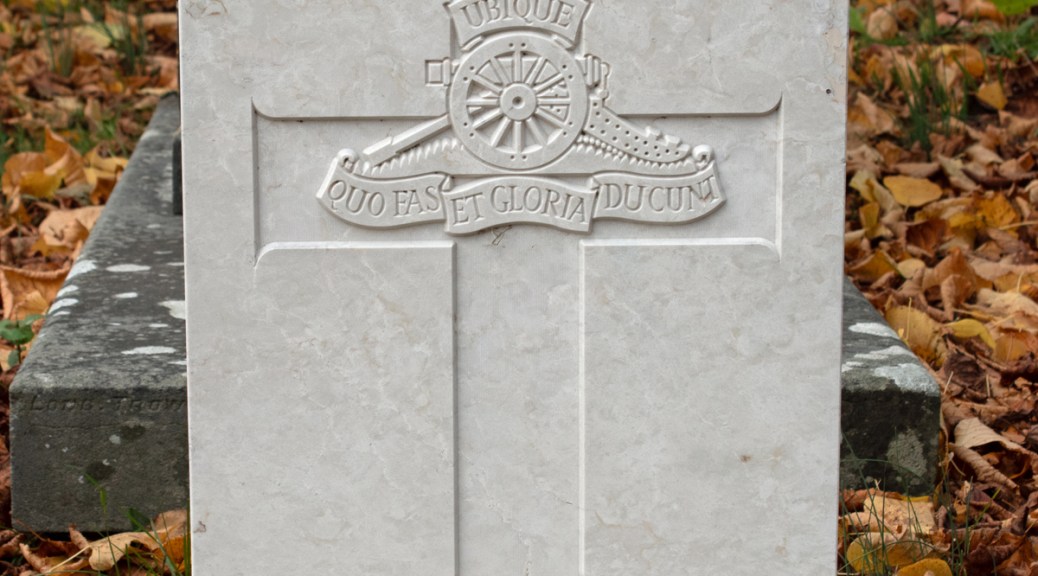
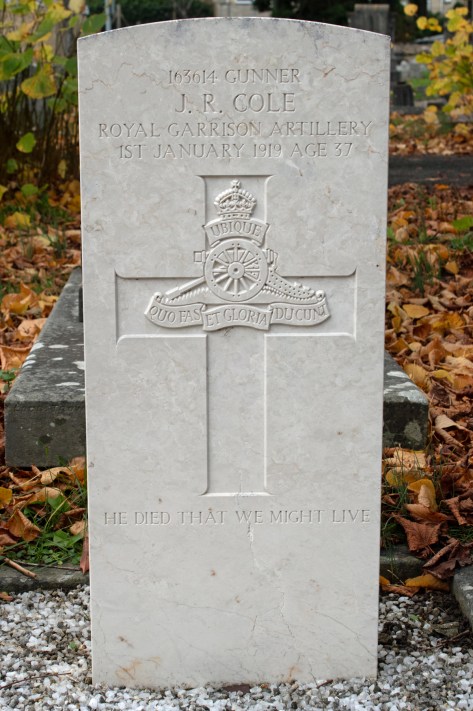
When war was declared, James stepped up to play his part. He enlisted in December 1915, by which point he and Bessie had moved to Reading, Berkshire. His service papers show that he was 5ft 9ins (1.75m) tall, and weighed 135lbs (61.2kg). He had blue eyes, brown hair and a fresh complexion.

Assigned to the Royal Garrison Artillery, Gunner Cole was not formally mobilised until June 1917. Initially sent to Plymouth, Devon, by the following spring, he had moved to Fareham, ahead of his unit being sent to France. James would spend the next six months in France, before being medically evacuated back to Britain.

Gunner Cole had crushed the metatarsals in his left foot, although his medical notes are difficult to read, it is clear that he was inconsiderable pain. He was admitted to the war hospital in Reading, Berkshire, and remained there for a couple of weeks. When he was discharged, he was transferred to the 2nd Siege Artillery Reserve Brigade in Catterick, North Yorkshire, while he recuperated.

James would only be out of hospital for a matter of weeks. He contracted influenza and was admitted to the camp hospital, but the condition would prove too severe. He passed away on 1st January 1919, at the age of 37 years old.

The body of James Rees Cole was taken back to Wiltshire for burial. He was laid to rest in the graveyard of Christ Church, Bradford on Avon, not far from where his widow and children were living.


Cadet Clifford Kiddle

Cadet Clifford Kiddle

Clifford Henry Evan Kiddle was born on 10th November 1900, and was the youngest of five children to Fred and Martha. Fred was a wheelwright from East Stour, Dorset, and it was here that the Kiddle family were born and raised.

The 1911 census makes for interesting reading. Fred is missing from it, and Martha is recorded as married, and at a house on Victoria Road in Gillingham, Dorset. Her son Leonard is living with her, as are three of her nephews, and a boarder, John Samways.

Clifford, meanwhile, had moved to the village of Penselwood in Wiltshire. His two sisters, Ellen and Sarah, were employed as elementary school teachers there, and their young brother had relocated with them.

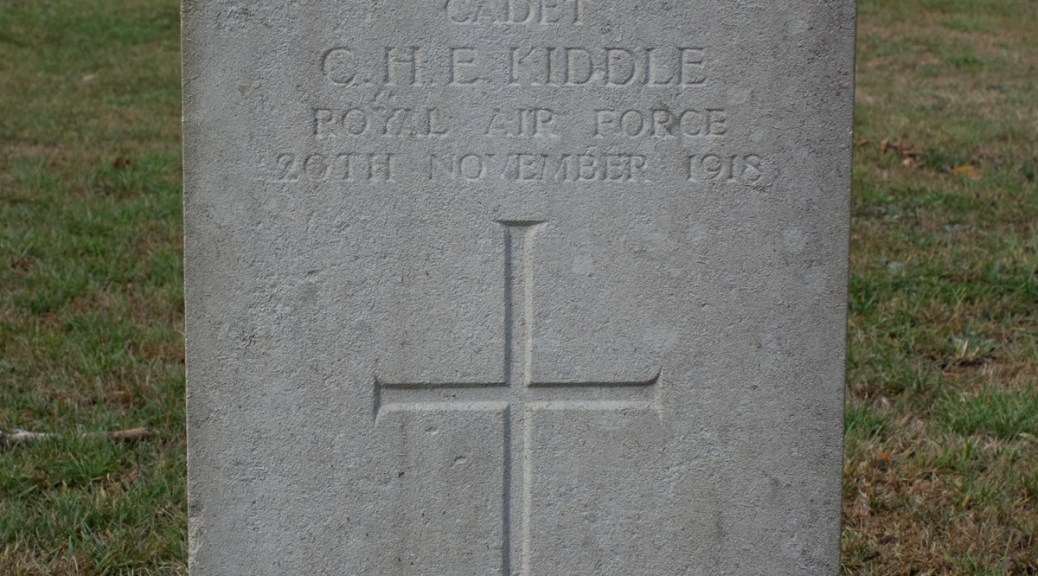
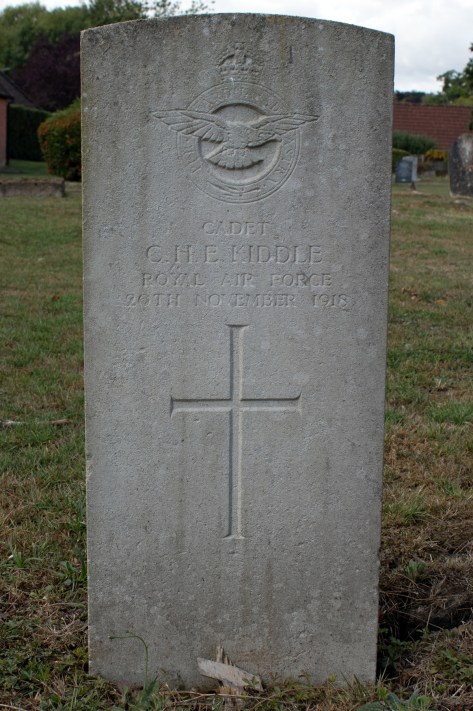
When war broke out, Clifford was just a boy. He was keen to play his part as soon as he could, however, and, on 8th October 1918, he gave up his job as a chemist’s apprentice to enlist in the Royal Air Force. Cadet Kiddle’s service papers show that he was 5ft 8ins (1.72m) tall, and had brown hair, hazel eyes and a fresh complexion.

Clifford was sent to Kent for his training, but his time as an airman was to be brief. He was admitted to Shorncliffe Military Hospital with pneumonia, but the condition would prove too much. He died on 20th November 1918, ten days after his eighteenth birthday.

The body of Clifford Henry Evan Kiddle was taken back to Dorset for burial. He was laid to rest in Gillingham Cemetery, not far from where his family were living.


Lance Corporal Charles Waller

Lance Corporal Charles Waller

The early life of Charles Henry Waller is a challenge to piece together, and it is easier to work backwards.

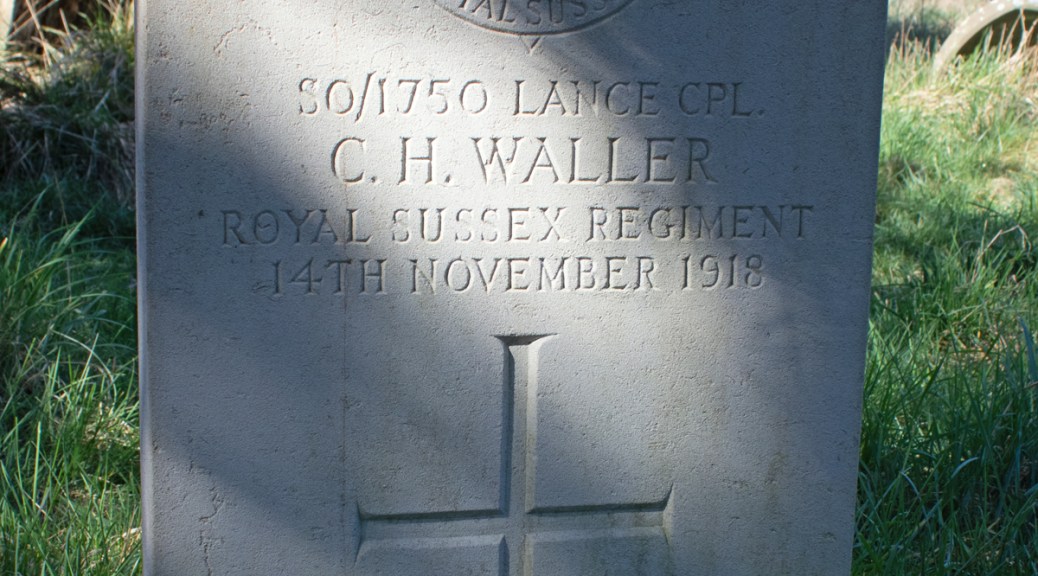
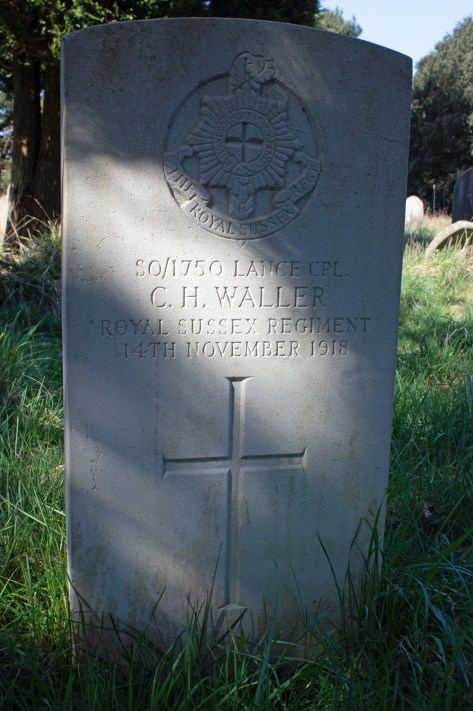
A Lance Corporal in the Royal Sussex Regiment, Charles died from influenza in the 2nd Eastern General Hospital, Brighton, Sussex, on 14th November 1918. His entry in the British Army Register of Soldiers’ Effects show that he had enlisted before the spring of that year, and gave his beneficiary as Elsie.

Lance Corporal Waller’s Dependents’ Pension card expanded on this, giving her details as Mrs Elsie Smith, of 91 High Street, Worthing. The card, however, states that the pension was refused, as she had attained the age of 16.

Intriguingly, while it has not been possible to trace Charles in the 1911 census, Elsie does appear. She is recorded as living with her husband, carter Arthur Smith, and son, three-year-old James. The three are also recorded in the 1921 census, with another child, Arthur. The family, who were living at 35 Lyndhurst Road, Worthing, by this point, had a boarder, George Frederic Waller – possibly a relation of Charles.

As to Charles himself, his life looks to remain a mystery. There are records for people with the same name in the area, but without an age it isn’t possible to definitively identify him. When he passed away, he was laid to rest in Broadwater Cemetery, Worthing, not far from Elsie and her family.


Serjeant Frederick Bewley

Serjeant Frederick Bewley

Frederick John Edwin Bewley was born in Calne, Wiltshire, on 10th May 1882. Noticeably absent from the 1891 and 1901 census records, his parents were Chelsea pensioner John Bewley, and his wife, Annie.

Following in his father’s footsteps, Frederick was drawn to a life in the army. Having already been a volunteer in the local militia, on 20th November 1900, he enlisted in the Wiltshire Regiment. His service papers show that, at 5ft 6ins (1.68m) tall, he weighed 125lbs (56.7kg). He sported brown hair, grey eyes and a fresh complexion. He was also noted as having a scar on his right thigh and calf.

Private Bewley’s contract was for 12 years. During that time, he travelled the world spending three years in South Africa, and more than five in India. He was back in South Africa when his initial term of service came to an end, and he re-enlisted without thinking about it.

In May 1904 Frederick has been promoted to Lance Corporal, a rank he would hold for the next 12 years. During his second term of service, war broke out, but he would only spend short periods of time overseas.

…a member of the regular army, [Frederick] crossed to France with Lord French’s Expeditionary Force in August, 1914, and was wounded in the thigh at the battle of Mons. After a short period at Netley Hospital he went to Flanders in the following November. The awful conditions prevailing in the trenches was responsible for an attack of frost-bite, and tuberculosis following, he was treated at Winsley and Harnwood Sanatoriums…

[Wiltshire Times and Trowbridge Advertiser: Saturday 27th December 1919]

From 1th January 1915, Lance Corporal Bewley would remain on home soil. The sharp clarity of near-death experiences, along with a reconnection with home life, led to love blossoming and, on 6th May, he married labourer’s daughter Lilian Fidler. Both were living in Holt, Wiltshire, by this point, and it was in the village’s church that the couple exchanged vows.

Back on home soil, a new opportunity had opened up for Frederick, and he transferred to the Military Provost Staff Corps, a unit set up to police the army. In January 1916, he was promoted to Corporal; just weeks later, Vivian gave birth to their first child, Eric. and he rose to Sergeant eighteen months later.

On 1st August 1917, Corporal Bewley was promoted again, taking the rank of Serjeant. By this point, however, his bouts of poor health were coming back to haunt him, and, just six weeks after his promotion, he was medically discharged from the army.

After returning to Holt, Frederick welcomed a second son with Lilian on New Year’s Eve 1918, when Vivian was born. The following winter, his tuberculosis struck again, and this time it was clear the illness would prove fatal. He passed away on 21st December 1919, aged 37 years old.

The body of Frederick John Edwin Bewley was laid to rest in Hold Old Cemetery.


Private Henry Davis

Private Henry Davis

Henry John Davis was born in the village of Broughton Gifford, Wiltshire, in December 1899. The middle of nine children, his parents were John and Annie Davis. John was a cowman, and he worked for the Chalfield estate, not far from the village.

After the 1911 census, Henry’s life is a challenge to piece together. When war broke out, he was too young to serve his country, but it is clear that he enlisted in the Devonshire Regiment at some point. As a Private, he was assigned to the 52nd (Graduated) Battalion, and was based in Norfolk during the second half of the conflict.

By the spring of 1918 Private Davis’ unit was in France, although there is no evidence that Henry was there himself. All that can be confirmed is that he was medically discharged from the army on 26th March 1920, as he was suffering from adenitis, a swelling of the lymph nodes in the abdomen.

Henry John Davis passed away on 4th April 1921, at the age of 21 years old. He seems to have died at home, although the exact cause of his passing is not known. He was laid to rest in Holt Old Cemetery, not far from where his family were living.


Lance Corporal Stanley Gosnell

Lance Corporal Stanley Gosnell

Joseph Roger Stanley Gosnell was born in Birmingham, Warwickshire, in the autumn of 1895. He wad the only child to William and Florence Gosnell. William was a draughtsman, who died when his son was just 4 years old.

Florence was left to raise her son on her own and moved back to Bradford-on-Avon, Wiltshire, where her family lived. On 14th April 1903, she remarried, her new husband being head teacher of Holt Congregational School, John Longstaff. The 1911 census found the family living at Eglington Villa, not far from the school.

When war broke out, Joseph was quick to step up and play his part. Now going by Stanley, he enlisted in the Wiltshire Regiment on 17th September 1914, and was assigned to the 4th Battalion. His service papers show that he was 5ft 11ins (1.8m) tall, with brown hair, blue eyes and a fair complexion. He was noted as having normal vision and good physical development.

Private Gosnell seemed to impress his superiors, and, on 12th December 1914, he was promoted Lance Corporal. The following day his unit was dispatched oversees, and he was sent to India. He would go on to spend the next eight months in Pune, but not in the way he might have hoped.

On 27th February 1915, Stanley was admitted to hospital, suffering from pneumonia. He would remain admitted for nearly three months. Sent back to his unit in mid-May, he was taken back into hospital just three weeks later with tuberculosis. This time, he would only be there for three weeks before being sent back to his unit.

Lance Corporal Gosnell was sent back to Britain in August 1915, and he would remain on home soil for the next year. During this time his health deteriorated, to the point that, no 25th August 1916, he was medically discharged from the army.

At this point, Stanley’s trail goes cold, and it is only a later newspaper report that confirms what happened:

Mrs Longstaff, of Eglington Villa, who a short time since was called upon to mourn the loss of her husband, Mr JC Longstaff, was on Wednesday further bereaved by the death of her only son, Mr Stanley Gosnell. Mr Gosnell’s constitution was never of the most robust kind, and though he volunteered for service and proceeded to India with the Territorials, he was unable to withstand the climate and the work entailed, and was invalided home. His death so soon after reaching manhood’s estate is a heavy blow to his mother and the utmost sympathy will go out to her in her irreparable loss.

[Wiltshire Times and Trowbridge Advertiser: Saturday 10th May 1919]

Details of John’s passing are unclear, but he died just a few months before his stepson. Joseph Roger Stanley Gosnell was just 23 when he died on 7th May 1919. He was laid to rest in Holt Old Cemetery, not far from where his twice-grieving mother lived.


Florence had now been widowed twice, on top of losing her only child. She found some solace in her grief, however, and, in the autumn of 1923, she married for a third time. Her new husband, Joseph Scarisbrick, was a widow thirteen years her senior, and worked as a customs and excise man.

Joseph died in 1938, at the age of 85: Florence had outlived all three of her husbands. She passed away on 4th October 1954, at the age of 88 years old.


Serjeant William Loder

Serjeant William Loder

William James Nelson Loder was born in the summer of 1893 in Trowbridge, Wiltshire. The oldest of seven children, his parents were Harry and Rosina. Harry was an engineer at a wool mill, and his son obviously followed in his father’s practical footsteps: the 1911 census found him employed as a coach builder’s apprentice.

The document found the Loder family living at 1 Canal Road, a five-roomed cottage on the outskirts of town. Alongside Harry and his son, William’s younger sister, Ethel was also working as an apprentice dress maker.

Away from work, it seems that William also joined the local militia, with a later document showing that he enlisted in the Wiltshire Regiment on 4th February 1909. When war broke out, he was called upon to play his part. He was assigned to the 4th Battalion, and was sent to India in September 1914. While his service papers have been lost to time, it is clear that he rose to the rank of Serjeant, but by the start of 1917, he was back in Britain.

On 27th January 1917, William married Angelin Gliddon. She was a coachman’s daughter from Holt, Wiltshire, and was working as a draper’s assistant when she and her husband exchanged vows.

William’s health was failing by this point and, on 21st May 1917, he was formally discharged from the army on medical grounds. His trail goes cold as this point, and it is only three years later that documents confirm his passing. He died on 24th April 1920 at the age of 26 years old.

The body of William James Nelson Loder was laid to rest in Holt Old Cemetery, not far from where his grieving wife still lived.