Category Archives: Devon

Private George Taylor

Private George Taylor

George William Taylor was born on 14th July 1884 in Holcombe, Somerset. He was one of ten children, and his parents were John and Martha Taylor. John was a coal miner and for a while after finishing school, George followed his father to the pit. But he wanted bigger and better things, and was drawn to a career in the army.

On 16th September 1901, George enlisted in the Somerset Light Infantry. His service records confirm that he was 5ft 7ins (1.69m) tall, and weighed 131lbs (59.4kg). It was also noted that he had brown hair, grey eyes and a fresh complexion, and that he had a scar on his right shin and another on his left arm.

Private Taylor was assigned to the 2nd Battalion, and spent the next ten months training on home soil. In July 1902, however, he set off on his first big adventure, travelling to South Africa with his troop. He returned home in the spring of 1903, and spent the remainder of his seven years’ term of service on British soil.

On Christmas Day 1906, George married Ellen Hitchcock. She was the daughter of a blacksmith from Bath, and their marriage certificate adds further details to George’s life. He was living in Plymouth, Devon, when they married, and he gave his trade as a Bugler in the Somerset Light Infantry.

During the rest of his army contract, George had a number of admissions to hospital, for recurring conjunctivitis, a sprained ankle in November 1905 and a bout of scabies in January 1908. That autumn, having served for seven years, he was stood down to reserve status.

By the time of the 1911 census, George had settled back into civilian life. The young couple set up home in Holcombe, and George took up work back in the colliery there, where he was employed as a carter. A boarder helped them bring in a bit more money, but the document shows evidence of tragedy as it notes that Ellen had given birth to two children, but that both had died.

When war came to Europe in 1914, George was called back into active service. Initially assigned to the 1st Battalion of the Somerset Light Infantry, he arrived in France in July 1915. He only remained there for a matter of months, however, and, by October Private Taylor was back in Britain and reassigned to the 3rd Battalion.

It appears that his repatriation may have been for health reasons. On 31st January 1916, George was admitted to the 4th Southern General Hospital in Plymouth. The handwriting in the notes for this admission is difficult to read, but the basic headline is starkly clear: ‘bronchitis and subsequently mental’.

Private Taylor remained in hospital for a couple of weeks, before being moved to the Wells Asylum in Somerset. He was assessed by the military doctor after a couple of months’ treatment, and was declared unfit to continue in active service, due to ‘general paralysis of the insane’ or shellshock/PTSD as it is known today. His illness was wholly attributed to his military service, and sheds some light on what he must have gone through during his short time in France, compared to his previous seven years’ service. George’s last day in the army was on 13th April 1916, and he had served for a total of 14 years, 211 days.

George’s trail goes cold at this point. He passed away on 22nd December 1916, at the age of 32 years old. Although records do not confirm this, it seems likely that he died while he was still admitted to the asylum, as his death was recorded in Wells.

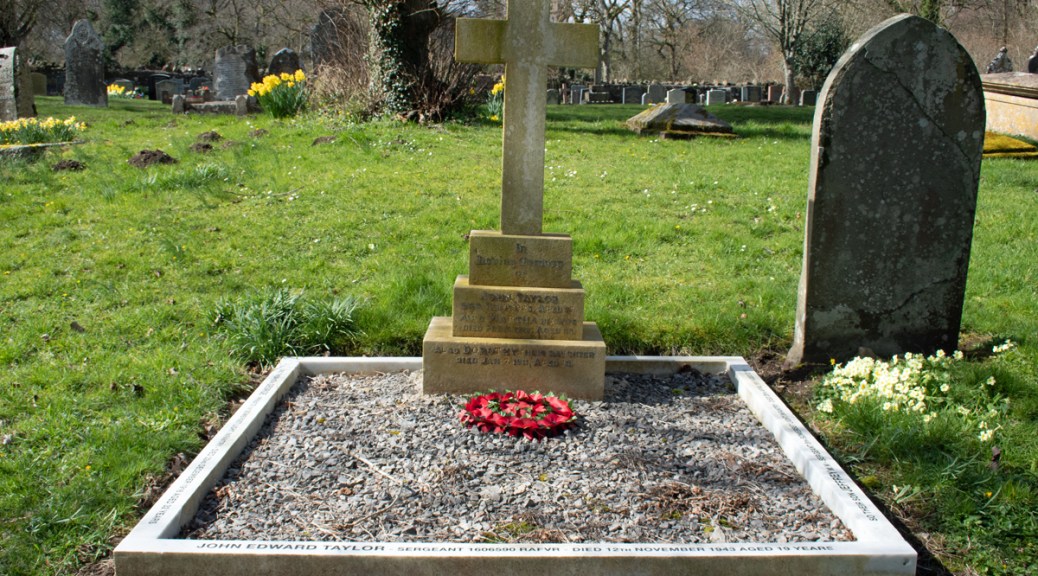
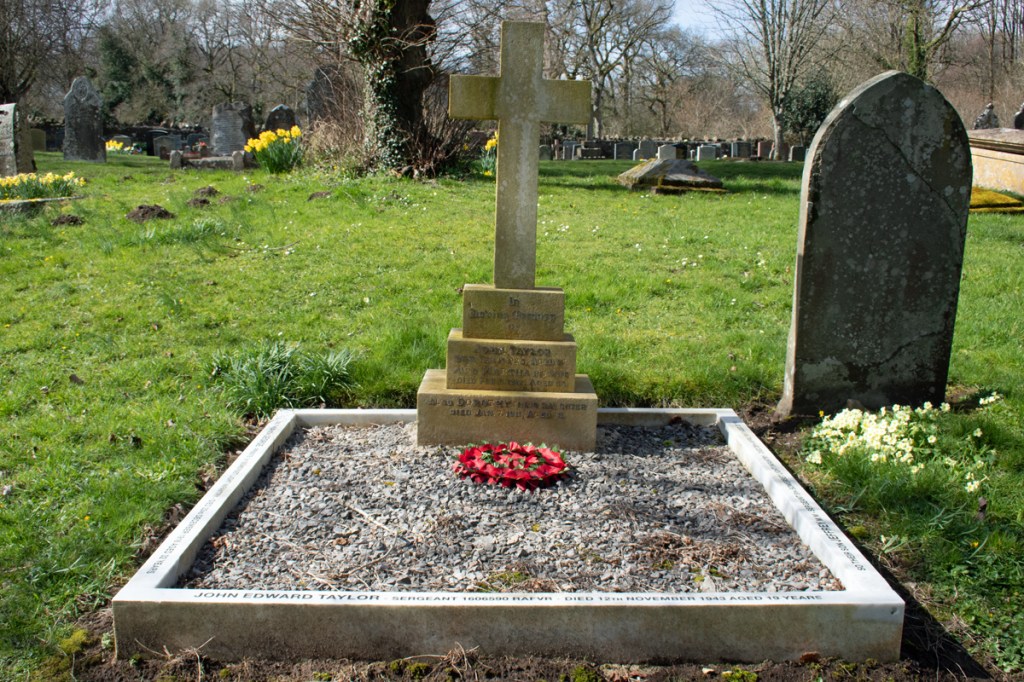
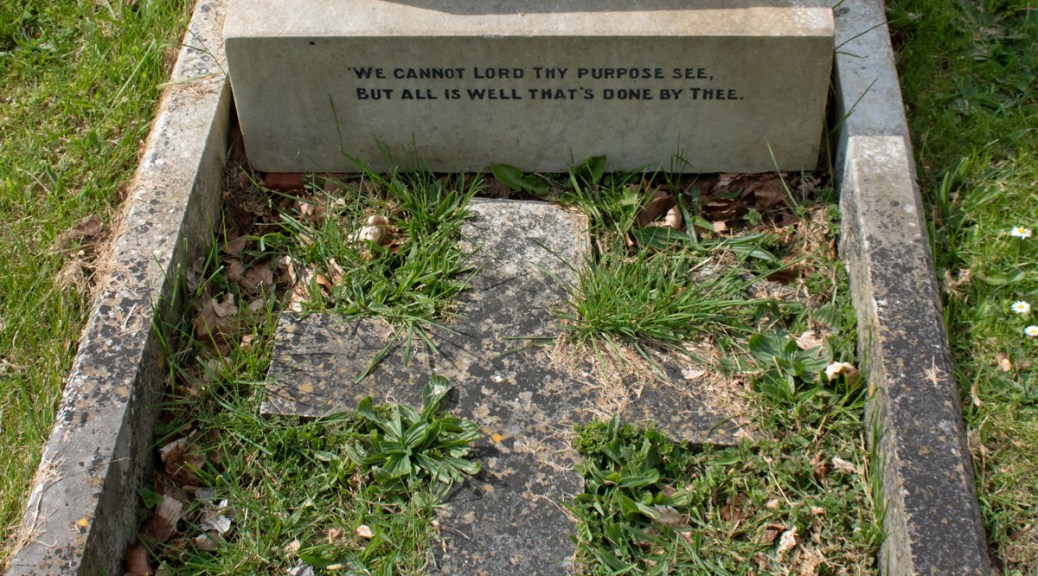
George William Taylor was brought back to Holcombe for burial. He was laid to rest in the family plot in the graveyard of St Andrew’s Church.

Petty Officer Stoker William Dyer

Petty Officer Stoker William Dyer

William Henry Dyer was born on 26th March 1895, in Bath, Somerset. He was the only child of William and Elizabeth Dyer. Elizabeth had had a son prior to her marriage to William Sr, and so William Jr had a half-brother, Sidney.

Elizabeth tragically passed away in December when her youngest was only a toddler. William Sr went on to marry again, to a Sarah Chivers. The couple went on to have a family of their own, giving William Jr and Sidney a further five half-siblings.

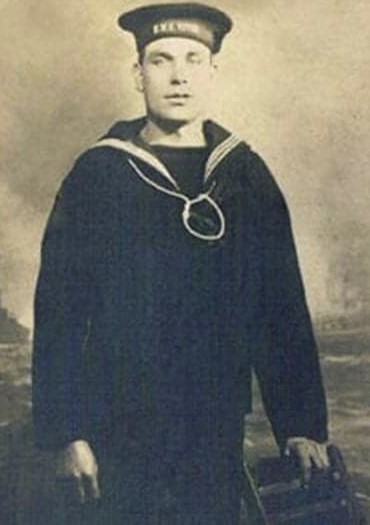
William Sr was a carman and, when his son left school, he also found carting work, the 1911 census recording him as being a milk carrier. He wanted bigger and better things, however, and, on 8th April 1913, a fortnight after his eighteenth birthday, he joined the Royal Navy.

William’s service records show that he was working as a van guard on the railway at the time of his enlistment. He was 5ft 7ins (1.7m) tall, with light hair, grey eyes and a fresh complexion. He joined as a Stoker 2nd Class, and was initially assigned to HMS Vivid, the Royal Naval Dockyard in Devonport.

After six months’ training, William was assigned to the dreadnought battleship HMS Ajax. She became his home for the next four years, patrolling the North Sea during the conflict and, in June 1916, was involved in the Battle of Jutland. During his time on board, William rose through the ranks, becoming Stoker 1st Class in August 1914, Leading Stoker in August 1916 and Petty Officer Stoker in October 1917.

In January 1918, William returned to HMS Vivid for a few weeks He was then given a new posting, on board HMS Sandhurst, based at Scapa Flow in the Orkneys. Petty Officer Stoker Dyer was to spend the next ten months here, albeit with a short break that autumn.

It was during this period of leave that William married Lily Sarah Bethia Durbin. She was the daughter of a miner, and the couple married in Clutton, Somerset. Their time together was to be brief, however, as William soon returned to Scotland.

It was while Petty Officer Stoker Dyer was back at HMS Sandhurst that he developed pneumonia. Sadly, the condition was to get the better of him. He passed away on board on 27th November 1918, at the age of just 23 years old.

William Henry Dyer’s body was brought back to Somerset for burial. He was laid to rest in St James’ Cemetery in Bath.


Lily had been a wife for just a matter of weeks, and was now left a widow. In 1926 she remarried, to baker and confectioner Albert Farmer. The couple lived a long and happy life, celebrating their 59th wedding anniversary before Albert died in 1985. Lily lived on, passing away in January 1997, at the ripe of age of 98 years old.


Able Seaman William Green

Able Seaman William Green

William Charles Green was born on 27th December 1897, one of five children – and the only son – to William and Mary Green. The family’s backstory is a bit hard to decipher.

William Sr was born in the Bath Union Workhouse in 1869 and the only details of his parentage comes in his marriage certificate, which suggests that his father was also called William Green, who was deceased. The same document records the groom as being a miner, and that he and Mary were living in Widcombe, Bath.

The Greens do not appear on the 1901 census – or at least that census record for them is lost to time. The next census return, in 1911, does have the family recorded as living in three room in St George’s Place, Widcombe. This particular census was the first to put the onus on the resident to complete the form, and, in William Green Sr’s case, this has led to a handful of anomalies in the record.

William Sr notes his trade as “going out with commercial travellers and hotel work also”. He confirms that he was “Somerset-born”, but suggests that Mary was born in “South Wells” (a spelling error, which should be South Wales), even though her birth and marriage certificate confirm she came from Bath.

The Greens certainly spent some time in Wales – their eldest daughter was born in Merthyr Tydfil, while William Sr was working as a miner there. By the time of William Jr’s birth, however, the family seem to have returned to England – he is recorded as coming from Bath.

William was 13 years old at the time of the 1911 census, and still at school. When he left education, he found work at a fishmonger, but with war closing in on Europe by this point, he was keen to serve his King and Country.

On 7th May 1915, William enlisted in the Royal Navy and, as he was just under age, he was given the rank of Boy 2nd Class. His service records note that he was 5ft 1in (1.55m) tall, with brown hair, blue eyes and a fresh complexion. Intriguingly the records give the place of his birth as Aberdare, Glamorganshire, but whether it is this document or the 1911 census that is incorrect is impossible to confirm.

Boy Green was initially sent to HMS Impregnable, the training establishment based in Devonport, Devon. He spent four months there and, on the day he was promoted to Boy 1st Class, he was assigned to HMS Defiance, the navy’s Torpedo School, off the Plymouth coast. In October 1915 he was assigned to HMS Fox, and remained on board for the next three years.

Fox was a cruiser that patrolled the seas from the East Indies to Egypt and the Red Sea. While on board, William came of age, and was formally enrolled in the Royal Navy as an Ordinary Seaman. With a character that was classed very good, even if his ability was noted as satisfactory, within eighteen months he was promoted again, to Able Seaman.

In August 1918, William was assigned to HMS Mantis, a river gunboat that patrolled the Tigris around Baghdad. He remained on board until the end of the year, when he was assigned to HMS Vivid, the Royal Naval Dockyard in Plymouth.

Over the next fifteen months, Able Seaman Green’s time was split between Plymouth and HMS Columbine, the naval base at Port Edgar on the Firth of Forth. It was when he was back in Devon, early in 1920, however, that he fell ill.

Able Seaman Green had contracted influenza, which had developed into pneumonia, and it was the combination of lung conditions that was to ultimately take his life. He passed away at the naval base on 5th March 1920, at the age of just 22 years old.

William Charles Green’s body was brought back to Somerset for burial. He was laid to rest in St James Cemetery, Bath, to be reunited with his parents when William Sr died in 1938 and Mary passed away in 1959.


Stoker 2nd Class Tom Mounter

Stoker 2nd Class Tom Mounter

Tom Mounter was born on 24th March 1890 in the quiet Somerset village of Kingsbury Episcopi. He was one of ten children to Robert and Ellen Mounter. Robert was a farm labourer, while Ellen earned a little more money for the family by stripping withy – or willow – branches for use in a variety of ways, such as basket weaving.

When Tom left school, he followed his father into agricultural work, employed to grow and manage the withy fields. In April 1911, he married Ellen Talbot, a farm labourer’s daughter from the village. The couple went on to have three children, Frederick, Martha and Horatio.

When war came to Europe, Tom stepped up to play his part. On 14th December 1916, he joined the Royal Navy, along with four others from the village.

Tom’s service records show that he was 5ft 6ins (1.68m) tall, with brown hair, blue eyes and a fresh complexion. Stoker 2nd Class Mounter was initially sent to HMS Vivid, the Royal Naval Dockyard in Devonport, for training, before being assigned to the cruiser HMS Ariadne on 31st March 1917.

The Ariadne had been converted into a minelayer that year, and worked in the English Channel. On 26th July 1917, she was torpedoed by the German submarine UC-65, and sunk, with the loss of all 38 hands, including Stoker Mounter. He was just 27 years of age.

Tom Mounter’s body was brought back to Somerset for burial. He was laid to rest in the peaceful Kingsbury Episcopi Cemetery, next to George Bonning, who had enlisted on the same day as him, and who had died six months before.

The local newspaper, when reporting on Stoker Mounter’s funeral, noted that he was “the seventeenth Kingsbury Episcopi man who has died for his King and country. It is stated that he had a strong presentiment that he would be killed.” [Langport & Somerton Herald: Saturday 4th August 1917]


Stoker 2nd Class Tom Mounter
(from findagrave.com)

Stoker 2nd Class George Bonning

Stoker 2nd Class George Bonning

George Thomas Bonning – whose forenames seem to have been interchangeable – was born on 9th August 1887 in the Somerset village of Kingsbury Episcopi. His parents were farm workers James and Elizabeth Bonning, and George also entered farm work when he finished school.

In 1909, George marred Olive Harvey, the daughter of another agricultural labourer from the village. The couple set up home together in the village, and went on to have a daughter, Lilian, the following year. It was around the time of their daughter’s birth that George’s mother passed away, happiness and sadness in a short space of time for the young family.

By 1911, George was employed as a carter in a factory, presumably a financial step up from his previous employment on the farm. The money was still not a great deal, however, and Olive was also working, machining gloves at home for the local factory.

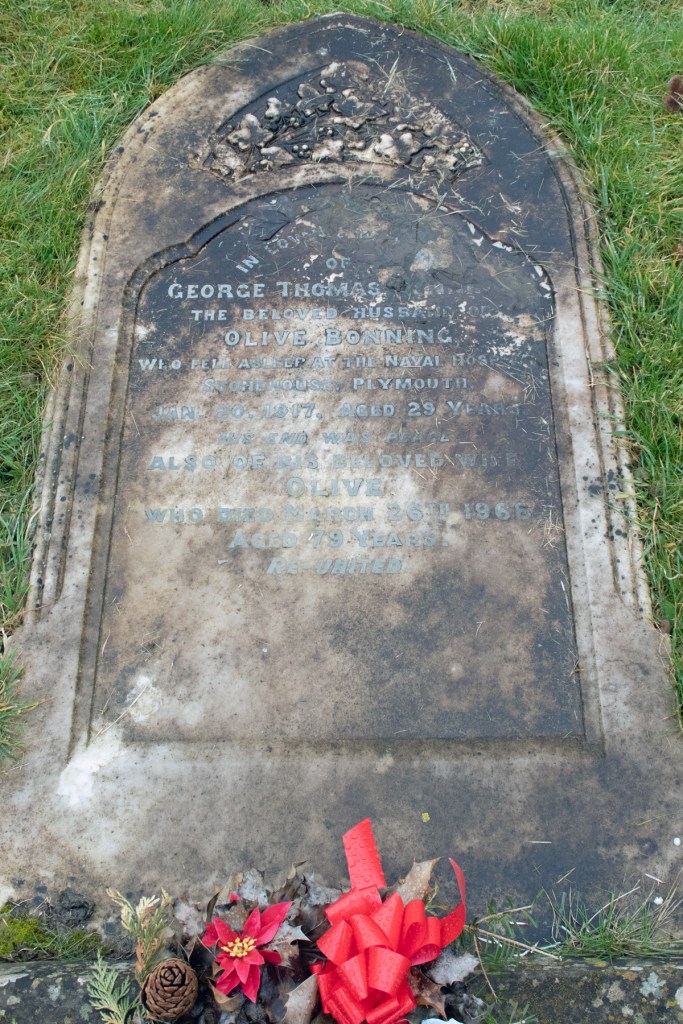
War came to Europe, and on 14th December 1916, George enlisted in the Royal Navy, along with four other men from the village, including friend and neighbour Tom Mounter. His service records show that he was 5th 11.5ins (1.82m) tall, with black hair, hazel eyes and a fresh complexion.

Stoker 2nd Class Bonning was sent to HMS Vivid, the Royal Naval Dockyard in Devonport, for training, and it was here that he contracted a chill. Tragically, this developed into pneumonia, and he died in the barracks on 20th January 1917. He was 29 years of age, and had been in service for just 37 days.

George Thomas Bonning’s body was brought back to Somerset for burial. He was laid to rest in the peaceful Kingsbury Episcopi Cemetery.


Olive never remarried after losing her husband. She remained in the village, raising Lilian and finding occasional employment to help pay the bills. She passed away on 26th March 1968, at the age of 79, and was laid to rest with George, husband and wife reunited after more than fifty years.


Able Seaman Jesse Baber

Able Seaman Jesse Baber

Jesse Baber was born on 28th February 1889 and was the youngest of thirteen children to John and Jane Baber. John was a farm labourer from Westcombe in Somerset, and it was in this village that he and Jane raised their family.

Jesse chose not to follow his father and siblings into farm work and instead, on 6th October 1906, he enlisted in the Royal Navy. As he was underage for full service at the time, he was given the rank of Boy 2nd Class and sent to HMS Ganges, a training establishment on the outskirts of Ipswich, Suffolk. His service records confirm that he was 5ft 5.5ins (1.66m) tall at the time of joining. He was also noted as having dark brown hair, grey eyes and a fresh complexion, with a mole on his right cheek being highlighted as a distinguishing mark.

Boy Baber spent six months at HMS Ganges, and was promoted to Boy 1st Class for his commitment. He was then transferred to HMS London, a dreadnaught battleship for a further six months. During his time on board, Jesse came of age, and was formally enrolled in the Royal Navy with the rank of Ordinary Seaman.

Over the next eight years, Jesse served on eleven different vessels, sailing between his British base of HMS Vivid in Devonport and the East Indies. His service seems to have generally been very good – he was promoted to Able Seaman in February 1909 – although he did spend five days in the brig in July 1912 for reasons unrecorded.

When war broke out, the ships that Able Seaman Baber served on patrolled the waters of the Mediterranean. In the summer of 1916, while on board HMS Dartmouth, he contracted malaria. Jesse was admitted to a hospital in Malta, where he remained for six weeks, and was then sent on leave home to recover.

He arrived at Castle Cary [in Somerset] on the evening of the 23rd August, on a visit to his sister, in a very serious condition, being practically in a state of collapse. Medical attention was immediately obtained, but his condition was hopeless, and he lay in an unconscious condition until Friday September 1st, when he expired, death being due to meningitis, following malaria.

[Shepton Mallet Journal: Friday 15th September 1916]

Jesse Baber was 27 years old when he passed away. He was laid to rest in the quiet graveyard of St Mary’s Church in Batcombe, not far from where his mother, who was now 74 years old, was living.


Gunner William King

Gunner William King

William Henry George King was born in the summer of 1898 and was the only child of Henry and Martha King. Henry was a grocer in the Somerset village of Witham Friary, and this is where William was born and raised.

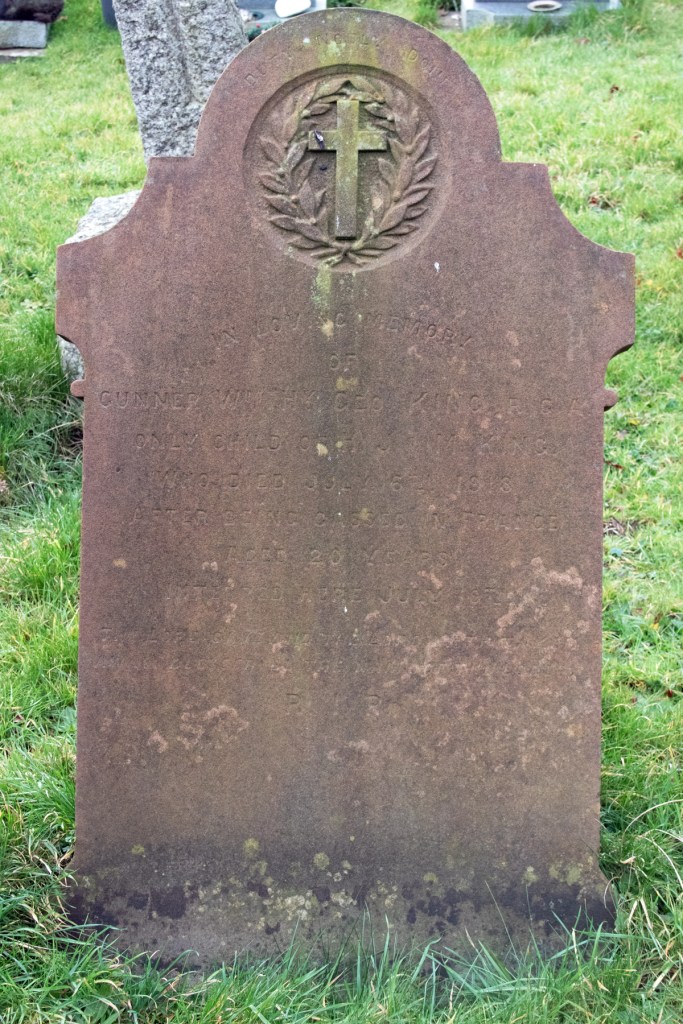
When he left school, William found work as a draper’s assistant in Wells, but when he turned 18, with war raging across Europe, he gave that up to play his part. He enlisted in the Royal Garrison Artillery in August 1916, and was assigned as a Gunner in the 99th Siege Battery. His service records show that he was 6ft (1.83m) tall and weighed in at 140lbs (63.5kg).

Gunner King received his initial training in Plymouth, but was eventually shipped to France, arriving there in August 1917. He was caught up in a German gas attack at the end of June 1918, and was invalided back to Britain for treatment on 2nd July. He was admitted to the War Hospital in Bradford, but died of a combination of his injuries and the resulting bronchitis on 6th July 1918. He was just 20 years of age.

The body of William Henry George King was brought back to Somerset for burial He was laid to rest in the family plot in the graveyard of St Mary’s Church in his home village of Witham Friary.


Boy 2nd Class Henry Butcher

Boy 2nd Class Henry Butcher

Henry George Butcher was born on 29th September 1900, the middle of five children to Henry and Sarah Butcher. Henry Sr was a labourer in a nursery and the family were born and raised in his and Sarah’s home village of Merriott, Somerset.

Henry Jr followed his father into agricultural labouring when he finished school. When war was declared, he was too young to enlist and, seeing his older friends head off to glory, he must have been desperate to play a part before it was all over.

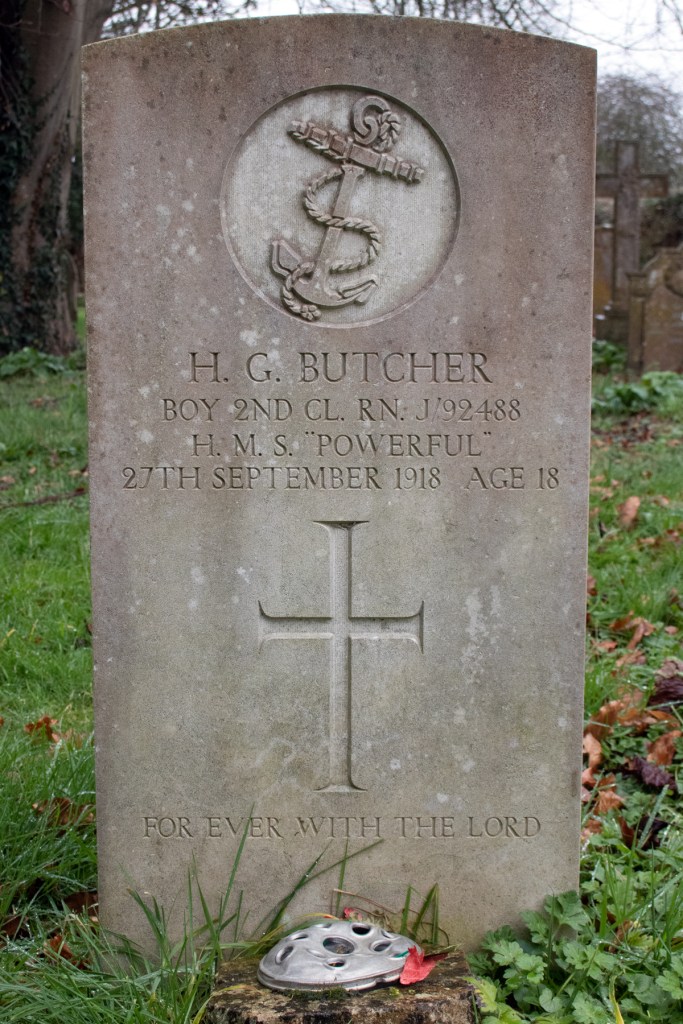
Henry’s chance finally came when, on 2nd September 1918, he joined the Royal Navy. His service records show that he was 5ft 2.5in (1.59m) tall, had brown hair, blue eyes and a fresh complexion. As he was under-age when he enlisted, he was given the rank of Boy 2nd Class, and sent off to HMS Powerful, a training ship in Devonport.

Naval and army barracks were crowded places, and brought together boys and men from all over the country in a way that had never happened before. The cramped nature of the billets meant that disease would run rampant once it took hold, and it could prove fatal. In the last week of September 1918, seventeen boys from HMS Powerful died from a combination of influenza and pneumonia and, on Friday 27th, Boy 2nd Class Butcher was to join that list. He was two days from his eighteenth birthday, and had been in the Royal Navy for just 25 days.

Henry George Butcher’s body was brought back to Somerset for burial. He was laid to rest in the graveyard of All Saints’ Church in his home village of Merriott.


Private John Sherrin

Private John Sherrin

John Sherrin was born in Langport, Somerset, in the summer of 1874. The youngest of three children, his parents were Arthur and Elizabeth Sherrin. Arthur was a cowman and farmer, and John was to follow him into agricultural labouring when he left school.

Arthur took the family where the work was: by the time of the 1891 census, they were living in Broadchalke, a village to the west of Salisbury, Wiltshire. Ten years later, the census notes Arthur and Elizabeth living in Dorset, while John was in Swindon, Wiltshire, working on a farm as a butter churner.

John’s father died in 1906, and Elizabeth went to live with her daughter’s family in Devon. The same year, John returned to Somerset, where he married Bessie Kingsbury. She was a labourer’s daughter from Henstridge, who was working as a domestic servant. The couple went on to have four children – Marleen, Arthur, Albert and Grace.

John’s dairy work kept the family moving, and, according to the 1911 census, the Sherrins were living in a five-room cottage in Sturminster Marshall, Dorset.

When war came to Europe, John had turned 39 years old. He did not initially enlist – presumably because of his farm work – and it seems that he was only conscripted in the closing months of the conflict. He was called up to the Royal Defence Corps during the summer of 1918, and was assigned to 254 Company.

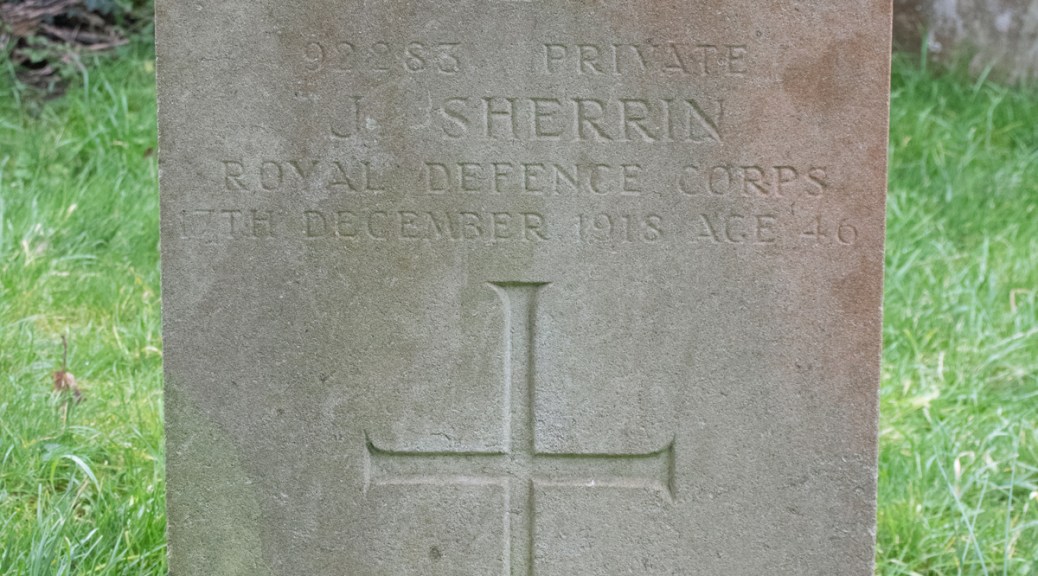
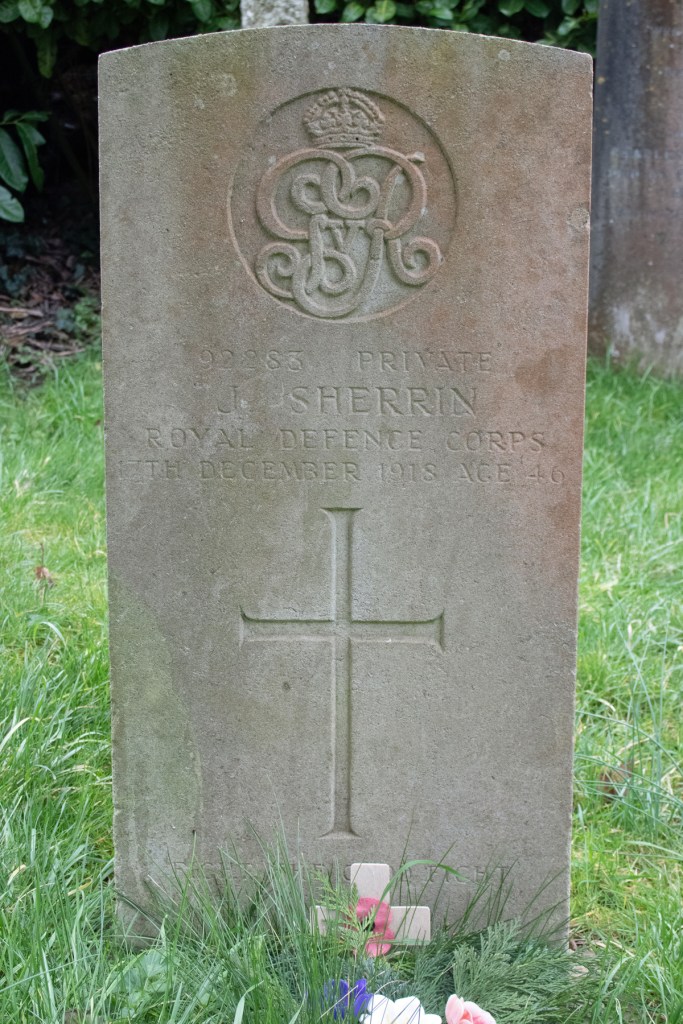
Private Sherrin was sent to an army camp in Tidworth, Wiltshire, and it was here that he served through the Armistice. He was waiting to be demobbed in December 1918, when he was admitted to the camp’s hospital. Details of his condition are unclear, but it was in the hospital that he passed away on 17th December 1918. He was 44 years of age.

While her late husband was serving, Bessie had returned to her family in Henstridge, and it was there that John’s body was brought. He was laid to rest in the graveyard of St Nicholas’ Church in the village.


Private Herbert Burgess

Private Herbert Burgess

Herbert John Burgess was born in the spring of 1883 in the Somerset village of Henstridge. He was the only child to Stephen and Sarah Burgess. Stephen was a farm labourer and, by the time of the 1901 census, the family had moved to nearby North Cadbury, where Herbert had also found farm work.

At this point, Herbert’s trail goes cold. None of the Burgesses appear on the 1911 census and, when war broke out, while documents confirm that Herbert enlisted, further details are limited.

Private Burgess joined the Devonshire Regiment, and was assigned to the 12th (Labour) Battalion. The troop was sent to France in June 1916, although it is unclear whether Herbert also went abroad. The next available record for him is that of his passing. He died on 10th February 1918, although, again, the cause and location of his passing is unknown. He was 35 years of age.

Wherever and however Herbert John Burgess died, he was brought back to Somerset for burial. He lies in a quiet corner of the graveyard of St Nicholas’ Church in his home village, Henstridge.