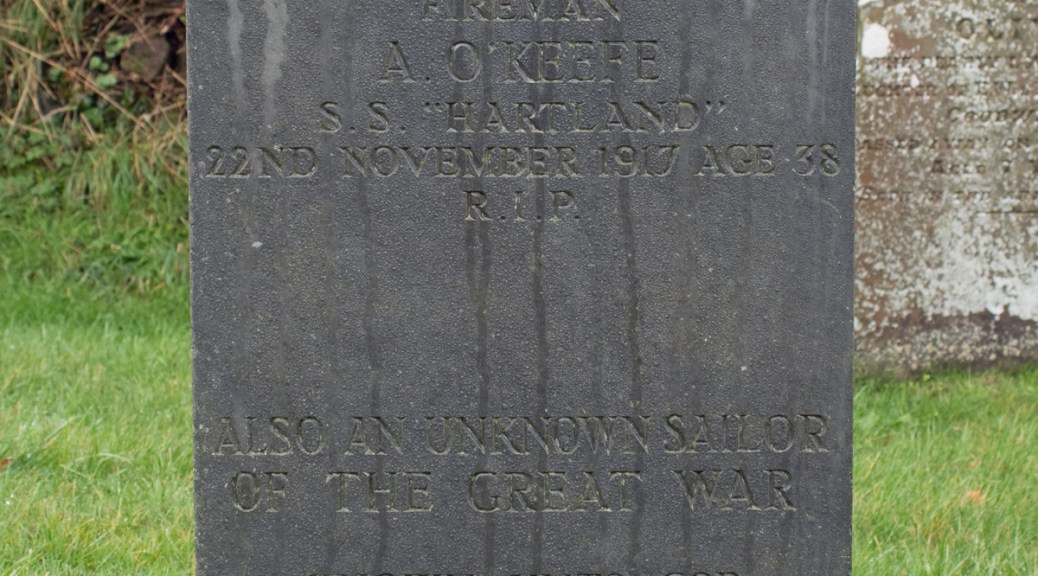
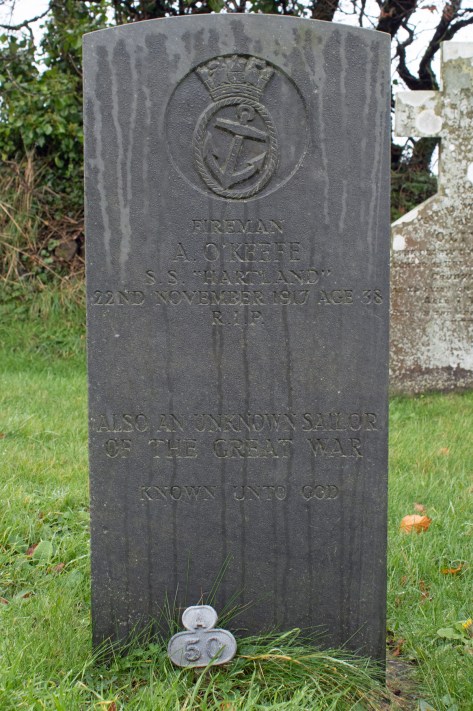
O’KEEFE Fireman Arthur. SS “Hartland.” 22nd Nov., 1917. Age 38. Son of John and Mary O’Keefe of Cork.
The search for information about Arthur O’Keefe has proved a challenging one. He does not appear with his parents on any census records, and there is precious little documentation about his life.
Arthur found work as a Fireman in the Mercantile Marine, and served on board at least four ships. In the autumn of 1917, he was based out of Glasgow, Scotland, and was attached to the SS Hartland. She had been requisitioned by the Admiralty, and was put to use transporting wheat from India.
On 22nd November the Hartland was travelling from Glasgow to Barry, South Wales, when she was hit by a torpedo from the submarine U-97, 21 miles south west of Bardsey Island. The ship was damaged, and two of the crew – Fireman O’Keefe and Fireman Thomas McGaw – were killed.
An American destroyer, the USS Conyngham, was at the head of the Hartland’s convoy, and managed to rescue the remaining 28 members of the crew, taking them to Holyhead. The Hartland was towed to Fishguard Harbour and refloated.
Arthur O’Keefe was 38 years of age when he was killed. He was laid to rest in Llanwnda Cemetery, not far from Fishguard, Pembrokeshire.
Arthur’s headstone notes that he was buried with an unknown sailor of the Great War. There is no indication who this might have been, but there are no records of his colleague Thomas McGaw being laid to rest. Given both men died in the same incident, and their bodies were transported to Fishguard with their ship, it seems possible that they may have been buried together.
John Devan was born in Gibraltar in the autumn of 1879 and was the son of Michael and Catharine. Michael was a gunner in the Royal Artillery, and his work took the family around the world, from Britain, to Jersey, to Japan. The 1881 census found them living in family quarters at Dover Castle in Kent.
Much of John’s life is lost to time, and the documents that remain give only a tantalising glimpse into it. He married Mary Byrne in around 1913: she came from Cashel in County Tipperary, so it is fair to assume that John spent time in Ireland. The couple had a daughter – Catharine – who was born in February 1914.
John’s entry on the Army Register of Soldier’s Effects is equally intriguing. It shows that he enlisted in the army on 24th April 1905, and worked as a kitchen man. A Private in the 2nd Battalion of the Scots Guards, in the opening months of the First World War, he was based in a camp in Lyndhurst, Hampshire.
The only other document relating to Private Devan is his entry on the Pension Ledger: this confirms that he died on 4th October 1914, of self inflicted wounds during insanity. He was 35 years of age.
Mary and Catharine were still in Ireland at this point, and so John Devan was laid to rest in Lyndhurst Cemetery, not far from the camp in which he had been based.
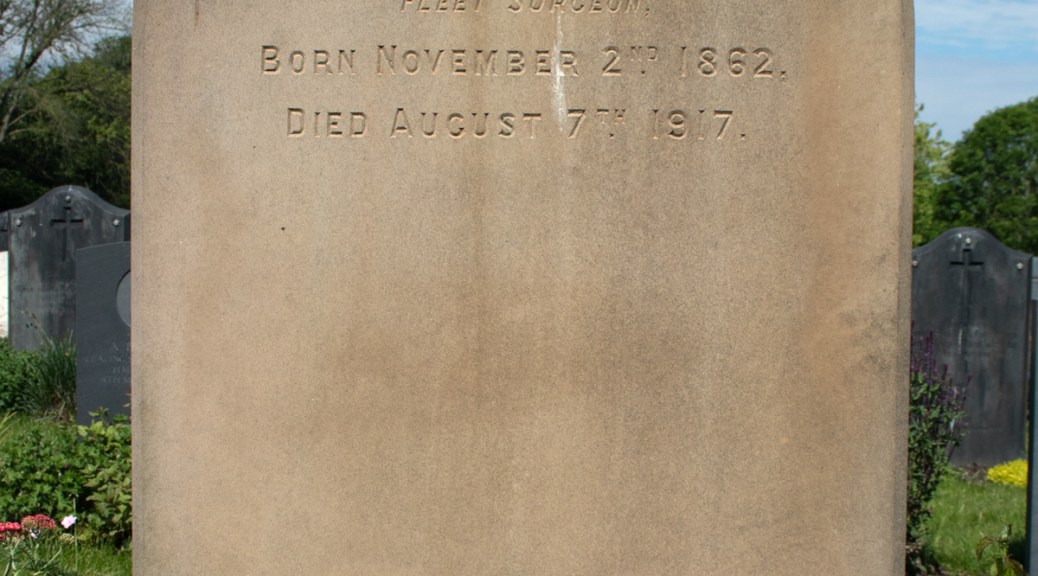
Edward Copley Ward was born in Charleville, County Cork, Ireland, on 2nd November 1862. The middle of three children, his parents were Thomas and Elizabeth Ward. Thomas died in 1868, and there is scant information about Edward’s life until he reached his early 20s.
It is clear that he had a focus on education, and a leaning towards the medical side of things. By December 1883, he had qualified as a Master Surgeon at the Royal University of Ireland, and was licenced in midwifery through the King & Queen’s College of Physicians.
Edward was not one to rest on his laurels, however, and he soon tasked himself to a naval career. On 21st August 1900 he was recorded on the Navy Lists as being a Fleet Surgeon, although there is little specific information about this service at this time.
MARRIAGES: WARD-CROWE
October 28, by special licence, at Kill Church… Staff-Surgeon Edward C Ward, RN, to Eleanor, daughter of the late Michael F Crowe, JP, of Melfield, Blackrock, County Dublin.
[Northern Whig: Saturday 1st November 1902]
Edward and Eleanor’s trail goes cold again at this point, and it is not until the 1911 census that we are able to pick them up again. By this point, Eleanor, now 45 years old, is living with four of her sisters, Kate, Charlotte, Isabella and Susanna in a house in Monkstown, Dublin. The family are supported by a domestic servant, Mary Collins.
Edward, meanwhile, was serving on board the battleship HMS Jupiter, which was moored in Weymouth Bay, Dorset. There were 548 crew members on board, and the now Fleet Surgeon Ward was one of seventeen commissioned officers, serving under Rear Admiral Arthur Limpus.
Over the next three years, Edward would serve on six further ships, but, by the time war was declared in the summer of 1914, he found himself shore-based. From December of that year, he served at HMS Pembroke, the Royal Naval Dockyard in Chatham, Kent. His role: to oversee the treatment of incoming wounded troops, and their preparation for onward transport to whichever hospital they would end up.
Fleet Surgeon War would spend the next three years fulfilling this task, but, by the summer of 1917, it would be Edward himself who needed support. Admitted to the Royal Naval Hospital in Chatham, he was suffering from tubercular disease of the kidney, and it would be this condition to which he would succumb. He passed away on 7th August 1917, at the age of 54 years old.
The body of Edward Copley Ward was laid to rest with a simple headstone in Woodlands Cemetery, Gillingham, Kent, not far from the dockyard he had come to know as home.
Interestingly, when Edward’s estate went to probate, he left his estate – worth £1257 7s 11d (approximately £111,500 in today’s money) to Geoffrey Holt Stillwell, with no mention of Eleanor. Geoffrey was a member of a banking family from the south of England, who served as a Lieutenant Colonel in the 4th Hampshire Regiment.
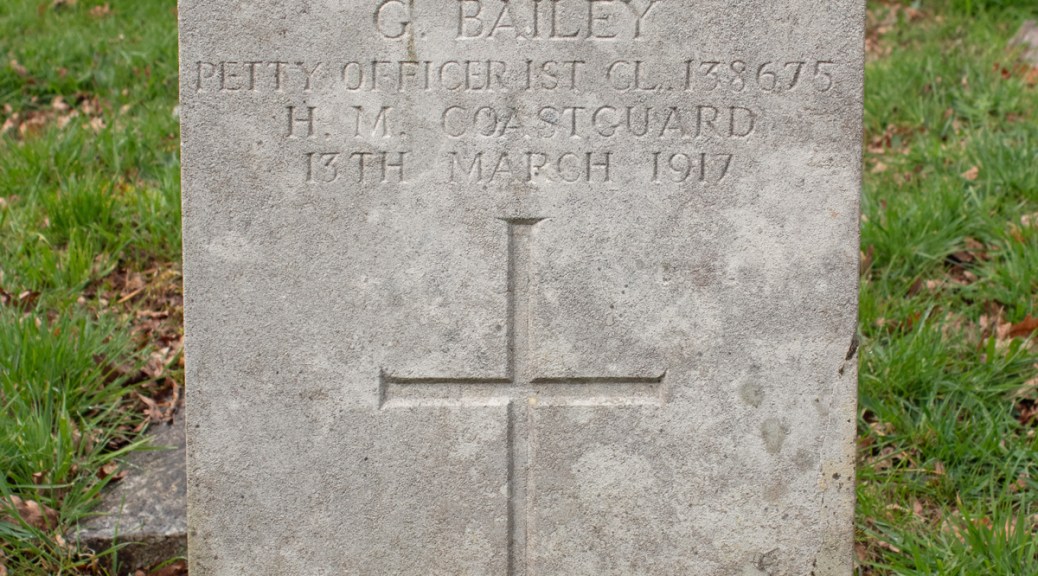
George Bailey was born in Bedminster, Somerset, on 20th August 1871. One of six children, his parents were George and Anna (or Hannah) Bailey. George Sr was a labourer and, when he died in 1876, Anna moved the family to Clifton, near Bristol.
The 1881 census found the family living in a small cottage at 5 Crosby Row in the then village. Hannah was listed as a late general labourer’s wife, while her three older children were all working for a dairy.
When George finished his schooling, he sought out a career. Joining the Royal Navy, this would prove a long-term role, bringing in a relatively decent wage for him and his family, but also gave him some adventure, not surprising given the number of ships he would have seen going to and fro from Bristol.
George was only 15 years old when he joined up on 25th September 1886, and so was below the age to formally enlist in the navy. Taken on with the rank of Boy 2nd Class, he was sent to HMS Impregnable, the training ship based in Devonport, Devon. Over the next three year he learnt his craft, and served on a few ships, including the battleship HMS Iron Duke.
In October 1887, George was promoted to Boy 1st Class and, on 20th August 1889, while assigned to the Iron Duke, he came of age, and was formally inducted into the Royal Navy. Ordinary Seaman Bailey’s service records show that he was 5ft 5.5ins (1.66m) tall, with auburn hair, blue eyes and a fresh complexion. He was also noted as having a spot tattooed between the finger and thumb of his left hand, a scar on his left leg and another in the centre of his back.
Over the next seven years, George served on a total of ten ships, and saw the world. In between voyages he returned to HMS Vivid, the Royal Naval Dockyard in Devonport. In 1895 he married Elizabeth Bull, from Burrington, Somerset, and the couple went on to have six children.
George’s naval career continued, and he rose through the ranks, to Able Seaman in September 1890, Leading Seaman in June 1895, and to Petty Officer 2nd Class and 1st Class the following year.
In January 1899, George’s life took a different direction. After some time training at HMS Collingwood in Hampshire, he joined the Coastguard service, and would spend the next twelve years serving on the coast of Southern Ireland. This opportunity allowed him to have his family with him, and his and Elizabeth’s four youngest children were born in County Clare and County Cork.
By 1911, the family returned to Britain, setting up home in Brixham, Devon. That year’s census found the Baileys living at 6 Coastguard Station on the waterfront. The family remained there through to October 1913, when George was transferred to the Royal Naval Reserve, having served for 26 years.
George found work as the caretaker of the Electric Theatre in Tiverton, Devon, and this is where he and Elizabeth settled down.
Petty Officer Bailey’s time out of active service was to be limited, however, as, just nine months later, war was declared. Called back into action, he was sent to Western Stack Fort in Milford Haven, Pembrokeshire.
An interesting personality has passed away in First-Class Petty Officer George Bailey, who died suddenly on Tuesday… He came home about a fortnight ago on sick leave, and seemed to be improving in health, and on Tuesday went out for a walk. After retiring to bed his death came suddenly as a result of heart failure.
[Crediton Gazette: Saturday 24th March 1917]
George Bailey died on 13th March 1917: he was 45 years of age. He was laid to rest in Tiverton Cemetery.
The funeral took place at the Tiverton Cemetery, on Tuesday afternoon, of George Hunt, 17… a member of the Devon band, who died in Ireland as a result of an illness brought on by exposure. Pte. Hunt visited Tiverton for the last time at Christmas. On the return journey to Ireland he, with several others, were drafted to camp to await the arrival of a steamer. Whilst in camp he contracted a severe chill which he was unable to throw off and his parents recently received a message stating that his condition was giving rise to some anxiety. Mr and Mrs Hunt journeyed to Ireland and satisfied themselves that everything possible was being done to save their son. In spite of all efforts he died on Thursday, June 16th.
[Tiverton Gazette (Mid-Devon Gazette): Tuesday 28th June 1921]
George Cockram Hunt was born on 15th January 1904, and was the youngest of five children to William and Emily Hunt. William was a carpenter and joiner from Tiverton in Devon, and this is where the family were born and raised.
There is little additional available about young George’s life. He had enlisted in the army by the middle of 1920, and, as a Band Boy, was attached to the 1st Battalion of the Devonshire Regiment. Given his age, it is unlikely that he spent any time overseas before the Armistice but, as the report of his funeral suggests, he was stationed in Ireland at the time of his death.
Boy Hunt died in barracks in Queenstown – now Cobh – in the south of Ireland. His body was brought back to Devon for burial.
George Cockram Hunt was laid to rest in Tiverton Cemetery, on the outskirts of the town he had called his home for less that two decades.
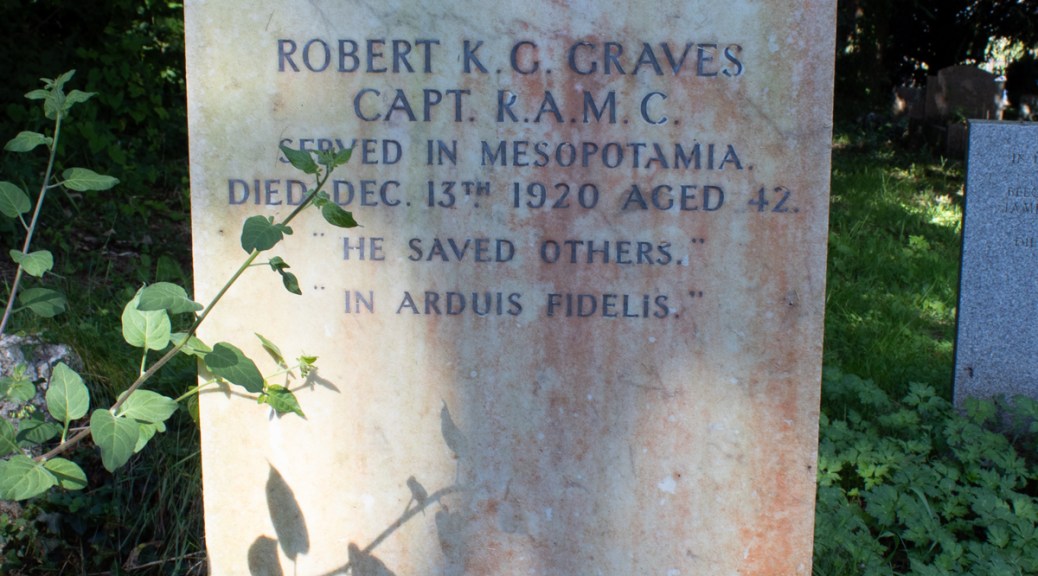
Robert Kennedy Grogan Graves was born on 1st January 1878. An announcement in the local newspaper confirmed that “at Baronne Court, County Tipperary, the wife of Lieutenant-Colonel W. Grogan Graves, 82nd Regiment, of a son (prematurely).” Robert was the older of two children, while his parents were William Graves, a Justice of the Peace in Ireland, and his wife, Georgianna Graves.
William died in 1890, and Georgianna moved the family to London. The 1891 census found her residing at the Golden Hotel in St Martin in the Fields, while her two boys, Robert and his younger brother, Geoffrey, were boarding students at Francis Napier’s classics school on Shooter’s Hill Road in Kidbrooke, Kent.
Robert found his calling through education. He studied medicine, and by January 1896 he was a student at St George’s Hospital in Tooting, Surrey.
By 1906 Robert had set himself up in an infirmary on Southgate Street in Gloucester, Gloucestershire. That same year, he married Kathleen Schofield: the couple went on to have two children, Robert Jr in 1912, and Bernard the following year.
Graves, Robt. Kennedy Grogan, Scison Lodge, Clevedon, Somerset (Tel. 11 Y Clevedon) – MRCS, LRCP London 1904; (St Geo.); Hon, Med, Off. Clevedon Cott. Hosp.; Med. Off Mutual Insur. N.Y. & Clevedon Hydro. Estab.; late Sen. Ho. Surg. & Asst. Ho. Surg., & Surg. Gloucester Co. Infirm., & Asst. Med. Regist. & Obst. Clerk St Geo. Hosp.
[The Medical Directory, 1910]
Robert had set himself up well during his life. The 1911 census found him and Kathleen – who was better known by her middle name, Gladys – living in their 17-room house on Linden Road in Clevedon. They afforded themselves three servants, including a housemaid, a cook and a motor driver. By the outbreak of war, Robert has an entry in the town’s Kelly’s Directory, and seemed to be a focal member of the community, joining the local Grand Lodge in September 1908.
Robert’s time in the army, is hard to piece together. He joined the Royal Army Medical Corps as a Captain, and appears to have been connected to the air force. His headstone suggests that he served in Mesopotamia, but when and exactly where, however, is lost to time.
After the war, Robert returned to Britain. Leaving the Somerset coast, however, he and Kathleen appear to have set themselves up in Dorset. He died, through causes not detailed, on 12th December 1920, at 42 years of age. His entry on the probate register states:
GRAVES Robert Kennedy Grogan of 1 Charnwood Chambers Seabourne-road West Southbourne Hampshire died 12 December 1920 at The Grange Buckfastleigh Devonshire…
It is unclear whether Charnwood Chambers was his working address, with The Grange being the family’s official home, or if Buckfastleigh served as a place of convalescence.
Robert Kennedy Grogan Graves left an estate totalling £370 14s 7d (approximately £21,100 today) to Kathleen. He was buried in the graveyard of Holy Trinity church, Buckfastleigh.
George Patrick Marshall was born in Dublin, Ireland, on 17th March 1896. One of ten children, his parents were plumber and gasfitter Robert Marshall and his wife, Rachel.
When he finished his schooling, George found work as a messenger. By the time war broke out, however, he was working as a builder’s mate. Keen to play his part and serve his country, he decided to enlist in the Royal Navy.
Stoker 2nd Class Marshall enlisted on 7th March 1915. His service records show a little of the man he had become. He was noted as being 5ft 4ins (1.62m) tall, with brown hair, grey eyes and a fresh complexion. His first trip overseas took him to HMS Pembroke, the Royal Naval Dockyard in Chatham, Kent, where he would receive his training.
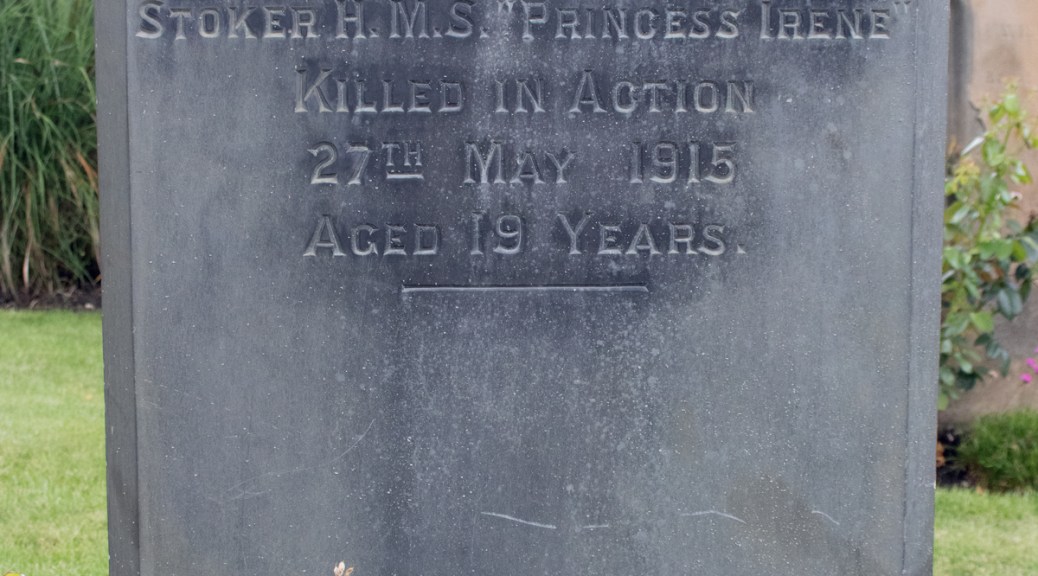
Tragically, George’s time in the navy would not prove a lengthy one. By the end of May he was part of the crew of HMS Princess Irene, an ocean liner that had been put into service as a minelayer when war was declared.
On 27th May 1915, a series of explosions ripped through the ship, killing more than 350 crew, Stoker Marshall included. He was just 19 years of age.
George Patrick Marshall was laid to rest in Woodlands Cemetery, Gillingham, alongside the other victims of the disaster.
Ernest Patterson was born in Roscrea, Co. Tipperary, Ireland, in 1900. He was the oldest of six children to Robert and Matilda Patterson. Robert was a boot machinist when his son was born but, by the time of the 1911 census, he had turned his hand to farming.
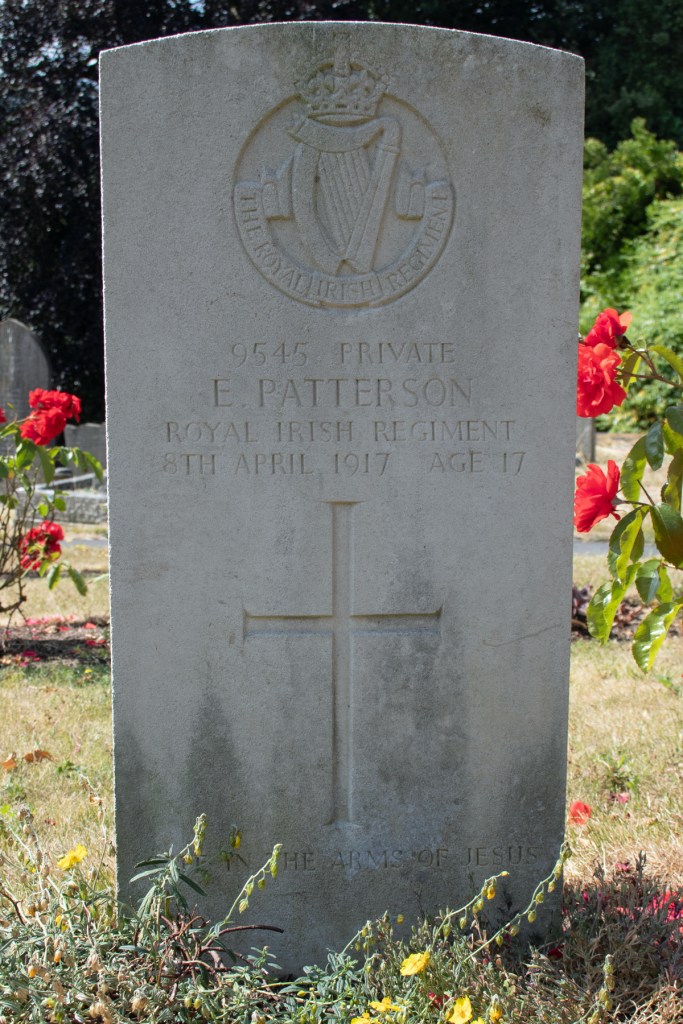
When war came, Ernest stepped up to serve his King and Country and, in his eagerness to do so, he lied about his age. He enlisted in the Royal Irish Regiment on 1st September 1915, and stated that he was 19 years old. Given that his service records show that he was 5ft 8.5ins (1.64m) tall and that he weighed 130lbs (59kg), it is not surprising that the military were willing to take him on his word.
Private Patterson was initially posted to the 3rd (Reserve) Battalion in Dublin. While there, he contracted German measles, and was hospitalised for two weeks. When he recovered, Ernest was moved to the 2nd Battalion, and shipped off to France with his new unit.
His time overseas was cut short, however, and he was medically evacuated to Britain for treatment on 9th March. He was noted as suffering from ‘debility’, and admitted to the Royal Surrey County Hospital for a week.
Out of hospital again, Ernest was re-assigned to the 3rd (Reserve) Battalion. As summer came and went and winter moved in, his health wavered again. On 19th December 1916, he was admitted to the Bath War Hospital in Somerset, suffering from pulmonary tuberculosis. He remained in hospital for the next three months, the condition finally leading to his medical discharge from the army on 29th March 1917.
Private Patterson’s discharge from the army did not mean a discharge from hospital, however, and he remained there for the next week or so. His health was deteriorating by this point, and his body finally succumbed to tuberculosis on 8th April 1917. He was just 17 years of age.
It was not practical to return Ernest Patterson’s body to his family in Ireland. Instead, he was laid to rest in Locksbrook Cemetery in Bath, not far from the hospital in which he had died.
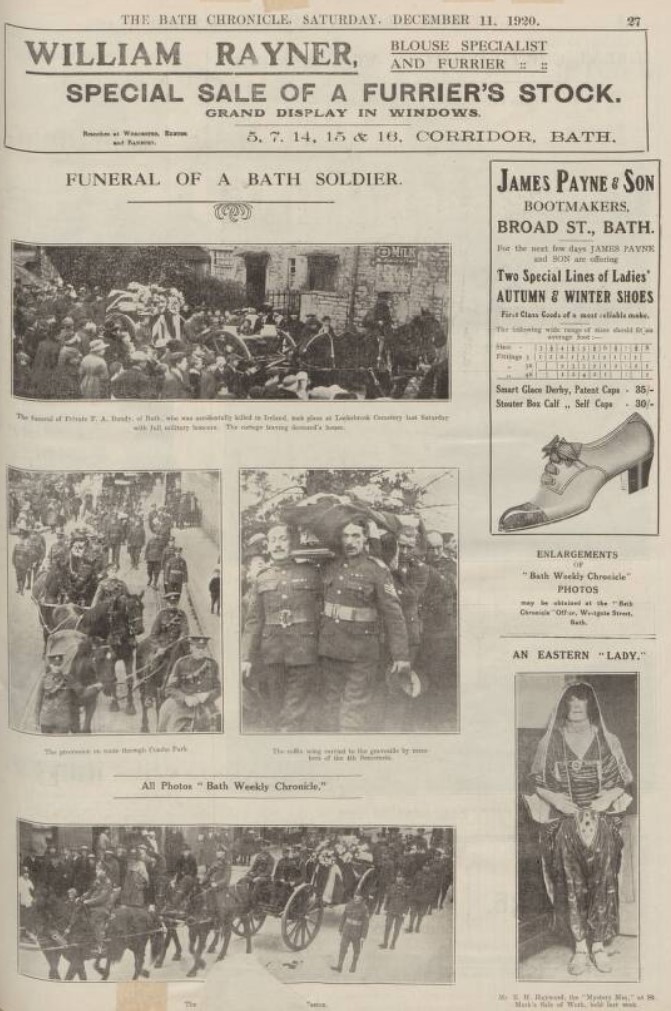
Private Frederick Arthur Bundy, of the 1st Somerset Light Infantry is to be buried in Locksbrook Cemetery tomorrow (Saturday) afternoon with full military honours. He met with a fatal accident in Belfast on Sunday last. In the afternoon when in quarters he was passing from one room to another when a rifle which was bring cleaned by a comrade in the room which he was entering went off. The bullet passed through Private Bundy’s wrist and entered the stomach. He was at once removed to the military hospital, but passed away at midnight, from internal haemorrhage. Deceased, was the son of Mr FA Bundy, of 93 High Street, Upper Weston, and enlisted at the Drill Hall, Bath, in August 1919, when only 15 years of age, being accepted as he was a youth of exceptionally fine stature. At the time of his death he was 16 years and 10 months of age. After a short period of training at Taunton he went with a draft of Somersets to Ireland and was stationed for some time at Carrickfergus Castle, being moved into Belfast when the riots occurred there.
[Bath Chronicle and Weekly Gazette: Saturday 4th December 1920]
Frederick Arthur Bundy was born early in 1904, and was the middle of three children to Frederick and Mary Ann Bundy. Frederick Sr was a labourer from Bath, Somerset, and it was in the Weston area of the city that the family were born and raised.
The 1911 census – the only one Frederick Jr would be recorded on – noted the family as living at 45 High Street, Weston. The household consisted of Frederick Sr, Mary Ann, Frederick Jr, his older sister Sarah, younger brother William and Mary Ann’s daughter from a previous marriage, Annie.
Sadly, due to his young age, there is little additional documentation to build a picture of Frederick Jr’s life. He passed away on 28th November 1920, and was laid to rest in Bath’s Locksbrook Cemetery, not far from the family home.
Frederick Arthur Bundy’s funeral was shown in a photo-spread in the Bath Chronicle of 11th December 1920.
Editor’s Note: While Frederick enlisted nine months after the end of the First World War, his acceptance for a Commonwealth War Grave is because his passing being between the qualifying dates and the cause being as a result of his military service.
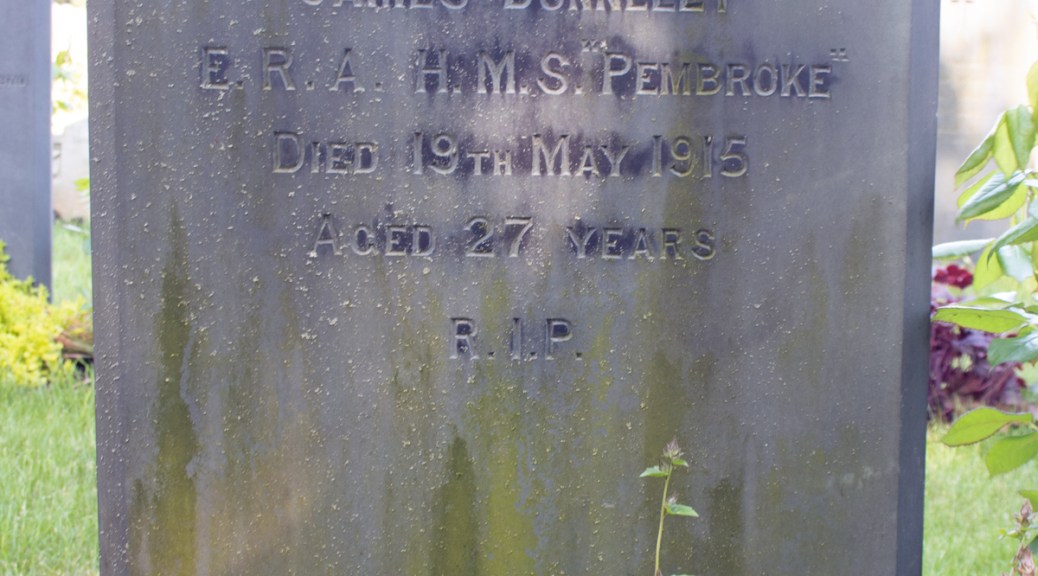
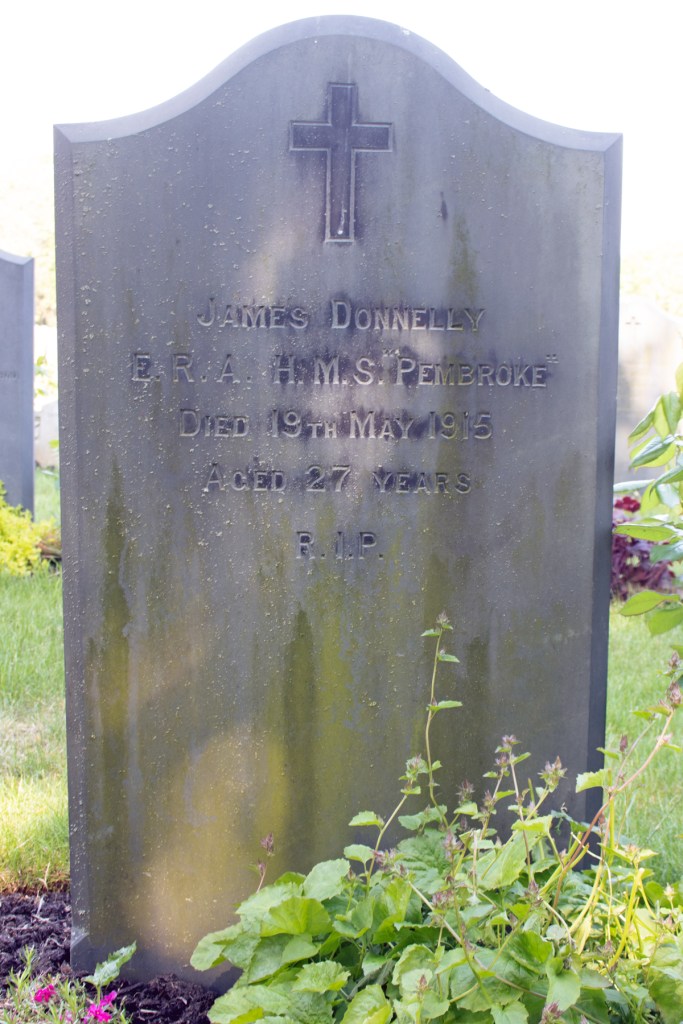
James Donnelly’s life is a challenging one to pin down. Based on the Commonwealth War Graves Commission information, he was born in 1888 in Cappagh, County Tyrone, Northern Ireland, and was the son of Owen and Mary Donnelly. Unfortunately, there are no baptism or census records to expand on his family background.
Military records are equally sparse. James enlisted in the Royal Navy as an Engine Room Artificer 4th Class. He was assigned to HMS Pembroke, the Royal Naval Dockyard in Chatham, Kent; given how early in the conflict, and his position at the lower end of the ERA rankings, is it likely that he was posted there for training.
James’ time in the military was to be brief. He was admitted to the Royal Naval Hospital in Chatham, suffering from cerebrospinal meningitis. The condition was to prove severe: he succumbed to it on 19th May 1915, at the age of 27 years old.
Finances may have prevented the Donnelly family from bringing their boy back home. Instead, James was laid to rest in the Roman Catholic section of Woodlands Cemetery, Gillingham, not far from the naval base at which he had served.
Engine Room Artificer James Donnelly (from findagrave.com)













 Death and Service