Category Archives: Somerset Light Infantry

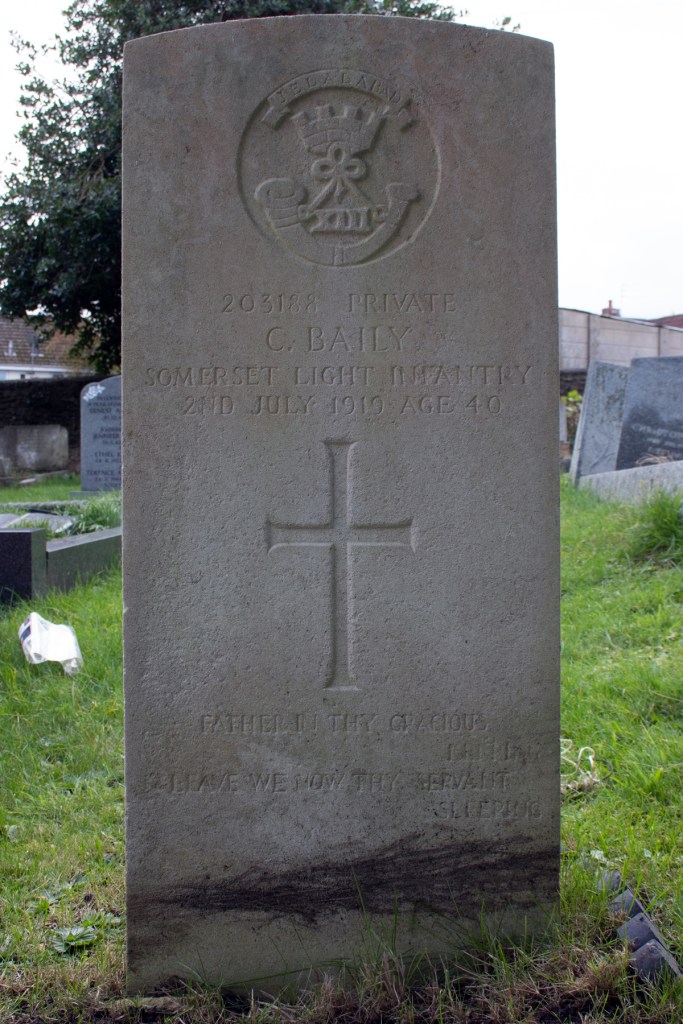
Private Charles Baily

Charles Baily

Charles Baily was born in Frome, Somerset, in March 1879; he was the middle of three children to Charles and Sarah Baily. Charles Sr was a plasterer, and the family were raised in a small cottage to the south of the town centre.

When Charles Jr left school, he found work as a carpenter and, on 17th March 1902, he married local woman Fanny Howell. Her father was a carter and she had not long returned from South Wales, where she had found employment as a parlour maid. Charles and Fanny set up home just three doors down from his parents, and went on to have five children.

War was coming to Europe, but the details of most of Charles’ military service are lost. He enlisted as a Private in the Somerset Light Infantry, and was assigned to B Company of the 1st/4th Battalion. The troop was sent to Bombay in the autumn of 1914; it then moved to Basra in the spring of 1916, remaining in Mesopotamia for the remainder of the conflict. Sadly, it’s not possible to know how much of this travel Private Baily undertook himself.

Charles survived the war, and was demobbed soon after the Armistice. He returned home, but his time back with his family was to be short: Private Baily died at home through causes lost to time on 2nd July 1919. He was 40 years old.

Charles Baily was laid to rest in the graveyard of Holy Trinity Church in his home town of Frome.


One sad aside to the story is that Charles and Fanny’s oldest child, daughter Frances Baily, had passed away in the summer of 1917. The cause of her passing is also lost to history, but she was just 16 years old when she died.


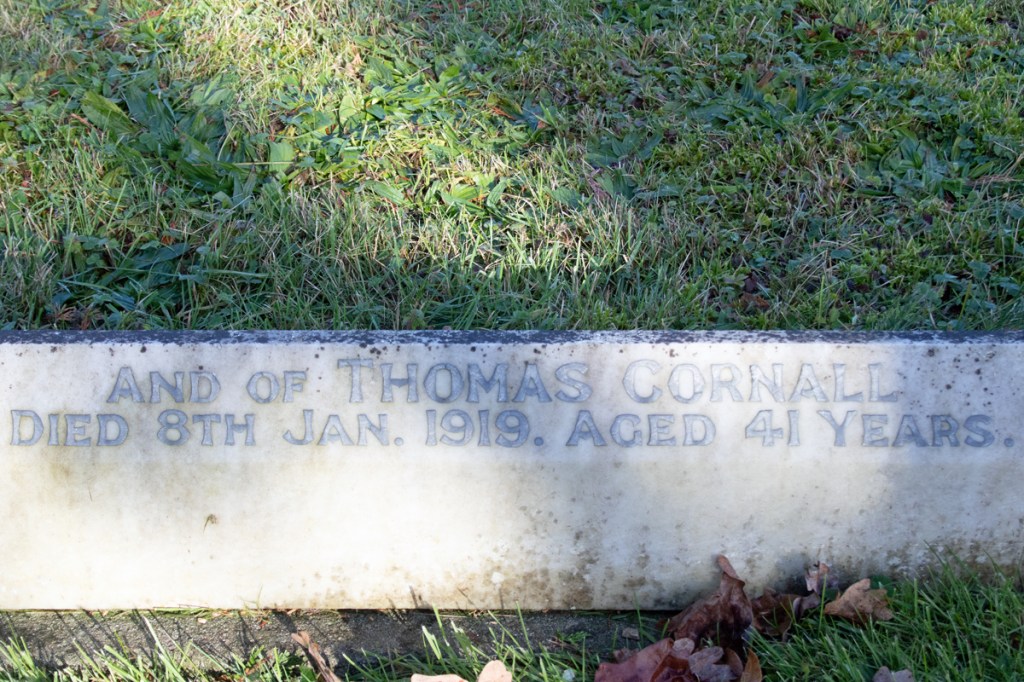
Private Thomas Cornall

Private Thomas Cornall

Thomas Cornall was born in Kingsteignton, Devon, early in 1879 and was the oldest of seven children to Thomas and Elizabeth Cornall. Thomas Sr was a clay cutter and, while the family were all raised in Kingsteignton, Thomas Jr appears to have been more wayward, and was farmed out to local relatives over time.

The 1881 census shows Thomas living with his parents; ten years later he was living with his maternal grandmother; in 1901 he was boarding with Elizabeth’s brother, John Withycombe, in Devonport; the 1911 census recorded him living with his sister and her family in the village of Chudleigh.

Thomas took on labouring jobs. He worked as a dockworker in Devonport, and a haulier in Chudleigh. War was coming to Europe, however, and Thomas was pulled in a different direction.

Full details of his military career are not available, but it is clear that he enlisted in the Somerset Light Infantry early on in the conflict. Whether Private Cornall saw active service overseas is lost to time, but he soon transferred over to the 696th Agricultural Company of the Labour Corps.

Thomas’ maternal uncle – John Withycombe – who had had lived with in 1901, had become manager of the Lion Hotel in Chudleigh and when he died in 1913, he left his wife, Bertha, with a son to raise and a business to run. At the end of 1916, Thomas and Bertha married in nearby Newton Abbot and took on the running of the Lion Hotel together.

Private Cornall was still serving at this point, and continued his work in the Labour Corps through until the end of the war. His trail at this point goes cold; all that is known is that he died at home on 8th January 1919, at the age of 40 years old.

Thomas Cornall was laid to rest in Chudleigh Cemetery. The family plot included John and Bertha, when she passed away in 1954.


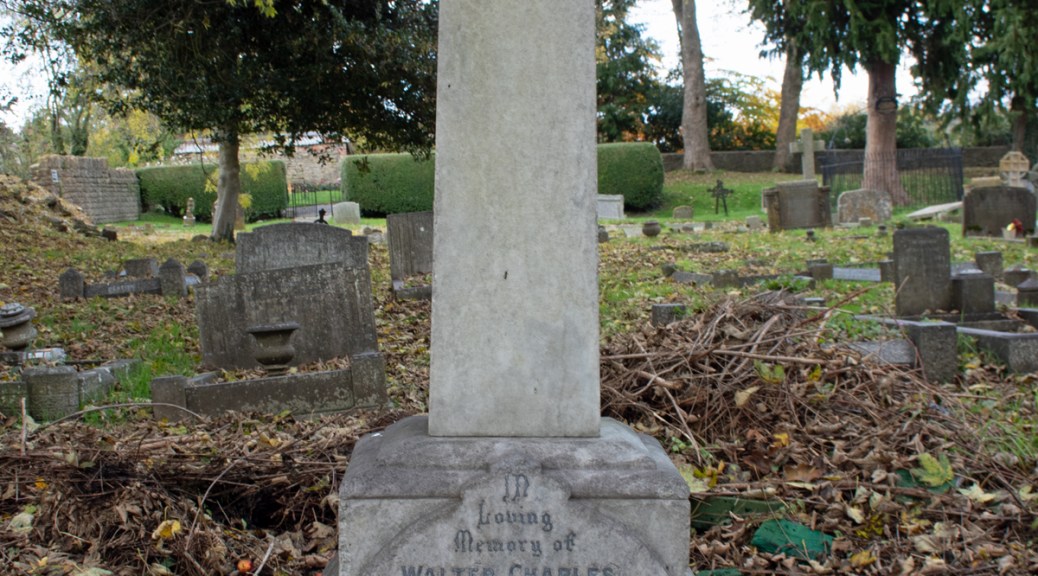
Private Charles Sparey

Private Charles Sparey

Walter Charles Sparey was born on 3rd Aril 1890 in the Somerset town of Frome. He was a twin, and was one of a total of seven children to Walter and Susan Sparey. Walter Sr was a plasterer and tiler and the family lived on Culver Hill, to the south of the town centre, and next to the Girls’ Asylum Institute.

When he left school, Walter Jr – who was known as Charles, to avoid confusion with his father – found work as a grocer’s porter, while his twin, Henry, was employed as a labourer for the local brewery.

Europe was on the brink of war and, while full details of Charles’ military service are not available, some aspects are clear. He enlisted within weeks of war breaking out, joining the Somerset Light Infantry as a Private. By July 1915, he found himself on the Western Front in France.

Private Carey was caught up in the fighting and, on 3rd April 1916, received gun shot wounds in the back and shoulder. He seems to have recovered, but was dogged by lung and heart afflictions afterwards, and did not return to active duty. He was eventually discharged from military service on 15th August 1917.

Charles returned home, but the effects of his injuries eventually proved too much. He passed away on 1st March 1918, aged just 28 years old, and was laid to rest in the graveyard of Christ Church in his home town of Frome.


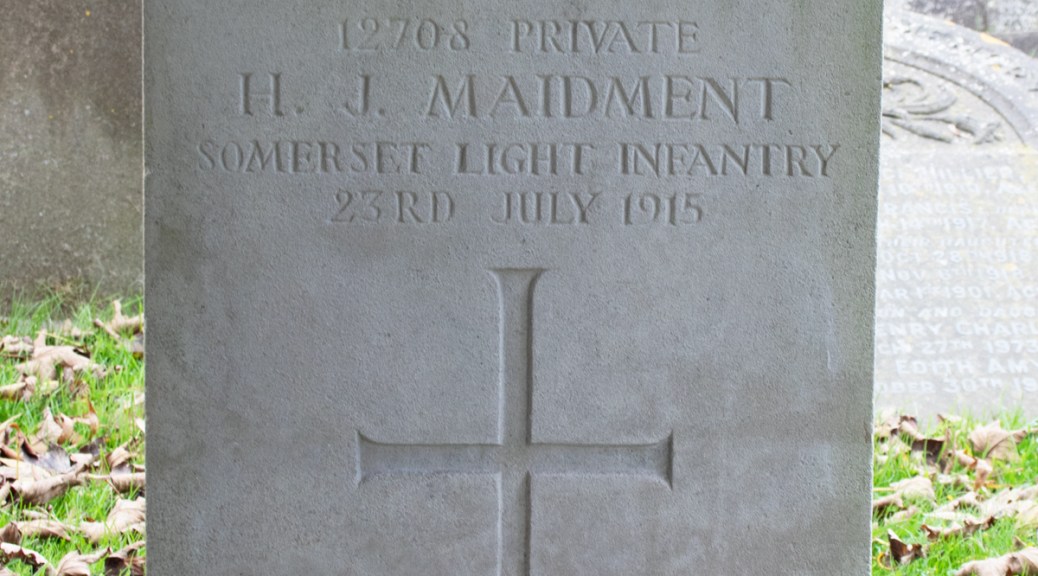
Private Harry Maidment

Private Harry Maidment

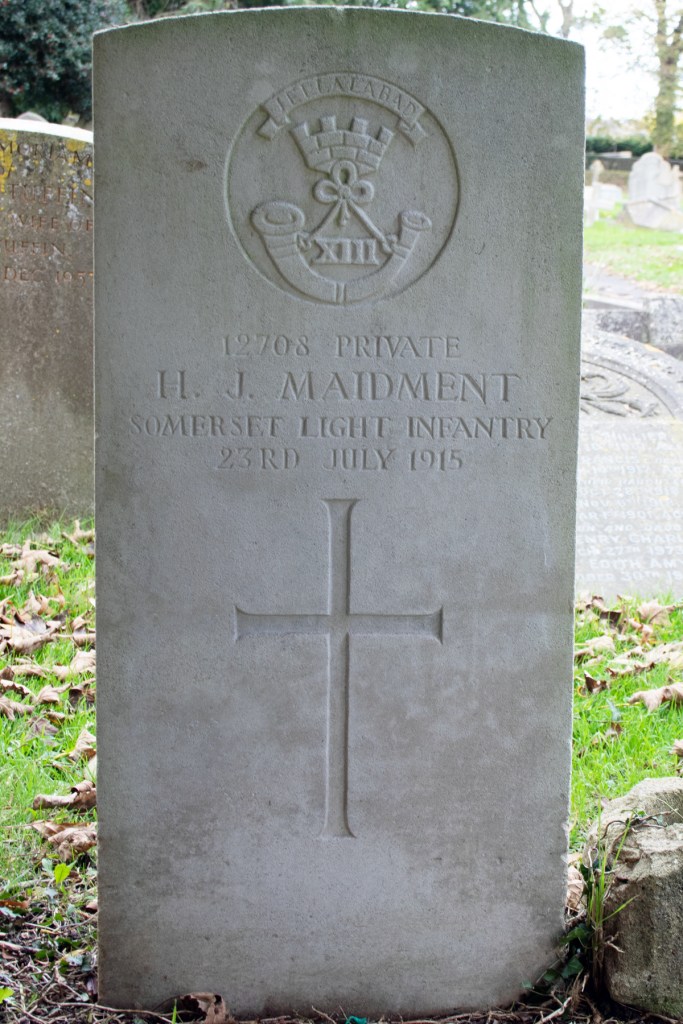
Henry James Maidment – known as Harry – was born in Penarth, South Wales, in the autumn of 1890. He was one of seven children to Somerset-born Henry and Minnie Maidment. Henry Sr was a general labourer, and, when he died in 1899, Minnie remained in Penarth, earning money to support the family as a hawker of fruit.

By the time of the 1911 census, most of Minnie’s children were still living at home, with all but one of them working. Harry was employed as a van driver for a laundry, while his siblings were working variously as labourers, sailors and a housekeeper.

In the autumn of 1911, Harry married Annie Hillier, a servant who had been born in Yeovil, but who had also moved to South Wales. The couple went on to have a son, Henry, in October 1912, but he tragically passed away when he was just a couple of months old. They were not to have any other children.

War was coming to Europe by this point, and Harry was keen to play his part. He enlisted towards the end of 1914, joining the 1st Battalion of the Somerset Light Infantry as a Private. He arrived in France at the beginning of May 1915, and would have seen fighting at Ypres that spring.

It seems that Private Maidment was wounded at Ypres; he was medically evacuated home and was admitted to the Graylingwell Hospital in Chichester, West Sussex. Details of his injuries are not available, but they must have been severe; he passed away from them on 23rd July 1915, aged just 25 years old.

Harry James Maidment’s body was brought back to Somerset; he was laid to rest in the graveyard of Christ Church, Frome, his parents’ home town, and where his widow, Annie was living.


Private Frederick Crook

Private Frederick Crook

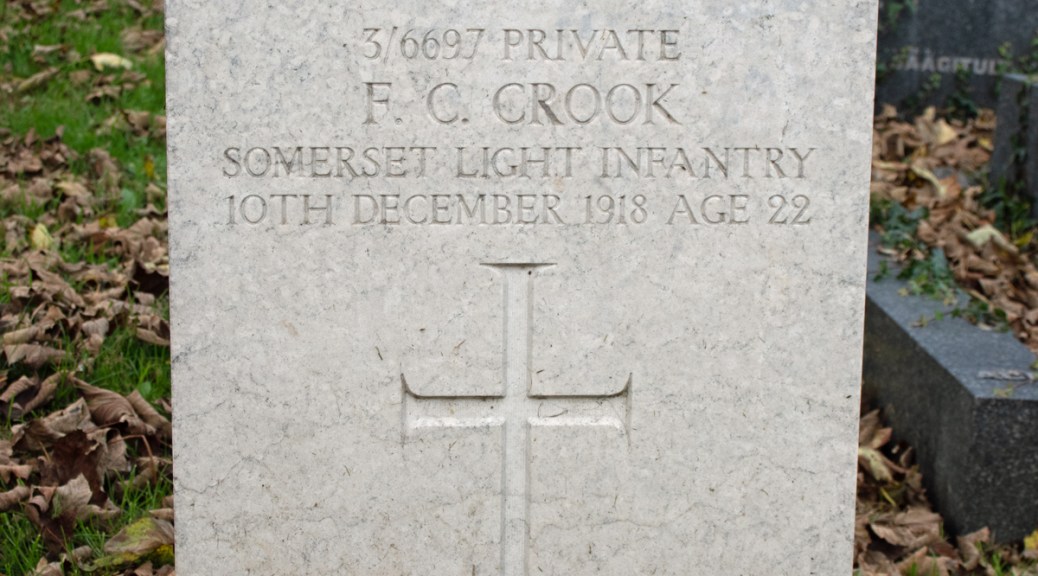
Frederick Charles Crook was born in Frome, Somerset, in 1896 and was one of eleven children. His parents were Frank and Bessie Crook, and the family were raised in a house to the south of the town centre. Frank was a plasterer but sadly details of his son’s life are quite sketchy, so it’s not evident if this was a trade he followed his father into.

In the spring of 1912, Frederick married Wiltshire-born domestic servant Hannah Gerrish, a farm labourer’s daughter. The couple wed in Bradford-upon-Avon, and went on to have a daughter, Margaret, who was born in 1913.

Storm clouds were gathering over Europe, and, in November 1914, Frederick volunteered to play his part. He joined the Somerset Light Infantry, and was assigned to the 1st Battalion as a Private.

While it’s not possible to identify exactly where he served, Frederick would certainly have seen action on the Western Front: his battalion fought with the 4th Division at Ypres, The Somme and at Arras in the various phases of the conflict.

The ongoing conflict must have had an impact on Private Crook: he was medically discharged from military service with neurasthenia – a nervous breakdown – just weeks before the Armistice was signed. He returned to Frome, but it must have been too much: he passed away on 10th December 1918, at the age of just 22 years old.

Frederick Charles Crook was laid to rest in the graveyard of Christ Church, in his home town, Frome.


Private Thomas Singer

Private Thomas Singer

Thomas – better known as Tom – Singer was born in Frome, Somerset, in the summer of 1876, the youngest of seven children to John and Sophia Singer. John was a labourer on the railway, who sadly passed away when Tom was only three years old. Sophia was left to raise the family on her own, and she did so by taking in washing for other people (the 1891 census has her listed as a pauper, but she still managed to support her children). Sophia also died in 1892, meaning Tom was an orphan by the time he was just 16 years old.

Tom found work as an errand boy when he left school, although he soon moved on to labouring work. After Sophia’s death, he moved in with his brother Walter, who had also recently been widowed, and the money they brought in helped support Walter’s three children and pay for a housekeeper to do so.

On 21st July 1904, Tom married Edith Mary Bugler, a labourer’s daughter from nearby Selwood; the couple went on to have five children. With a growing family to support, Tom found new work as an ostler at the pub in Witham Friary, to the south of Frome.

War was coming to Europe, and Tom was called upon to do his duty. Full details of his service are not available, sadly, but it is clear that he enlisted as a Private in the Somerset Light Infantry at some point before the summer of 1916.

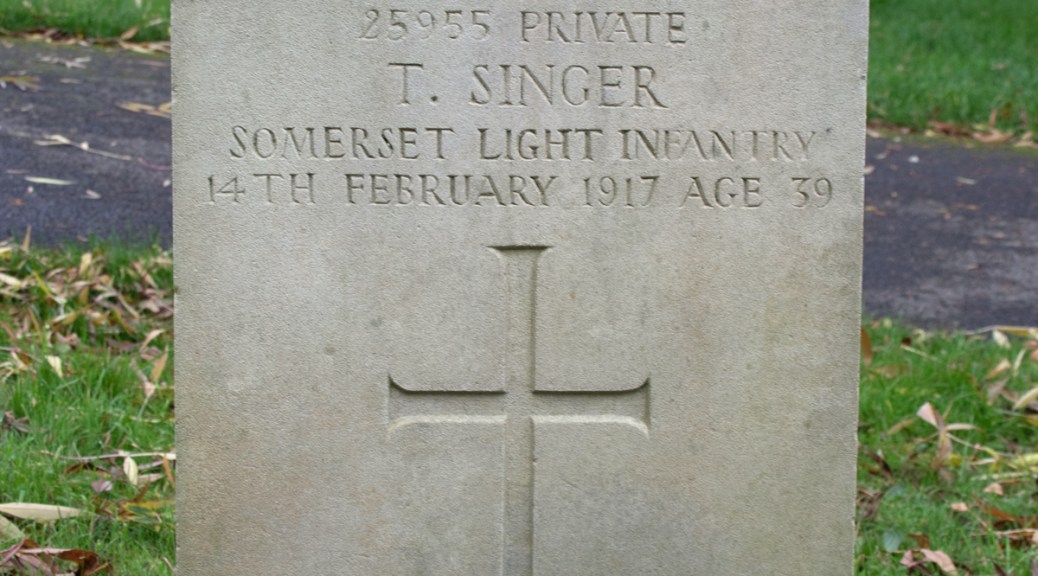
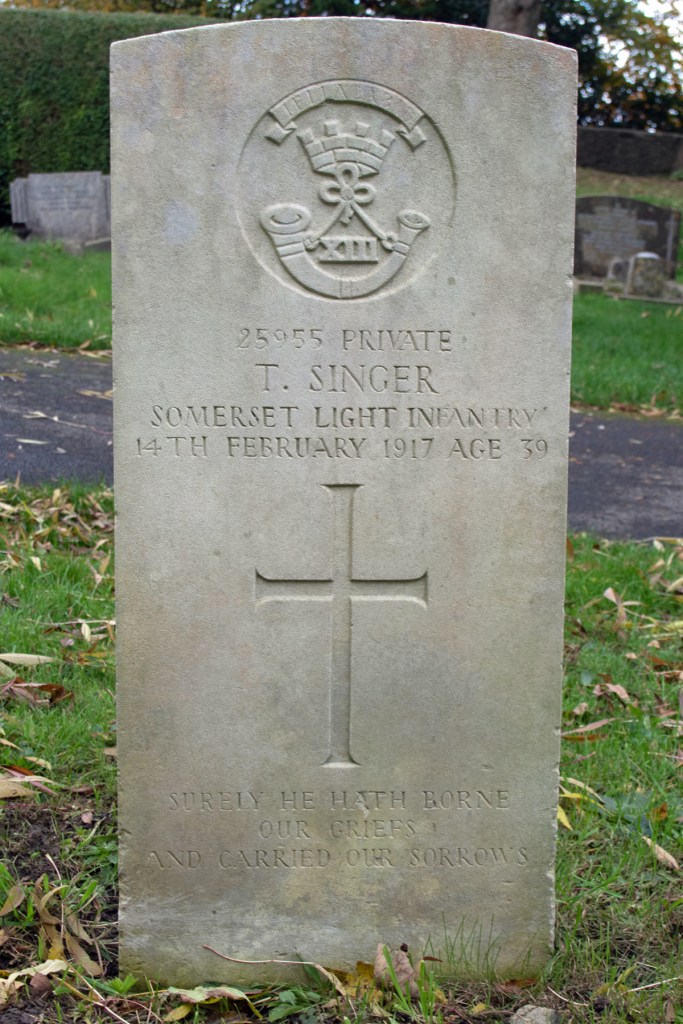
Private Singer was sent to France in November 1916, but fell ill soon afterwards. He was medically evacuated back to England and admitted to hospital, where he underwent an operation. Sadly, he did not recover, and passed away on 14th February 1917, at the age of 40 years old.

Tom Singer was laid to rest in the graveyard of Christ Church in his home town of Frome.


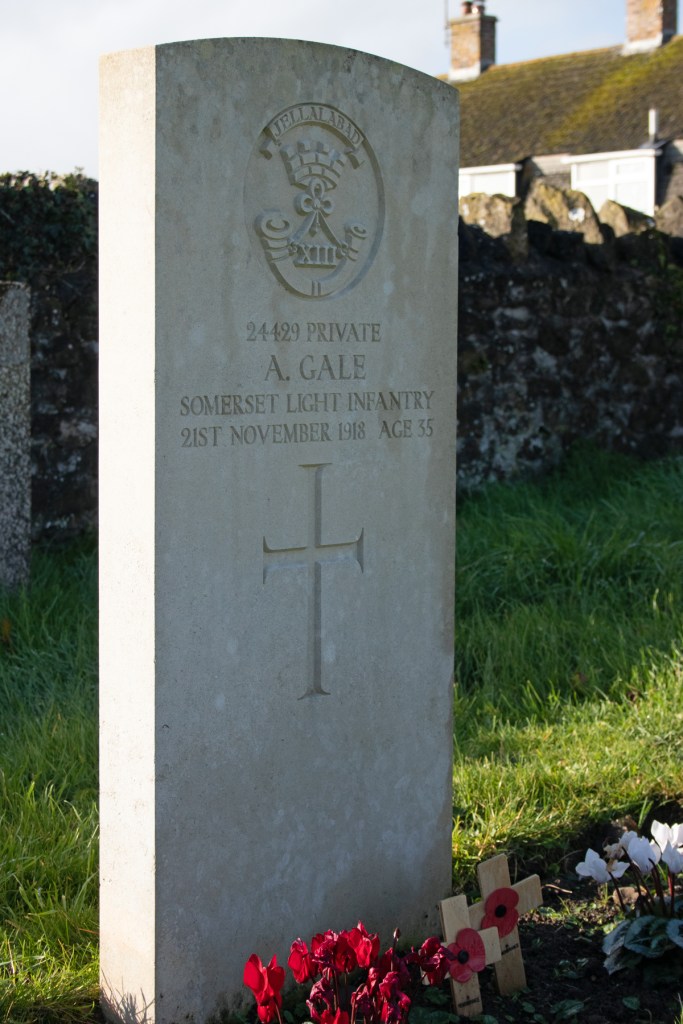
Private Albert Gale

Private Albert Gale

Albert Gale was born in the Devon village of Chudleigh Knighton in October 1883, one of five children to John and Elizabeth Gale. It seems that Elizabeth may have died when Albert was young, as, by the time of the 1901 census, John was married to a Sarah Gale, and the family were living in the village of Hennock.

John was a clay cutter, and this was a trade into which Albert followed his father. Again, as time moves on, things change; the 1911 census found Albert boarding with his sister Sophy and her husband, fellow cutter Thomas Willcocks, back in Chudleigh Knighton.

War was coming to Europe and, in April 1916, Albert enlisted, joining the Somerset Light Infantry as a Private. He would have cut a commanding figure; his enlistment papers show that he stood at 5ft 10ins (1.77m) tall.

Albert served on home soil. While attached to the Somerset Light Infantry, he was assigned to the 661st Agricultural Company of the Labour Corps, working in Kent and Sussex.

During this time, he received hospital treatment on four separate occasions: in August 1916, he was admitted with cellulitis of the arm; in December 1916 and January 1917, he was treated on two separate occasions for scabies. In November 1918, however, he was admitted to the Military Hospital in Chichester, West Sussex, as he was suffering from influenza. Sadly, this last condition was to worsen and, on 21st November 1918, Private Gale died, having subsequently contracted pneumonia. He was 35 years old.

Albert Gale’s body was brought back to Devon for burial. His brother-in-law Thomas had died the previous summer; his story can be found here. Albert was laid to rest in the grave next to his sister’s husband in the churchyard of St Paul’s in Chudleigh Knighton.


With Thomas dead, Sophy had been left a widow. Understandably bitter at what the war had taken from her, when she was asked if she wanted a memorial for her brother, she returned the form with the following statement: “I don’t require the plaque and scroll in memory of my dear brother; a piece of paper won’t keep me.”

Private Edmund Bevan

Private Edmund Bevan

Edmund Thomas Bevan was born in Weston-super-Mare, Somerset, in November 1867, the son of blacksmith George Bevan and his wife, Mary Ann.

Unfortunately, little documentation remains on Edmund’s early life; after his baptism record, the next evidence for him comes in the form of his military service record, twenty years later.

Looking for a life of adventure, Edmund gave up his labouring job and joined the Somerset Light Infantry. His enlistment papers confirm the date – 12th May 1887 – and showed that he stood at 5ft 4ins (1.62m) tall and weighed in at 120lbs (54.4kg). The papers also note that he had dark brown hair, hazel eyes and a fresh complexion. He also had a scar above his right eye.

Private Bevan joined up for twelve years’ service. He spent his first four years at bases in Essex and Hampshire, before being sent to Gibraltar in November 1891. He returned home after two years, and spent his remaining time in the army in his home county, Somerset. Noted that he had shown a very good character, he was discharged to the reserve brigade on 11th May 1899 in Taunton.

Sadly – tantalisingly – Edmund’s trail goes cold again at this point. When hostilities were declared in August 1914, it seems likely that he was brought out of reserve, but given his age at this point – he was 46 – he was assigned to the territorial force. As a Private in the 125th Coy of the Royal Defence Corps, he would have had civil protection in the London area, although again, specific details are not known.

The next confirmation of Private Bevan’s life is his gravestone. This confirms that he passed away 19th July 1917, at the age of 49. While no cause of death is evident, his pension record sheds a little more light onto his life in the early years of the twentieth century.

Edmund had married a woman called Martha, and the couple had gone on to have a child. Martha passed away in September 1913 and, according to the pension record, Edmund passed guardianship on to his brother Henry.

Edmund Thomas Bevan was laid to rest in the Milton Road Cemetery in his home town of Weston-super-Mare.


Quartermaster Serjeant Percy Macey

Quartermaster Serjeant Percy Macey

Percy George Macey was born in Frome, Somerset, in the autumn of 1889. He was the oldest of six children and the only son to Arthur and Susan Macey. Arthur was a general labourer and domestic gardener from Wiltshire, whose family had moved to Somerset in the 1870s.

When he left school, Percy found work at a local foundry, and, by the time of the 1911 census, was listed as a brass fitter. By this point he had met Winifred Rowe, a labourer’s daughter from Wiltshire, who had found work as a servant to a Frome butcher. The couple married at the start of 1913, and went on to have a son – who they called Arthur, after Percy’s recently deceased father – later that year.

War was coming, and Percy joined the Somerset Light Infantry. Full details of his military service are not available, although at some point during the conflict he was promoted to Serjeant and transferred to the Labour Corps under the Devonshire Regiment. He was awarded the Victory and British Medals, but does not appear to have seen any service overseas.

By the end of the war, Percy had risen to the rank of Quartermaster Serjeant. The end of his life is, however, shrouded in a bit of mystery. He passed away on 15th March 1921 in Cheltenham, Gloucestershire; although no cause for his death is evident, it seems likely to have been from an illness of some sort, as there are no contemporary newspaper reports to suggest anything out of the ordinary. He was just 31 years old.

Percy George Macey was brought back to Frome; he was laid to rest in the Dissenters’ Cemetery in Vallis Road.


Private Leonard Patch

Private Leonard Patch

Leonard David Patch was born on 22nd October 1892, the oldest of four children to David and Fanny Patch from Norton-sub-Hamdon in Somerset. David was a stone mason, but when his eldest son left school, he found work as a carpenter.

When war came to Europe, Leonard was one of the first from the village to volunteer. Given the small size of Norton-sub-Hamdon, it seems likely that he would have done so with friends; many of the Pals Battalions were formed like this.

Leonard joined the Somerset Light Infantry as a Private, and was assigned to the 7th Battalion. He was sent to Woking, Surrey, for training and it was while he was billeted there that he contracted measles. Moved to the Military Isolation Hospital in Aldershot, he developed pneumonia, and passed away from the lung condition on 25th February 1915. He was just 22 years of age, and had seen no military action.

Private Patch’s body was brought back to his home village, where he was laid to rest in the graveyard of St Mary’s Church, where he had been baptised two decades before.


Of Leonard’s brothers, two saw active service.

John Henry Patch, the second oldest of the siblings, served in the Royal Engineers, enlisting just ten months after his brother had died. He survived the war, married Linda Turner in Yeovil and went on to have a son, Norman. John passed away in February 1969, a few days after his 75th birthday.

Edward Lionel Patch – the third brother – served with the Devonshire Regiment. He too survived the war, marrying Honor Brown in 1923; they also had a son, called David. Edward passed away in Yeovil in 1966, aged 70 years old.

The youngest of the four brothers, Clarence William Patch, was born in 1899 and was lucky enough not to have seen military service. He married Emily Brown in 1924 and the couple had a daughter, Emmie. Sadly, she passed away as a babe-in-arms, and Emily was to follow soon after. In 1931, Clarence married again, this time to Emily Dyer; they went on to have a son, Douglas Leonard. Clarence passed away in 1945 at the age of just 46 years old.