Category Archives: Private

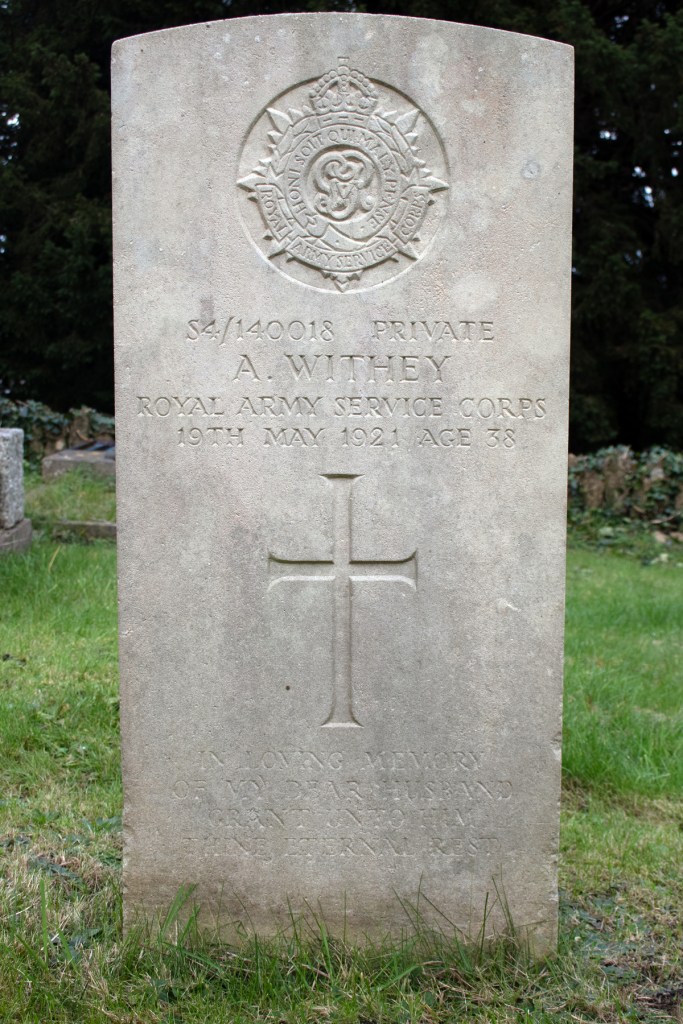
Private Albert Withey

Private Albert Withey

Albert Withey was born in Frome, Somerset in November 1882. One of ten children, his parents were John Withey, a coal dealer, and his wife Elizabeth. John passed away in 1891, Elizabeth eight years later, which led to Albert becoming an orphan while still in his teens.

Information on Albert’s early life is scarce and, indeed, his trail goes cold until 26th September 1915, when he enlisted in the Army Service Corps, as part of the war effort.

Private Withey’s service records give more insight into his life: he was 5ft 7ins (1.70m) tall, and had varicose veins on both legs. The document also confirms that he had married local woman Annie Louisa Stent on 2nd January 1912. Both attended Holy Trinity Church, and it is likely that this is where they met. Annie was the daughter of a local house painter, while Albert had become a baker; it is probable that it was this work that led him to be assigned to the ASC.

Within weeks of joining up, Private Withey was in Egypt, and it was here that he worked as part of the Supply Corps for the next four years. Albert remained in North Africa long after the Armistice was signed and, in fact, did not return to England until the August after the war had ended. He was officially demobbed on 30th September 1919.

At this point, Albert’s trail once again goes cold, and the next document relating to him is a short notice in the Somerset Standard, two years later, when, “at Pensions Hospital, Bath, Albert Withey, aged 38 years, [died] after a long and painful illness, patiently borne.[Somerset Standard: Friday 27th May 1921]

Albert Withey was laid to rest in the graveyard of the church in which he was baptised and married, Holy Trinity Church, Frome.


Albert’s widow, Annie, was the sister of Bertie Stent, who had also died after coming home from war. Read his story here.

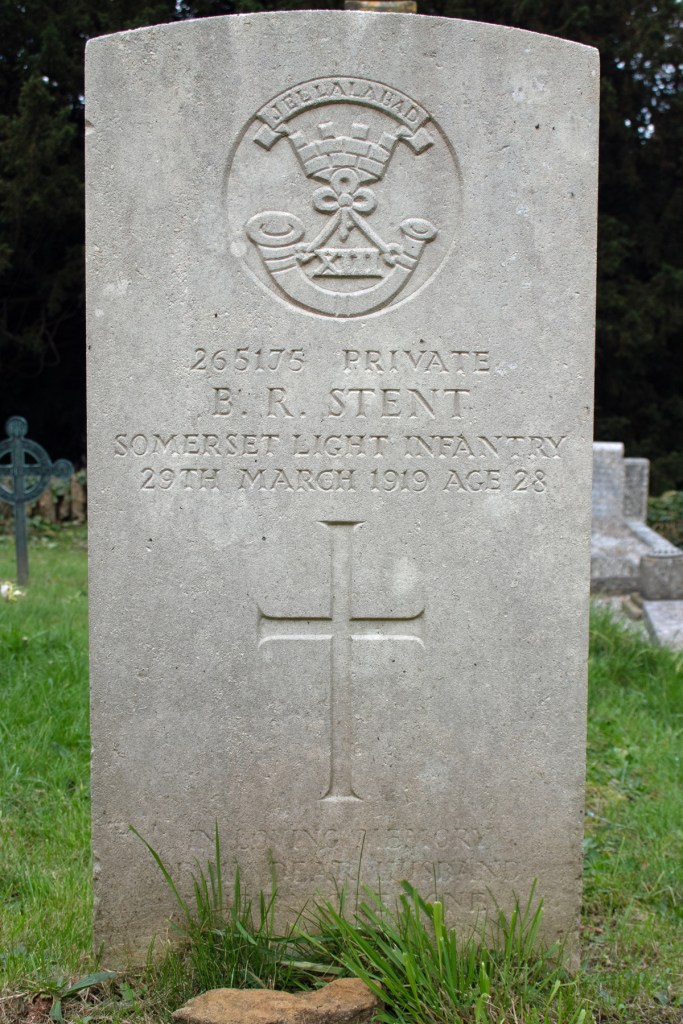
Private Bertie Stent

Private Bertie Stent

Bertie Reginald Stent was born early in 1892, one of fifteen children to Henry and Emily. Henry was a painter – initially for the railways, and then a house painter – from Frome, Somerset, and the family were raised on The Mint in town.

When he left school, Bertie also left an overcrowded home. He found work as a carter, and moved to Wellow, near Bath, where he boarded with stonemason Albert Barnes and his family. War was coming to Europe, however, and things were about to change.

Bertie enlisted in the 85th Provisional Battalion of the Territorial Force early on in the conflict. He was initially based on home soil, serving in Herne Bay in Kent and Wrentham in Suffolk. His troop became the 11th Battalion of the Somerset Light Infantry at the start of 1917 and, by the spring of the following year, he found himself in Northern France.

By this point, Bertie had met and married a woman called Ethel May. Sadly, little further information about the wedding is available, but the couple set up home in the same road as his parents and went on to have two children.

Private Stent was involved in some of the final battles of the war – the Battle of Albert and the advances in Artois and Flanders. When the Armistice was signed, he remained in France, returning home in the following spring.

Tragically, he had contracted influenza while waiting to be demobbed and, on 29th March 1919, he passed away at home from pneumonia. He was just 27 years old and had been back in Frome for just a week.

Bertie Reginald Stent was laid to rest in the churchyard of Holy Trinity Church in Frome, within sight of his family home.


While there is little information about Bertie and Ethel’s marriage, there is some detail about her life after her husband’s death. Ethel continued to live in Frome, on the same road as her marital home. The 1939 Register lists her as an unpaid domestic worker – in effect, a housewife – and she is living with Reginald, her and Bertie’s second child, who was a land worker.


Bertie’s sister, Annie, married Albert Withey, who also died after coming home from war. Read his story here.

Serjeant Charles Flower

Serjeant Charles Flower

Charles Franklin Flower was born in Walcot, Bath, at the end of 1879. The middle of five children, his parents were stonemason John Flower and his dressmaker wife, Elizabeth.

John died when his son was only eleven years old, and Elizabeth passed away just two years later, leaving Charles an orphan at just 13 years of age.

He disappears off the radar for a time, only reappearing again when, in the summer of 1895, he enlisted in the 13th Battalion of the Somerset Light Infantry. Charles’ service records show that he stood 5ft 7ins (1.69m) tall, weighed 121lbs (55kg) and had grey eyes, light brown hair and a fair complexion. He was also noted as having a tattooed ring on his left ring finger.

After eighteen months on home soil, Private Flower was sent out to the East Indies, where, apart from a short stint back in England, he spent the next twelve years. He was promoted to Lance Corporal in May 1898, but though his own volition, reverted to the rank of Private seven months later. Charles was destined for bigger things, though, and was again promoted to Lance Corporal in September 1900. Over the next few years, he received further promotions – to Corporal in September 1905 and Lance Serjeant eighteen months later.

In the autumn of 1908, Charles returned to home soil, but his military service continued. On 12th April 1909, he married Elizabeth Ann Wills, a gamekeeper’s daughter from Cannington, Somerset. They set up home in Portland, Dorset, where Charles was based, and went on to have a son, Herbert, a year after they married.

By 1910, Charles had again been promoted, and was now a Serjeant. In the next couple of years, the family moved from the Dorset coast to the Somerset town of Frome. Serjeant Flower’s service continued, but he remained on home soil, even when war broke out.

All was not well with Charles’ health, however, and by the summer of 1915, he was admitted to hospital. He was thin and anaemic, with an enlarged liver and an ‘enormously swollen’ spleen. This was discovered to be a malignant growth, and Serjeant Flower was discharged from military service on medical grounds on 20th December 1915. He had been in the Somerset Light Infantry for more than two decades.

Charles Franklin Flower was not to recover from his illness. He passed away at home on 27th February 1916, at the age of just 37 years old. He was laid to rest in the graveyard of Holy Trinity Church in Frome.


Serjeant Charles Flower
(from ancestry.co.uk)

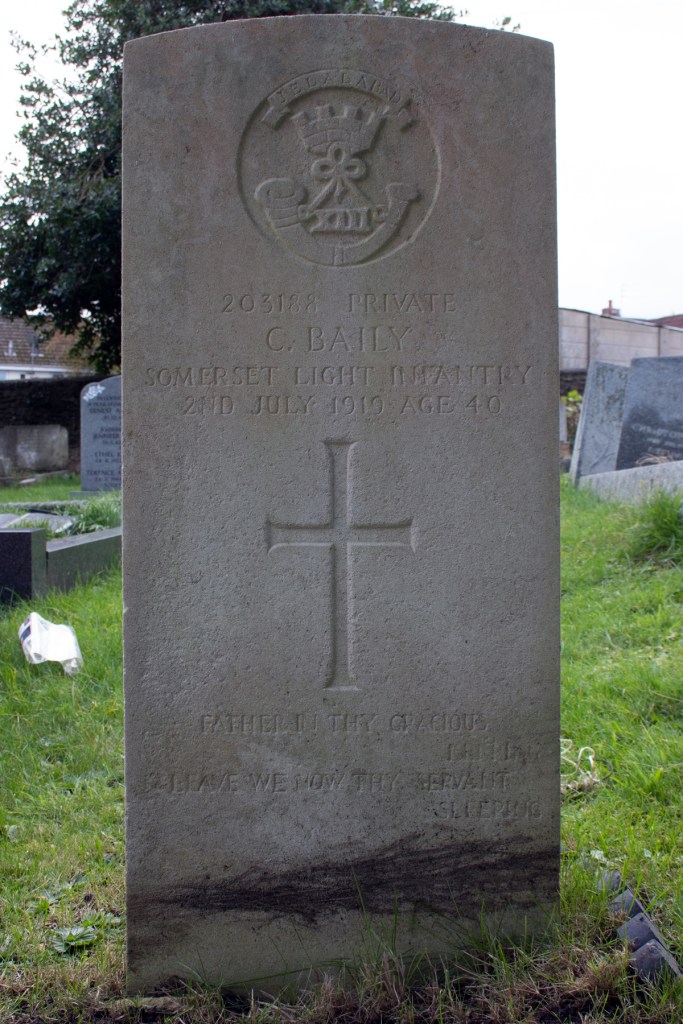
Private Charles Baily

Charles Baily

Charles Baily was born in Frome, Somerset, in March 1879; he was the middle of three children to Charles and Sarah Baily. Charles Sr was a plasterer, and the family were raised in a small cottage to the south of the town centre.

When Charles Jr left school, he found work as a carpenter and, on 17th March 1902, he married local woman Fanny Howell. Her father was a carter and she had not long returned from South Wales, where she had found employment as a parlour maid. Charles and Fanny set up home just three doors down from his parents, and went on to have five children.

War was coming to Europe, but the details of most of Charles’ military service are lost. He enlisted as a Private in the Somerset Light Infantry, and was assigned to B Company of the 1st/4th Battalion. The troop was sent to Bombay in the autumn of 1914; it then moved to Basra in the spring of 1916, remaining in Mesopotamia for the remainder of the conflict. Sadly, it’s not possible to know how much of this travel Private Baily undertook himself.

Charles survived the war, and was demobbed soon after the Armistice. He returned home, but his time back with his family was to be short: Private Baily died at home through causes lost to time on 2nd July 1919. He was 40 years old.

Charles Baily was laid to rest in the graveyard of Holy Trinity Church in his home town of Frome.


One sad aside to the story is that Charles and Fanny’s oldest child, daughter Frances Baily, had passed away in the summer of 1917. The cause of her passing is also lost to history, but she was just 16 years old when she died.


Serjeant Bertie Moody

Serjeant Bertie Moody

Bertie Richard Moody was born in Warminster, Wiltshire in April 1885, one of ten children to Joshua and Mary Moody. Joshua was a navy pensioner, who was twenty years older than his wife, and they raised their family in a small house to the west of the town centre.

When he left school, Bertie found work labouring for a man with a traction engine, but, after his parents died – Mary in 1901 and Joshua two years later – he had more need of a trade. The army offered him a life of adventure, and so he enlisted in the 1st Battalion of the Wiltshire Regiment. Full details of his military career are lost to time, but by the 1911 census, Private Moody was based in Pietermaritzburg, South Africa.

War in Europe was looming, and Bertie’s regiment was called back home. By December 1914, however, he was on the front line in France, and, over the next couple of years, earned the Victory and British Medals, the 1915 Star and a promotion to Serjeant for his service.

As time wore on, it was evident that illness was playing a bigger part in Serjeant Moody’s life. He was suffering from diabetes, and the condition led to him being medically discharged from the army in October 1916. Bertie moved to Frome, Somerset, and found work as a labourer.

He still wanted to play his part, and after making something of a recovery, he tried to enlist again, this time in the Royal Air Force. They rejected Bertie because of his condition too, however, so his time in active service came to an end.

At this point, Bertie’s trail goes cold. He died in Frome on 13th December 1918, at the age of 33, and was laid to rest in the graveyard of Holy Trinity Church in the town.


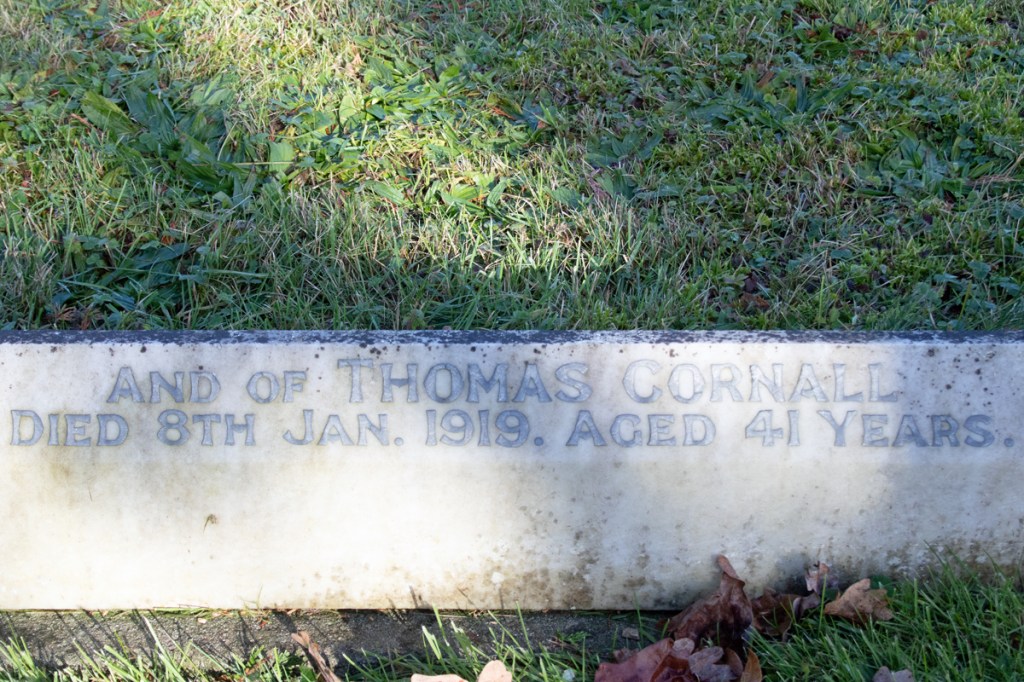
Private Thomas Cornall

Private Thomas Cornall

Thomas Cornall was born in Kingsteignton, Devon, early in 1879 and was the oldest of seven children to Thomas and Elizabeth Cornall. Thomas Sr was a clay cutter and, while the family were all raised in Kingsteignton, Thomas Jr appears to have been more wayward, and was farmed out to local relatives over time.

The 1881 census shows Thomas living with his parents; ten years later he was living with his maternal grandmother; in 1901 he was boarding with Elizabeth’s brother, John Withycombe, in Devonport; the 1911 census recorded him living with his sister and her family in the village of Chudleigh.

Thomas took on labouring jobs. He worked as a dockworker in Devonport, and a haulier in Chudleigh. War was coming to Europe, however, and Thomas was pulled in a different direction.

Full details of his military career are not available, but it is clear that he enlisted in the Somerset Light Infantry early on in the conflict. Whether Private Cornall saw active service overseas is lost to time, but he soon transferred over to the 696th Agricultural Company of the Labour Corps.

Thomas’ maternal uncle – John Withycombe – who had had lived with in 1901, had become manager of the Lion Hotel in Chudleigh and when he died in 1913, he left his wife, Bertha, with a son to raise and a business to run. At the end of 1916, Thomas and Bertha married in nearby Newton Abbot and took on the running of the Lion Hotel together.

Private Cornall was still serving at this point, and continued his work in the Labour Corps through until the end of the war. His trail at this point goes cold; all that is known is that he died at home on 8th January 1919, at the age of 40 years old.

Thomas Cornall was laid to rest in Chudleigh Cemetery. The family plot included John and Bertha, when she passed away in 1954.


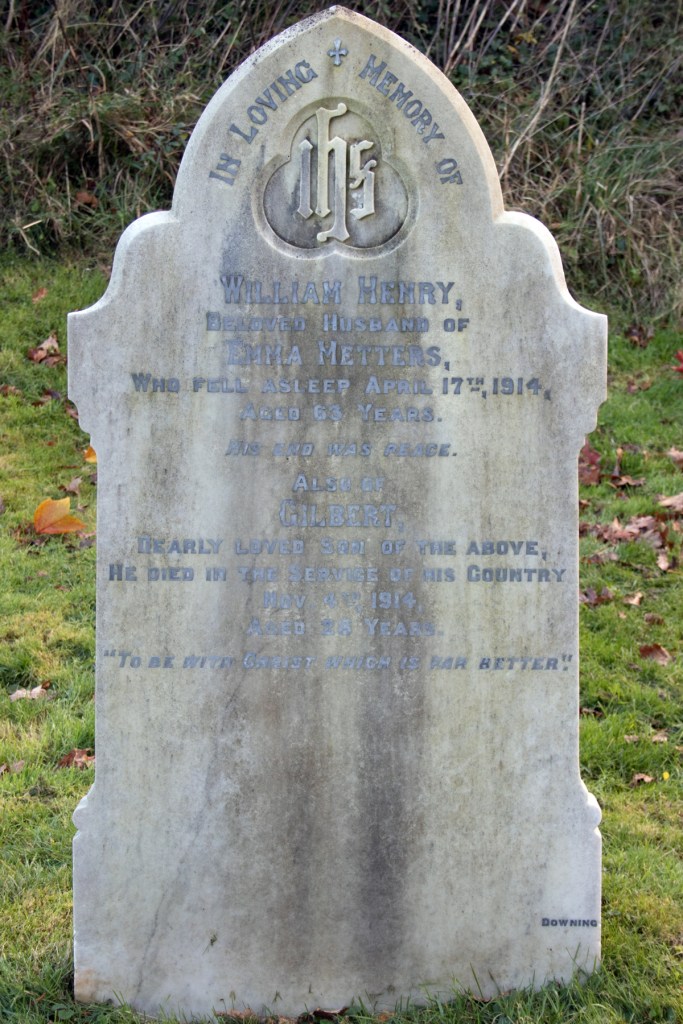
Private Gilbert Metters

Private Gilbert Metters

Gilbert Metters was born in Linkinhorne, Cornwall in March 1885, one of four children to William and Emma Metters. William was a farmer and haulier who moved his family to Chudleigh in Devon not long after Gilbert was born.

When Gilbert left school, he found work as a domestic gardener. By the time of the 1911 census, he was living with his parents, younger sister and Emma’s sister in Old Way, not far from the village centre. On 17th April 1914, William passed away, leaving Emma widowed.

When war broke out, Gilbert was one of the first from the town to sign up. He enlisted in the 8th Battalion of the Devonshire Regiment, and was soon off to Hampshire for training. Tragically, within weeks of arriving, Private Metters contracted tuberculosis, and passed away in the camp hospital. He was 29 years of age, breathing his last on 4th November 1914.

Gilbert Metters’ body was brought back to Chudleigh for burial, and was laid to rest alongside his father in the family grave.


The local newspaper reported on Gilbert’s funeral. It suggested that when enlisting “although not one of the strongest, he managed to pass the medical test.” It went on to say that:

He always assisted in every good cause in the town, and was very highly respected. He endeared himself with the officers and men of C Company.

Western Times: Friday 13th November 1914

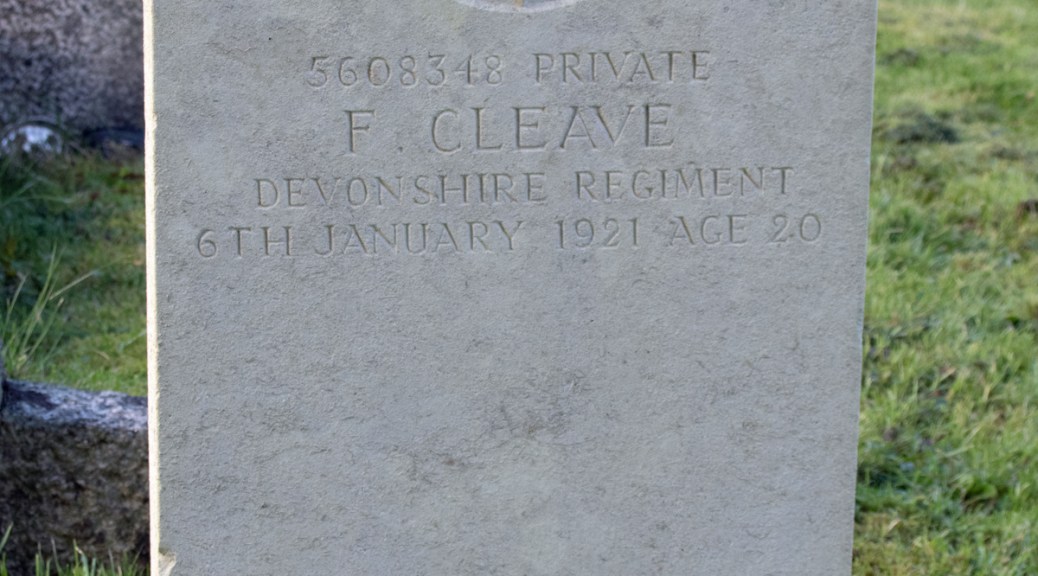
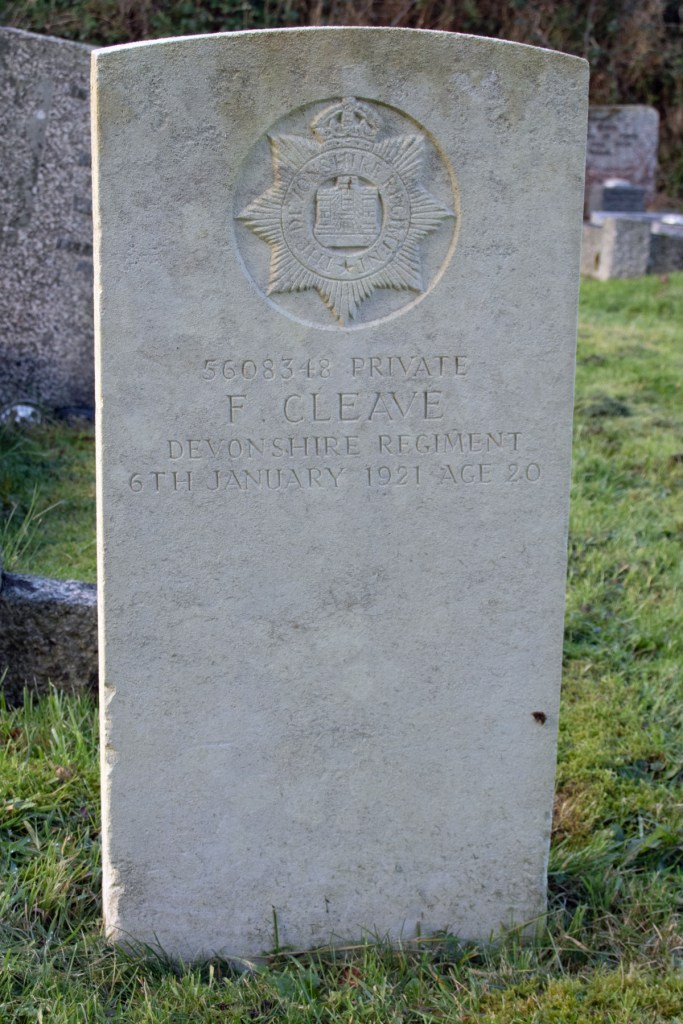
Private Frederick Cleave

Private Frederick Cleave

Frederick Cleave was born in Chudleigh, Devon, early in 1899, and was one of nine children to Charles and Eva Cleave. Charles worked as a waggoner – for a grocer, according to the 1901 census, and for a stonemason in the 1911 one.

There is little specific information about Frederick’s early life, and even details of his military service are only evident from a contemporary newspaper report of his funeral:

The funeral took place at the cemetery on Tuesday afternoon of Private F Cleave of the 1st Devon Regiment, son of Mr and Mrs C Cleave of Woodway Street, who died at Fermoy Hospital, Ireland… from disease contracted on foreign service… He joined the Army in 1915, and served through the war in France, and afterwards in the Russian Expedition.

Western Times: Friday 14th January 1921

The report suggests a couple of things. Firstly, Frederick was underage when he enlisted – he would have been 16 years old. He would also have been involved in some of the fiercest fighting of the conflict: the 1st Battalion of the Devonshire Regiment fought at the Somme in 1916, Arras and Ypres in 1917, and Lys, the Somme and the Hindenburg Line in 1918.

The Russian Expedition mentioned was part of the Allied attempt to intervene after the country’s civil war – actions that were to prove unsuccessful.

Fermoy Military Hospital was part of the British Army’s barracks in the County Cork town; it is likely that Private Cleave had contracted one of the lung conditions running rampant across Europe in the immediate aftermath of the First World War – influenza, tuberculosis or pneumonia. He passed away on 4th January 1921 at the age of 21 years old.

Brought back home, Frederick Cleave lies at rest in the cemetery of his home town, Chudleigh, Devon.


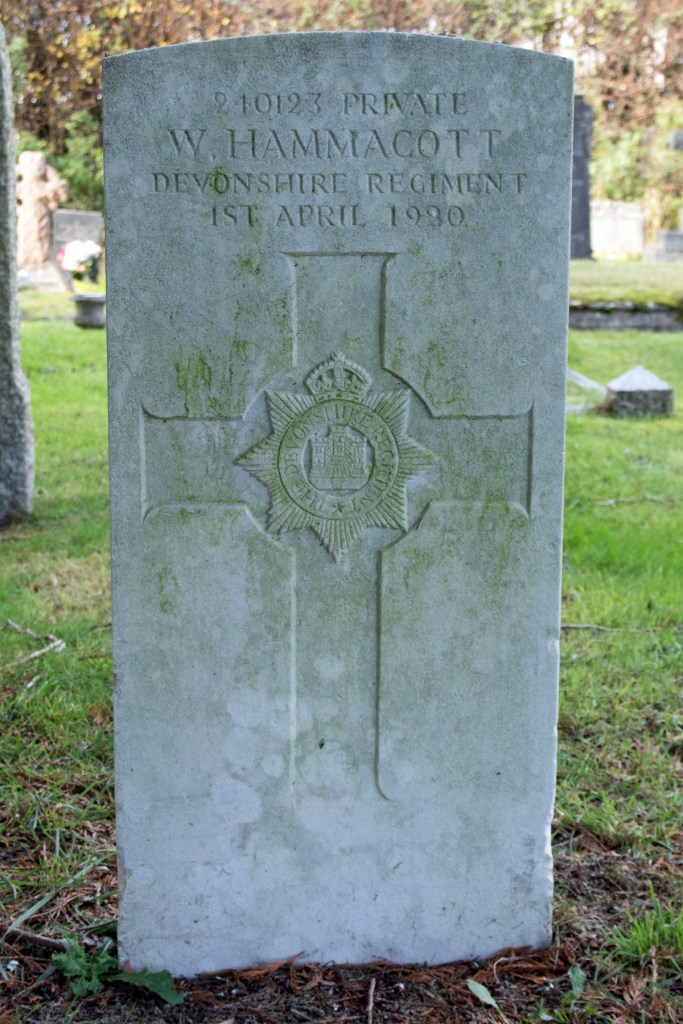
Private William Hammacott

Private William Hammacott

William Henry Hammacott was born on 11th January 1892 and was the oldest of four children. His parents were labourer George Hammacott and his wife Ellen; both were born in Chudleigh, Devon, and this is where they raised their family.

When William left school he too found work as a labourer, but war was coming to Europe, and he was keen to play his part. Full details of his service haven’t survived, but he had enlisted in the 5th Battalion of the Devonshire Regiment by 1915, and served on home soil.

Private Hammacott survived the war and earned the Victory, British and Territorial Force Medals for his service. During his time, he contracted malaria and was discharged from the army on medical grounds on 29th March 1919.

William returned home, and his trail goes cold for the next year. It is likely that his bout of malaria left him particularly vulnerable: he passed away on 4th May 1920, having contracted pneumonia. He was just 28 years old.

William Henry Hammacott was laid to rest in Chudleigh Cemetery.


Private Frederick Down

Private Frederick Down

Frederick Francis Down is one of those servicemen whose life is destined to remain lost to time. Born in Chudleigh, Devon, most of the information available about his life comes from one document – his naval service record.

The document gives his date of birth as 15th November 1897 and confirms that he enlisted on 23rd November 1914. Frederick was 5ft 2ins (1.57m) tall, had a fresh complexion, brown eyes and dark brown hair.

Frederick signed up as a Private in the Royal Marine Light Infantry, and, at the time of joining up, had been working as a butcher’s boy, living in Fore Street in the village of his birth.

Private Down served at the regiment’s depot in Deal, Kent. But he was only there for a short time: he was invalided out of the service – for reasons unrecorded – on 9th June 1915.

At this point, Frederick Francis Down’s trail goes cold once again. His gravestone confirms that he died on 11th April 1916, at the age of just 18 years old. He was laid to rest in Chudleigh Cemetery.