Category Archives: Private

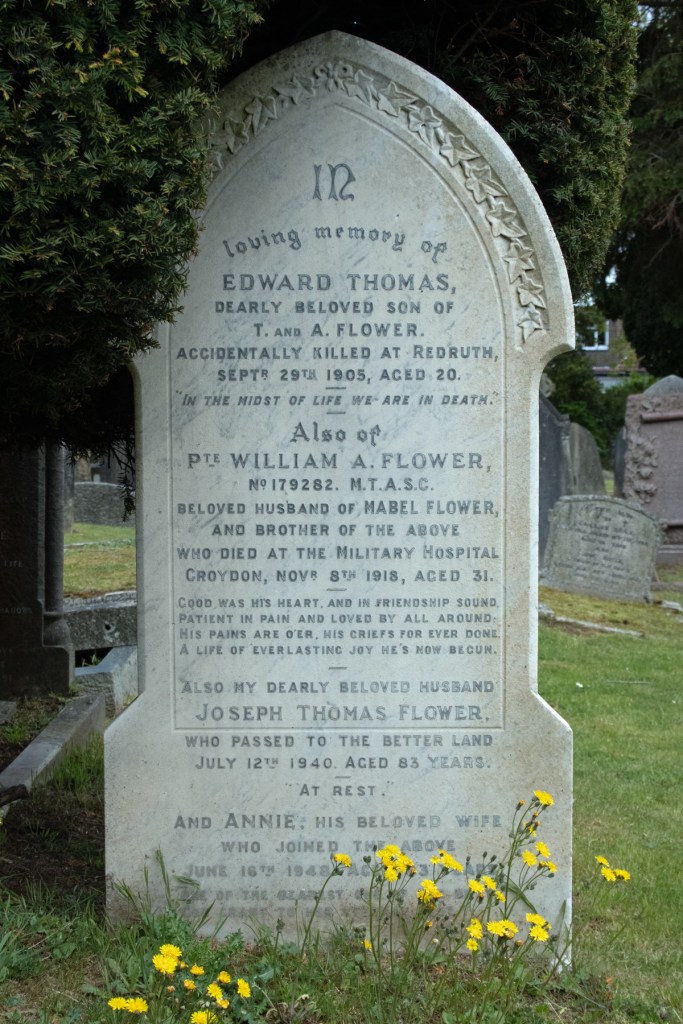
Private William Flower

Private William Flower

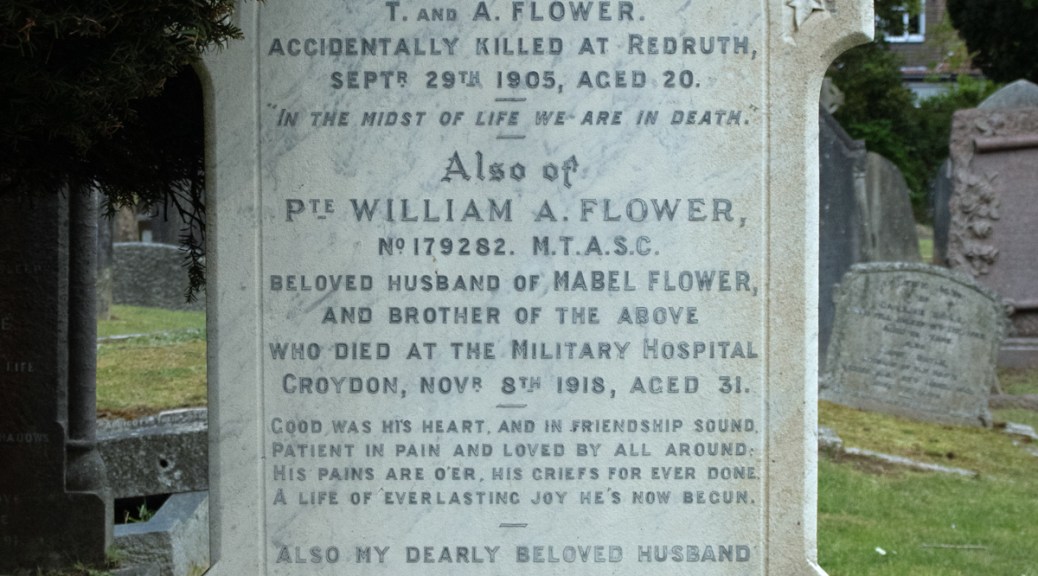
William Alister Flower was born in 1887, one of five children to Joseph and Annie Flower. Joseph was a platelayer for the local railway, and brought the family up in Weston-super-Mare, in his home county of Somerset.

When he left school, William worked as an errand boy for a local greengrocer; he stuck with it, and, by the time of the 1911 census, he was employed as a van driver for the grocer.

War was on the horizon and, while William enlisted in the army, it is difficult to get a complete handle on his military service. There are a number of servicemen with similar names, but the documentation that is available is not easy to directly connect them with the gravestone in the Weston-super-Mare cemetery.

What is clear is that William enlisted as a Private in the Army Service Corps at some point before May 1918. He was assigned to the Motor Transport division (this was likely on the back of his van-driving experience). His time seems to have been spent on home soil, although he was awarded both the Victory and British Medals for his service.

At some point, he had married a woman called Mabel. Exact details again are unclear – ancestry.com confirms the marriage of a William Flower and Mabel Richardson in December 1909, but as this took place in Northamptonshire, it is unlikely to be the Somerset Flowers researched here.

Details of Private Flower’s passing are also scarce. He died on 8th November 1918, in the Military Hospital in Croydon, Surrey, but the is no information as to the cause of his death. He was just 31 years old.

William Alister Flower’s body was brought back to Somerset; he lies at rest in the family grave, in the Milton Cemetery of his home town.


While I was researching William Flower, I was taken by the note of the accidental death of the first name on the family grave.

Edward Thomas Flower was two years William’s senior who, after leaving school, had gone on to be an errand boy for a local butcher.

Edward had decided to follow in his father’s footsteps and join the railways, leaving his home town in 1905 to work in Cornwall. After initially working as an engine cleaner, he progressed to be a fireman, helping to stoke the engine with coal. The local newspaper of the time picked up the story of the accident.

At the moment of the accident, a goods train was standing in the Redruth station, shunting having been temporarily suspended to admit the passage of the down motor rail car.

It appears that the flap of one of the cattle trucks in the goods train… had been allowed to remain down, and the folding doors above it had been insecurely fastened, with the result that as the motor rail car ran into the station the doors of the truck suddenly flew open outward and one of them struck deceased on the side of the face and head, inflicting terrible injuries.

There was a very extensive fracture of the skull, the whole of the left side of the face was driven in and there was also a formidable wound at the back of the head, death occurring within a few moments.

It appears that the rail motor was not proceeding at a greater rate than some five or six miles an hour, according to the statement made at the inquest by the driver, and the latter noticed that when the doors of the goods truck swung open they struck one of the handles on the fore part of the car. He applied the brake immediately, but did not know that Flower had been struck until afterwards.

Weston Mercury: Saturday 7th October 1905

The inquest found that there had been some neglect on the part of the porter and guard in not ensuring that the goods truck’s doors had been secured, and it seems that this was something that had been highlighted previously.

Edward had shortly been due to marry, leaving a fiancée, as well as a family, bereft. He was just 20 years old.

His body was brought back to Weston-super-Mare, and was the first to be buried in the family grave.


Private Henry Cowles

Private Henry Cowles

In a quiet corner of a cemetery in Somerset stands a gravestone to Private HJ Cowles. It confirms that he passed away on 26th April 1920, and that he was in the Bedfordshire Regiment during the First World War.

Little additional information on HJ Cowles is available. One document, the Medal Roll Index Card, confirms his first name as Henry, and that he had initially joined the Somerset Light Infantry. He was awarded the British Medal for his war service.

Cowles is a fairly common name in the Somerset area, and, without any additional information – date of birth, familial connections – it is impossible to narrow down the name on the gravestone to a specific Henry Cowles from the area or beyond.

There is also nothing in any contemporary newspapers to suggest that Private Cowles’ passing was anything out of the ordinary.

Sadly, therefore, he remains a name lost to history. Henry J Cowles, whoever he was, and however he died, lies at rest in the Milton Cemetery in Weston-super-Mare, Somerset.


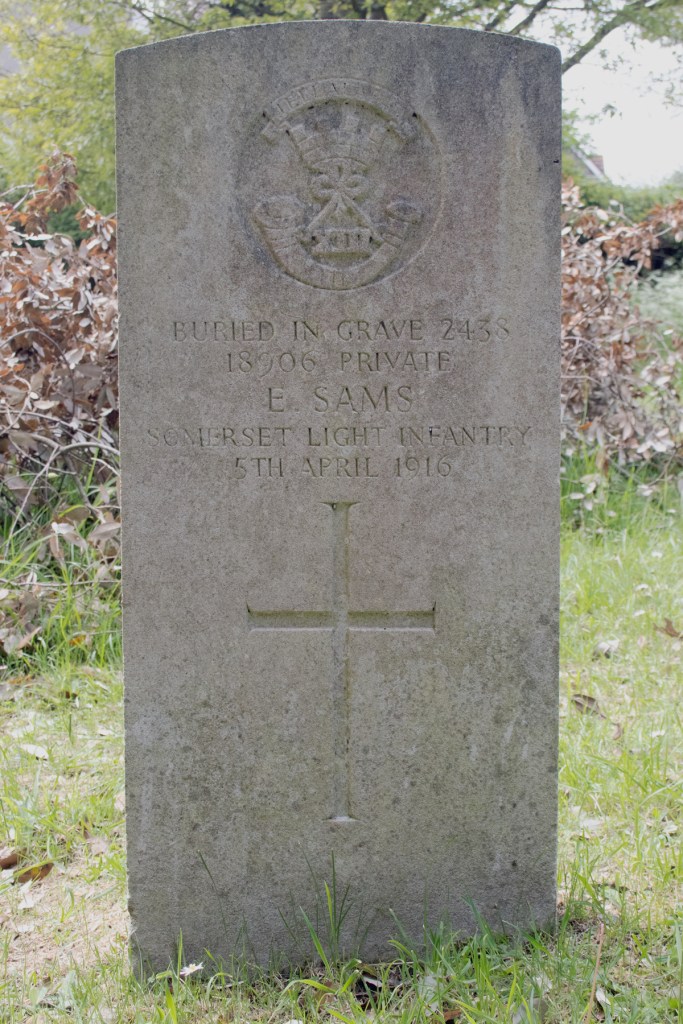
Private Edward Sams

Private Edwards Sams

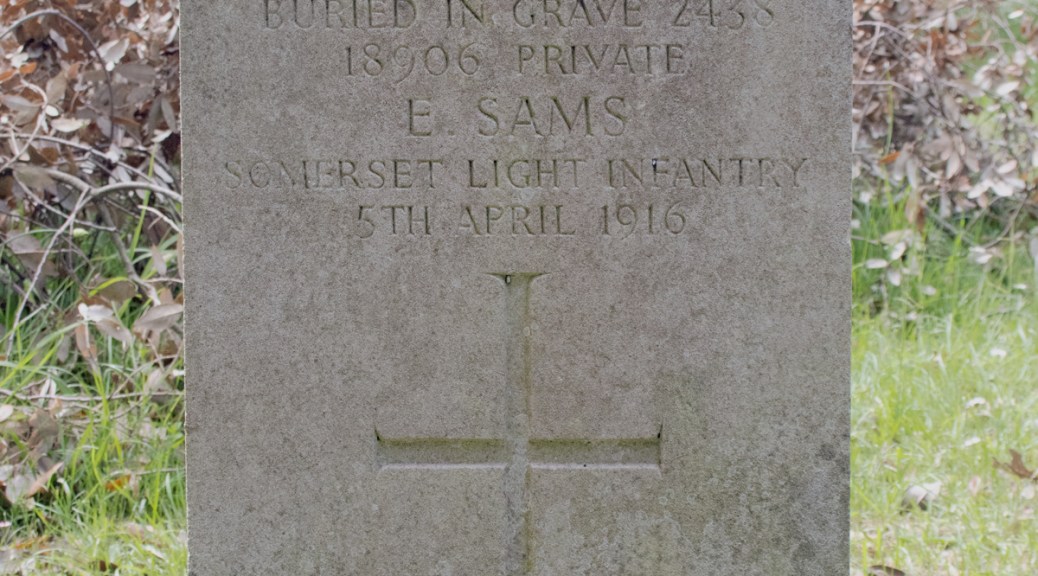
In a corner of the Milton Cemetery in Weston-super-Mare, Somerset, stands the gravestone of Edward Sams. It gives little information away, other than the fact that he passed away on 5th April 1916, and that he served as a Private in the Somerset Light Infantry.

There is no documentation – military or otherwise – that can be concretely connected to Private Sams. None of the available documents for Edward Sams include the service number on his gravestone, and there is nothing to provide a definite date of birth or familial connections.

Sams was not an uncommon Somerset name at the start of the twentieth century, and there are a number men by that name called Edward in the area at the time. Again, however, the information is lacking that allows us to directly connect any of these names with the gravestone in the Weston-super-Mare cemetery.

There is nothing in any contemporary newspapers to suggest that Private Sams’ passing was anything out of the ordinary.

Sadly, therefore, he remains a name lost to history. Edward Sams, whoever he was, and however he died, lies at rest in a Somerset cemetery.


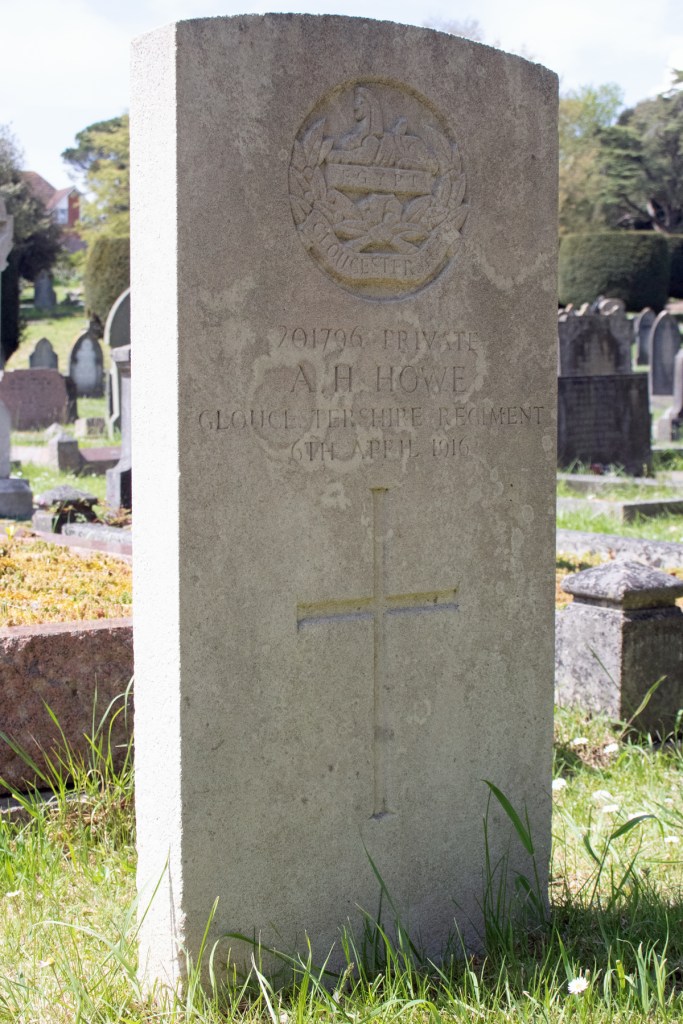
Private Alfred Howe

Private Alfred Howe

In the Milton Cemetery in Weston-super-Mare is a gravestone to Alfred Harry Howe. He seems destined, sadly, to be one of those servicemen whose stories are lost to time. The stone confirms that he died on 6th April 1916 and that he was a Private in the Gloucestershire Regiment. Further research adds that he was assigned to the 3rd/4th Battalion.

The UK Army Register of Soldier’s Effects gives his father’s name as William. It also confirms that he was not eligible for a war gratuity, as he had insufficient service; given the date of his death, it is likely, therefore, that he enlisted on or after October 1915.

Beyond this information, however, there is little documentation to confirm exactly who Alfred was. As there is no date or place of birth, it is difficult to get an exact match. There are at least three William/Alfred matches in the Somerset/Bristol area, but nothing to connect them to the headstone in Weston-super-Mare, and nothing to even confirm that Alfred was from the South West.

There is nothing in any contemporary newspapers to suggest that Private Howe’s passing was anything out of the ordinary.

Sadly, therefore, he remains a name lost to history. Alfred Harry Howe, whoever he was, and however he died, lies at rest in a Somerset cemetery.


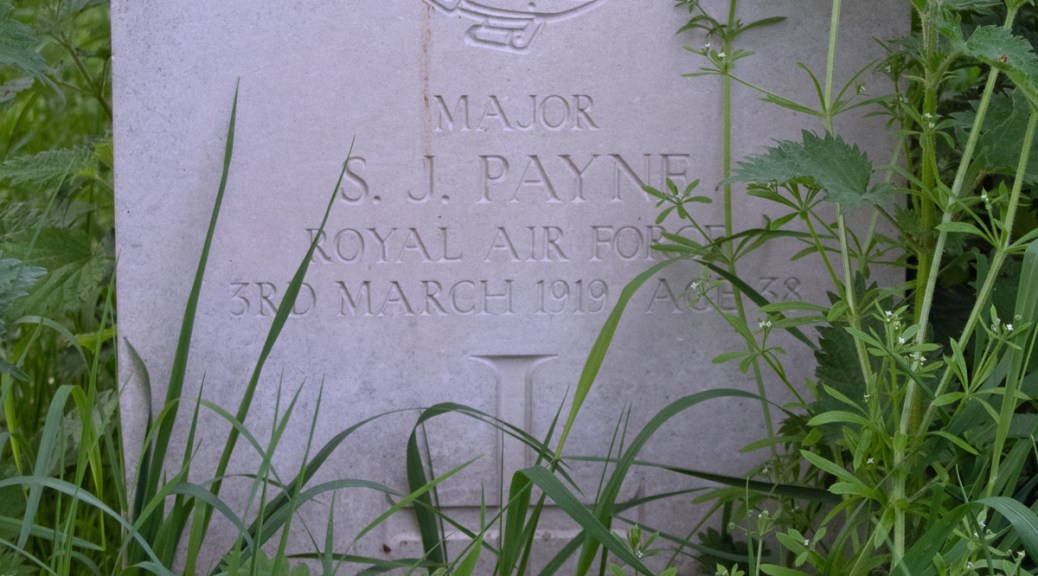
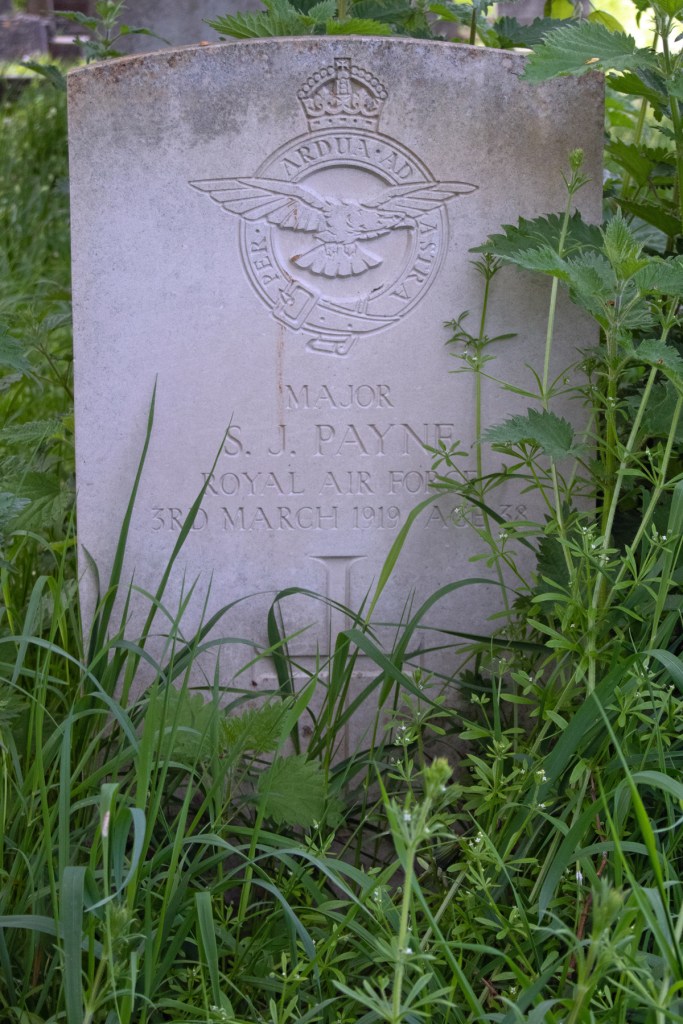
Major Stanley Payne

Major Stanley Payne

Stanley James Payne was born towards the end of 1882, one of eleven children to Stephen and Elizabeth Payne. Stephen was a leather salesman from Essex, who had moved his family to Weston-super-Mare in Somerset in around 1880.

Stanley seems to have been drawn in to a military life from an early age. In January 1900, he enlisted as a Private in the Somerset Light Infantry, and the 1901 census listed him as living at the Raglan Barracks in Devonport, near Plymouth.

Military service took Private Payne to India, where he served for six years. His success and ambition were clear; in 1906 he was promoted to first to Corporal and then to Sergeant. By 1911 – and now back in England – as a Lance Sergeant, Stanley was working as a military clerk at the Royal Horse Artillery Barracks in Dorchester, although he was still attached to the Somerset Light Infantry.

Stanley’s ambition and sense of adventure continued; by July 1912 he had made the transfer over to the newly-formed Royal Flying Corps, as a Sergeant.

It was while he was based in Dorchester that he met Winifred Bell. She was the daughter of a local council worker, and the couple married in the town in September 1912. Stanley and Winifred went on to have a daughter, Doris, who was born in July 1914.

War had arrived in Europe, and on 7th October, the now Warrant Officer Payne was shipped to France. During his nine months on the Western Front, he was mentioned in despatches and received the Croix de Guerre for his gallantry. The local newspaper also reported that he:

…had also the honour of being presented to the King on the occasion of His Majesty’s last visit to the front, and at a home station had also been presented to Queen Mary.

Western Daily Press: Saturday 8th March 1919

Returning to England on 1st June 1915, he was again promoted to Lieutenant and Quartermaster, although here his military records dry up. By this time, he had been in the armed forces for more than fifteen years, but his military records seem to confirm this as the last day of his service.

The next record for Stanley confirms his passing. Admitted to the Central Air Force Hospital in Hampstead with a combination of influenza and pneumonia, he died on 3rd March 1919. He was just 36 years of age.

Brought back to Weston-super-Mare, where his now widowed father was still living, Stanley James Payne was laid to rest in the Milton Cemetery in his home town.


Stanley’s gravestone gives his rank as Major. While there is no documented evidence of any additional promotions after June 1915, the rank is the equivalent of Quartermaster in the Army Reserve. It seems likely, therefore, that the end date of his military service marked the start of his time in the reserves.


Private Montague Palmer

Private Montague Palmer

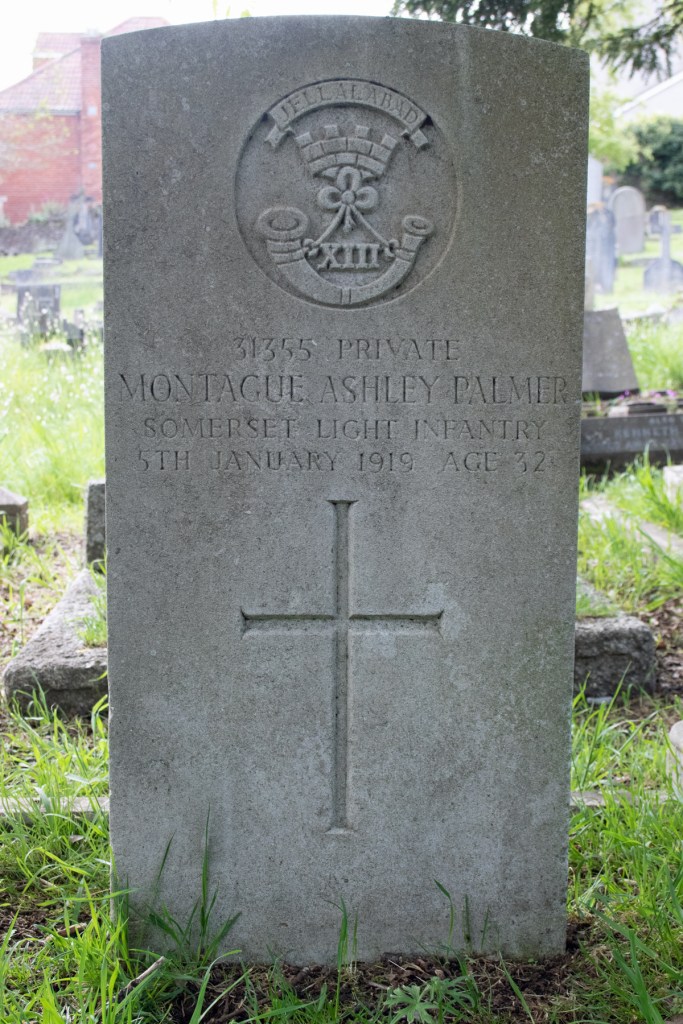
Montague Ashley Palmer was born in Weston-super-Mare, Somerset, in 1886, one of five children to Alfred and Martha. Montague’s father was a postman in the town for 25 years, retiring through ill health in February 1898. Sadly, Alfred’s retirement was not to last long, and he passed away that July aged 48, when his son was just 12 years old.

When he left school, Montague found work as a bus conductor and was now the oldest of Martha’s children to still be living at home. He was obviously an ambitious and inventive young man; by the time of the 1911 census, he had started work for the Ordnance Survey, and had moved to Didcot in Berkshire where he was boarding with Frances Battison, a suiter and greengrocer.

At this point, details of Montague’s life become a little hazier. At some point, he married a woman called Matilda, who either came from, or would go on to live in, Helston, Cornwall.

With war on the horizon, Montague enlisted – documented dates for this, again, are missing. He joined the 12th Battalion of the Somerset Light Infantry, which initially served in Egypt, before transferring to France in May 1918.

Where and for how long Private Palmer served is not clear, although he was definitely caught up in the fighting, and injured, towards the end of the war. Details of his wounds are not clear, but they were enough for him to be repatriated to England, and he was admitted to the Royal Hospital in Salford.

Private Palmer’s injuries appear to have been too severe for him to survive; he passed away in hospital on 5th January 1919. He was just 32 years old.

Montague Ashley Palmer’s body was brought back to Somerset, and he was laid to rest in the Milton Cemetery in Weston-super-Mare.


Private Reginald Morriss

Private Reginald Morriss

Reginald Benjamin James Morriss was born in the spring of 1886 and was the youngest of twelve children. His father, Thomas, was a bootmaker from Leeds, who had moved to Somerset and married Mary Ann Pennell. The couple brought their family up in her home town of Weston-super-Mare.

Thomas died in 1901, when Reginald was just 14 years old. Mary Ann, by this point, still had a lot of her family with her, including Reginald, three of his sisters, his brother-in-law and four nieces.

Reginald was about to leave school, and found work as a French polisher in Bristol, eventually moving in with his employer as a lodger. This may not have suited him, however, as, by the time he enlisted, he gave his trade as baker and confectioner, and he was living back with his mother in Weston-super-Mare.

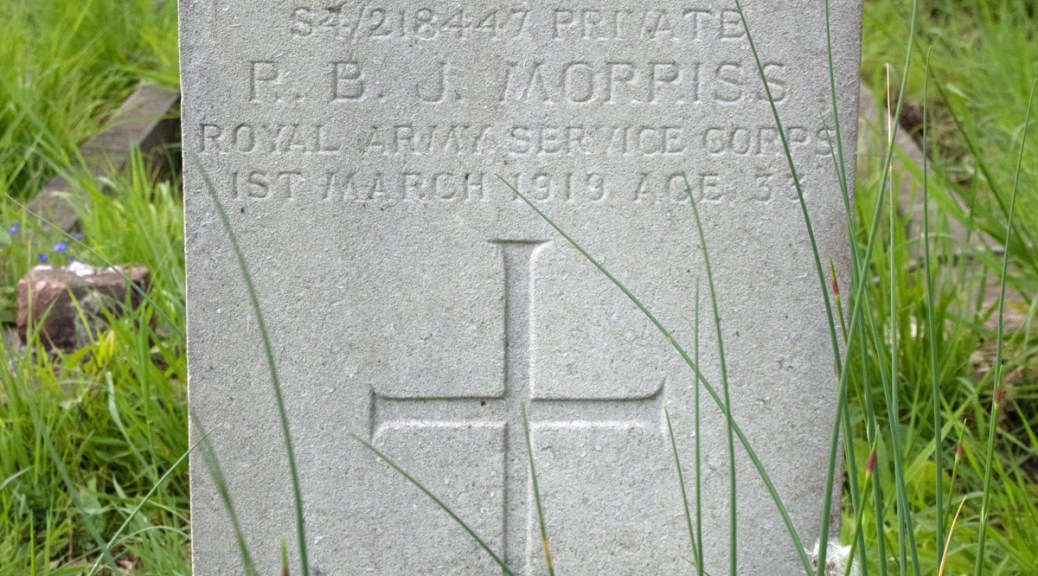
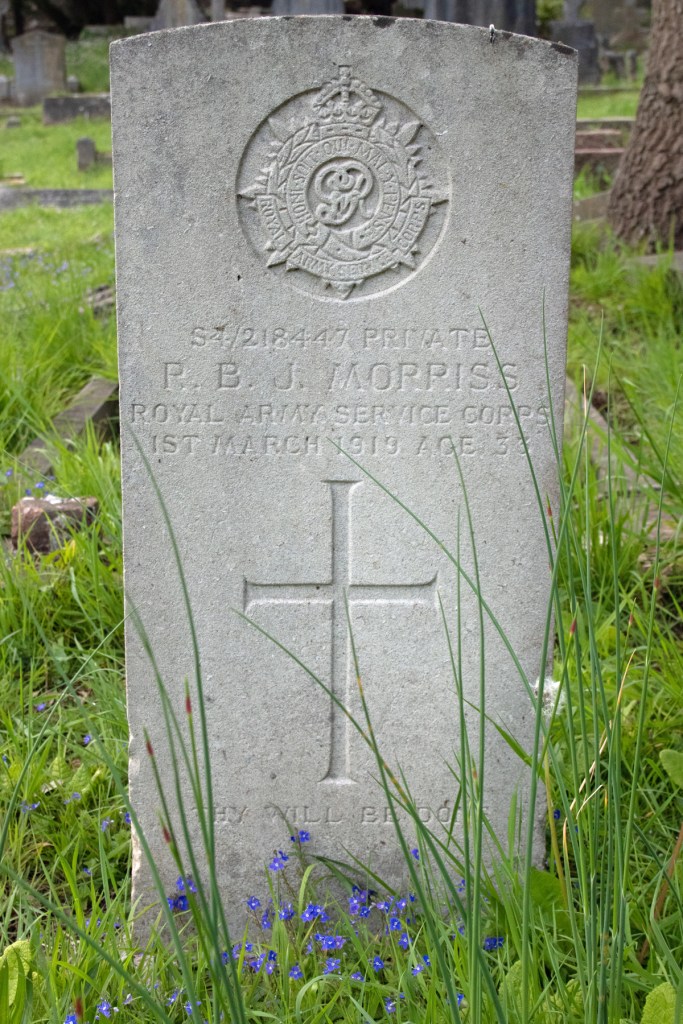
Private Morriss was 30 when he joined up in 1916, and stood 5ft 7ins (1.7m) tall. He joined the Army Service Corps as a baker, and was initially based in Aldershot. He was moved to Kent in September 1918, having been assigned to the 351st Horse Transport Company. The war was drawing to an end, but a new threat was on the horizon.

The following February, Private Morriss was admitted to St John’s Hospital in Hastings, suffering from influenza and pneumonia. Sadly, he was to succumb to the lung conditions, and he passed away on 3rd March 1919. He was just 32 years old.

Reginald Benjamin James Morriss’ body was brought back to Weston-super-Mare, and he was laid to rest in the Milton Cemetery in his home town.


Private Charles Wood

Private Charles Wood

Charles Wood is destined to be one of those servicemen whose lives remain shrouded in mystery.

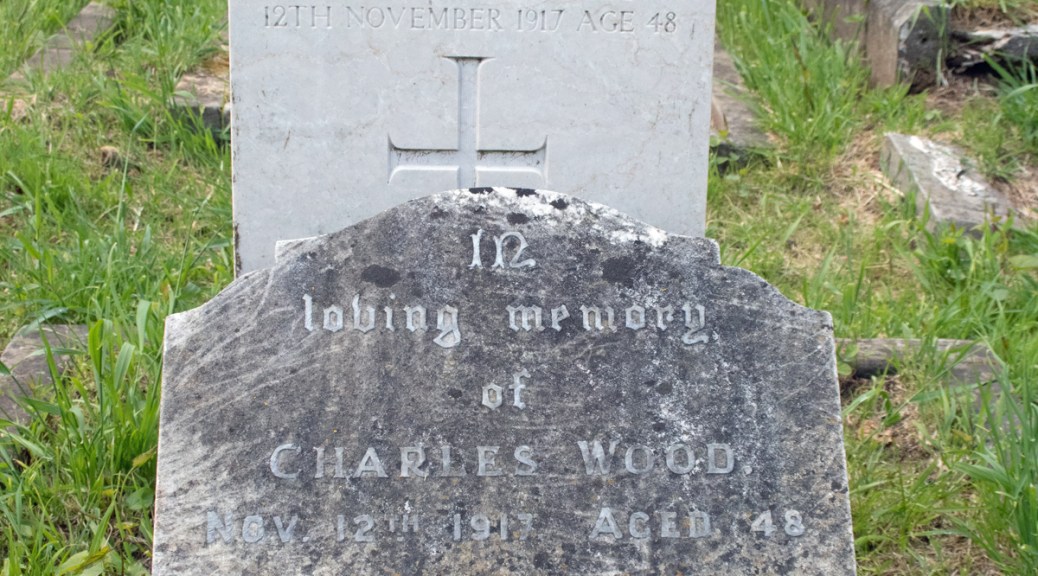
He was laid to rest in the Milton Cemetery in Weston-super-Mare, and his widow, Ellen, is buried with him. There are two headstones on the site – a family one, and a more recent war grave.

The Commonwealth War Graves Commission website give his age – 48 years old when he died – and states that he was a Private in the 263rd Company of the Royal Defence Corps and gives his service number. This was a territorial force, so it is probable that he served on home soil.

The only remaining military document relating to him is the Army Register of Soldier’s Effects. This confirms that he died in the Red Cross Hospital in Portishead on 12th November 1917, and that his belongings passed to his widow. It does highlight that he received a war gratuity, which was only applicable to soldiers who had completed at least six months’ service, so we know that he enlisted before May 1917.

There are a number of censuses available for the Weston-super-Mare area, but there at least two men called Charles Wood who married women called Ellen, so it is a challenge to identify which is the man buried in this grave.

A usual source of information would be his service record – which, in addition to his military activity, would give an address as well as other family members. However, this document is not available for Private Wood.

There is no mention of his passing in any of the contemporary newspapers, so it seems unlikely that his death was anything out of the ordinary.

Charles Wood is, sadly, lost to time, one of the countless men and women who gave up their lives for King and Country.


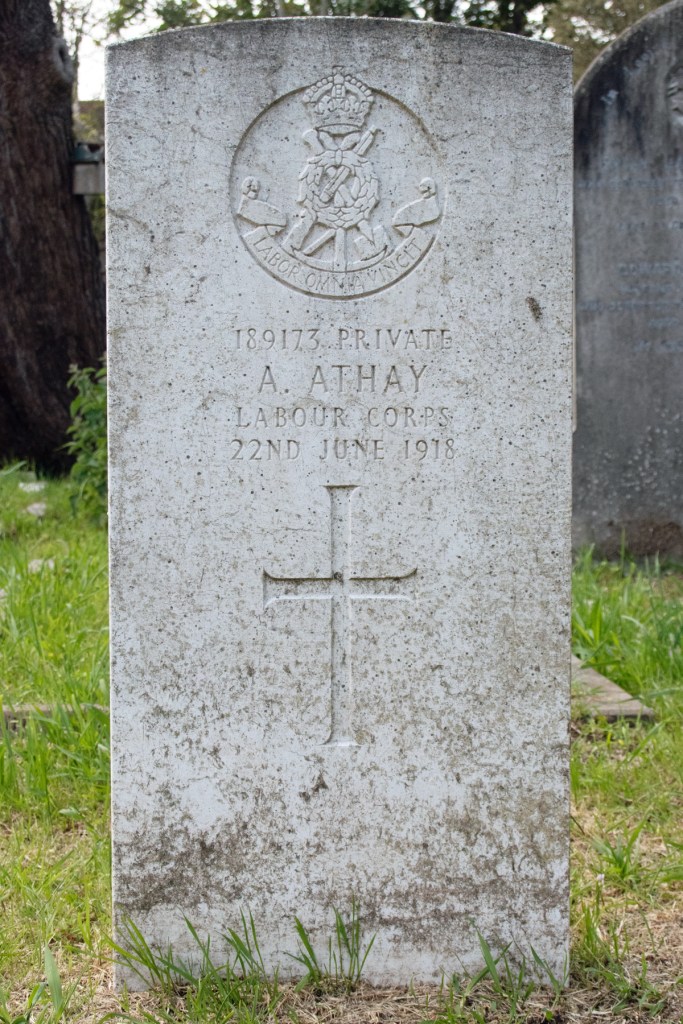
Private Albert Athay

Private Albert Athay

Albert Athay was born in 1887, one of eight children to Thomas and Emily. Thomas was a labourer for the local council in Weston-super-Mare, and the family lived in a small house on a road leading inland from the seafront.

Thomas died when Albert was only 14 years old, and, having left school, he found labouring work to help support his now widowed mother and younger siblings.

In August 1910, Albert married Mable Dunstone, a cowherd’s daughter from Somerset. The couple continued to live with Albert’s mother and brother right up until the outbreak of war. They went on to have three children, Milicent, Freda and Charles.

Albert, by this time, has been volunteering with the local Labour Battalion; he formalised his military service in June 1917, officially enlisting in the Labour Corps. He served as part of the territorial force, in and around Salisbury Plain.

Private Athay fell ill in the summer of 1918, and was admitted to hospital on 11th June with pneumonia. Sadly, as the days progressed, so did the condition, and he passed away from it just eleven days later. He was just 31 years old.

Brought back to Weston-super-Mare, Albert Athay was laid to rest in the Milton Cemetery in his home town.


Private William Henderson

Private William Henderson

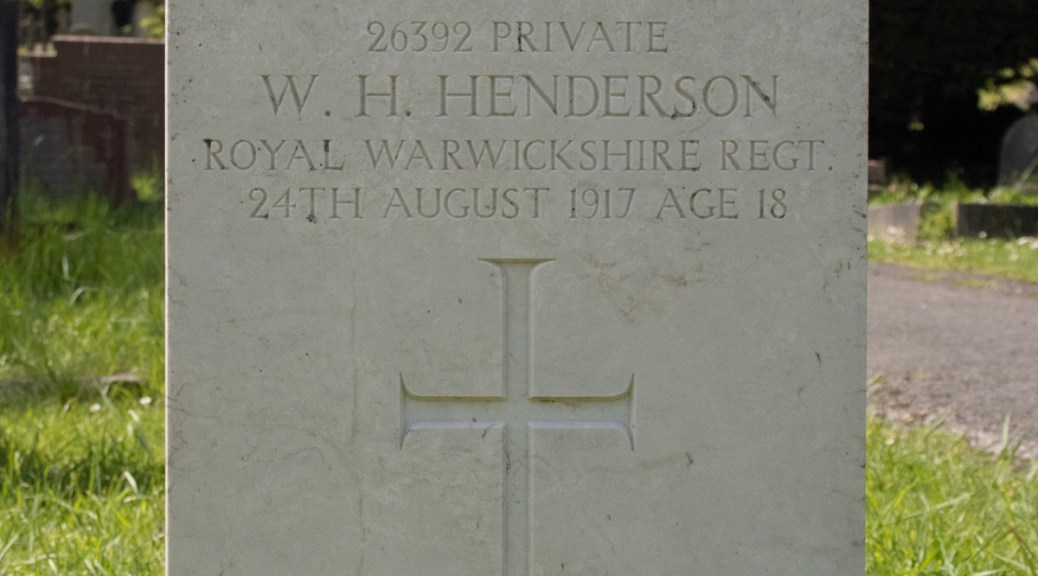
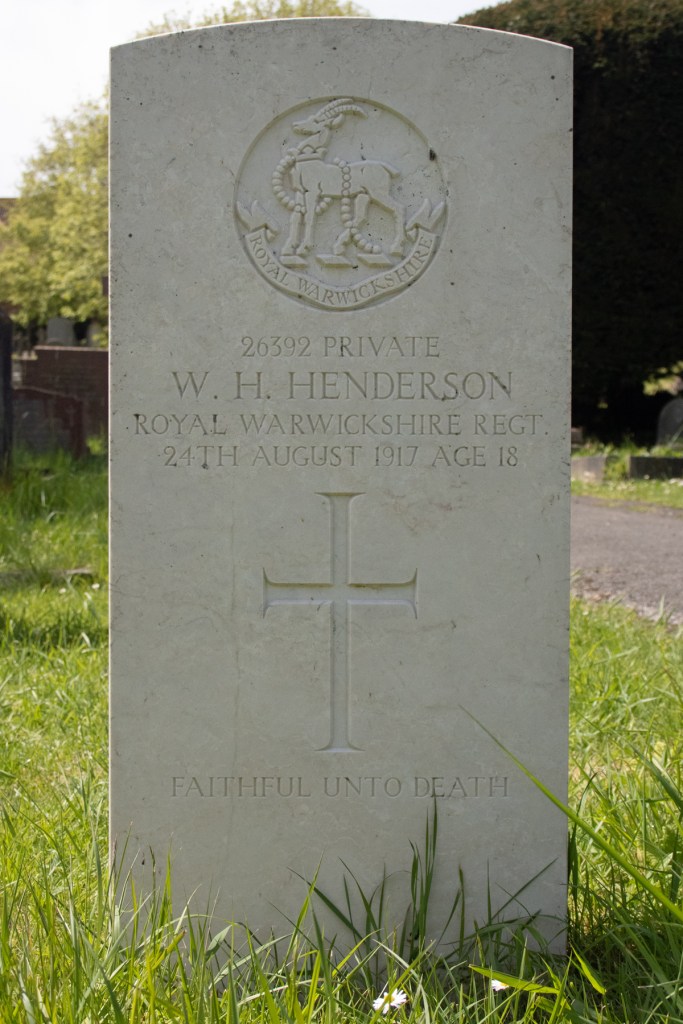
William Henry Henderson was born in Weston-super-Mare in December 1898. The oldest of four children, his parent were tailor Herbert Henderson and his wife Fanny.

As with a lot of servicemen born around 1900, there is little documentation around William’s early life. When war broke out, he was 15 years old, and seems to have been eager to do his bit. Few military records for him survive, but he joined the Royal Warwickshire Regiment and was given the role of Private in the 5th (Reserve) Battalion.

Part of William’s training seems to have taken place in Northumberland, and he was based near the coastal town of Blyth. On 24th August 1917, he was one of 600 men taken on a route march from the camp to the coast. The Somerset Standard took up the story of that day’s events:

Lieutenant Colonel Frank Martin Chatterley, the officer in command, said that he… allowed the men 20 minutes to cool, and after taking all necessary precautions gave orders for them to enter the sea.

The witness inquired from a boy the state of the tide, and was told that it was low ebb; he expected it to rise shortly. The witness undressed, bathed and came out of the water, and was dressing when he was told that some of the men were in difficulties.

Somerset Standard: Friday 31st August 1917

The Morpeth Herald added to this: “The soldiers had not been in the water long when some of them got into difficulties and were washed out seawards, in spite of their struggles. A number of comrades rushed to their assistance until at the fatal spot 13 men were seen struggling and evidently drowning.  Soldiers formed a human chain by joining hands and wading as far they could into the fast-ebbing tide. They succeeded in saving 5 of their comrades, three of whom were very exhausted, when they got ashore that they were immediately rushed off by car.”

Nine soldiers, including Private Henderson, drowned that day, despite the commended attempts by Reverend Verschoyle, the Army Chaplain, to save their lives.

Some of the survivors told the inquest that they were from the Midlands; they could not swim, and one had never seen the sea before. The inquest was told that there were terrific currents and shifting sands in that particular spot that day, and the conditions seemed to have changed after the soldiers had entered the water. Chatterley said that he had had men bathing at that spot before, and had also seen civilians bathing there before.

The other eight servicemen who perished that day were Privates Thomas Forley, Henry Southern, Fred Shale, George Beavan, Gordon Noy, William Blann, Lieutenant Kenneth Brown and Sergeant Riley. Private Henderson was just 18 years old.

William’s body was brought back to Weston-super-Mare for burial. He lies at rest in the Milton Cemetery in the town.