Category Archives: Sergeant

Serjeant Frederick Reid

Serjeant Frederick Reid

Frederick William Reid was born in January 1876 in Liverpool, Lancashire. Little information is available for his early life, and his trail only really becomes traceable when he joined the Royal Irish Regiment at the age of 16 years old.

Frederick’s service records confirm that his mother was called Elizabeth, who lived in Bedminster, near Bristol. He was already volunteering for the regiment when he enlisted, and was working as a musician when he joined up. His papers confirm that he was 5ft 4ins (1.63m) tall, and weighed 112lbs (60.8kg). He had brown hair, hazel eyes and a fresh complexion.

Frederick was given the rank of Drummer when he joined up and was attached to the Royal Irish Regiment’s 3rd Depot. He spent more than seven years on home soil, rising to the rank of Corporal in May 1898. The following January he reverted to the rank of Private at his own request, but his superiors obviously saw something in him, and he was supported in a new role – Lance Corporal – just a month later.

In October 1899, however, Frederick’s life was to take a new turn, when he was sent to India with his troop.

Corporal Reid was based in Lahore, and had found the life that he was seeking. Over the next forty months, he successfully took on a variety of clerical roles. He was promoted to Lance Sergeant in October 1901 and given oversight of the Officers’ Room.

In March 1903, Frederick returned to Britain. With the move came a further promotion, to the rank of full Sergeant, again, overseeing the Officer’s Room. He seems to have been based in Gloucestershire by this point, as, on 18th November 1903, he married Isabella Jane Parke at a Registry Office in Bristol. There is no further record for the young couple, however, so the new Mrs Reid is destined to remain a mystery.

Frederick was destined to return to India, and in January 1905, that is exactly what he did. His regiment returned to Lahore, and he was given the role of Clerk Steward at one of the Lawrence Memorial Asylum. The name is misleading, as the asylums were a series of four military-style boarding schools across India. Sergeant Reid’s records do not confirm which of the four he was attached to, but it would have been Sanawar, Mount Abu, Lovedale or Ghora Gali.

Given his military background, it seems that the role of clerk was something Frederick settled into quite happily. He was recalled back to army service in November 1909, and, within seven months, he requested a discharge from the army. This was granted, as he had, by this point, completed more than eighteen years’ service.

Frederick remained in India, however, and on 28th September 1913, he married Elizabeth Marshall in Lahore. They had two children, Florence, who was born in Quetta on 2nd September 1914, and Lily, who was born on 1st January 1916 in Lahore.

War had come to the world by this point, and in spite of his age – he was 39 by now – Frederick felt it only right to step up and play his part again. On 28th October 1914, he enlisted again, and was assigned to the 1st Battalion of the Duke of Wellington’s (West Riding Regiment). His new medical noted that he was 5ft 7ins (1.7m) tall, and weighed in at 9st (57.2kg). His complexion was recorded as pale, while he had a number of tattoos on his left forearm: the crossed swords, harp and crown of the Royal Irish Regiment, along with the initials VR.

While part of the West Riding Regiment, Sergeant Reid was attached to the 3rd Mule Corps of the Indian Supply & Transport Corps. He was involved in arranging provisions for the various battalions who needed them.

By March 1916, his battalion had been sent to Salonika, and it was here that Frederick contracted tuberculosis. Medically evacuated to Britain, he was admitted to the Southwark Military Hospital. He was confirmed as no longer being medically fit for army service and was discharged on 16th August 1916. His medical report noted that he “is anxious to have sanatorium treatment, but is not an insured man, owing to having been stationed in India.”

On his discharge, Frederick moved to Weston-super-Mare, Somerset, which is where his mother was by now living. His wife and children also came to live in England and, the family settled in Pawlett, near Bridgwater.

After leaving the army, Frederick’s trail goes cold. The next confirmation of his life is that of his passing. He died on 12th October 1919, presumably from his lung condition. He was 43 years of age.

Frederick William Reid, who had been born in Liverpool, who had had two separate careers in the army, and who had lived and married in India, was laid to rest in the peaceful graveyard of St John the Baptist’s Church in Pawlett, Somerset.

Sergeant Albert Ferris

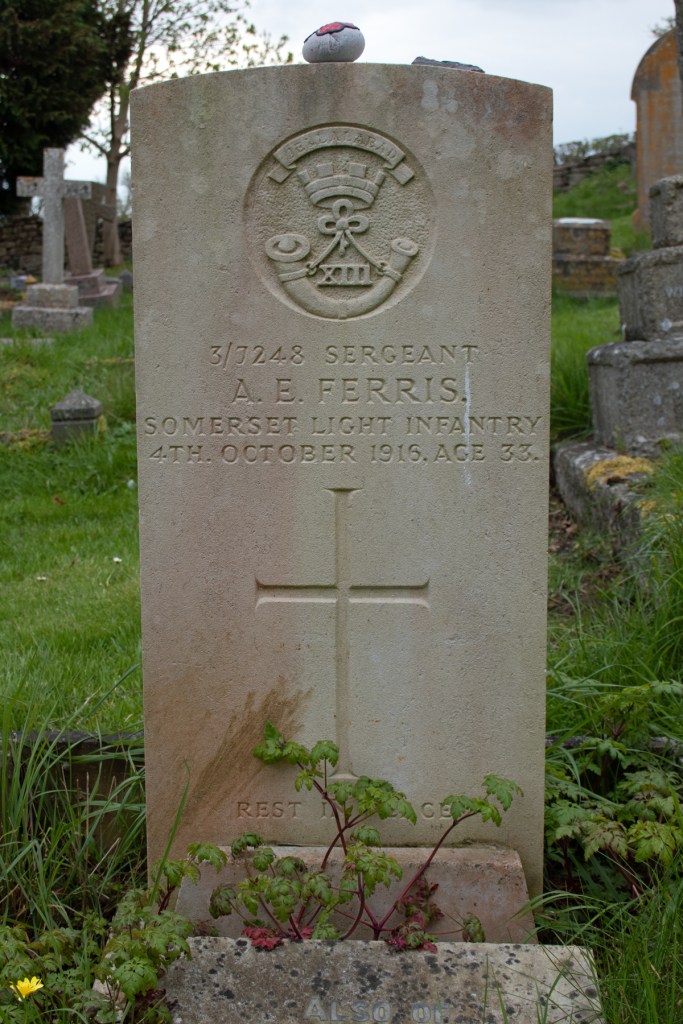
Sergeant Albert Ferris

Albert Edward Ferris was born in the spring of 1884, one of six children to Charles and Juliana. Charles was quarryman turned farm labourer from Gloucestershire, but it was in the village of Claverton, near Bath, that the family were born and raised.

When he finished his schooling, Albert found work as a baker, but soon sought out a career in the military. On 2nd January 1903 he enlisted in the Royal Marine Light Infantry as a Private. His services records show that he was 5ft 6ins (1.68m) tall, with brown hair, blue eyes and a fair complexion.

Based out of Plymouth, over the next nine years Private Ferris served on four different ships and was recognised as having a very good character and an ability to match.

In 1910, Albert married Eliza Jane Warren, a mason’s daughter from Monkton Combe. The 1911 census found Albert on board the armoured cruiser HMS Cumberland, while Eliza was living with her parents. Military life was taking a toll on married life and, on 6th December 1911 bought an end to his naval career and was ‘discharged by purchase’.

Returning to Somerset, Albert found employment as a motor-man with Bath Electric Tramways. He and Eliza settled into married life, but war was on the horizon and things were to change.

At the outbreak of war, [Albert] promptly responded to his country’s call, and enlisted in the [Somerset Light Infantry], as a Private. When his battalion was sent to France, he distinguished himself in a short time by his excellent work as a sniper, speedily earning his first stripes as a consequence. With his battalion he participated in the heavy fighting around the Ypres district, over an extended period, without sustaining any serious injury. Later his battalion was moved further down the line to take part in the “Great Push,” where, for meritorious conduct, he was… promoted to Sergeant in the field…

Bath Chronicle and Weekly Gazette: Saturday 7th October 1916

Sergeant Ferris’ luck was not to last, however, and things took a turn in September 1916.

In the… fighting around Delville Wood… Sergt, Ferris was severely wounded in the right thigh by a machine-gun bullet. One of his officers gave him the best first-aid treatment possible under the circumstances, and later he crawled nearly three miles in an endeavour to reach the nearest field dressing station. Through loss of blood, shock, and general exhaustion he was on the point of collapse when picked up by a field ambulance, after which he was transferred to the base and later to Tooting Military Hospital, where, despite skilled treatment and the greatest care, septic poisoning intervened and he passed away…

Bath Chronicle and Weekly Gazette: Saturday 7th October 1916

Sergeant Ferris died while admitted in the Surrey hospital on 4th October 1916. He was just 32 years of age.

The body of Albert Edward Ferris was brought back to Somerset for burial. He was laid to rest in the peaceful graveyard of St Michael’s Church, Monkton Combe.


Serjeant Joseph Smith

Serjeant Joseph Smith

Joseph Smith was born at the beginning of 1879 in Bath, Somerset. The fifth of six children – all boys – his parents were William and Sarah Smith. William was a carpenter and, while he did not follow in his father’s trade, Joseph found employment as a house painter when he left school.

Joseph married Alice May Martin in 1896: the couple were young, the groom being a year older than the bride, and they went on to have a daughter, Dorothy, who was born the following year. The newlyweds moved into a small, terraced house in Bath with Alice’s mother and sister, both of whom were widowed, and Alice’s nephew.

The 1911 census found the extended family living in larger home away from the centre of the city. Joseph was still employed as a house painter, Dorothy had left school and was apprenticed to a dressmaker. Alice looks to have been looking after the household, while her mother and sister were both living on their own means.

In his spare time, Joseph was also a member of staff at Bath’s Theatre Royal. He was sporty, with a keen interest in football and partial to a game of cricket. He was also very connected to St Stephen’s Church in the city, and was involved in parish life.

War was coming to Europe, and Joseph stepped up to play his part. Full details of his military service are lost to time, but from his gravestone and linked records, it is clear that he enlisted in the 6th Battalion of the Somerset Light Infantry. Further details are outlined in a contemporary newspaper report:

Though married, he was anxious to enlist practically as soon as the war began: and on January 16th, 1915, he offered himself for service, and was at once accepted. He did not leave England till 16th August [1916]. He had been selected for inclusion in 32 drafts on various occasions prior to that date; but had been obliged to remain behind from illness or some other cause. When he actually sailed, it was not as a member of a draft, but as one of five sergeants who had volunteered for special service.

Bath Chronicle and Weekly Gazette: Saturday 28th October 1916

Sergeant Smith made it to the Western Front, and was entrenched at the Somme. The newspaper report picks up on what happened next:

He was wounded in September, being struck by a bullet while leaving the trench preparatory to advancing. The bullet struck him in the thigh, and severed an artery… After doing what he could with his first-aid dressing, Sergt. Smith crawled some three miles from the firing line amid bursting shells. After five hours of this painful progress he was picked up by a stretcher party.

Bath Chronicle and Weekly Gazette: Saturday 28th October 1916

Sergeant Smith was medically evacuated to Britain for treatment, and was admitted to the 3rd Western General Hospital in Cardiff. Alice and Dorothy were a constant presence as his bedside, but the wound was to prove too severe, and he passed away at the hospital on 25th October 1916. He was 38 years of age.

Joseph Smith was brought back to Bath for burial. He was laid to rest in the Lansdown Cemetery, overlooking the city he called home.


Private Albert Lowman

Private Albert Lowman

Albert Lowman was born in Crewkerne, Somerset, in the autumn of 1876. He was the younger of two children to Charles and Sarah Lowman. The 1881 census recorded the family – Charles, Sarah and their boys Charles Jr and Albert – living in Back Lane. Charles Sr was noted as being a labourer, although in the column highlighting any medical conditions (‘deaf-and-dumb’, ‘blind’, ‘imbecile or idiot’, ‘lunatic’), is one word: “afflicted”.

Charles Sr passed away in 1886, when Albert was just 9 years old. The next census, in 1891, found Sarah working as a charwoman, while her youngest, who had left school by this point, was employed as a labourer. Mother and son also had a lodger, Alice, who was a dressmaker. Charles Jr, by this point, had left home, and was living in Penarth, Glamorganshire, where he was apprenticed to his paternal uncle, who was a tailor.

On 28th November 1896, Albert married Sarah Ann Dodge, a weaver’s daughter who was also from Crewkerne. Albert recorded his job as a drayman, although this seems to have been piecemeal employment.

The next census found more permanent work, as he was cited as being a shirt factory packer, while Sarah was employed by the factory as a machinist. Making up the household was young Charles Lowman, the couple’s first son, who was just a month old although sadly, he survived only a couple of months more before dying.

Further tragedy is highlighted by the 1911 census, as it highlights that the couple had had a further child, who had also died when just a babe-in-arms. The Lowmans were now living on Hermitage Street near the centre of the town. Albert was still a shirt packer, and, even though their cottage was small, they had two boarders and a visitor staying. The lodgers brought the couple a little rent, which meant that Sarah no longer had to work.

War was closing in on Europe and, while his full military records are lost to time, it is clear that Albert had stepped up to play his part. He had enlisted by January 1918, and was attached to the Devonshire Regiment, through which he served with the 380 Company of the Labour Corps.

Private Lowman was barracked on Salisbury Plain, Wiltshire, and in July he was admitted to the military hospital in Salisbury itself, suffering from appendicitis. He was operated on, but died following complications. He passed away on 10th July 1918, at the age of 41 years old.

Albert Lowman was brought back to Somerset for burial. He was laid to rest in the cemetery of his home town, Crewkerne.


Private Lowman’s pension ledger record shows the beneficiaries of his army service. The document identified Sarah as his widow, but also Phillis Annie Matilda Denning, the couple’s adopted daughter, who had been born in August 1904.

Sarah was not to outlive her late husband for long, however.

The death occurred with tragic suddenness on Sunday afternoon, January 7th, at her residence in Hermitage-street, of Mrs Sarah Ann Lowman… The deceased, who was of middle age, was about as usual attending to her ordinary household duties in the morning. Just before dinner hour, however, she complained of not feeling well and went upstairs to lie down. Her niece took her up a cup of how water, and she then apparently went to sleep. She awoke about 3:40pm, and then had to get out of bed owing to sickness. Upon going back into bed again she expired almost immediately. Dr Wolfenstein was called, but he could only pronounce life extinct.

Langport & Somerton Herald: Saturday 20th January 1923

Sarah was 47 years of age when she passed away. It is likely that she was laid to rest near her husband, although records to confirm this have been lost.


Albert’s brother, Charles, survived his sibling by less than six months. He had left tailoring behind him in South Wales, and instead embarked on a military career. He joined the Royal Field Artillery in 1895 and, over the course of his twelve years’ service, served in the Caribbean and the Mediterranean.

Charles married Florence Dodge in 1908, and the couple went on to have two children – Cecil and Freda. When war broke out in 1914, he stepped up once more. Having already risen through the ranks from Gunner to Bombardier and Corporal, he re-entered service as a Sergeant in the Royal Garrison Artillery.

Based in Le Harve, Northern France, Sergeant Lowman was admitted to a hospital in Harfleur, having contracted bronchial pneumonia. Sadly, he passed away while admitted, on 8th November 1918, just three days before the end of the conflict. He was 43 years of age.

Charles Lowman was laid to rest in the Sainte Marie Cemetery, near the centre of Le Harve.


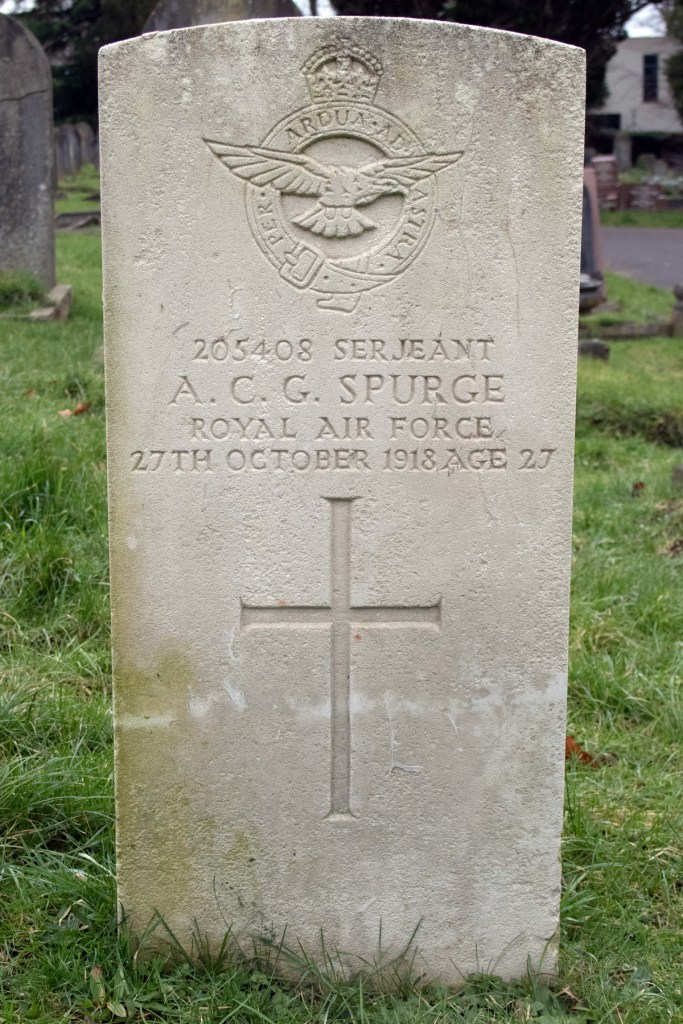
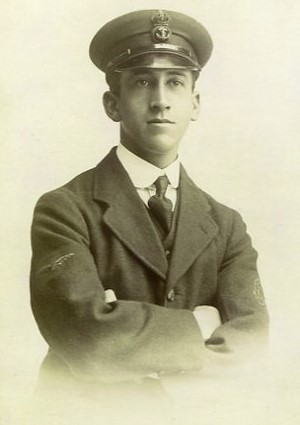
Serjeant Algernon Spurge

Serjeant Algernon Spurge

Algernon Carlyle Graham Spurge was born on 27th August 1891 in Bath, Somerset. The middle of five children, his parents were Algernon and Ida Spurge.

Algernon Sr was a portrait photographer, based in the Twerton area of the city, and this was very much a family business. The 1901 census recorded the Spurges as living in Victoria Road, Bath, with Ida’s brother, Tom Leaman, who was working as a photographic reloader.

Later that year, however, things were to take a turn for the worst. Algernon Sr seems to have been having some business worries and, on the morning of 16th December, he set off for work as usual. His and Ida’s daughter, also called Ida, arrived at the studio to find her father in some distress, a bottle of potassium cyanide – used as part of the photographic process at the time – next to him. He asked Ida to fetch him some water and salt, but when she returned, he declared it was too late, and lost consciousness. A doctor was called, but Algernon passed away shortly after he arrived.

A note was found, which read “My dearest wife, I really cannot stand the worry and anxiety of another day, to say nothing of weeks and perhaps months. Ask Mr Ashman and Mr Withy to be kind enough to help you straighten out matters a little. My best love to you and all my dear ones. AS” [Somerset Guardian and Radstock Observer – Saturday 21 December 1901] Ashman and Withy were family friends, who were also in the photography business.

An inquest was held and a verdict of suicide while temporarily insane was recorded.

The family rallied round, and Algernon’s widow and children moved in with Ida’s widowed mother in Bristol. Algernon’s daughter Ida continued working in photography, and Algernon Jr also took up the business. The 1911 census found him boarding with, and working for, his uncle Tom in Bath.

War was closing in on Europe by this point and, when it was declared, Algernon stepped up to play his part. He enlisted in the Royal Naval Air Service on 4th June 1915 as a Leading Mechanic (Photography). His service records show that he was 5ft 5ins (1.66m) tall, with dark brown hair, brown eyes and a dark complexion.

Algernon was initially assigned to the shore establishment HMS President in London for three years, rising to the rank of Petty Officer Mechanic (Photography). In April 1918, when the Royal Air Force was created he transferred across to HMS Daedalus in Lee-on-Solent, Hampshire, and rising to the rank of Sergeant Mechanic.

That autumn, with the end of the war in sight, Algernon fell ill. He contracted influenza, and this developed into pneumonia. He was admitted to the Military Hospital in York, but the conditions were to prove too much for his body to take. He died on 27th October 1918, aged just 27 years old.

The body of Algernon Carlyle Graham Spurge was brought back to Somerset for burial. He was laid to rest in St James Cemetery, Bath, not far from his father. When Ida passed away in 1926, she was buried in the same cemetery, father, mother and son reunited once more


Serjeant Algernon Spurge
(from ancestry.co.uk)

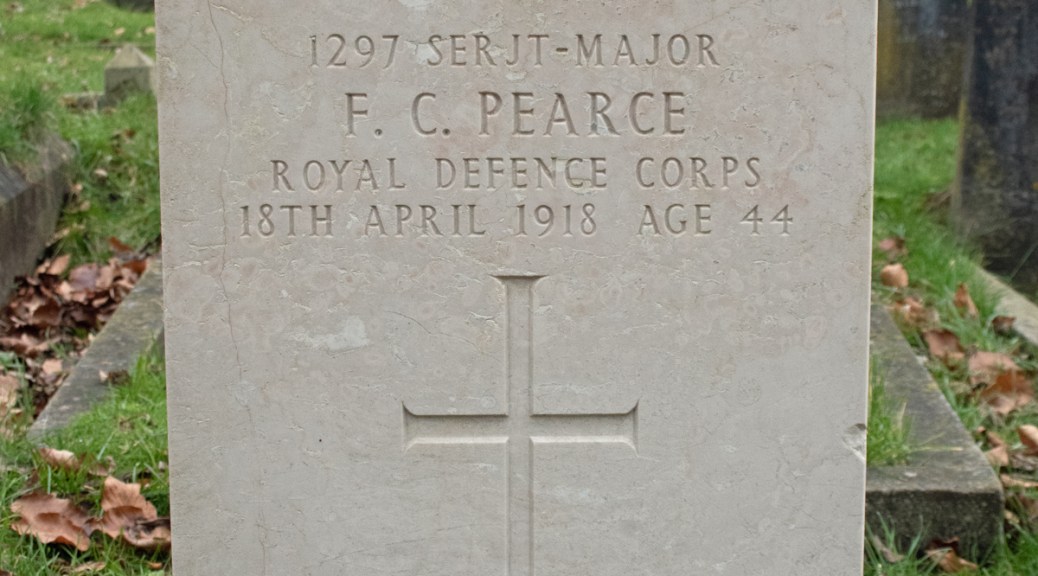
Serjeant Major Frederick Pearce

Serjeant Major Frederick Pearce

Frederick Charles Pearce was born in the spring of 1873 in the Gloucestershire town of Thornbury. The youngest of six children, his parents were Thomas and Elizabeth Pearce. Thomas was an agricultural labourer and, when he finished school, Frederick found work as a ‘rural messenger’.

This was only a step towards the career that Frederick sought, however, and on 12th July 1892, he enlisted in the Gloucestershire Regiment a a Private. His service records show that he was 5ft 5ins (1.65m) tall and weighed 128lbs (58kg). He was noted as having a fresh complexion, blue eyes and brown hair.

Private Pearce spent twelve years in the army, serving in Malta, Egypt, India and Ceylon (Sri Lanka). He had two stints in South Africa, including the 1899-1900 campaign, during which he was wounded in his chest in the battle at Farquhar’s Farm.

By the time he was discharged on 11th July 1904, he had risen through the ranks to Sergeant, his service records noting that his conduct had been “very good” (in capitals and underlined).

Thomas had died in 1896, and Frederick’s widowed brother William moved back in with his mother to help support her. Frederick also returned to Gloucestershire and, on 30th March 1905, he married Mary Rugman in the parish church in Olveston. The couple may have been childhood sweethearts, as the Pearces and Rugmans were Thornbury neighbours.

The marriage certificate noted Frederick as a groom, and it is likely that he was able to turn his hand to any role after his army career. The couple had a son Leslie, who was born in 1909, and, with the new responsibility of fatherhood, Frederick sought a more permanent career.

The 1911 census found the family living in Somerset, where Frederick was employed as a gardener at the Kingswood Reformatory School. This was a boarding school on an estate to the north of Bath, set in 57 acres of grounds, and again it seems likely that his military career stood him in good stead for such a prestigious role.

When war came to Europe, Frederick felt the pull of his military career once more. While his age did not compel it, on 20th November 1914, he re-enlisted in the Gloucester Regiment. He was enlisted with his previous rank, but within a year has been promoted to Acting Colour Sergeant.

In the spring of 1916, the Royal Defence Corps was formed, and, given his experience and age, Frederick was transferred across to the new regiment. Colour Sergeant Pearce was based in London and, over the next eighteen months served in four troops: 109, 149 and 150 Protection Companies and the 10th City of London Volunteers’ Regiment.

Frederick’s age and the demands of his role were beginning to take their toll by this point, and by the end of 1917, he had developed nephritis, or inflamed kidneys. The condition was severe enough to warrant his discharge from service, and the now Sergeant Major Pearce’s military career came to an end on 17th January 1918.

Frederick returned home to Bath, to the bosom of his family. He and Mary three children by this point, Violet and Freddie being two younger siblings to Leslie. Tragically for the Pearces, however, the family life was not to to last for long: Frederick’s condition was to get the better of him just three months later. He passed away on 18th April 1918, at the age of 44 years old.

Frederick Charles Pearce was laid to rest in St James’ Cemetery in Bath; a man of duty resting at last.


Tragedy was to strike again for poor Mary, when just six months later her youngest child, Freddie, also passed away. Details of his death are vague, but he was buried with his father, the two Fredericks reunited too soon.


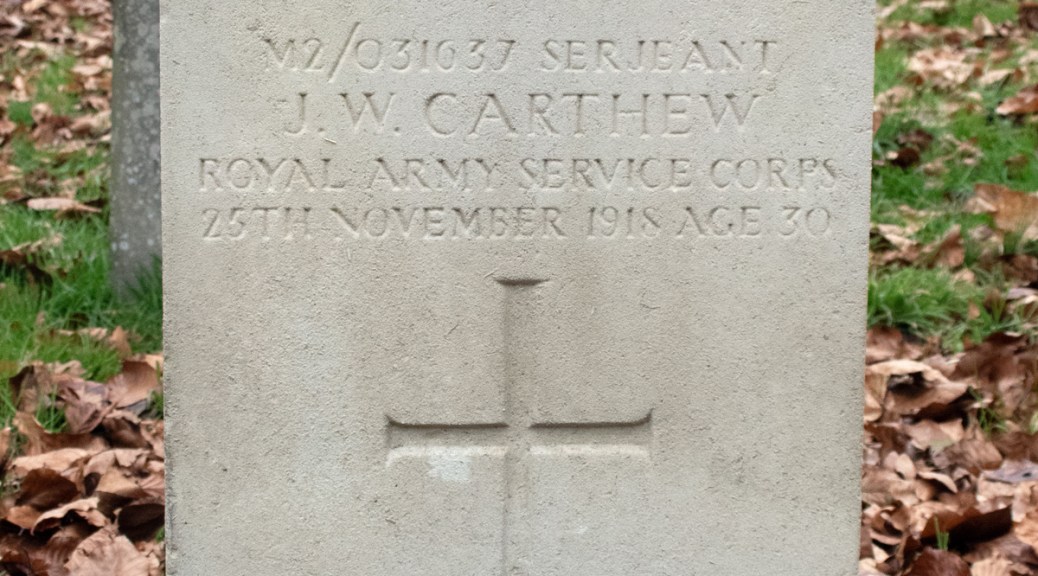
Serjeant John Carthew

Serjeant John Carthew

John Wallace Carthew was born in Warminster, Wiltshire, in the spring of 1892. The second youngest of seven children – three of whom did not survive childhood – his parents were miller James Carthew and his tailoress wife, Sarah.

John was destined to make a path for himself. By the time of the 1911 census, he was boarding with the Southon family in Aldershot, and working as a chauffeur.

On 22nd March 1914, John married Caroline Hamilton, a parlour maid for Captain Charles Woodroffe and his family in Aldershot. The couple set up home in Queensgate Mews, London, and having had a daughter, Cecilia, who was born that February.

When war came to Europe, John was quick to enlist. He joined up on the 21st December 1914, and was assigned to the Mechanical Transport section of the Royal Army Service Corps. His service records note that he was 6ft 1in (1.85m) tall, with a scar on his right eyebrow.

Private Carthew rose through the ranks, becoming a Corporal in 1916, and a Serjeant in 1918. During this time he acted almost exclusively as chauffeur to General Sir William Robertson. His duties were mainly based on home soil, but he did spend a year in France, while Robertson was Chief of the General Staff there.

As the war came to a close, Serjeant Carthew fell ill. Based in a camp in Aldershot, he contracted influenza, and this developed into pneumonia. This was to take his life, and he passed away at the town’s Connaught Hospital on 25th November 1918. He was just 26 years of age.

Caroline was living in Bath, Somerset by this point, and this is where the body of her husband was brought for burial. John Wallace Carthew was laid to rest in St James’ Cemetery, in the family plot where his father, who had died in 1911, was also buried.


Serjeant James Gillighan

Serjeant James Gillighan

Some lives are destined to remain shrouded in mystery, and James Gillighan’s is one of those to be lost to time.

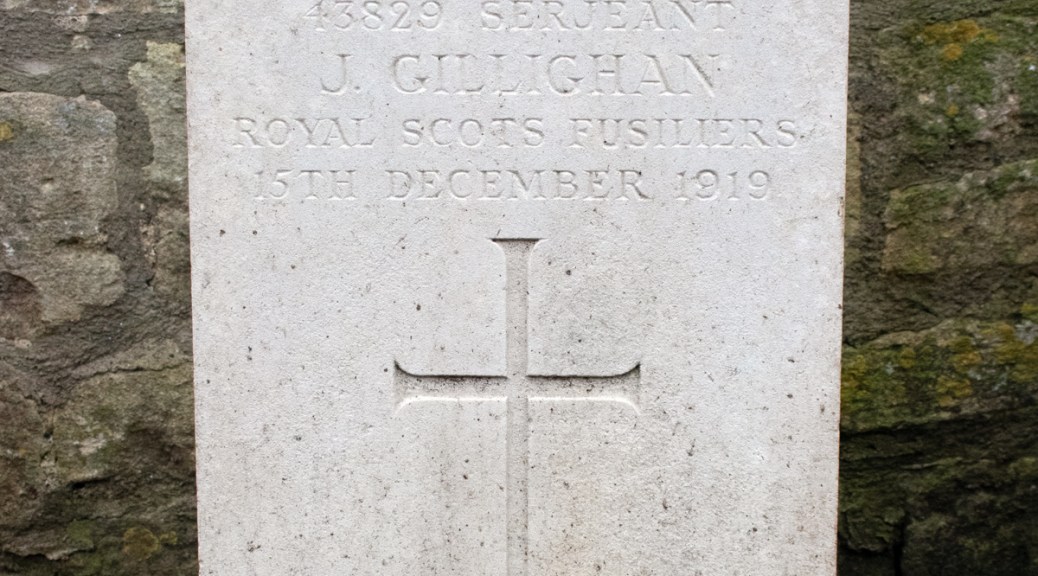
His headstone sits in the quiet Roman Catholic Cemetery in Bath, Somerset. It provides his regiment – the Royal Scots Fusiliers – and confirms that he was a Serjeant at the time of his death on 15th December 1919. The Commonwealth War Graves Commission adds that he served in the 2nd Battalion, but sadly James’ service records no longer exist.

The Army Register of Soldiers’ Effects notes that his next of kin was his brother, Matthew Gillighan, which suggests that James’ parents were not alive, nor that he was married. The document also notes that Serjeant Gillighan passed away in Bath War Hospital.

Another army document – the Service Medal and Award Roll – suggests that the service number on the headstone – 42839 – was actually James’ second number, given to him when he moved to the battalion depot. Tantalisingly, however, his previous regimental number – 15170 – sheds little more light to his service, other than the date he was sent to France – 15th September 1915.

Contemporary newspapers do not have any records for James’ passing, so it is likely to have been natural causes of some description – possibly an illness contracted while serving.

Sadly, there is little more detail that can be added to James’ life. He lies quietly, in a corner of the Bath cemetery, wrapped in mystery.


Serjeant George Collins

Serjeant George Collins

Details of the lives of those who fell during the Great War can be limited by the documentation that is available more than a century later. Based on what remains, the life of George Collins would have been technical and sparse.

From the formal documents that remain, it is possible to determine that he was born in Bath, Somerset, in 1870 or 1871, and his father was farmer Oliver Collins.

George married Florence Lydyard on 25th January 1896 at the parish church in Bathampton. George was listed as a cellarman, while Florence was noted as being the daughter of George Lydyard, an agent.

The 1901 census found the couple living at the Liberal Club in Bath, which they were both managing. The couple had had a son, George Jr, who was born in 1898, and were employing a servant to help with the daily chores.

The 1911 census shows that George had left the club behind, and was employed as a gymnastic instructor. He and Florence now had four children: Mona, who was 14 (and who didn’t appear on the previous census); George; and twins Marjorie and Dorothy, who were born on 5th July 1904.

The limited military documentation confirms that George enlisted in the North Somerset Yeomanry by October 1917. He was assigned to the 2nd/1st Battalion, which was a mounted division that became a cyclist unit. The troop was based on home soil throughout the war and, depending on when he joined, George could have served anywhere from Northumberland to East Anglia or Southern Ireland.

These details, while uncovering something of George’s life, remain as clinical as the engraving on his headstone. With Serjeant Collins, it is a newspaper article on his passing that adds humanity to his life:

Many friends in Bath will regret to hear that Sergeant George Collins died on Saturday at the Bath War Hospital, where he had been an inmate for seven weeks, suffering acutely from gastritis. Deceased, who was a Bathonian by birth, when a youth joined the Welsh Regiment, and served for seven years in the 1st Battalion… He returned to Bath 21 years ago, and became a drill and physical instructor to several schools… whilst he also instructed evening classes at Guinea Lane and St Mary’s Church House. Being a Reservist he was called upon for the South African War, and Sergeant Collins rejoined his old regiment in 1899. He was wounded and invalided home… When he recovered from his wounds, Sergeant Collins resumed his work as an instructor at schools, and continued to act in that capacity until 1915. Though 44 years of age and not liable for military service, he very patriotically rejoined; he entered the North Somerset Yeomanry and became a drill instructor. He had not been abroad in this war, but had served in several places with the 2/1st NSY. The fatal illness became very pronounced in January when on leave, and he was not able to rejoin his unit. Sergeant Collins was a fine boxer, and became middle-weight champion of the Army when serving with the 1st Welsh. His experience as a trainer was often in request locally, and he had acted in that capacity to the most successful Avon Rowing Club crews. Deceased leaves a widow, one son, and three daughters. His only boy, Sapper George Collins, Wessex [Royal Engineers], has been serving at Salonika since 1915.

Bath Chronicle and Weekly Gazette: Saturday 13 April 1918

Beyond the staid, formal documents is a life well lived. Serjeant George Collins was 47 or 48 years old when he passed on 5th April 1918; the army record noted the cause of his death as a cerebral haemorrhage. His body was laid to rest in the graveyard of St Mary the Virgin Church, Bathwick, overlooking the city he loved.


Quartermaster Serjeant Iva Brewer

Quartermaster Serjeant Ivor Brewer

Iva Victor Brewer was born on 2nd May 1886, the fourth of four children to James and Annie Brewer. James was a farm labourer from Weston-super-Mare, but the family were living in Bathampton by the time of Iva’s birth. James died in 1887, and Annie remarried three years later. Her new husband, Thomas Dolman, was the manager of the George Inn in Bathampton, and the couple went on to have four children of their own, half-siblings to Iva.

Tragedy struck again when Annie passed away in February 1897, at the age of just 37 years old. By the time of the next census in 1901, Iva was boarding with his stepfather’s parents; the following year, however, Thomas also passed away, and the children were left to build their own lives.

Iva – who was now going by his middle name, Victor – found an escape in the army and, according to the 1911 census was an Acting Bombardier in No. 69 Company of the Royal Garrison Artillery, based in Colaba, at the tip of the Mumbai peninsula.

By the time war was declared, Victor had cemented his military career. Full details of his service are no longer available, but the summer of 1916 he had left India for Aden, and was then mentioned in dispatches that October for his bravery in the field at the Somme.

In November 1917, the now Battery Quartermaster Sergeant Brewer was injured in fighting at Passchendaele, and was medically evacuated to Britain for treatment. It seems that he was treated in South Wales, and it seems a whirlwind romance set in when he was living in Pontardawe, near Swansea. On 2nd January 1918, Victor married Laura Seddon, a railway inspector’s daughter from the village of Ystalyfera, just up the valley from Victor.

The couple moved to Bathampton before Victor returned to the fighting. He was badly wounded and, having been evacuated back to Britain in May 1918, he was admitted to the Northern Central Hospital in London where his shattered leg was amputated. Sadly, bronchial pneumonia set in while he was recovering, and he passed away from the subsequent sepsis. Quartermaster Sergeant Brewer passed away on 7th May 1918, days after his 32nd birthday.

Iva Victor Brewer was brought back to Bathampton for burial. He was laid to rest in the quiet graveyard of St Nicholas’ Church in the village.


Tragedy was to strike again, sadly. After his funeral, Laura returned to Wales and found employment at a draper’s store.

…the loss of her husband played on her mind.

On Monday she set off for Bathampton, and on her way posted two letters to her late husband’s relatives.

One ran: “I cannot live without my husband. If you don’t hear from me, search Bathampton, as I shall be there somewhere.” Another letter asked her relatives to let her mother in the Swansea Valley know.

She reached Bath, and it is thought she there took a taxi to Bathampton. She then paid a visit to the cemetery, and placed her hat and handbag on her husband’s grave. At the canal-side nearby she laid her fur coat on the bank, and, it is supposed about midnight, plunged into the water

Western Gazette: Friday 9th April 1920

Laura was just 27 years old when she died: she was buried with Victor, husband and wife reunited again.