Tag Archives: 1917

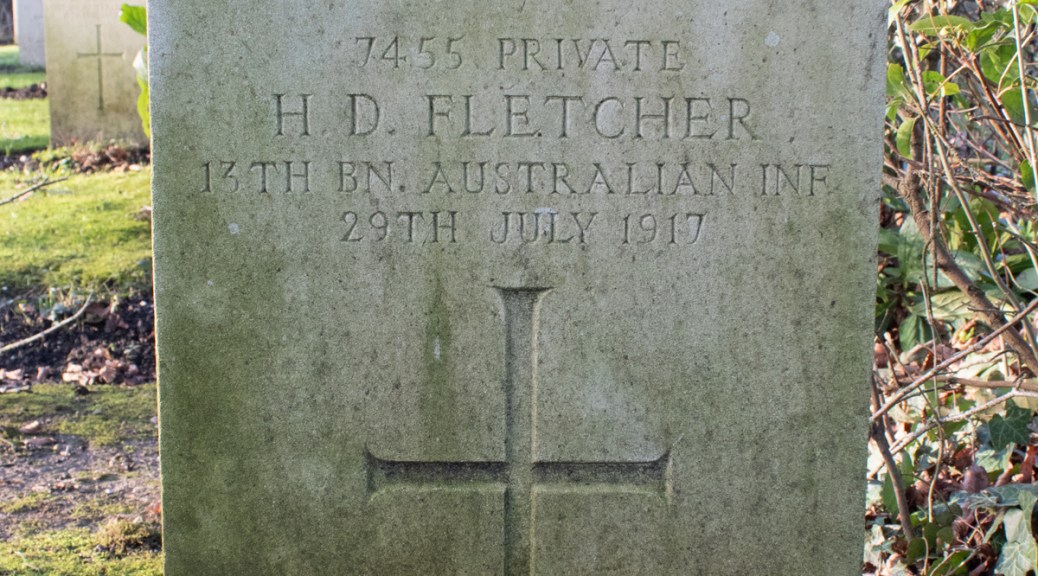
Private Harry Fletcher

Private Harry Fletcher

Harry David Fletcher was born in Leichhardt, New South Wales, Australia, on 1st November 1883. The seventh of ten children – and the only surviving son – his parents were Daniel and Charlotte Fletcher.

There is little information about Harry’s early life: he found work as a labourer when he finished school and, on 11th March 1911, he married Lillian Bosworth. The couple went on to have a son, Harold, who was born the following February.

When war came to Europe, the British Empire was called upon to play its part. On 19th February 1917, Harry enlisted in the Australian Infantry, although he did so under the alias of Harry Conway. His service records show that he had dark brown hair, hazel eyes and a medium complexion. He was also 5ft 7.75ins (1.72m) tall and weighed 140lbs (63.5kg). He had two noticeable scars: one on the inside of his right arm, the other on his right shin.

Private Conway/Fletcher set sail for Europe on 10th May 1917, arriving in Britain two months later. His unit – the 13th Battalion – was billeted in Wiltshire, near the village of Codford. Tragically, his time in the army was to be brief: he suffered issues with his gallbladder, and died in the camp hospital from cholecystitis and septicaemia on 29th July 1917. He was 33 years of age.

Harry David Fletcher was laid to rest in the Australian section of the new churchyard of St Mary’s Church in Codford. His burial records note that the service was officiated by Chaplain Captain Collins, with six of his friends from the battalion acting as pallbearers. He was buried in an elm and brass coffin, with a small oak cross being erected over the grave.


Private Harry Fletcher
(from findagrave.com)

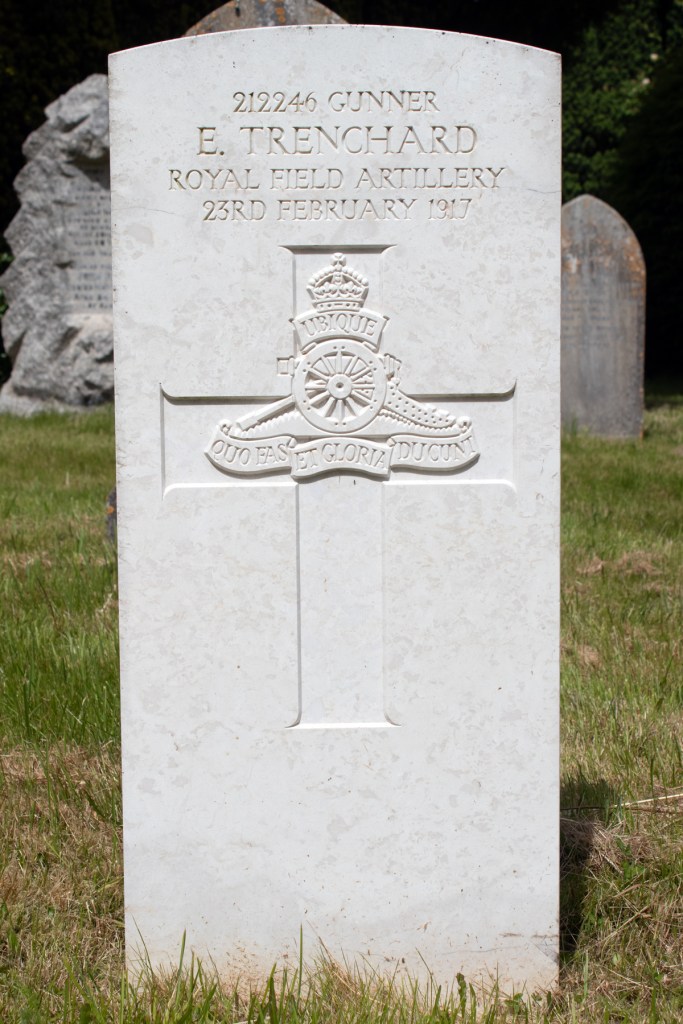
Gunner Eli Trenchard

Gunner Eli Trenchard

Eli Trenchard and his twin Reuben were born on 29th December 1889 in Axminster, Devon. Two of nine children, their parents were George and Mary Trenchard. George was a gamekeeper turned farmer, and the family were brought up at Uphay Farm on the outskirts of the town.

The whole family helped out on the farm and, by the time of the 1911 census, when the twins were 20, seven of the Trenchards – George, Mary, Eli, Reuben and three of their siblings – were all living in the farmhouse and employed in the business.

On 25th March 1913, Eli married Lily Gillingham. Born in Dorset, she was the daughter of the landlord of the Lamb Inn in Axminster, and working as a dressmaker in her own right. The couple moved to the village of Chardstock in Devon, and went on to have a daughter, Lilian, who was born later that year.

In 1915, Eli found himself brought to the Petty Sessions in Axminster, charged with “moving pigs from Dorset to Devon without the necessary license” [Western Times: Wednesday 27th October 1915]. Eli stated that he had purchased the pigs from his brother, Reuben, at Uphay Farm. Despite Reuben confirming this, it was subsequently determined that they had, in fact, been bought from a Mr Wells of Penn in Dorset. Eli have been convicted of a similar offence before, and was fined £10.

War was raging across Europe by this point, and Eli was called upon to play his part. He enlisted in the Royal Field Artillery in January 1917. Assigned to the 23rd Reserve Battery, Gunner Trenchard was sent to a camp near Sutton Veny in Wiltshire.

Eli’s time in the army was not to be a long one, however, and he was soon admitted to the camp hospital, suffering from pneumonia. The lung condition was to get the better of him, and Eli passed away on 23rd February 1917. He was 27 years of age.

The body of Eli Trenchard was taken back to Devon for burial. He was laid to rest in Axminster Cemetery, not far from where his widow and family still lived.


The Trenchard family were soon back in the court, however, with Lily bringing a lawsuit against her father-in-law, George, in December 1917. The widow said that Eli and his father had agreed her late husband’s immediate tenancy of two fields the month before Eli had been called up for to serve.

However, the month after his death, when she had gone to the fields to sow them for the coming season, the gates had been locked and her entrance barred. George responded by saying that he had agreed to pass the fields to his son, but only on the event of his own death. He subsequently sold the land to another farmer.

The judge in the case found that Lily had “failed to prove that an agreement had been made between [George] and his son” [Western Times: Thursday 6th December 1917] and found in the defendant’s favour.


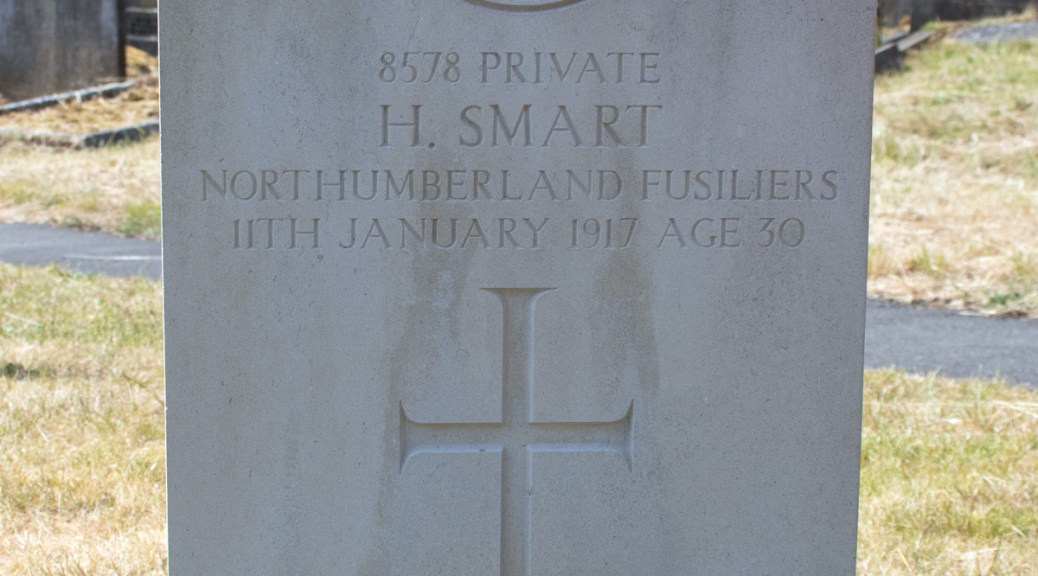
Private Herbert Smart

Private Herbert Smart

Herbert – or Bertie – Smart was born on 9th February 1885, and was the middle of five children to John and Lucy. John worked as a gardener and the family were raised in the Kent town of Sidcup.

By the early 1900s, Bertie had moved to London, and had settled in Islington, Middlesex. He was working as a fruiterer and, on 19th May 1907, he married Lucy Purton, a policeman’s daughter from the east of the capital.

The couple set up home in Kensington, and went on to have four children: Frank, Herbert, Kathleen and Frederick. The 1911 census found the family renting three rooms in a tenement at 36 Netherwood Road. They were sharing their home with Lucy’s younger brother, Frederick.

When war broke out across Europe, Bertie was called upon to play his part. Full service details have been lost to time, but it is clear that he enlisted in the second half of 1916, and was assigned to the Northumberland Fusiliers. Attached to the 2nd/4th Battalion, it seems that he may have been sent to the South West for training.

Private Smart’s time in the army was not to be a lengthy one. He came down with cerebrospinal meningitis, and was admitted to the War Hospital in Bath, Somerset. The condition was to get the better of him: he passed away was still admitted, on 11th January 1917. He was 31 years of age.

Herbert Smart was laid to rest in the sweeping grounds of Bath’s Locksbrook Cemetery.


These were tragic times for the Smart family. Lucy’s brother died just four months after her husband, and Lucy herself passed away in February 1918. In just over a year, the four children – Frank, Herbert, Kathleen and Frederick – had become orphans.


Private John Boura

Private John Boura

John Adams Boura was born in the spring of 1868 in Kensington, Middlesex. The middle of three children, his parents were Julien and Esther Boura. Julien was the son of a French immigrant, who had built up two businesses as a dyer and cleaner (the first business having failed).

John followed in his father’s line of employment, and, by the time of the 1891 census, he was living with business partner Isabel Knight, at 3 St Mark’s Place in Wimbledon, Surrey. Work and pleasure were obviously mixing, though, and, on 3rd October that year, the couple married in the nearby Queen’s Road Chapel.

The newlyweds would go on to have a son, also called John, in March 1895. By the start of the new century, the family has moved out of the capital, relocating to Aldershot, Hampshire, where they set up a new business at 111 Victoria Road, in the town centre.

Within the next decade, however, the Bouras had moved back to the London suburbs, setting up home and business in Merton, Surrey. A new alliance was forged at 106 Kingston Road, with the three sharing their home with Henry and Adelaide Shelley. All four adults were involved in the business, while the now 16-year-old John Jr was employed as a dentistry improver.

Julien – who was also known by his middle name, Aimé – and Esther had moved to Maidenhead in Berkshire by this point, and in September 1910, it seems that their son visited them. An argument seems to have erupted, and John was arrested. Taken before the Maidenhead Petty Sessions, he was tried for unlawfully and maliciously damaging the glass of certain windows, exceeding he amount of £5 to wit £8 6s., the property of Aimé Boura. John was find a total of £10 for the damage.

When war broke out, John stepped up to serve his country. While his service documents are long since lost, other records suggest that he had enlisted by the summer of 1916, and likely volunteered, give he was in mid-40s by this point. Private Boura was assigned to the Royal Army Service Corps, and was to be based at the Supply Depot in Bath, Somerset.

It is probable that John’s dying and cleaning background meant that he was involved in uniforms in some way, although nothing concrete remains to document his time in the army. During the early part of 1917, he fell ill, coming down with bronchitis. He was admitted to Bath War Hospital, but the condition was to get the better of him. Private Boura passed away on 9th February 1917, at the age of 48.

The body of John Adams Boura was laid to rest in Bath’s majestic Locksbrook Cemetery, not far from the hospital in which he had passed.


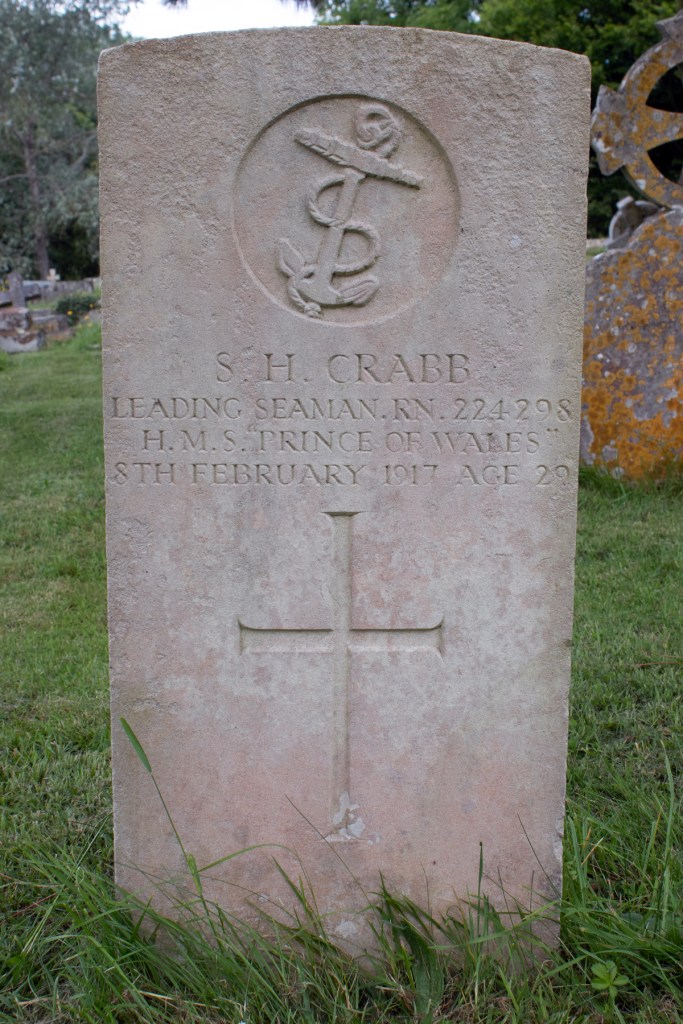
Leading Seaman Sidney Crabb

Leading Seaman Sidney Crabb

Sidney Harry Crabb was born in the seaside town of Lyme Regis, Dorset on 6th September 1888. One of nine children, his parents were Albert and Mary Crabb. Albert was a Trinity pilot, working on ships, and his son was destined to follow in his stead.

On 16th January 1903, Sidney enlisted in the Royal Navy. He lied about his age to be taken in, adding two years to his date of birth. That was still below the full enlistment age for the military, and he was taken on with the rank of Boy 2nd Class.

Sidney was sent to HMS Boscawen, a training ship, for his initial instruction. He remained there until mid-November 1903, by which time he had been promoted to Boy 1st Class. He then moved to the training battleship HMS Minotaur (which became HMS Boscawen II shortly afterwards), and remained on board for the next nine months.

On 7th September 1904, Sidney “came of age” (albeit he was two years younger than he had said), and was formally inducted into the Royal Navy. He was given the rank of Ordinary Seaman and, within a matter of days, was assigned to his first vessel, the tender HMS Fire Queen.

On 19th November 1904, Ordinary Seaman Crabb was reassigned, to the armoured cruiser HMS Sutlej. She was to remain his home for the next eighteen months, during which time Sidney was promoted again, to the rank of Able Seaman.

Over the next nine years, Sidney was to serve on six more vessels. On 9th December 1912, while back in Dorset, he married Lily Froom in the parish church of their home town, Lyme Regis. The couple would go on to have a son, Stanley, who was born in September 1914.

By this point, Able Seaman Crabb’s health was faltering. He was serving on board the battleship HMS Prince of Wales when war was declared, and had been promoted again, to Leading Seaman. By early October 1914, however, he was medically dismissed from service, having contracted pulmonary tuberculosis.

At this point, Sidney’s trail goes cold. He seems to have returned home, but it is unclear how much his failing health impacted on his daily life. The lung condition was ultimately to get the better of him: he passed away in Axminster, Devon, on 8th February 1917, at the age of 28 years of age.

Sidney Harry Crabb was taken the short distance back to Lyme Regis for burial. He was laid to rest in the town’s cemetery, overlooking the sea to which he and he late father had dedicated much of their lives.


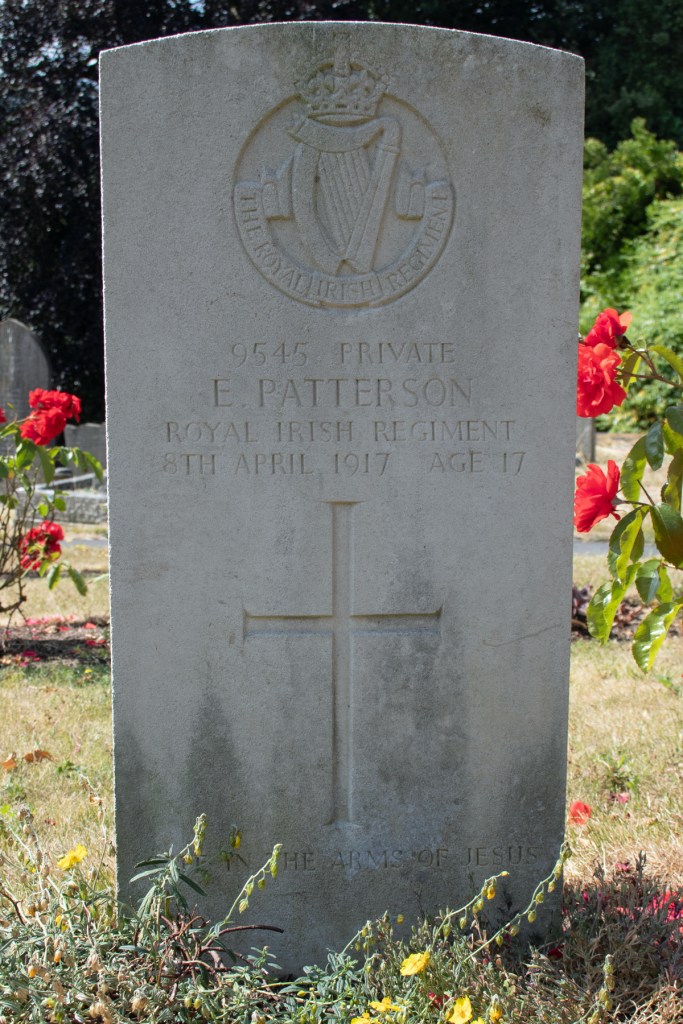
Private Ernest Patterson

Private Ernest Patterson

Ernest Patterson was born in Roscrea, Co. Tipperary, Ireland, in 1900. He was the oldest of six children to Robert and Matilda Patterson. Robert was a boot machinist when his son was born but, by the time of the 1911 census, he had turned his hand to farming.

When war came, Ernest stepped up to serve his King and Country and, in his eagerness to do so, he lied about his age. He enlisted in the Royal Irish Regiment on 1st September 1915, and stated that he was 19 years old. Given that his service records show that he was 5ft 8.5ins (1.64m) tall and that he weighed 130lbs (59kg), it is not surprising that the military were willing to take him on his word.

Private Patterson was initially posted to the 3rd (Reserve) Battalion in Dublin. While there, he contracted German measles, and was hospitalised for two weeks. When he recovered, Ernest was moved to the 2nd Battalion, and shipped off to France with his new unit.

His time overseas was cut short, however, and he was medically evacuated to Britain for treatment on 9th March. He was noted as suffering from ‘debility’, and admitted to the Royal Surrey County Hospital for a week.

Out of hospital again, Ernest was re-assigned to the 3rd (Reserve) Battalion. As summer came and went and winter moved in, his health wavered again. On 19th December 1916, he was admitted to the Bath War Hospital in Somerset, suffering from pulmonary tuberculosis. He remained in hospital for the next three months, the condition finally leading to his medical discharge from the army on 29th March 1917.

Private Patterson’s discharge from the army did not mean a discharge from hospital, however, and he remained there for the next week or so. His health was deteriorating by this point, and his body finally succumbed to tuberculosis on 8th April 1917. He was just 17 years of age.

It was not practical to return Ernest Patterson’s body to his family in Ireland. Instead, he was laid to rest in Locksbrook Cemetery in Bath, not far from the hospital in which he had died.


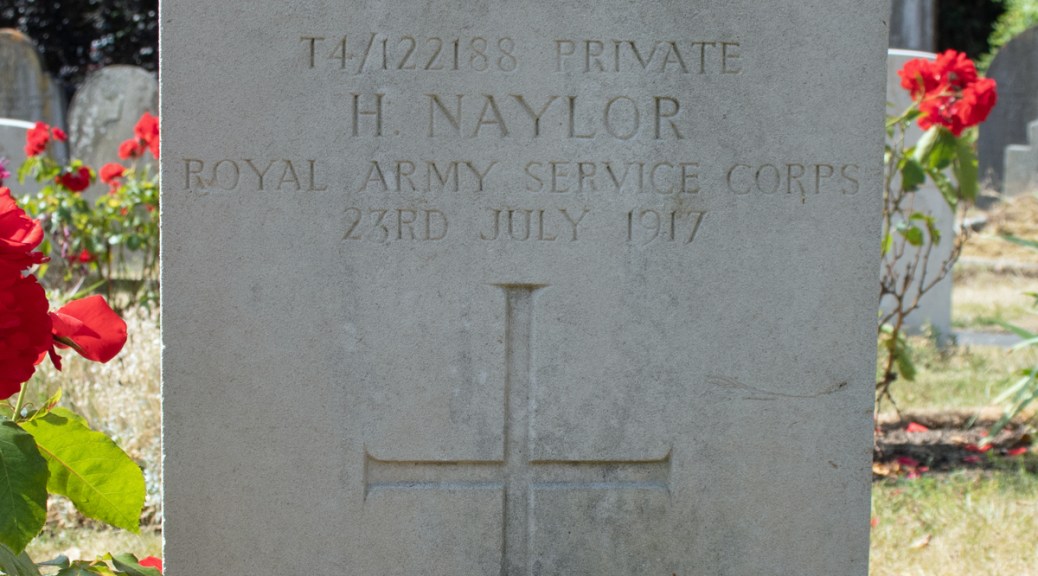
Private Hubert Naylor

Private Hubert Naylor

The early life of Hubert Naylor is a challenge to piece together. Later documents suggest he was born in Elsley (possibly Ilsley), Berkshire in around 1874.

The first census Hubert appears on dates from 1911. By this time he was living in Bath, Somerset and was employed as a general labourer. The document confirms that he was married to Mary, and had been for some eight years. The couple had four children – Isabella, Hubert Jr, Henry and Catherine – and the family were living at 1 Dover Court, in the Walcot area of the city.

When war broke out, despite his age, Hubert stepped up to play his part. He enlisted in the Royal Army Service Corps on 27th June 1915. Mary may not have been happy with this turn of events, as she had had two further children – Bertha and Doris – by this point.

Hubert was given the rank of Driver, and was initially posted to the 12th Labour Battalion. Within a year, his unit was in France. He spent the next year overseas, transferring to the Reserve Supply Personnel Depot as a Private in the process.

By the summer of 1917, Hubert’s health was failing. He was medically evacuated to Britain for treatment, and was admitted to the Bath War Hospital. He passed away from nephritis on 23rd July 1917: he was 42 years of age.

Hubert Naylor was laid to rest in the sweeping Locksbrook Cemetery in Bath, not far from the family home.


Private Sidney Crabb

Private Sidney Crabb

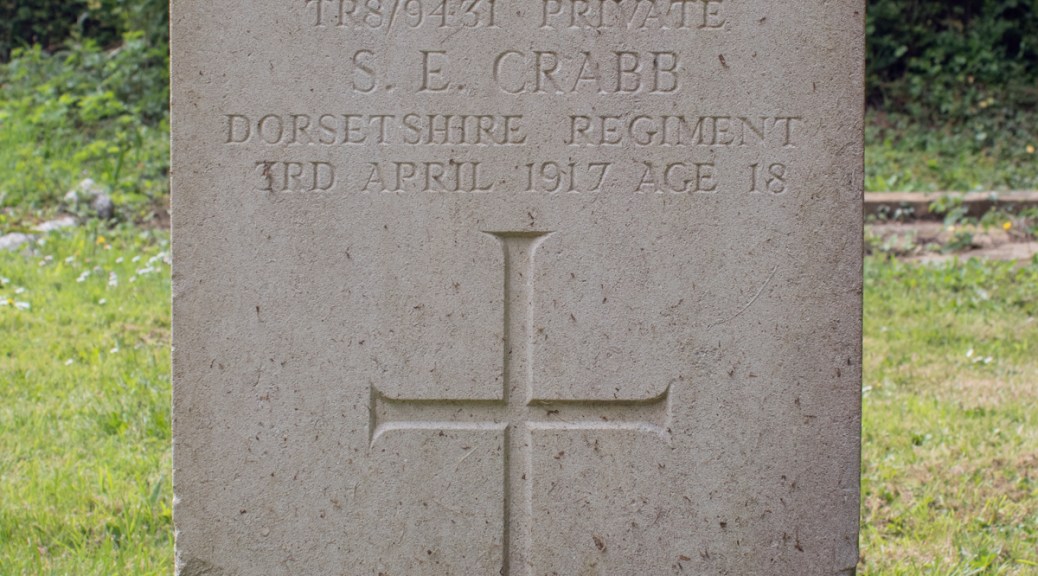
Sidney Edgar Crabb was born in the autumn of 1898 in the Dorset village of Chedington. One of ten children, his parents were shepherd-turned-farm labourer John Crabb and his wife, Mary.

Little information is available about young Sidney’s life. He was still at school when the 1911 census was taken, and was too young to enlist when war was declared in the summer of 1914. He enlisted in the Dorsetshire Regiment no earlier than October 1916, and was sent to Warminster for training.

The only other record for Private Crabb confirms his passing. He died from bronchial pneumonia while in hospital near his army camp in Warminster, Wiltshire, on 3rd April 1917. He was just 18 years of age.

Sidney Edgar Crabb’s body was taken back to Dorset for burial. He was laid to rest in the graveyard of St Mary’s Church, in his home village of Halstock. While only five of his siblings survived childhood, Sidney was the only one to pass away as a result of the conflict.


Private George Hansford

Private George Hansford

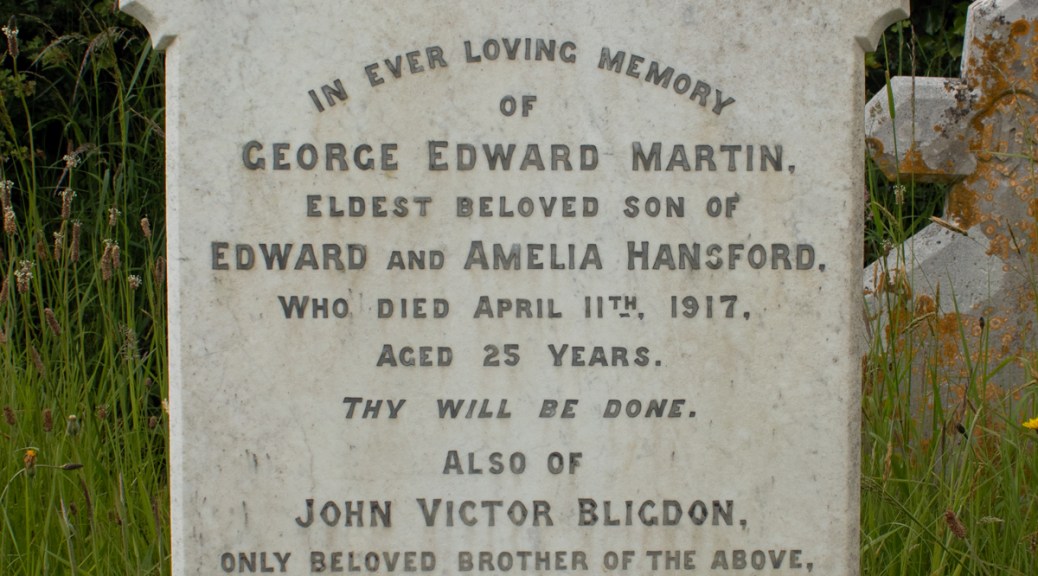
George Edward Martin Hansford was born on 25th March 1892, the second of five children – and the eldest son – to Edward and Amelia Hansford. Edward was a farmer from Netherbury in Dorset, and this is where the family were born and raised.

By the time of the 1911 census, Lower Ford Farm had become a family affair, with George and his older sister, Susannah both supporting their father in running things. War was on the horizon, however, and things were to change.

George was called upon to serve his country on 15th February 1916. He joined the Dorsetshire Regiment, and was assigned to the 2nd Battalion. He wasn’t formally mobilised until 19th January 1917, but his medical identified an underlying health condition.

Private Hansford had suffered a bout tuberculosis in 1914, and this left to his medical report confirming that his health was impacted to the point that he was medically unfit to serve in the army. Unfortunately, while awaiting the results of the report, George, who was back at home had a recurrence of the condition, and succumbed to it. He passed away on 11th April 1917, at the age of just 25 years old.

George Edward Martin Hansford was laid to rest in the graveyard of Holy Trinity Church in Salwayash, a few miles from the family home in Netherbury.


Private John Gaunt

Private John Gaunt

John Alfred Gaunt was born on 15th October 1893, the fourth of five children to John and Jane Gaunt. John Sr was a cattle dealer from St Ives in Huntingdonshire, and it was in the nearby village of Needingworth that the family were born and raised.

John Sr sought out opportunities to support his wife and children and, in 1902 he moved the family to Canada, settling in Pincher Creek, Alberta. There isn’t a great deal of detail available about the Gaunts’ time in North America, but it is likely that farming became their way of life.

Tragedy struck the family in October 1912, when John Sr died, at the age of 61. By this point it seems that they had moved on to British Colombia. Just six months later, Jane also died, John Jr was left an orphan while still a teenager.

Most of the family seemed to remain on the west coast – a later document shows John’s older sister Julia living in Cranbrook, British Colombia – but John was working as a farmer by this point and had either returned to Pincher Creek after his parents’ deaths, or had remained there when they went west.

When war broke out in Europe in the summer of 1914, the Empire were called upon to serve, and John was to return to the country he had left more than a decade earlier. He enlisted on 20th January 1916, joining the Canadian Expeditionary Force.

Private Gaunt’s service records show that he was 5ft 8ins (1.72m) tall, 130lbs (59kg) in weight and had light brown hair, blue eyes and a fresh complexion. It was also noted that he had a fine scar, some 3.5ins (9cm) long, on his upper left arm and had a slight defect in his speech (although this is not elaborated on).

John departed for Europe on 21st August 1916, boarding the HMS Olympic for Liverpool, Lancashire. His unit was initially based in Witley Camps near Aldershot, Hampshire, and he would remain on base until the end of the year. This included eight weeks admitted to the Connaught Hospital, when he was suffering from a bout of syphilis.

By January 1917, John was transferred to the 21st Reserve Battalion, which meant a move to Seaford, East Sussex. He transferred again to the 50th Battalion on 19th March, a move which included being shipped off to France.

Over the next couple of months, things were to change dramatically for Private Gaunt. His service records note that he was wounded on 10th May, but that he remained on duty. On 21st July, he wad admitted to the No. 11 Ambulance Station in Rouen, suffering from jaundice.

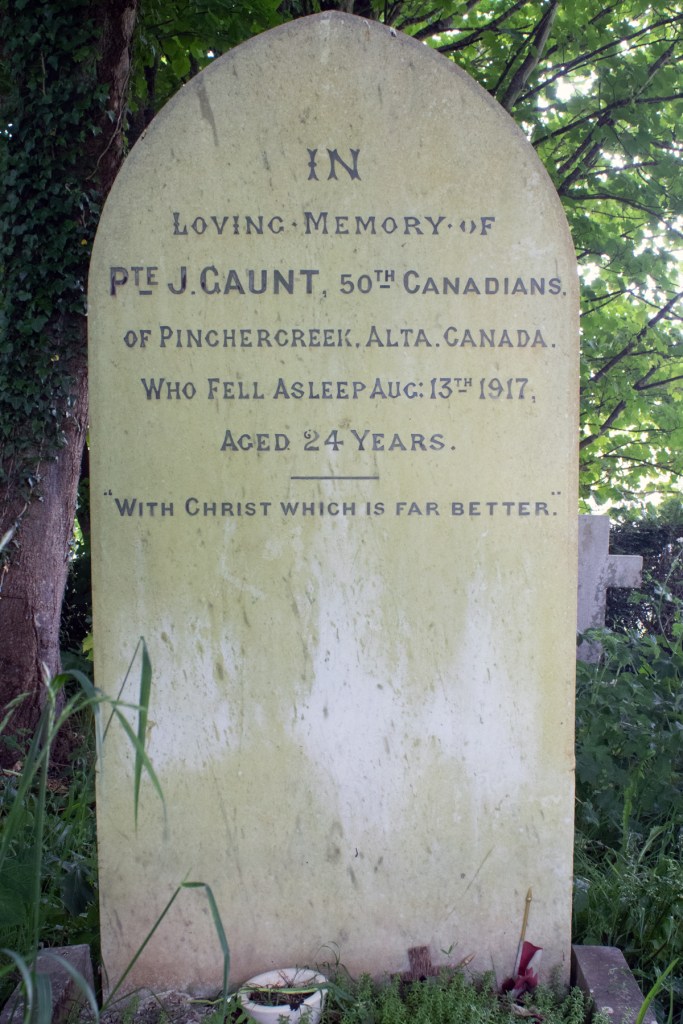
He was medically evacuated to Britain for treatment, initially to the Auxiliary Hospital in Exeter, Devon, then to Uplyme Hospital, just to the north of Lyme Regis. By this point, John was severely ill. He passed away on 13th August 1917, at the age of 23 years of age.

With the majority of his family living on the other side of the Atlantic, John Alfred Gaunt was, instead, laid to rest in the churchyard of Ss. Peter & Paul Church in Uplyme, not fat from where he had breathed his last. He is also among those servicemen to be commemorated on the Pincher Creek War Memorial.