Tag Archives: London

Leading Stoker Percy Moore

Leading Stoker Percy Moore

Percy Edwin Moore was born on 14th April 1889, one of nine children to farrier Charles Moore and his wife, Eliza. Both of Percy’s parents were from West London, and the family was raised on the border between Kensington and Hammersmith.

When Percy left school he found work as a builder’s labourer, but he was drawn to bigger things and, in 1909, he joined the Royal Navy as a Stoker 2nd Class. His service records show that he stood 5ft 6ins (1.68m) tall, had light brown hair, brown eyes and a fresh complexion. He had a scar above his right eye, and a tattoo on each arm.

Percy’s sense of adventure seemed to have been kindled in his earlier years; the tattoo on his right arm was a depiction of Buffalo Bill Cody, the American showman who brought the Wild West to England in the early 1900s. Young Percy’s interest was obviously piqued early on.

Stoker Moore’s first posting was on board HMS Acheron. In the years leading up to the war, he served on six further vessels, returning to HMS Pembroke – the Royal Naval Dockyard in Chatham, Kent – in between voyages. During this time, he was promoted to Stoker 1st Class for his work.

It was during one of these pauses, in August 1913, that he married Annie Eliza Wells, a labourer’s daughter from Kensington. Their honeymoon was brief: just five days after they married, Percy was back at sea.

When war was declared, Stoker Moore was assigned to the battleship HMS Triumph. She served in the Mediterranean, seeing action early on in the Gallipoli campaign. After a short spell back in Chatham, he transferred to HMS Tyne, a depot ship, and received a promotion to Acting Leading Stoker.

By the summer of 1917, Percy was back at HMS Pembroke. The base was overly busy that summer, and he was billeted in temporary accommodation in the town’s Drill Hall.

On the 3rd September 1917, the first night air raid carried out by the German Air Force scored a direct hit on the barracks and Drill Hall; Acting Leading Stoker Moore was killed instantly. He was just 28 years old.

Percy Edwin Moore was laid to rest, along with the other victims of the Chatham Air Raid, in the Woodlands Cemetery, Gillingham.

Ordinary Seaman Robert Smith

Ordinary Seaman Robert Smith

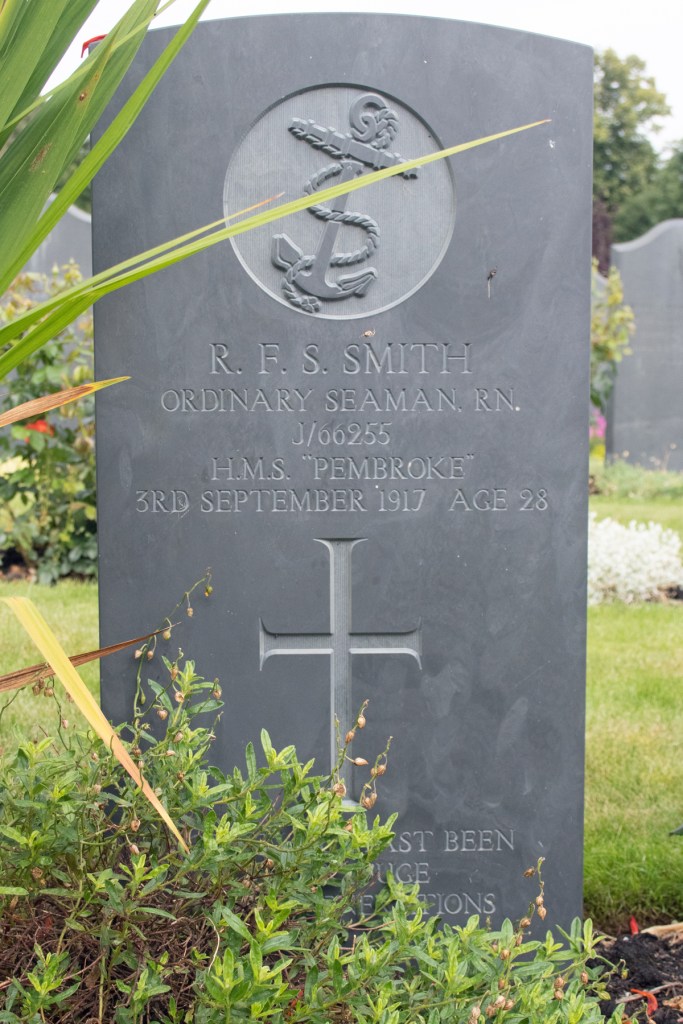
Robert Frederick Sydney Smith was born on 24th July 1889 in Peckham, London. One of seven children, his parents were Robert Smith – a tailor and draper – and his wife Ada.

Little more information is available on Robert Jr’s early life. He married Alice Brookman, a leatherworker’s daughter, on 3rd September 1911, and was, by this time, working as a bank clerk. The couple went on to have three children: Sidney, Eileen and Ronald.

War was on the horizon and, at Robert was soon called up. His service records are dated 31st January 1917, and note that he stood 5ft 5.5ins (1.66m) tall, had brown hair, brown eyes and a medium complexion.

Robert was employed as an Ordinary Seaman, and was initially posted to HMS Pembroke, the shore-based establishment at the Royal Naval Dockyard in Chatham, Kent. After a few weeks, he was assigned to HMS Crescent, a cruiser that served in the North Sea.

After six months at sea, Ordinary Seaman Smith landed back in Kent. HMS Pembroke was a busy place at that point in the war, and additional accommodation was desperately needed. Robert found himself billeted at Chatham Drill Hall, away from the main barracks.

At this point in the war, the German Air Force had been suffering huge losses during the daylight bombing raids it had been undertaking. It was imperative for them to minimise these losses, and so a new tactic – night time raids – was employed.

The first trial of this approach was on the night of 3rd September 1917, and Chatham suddenly found itself in the firing line, startlingly unready and fundamentally unprotected. One of the German bombs landed a direct hit on the Drill Hall, and Ordinary Seaman Smith was killed. He was just 28 years old.

More than 120 servicemen perished during the Chatham Air Raid that night. Many were buried in a mass funeral at the Woodlands Cemetery in nearby Gillingham. This, too, is where Robert Frederick Sydney Smith was laid to rest.


Leading Stoker William Osborne

Leading Stoker William Osborne

William Alfred Osborne was born in Islington, London, on 22nd August 1892. Sadly, this is where any concrete information on his early life – including his family – ends.

The only firm document available is William’s naval service records. This gives the date and location of his birth and also some physical details. He was 5ft 3ins (1.59m) tall, had brown hair, grey eyes (with a scar above his left one) and a fair complexion.

William enlisted in the Royal Navy on 11th May 1911, and was given the rank of Stoker 2nd Class. He was initially stationed at HMS Pembroke – the Royal Naval Dockyard in Chatham, Kent – where he spent a total of five months.

Weeks into his service in Chatham, he was put in the cells for seven days; it is not clear what misdemeanour he had committed, but the punishment this early on into his career seemed to have done the job, as the remainder of his service appears unblemished.

In October 1911, Stoker Osborne was given his first ocean-based posting. He was assigned to the battlecruiser HMS Inflexible on board which he served for nearly six years. During this time, he was given two promotions, to Stoker 1st Class in May 1912, and Leading Stoker four years later.

The Inflexible initially served in the Mediterranean, although during William’s time on board, she was involved in the Battle of the Falklands in the South Atlantic, the Dardanelles Campaign in the Eastern Mediterranean and the Battle of Jutland in the North Sea.

By the summer of 1917, Leading Stoker Osborne was back on home soil, stationed at HMS Pembroke. The Dockyard was a busy place at that point in the war, and additional accommodation was desperately needed. William found himself billeted at Chatham Drill Hall, away from the main barracks.

At this point in the war, the German Air Force had been suffering huge losses during the daylight bombing raids it had been undertaking. It was imperative for them to minimise these losses, and so a new tactic – night time raids – was employed.

The first trial of this approach was on the night of 3rd September 1917, and Chatham suddenly found itself in the firing line, startling unready and fundamentally unprotected. One of the German bombs landed a direct hit on the Drill Hall, and Leading Stoker Osborne was killed. He was just 25 years old.

Nearly 130 servicemen perished during the Chatham Air Raid that night. Ninety-eight were buried in a mass funeral at the Woodlands Cemetery in nearby Gillingham. This, too, is where William Alfred Osborne was laid to rest.


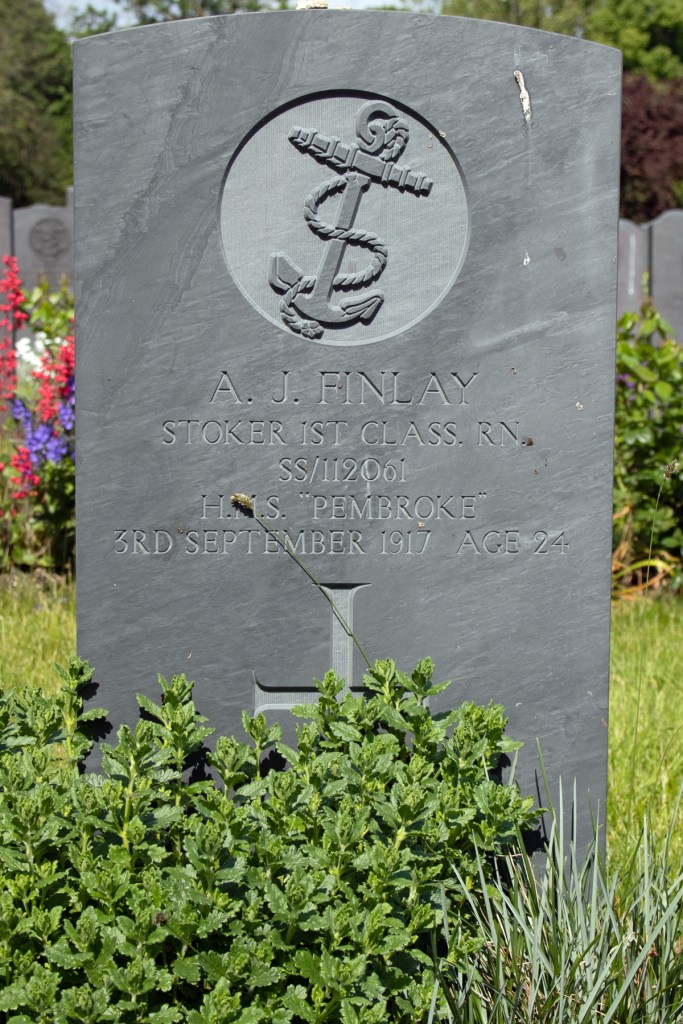
Stoker 1st Class Alfred Finlay

Stoker 1st Class Alfred Finlay

Alfred James Finlay was born in Croydon, Surrey on 7th September 1893. His mother was Emily Finlay, although there is little more information to confirm details of his early life.

He was working as a shop porter when he was drawn to a life at sea and, on 9th April 1912 he enlisted in the Royal Navy as a Stoker 2nd Class. Alfred’s enlistment papers confirm that he was 5ft 5ins (1.66m) tall, had brown hair and brown eyes. While he had a fair complexion, he was also noted to have a scar above his left eye, another on his left thigh, and had a tattoo of a pierced heart on his left arm.

After his initial six months’ training at HMS Pembroke – the shore-based establishment at the Royal Naval Dockyard in Chatham, Kent – he was assigned to the cruiser HMS Lancaster, where he spent a couple of months. He had another few weeks at HMS Pembroke, before being sent to another cruiser, HMS Chatham.

Alfred spent more than three years on Chatham, and was promoted to Stoker 1st Class during his time aboard. Returning once again to Kent, his service from here on in seems to have been mainly shore-based: HMS Pembroke in Chatham; HMS Vivid in Devonport; HMS Victory in Portsmouth.

Stoker Finlay returned to HMS Pembroke in the summer of 1917. It was a busy period for the Naval Dockyard in Chatham, and a lot of the servicemen there – Alfred included – were billeted in temporary accommodation at the nearby Drill Hall. It was here that he was sleeping on the 3rd September, when the German Air Force undertook their first night raid over England. One of the bombers scored a direct hit on the Drill Hall, and Alfred was killed. He was just 24 years old.

Alfred James Finlay was laid to rest, along with the dozens of other victims of the Chatham Air Raid, at the Woodlands Cemetery in nearby Gillingham.

Ordinary Seaman Henry Bird

Ordinary Seaman Henry Bird

Henry David Bird was born on 11th April 1898 in Hoxton, East London. He was the third of eleven children to carter and carman Henry Bird and his wife Florence.

When he left school, Henry Jr found employment as a munition worker, but shortly before his nineteenth birthday, he was drawn to a more active role. On 8th January 1917, he enlisted in the Royal Navy as an Ordinary Seaman. His enlistment papers show that he was 5ft 4ins (1.63m) tall, with brown eyes, brown hair and a fresh complexion. They also noted that he had a scar on his right index finger.

Henry’s first posting was at HMS Pembroke, the shore-based establishment at the Naval Dockyard in Chatham, Kent. After a couple of months’ training, he was assigned to the cruiser HMS Concord. He served on board for a few weeks, before returning to Chatham in May.

The summer of 1917 was a busy time for HMS Pembroke; Ordinary Seaman Bird was one of those billeted in the Drill Hall, sleeping there, rather than in the overcrowded barracks in the dockyard itself. It was here that he was sleeping on the 3rd September, when the German Air Force undertook their first night bombing raid. One of the planes scored a direct hit on the Drill Hall, and Henry was killed instantly. He was just 19 years of age.

Henry David Bird was buried in the Woodlands Cemetery in nearby Gillingham, along with the dozens of other servicemen killed in the Chatham Air Raid.


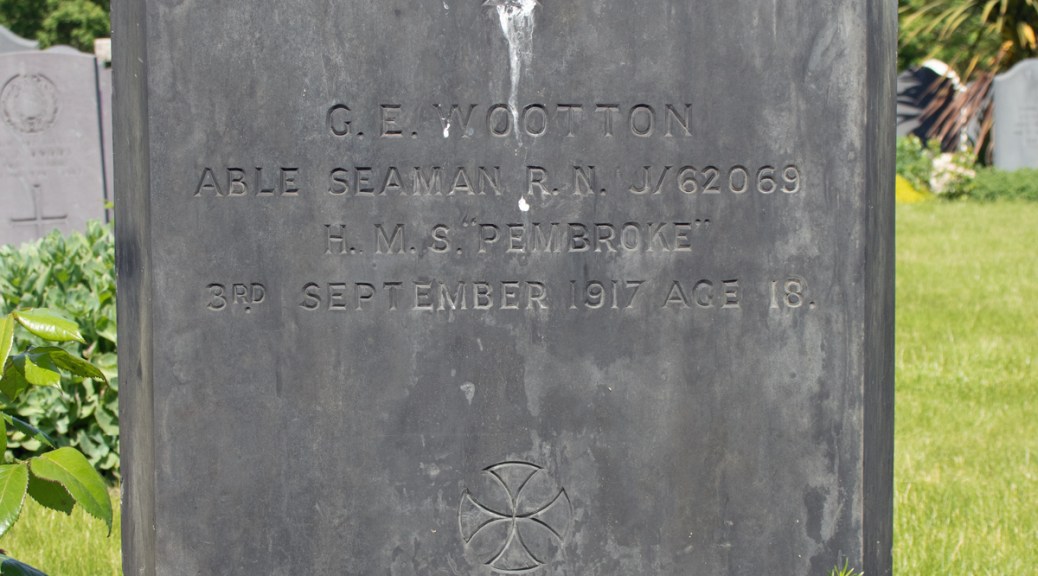
Able Seaman Gregory Wootton

Able Seaman Gregory Wootton

Gregory Ernest Wootton was born on 28th October 1898, the only child of Henry and Isabella Wootton. The family lived in East London, and the year of Gregory’s birth was a challenging one. His parents married that year, and Henry also passed away, leaving Isabella to raise her son on her own.

She was made of stern stuff, however, and moved back in with her father, Joseph, while finding employment as a florist, working with artificial flowers. By 1909, Isabella had remarried, wedding policeman Harry Mee, and moving to South London, where the couple had a child of their own, Gregory’s half-brother, Leonard.

War was edging close to Europe, although Gregory was underage when hostilities broke out. By late 1916, however, this was no longer the case, and he was drawn to the Royal Navy. On 6th November, he gave up his job as a case maker, and enlisted as an Ordinary Seaman. His sign-up papers show that he stood 5ft 4ins (1.62m) tall, had brown hair, brown eyes and a fresh complexion.

Ordinary Seaman Wootton’s first posting was at HMS Pembroke, the shore-based establishment at the Naval Dockyard in Chatham, Kent. After a couple of months, he was moved north, to HMS Ganges, which was a similar training base in Suffolk. While here, he was promoted to Able Seaman.

In June 1917, Gregory was on the move again, returning to Chatham. While here, at a particularly crowded time for the dockyard, he was billeted at the nearby Drill Hall. On the night of the 3rd September, while resting, the first German night raid dropped bombs on Chatham, directly hitting the Drill Hall. Able Seaman Wootton was killed instantly. He was just 18 years of age.

Gregory Ernest Wootton was laid to rest in the Woodlands Cemetery in nearby Gillingham. He was buried with 97 of the victims of the Chatham Air Raid.


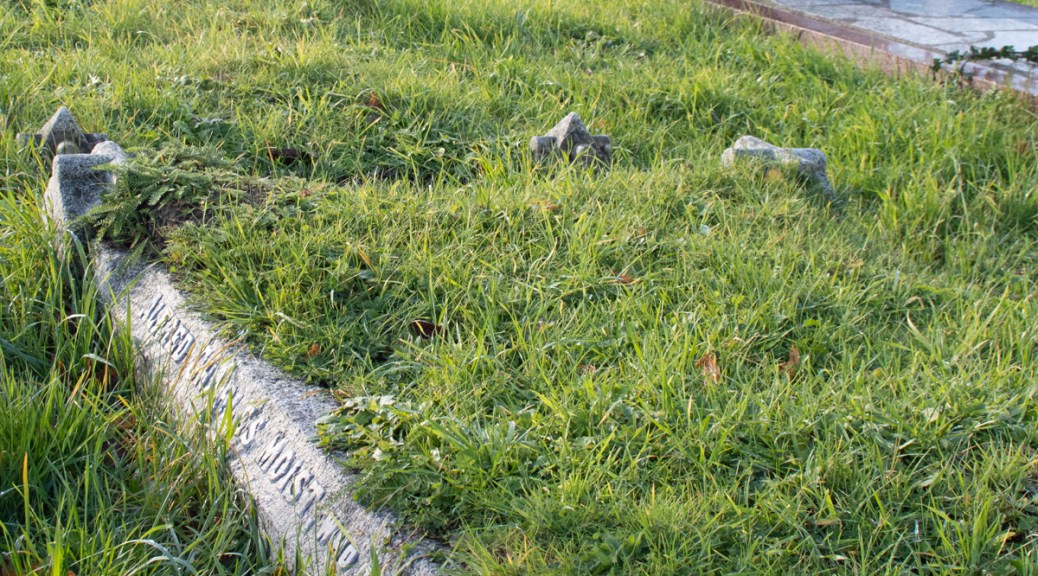
Guardsman Alfred Moist

Guardsman Alfred Moist

Alfred Charles Moist was born early in 1887 in the Devon village of Chudleigh Knighton. His parents were William and Mary Moist, and he was the youngest of eight children. William was a clay miner and his neighbours – who included the young Thomas Willcocks – all worked in the same trade.

William died in 1899, leaving Mary to raise the family alone. By the time of the 1901 census, her widowed daughter Emma had moved back in with her son, and was working from home as a dressmaker. Alfred, meanwhile, and his two older brothers Frank and Reginald were all employed as brick dressers and together they earned enough to keep the family going.

The next census – compiled in 1911 – found Alfred still living with Mary, but the household had a different set up. Emma had remarried and was living in nearby Ilsington with her publican husband. Another of Alfred’s sisters, Bessie, had moved in with her daughter, Florence, and was keeping house for her mother. Reginald was also still living at home and was still employed by the brickyard. Alfred, however, had found now work as a police constable.

Mary passed away in the spring of 1913, by which point, Alfred had met Edith Mary Sampson, a labourer’s daughter from North Devon. The couple married in Broadhempston, near Totnes, on 21st November 1913.

War came to Europe, and Alfred enlisted in December 1915. His job in the police force, however, meant that he was initially placed on reserve, and he was not formally mobilised until April 1918, when he joined the Coldstream Guards. His enlistment papers show that he stood 5ft 11ins (1.8m) tall and weighed in at 10st 4lbs (65kg).

Guardsman Moist was barracked in London, but fell ill in September 1918. He was admitted to the Queen Alexandra Military Hospital with a haematoma and renal calculus (kidney stones). He spent a total of four months in hospital before being discharged back to duty.

At this point, Alfred’s trail goes cold. The next record for him comes in the form of the record of his death, which was registered in Hampstead, London. This suggests that he was either still in the Coldstream Guards or that he had been hospitalised again because of his previous illness. Either way, he died on 28th August 1919, at the age of 32 years old.

Alfred Charles Moist’s body was brought back to Devon. He lies at rest in the Graveyard of St Paul’s Church in his home village of Chudleigh Knighton.


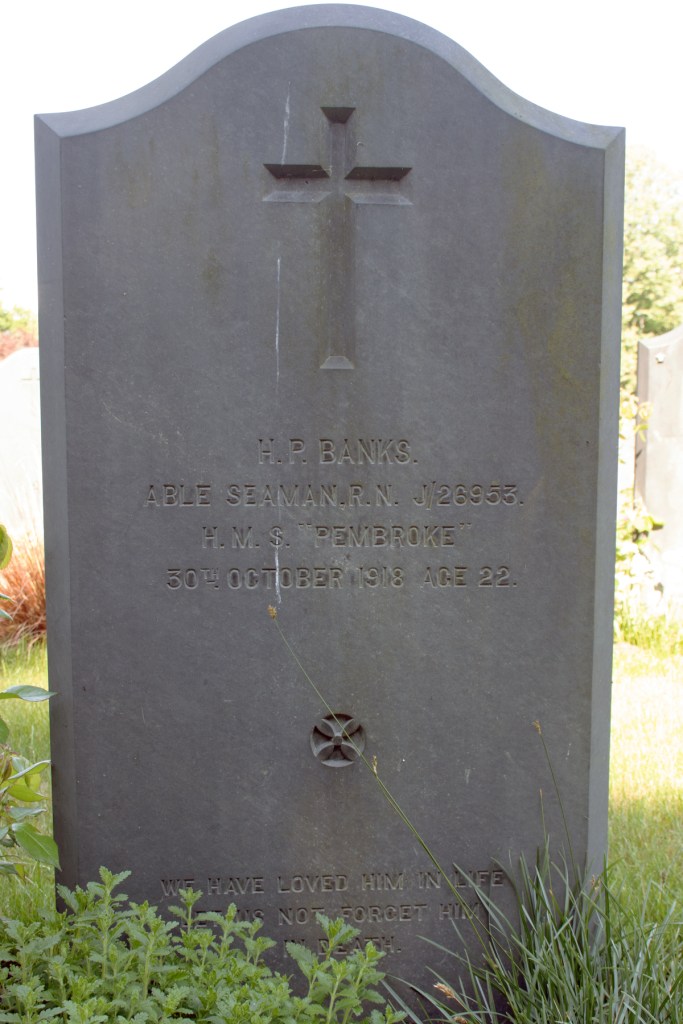
Able Seaman Hubert Banks

Able Seaman Hubert Banks

Hubert Philip Banks was born on 13th September 1896 in Tottenham, London and was one of eight children to Wilfrid and Mary Banks. Wilfrid was a gas engineer, but when he left school, Hubert found work as a clerk. By the time of the 1911 census, the family had moved to Edmonton.

Hubert had a sense of adventure, and wanted a career that reflected that. On 23rd September 1913, he enlisted in the Royal Navy; as he was underage at this point, he was given the role of Boy. Within a year he turned 18 and was formally given the rank of Ordinary Seaman.

After initial training at HMS Pembroke – the shore-based establishment at the Royal Naval Dockyard in Chatham, Kent – he was assigned to HMS Cornwallis, a dreadnought class vessel that served in the Mediterranean. Hubert spent two years on Cornwallis, during which time he was promoted to Able Seaman.

Over the next few years, Hubert served on three more vessels – HMS Quernmore, HMS Agamemnon and HMS Europa. In between times, he was based back in Chatham before moving back to HMS Pembroke on a more permanent basis in July 1918.

It was while he was back in Kent that Hubert fell ill. He was admitted to the Naval Hospital in Chatham with pneumonia, and was to succumb to the lung condition on 30th October 1918. He was just 22 years of age.

Hubert Philip Banks was laid to rest in the Woodlands Cemetery in Gillingham, Kent, not far from the naval base he called home.


Lieutenant Basil Scott-Holmes

Lieutenant Basil Scott-Holmes

Basil Scott-Holmes was born on 2nd February 1884 in the Somerset village of Wookey. The oldest of two children, his father was Liverpool-born Thomas Scott-Holmes and his wife, Katherine. When Basil was born, Thomas was the vicar of St Matthew’s Church, Wookey, but by 1901, he had risen to the role of clergyman – and subsequently Chancellor – at Wells Cathedral.

Basil’s pedigree stood him in good stead. Initially educated in Llandaff, South Wales, he subsequently attended Sherborne School in Dorset. Sent up to Cambridge, he studied history at Sidney Sussex College.

After leaving university, Basil spent time in Europe learning German and French. He was then assigned the role of Assistant Commissioner in North Nigeria but, after a year there he was invalided home taking up a teaching role at the Bristol Grammar School in 1912.

In July 1913, Basil married Barbara Willey, a surgeon’s daughter from Reigate, Surrey. The marriage record shows that Basil was registrar for an architectural association by this point; the couple went on to have two children, daughters Annette and Prudence.

When the war broke out, he was obviously keen to do his bit. In September 1914 he enlisted in the Royal Army Service Corps, before gaining a commission in the King’s Royal Rifle Corps a couple of months later. In the spring of 1916, Lieutenant Scott-Holmes had been seconded to the Machine Gun Corps, although it is unclear whether he served abroad during any of his time in the army.

On the evening of 24th October 1916, Lieutenant Scott-Holmes was riding in a motorcycle sidecar through central London, on the way back to camp. A local newspaper picked up the story:

…they stopped when going through Wandsworth to re-light the near light, and in the dark a motor omnibus ran into them, and Lieutenant [Scott-Holmes], who was strapped in the side-car, was, with the car, flung across the road. He died as he was being taken to Wandsworth Hospital. At the subsequent inquest, a verdict of “accidental death” was returned.

Central Somerset Gazette: Friday 3rd November 1916

Basil Scott-Holmes was just 32 years old. His body was brought back to Somerset; he was laid to rest in the cemetery at Wells Cathedral.


Larger memorial image loading...
Basil Scott-Holmes
(from ancestry.co.uk)

Private Henry Teahen

Private Henry Teahen

Henry Teahen (or Teahan) was born in around 1898 in Castlegregory, County Kerry, Ireland. One of twelve children – eight of whom survived infancy – his parents were John and Catherine Teahan.

John was a wayman (or road surveyor), who was born in Kerry. Catherine was born in Wandsworth and it was in London that the couple met and married. By the time Henry was born, the family had moved back to Ireland, although Catherine had made the journey back to England in the early 1900s, after John passed away.

The 1911 census found the family living in Forest Gate in the east of the capital; Henry’s oldest brother, Joseph, was head of the household and, at 24, was working as a police constable. Schoolboy Henry was there, as was his mother, two more of his brothers, one of his sisters and his niece and nephew.

War was imminent, though, and, within a week of hostilities breaking out, Henry – who had been working as a waiter – enlisted in the Royal Marine Light Infantry. Private Teahen’s service records show that he was 5ft 8ins (1.72m) tall, had a fair complexion, grey eyes and brown hair. They also give his date of birth as 22nd June 1896, although he may have adapted this, as he would have been underage at the point he joined up.

Over the next few years, he served on a number of ships, switching between the Plymouth and Chatham divisions of the regiment. Full details of his duties are not immediately apparent, although is seems that he was injured while on board HMS Valiant in February 1916 – six months before her involvement in the Battle of Jutland – receiving a contusion to his right knee.

By the closing months of the war, Private Teahen had transferred back to the Naval Dockyard in Chatham, Kent. It was while here, early in 1919, that he fell ill. Details of his condition are lost to time, but it is known that he succumbed to them, passing away on 1st March 1919; he was 21 years old when he died.

Henry Teahen was laid to rest in the Woodlands Cemetery in Gillingham, within walking distance of the dockyard at which he was based.


Henry’s older brother James, also fought in the First World War. Full details are not clear, but documents show that he enlisted in the 6th City of London Regiment (also known as the City of London Rifles).

James’ regiment fought in many of the fiercest battles on the Western Front, including Loos, Vimy, High Wood and Messines, but it was at Ypres in the late summer of 1917, that he was injured. He died of his wounds on 30th September, aged just 23 years old.

Private James Teahan was laid to rest at the Mendinghem Military Cemetery in Poperinghe, Belgium.