Tag Archives: mystery

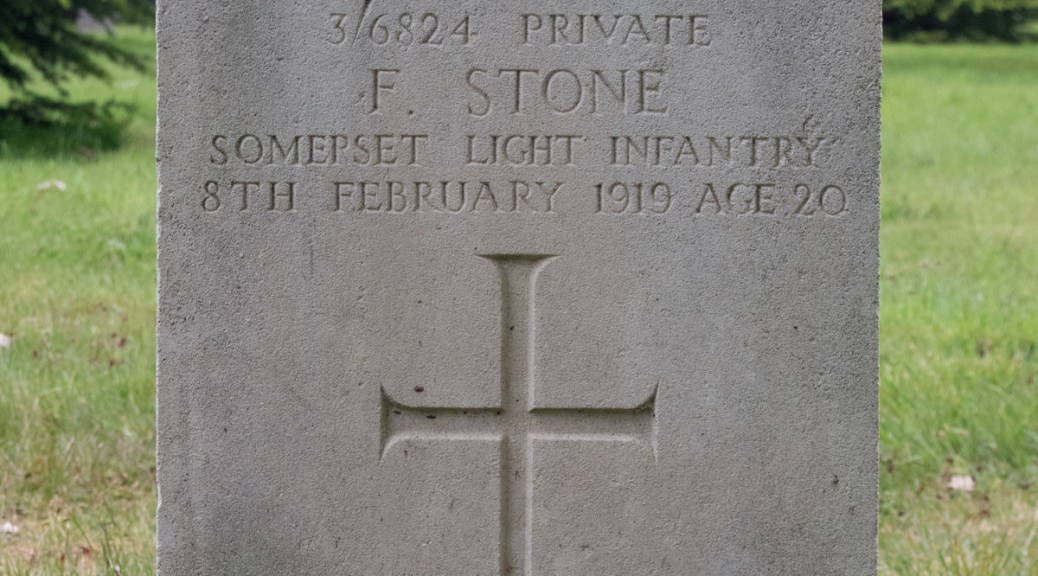
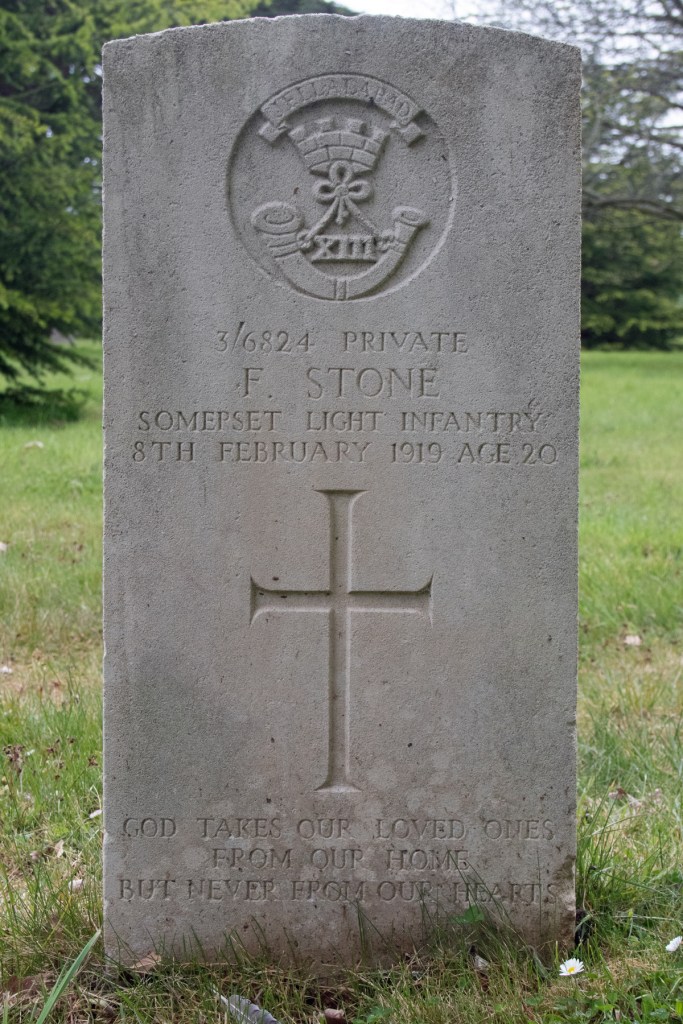
Private Frank Stone

Private Frank Stone

Francis Jesse Stone – known as Frank – was born in 1899, one of five children to William and Sarah Stone. William was a general handyman – his census records record him variously as a labourer, carpenter and carman (or carter) – and the family lived in the village of Bishop’s Hull, on the outskirts of Taunton, Somerset.

Given when he was born, documentation for Frank’s early life is limited to the 1901 and 1911 censuses. We are restricted, therefore, to the information provided by the medal rolls.

Frank was under age when he joined up. He enlisted in the Somerset Light Infantry on 27th December 1914, when he could only have been 15 years old. He was assigned to the Depot Battalion, and was shipped to France the following year.

Sadly, there is little other information about Private Stone. He survived the war and returned to England, but passed away on 8th February 1919. No cause of death is evident, but it seems likely to have been one of the lung conditions running rampant across the country at the time, probably influenza, tuberculosis or pneumonia. When he died, Frank was just 20 years old.

Frank Jesse Stone lies at rest in St Mary’s Cemetery in his home town of Taunton, Somerset.


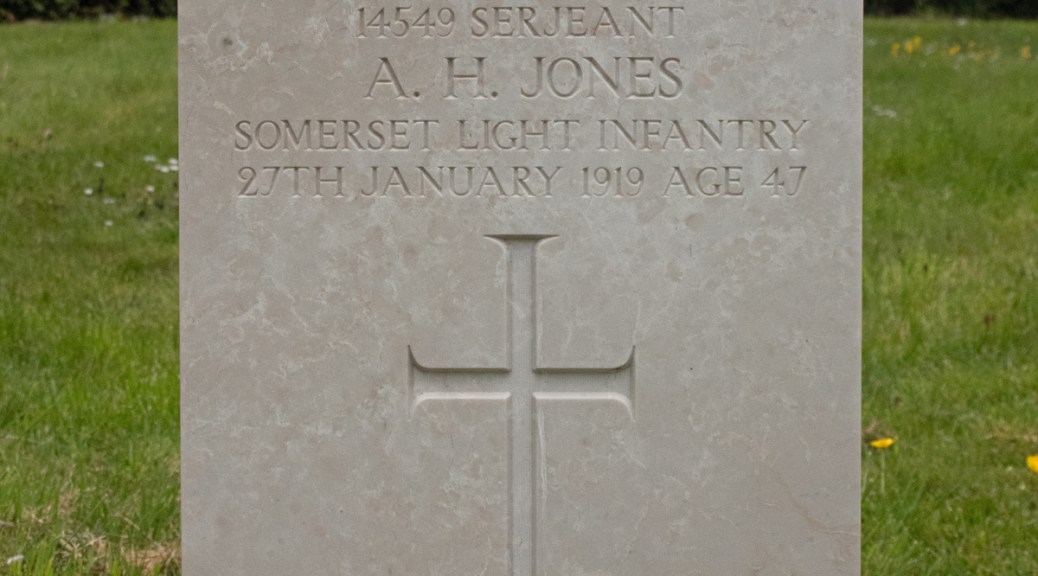
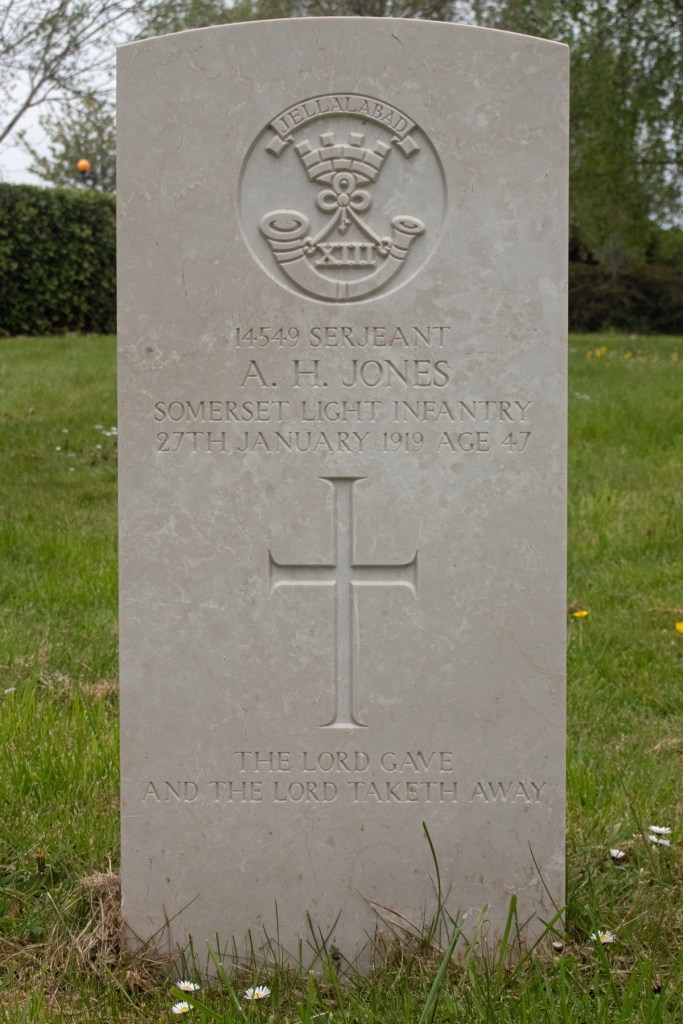
Serjeant Arthur Jones

Serjeant Arthur Jones

Arthur Henry Jones was born in 1874, the oldest of five children to James and Kate Jones. James worked as a coachman, and travelling seems to have been his thing.

Born in Wiltshire, he met and married Kate in Somerset, and this is where Arthur was born; by 1879, the young family had moved to Hampshire, and within a year they had relocated again, this time to Folkestone in Kent. Three years later, by the time James and Kate’s youngest two children were born, they were back in Wiltshire again, having competed their tour of the south of England.

Sadly, tragedy was to strike the Jones family, when Kate passed away in 1888, at the tender age of 31 years old. James had a family of boys to bring up, however, and he married again, this time to a Miriam Millard. The couple went on to have two children, giving Arthur a half-brother and half-sister.

At this point, Arthur falls off the radar. It may well be that he chose to take up a military career early on – if he was serving overseas, it is possible that the census documentation no longer exists. Twelve years’ service would certainly seem to account for his absence between 1881 and the next time his name appears on records.

These records relate to Arthur’s marriage to Fanny Hill. The couple were married by Banns in May 1906, marrying in Westbury, Wiltshire. They went on to have four children – Arthur, Kathleen, Gladys and Percival – between 1907 and 1911.

Again, at this point, Arthur falls off the radar. His service records no longer exist, but what evidence remains confirms that he enlisted in the Somerset Light Infantry and was assigned to the 7th (Service) Battalion. Initially formed in Taunton, they shipped out to France in July 1915, although there is no documentation to confirm when or if Arthur was involved.

Sadly, the only other reference to Serjeant Jones is his final pension record. This confirms that he succumbed to a combination of influenza and pneumonia on 27th January 1919. He was 44 years old.

Arthur Henry Jones lies at rest in St Mary’s Cemetery in Taunton, Somerset.


Private Thomas Winter

Private Thomas Winter

Thomas Henry Winter was born in 1887, one of six children to James and Mary. James was a farmer, and the family lived in Milverton, in the Somerset countryside to the west of Taunton.

James died in 1900, and Thomas found his way into farm work as well. He met and married a local woman called Ada Thynne in February 1909, and the couple went on to have five children: Beatrice, James, Charles, Frank and Thomas.

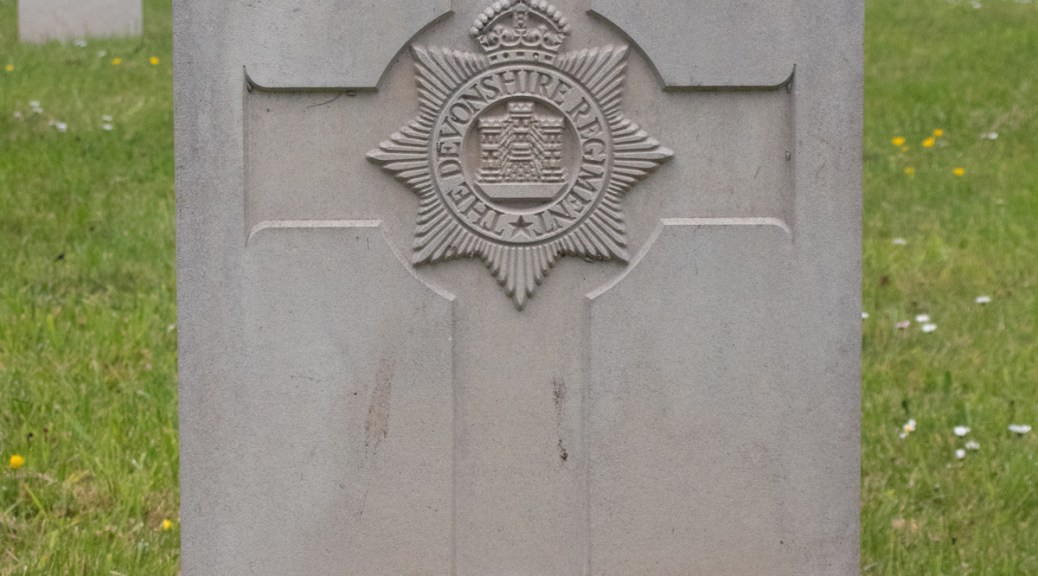
There is little confirmed information about Thomas’ military career. When he joined up, he enlisted in the 13th Battalion of the Devonshire Regiment, although, as his service records no longer exist, it is not possible to identify when this was.

Private Winter later transferred to the Labour Corps – again there are no records to confirm the dates – and this is the division in which he remained.

Illness was to dog Thomas, however; in early 1918, he contracted enteric fever (known nowadays as typhoid), and was hospitalised. Sadly, he succumbed to the disease, and passed away on 14th February 1918. He was 30 years of age.

Thomas Henry Winter lies at rest in St Mary’s Cemetery in Taunton, Somerset.


An additional tragic turn to Thomas’ story is that Ada was pregnant when he passed away. His youngest son, whom Ada named after him, would never know his father.


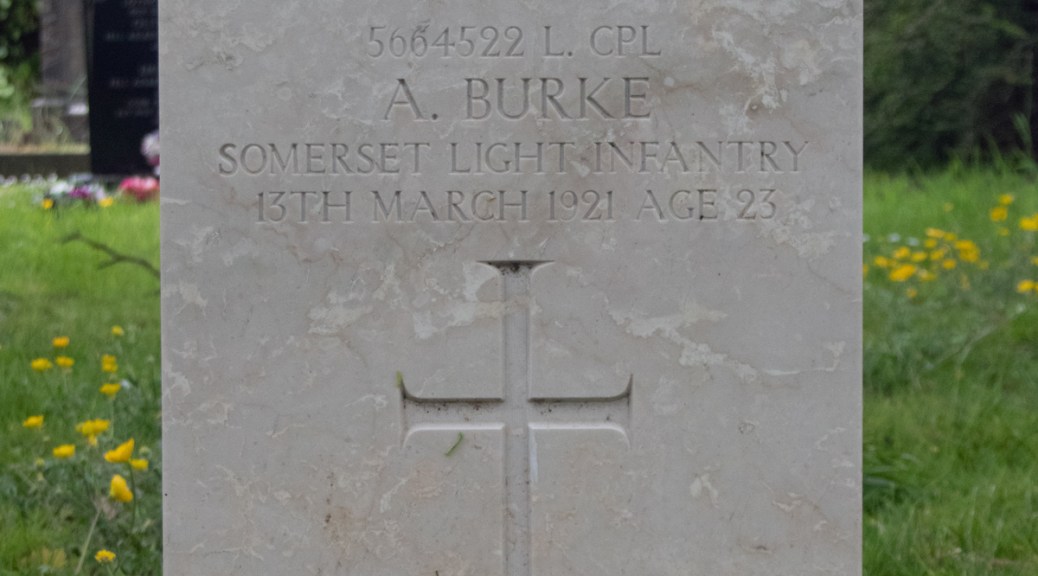
Lance Corporal Albert Burke

Lance Corporal Albert Burke

Sometimes, researching war graves can throw a bit of a curve ball, and the things you uncover can make you stop in your tracks. Such is the story surrounding Lance Corporal Albert Burke, and a media report surrounding his death in March 1921.


SCHEME OF VENGEANCE

Taunton Suicide’s Amazing Last Letter

Toll On Young Women

A sensational affair has occurred at Taunton Barracks. On Sunday morning, Albert (or Alfred James) Burke, aged 23, a Lance Corporal in the Somerset Light Infantry, was found to have taken his life by inhaling chloroform, his dead body being found on a bed at the military hospital, where he was employed as an orderly.

On Saturday night, according to the evidence, deceased appeared to be in his usual health and spirits. The next morning, a comrade found his dead body with a chloroform bottle by its side and near his face a large piece of cotton wool which he had evidently used for the purpose of inhaling the poison.

Some light was thrown on the tragedy by a letter addressed to a Taunton young woman, found on his clothing, and which was read at the inquest yesterday.

It was of an extraordinary character, and began “You wish to know what my intentions are in regard to you. Well, in the first place let me tell you I am not, as the coroner who holds the inquest will adjudge me, insane. In fact I don’t think I was ever so rational or level-minded as at the present moment, although I have had a glass or two.

“Well, Beatrice, mine is a rather long and interesting story. I married Louisa Wills some time in 1917, and I think the least said about her the better, but I wish to say this, that I have never knocked across a beast to equal her for violence. I am afraid the people around Brentford, Middlesex, could give you a far better account of her than I can.”

The writer went on to make certain allegations against the woman, and then referred to other towns where, he said, he had ruined girls before coming to Taunton and joining the Somerset Light Infantry. He added that he spent Friday night, when he was supposed to go out with Beatrice, with another girl in the barracks.

He said his father committed suicide owing to a “thing” who called herself a woman, and he (deceased) got a feeling with him that he would like to pay it back on a few girls. In conclusion, Burke expressed his satisfaction at knowing the condition Beatrice was in, and that he had been able to add another to the list of those on whom he wished to have his revenge.

Evidence was given by Alec Treeby, civilian orderly at the Barracks, who found deceased. In reply to the coroner, witness said that he knew the man was keeping company with a girl, but was not aware that there was any trouble about her.

PC Carter stated that the police had made enquiries, and a telephone message had been received that nothing was known of the man or of a wife and family of the name at Brentford…

[The] medical officer at Taunton Barracks said deceased was a steady, hard working man, and, so far as he knew, perfectly sane.

The jury returned a verdict of “suicide while of unsound mind”.

Western Times: Wednesday 16th March 1921

The newspaper report confirms the Lance Corporal’s name as either Albert or Alfred James Burke; the coroner also went on to say that he had also used the aliases of Povery and Pavey. Sadly, research around these names – and that of Louisa Wills – have either led to frustrating dead ends, or to results too vague to concretely connect them to Lance Corporal Burke.

The life and loves of Lance Corporal Burke are destined to remain a mystery. All that can be confirmed is that he took his own life on 13th March 1921; he was 23 years old.

Albert Burke lies at peace in St Mary’s Cemetery in Taunton, Somerset. He was accepted for commemoration as war dead on 27th May 2016 and was afforded a gravestone by the Commonwealth War Graves Commission.

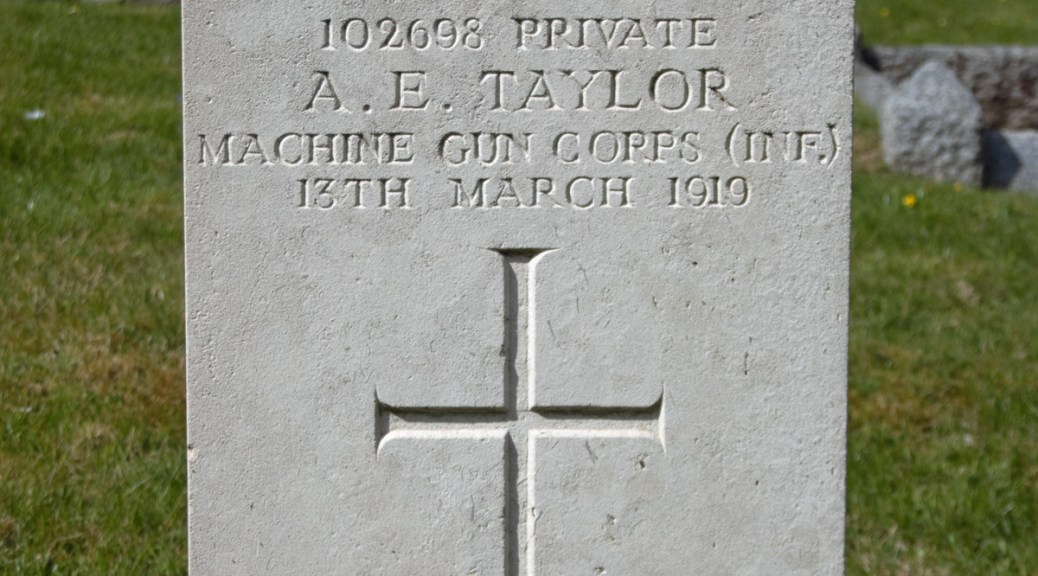
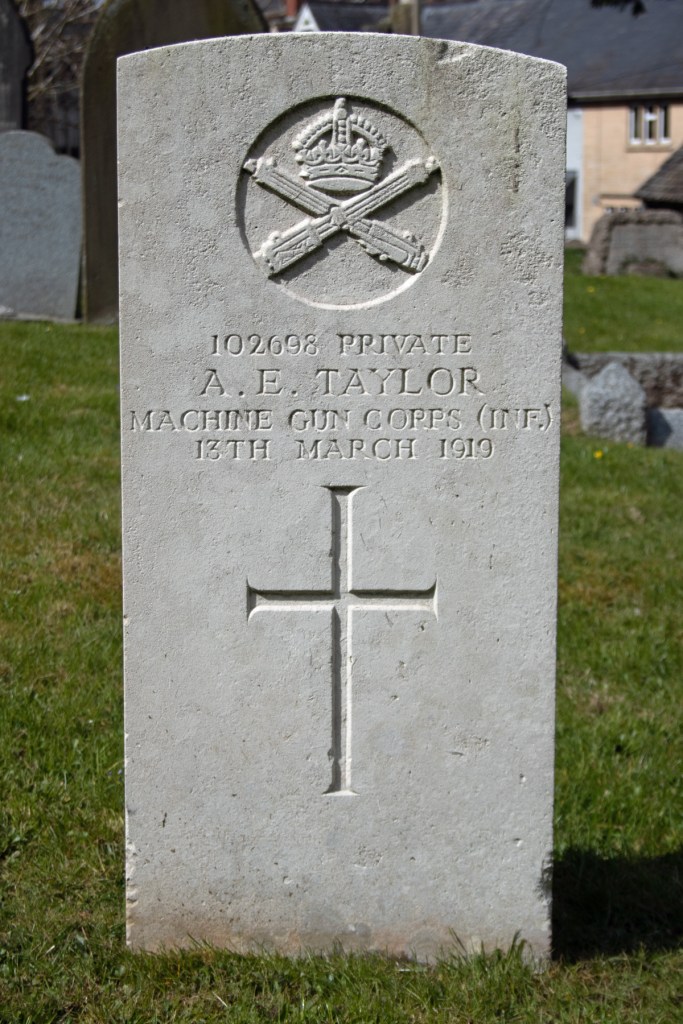
Private Arthur Taylor

Private Arthur Taylor

Arthur Ernest Taylor was born at the end of 1892, the middle of three children to James and Sarah. James was a baker, and the family lived in Bruton, a small town in the west of Somerset.

Only one of James’ three sons followed him into the baking business; this was his youngest, Reginald. The oldest of the three brothers, Oatley, found employment in Wales as a miner. Arthur, on the other hand, stayed in Bruton, but found work as a cycle repairer when he left school.

In December 1913, Arthur married Gertrude James, the daughter of a local carpenter; the young couple went on to have a son, Gerald, the following year.

Sadly, little information about of Arthur’s military career survives. He enlisted in the Machine Gun Corps, although there is nothing to confirm exactly when he enrolled.

The next time Private Taylor appears in the records is a notice in the Western Gazette on 28th March 1919. The newspaper reports that he passed away in the Military Hospital in Grantham, Lincolnshire. Further documentation shows that he passed away on 13th March 1919, at the age of 27 years old. Sadly, there is no confirmation of the cause of his passing.

Arthur Ernest Taylor was brought back to Somerset, and his body lies at rest in the graveyard of St Mary’s Church in his home town of Bruton.


Private William Diamond

Private William Diamond

William Diamond was born in around 1888, although documentation relating to his life are tantalisingly absent. From what does remain, the following can be identified.

William was one of ten children, whose mother was Maryann (or Mary Ann) Diamond. His father had passed away by the time of the 1911 census, by which point the Maryann was living with six of her children, including William, in the village of Litton, on the north side of the Somerset Mendips.

When war broke out, William enlisted, and was assigned to the 15th Battalion of the Hampshire Regiment. Again, there is little documentation to confirm his military service; sadly, the next time Private Diamond appears in the records is to confirm his passing.

The local newspaper reported on his funeral:

The funeral took place on Sunday afternoon, at Litton, his native place, of Private W Diamond, 28 [sic], late of the Hampshire Regiment, who died in hospital in Northampton after a serious illness, after serving some seven months at the front.

Among the chief mourners was a younger brother in khaki (an elder one is now serving in India) and several officers of the AOF, of which deceased was a member.

Shepton Mallet Journal: Friday 24th August 1917

Private William Diamond passed away on 15th August 1917, at the age of 29 years old. He lies at rest in the churchyard of St Mary the Virgin, in Litton, Somerset.


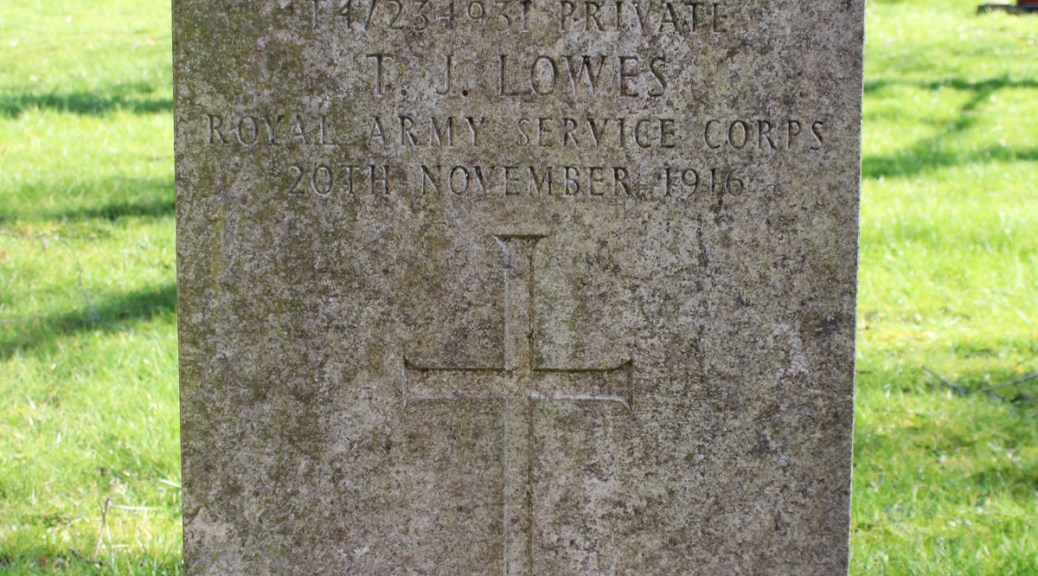
Private Thomas Lowes

Private Thomas Lowes

TJ Lowes is another of those names that challenges you to find out more about their lives. A quick search against the surname and service number identified the full name of Thomas James Lowes, and the Commonwealth War Graves Commission website confirms he was the husband of Mary Lowes.

There is enough circumstantial evidence available to suggest a particular set of records, but nothing to fully connect this gravestone to those records.

Based on that documentation, this is what I believe to be the Thomas James Lowes’ life.


Thomas James Lowes was born in Chatham, Kent, in 1863. One of eight children, his parents were Joseph and Jane Lowes, who came from Durham. Joseph was a shipwright, and moved the family to Hampshire in around 1860, before settling in Kent a year or so later. Given his trade, it the sea ports were an obvious draw, and he found work in the Naval Dockyard in Chatham.

When he left school, Thomas found work as a painter, and this was work that stood him in good stead all his life. He started decorating houses, but soon found employment in the dockyard.

Joseph died at some point in the 1880s, and by the 1891 census, Thomas was living at home with his mother and three of his younger siblings, all working to bring money in.

It was later that year that he got married, to a woman called Mary. The couple went on to have two children – Elsie (who was born in Sutton, Surrey) and Thomas Jr (who was born back in Kent). The young family came to live close to the dockyard again, as this is where Thomas was obviously earning his living.

War was on the horizon and, while Thomas’ full service records do not exist, it’s been possible to piece some bits together. He enlisted in the Royal Army Service Corps early on in the conflict, and worked as a farrier for No. 2 Company Depot. From here on in, however, Private Lowes’ documentation becomes confusing.

The Army Register of Soldier’s Effects confirms the service number documented elsewhere – T4/234931 – and that he passed away on 20th November 1916. It states that the the money was passed to his father, Thomas, which doesn’t tally up with the other records.

The other documentation available – the Pension Ledger and Index Cards – all include the Private Lowes’ service number, but give his widow , Mary Lowes, as his beneficiary.

Thomas contracted pneumonia while on active service; he was admitted to the Royal Herbert Hospital in Woolwich, but succumbed to the illness on 20th November 1916. He was 53 years old.

Thomas James Lowes was laid to rest in the Woodlands Cemetery in Gillingham, Kent.


Private Thomas Lowes

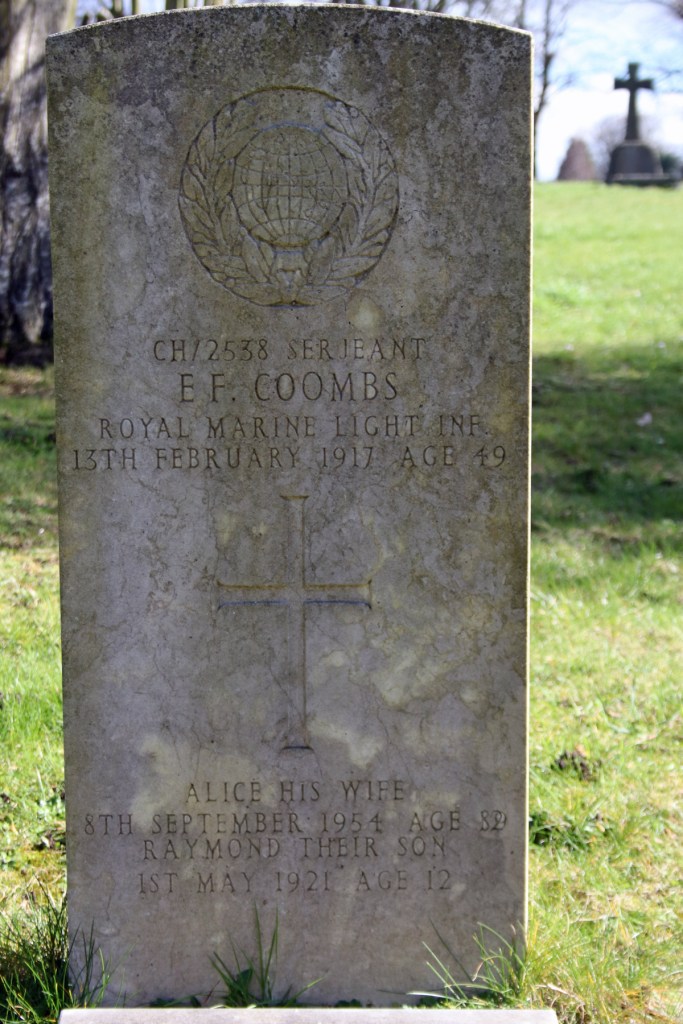
Sergeant Ernest Coombs

Serjeant Ernest Coombs

Ernest Frederick Coombs was born in the summer of 1866. One of four children to cabinet maker Frederick Coombs and his wife Julie, the family lived in Leatherhead, Surrey.

Unfortunately, the documentation around Ernest’s life is a little scattered. What we do know is that he married Alice Amelia Kinnear in June 1889, and the couple went on to have fourteen children.

Jumping forward, and by the time of the 1911 census, the family were living in a small terraced house on the outskirts of Dover. Ernest listed his trade as a canteen managed for a provision merchant.

Sadly, Ernest’s military records are also lost to time. He enlisted in the Royal Marines Light Infantry, and was promoted to Serjeant during his time there.

The only other information available about him comes from the obituaries section of a local newspaper in March 1917:

COOMBS: On February 13th, at the Royal Naval Hospital, Chatham, after a short illness, Ernest Frederick Coombs, aged 50 [sic] years (late of 14 Leighton Road, Dover). RIP

Dover Express: Friday 2nd March 1917

Ernest Frederick Coombs was actually 49 when he died; he lies at rest in the Woodlands Cemetery in Gillingham, Kent.


Ernest’s grave was also the last resting place for his youngest son, Raymond, who died aged just twelve years old, two months after his father, and his widow, Alice, who passed away in 1954, at the age of 82.


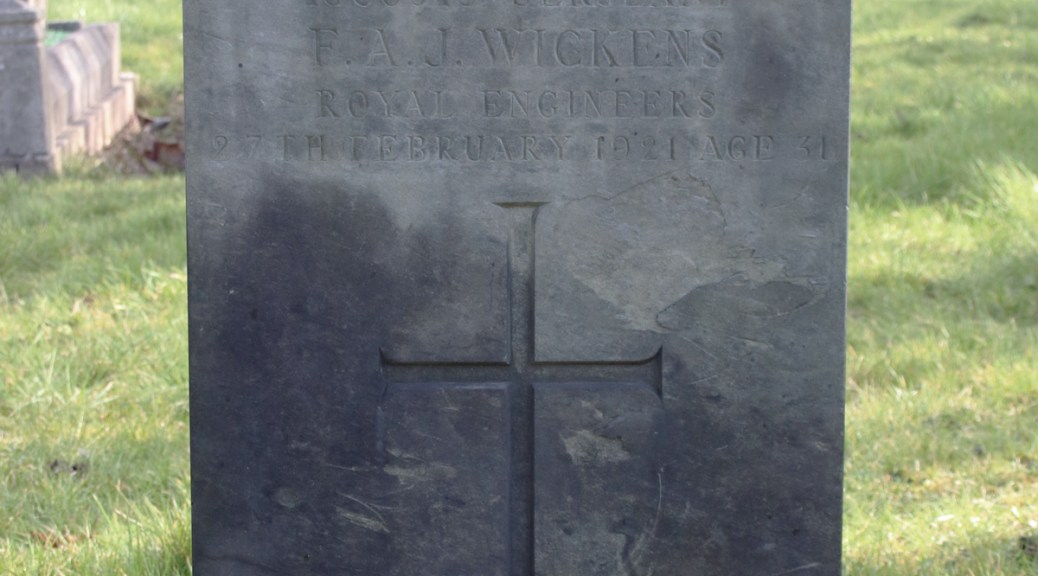
Serjeant Frederick Wickens

Serjeant Frederick Wickens

Frederick Albert John Wickens was born in Newbury, Berkshire, in the summer of 1889. The oldest of four children to Alfred and Emily Wickens, his father was a brewer’s labourer.

The military life proved more of a draw to Frederick, however. While his full records no longer exist, by the time of the 1911 census, he was recorded as being a Sapper with the 2nd Field Troop of the Royal Engineers. He was based at Potchefstroom, around 75 miles (120km) south east of Johannesburg in South Africa, and his trade was listed as a tailor.

Sadly, it is at this point that Frederick’s trail goes tepid, if not cold.

From a personal perspective, he married a woman called Rose, who was a year younger then him. Her details are scarce, and there is nothing to confirm when or where they married (other than the 1911 census, when Frederick was listed as ‘single’).

The couple must have had some connection to Gillingham, as this is where they lived; given the proximity of the Royal Engineers Barracks in neighbouring Chatham.

Sapper Wickens’ military service continued into the Great War. He was awarded the medaille militaire by Belgium, and achieved the rank of Serjeant during his career. Unfortunately, there are no details of the actions around either the award or his promotion.

Serjeant Wickens passed away on 27th February 1921; he died in Chatham, although the cause was not recorded. He was 31 years old.

Frederick Albert John Wickens lies at rest in the Woodlands Cemetery in Gillingham, Kent.


Frederick’s younger brother Thomas, also served in the Great War. He enlisted in the Princess Charlotte of Wales’s (Royal Berkshire) Regiment, and was involved in the battles on the Western Front. Sadly he was killed in the fighting on 24th May 1916, at the age of 19 years old.


Musician Henry Selley

Musician Henry Selley

Henry Louis Selley was born in 1876, one of nine children to Richard and Mary Ann Selley. His father was an agricultural labourer and the family lived in Exminster, Devon.

Initially, Henry followed his father in becoming an agricultural labourer, but the military life seems to have sparked an interest. While Henry’s military records no longer exist, he is recorded as having completed 24 years’ service with the Royal Engineers at the time of his death. He would have enlisted, therefore, in around 1897, when he was about 21 years of age.

As to his duties while in the military, these can only be guessed at. He is intriguingly noted as Musician, although there is no documentation to expand on Henry’s role any further. There were many professional musicians in the army, and they performed table music, serenades, and home concerts, mainly for high-ranking officers.

Musician Selley’s role may also have to be set timing for marches, etc, although, again, this is purely speculation on my part, as there is no evidence to suggest this was the case.

Henry married a woman called Constance in 1905; she had been born in Devon, but there is no further information on her. The 1911 census records the young couple as living in a terraced house not far from the Royal Engineers Barracks, where Henry would have been based. The couple did not go on to have any children.

And there, Musician Selley’s trail goes cold. The next that he appears in any documentation is in 1921, when his army pension record confirms that he passed away. He had been admitted to the Royal Herbert Hospital in Woolwich with pulmonary tuberculosis, and succumbed to the disease on 26th May 1921. He was 45 years old.

Henry Louis Selley lies at rest in the Woodlands Cemetery in Gillingham, Kent.