Tag Archives: pneumonia

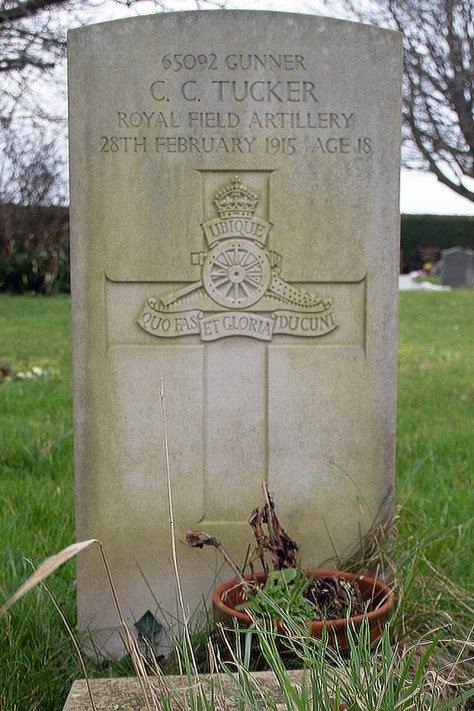
Gunner Clifford Tucker

Gunner Clifford Tucker

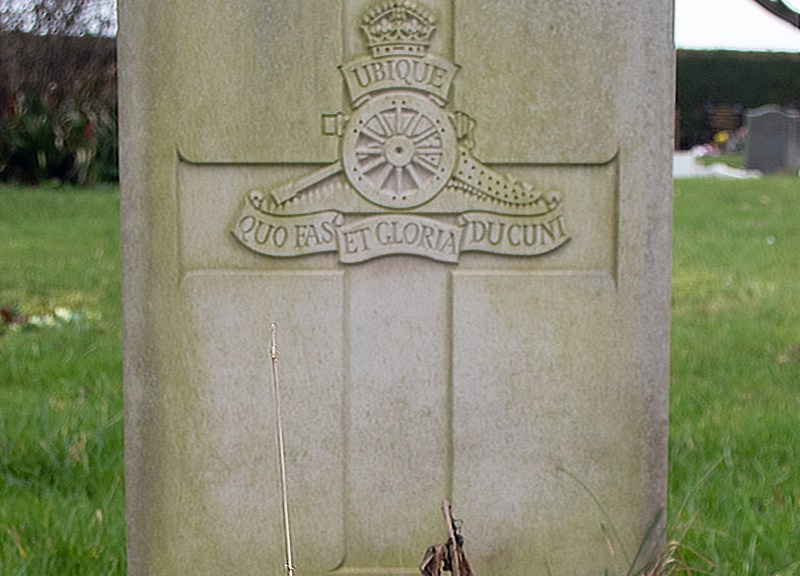
Clifford Charles Tucker was born in 1896, one of five children to John and Ellen Tucker. John was a shoemaker in the Somerset village of Othery, while Clifford became a farm labourer when he left school.

There is little documented of Clifford’s life, and what I have been able to identify about his military career has come from a newspaper article.

Much regret is felt in Othery at the new of the death of Clifford Tucker, one of the young fellows who volunteered for the service of their King and Country. Deceased, who was only 18 years of age… enlisted in the Royal Artillery about six weeks ago and was stationed at Brighton.

He was taken ill with pneumonia and died, his father arriving in time to see him before he breathed his last.

Taunton Courier and Western Advertiser: Wednesday 17th March 1915.

Gunner Tucker passed away on 28th February 1915, aged just 18 years old.

He lies at rest in the cemetery of his home village of Othery.


Corporal Ossian Richards

Corporal Ossian Richards

Ossian Emanuel Richards was born in Westonzoyland, Somerset, in December 1897. He was the youngest of two children and his parents – Emmanuel and Jane – were farmers in the area.

Ossian enlisted later in the war, joining the RAF in June 1918. While little detail of his service is available, he had been a fitter before joining up, so it may well have been on the mechanical side of things that he was involved.

After nine months’ service, Ossian has been promoted to Corporal, and, with the war over, he was transferred to the RAF Reserves in March 1919.

Sadly, as with many young men of his generation, Corporal Richards succumbed to the flu pandemic that followed the war. He died on 15th September 1919, aged just 21 years old.

Ossian Emanuel Richards lies at rest in the cemetery of his home village of Westonzoyland.


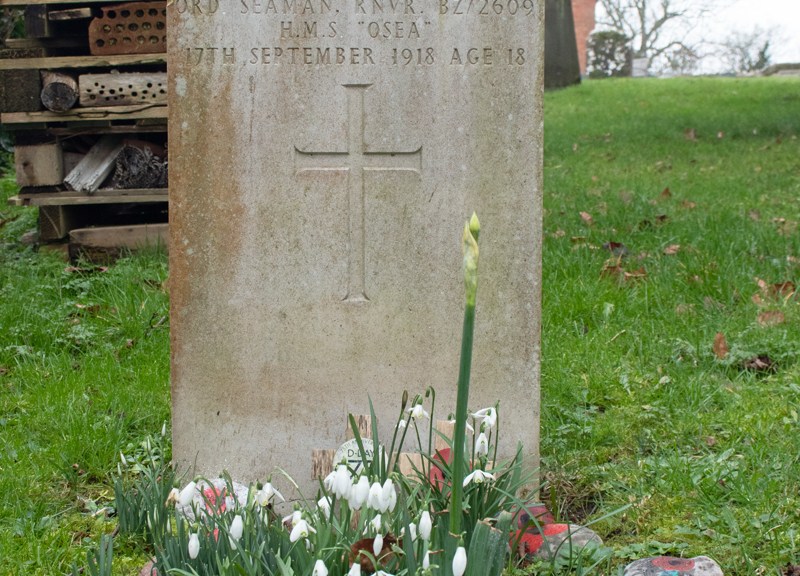
Ordinary Seaman Harry Kick

Ordinary Seaman Harry Kick

Harry Kick was born in August 1900, the oldest of six children to George and Georgina Kick from the small village of Middlezoy in Somerset. George was an agricultural labourer, while his wife helped with the dairy side of Jones Farm, where he worked.

Details of Harry’s military service are scarce, but, based on his age, it is likely to have been the second half of the war when he enlisted. He joined the Royal Navy and was assigned to HMS Osea, a naval base in Essex.

Sadly, there is little evidence of Harry’s time in the navy. His pension records confirm that he passed away on 17th September 1918, having been suffering from pneumonia. He was just 18 years old when he died.

Harry Kick lies at peace in the churchyard of Holy Cross Church in his home village of Middlezoy, Somerset.


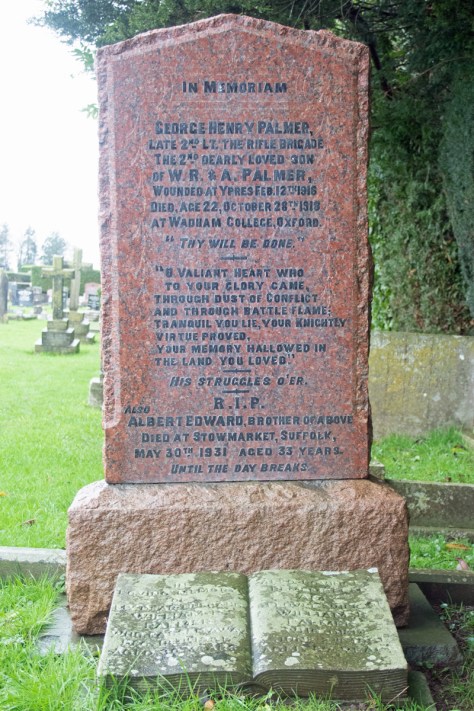
Second Lieutenant George Palmer

Second Lieutenant George Palmer

George Henry Palmer is one of those names that has been a challenge to research and who risked being lost to time.

George and Henry are common names for the late Victorian era, so a simple search on Ancestry brought up too many options to confirm anything specific.

Given the ornate nature of his headstone, it seemed reasonable that his passing and funeral would have been recorded in contemporary media, and indeed it was; the only identifiable name was his own. (His parents “WR and A Palmer” and featured, as is his grandfather “Rev. J Palmer”, but, again, this is not enough to go on for research.)

The additional name on the gravestone, however – George’s brother Albert – proved to be the key, though, identifying the following.


George Henry Palmer was born in May 1896, one of five children to William Richard Palmer and his wife Amy. William was a chemist’s assistant, a job that seemed to move him around the country. William was born in Wells, Somerset, as was his wife and eldest son; George was born in Regents Park, London, while Albert, who was a year younger, was born back in Wells. By the time of the 1901 census (when George was 4 and Albert 3), the family were living in Leicester, and they remained so for the next ten years.

Details of George’s military service comes primarily from the newspaper report of his funeral:

Deceased… was discharged from the Army through wounds received at Ypres in February, 1916, and had resumed his studies at Oxford and entered on a course of forestry, which he was following with great success.

He was well known in Wells, having spent a considerable time in the city and vicinity. He took a great interest in the Wells Volunteers, and was able to drill them in true Army style, having received his training in the Artist Rifles, and later gained his commission in the Rifle Brigade, where he was spoken highly of by his brother officers and men.

Mr Palmer was most thorough and painstaking in all his duties and studies. He was a Wyggestine [sic] scholar at the age of ten years in open competition, and later senior scholar at Wadham College Oxford.

Wells Journal: Friday 1st November 1918.

Second Lieutenant Palmer contracted pneumonia while up at Oxford, succumbing to the illness on 28th October 1918, just a fortnight before the end of the war. He was 22 years of age.

George Henry Palmer lies at rest in the cemetery of his home city of Wells.


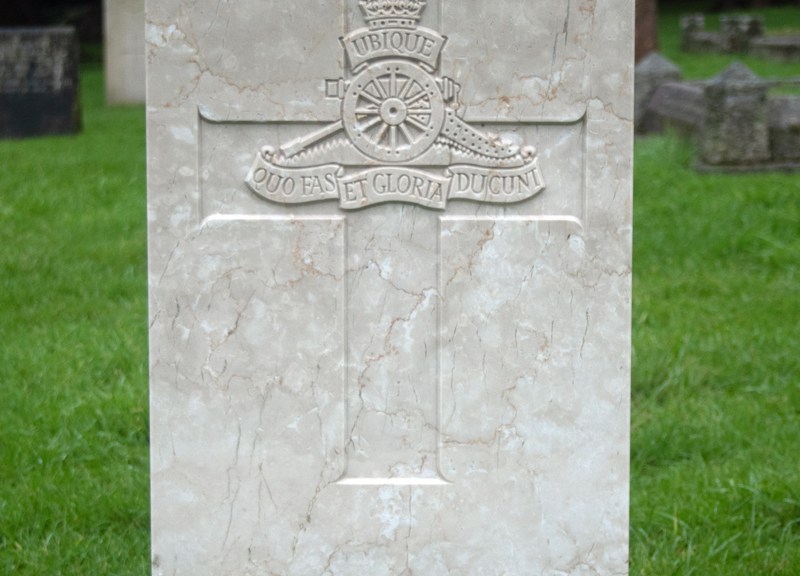
Gunner Alfred Richards

Gunner Alfred Richards

Alfred Henry Richards was born in 1891, the oldest of five children to William Henry Richards and his wife Jane. William (who was known as Henry) worked in the local paper mill, and this is a trade that his two sons – Alfred and Leslie – were to follow as well.

Paper making was a driving force in this part of Somerset during the Victorian era, employing a large number of people in Wells and the nearby village of Wookey, which is where Alfred and his siblings were born.

Details of Alfred’s military service are sketchy. He enlisted as a Gunner in the Royal Horse Artillery, although when during the war this happened is unknown.

His troop – the 18th Brigade, 1st Somerset Royal Horse Artillery – was stationed in the UK for the first couple of years of the war, before serving in the Middle East. Again, I have not been able to confirm how much of this service Gunner Richards was involved in.

Alfred returned to Somerset after being demobbed, but within a few months of the end of the war, he succumbed to double pneumonia. He passed away on 1st March 1919, aged just 28 years old.

Alfred Henry Richards lies at rest in the cemetery in Wells, Somerset, not far from his home.


Private Francis Smith

Private Francis Smith

Francis George Smith was born in Glasgow in 1890. Records are scattered, but some of the pieces pull together to give an outline of his life.

The son of William and Mary Smith, Francis was the fourth of six children. His tombstone confirms that William had worked as an optician, but passed away when Francis was a young man.

Francis was an electrical engineer, and had assisted Mary in her business in Glasgow before signing up.

Private Smith enlisted early on in the war, “on February 24th of this year [1915], when he left his native city for London, where he joined the motor transport section of the Army Service Corps” [Wells Journal, Friday 12th March 1915].

Billeted in Wells, he had been assigned to the 133 Mechanical Transport Company. Within weeks of moving there, however, it seems that Francis fell ill. Sadly, his was a life cut too short, and he passed away from pneumonia on 6th March 1915, aged just 25 years old.

Francis George Smith lies at rest in the cemetery in Wells.


Serjeant William Waterhouse

Serjeant William Waterhouse

William James Waterhouse was born in 1875, the eldest of seven children to Richard and Elizabeth Waterhouse. The family lived in Cumberland, where Richard initially worked a grocer before becoming a music teacher.

William followed his father into food retail, working initially as a butcher’s boy in Barrow-in-Furness, before moving 400 miles to the south coast and settling in Eastbourne. Travel was definitely on William’s mind, however, as, by the 1911 census, he was a butcher’s manager at a hotel in Leicester.

William’s service records are limited; he was 39 when war broke out, and enlisted in the Eastern Mounted Brigade, before transferring Army Service Corps. During his time, he was promoted to Serjeant, and according to a newspaper report of his funeral “was most popular among the men.” [Wells Journal: Friday 9th July 1915]

It seems that, as part of his service, Serjeant Waterhouse had been assisting with haymaking in the Wells area, and it was after this that he fell ill. He developed pneumonia, and passed away on 30th June 1915. He 40 years old.

William James Waterhouse lies at rest in the cemetery of his adopted home town of Wells, in Somerset.


Private Thomas Baker

Private Thomas Baker

Thomas Baker was born in 1877, the youngest of four children – all boys – to John and Anna Baker from Meare in Somerset. John was a farm labourer, and it was rural trades that his four sons followed, Thomas himself also becoming a farm worker.

Thomas married in August 1896; Phoebe Ann Willis was also from Meare and was just seventeen when the couple married. While I am sure there was love involved, something more practical might have prompted such a young marriage as, six months later, the couple had their first child, Henry.

Thomas and Phoebe went on to have four children, three of whom – Henry, Florence and Amy – survived. By the time of the 1911 census, the family were living in their home village of Meare, with Henry following in his father’s – and grandfather’s – line of work.

Full details of Thomas’ military services are not available. He enlisted in the Devonshire Regiment as part of the 13th Works Battalion and, while there is no documentation to confirm when he joined up, it was probably early in 1917.

Thomas and Phoebe’s son Henry had enlisted in 1915, joining the Gloucestershire Regiment. It seems likely he fought on the Somme, and he was killed in action in November 1916, aged just 20 years old. It may have been this loss that prompted Thomas to do his duty, albeit on the Home Front.

Whenever it was that Private Thomas Baker had enlisted, it was Phoebe that was to suffer the ultimate price. Having already lost a child young, her boy had died in the fields of France, and her husband was also about to add to that loss.

Thomas contracted pneumonia in the winter of 1916-17, and passed away in a military hospital on 22nd February 1917. He was 40 years old.

Thomas lies at rest in the graveyard of the Church of the Blessed Virgin Mary & All Saints in his home village of Meare in Somerset.


Gunner Arthur Latcham

Gunner Arthur Latcham

Arthur James Latcham was born in 1889, the oldest of five children – all boys – to Walter and Matilda Latcham. The family lived in Street, Somerset, where Walter worked as a carpenter in the Clark’s shoe factory.

Initially following his father into shoemaking, Arthur was quick to enlist when war broke out. Details of Gunner Latcham’s military service is scarce, but documents confirm that he joined the Somerset Royal Horse Artillery on 8th October 1914. He did not see active service abroad, but had been stationed on the east coast for his training.

While little remains of his service records, contemporary media of the day includes a lot of information about both his passing and his subsequent funeral.

On Sunday, December 5th, having a few hours’ leave, he visited his parents at Street, and while at home complained that he was feeling unwell. On the following Wednesday, December 8th (which, by a coincidence, was his twenty-sixth birthday) Mr and Mrs Latcham received a post-card from him from Taunton [where the Somerset RHA was based] stating that he was very ill. They immediately engaged a motor car, and went to Taunton, where they found him in an extremely weak state, and on the point of collapse, he having had to walk to a hospital nearly a mile away three times a day for his medicine. Having obtained the captain’s permission, they brought him home in the motor car, and at once put him under the care of Dr MacVicker. He was then found to be suffering from pneumonia and congestion of the lungs… In spite of the greatest care, and best of nursing, however, he gradually grew worse, and never rallied.

Central Somerset Gazette: Friday 24th December 1915.

The following week’s newspaper included nearly a whole column on Gunner Latcham’s funeral, including two tributes, one from his captain and another from the local MP.

I am writing to tell you how very sorry all the officers of this battery are at your loss. Your son was the first member of the Somerset RHA to give his life for his country, and although he did not have the satisfaction of being killed in action, the honour is the same. I’m afraid the last few months he was in this battery were not very happy ones for him, owing to his trouble with his finger; but he bore the trouble and pain well. I had him with me for more than a year, so I can fully appreciate what a good fellow he was and how great your loss is.

Captain M Clowes (Central Somerset Gazette: Friday 31st December 1915)

I am very sorry indeed to learn of the sad loss you have suffered through the death of your son. I know that he was a fine fellow, an example of what an Englishman should be, and respected by all who knew him. I am sure you must feel proud to know that he has done all that a man can do, and has died serving his country.

Ernest Jardine MP (Central Somerset Gazette: Friday 31st December 1915)

Arthur James Latcham lies at rest in the graveyard of Holy Trinity Church in his home town of Street.


Arthur was the third son Walter and Matilda had lost. Their second-born, Herbert, passed when a little over a year old. Their third son, William, died a year before Arthur, when he was just 15 years old.


Private James Fowler

Private James Fowler

Thomas James Buckley Fowler – known as James – was born in 1872, the eldest of eleven children to Tom and Ellen Fowler.

Much of his early life is lost to time, but we do know that James married Emily Ann Gregory on December 26th 1898, and the couple went on to have four children – Wilfred, Harold, Violet and Ivy.

On his marriage certificate James lists himself as a shoemaker and, given the family were living in the Somerset town of Street, it is likely that he was employed at the Clark’s factory there. By 1911, however, the family had moved to Glamorgan, where he had taken work as a timber man in the coal mine in the village of Nelson.

Private Fowler enlisted when war broke out, joining the 10th Battalion of the Welch Regiment in October 1914. During his time with the regiment, he was promoted, first to Lance Corporal and then to Acting Sergeant.

He transferred to the Royal Army Medical Corps just under a year later. In November 1915, he was admitted to hospital with enteritis, which led to him being shipped back to England for treatment.

Once he had recovered, Private Fowler was enlisted in the Provisional Company of the RAMC, transferring again to the 7th Company in 1916. He then operated on home soil for the next few years.

James was admitted to the Royal Military Hospital in Bristol on 28th October 1918 with influenza and bronchial pneumonia. He sadly passed away a few days later, on 2nd November 1918. He was 46 years old.

James Fowler lies at rest in the cemetery in Street, Somerset.