Tag Archives: pneumonia

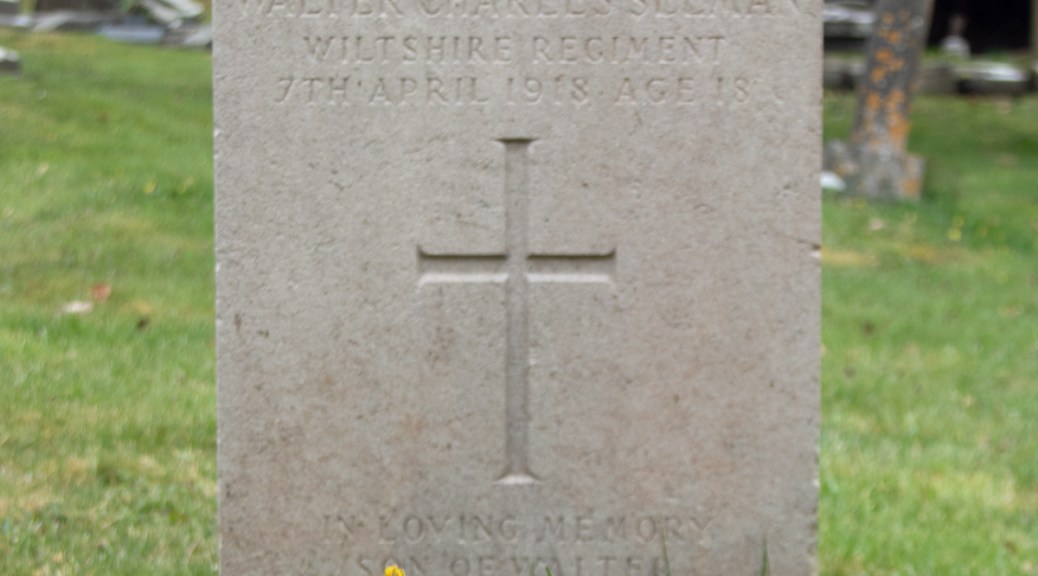
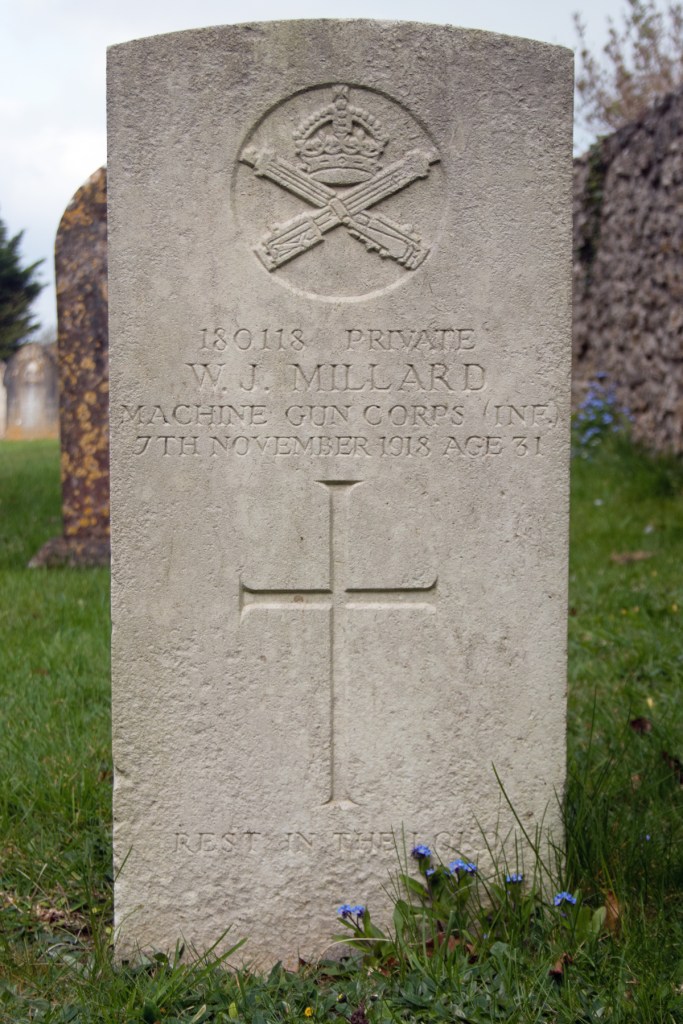
Private Walter Millard

Private Walter Millard

Walter John Millard was born in the summer of 1887, the youngest of nine children to Robert and Elizabeth. Robert was a farmer, and brought his family up in the village of Wedmore, Somerset. Walter followed in his father’s footsteps, and by the time of the 1911 census, was listed as a farm labourer in Wedmore, working for a William Millard, who presumably was a cousin of the family.

In March 1915, Walter married Jessy Masters, daughter of a grocer in nearby Wells. The couple set up home in the neighbouring village of Wookey, but would later make their home in Westbury-sub-Mendip.

In December 1915, aged 28, Walter was called up, and assigned to the Reserve Machine Gun Corps. He was not formally mobilised for almost three years when, in October 1918, he was shipped to Rugeley, Staffordshire, for training.

During this time, Private Millard was taken ill, and was admitted to the Military Hospital at Cannock Chase within weeks with influenza. His health deteriorated and, on 7th November 1918, he died from pneumonia. He was 31 years of age.

Had it not been for the quirk of fate of having been mobilised a month before the war ended, tragically, this would likely not be a story that needed to be told.

Walter John Millard was brought back to Somerset, and lies at rest in the graveyard of St Lawrence Church in Westbury-sub-Mendip.


Private Thomas Lowes

Private Thomas Lowes

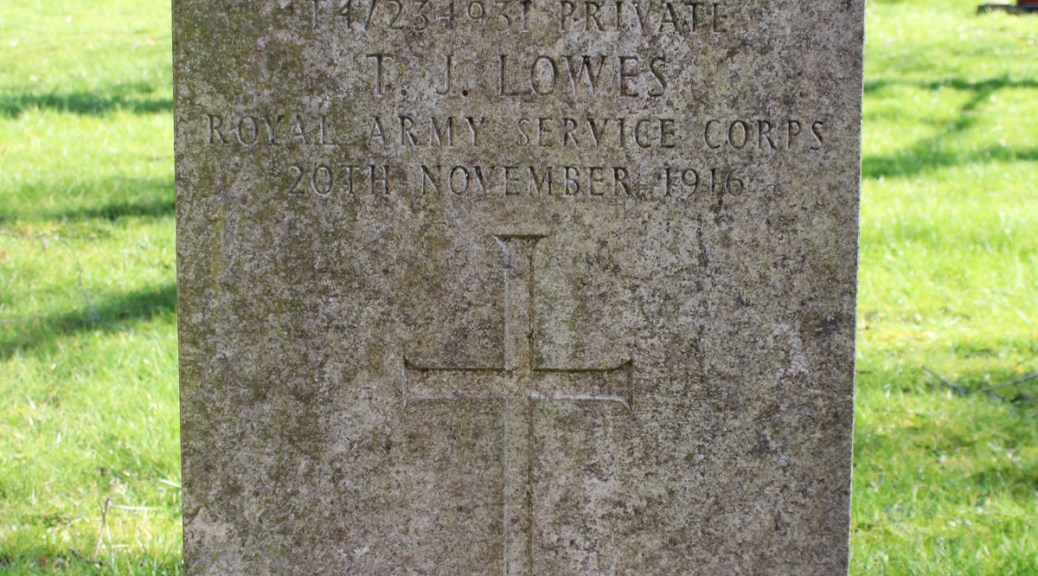
TJ Lowes is another of those names that challenges you to find out more about their lives. A quick search against the surname and service number identified the full name of Thomas James Lowes, and the Commonwealth War Graves Commission website confirms he was the husband of Mary Lowes.

There is enough circumstantial evidence available to suggest a particular set of records, but nothing to fully connect this gravestone to those records.

Based on that documentation, this is what I believe to be the Thomas James Lowes’ life.


Thomas James Lowes was born in Chatham, Kent, in 1863. One of eight children, his parents were Joseph and Jane Lowes, who came from Durham. Joseph was a shipwright, and moved the family to Hampshire in around 1860, before settling in Kent a year or so later. Given his trade, it the sea ports were an obvious draw, and he found work in the Naval Dockyard in Chatham.

When he left school, Thomas found work as a painter, and this was work that stood him in good stead all his life. He started decorating houses, but soon found employment in the dockyard.

Joseph died at some point in the 1880s, and by the 1891 census, Thomas was living at home with his mother and three of his younger siblings, all working to bring money in.

It was later that year that he got married, to a woman called Mary. The couple went on to have two children – Elsie (who was born in Sutton, Surrey) and Thomas Jr (who was born back in Kent). The young family came to live close to the dockyard again, as this is where Thomas was obviously earning his living.

War was on the horizon and, while Thomas’ full service records do not exist, it’s been possible to piece some bits together. He enlisted in the Royal Army Service Corps early on in the conflict, and worked as a farrier for No. 2 Company Depot. From here on in, however, Private Lowes’ documentation becomes confusing.

The Army Register of Soldier’s Effects confirms the service number documented elsewhere – T4/234931 – and that he passed away on 20th November 1916. It states that the the money was passed to his father, Thomas, which doesn’t tally up with the other records.

The other documentation available – the Pension Ledger and Index Cards – all include the Private Lowes’ service number, but give his widow , Mary Lowes, as his beneficiary.

Thomas contracted pneumonia while on active service; he was admitted to the Royal Herbert Hospital in Woolwich, but succumbed to the illness on 20th November 1916. He was 53 years old.

Thomas James Lowes was laid to rest in the Woodlands Cemetery in Gillingham, Kent.


Private Thomas Lowes

Chief Engine Room Artificer 2nd Class Charles Miller

Artificer Charles Miller

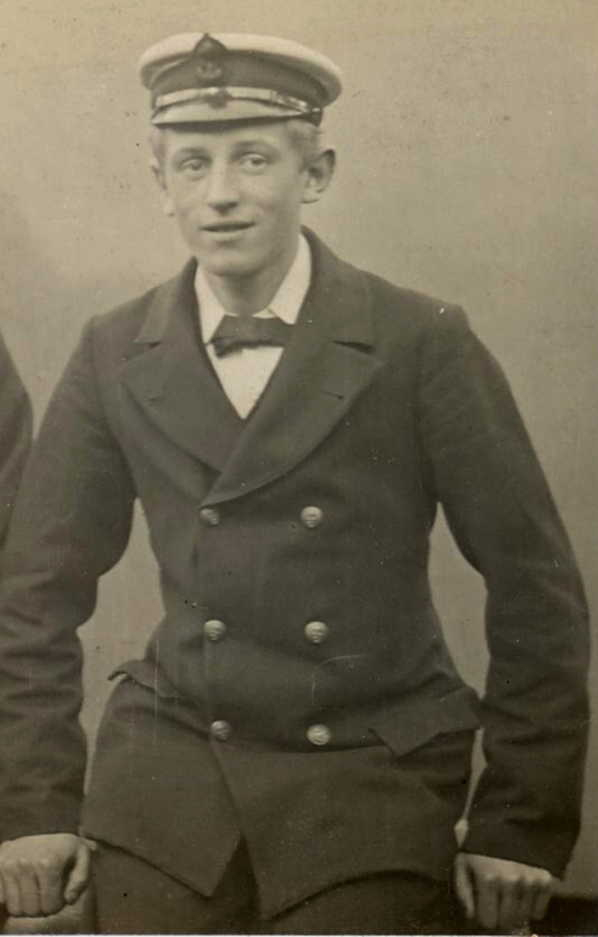
Charles Frederick Caleb Miller was born on 12th December 1887 in Gillingham, Kent. His parents were Charles and Harriet Miller, and he had two younger siblings, Mabel and Harriet.

Tragically, Charles Jr’s mother died when he was only three years old; his father went on to marry again – to his widow’s younger sister, Jane – and the couple had two further children – Jane and Beatrice – who were Charles Jr’s half-sisters.

Charles Sr worked as a ship’s rigger in the Military Dockyard in Chatham, and naval life obviously caught his son’s eye. In 1903, having left school, he enlisted in the Royal Navy, started as a ‘boy artificer’, working in the engine and boiler rooms of ships.

His initial service was for twelve years, and he worked on a number of vessels, as well as being assigned to HMS Pembroke, the shore base in Chatham. He worked his way through the ranks to Engine Room Artificer 2nd Class by 1915.

In June of that year, Charles married Ellen Holden. the daughter of a dairyman from Chelsea. The couple went on to have a daughter, Joan, who was born in 1918. At the time of their wedding, Charles was based on HMS Lance, and his military service was to continue.

His period of service extended until the end of the war, Charles served on a number of other vessels, including HMS Surprise, Blenheim and Prince George and rose to Chief Engine Room Artificer 2nd Class.

It was while he was assigned to HMS Ganges in January 1920 that he became unwell, however. He had contracted bronchial pneumonia, and died of a combination of that and heart failure on 9th February 1920. He was 32 years old.

Charles Frederick Caleb Miller lies at rest in Woodlands Cemetery in his home town of Gillingham, Kent.


Charles Miller (from ancestry.co.uk)

Corporal Albert Shrubsall

Corporal Albert Shrubsall

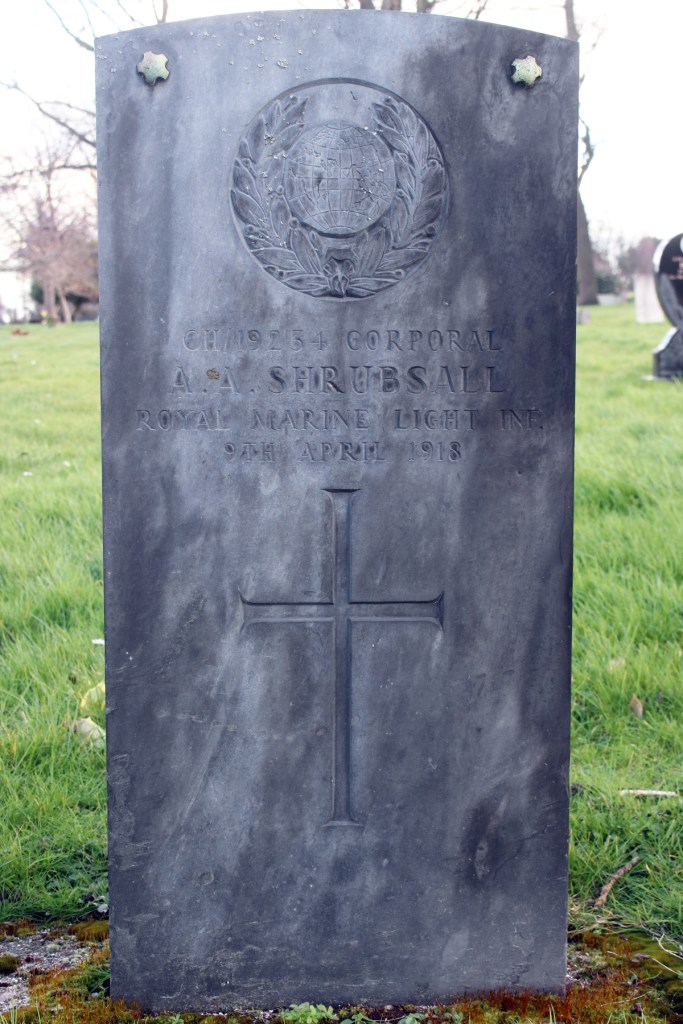
Albert Arthur Shrubsall was born in Deptford, South London, in April 1896. He was the youngest of three children – all boys – to ironmonger George Shrubsall and his wife Jessie.

While his brothers continued to live at home after they had left school and got jobs, Albert found live-in work as a pageboy, or servant, for Wilfred Lineham, who was a professor of engineering for a London college. It was while he was working here that his mother, Jessie, passed away. She died in 1913, aged just 43.

Details of Albert’s military service are a bit scant. He enlisted in the Royal Marine Light Infantry, although I have been unable to confirm when he joined up. He was assigned to the Chatham Division, and was based at the Naval Dockyard in Kent, ultimately being promoted to Corporal.

Albert married Gertrude Spoore – affectionately known a ‘Ginty’ – in Deptford in October 1917. Sadly, the marriage was to las less than six months, as, on 9th April 1918, Albert passed away, having contracted pneumonia and septicaemia. He was just 22 years old.

Albert lies at rest in the Woodlands Cemetery in his adopted home town of Gillingham in Kent.


Albert’s two brothers George and Alfred were also involved in the First World War.


George, had gone on to become a tailor’s assistant when he left school. He married Emily Hawkes in 1911, and the couple went on to have a son, also called George, the following year.

When war broke out, he enlisted in the Machine Gun Corps, and served on the Western Front. Sadly, he was caught up in the fighting, and was killed in action on 22nd August 1917. He was buried at the Tyne Cot Memorial in Flanders.


When he left school, Alfred went on to become a butcher’s assistant. War came along, and he enlisted straight away.

Enrolling in the Royal Field Artillery, Gunner Shrubsall was assigned to the 95th Brigade. Sadly, he had recorded less than six months’ service, as he passed away on 8th January 1915, aged just 21 years old. His brigade did not go to France until the following year, so, while no cause of death is recorded, it is likely that he died from a communicable disease like influenza or pneumonia.

Alfred is buried in the family grave in Deptford, South London.


Within a period of just three years, George had lost all three of his sons to the Great War. Given the previous death of his wife, you can only imagine the heartbreak he was going through.


Private John Friday

Private John Friday

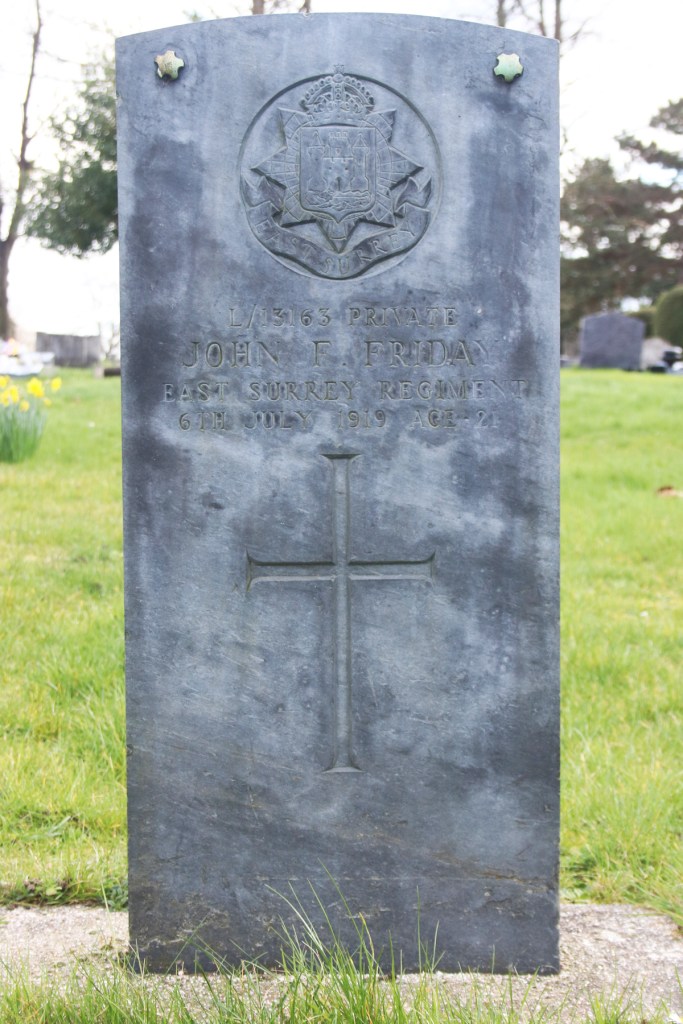
John Francis Friday was born in June 1898 to John and Laura Friday from Gillingham in Kent. Laura passed away when John Jr was only ten years old, and his dad remarried, meaning John Jr had eight full and half siblings. John Sr was a farm labourer, and the family lived on the river front in Gillingham, Kent.

John’s military service seems a bit of a challenging one. A letter to Gillingham Police Station dated November 1916 stated that he had not received his call up papers, but that he would present himself that day for enlistment.

John eventually enlisted on 27th December 1916; his joining records show that he was 18 years and six months old, and stood at just under 5ft 3ins (1.57m) tall. He also noted that his preference was to be assigned to the Royal Engineers.

Private Friday initially joined the Manchester Regiment, and, while serving on the Western Front, seemed to have a bit of a rebellious streak in him. He was pulled up on misdemeanours such as neglect of duty on at least five occasions before being admitted to hospital in Calais in December 1917, suffering from trench foot. After serving some further time in England, he again found himself in France in the summer of 1918.

On 11st March 1919, he was transferred to the East Surrey Regiment, and was shipped back to England at the beginning of April. Sadly, it looks like John was stricken by poor health; he passed away on 6th July 1919, having contracted pneumonia. He was just 21 years old.

John Francis Friday lies at rest in the Woodlands Cemetery in his home town of Gillingham in Kent.


Private Herbert Packer

Guardsman Herbert Packer

Herbert Packer was born in December 1889, the youngest of nine children to Joseph and Ann Packer. Joseph was a railway carrier (or porter) and the family lived in Cheddar, Somerset.

The 1911 census found Herbert on his travels; he was working as a grocer’s assistant, and boarding with a family in Abergavenny, South Wales. He was obviously keen to develop his skills, and soon moved to Barnstaple in Devon to work for the Lipton’s grocery there.

In the autumn of 1914, Herbert married Lydia Snell, a dressmaker from Wales and the young couple lived together in the Devon town where he worked. He was very active in the community; he was a teacher at the local Wesleyan Sunday School, and active in the church choir having, according to a local newspaper, “a capital voice”.

Herbert enlisted in the spring of 1916, and had the honour of joining the Coldstream Guards. He did his training in London, and was due back to Barnstaple on leave before starting his active service when he was taken ill. Admitted to the London Hospital with pneumonia, within a couple of weeks he had succumbed to the condition. Guardsman Packer died on 3rd December 1916, aged just 26 years old.

Herbert Packer lies at rest in St Andrew’s Churchyard in his home town of Cheddar in Somerset.


Private Sidney Warren

Private Sidney Warren

Sidney John Warren was born in January 1890, one of eleven children to shipwright George Warren and his wife Elizabeth. The family lived in Salmon Parade, on the riverside in Bridgwater, where George would have plied his trade. By the time of the 1911 census, Sidney had found work as a grocer’s assistant, and was living with his parents and the youngest of his brothers, Edward.

While exact details of Private Warren’s military career are not available, documents confirm that he enlisted in the Somerset Light Infantry. Assigned to the 4th Battalion, he was based in India and Mesopotamia during the conflict. No details are available of his time there, but at some point, he transferred to the Labour Corps back in Somerset.

And there Sidney’s trail goes cold. He survived the war, but passed away on 27th November 1918, suffering from pneumonia. He was just 28 years old.

Sidney John Warren lies at rest in the family grave at St John’s Cemetery in his home town of Bridgwater in Somerset.


Gunner William Pearn

Gunner William Pearn

William Henry Pearn was born in January 1896, one of two children to Richard and Selina Pearn from Bridgwater in Somerset. Selina had been married previously, and had been widowed, and so William had a further four half-siblings. Richard was a lath renderer – a plasterer in today’s terms – and he was not the only one of the household to be working. According to the 1901 census, Selina was a collar maker and William ‘s two older half-brothers were a landscape gardener and a bookshop assistant.

When William left school, he went to work for a local coal yard as a porter. The next census finds him living with his mother and his older brother, Wallace, who was a labourer in a brickyard. Richard is noticeable in his absence, but Selina is having been married for 18 years.

Sadly, though, at this point William’s trail goes cold. His military records are sparse, but we know that he enlisted as a Gunner in the Royal Field Artillery, although I have been unable to identify when he enrolled. The only other information I have I have been able to locate for him are his pension records, that confirm that he passed away from pneumonia on 19th October 1918. Gunner Pearn was just 24 years old.

William Henry Pearn lies at rest in St John’s Cemetery in his home town of Bridgwater in Somerset.


Lance Corporal Albert Adams

Lance Corporal Albert Adams

Albert James Adams was born in Somerset in September 1878, the fifth of ten children to Robert and Mary. Robert was a mason, who sadly passed away when Albert was only 11 years old. Mary lived on as the head of the household, and by the 1901 census, she had four of her five sons living with her, three of them also stone masons.

Albert had taken a different route in life, and found work as a postman. He married Annie King, a young woman from Taunton, in 1910, and they set up home in the village of Selworthy near Minehead. Albert was the village postman, and the young couple lived there with their sons – Albert and Robert – and Mary.

When war came, Albert enlisted, joining the 6th Battalion of the Devonshire Regiment. While his military records are scattered, his battalion served in India and Mesopotamia; during their three years in the Middle East, the 6th Battalion lost twice as many men to illness – influenza, pneumonia, malaria – as to enemy action.

Lance Corporal Adams was not immune to sickness; while I have been unable to unearth exact dates for his military service, his cause of death is recorded as malaria and pneumonia. He passed away on 9th February 1919, at the age of 40 years old.

Albert James Adams lies at rest in St John’s Cemetery in Bridgwater, Somerset.


Albert James Adams from Ancestry.com

Company Quartermaster Sergeant Robert Roberts

Company Quartermaster Sergeant Robert Roberts

Robert Roberts was born in Liverpool in November 1887 the youngest of two children to Robert and Alice Roberts.

The New World beckoned for the Roberts family, and they set sail for Canada when Robert Jr was just 4 years old. The family settled in the city of Regina, Saskatchewan.

Little is recorded about Robert Jr until October 1911, when he married a Quebecois woman called Edna Webber. The young couple went on to have two children, a daughter, One, and a son, George.

In April 1916, he enlisted in the Canadian Expeditionary Force. His trade was noted as a Lumberman, and his record notes that Robert had already served as part of the 95th Saskatchewan Rifles.

Joining the 224th Battalion, Robert was shipped to England in May 1916. He transferred to the Canadian Forestry Corps in November, reaching the rank of Staff Sergeant, and was assigned to the company’s Base Depot in Sunningdale, near Windsor.

When the war ended, demobilisation was still a way off for a lot of soldiers, particularly those from the Commonwealth. Robert was transferred to Stirling, and was appointed Quartermaster Sergeant (responsible for supplies and stores) for 121st Company.

On 28th January 1919, Robert was admitted to the Royal Infirmary in Stirling with influenza and double pneumonia. Sadly, he passed away just over a week later, breathing his last on 6th February 1919. He was 33 years old.

Robert Roberts lies at peace in the Wembdon Road Cemetery in Bridgwater, Somerset.


There is no evident connection between Robert and Bridgwater, so why this was chosen as his place of rest is a mystery. It is likely that there was some sort of family connection, but that cannot be definitely established.