Tag Archives: Scotland

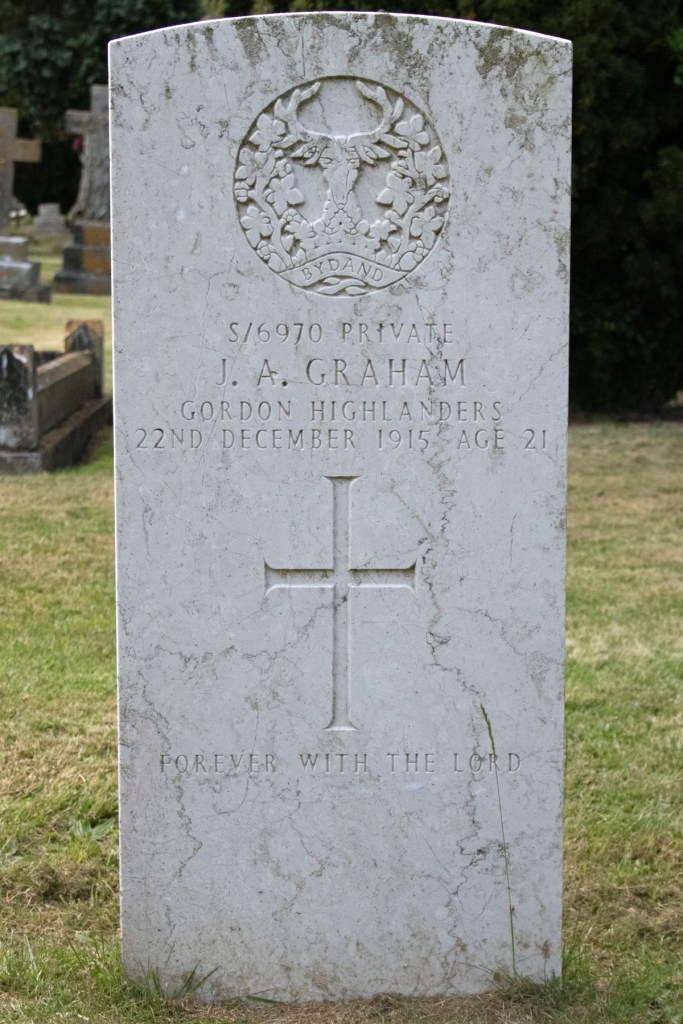
Private Joseph Graham

Private Joseph Graham

Joseph Aitken Graham was born in Kirkmichael, Dumfries, in 1894 and was the son of James and Bella Graham. There is little detail about his early life, but by the time war broke out, he was working with his father as a ploughman.

Joseph enlisted in November 1914, joining the 2nd Battalion of the Gordon Highlanders as a Private. His medical report records that he was 5ft 9.5ins (1.77m) tall, weighed 145lbs (65.8kg), had grey eyes, brown hair and a fresh complexion.

After a short period of training, Private Graham was sent to the Western Front, arriving in France on 2nd February 1915. He was involved in the fighting at Neuve Chapelle and Aubers Ridge. It was at Festubert, however, that things took a turn for the young private.

On the first day of the battle, 16th May 1915, Graham was badly injured, receiving gunshot and shrapnel wounds to his head and legs. He was initially treated at nearby Bethune, before being moved to Rouen. He was then evacuated to England in July, to further his recovery, and admitted to hospital in Wincanton, Somerset.

He was making such good progress that he was able to take a short walk each morning, and it was after one of these walks that he was taken ill. In spite of all that medical skill could do his condition became gradually worse, and it was thought advisable to send to Dumfries for his parents, who at once proceeded to Wincanton.

Dumfries and Galloway Standard: Saturday 8th January 1916

Sadly, nothing could be done for Private Graham: he passed away from a suspected brain haemorrhage on 22nd December 1915, at the age of just 21 years old.

Joseph Aitken Graham was laid to rest in the quiet and peaceful Wincanton Cemetery.


Seaman Alexander Kennedy

Seaman Alexander Kennedy

Alexander Kennedy was born in Cromore on the Isle of Lewis on 15th June 1895. He was one of five children – four of them boys – to John and Isabella Kennedy.

Living in the remote coastal township, he would have grown up knowing the sea and, when the opportunity arose, he volunteered for the Royal Naval Reserve. His service records show that he enlisted on 12th December 1913; they also note that he was 5ft 6.5ins (1.69m) tall, had blue eyes, a fresh complexion and a scar under his chin.

Seaman Kennedy was kept on a retainer until war broke out the following summer, at which point he was sent to the other end of the country – HMS Pembroke, the Royal Naval Dockyard in Chatham, Kent – for formal training. His time in the navy was then split between the dockyard and the battleship HMS Implacable.

Over the next couple of years, Seaman Kennedy toured the Mediterranean, berthing in Egypt, Malta and Gibraltar between stops back in the ports on the English coasts. By the summer of 1917, he had returned to HMS Pembroke for good.

At that point in the war, Chatham Dockyard was a particularly busy place, and Alexander was billeted in overflow accommodation set up in the naval barracks’ Drill Hall.

On the night of the 3rd September, the German Air Force conducted the first night time raid on England. Chatham came in the firing line, and the Drill Hall received a direct hit. Seaman Kennedy was among those killed. He was just 21 years of age.

Alexander Kennedy was laid to rest in the Woodlands Cemetery in nearby Gillingham, along with the other victims of the Chatham Air Raid.


Seaman Alexander Kennedy
(from ancestry.co.uk)

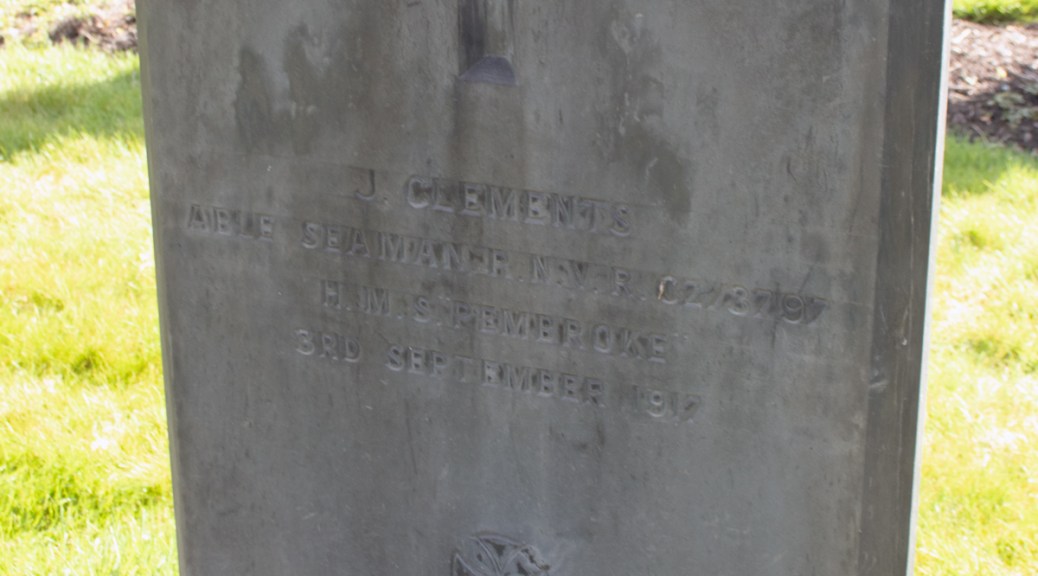
Able Seaman John Clements

Able Seaman John Clements

John Clements was born on 22nd March 1891 in the Lanarkshire town of Airdrie. He was one of seven children to John and Catherine Clements.

There is little concrete information about John Jr’s life. When he left school, he followed his father and two brothers, David and George into the mining industry, working at the New Orbiston Colliery, walking distance from home.

When war broke out, however, John Jr wanted to play a bigger part and – probably to Catherine’s horror – he enlisted in the Royal Naval Volunteer Reserve at the same time as two of his three brothers also joined up.

Information about Able Seaman Clements’ service is scarce. All that can be confirmed is that, in the autumn of 1917, he was based at HMS Pembroke, the Royal Naval Dockyard in Chatham, Kent.

The base was particularly busy at that point in the war, and John found himself billeted in overflow accommodation in the barracks’ Drill Hall.

On the night of 3rd September 1917, Chatham was bombarded by a German air raid, and the Drill Hall received a direct hit. Able Seamen Clements was among those killed. He was just 26 years old.

John Clements’s body, along the other victims of the Chatham Air Raid, was laid to rest in the Woodlands Cemetery in nearby Gillingham.


Able Seaman John Clements
(from britishnewspaperarchive.co.uk)

John and Catherine’s second son had been killed, but, as the local newspaper reported, there seemed to be more trauma ahead:

Private George Clements, Cameron Highlanders, aged 23… is officially posted missing in recent operations in France. He has seen a long period of active service, and previous to enlisting, was employed in the… Hattonrigg Colliery.

Private David Clements, Royal Irish, the eldest son [of John and Catherine] is in hospital in Yorkshire suffering from ‘gassing injuries’. This is the third occasion upon which he has been wounded; fortunately, he is making a satisfactory recovery. He is 28 years of age and was employed in the… New Orbiston Colliery.

Bellshill Speaker: Friday 14th September 1917

Thankfully, George was found and David recovered and John was to be the only casualty of the conflict for the Clements family.


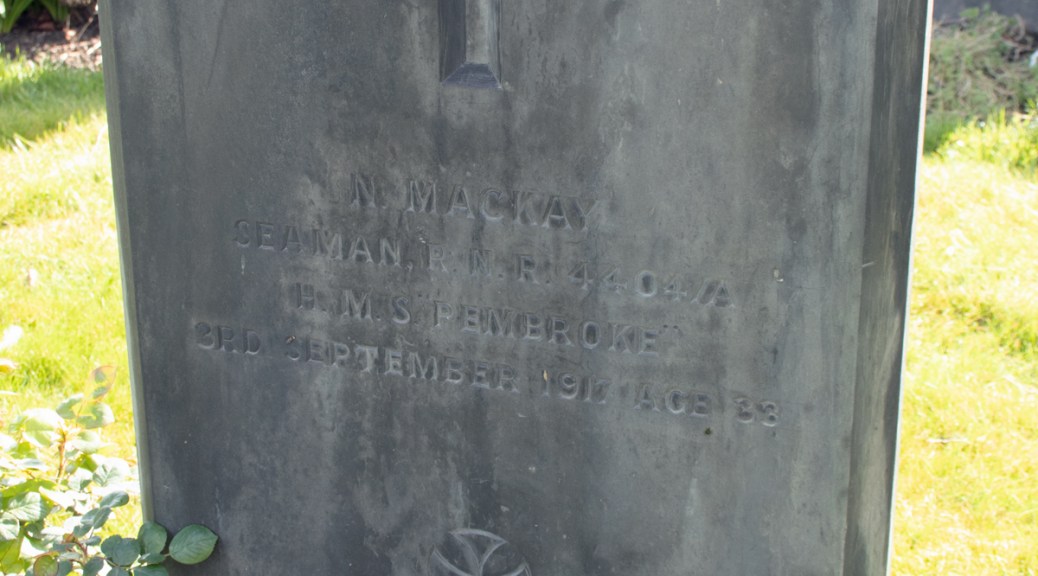
Seaman Neil Mackay

Seaman Neil Mackay

Neil Mackay was born on 16th September 1888 in Stornoway, Scotland, the son of Murdoch and Johanna (known as Murdo and Annie) Mackay.

Sadly, little information remains about his early life; most of what can be gleaned comes from his Royal Naval Reserve records. The document confirms that he was 5ft 9ins (1.75m) tall, had blue eyes, a dark complexion and a scar between his eyes.

Neil enlisted as a Seaman on 3rd September 1912 and, over the next couple of years, he travelled the world, visiting Maine in the United States, New Zealand and Newfoundland on his voyages.

When war broke out, he was assigned to HMS Northbrook, a troopship taking soldiers to India; he returned to the United Kingdom on HMS Dalhousie, in 1915, before making the same round trip, this time on HMS Lawrence, later that year.

In April 1916 Seaman Mackay returned to England, and was based at HMS Pembroke, the Royal Naval Dockyard in Chatham, Kent, for around eighteen months.

The summer of 1917 was to prove a busy time at HMS Pembroke, and Neil found himself billeted in temporary accommodation in the barracks’ Drill Hall. On 3rd September 1917, the town came under fire from a German air raid; the Drill Hall received a direct hit and Neil was killed. He was just shy of his 29th birthday and had completed five years’ service that day.

Neil Mackay was among 98 servicemen to be killed during the Chatham Air Raid that night. The victims were laid to rest in a mass funeral at Woodlands Cemetery in nearby Gillingham a few days later.


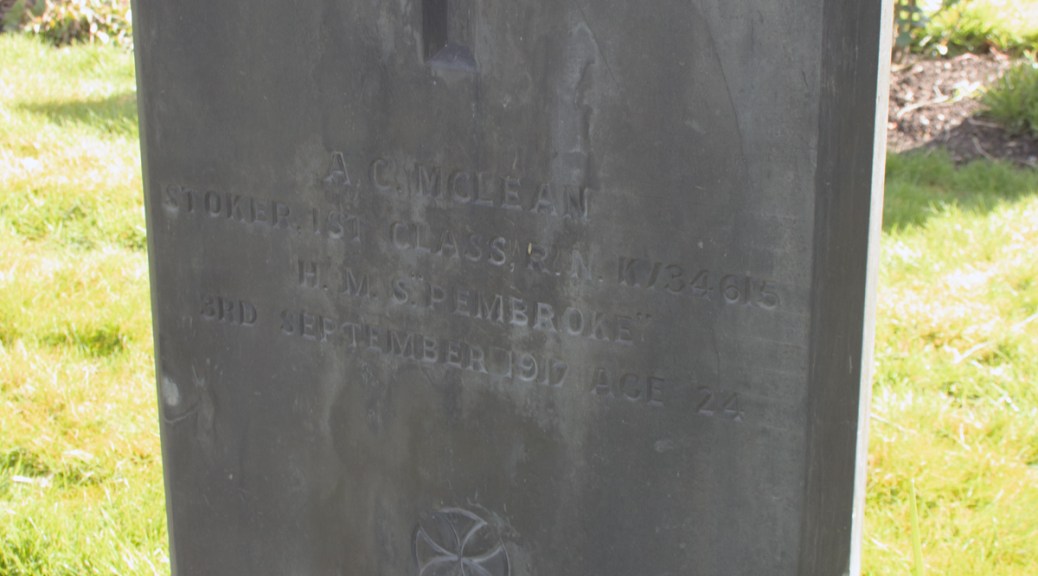
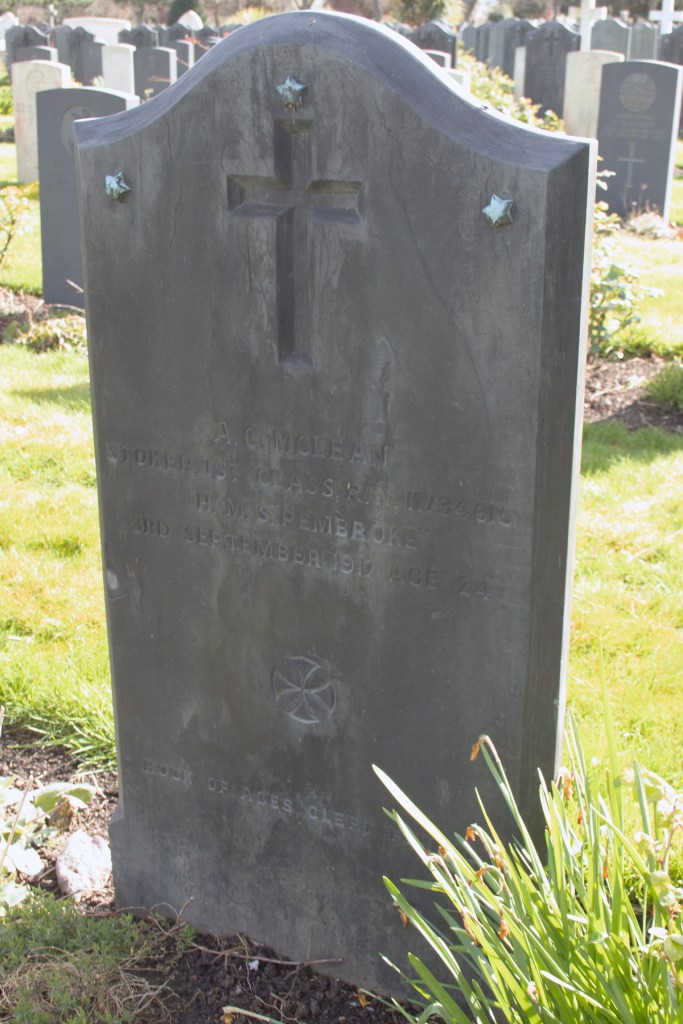
Stoker 1st Class Alexander McLean

Stoker 1st Class Alexander McLean

Alexander McLean was born in the village of Bowling, on the River Clyde near Glasgow, on 7th February 1893. There is little documented on his life, other than that his parents were Duncan and Margaret (Maggie) McLean.

When he left school, he fond work as a caulker at the local docks; war came to Europe, however, and he wanted to play his part. on 11th November 1914, he enlisted in the Cameron Highlanders as a Private. His service records show that he was 5ft 4ins (1.63m) tall, weighed 118lbs (53.5kg), had dark brown eyes, grey eyes and a fresh complexion.

Private McLean’s time in the army was a brief one, however, as his entry exam identified him as medically unfit, and that he would not be an effective soldier.

Alexander was not to be deterred, however, and he soon enlisted in the Royal Navy as a Stoker 2nd Class. There is little information about his life at sea. At some point he was promoted to Stoker 1st Class, and he was certainly based at HMS Pembroke, the Royal Naval Dockyard in Chatham, Kent, by the summer of 1917.

That was particularly busy time for the base, and temporary accommodation had been put in place at the barrack’s Drill Hall: this is where Alexander found himself billeted.

On the night of the 3rd September 1917, Chatham was bombarded by a German air raid, and the Drill Hall received a direct hit. Tragically, Stoker 1st Class McLean was amongst those killed. He was just 24 years old.

Alexander McLean’s body was laid to rest in the Woodlands Cemetery in Gillingham, alongside the other victims of the Chatham Air Raid.


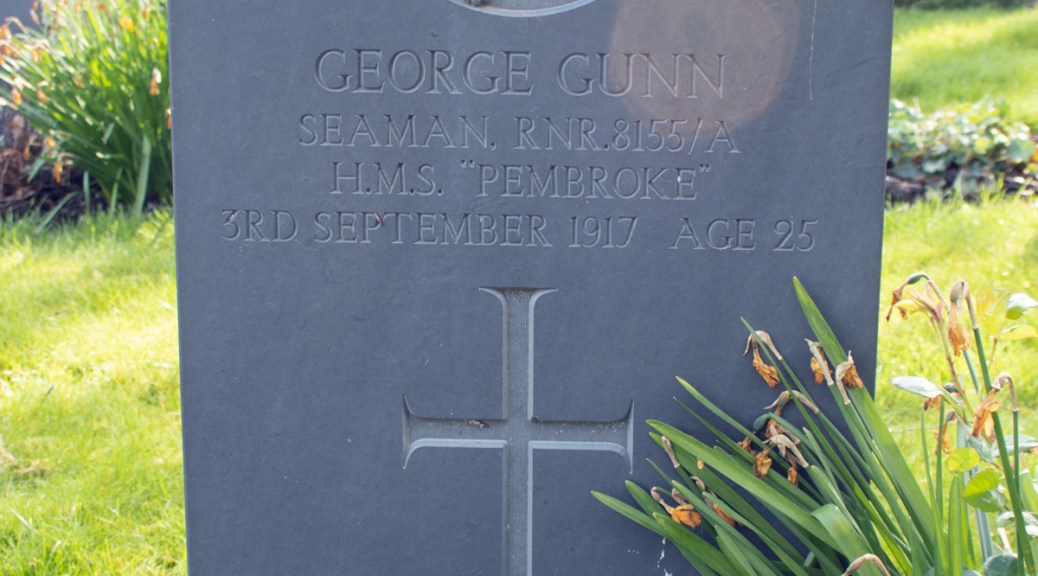
Seaman George Gunn

Seaman George Gunn

George Gunn was born on 15th October 1891, the middle of three children to William and Hughina Gunn. The family lived in the hamlet of Skerray on the North Scottish coast.

Sadly, there is little information about George’s life. When was broke out, he enlisted in the Royal Naval Reserve, which suggests that he had experience of going to sea, although this is likely, because he lived in a coastal village.

George’s service records show that he was 5ft 10.5ins (1.79m) tall, had grey eyes and a fresh complexion. Under ‘personal marks’ the document noted that he had a dimple in his chin.

Seaman Gunn spent most of his time on land; he was initially posted to HMS Pembroke, the Royal Naval Dockyard in Chatham, Kent. In June 1915, however, he was assigned to the minelayer HMS Orvieto, and spent the next year patrolling the North Sea.

By the spring of 1916, George was back in Chatham; by August he was on the move again, this time to London, where he spent twelve months at HMS President, the Royal Naval Base in London. He returned to HMS Pembroke on 3rd September 1917, a move that was to prove fatal.

The base was a particularly busy place that summer, and George was billeted in overflow accommodation in the barracks’ Drill Hall.

That night, Chatham was bombarded by a German air raid, and the Drill Hall received a direct hit. Tragically, Seamen Gunn was among those killed. He was just 24 years old and has been at HMS Pembroke for a matter of hours.

George Gunn’s body, along the other victims of the Chatham Air Raid, was laid to rest in the Woodlands Cemetery in Gillingham, more than 500 miles from home.


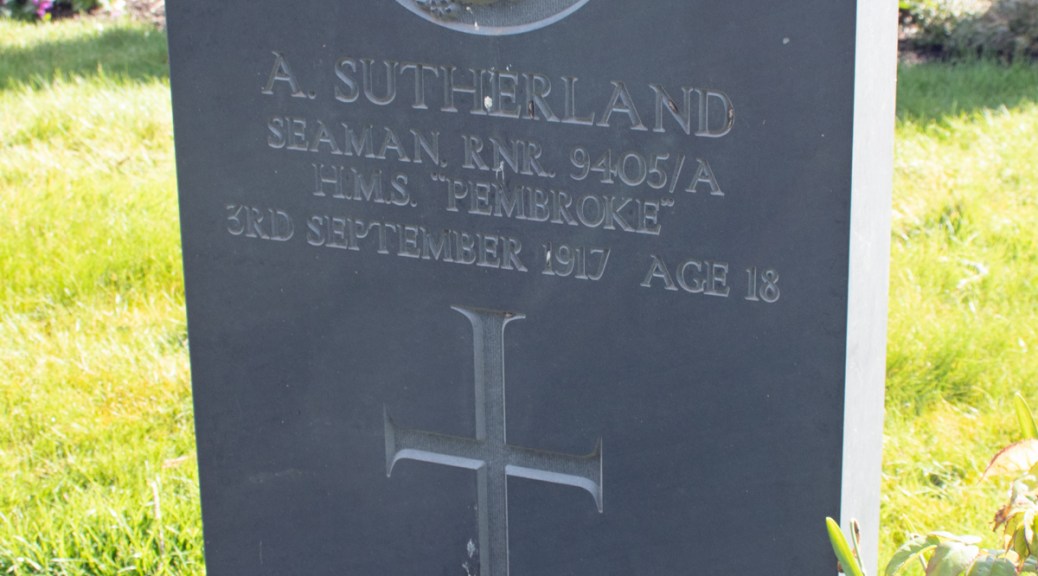
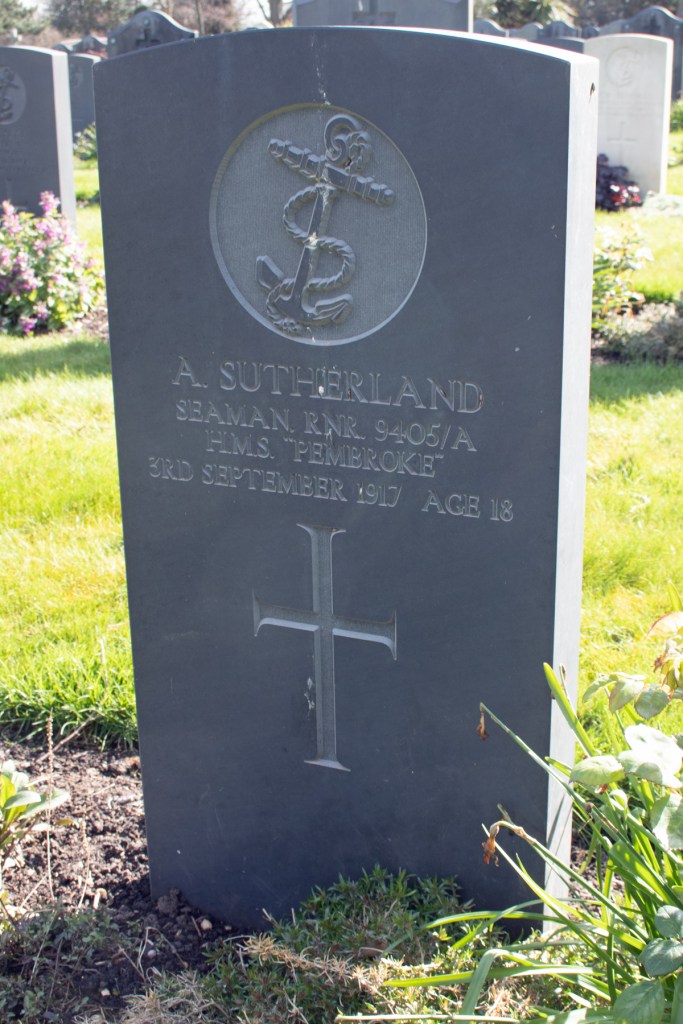
Seaman Alexander Sutherland

Seaman Alexander Sutherland

Alexander Sutherland was born on 20th May 1899 in the Scottish town of Brora. His parents were Peter and Jane Sutherland and he was one of four children, although, tragically, all three of his siblings died before they turned five.

There is little information documented about Alexander’s life: the 1901 census recorded him and his parents living with his paternal grandparents, but give little additional information. Peter died in March 1917, although, again, there is nothing to confirm a cause of death.

The document that provides the most detail about Alexander is his service record. He was too young to enlist when war broke out, but in August 1917, having turned 18, and possibly spurred on by the passing of his father, he joined the Royal Naval Reserve as a Seaman. The record shows that he was 5ft 11ins (1.8m) tall, had fair hair, blue eyes and a fresh complexion. He was also noted as having a scar on the left side of his neck.

Seaman Sutherlands’s first posting was at HMS Pembroke, the Royal Naval Dockyard in Chatham, Kent and he arrived there on 23rd August 1917. The base was a particularly busy place that summer, and Alexander was billeted in some overflow accommodation in the barracks’ Drill Hall.

On the night of the 3rd September 1917, Chatham was bombarded by a German air raid, and the Drill Hall received a direct hit. Tragically, Seamen Sutherland was amongst those killed. He was just 18 years old and had been at the base for just ten days, and on active service for just over a fortnight.

Alexander Sutherland’s body was laid to rest in the Woodlands Cemetery in Gillingham, alongside the other victims of the Chatham Air Raid.


Alexander’s death was particularly tragic for his mother, Jane. She had lost three children early on, and both her husband and last child within six months. Her torment must have been unimaginable.

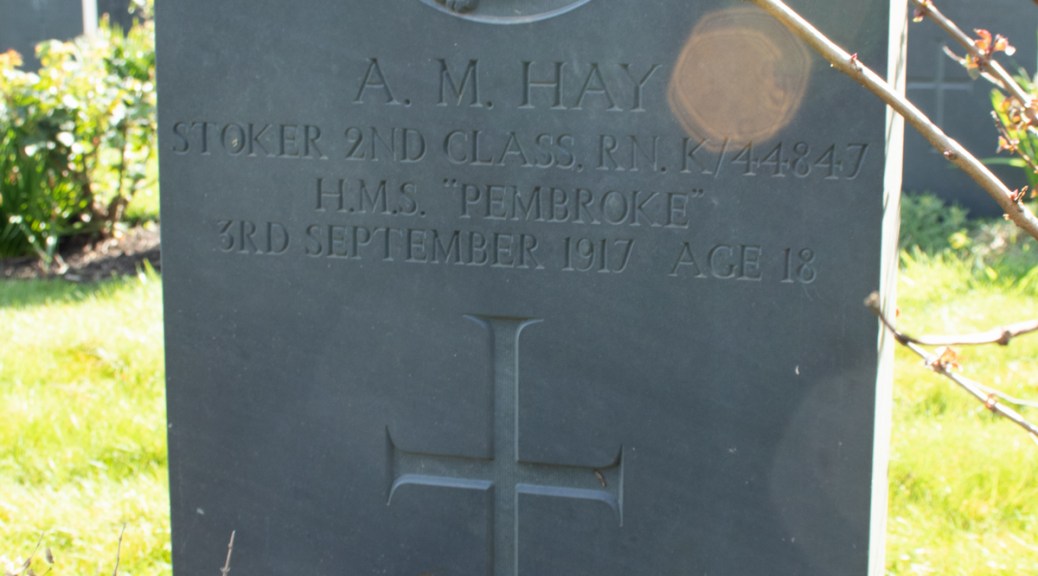
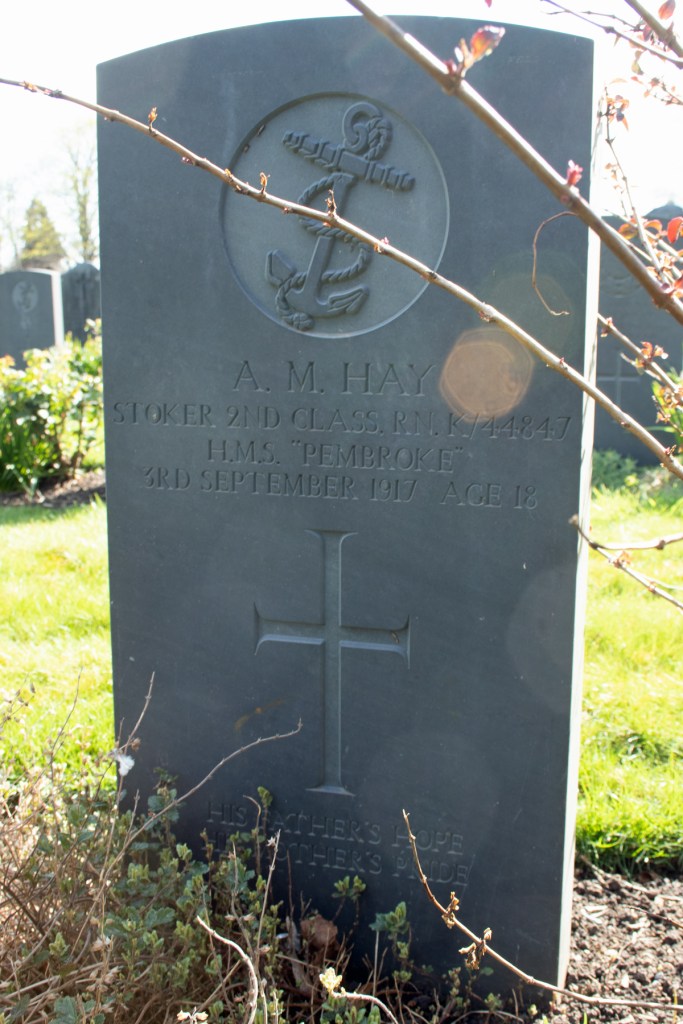
Stoker 2nd Class Archibald Hay

Stoker 2nd Class Archibald Hay

Archibald Mitchell Hay was born on 7th February 1900 in Edinburgh, Scotland. He was the older of two children to Archibald and Elizabeth Hay.

There is little documented about Archibald Jr’s life; that he enlisted in the Royal Navy as a Stoker 2nd Class, is fact. It is likely that he did so in August 1917: the Royal Navy War Graves Roll gives his date of birth as 7th August 1899, so this would put him as being of an age to join up.

Archibald Sr also enlisted during the war – he joined the Royal Army Service Corps and gave his son as one of his dependents, citing his date of birth as 7th February 1900.

Either way, Archibald joined the Royal Navy. Again, full details of his service have not survived, but what is certain is that he was based at HMS Pembroke – the Royal Naval Dockyard in Chatham, Kent – during the summer of 1917.

The naval base was particularly busy at that point in the war, and the barracks’ Drill Hall was brought in as temporary accommodation. This is where Stoker Hay was billeted.

On the night of the 3rd September 1917, Chatham was bombarded by a German air raid, and the Drill Hall received a direct hit. Tragically, Stoker 2nd Class Hay was amongst those killed. He was just 17 years old.

Archibald Mitchell Hay’s body was laid to rest in the Woodlands Cemetery in Gillingham, alongside the other victims of the Chatham Air Raid.

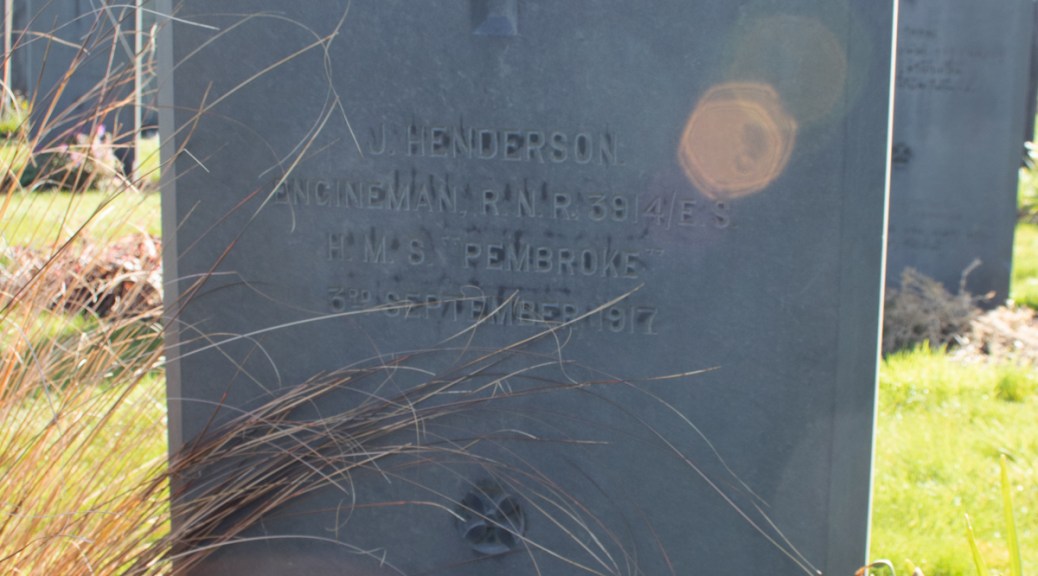
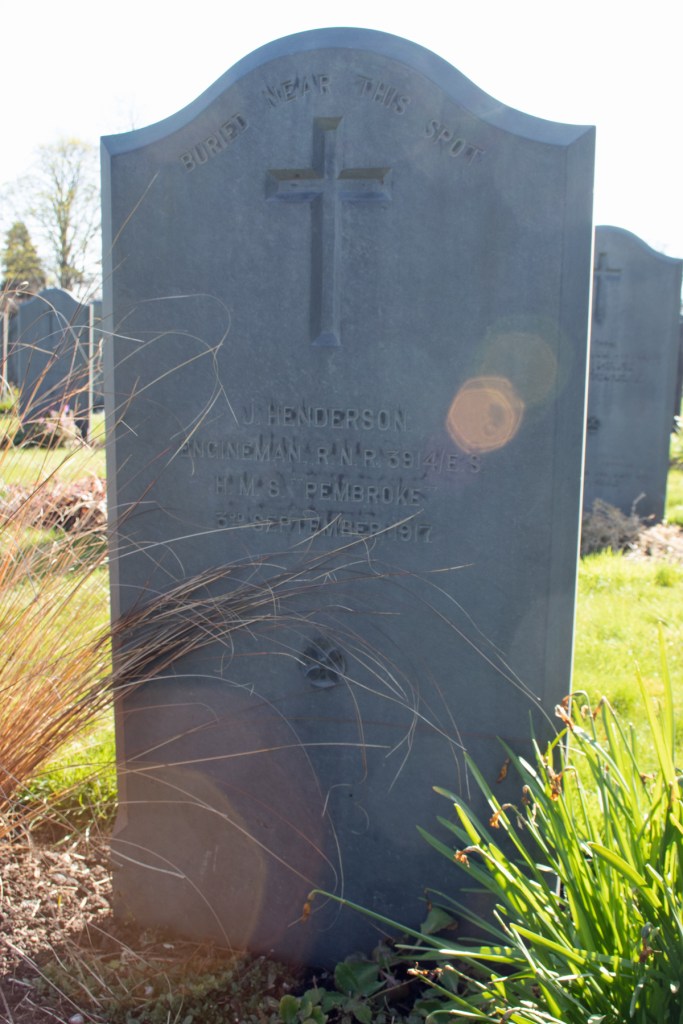
Engineman John Henderson

Engineman John Henderson

John Henderson was born on 21st May 1887 in Leith, near Edinburgh. His parents were John William Henderson (known by both of his first names) and Matilda Jane Henderson (known as Jane), and he was one of eight children.

There is little documented about John’s early life and, in fact, the main information about him comes from his service records during his time in the Royal Naval Reserve. Before enlisting he was already involved in shipping in some form – again, however, this is not detailed – but he formally enlisted on 13th August 1915, serving as an Engineman.

John’s records confirm that he was 5ft 4.5ins (1.63m) tall, with blue eyes and a ruddy complexion. He was also noted as having a couple of tattoos on his forearms, including a pair of clasped hands over a heart.

All of Engineman Henderson’s postings were shore-based. He was initially assigned to HMS Columbine, the naval base at Port Edgar, on the Firth of Forth. This was bring constructed at the time, and John was employed as part of that construction process. While here, he was injured on his left hands while laying some cables in April 1916 and lost the tip of his finger.

When he had recovered, Engineman Henderson was transferred to HMS Gunner, the Granton Naval Base in Edinburgh. He spent fifteen months working there, before being assigned to HMS Pembroke, the Royal Naval Dockyard in Chatham, Kent, in August 1917.

The Dockyard was particularly busy that summer, and the large number of extra servicemen meant that John was billeted in temporary accommodation in Chatham Drill Hall.

On the 3rd September 1917, the first night air raid carried out by the German Air Force bombarded the town, and scored a direct hit on the Drill Hall; Engineman Henderson was among those killed that night. He was just 30 years of age.

John Henderson was laid to rest, along with the other victims of the Chatham Air Raid, in the Woodlands Cemetery, Gillingham.


Leading Seaman Robert Franklin

Leading Seaman Robert Franklin

Robert William Franklin was born on 9th March 1894, one of four children to Alfred and Annie Franklin. Alfred was Australian, who had settled in England in his teens and settled in Woolwich, London, to marry and raise his family. It was not long, however, before the family upped and moved to Greenock, Scotland.

There is little information available about Robert’s early life, but in 1913 he enlisted in the Royal Navy, and served for three years. His enrolment papers show that he was 5ft 4.5ins (1.64m) tall, had auburn hair and brown eyes. He was also noted has having a scar on his abdomen and had been working as an appliance fitter.

Details of his initial service are not readily available, although a later newspaper report suggests that he “was with the Naval Division at the siege of Antwerp [October 1914] and served through the Gallipoli campaign” [Daily Record: Saturday 8th September 1917].

Able Seaman Franklin was transferred to the Royal Naval Reserve in April 1916, and was based at HMS President – the London shore-based establishment. However, he had moved to The Royal Naval Dockyard in Chatham, Kent – also known as HMS Pembroke – by the end of July 1917.

The Dockyard was particularly busy that summer, and the large number of extra servicemen meant that Robert was billeted in temporary accommodation in Chatham Drill Hall.

On the 3rd September 1917, the first night air raid carried out by the German Air Force bombarded the town, and scored a direct hit on the Drill Hall; Leading Seaman Franklin was among those killed instantly. He was just 23 years of age.

Robert William Franklin was laid to rest, along with the other victims of the Chatham Air Raid, in the Woodlands Cemetery, Gillingham.