Tag Archives: Somerset

Private Edward Gane

Private Edward Gane

Edward Lionel Gane was born in 1899 and was one of eight children. Known as Lionel, he was the son of Edwin and Joanna Gane, and lived in the quiet Somerset village of Ditcheat. Edwin began life as a pig dealer, but by the time of the 1911 census, had changed direction and become an insurance agent.

Joanna passed away in 1915, and this may have been the impetus Lionel needed to find his way in the world. He enlisted in the Wiltshire Regiment, joining the 3rd (Reserve) Battalion of the Duke of Edinburgh’s brigade.

The battalion – a depot and training unit – were initially based in Devizes, before moving to Dorset and then Kent. While there is no confirmation of when Private Gane enlisted, it would have been by September 1917, which is when the battalion became part of the Thames & Medway Garrison.

The end of the war marked another ending for the Gane family. Edwin passed away on Armistice Day – 11th November – and further tragedy was to follow, as Private Gane contracted influenza and died less than two weeks later.

Edward Lionel Gane died in a military hospital in Malling, Kent, on 24th November 1918. He was just 19 years old. He lies at rest in the graveyard of St Mary’s Church in his home village of Ditcheat.

Driver Thomas Humphries

Driver Thomas Humphries

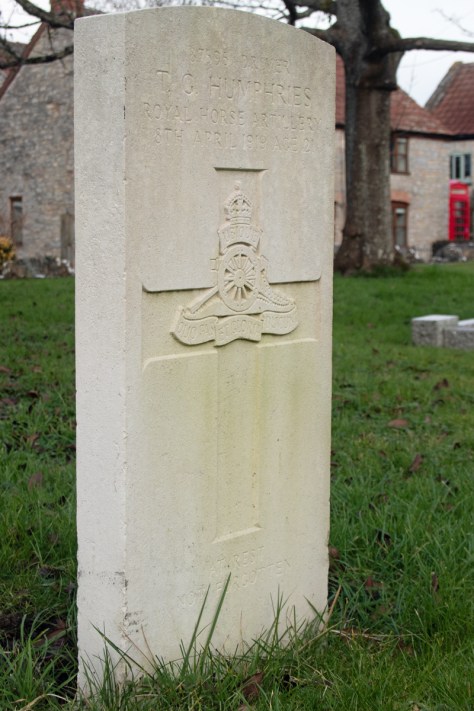
Thomas George Edward Humphries was born in November 1897, one of six children to George and Annie Humphries, from North Wootton in Somerset. George was a farm labourer, and had been married to his wife for 19 years before her untimely death in at the age of 40.

When war came, Thomas was just 16 years old. He enlisted quickly, though, joining the Royal Horse Artillery as early as the summer of 1915. Driver Humphries joined the 120 Brigade of the Royal Field Artillery, which was one of the many Howitzer brigades moving the large long-barrelled field guns along the front line.

Given the high use of horses during the way, and that Thomas was a Driver, it is likely that his role would have been guiding the animals in his care – this may also account for why his gravestone gives his troop as the Royal Horse Artillery.

Little remains of Thomas’ service records; he was awarded the Victory and British Medals and well as the 1915 Star, so would have been in the thick of the fighting and seen action on the Western Front.

When it comes to his passing, again details are scant. His pension records simply state that he died of ‘disease’, and he passed in the military hospital in Southwark, South London. Again, given when he died and the lack of any contemporary media report on his passing, it seems likely that the cause was a lung condition – influenza, pneumonia or tuberculosis – but that is a presumption on my part,

Whatever the cause, Driver Humphries died on 8th April 1919, aged just 21 years old.

Thomas George Edward Humphries lies at rest in the quiet graveyard of St Peter’s Church in his home village of North Wootton.


Private Ernest Hector

Private Ernest Hector

Ernest Edward Hector was born in 1875, one of six children – all boys – to Thomas and Mary Hector. Thomas was a farm labourer, and this was a trade Ernest and his brothers all followed their father in.

Ernest was keen for a better life, however, and enlisted in the Somerset Light Infantry in May 1896, aged 21. After initial training and service in England, Private Hector was off to the East Indies, arriving there just after Christmas 1897.

Six years abroad followed, after which Ernest returned to England to serve another four years. He completed the 12 years of his military career in May 1908.

By this point, Ernest had married Eliza Humphries, a young lady seven years his junior, who came from his home village of North Wootton in Somerset. The couple went on to have six children and, by the time of the 1911 census, Ernest had settled his family in West Pennard, near Glastonbury, and was working as a farm labourer.

Ernest’s service during the Great War remains tantalisingly hidden. Given that he was 39 when hostilities broke out, it is unlikely that he was called up again straight away; his gravestone confirms that he was assigned to the Machine Gun Corps (Infantry), but research on his service number provides little other detail.

There is nothing in the media of the time reporting on his death or funeral either, so no concrete cause of death can be confirmed. All that is known is that Private Hector died on 9th May 1920, aged 45 years old.

Ernest Edward Hector is buried in the graveyard of St Peter’s Church in North Wootton.


Private Sydney Gillard

Private Sydney Gillard

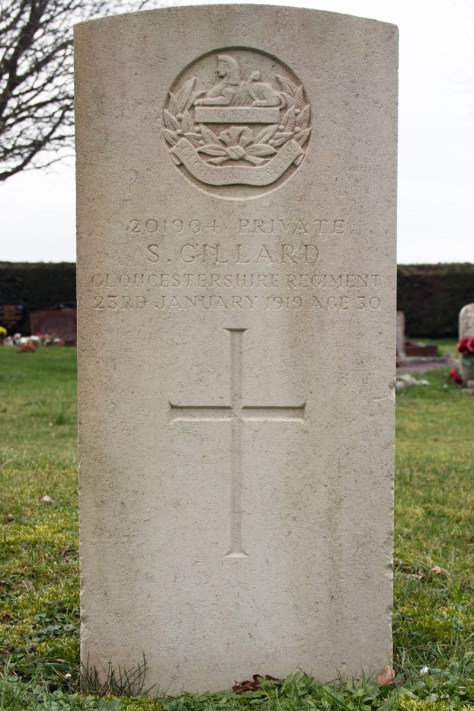
Sydney Gillard was born in October 1888, one of eight children to Charles and Lily. Charles was a stonemason, and this is the trade that Sydney and his older brother Harry also followed.

When war broke out, he enlisted in the Gloucestershire Regiment; Private Gillard’s troop, the 1/4th (City of Bristol) Battalion, were initially based in Swindon, before moving to Maldon in Essex. They were posted to France in March 1915, eventually being shipped to Italy in November 1917.

While Sydney’s military records do not confirm when he enlisted or where he served, that he saw fighting is beyond any doubt because his war pension records confirm that he died from his wounds.

Sydney Gillard passed away on 23rd January 1919, at the age of 31. He lies at rest in the cemetery of his home village of Othery, Somerset.

Gunner Clifford Tucker

Gunner Clifford Tucker

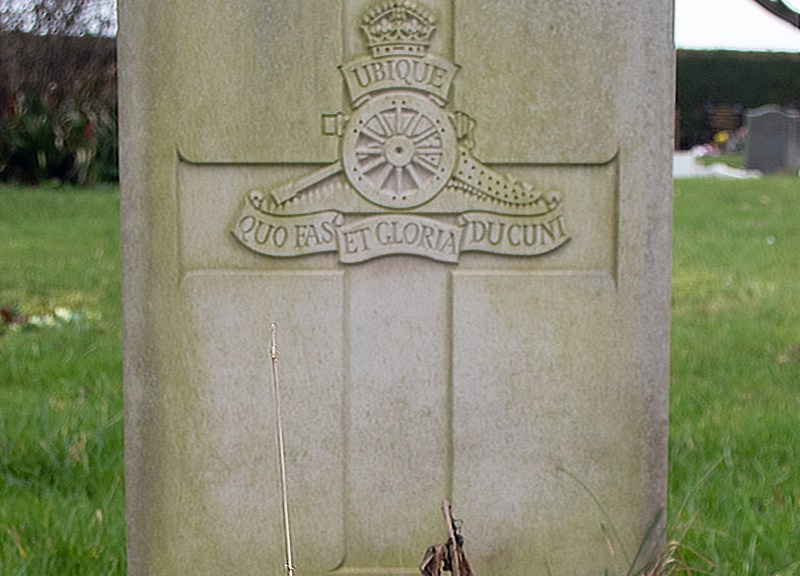
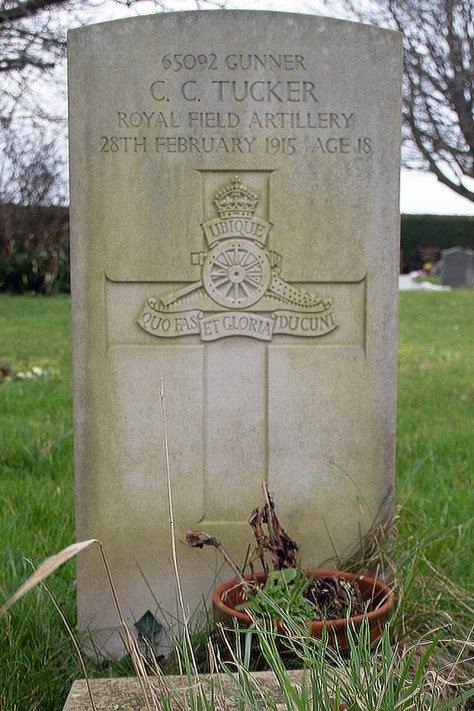
Clifford Charles Tucker was born in 1896, one of five children to John and Ellen Tucker. John was a shoemaker in the Somerset village of Othery, while Clifford became a farm labourer when he left school.

There is little documented of Clifford’s life, and what I have been able to identify about his military career has come from a newspaper article.

Much regret is felt in Othery at the new of the death of Clifford Tucker, one of the young fellows who volunteered for the service of their King and Country. Deceased, who was only 18 years of age… enlisted in the Royal Artillery about six weeks ago and was stationed at Brighton.

He was taken ill with pneumonia and died, his father arriving in time to see him before he breathed his last.

Taunton Courier and Western Advertiser: Wednesday 17th March 1915.

Gunner Tucker passed away on 28th February 1915, aged just 18 years old.

He lies at rest in the cemetery of his home village of Othery.


Able Seaman Percy Strong

Able Seaman Percy Strong

Percy William Strong was born in April 1897, the youngest of five children to Albert Strong and his wife Elizabeth. The family lived in Shepton Mallet, Somerset, where Albert worked as a mason’s labourer.

Percy was keen to make his own way in the world. By the 1911 census, and having left school, he was working as a farm boy on Kingsdown Farm in Shepton, alongside a couple of other paid, and boarding, employees.

He seemed to have been after adventure in his life too; in January 1913, he enlisted in the Royal Navy, getting his training on a number of vessels, even before the start of the Great War. In his six years of service, he was promoted from Boy to Able Seaman, and served on nine ships.

Able Seaman Strong’s final assignment was at HMS Idaho, the naval base in Milford Haven, Pembrokeshire, which he joined in May 1918. It was while he was stationed at HMS Idaho that tragedy would strike.

A boat belonging to a Government Patrol-boat capsized in Milford Haven, when three members of the crew lost their lives. They were Sub-Lieutenant Lever (20), Birkenhead; Leading Seaman Thomas Palmer (30) Shepton Mallet; and AB Percy Strong (21), Shepton Mallet.

The boat, containing six men, had come ashore in a rough sea. It left Milford Haven Naval stage on return to the ship at eleven am. A sharp squall caught the men when well out on their return journey, and this the craft failed to weather, and was capsized. The six occupants were cast into the sea, and despite the efforts of men in boats from other vessels, the three named were drowned, and the others had a narrow escape.

Western Mail: Friday 11th October 1918

Able Seaman Strong has lost his life on 9th October 1918. He was just 21 years old.

Percy William Strong’s body was returned to Shepton Mallet, the town of his birth, and lies at rest in the cemetery there.


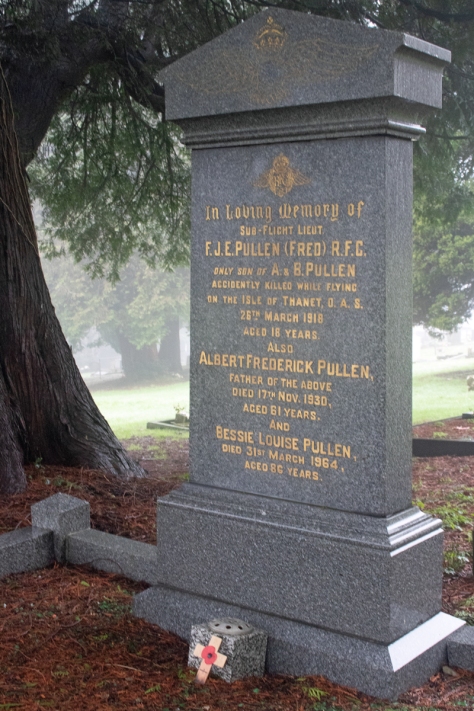
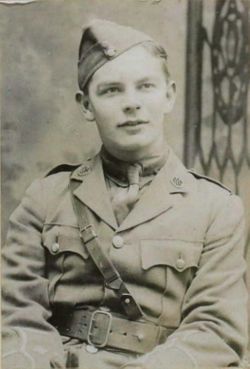
Second Lieutenant Frederick Pullen

Second Lieutenant Frederick Pullen

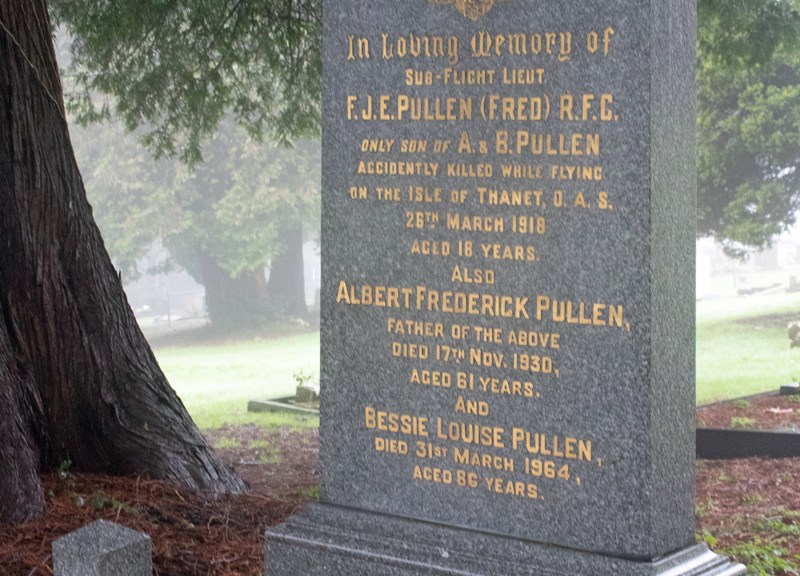
Frederick John Edward Pullen was born in May 1899, the only son to Albert and Bessie Pullen from Shepton Mallet in Somerset. Albert worked at the local prison, acting as clerk, warden and school master to the inmates.

Little else survives to expand on Fred’s military life; his gravestone confirms that he had enlisted in the Royal Flying Corps and, although no date can be attributed to this, it is likely to have been almost as soon as he turned 17.

A report of the young man’s funeral does give a little insight into the young man.


…before entering the service of his country, Lieutenant Pullen was in the Civil Service, and a letter from his late surveyor at Oxford, speaks in high terms of his character and abilities.

He graduated to the rank of Service Pilot in February last, and was gazetted in March. By the Naval authorities he was considered a very good pilot, and was graded as Class A (exemplary).

Shepton Mallet Journal: Friday 5th April 1918

Alongside the Edwardian trait of listing the chief mourners and floral tributes, the newspaper also gives an in-depth report of the cause of Second Lieutenant Pullen’s demise.


The brave young office, who was at a war school [Manston Airfield, Kent], was engaged in ‘stunting’ or trick flying, absolutely necessary in warfare, when from some unknown cause, he fell into a field, and was instantly killed.

A farmer who was ploughing near the spot said he was not conscious of the presence of an aeroplane in the vicinity till this one seemed to drop from the clouds. It nose-dived, but righted on coming near the earth, and seemed to swoop up again, but before going far turned turtle and fell, upside down.

The poor lad was found crushed beneath his gun, and had met instantaneous death. Letters received from witnesses of the accident stated that people living in the neighbourhood hurried to the spot with remedies of all sorts, and were much saddened to find that nothing that they could do was of any avail.

Shepton Mallet Journal: Friday 5th April 1918


Second Lieutenant Pullen met his death in a flying accident on 26th March 1918. He was just 18 years old.

Frederick John Edward Pullen lies at rest in the cemetery of his home town of Shepton Mallet.


Second Lieutenant Fred Pullen (courtesy of findagrave.com)

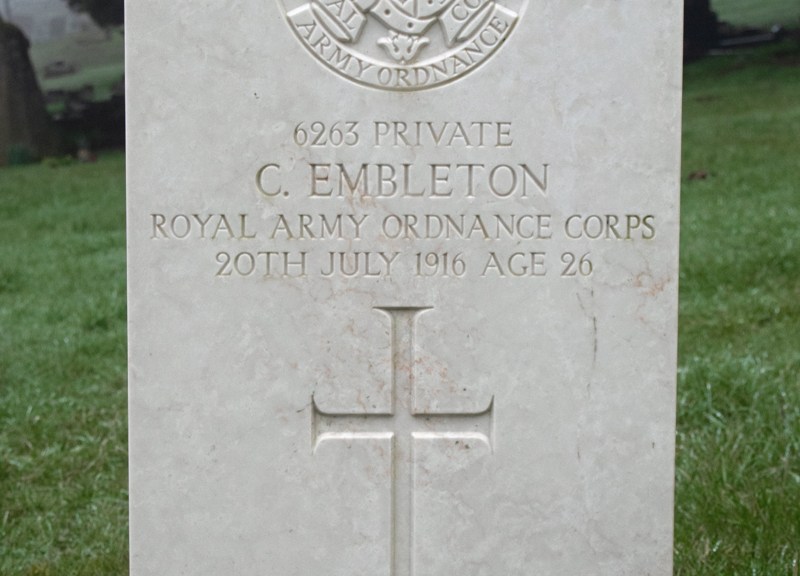
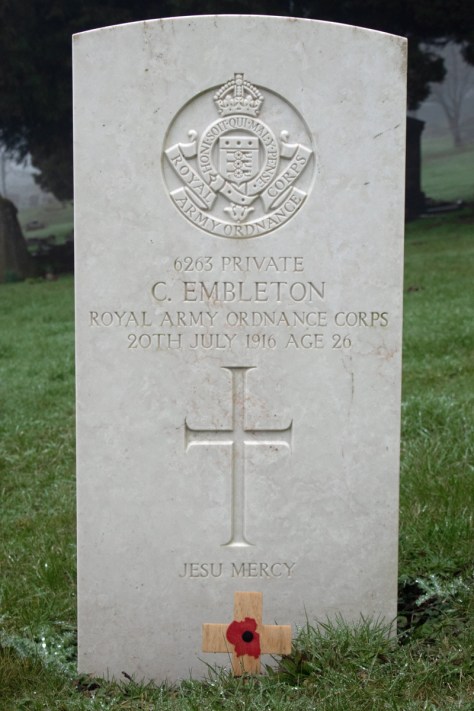
Private Charles Embleton

Private Charles Embleton

Charles Embleton was born in Alexandria, Egypt, in 1891. One of five children, his father John was a captain in the army, and his wife, Sarah was based wherever he was.

Military service was obviously in Charles’ blood. He joined up in 1908, and was assigned to the Army Ordnance Corps. After three years’ service, he was moved back to the Reserves.

Charles had met Mary Cooper, a baker’s daughter, from Farnham. They married in September 1911, and, two months later, Mary gave birth to their daughter, Florence. Her baptism records show that, by this time, Charles was working as a registry clerk for his former Corps.

When war broke out, Private Embleton was remobilised and by 14th August 1914, he was in France. His service abroad was brief, however. Within a fortnight he had been shipped back to England and there he stayed until he was medically discharged in March 1915.

While no cause for his dismissal is evident from his service records, his war pension document confirms that, when he passed away, it was from tuberculosis, contracted while on active service. It is reasonable to assume, therefore, what his lung condition was the cause for his initial discharge.

It seems that Charles and his family had relocated to the south west of England when his service was completed. It was here that he died – on 20th July 1916 – at the age of just 25 years old.

Charles Embleton lies at peace in Shepton Mallet Cemetery in Somerset.


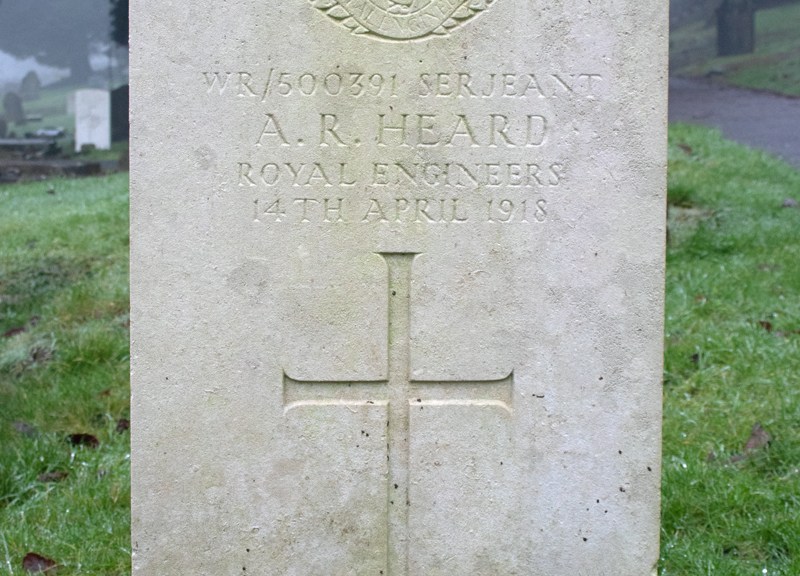
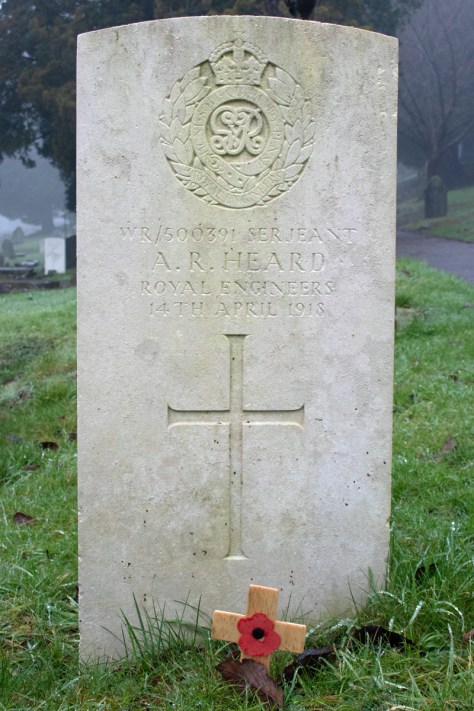
Serjeant Arthur Heard

Serjeant Arthur Heard

Arthur Reginald Heard was born in 1887, the youngest son to Herbert and Emily. Herbert was a local surveyor and land agent, and the family lived in the middle of Shepton Mallet in Somerset, two doors up from the town’s Baptist Church and within sight of the Magistrate’s Court.

In 1908, aged 21, Arthur made the journey across the Atlantic to Argentina, settling in Buenos Aires and working for the Pacific Railway Company. When war broke out, however, he immediately returned to England, when he enlisted in the army, and was assigned to the Royal Engineers.

Sapper Heard was shipped out to France and was quickly promoted, first to Corporal, then to Serjeant. In November 1917, Arthur was caught up in a shell impact on the front, and was buried. He was quickly dug out, and not severely hurt.

On 25th March 1918, Serjeant Heard was due to return home on leave, but was taken ill. Back in England, he was hospitalised in Birmingham, where meningitis was confirmed. He seemed to recover – even going out for tea with his sister-in-law when she visited him – and was transferred to recuperate in Saltash, Cornwall.

Within days of arriving, he collapsed with a fit, and passed away within half an hour. Subsequent examination confirmed that Arthur had died from a brain tumour. He was just 30 years old.

Arthur Reginald Heard lies at rest in the cemetery of his home town, Shepton Mallet.


Corporal Ossian Richards

Corporal Ossian Richards

Ossian Emanuel Richards was born in Westonzoyland, Somerset, in December 1897. He was the youngest of two children and his parents – Emmanuel and Jane – were farmers in the area.

Ossian enlisted later in the war, joining the RAF in June 1918. While little detail of his service is available, he had been a fitter before joining up, so it may well have been on the mechanical side of things that he was involved.

After nine months’ service, Ossian has been promoted to Corporal, and, with the war over, he was transferred to the RAF Reserves in March 1919.

Sadly, as with many young men of his generation, Corporal Richards succumbed to the flu pandemic that followed the war. He died on 15th September 1919, aged just 21 years old.

Ossian Emanuel Richards lies at rest in the cemetery of his home village of Westonzoyland.