Tag Archives: tuberculosis

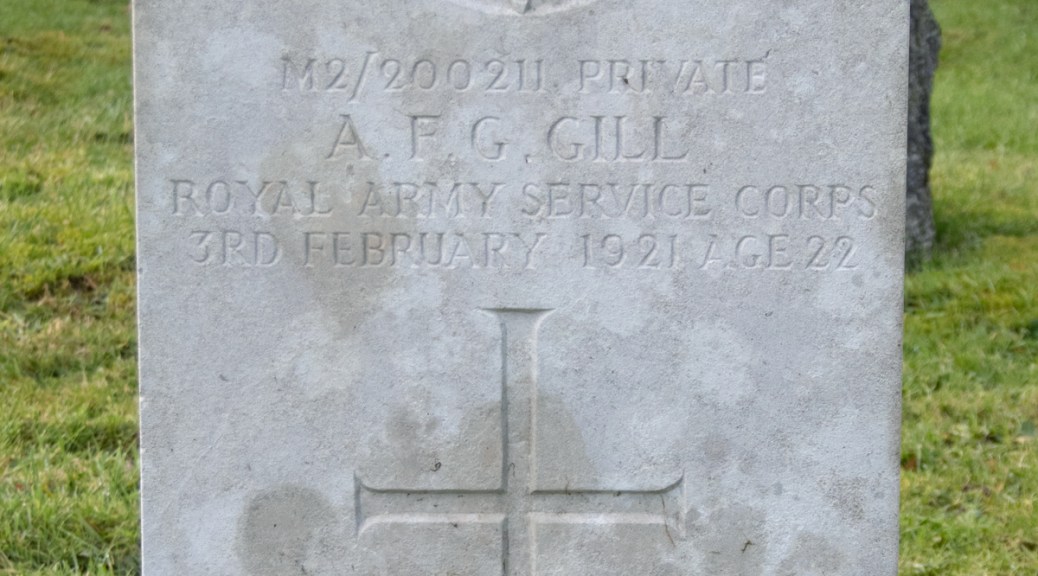
Private Frederick Gill

Private Frederick Gill

There are parts of AFG Gill’s that are destined to remain a mystery. The Commonwealth War Graves Commission give his parents’ names and address – Edwin and Annie Gill of 15 Old Exeter Street, Chudleigh, Devon. Combined with his service number – M2/200211 – this would suggest that the FG in his name is Frederick George, but the initial A remains stubbornly absent.

Frederick George Gill was born in 1898, in the village of Chudlegh, and was one of seven children. His father – Edwin – was a carrier and haulier in the area, and the family lived in the middle of the village.

When war came to Europe, Frederick was keen to do his bit – he enlisted in the Royal Army Service Corps as a Private and was assigned to the Mechanical Transport division.

There is very little information on Private Gill’s military service. He was awarded the Victory and British Medals for his service, but there is nothing to confirm when he enlisted or if he served abroad.

Private Gill survived the war, but was discharged on medical grounds on 18th November 1919 – he had contracted pulmonary tuberculosis during his time in the army, and was not longer fit to serve.

At this point, Frederick’s trail goes cold. While nothing can be confirmed, it would seem that the lung condition got the better of him – on 3rd February 1921 he passed away at home. He was just 22 years of age.

Frederick George Gill was laid to rest in the cemetery of his home village.


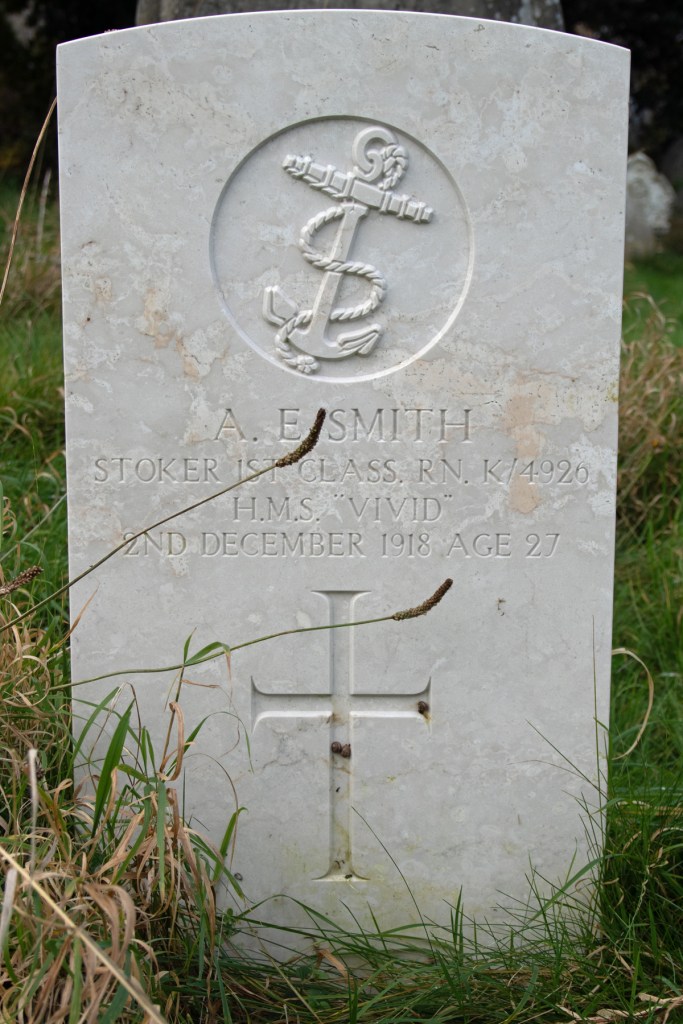
Stoker 1st Class Arthur Smith

Stoker 1st Class Arthur Smith

Arthur Edgar Smith was born in the Somerset village of Beckington on 12th January 1890. He was one of eight children to agricultural labourer and cowman George Smith and his wife Hester.

Arthur was after some adventure in his life, and didn’t want to be limited to Somerset. The Royal Navy offered this opportunity, and so, in December 1909, aged 19, he joined the service as a Stoker 2nd Class. His service records confirm that he stood at 5ft 7ins (1.7m) tall, had a fresh complexion, brown hair and hazel eyes. He signed up for the standard 12 years’ service.

After an initial five months’ training at HMS Vivid in Devonport, Stoker Smith was assigned to the battleship HMS Mars. During his two years’ service on board, he was promoted to Stoker 1st Class. In January 1912, he was reassigned, boarding HMS Orion, also a battleship.

Over the next two years, Stoker Smith served on board two further vessels, HMS Hercules and HMS Narcissus. In April 1916, Arthur was transferred back to HMS Vivid, suffering from pulmonary tuberculosis. This ultimately led to him being medically discharged from the Royal Navy, and he left service in June that year.

At this point, Arthur’s trail goes a bit cold. It would seem that his lung condition ultimately got the better of him, and he passed away back at home on 2nd December 1918. He was just 27 years of age.

Arthur Edgar Smith was laid to rest in the Dissenters’ Cemetery on Vallis Road in Frome, where his parents now lived.


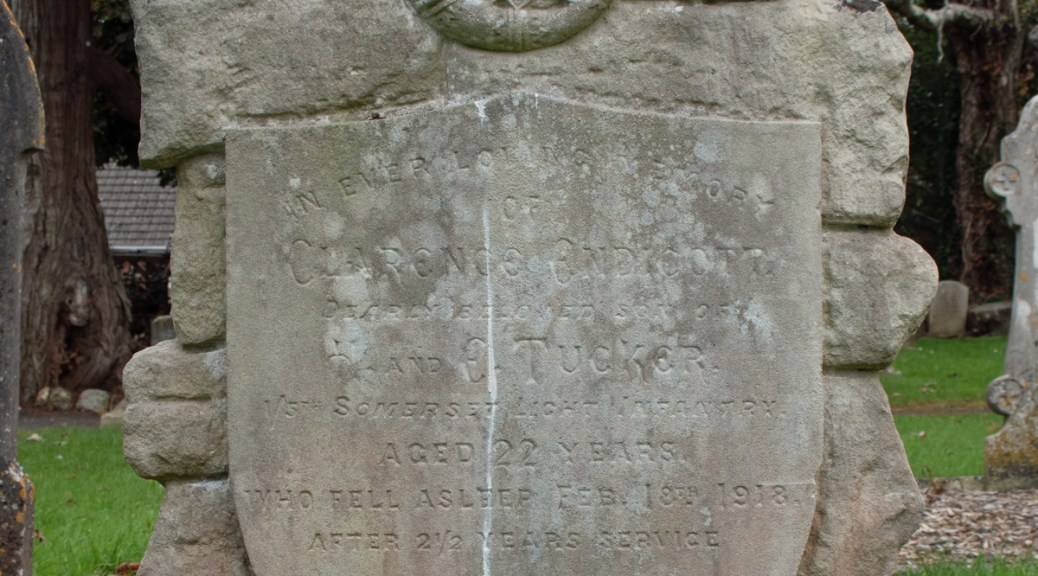
Private Clarence Tucker

Private Clarence Tucker

Clarence Endicott Tucker was born in the summer of 1895 and was the oldest of eight children (six of whom survived) to Samuel and Emma Tucker. Samuel was a sign writer from Axminster in Devon, although he had lived in Nottingham in the early 1890s, where he had met and married Emma, and this was where Clarence was subsequently born.

Within a couple of years, the family had moved to Yeovil, Somerset, where Clarence’s siblings were born and the family were raised. The 1911 census recorded the family as living in a house in the centre of town, the household comprising of Samuel, Emma, their six children and Samuel’s sister. Clarence, having left school, was working as a junior clerk for a cheese and butter merchant.

When war broke out, it was clear that Clarence was keen to play his part. He enlisted in September 1914 and joined the Somerset Light Infantry as a Private. It must has seemed an overwhelming experience as, within a month he was on board a ship headed for India.

Private Tucker spent more than two years serving with the 5th Battalion, before contracting tuberculosis. After six weeks in hospital, he was evacuated to Egypt and then back to England again. He was admitted to the Southern General Hospital in Bristol, where an assessment identified that he was no longer medically fit enough to serve in the army. He was discharged on 2nd April 1917, having served for three and a half years.

At this point Clarence’s trail goes cold. He died on 18th February 1918, at the age of 22 years old. There is no confirmation of the cause of his death, although it seems likely to have been related to the problems he had with his lungs.

Clarence Endicott Tucker lies at rest in the cemetery in the Somerset town he called home, Yeovil.


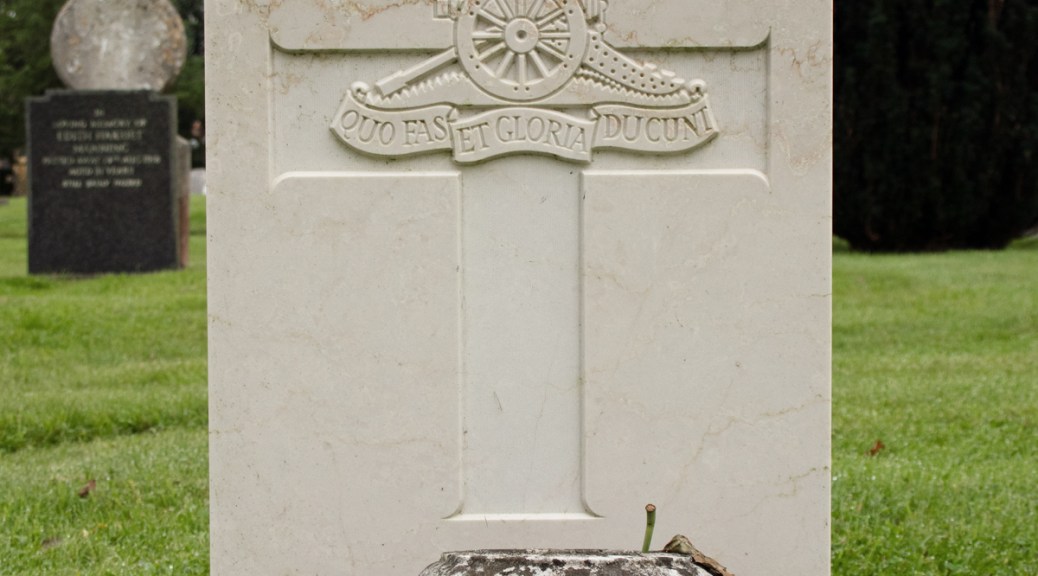
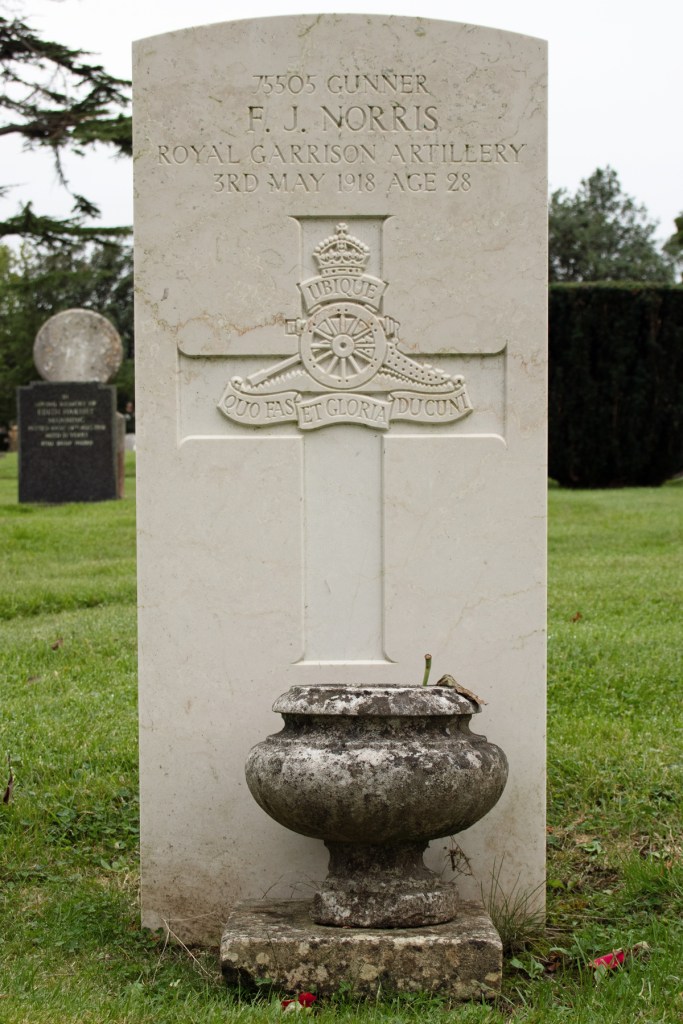
Gunner Frederick Norris

Gunner Frederick Norris

Frederick James Norris was born in the spring of 1890, one of eight children to Henry and Sarah Norris. Henry was a brewer’s drayman and groom, Sarah a milliner, and together they raised their family in the Somerset town of Yeovil.

When he left school, Frederick found work as a carman and carter, following in his father’s footsteps. Henry had died in 1907, followed by his two older brothers, Alfred in 1911 and Frank in 1912. Frederick, by this time, had met Emily Katherine White, and the couple married in Yeovil Parish Church on 23rd May 1909. They went on to have a daughter, Gwendoline, the following year.

War was fast approaching and, in December 1915, Frederick enlisted, joining the Royal Garrison Artillery as a Gunner. After a few months’ training, he was sent to Columbo, Ceylon (now Sri Lanka), where he served for just over a year. During his time there, he had contracted tuberculosis, a condition that ultimately resulted in his return to the UK.

Gunner Norris arrived back in England in August 1917, where he was again admitted to hospital with the respiratory condition. He was ultimately discharged from the army on medical grounds in August of that year.

After leaving the army, Frederick was admitted to a sanitorium, but at this point his trail goes cold. He died on 3rd May 1918, at the age of 28. While the cause of death is not stated, it seems likely to have been as a result of his already debilitated health.

Frederick James Norris was laid to rest in the cemetery in his home town of Yeovil.


Chief Stoker John Seager

Chief Stoker John Seager

John Edward Seager was born in Gillingham, Kent, in March 1869. One of eight children, his parents were labourer William Seager and his wife Maria (who was known by her middle name, Elizabeth).

John was keen to have adventure in his life, and the local Naval Dockyard in Chatham gave him that opportunity. on 23rd April 1887, he enlisted in the Royal Navy for the standard twelve years’ service. During that time, he served on six different ships, begging his career as a Stoker and rising through the ranks to become a Leading Stoker at the end of his time.

In April 1899, John re-enlisted and was given the rank of Chief Stoker. After completing his initial training at the on-shore establishment HMS Pembroke, he was assigned to HMS Cossack. Over the next ten years, he served on five more ships, before being moved over the Royal Naval Reserve in 1909.

During this time, John had gotten married. Emmeline Ada Driver was also born in Gillingham, and had found work as a nurse in the Surrey County Asylum. The couple married on 8th August 1903 in New Brompton, and set up home in a cottage close to the centre of Gillingham, close to their families and within walking distance of the dockyard.

When war broke out, John was called back into active service. He spent a year on board HMS Wildfire and five months on HMS Attentive. Most of his time, however, was spent at HMS Pembroke in Chatham. It was while he was here in January 1918 that he was admitted to hospital with pneumonia and tuberculosis. Sadly, Chief Stoker Seager was to succumb to these conditions; he died on 1st February 1918 at the age of 49 years old.

John Edward Seager was laid to rest in the Grange Road Cemetery in Gillingham, Kent. He is commemorated in the Woodlands Cemetery, which replaced this now park.


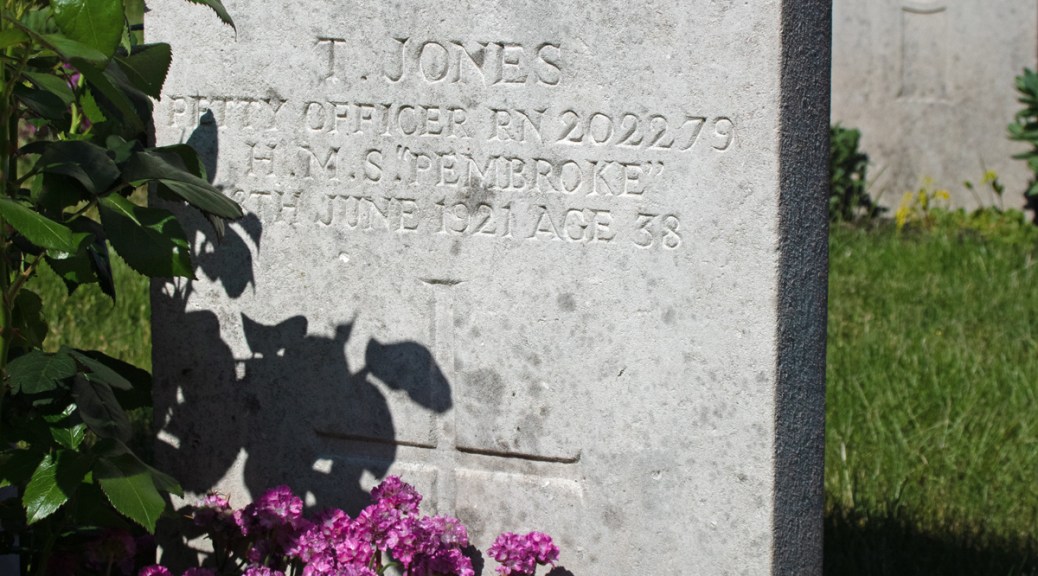
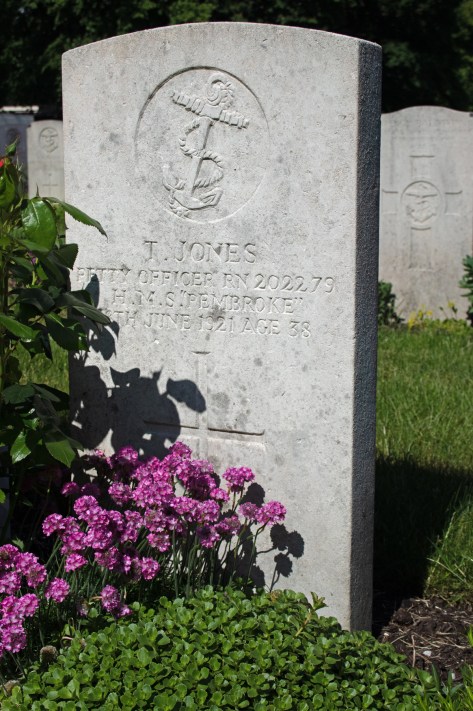
Petty Officer Tom Jones

Petty Office Tom Jones

Thomas Jones (known as Tom) was born in Wednesbury on 7th September 1882 and was the middle of seven children. His father, also called Thomas, was a grocer and, with his mother Mary, they raised their family first in the Staffordshire town and then in Blackpool, Lancashire.

When he left school Tom helped his dad in the shop, primarily dealing with meat. His mind was on greater adventures, however, and in November 1898, he enlisted in the Royal Navy. Due to his age, he was initially given the rank of Boy, but was officially signed up as an Ordinary Seaman on the day after his 18th birthday.

Over the time of his initial twelve years’ service, Tom rose through the ranks, from Able Seaman to Leading Seaman and Petty Officer. In May 1912, however, he was ‘disrated’ back to Able Seaman, but there is no evidence to confirm why this was done. By this time, he had served on nine ships, as well as having time in shore-based establishments, and had completed his twelve years as a mariner.

Meanwhile, in the autumn of 1904, Tom had married Hannah Kennedy, a dockyard labourer’s daughter from Gillingham, Kent. The couple went on to have four children and set up home in the centre of the town, not far from the Naval Dockyard where Tom was sometimes based.

With war in Europe on the horizon, Tom immediately volunteered to continue his duty when he term of service came to an end. Working hard, he soon regained the rank of Leading Seaman and, by April 1915, was back up to Petty Officer once more.

During the remainder of his time in the Royal Navy, Petty Officer Jones served on a further seven vessels. In October 1920, after more than two decades’ service, he was invalided out, having contracted tuberculosis, rendering him unfit to continue.

At this point Tom’s trail goes cold. It seems likely that his lung condition got the better of him; he passed away on 20th June 1921, at the age of 38 years old.

Petty Officer Tom Jones was laid to rest in the Woodlands Cemetery in Gillingham, Kent.


Tom Jones II
Petty Officer Tom Jones
(courtesy of ancestry.co.uk)

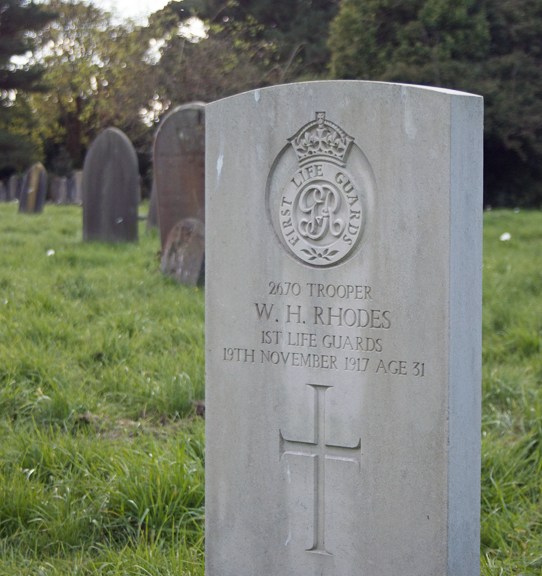
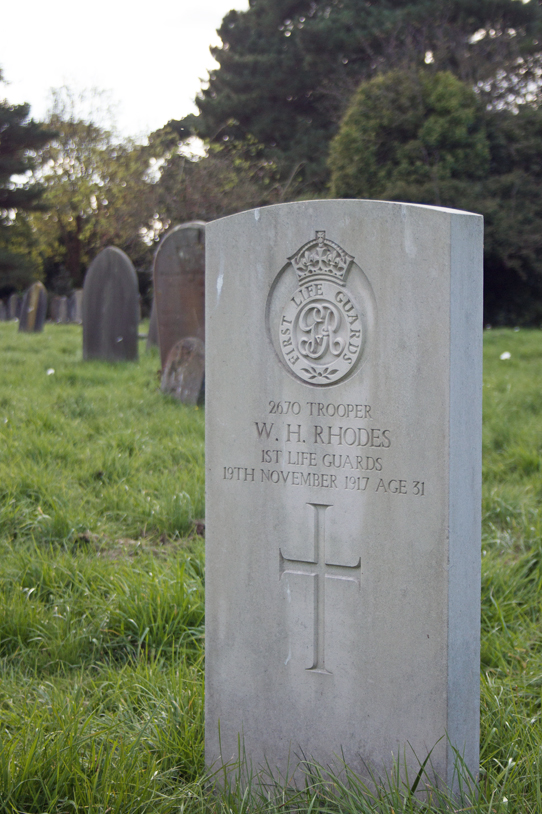
Trooper William Rhodes

Trooper William Rhodes

William Henry Rhodes was born in the summer of 1886 and was the youngest of six children. His father Reuben was a gardener who, with his wife Ellen, raised their family in a small cottage near the central station in Worthing, West Sussex.

When he left school, William found work as an assistant in a bookshop. This was just a stepping stone, however, and his mind was on a life of adventures. In March 1908, he enlisted in the army, joining the Household Cavalry, and was assigned to the 1st Life Guards. William’s medical report showed that he stood at just under 6ft (1.83m) tall, and weighed 141lbs (64kg). He had a fresh complexion, grey eyes and brown hair.

Trooper Rhodes was initially based on home soil; his barracks were in London and he served in Hyde Park, Regents Park and at Windsor, where he would have been called upon to be involved in royal duties that would have taken place. This changed when the Great War broke out, however, and his division was sent out to northern France as part of the British Expeditionary Force.

The 1st Life Guards were involved in the First Battle of Ypres, and went on to fight in many of the fiercest battles of the conflict. His service record identifies that he was wounded in February 1915, when he received a gunshot wound to the head, although, surprisingly, there is nothing in his medical record that suggests any subsequent hospital admission.

In fact, Trooper Rhodes did receive hospital treatment during his military service; he was admitted for bronchial catarrh in April 1908 and May 1909 and headaches in June 1911. Four years later, he contracted tuberculosis while in action in France, and moved back to London for treatment.

William’s condition was serious enough for him to be medically discharged form the army; having spent more than a month in hospital, he was released from duty on 31st August 1915.

There is little further information about William’s life back home. The next document on him confirms that he died on 19th November 1917. While the cause is not noted, it seems likely to have been connected to the lung conditions he suffered during the war. William was 31 years of age.

William Henry Rhodes was laid to rest in Broadwater Cemetery in the town of his birth, Worthing, West Sussex.


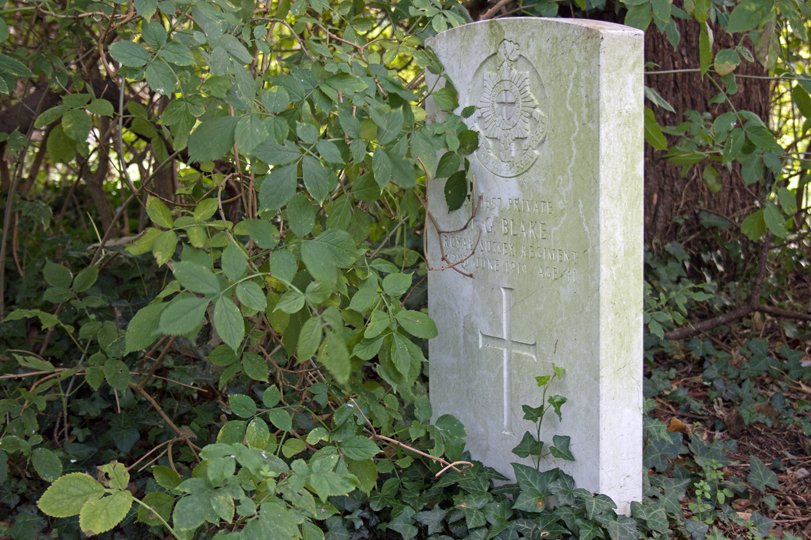
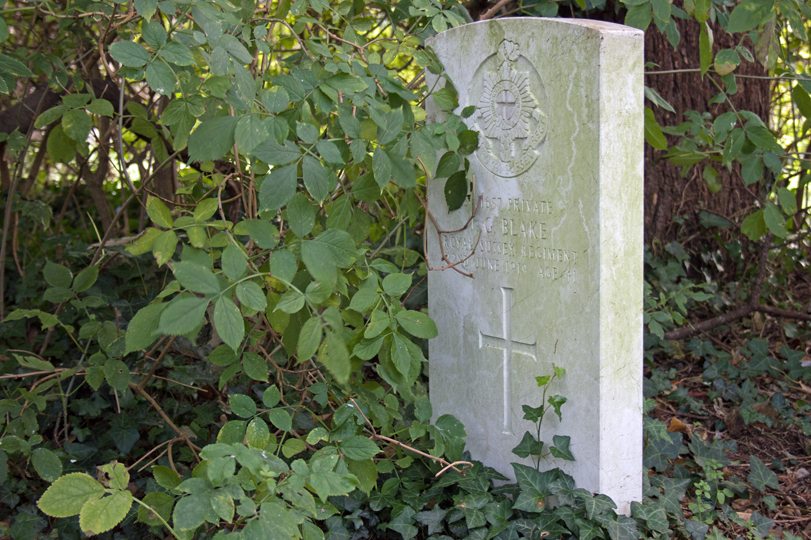
Private John Blake

Private John Blake

John George Blake was born early in 1878, and was the oldest of seven children. His father, Job, was a general labourer, and, with Eliza, John’s mother, brought the young family up in the West Sussex town of Worthing.

Job died in 1898, ages just 36 years old; Eliza found work as a housekeeper, while John was employed as a carter for the railway. By the 1901 census, the family were living in a terraced house near the centre of town, Eliza living there with her three sons, two daughters, son-in-law and granddaughter.

In October 1904, John married Alice Attwater, a labourer’s daughter from mid-Sussex. The couple moved into a house close to the station and went on to have four children; John Jr, Ernest, Bertha and Dorothy. John was by now working as a porter for the railway, a role he continued through to the outbreak of war.

John enlisted in November 1914; he joined the Royal Sussex Regiment, working as a member of the depot staff. Private Blake was shipped overseas, arriving in France in March 1916.

Almost exactly a year after landing in France, John was injured in the line of duty. The medical report confirmed that a “scald on the left arm and neck [had] occurred while on duty on March 1st 1917, in France. He was preparing hot soup for his company in the front line at midnight. He was not to blame. Injury caused by enemy shelling the company kitchen“.

Private Blake was shipped back to England for treatment, and admitted to Netley Hospital near Southampton. While there, he contracted phthisis (tuberculosis), which left his totally incapacitated. He was medically discharged from military service in August 1917.

Further details of John’s life are scarce. He returned home to his family, although whether he took up his job again is unknown. He passed away on 22nd June 1919 at the age of 41. The cause of his death is unknown, although it seems likely to have been related to the tuberculosis.

John George Blake lies at rest in the Broadwater Cemetery of his home town, Worthing.


Rifleman Ernest Parsons

Rifleman Ernest Parsons

Ernest Charles Parsons was born in 1881, and was one of six children to bricklayer Robert Parsons and his wife Mary Ann. Robert was a labourer and bricklayer from Watford, while Mary Ann was born in Arundel, West Sussex. The couple moved to where his work was, having their first children in Hertfordshire and Sussex They finally settled in London, which was where Ernest was born.

Where he first left school, Ernest worked as a painter, but soon found a career as a postman., something he would continue to do through to the outbreak of war.

Ernest married Frances Olive Eynott on 28th February 1904; they went on to have a daughter, Doris, the following year. It seems, however, that their marriage was destined to be a short one; Frances passed away within a couple of years.

With a daughter to raise and a living to earn, Ernest married again. Elizabeth Kate Dew was born in Fulham in 1883, and the couple married in the spring of 1907. Again, however, their happiness was to be short; Elizabeth died eighteen months later.

Widowed twice, and with Doris now a toddler, Ernest moved back in with his parents in Chiswick. He continued his work as a postman, but alongside this had been an active volunteer in the London Regiment (Post Office Rifles) since early 1908.

Rifleman Parsons’ initial year’s service was extended and extended and, by the time of the outbreak of the First World War, had been serving for some six years.

By 1914, Ernest had found love for a third time, and married Lilian Frances Cromie on 25th March that year. With war imminent, his time was take up more with military duties; while part of the territorial force, Rifleman Parsons had been officially mobilised.

The sudden intermingling of men from different parts of the country in small, packed training camps made the perfect environment for illness and disease to circulate. Ernest had initially contracted bronchitis while on service in 1912; this had dogged him intermittently oved the next few years until, in March 1915, it was serious enough for the Medical Examination Board to declare him unfit for military service.

Ernest moved his family to Worthing, in West Sussex, presumably as the air was fresher there than in the bustling capital. He may also had had family in the area, as his mother had been born just up the road in Arundel. Sadly, though, it seems that his health was not to recover sufficiently, and he passed away on 4th October 1918, at the age of 37.

Ernest Charles Parsons was buried in the Broadwater Cemetery in the town, not far from where his widow and daughter were then living.


Coincidentally, when researching another soldier, Lance Corporal Edgar Godden, this turns out to be the address where he also died, just ten months earlier on 22nd December 1917. There is no apparent other link between the two men.

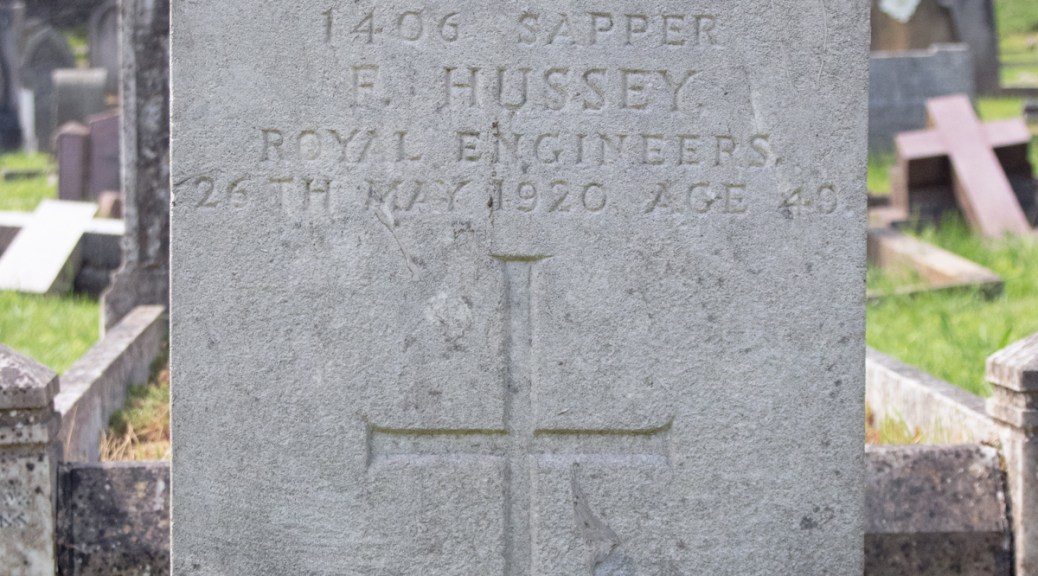
Sapper Frank Hussey

Sapper Frank Hussey

Frank Hussey was born in the autumn of 1870, one of eight children to William and Ann Hussey. William was a mason, and raised his family in Weston-super-Mare in his home county of Somerset. When he left school, Frank found employment as a general labourer, initially in Somerset, but then in South Wales with his older brother Samuel.

By 1889, Frank has moved back to Somerset, where he married Elizabeth Webber in December. Work was obviously more available in South Wales, however, as the couple moved back to Glamorgan, and had their first four children – Beatrice, William, Edith and Hubert – there.

The turn of the century saw the Hussey family return to Somerset. Frank, by now, was working as a bricklayer, and they settled in a small house near the centre of Weston. Life continued on, with building work helping to support the family. Frank and Elizabeth had two more children – James and Marion – and, by the time of the 1911 census, the couple were living with their five youngest children in a two-up-two-down house on the then outskirts of the town.

Storm clouds were gathering over in Europe, and Frank was more than willing to do his bit for King and country. Having already been a volunteer with the Royal Engineers, he formally enlisted with the regiment on 5th May 1915.

Sapper Hussey was assigned to the 2nd (Wessex) Field Company, which was a territorial force. He was mobilised for fourteen months, before being discharged from the army as he was no longer physically fit for war service. Unfortunately, his military records give no further indication as to his ailment or condition.

Frank’s trail goes cold for a few years. Released from service in July 1916, the next identifiable record is from four years later. This confirms that he died from tuberculosis on 26th May 1920, aged 49 years old. Given the debilitating effect of the condition, it seems likely that Sapper Hussey contracted it during the war, and this is what had led to his dismissal.

Frank Hussey had died at home, and it was in the Milton Cemetery in Weston-super-Mare that he was laid to rest.